
Quick Answer
Review W-8BEN-E Part III UK company submissions as a control decision, not a formality: verify the correct form type first, then approve only when Line 14 and Line 15 are specific, internally consistent, and explainable from the packet. Use IRS form text and IRS instructions as the authority, and escalate cases with unclear treaty logic or unsupported ownership and base erosion claims before payment release. Keep a clear decision trail because the form is furnished to the withholding agent or payer, not sent to the IRS.
UK teams are not struggling with boxes, they are struggling with risk#
Teams reviewing these forms are usually less stuck on layout than on risk: when a treaty claim is solid enough to approve, and when it needs escalation.
Step 1 Set the review objective#
This guide is for compliance, legal, finance, and risk owners handling repeat reviews, not for a founder filing a form once a year. Your job is not to admire a complete-looking PDF. Your job is to decide whether a UK entity's Claim of Tax Treaty Benefits is coherent enough to support U.S. withholding treatment.
That standard matters. A good review process helps you accept valid claims faster, but only when the record is clear enough that another reviewer could reach the same answer from the same form. If the claim is vague, contradictory, or copied from another submission without matching the entity facts, the right outcome is escalation, not a best-effort approval.
Start with one simple intake check: confirm you are holding Form W-8BEN-E, not Form W-8BEN. The IRS is explicit that W-8BEN-E is "For use by entities" and that individuals must use Form W-8BEN. If that classification is wrong, everything that follows in Part III is noise.
Step 2 Anchor your authority#
Use the Internal Revenue Service form text and the IRS Instructions for Form W-8BEN-E as your authority. Blog examples, including this one, can help you structure reviewer notes and escalation rules, but they do not override the IRS document set.
That matters in practice because teams can overfit to copied examples. If a reviewer cannot point to the IRS headings for "Line 14, claim of tax treaty benefits" and "Line 15, special rates and conditions," you may be relying on custom house rules rather than source text. Keep those house rules if they help, but treat them as internal controls layered on top of the IRS form, not a substitute for it.
One operational detail is easy to miss: the form is given to the withholding agent or payer and is not sent to the IRS. That makes your evidence pack and approval record more important for internal controls. If a claim is challenged later, a clear record helps show what was reviewed, what was accepted, and why.
Step 3 Narrow the scope before you review#
Keep the scope tight. This article is focused on UK company treaty claims in Part III, especially the decision points on Line 14 and Line 15. It is not a full guide to every W-8 variant, every treaty article, or every entity type.
If a case falls outside that scope, say so early. A UK company submission that is really an individual case, or a file that belongs on another W-8 form, should be rerouted before anyone spends time debating treaty language. Inside scope, the question is narrower: can you defend what was claimed on Line 14 and Line 15 using the form, the instructions, and your review record? If not, hold it for specialist review before it becomes a withholding or audit problem.
Need the full breakdown? Read What UK Companies Should Enter in Foreign TIN on Form W-8BEN-E.
What Part III actually controls for a UK company#
Once you confirm the file is on Form W-8BEN-E (the entity form), Part III is a pass/fail control for treaty-claim handling, not a soft documentation field. This is where the Beneficial Owner makes its Claim of Tax Treaty Benefits for U.S. withholding, so weak entries here are a review risk, not a formatting issue.
Step 1 Treat Part III as a decision point#
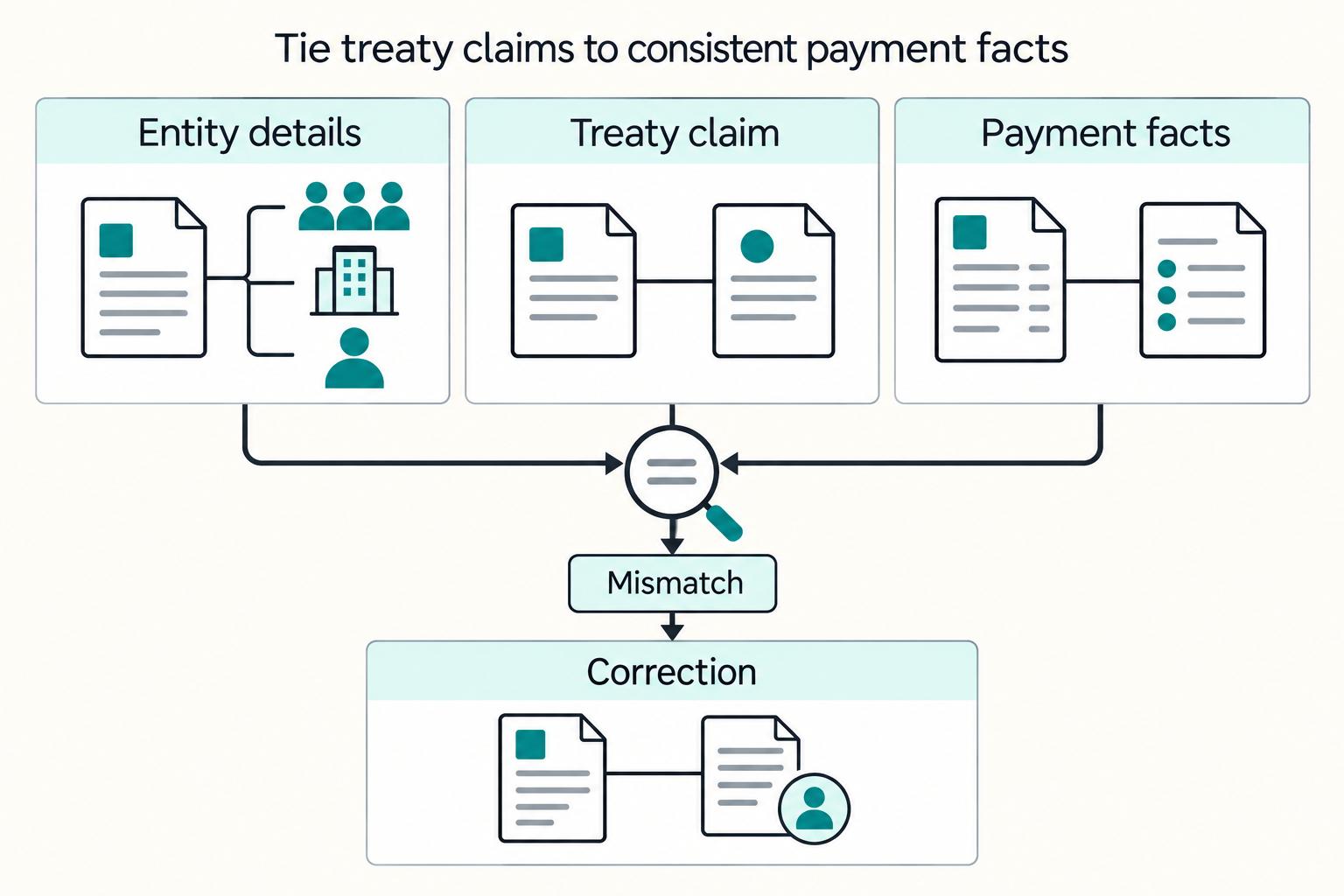
Your standard is not that boxes are filled. Your standard is whether Line 14 (claim of tax treaty benefits) and Line 15 (special rates and conditions) are coherent with the entity facts already stated on the form. If Part III conflicts with those earlier statements, stop and escalate instead of approving.
A practical sequence helps: review the rest of the form first, then read Line 14 and Line 15. That makes copied boilerplate easier to spot.
Step 2 Require usable Line 14 and Line 15 detail#
If Line 14 or Line 15 is blank, vague, or contradictory, do not approve for payout processing. If you cannot clearly explain what is being claimed and how those lines fit the rest of Form W-8BEN-E, the file is not operationally ready.
Because the certificate is given to the withholding agent or payer and is not sent to the IRS, your review record matters. Record whether Part III passed, failed, or was escalated, and why.
Related: A UK Limited Company's Guide to Filling Out Form W-8BEN-E.
What to prepare before anyone touches Line 14 or Line 15#
Before anyone reviews Line 14 or Line 15, confirm the entity record is complete and internally consistent in Form W-8BEN-E and your intake notes.
| Checkpoint | What to confirm | If unclear |
|---|---|---|
| Intake packet | Completed Form W-8BEN-E, legal organization name, United Kingdom country of incorporation or organization, and reviewer notes | Validate from Part I fields, not side-channel labels |
| Identifier fields | TIN or a foreign tax identifier where your process captures one; UK tax reference data such as a UTR if already on file | Cross-check for consistency across the form and case record |
| Entity context | Entity type and Chapter 4 Status (FATCA status), for example Corporation and Active NFFE | Pause the treaty review if incomplete or conflicting with the account record |
| Escalation ownership | Unclear treaty article positions or unclear Ownership and base erosion test treatment | Route to tax counsel with the form and reviewer notes before approval |
- Gather a usable intake packet: the completed Form W-8BEN-E, the legal organization name, the country of incorporation or organization (United Kingdom), and reviewer notes. Validate these from Part I fields, not from side-channel labels.
- Confirm identifier fields are present and consistent across the form and case record, including TIN or a foreign tax identifier where your process captures one. For UK entities, teams may cross-check UK tax reference data, such as a UTR, if it is already on file, but the control is consistency, not a single identifier assumption.
- Verify entity context from earlier lines before Part III review, including entity type and Chapter 4 Status (FATCA status), for example Corporation and Active NFFE. If this context is incomplete or conflicts with the account record, pause the treaty review.
- Set escalation ownership in advance for unclear treaty article positions or unclear Ownership and base erosion test treatment. Route those cases to tax counsel with the form and reviewer notes before approval.
Remember that the form is provided to the withholding agent or payer and is not sent to the IRS, so your stored packet should support the decision if it is reviewed later.
For a step-by-step walkthrough, see Apple W-8BEN-E Decisions for UK Limited Companies in App Store Connect.
Step 1 classify the entity correctly before treaty review#
Confirm the filer is on the correct W-8 form family before any Part III analysis. If the form type is wrong, pause review and return the case for re-papering before a withholding decision.
| Case | Routing outcome | Note |
|---|---|---|
| Individual case | Form W-8BEN | Route to Form W-8BEN |
| Nonresident alien individual claiming exemption on compensation for personal services | Form 8233 | Assess Form 8233 |
| Foreign partnership, foreign simple trust, or foreign grantor trust | Form W-8IMY | Check W-8IMY routing, with instruction-level exceptions where applicable |
| Other out-of-scope cases | Form W-8ECI or Form W-8EXP | Route out if your IRS-instruction workflow maps them there |
Start with the basic form rule: Form W-8BEN-E is for entities, and individuals must use Form W-8BEN. So your first decision is entity vs. individual status for withholding documentation, not treaty article wording.
Use a quick routing check for obvious misfiles:
- Individual case: route to Form W-8BEN.
- Nonresident alien individual claiming exemption on compensation for personal services: assess Form 8233.
- Foreign partnership, foreign simple trust, or foreign grantor trust: check Form W-8IMY routing (with instruction-level exceptions where applicable).
- Other out-of-scope cases: if your IRS-instruction workflow maps them to Form W-8ECI or Form W-8EXP, route out rather than forcing a Part III review on W-8BEN-E.
This is a tax-treatment control, not just paperwork hygiene. For example, Form 8233 instructions note section 1441 generally requires 30% withholding on compensation for independent personal services.
As an internal control, record the classification rationale and form-type outcome in your review notes, and remember the completed W-8BEN-E is given to the withholding agent or payer and not sent to the IRS.
Step 2 complete Line 14 with explicit decision checkpoints#
After you confirm the filer is on the correct entity form, make Line 14 the next hard gate: accept treaty review only when the claim is clearly stated on the line the IRS instructions identify as "Line 14, claim of tax treaty benefits."
For a UK company, check Line 14 against Part I before you judge wording quality. Line 1 (legal name) and Line 2 (country of incorporation or organization) should align with a treaty claim tied to the United Kingdom. If Line 14 is blank, vague, or inconsistent with those entity details, mark the case pending and return it for correction.
Use IRS instructions as the acceptance standard#
Use practitioner examples for pattern recognition only, not as approval criteria. The acceptance standard is the Form W-8BEN-E plus the IRS Instructions for Form W-8BEN-E.
Keep the reviewer logic explicit:
- Known from IRS materials: Line 14 is the treaty-claim line.
- Known from the form: W-8BEN-E is for entities, and Part I includes country of incorporation/organization for coherence checks.
- Not established on its own: that any sample phrase, article citation style, or shorthand automatically satisfies the claim.
Apply a compact reviewer table#
| Checkpoint | Required evidence | Fail condition | Escalation owner |
|---|---|---|---|
| Line 14 treaty claim is present | Completed Line 14 on Form W-8BEN-E | Line 14 is blank, partial, or replaced by off-form explanation | Ops |
| UK treaty claim is coherent with entity data | Line 1 legal name and Line 2 country data align with UK entity profile | UK treaty claim conflicts with or is unsupported by Part I data | Compliance |
| Entity identity is consistent across records | Same legal entity appears in intake and form | Intake/onboarding identity does not match form entity | Ops |
| Special claim support is complete | Required support documents are present per your policy | Claim includes added eligibility statements without support | Compliance |
| Ownership and base erosion test reference is supportable | Documented support packet or counsel-reviewed analysis is attached when that concept is invoked | Concept is invoked but support is missing or unclear | Legal |
If the filer invokes the Ownership and base erosion test but support is incomplete, do not best-effort approve. Mark the case pending, record what is missing, and escalate.
Keep the review record reproducible for a second reviewer. Include the form, the matching entity record, your Line 14 decision note, and any support materials you used. Remember: the form is furnished to the withholding agent or payer and is not sent to the IRS, so your internal review notes are part of the control.
Related reading: W-8BEN-E for UK Limited Companies with Routing and Review Checks.
If you need a faster handoff, try the W-8 form generator.
Step 3 complete Line 15 with treaty article logic you can defend#
Once Line 14 is coherent, treat Line 15 as the release gate: if you cannot explain the special treatment being claimed and why it fits the payment facts, hold payment. IRS instructions identify Line 15 as "special rates and conditions," so the review standard should focus on whether the claim is understandable and defensible, not whether it looks familiar.
For a UK company, require three elements on or alongside Line 15: the treaty article cited, the claimed rate or condition narrative, and a plain-language explanation tied to the UK-US treaty claim. If form space is limited, keep concise text on the form and store the fuller rationale in reviewer notes. Do not accept a bare article reference or generic wording that cannot be mapped to the payment facts.
Require article selection plus payment-specific reasoning#
Treat article selection as a facts check, not a copy-paste step. If a filer cites Article 7 (Business profits), require an internal note explaining why that article was chosen for this payment pattern.
Minimum note set:
- Payment type in plain language from the intake record
- Article cited on Line 15
- Short explanation of the condition or outcome being claimed
- Reviewer name, date, and escalation status if interpretation is unclear
"Looks standard" is not a defensible rationale.
Use reviewer notes as the real control surface#
Because the form is given to the withholding agent or payer and not sent to the IRS, reviewer notes are part of the control record. Write them so a second reviewer can explain the claim without relying on the original analyst. A signed form plus vague Line 15 wording is not an audit-ready file.
There is a practical tradeoff here: generic text may clear the queue faster, but weak documentation creates rework and downstream risk. The Taxpayer Advocate has reported some Chapter 3 and Chapter 4 refund situations being frozen for up to one year or longer, which reinforces the operational cost of poor support.
Escalate when the logic is not explainable#
Apply a hard rule: if the Line 15 article and conditions cannot be explained from the form, payment facts, and reviewer notes, escalate to specialist review before payment release. Delaying for specialist review is usually lower-risk than unwinding withholding treatment later.
Reviewer QA checks before accepting the form into payout operations#
Do not approve for payout unless Part III is clear, consistent with Part I, and understandable without guesswork.
- Review Line 14 and Line 15 together.
Check Line 14, claim of tax treaty benefits and Line 15, special rates and conditions as one claim, not as separate fields.
- Confirm Part III matches Part I entity details.
If the Part III treaty wording is vague, contradictory, or does not fit the filer details in Form W-8BEN-E Part I, return it for correction instead of interpreting it informally.
- Make sure the claim is traceable for the withholding agent.
The file should clearly show what was claimed on Line 14, what special rate or condition was claimed on Line 15, and the note that ties that claim to the payment facts. If that logic is not clear from the record, hold approval until it is.
If you want a deeper dive, read How to Fill Out Form W-8BEN-E for a Foreign Company.
Common failure modes and how to recover without payment disruption#
When a treaty-related file is incomplete or unclear, the safest recovery is to pause approval, keep payout status visible, and require a corrected package rather than patching gaps with internal notes.
| Failure mode | Recovery | Control note |
|---|---|---|
| Unsupported claim logic in the file | Move the payout to a visible pending state, record why normal review stopped, and route for specialist review | Keep the hold in place until the file supports a repeatable decision |
| Documentation classification or completeness is unclear | Stop and re-collect with a clear reason code | Do not approve temporarily while planning to fix it later |
| Entity details conflict across the packet | Require a corrected submission and preserve the decision history | Keep the prior version, corrected version, and approver record together |
| Operational status is hidden or non-reversible | Use explicit, timestamped states such as pending tax review or corrected documentation requested | Make the states visible to operations and tax |
- Unsupported claim logic in the file
If you cannot trace how the claim was reached from the stored packet, treat it as an error-resolution case, not a drafting tweak. Move the payout to a visible pending state, record why normal review stopped, and route for specialist review. Keep the hold in place until the file itself supports a repeatable decision.
- Documentation classification or completeness is unclear
If the submitted tax documentation does not clearly match the case, stop and re-collect with a clear reason code. Do not approve "temporarily" while planning to fix it later. Recovery means replacing ambiguity with a clean, reviewable submission trail.
- Entity details conflict across the packet
When core entity details do not align across documents, require a corrected submission and preserve the decision history. Keep the prior version, corrected version, and approver record together so a later reviewer can reconstruct what changed. Note-only exceptions create avoidable audit rework.
- Operational status is hidden or non-reversible
Silent manual overrides are a control failure. Use explicit, timestamped states, for example pending tax review or corrected documentation requested, that operations and tax can both see. This aligns with handling errors as a defined process, consistent with the IRS focus on processing and error resolution in IRM 3.22.110.
Final takeaway and copy/paste reviewer checklist#
For this review, the practical standard is simple: approve only what you can explain from supported materials and your reviewer evidence. Do not treat current guidance as authority for Form W-8BEN-E Part III completion details. If a decision depends on those details, hold and escalate before payment release.
Step 1. Set the acceptance rule. Treat this as a documented decision, not a box-ticking exercise. Your pass condition is that another reviewer can read the same packet and your notes and reach the same conclusion without guessing.
Step 2. Use this checklist as a guardrail. Use it to block unsupported approvals, not as a substitute for the governing IRS materials.
- Confirm whether the packet is sufficient for the decision you are being asked to make.
- Do not approve a treaty-position decision from blog wording, memory, or assumptions.
- Verify Line 14, Line 15, UK-US treaty article/rate logic, and Ownership and base erosion test conclusions with a qualified tax adviser before filing.
- If those points are required to release payment, escalate and request the controlling W-8BEN-E materials your team relies on.
- Record the hold/escalation outcome and the reviewer rationale so the file can be reopened and understood later.
Step 3. Close only when the record is reproducible. Before you mark review complete, check one thing: can someone reopen the file later and clearly see what was reviewed, what was unsupported, and why it was accepted, held, or escalated? If not, the review is not finished.
Frequently Asked Questions
What is Part III of Form W-8BEN-E and why does it matter for a UK company?
Part III is where treaty-benefits information appears on Form W-8BEN-E, including the lines the IRS instructions label as Line 14 (claim of tax treaty benefits) and Line 15 (special rates and conditions). For a UK company, this is the part tied to the treaty claim a withholding agent or payer reviews with the rest of the form. If this section is incomplete or unclear, treat the claim as needing follow-up.
Which fields are non-negotiable for a valid UK treaty claim on Line 14 and Line 15?
The clear points are that the instructions explicitly include "Line 14, claim of tax treaty benefits" and "Line 15, special rates and conditions." This article does not provide full line-by-line completion criteria, so do not invent a hard validity checklist from blogs or partial snippets. If a reviewer cannot clearly understand what is being claimed from the form and instructions in use, escalate.
Can we rely on accounting blog examples when IRS instruction detail is unclear?
No. Use blogs as drafting hints at most, but let the IRS form and instructions control acceptance, especially for Part III of Form W-8BEN-E. A practical check is to compare any example wording against the current IRS materials your team relies on, including the form/instructions revision on file, rather than copying generic text.
When should a reviewer escalate instead of approving a treaty claim?
Escalate when the form type appears wrong, when the treaty claim is vague, or when the reviewer cannot explain the basis for the claim from the packet alone. The form states: "For use by entities. Individuals must use Form W-8BEN," and the related materials also point foreign individuals to Form W-8BEN (or Form 8233) instead of Form W-8BEN-E. If you are unsure which form type applies, stop and escalate before payment release.
How should teams handle submissions that cite Article 7 but provide weak conditions text?
Do not approve based on the article citation alone. This guide confirms that Line 15 is for "special rates and conditions," but it does not provide enough detail to treat a thin Article 7 reference as self-proving. If no one can connect the conditions text to the payment facts, escalate.
What is the minimum evidence pack a withholding agent should retain for auditability?
This guide does not set a minimum evidence-pack standard. It does state that Form W-8BEN-E is given to the withholding agent or payer, not sent to the IRS. Beyond that, retention depth, for example notes, status history, or corrected versions, is an internal control decision.
Try a related tool
Researched and edited by the Gruv editorial team. Gruv builds cross-border billing, payouts, and finance-operations software for global businesses.
Sources
Includes 2 external sources outside the trusted-domain allowlist.
- irs.gov/pub/irs-pdf/fw8bene.pdftrusted
- irs.gov/instructions/iw8benetrusted
- sec.gov/Archives/edgar/data/2021880/0001193125250557...trusted
- taxpayeradvocate.irs.gov/wp-content/uploads/2020/08/Areas_of_Focus.pdftrusted
- taxpayeradvocate.irs.gov/wp-content/uploads/2024/12/ARC24_MSP.pdftrusted
- gov.uk/register-for-self-assessmentexternal
- gov.uk/self-assessment-tax-returns/registeringexternal
Educational content only. Not legal, tax, or financial advice.
Related Posts
How to Fill Out Form W-8BEN-E for a Foreign Company
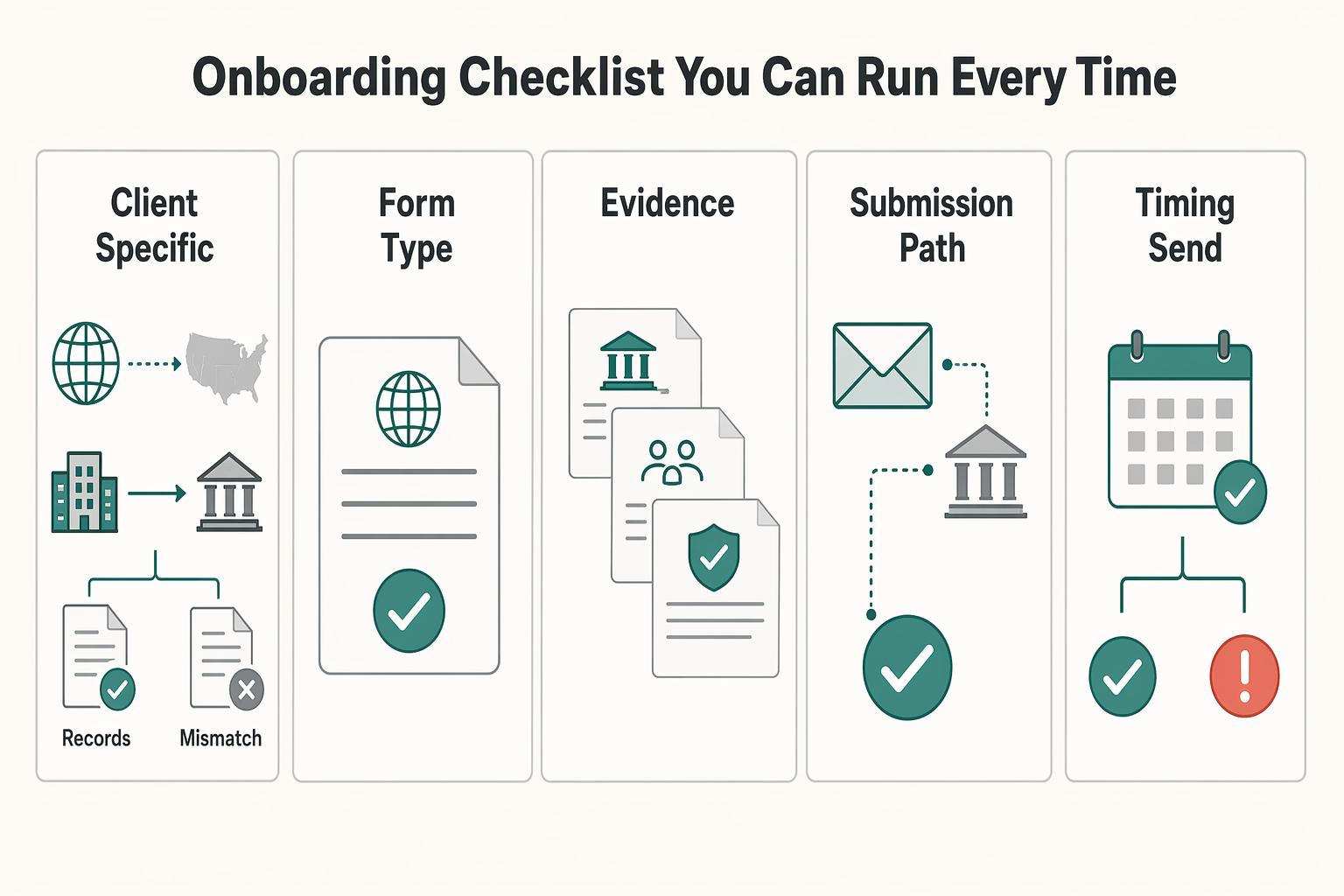
Start here: Form W-8BEN-E is documentation for a foreign entity, not an IRS filing. You send it to the U.S. payer or withholding agent so they can classify the payment and determine whether they may treat your company as a foreign beneficial owner.
How a UK Limited Company Files W-8BEN-E for US Client Payments
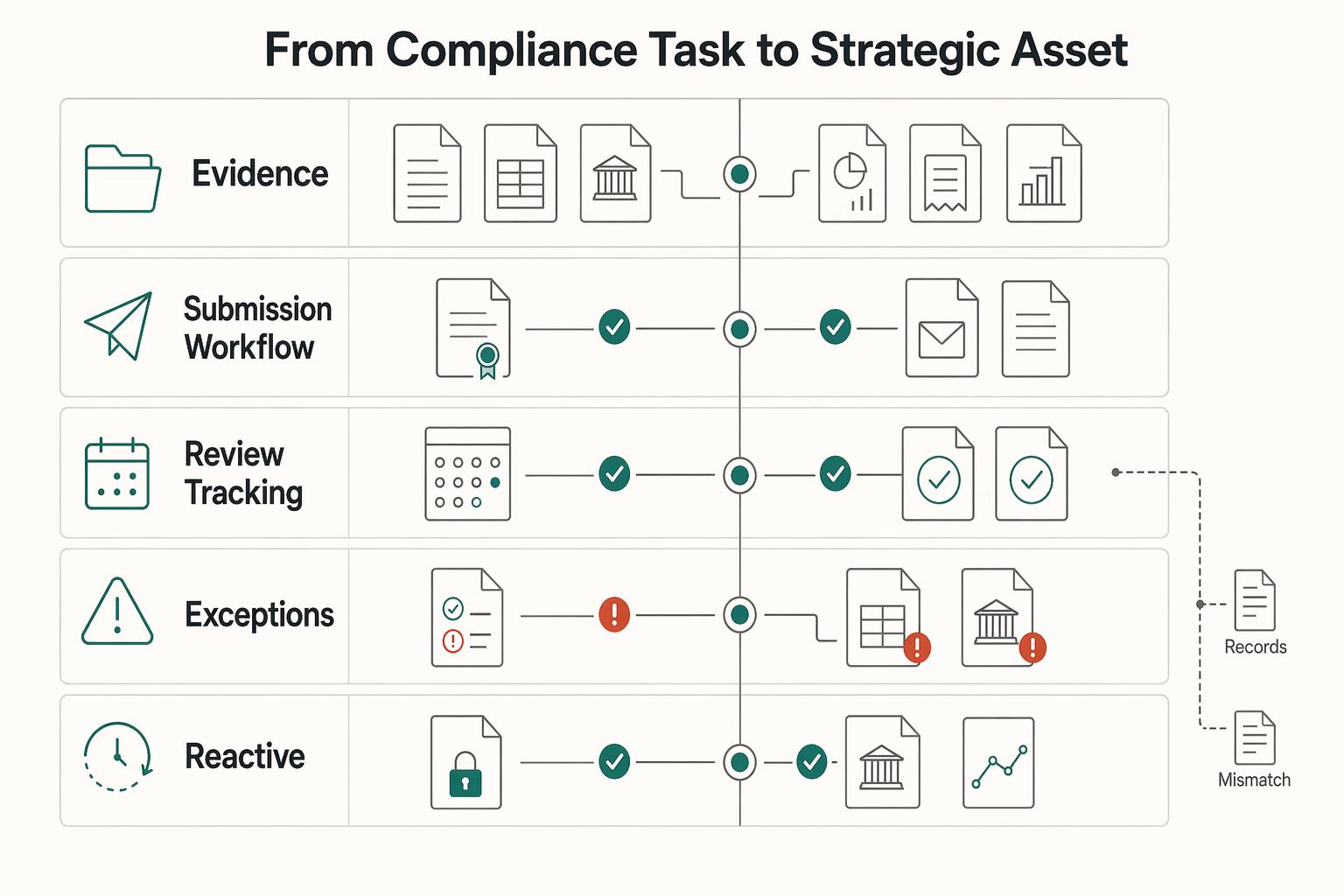
How to turn a mandatory compliance document into a practical shield against a 30% withholding tax while keeping payments moving.
How a UK Creative Director Can Invoice a US Client Through a UK LTD Company
Landing a major US client as a UK creative director trading through a limited company is a real step up. It also changes how you get paid. Cross-border payments tend to break in predictable places: unexpected withholding, invoices blocked by onboarding errors, and margin lost to transfer costs you only notice after the money lands.