

Quick Answer
Start with a three-part mix: Web Development as the core, SEO Specialist or Video Editing and Production as the growth lever, and AI support only where human review is already in place. The article’s evidence favors this sequence over single-skill bets, including the 109% year-over-year rise in AI-linked skills and consistent demand in core categories. Before scaling hiring, validate with your own inbound briefs, win rates, and revision load rather than social rankings alone.
If you are making staffing, training, or packaging decisions, a simple role list is not enough#
If you are making staffing, training, or packaging decisions, a simple role list is not enough. Popularity alone does not answer the real question behind top freelance skills 2026: which skills are durable, which are being reshaped by AI, and which only make sense when paired with adjacent services.
Three signals matter at the start:
- Stable demand
Research published on Feb 4, 2026 says several core categories have "remained consistent year over year," including full stack development and graphic design. That matters because stable demand is different from hype. A category that keeps showing up year after year is usually easier to plan around than a sharp spike with unclear staying power.
- AI is shifting work inside categories, not wiping them out
The same research reports that skills explicitly referencing AI grew 109% year over year, and AI video generation and editing rose +329%. Read that carefully. It supports the idea that AI-fluent execution is gaining demand fast, but it does not mean every legacy service is obsolete. In practice, a practical bet is often a core skill plus AI-assisted delivery, not a vague "AI" offer on its own.
- Skill turnover is real, so single-skill bets get riskier over time
The World Economic Forum says employers expect 39% of workers' core skills to change by 2030. That supports treating skill choice as a portfolio-style decision. You want a mix that can handle current demand and still adapt as tools, buyer expectations, and service boundaries keep moving.
All of this sits inside a larger labor shift. A 2025 workforce report says 28% of skilled knowledge workers now operate as freelancers or independent professionals, and freelancers generated $1.5 trillion in earnings in 2024. Deloitte frames strategic workforce planning as using data to align the work that needs to be done with the talent and automation available to do it. That is the right mindset here. You are not just choosing good skills. You are matching revenue opportunities to delivery capacity and automation reality.
Before you commit budget, validate marketplace signals against your own evidence pack. Platform data can show direction, and Fiverr's business trends index is built from millions of searches across the platform. But your hiring or training decision should also reflect live client asks, proposal volume, repeat request patterns, and where delivery quality currently breaks down.
A common failure mode is chasing the fastest-growing label, usually an AI-tagged one, without checking whether the team can scope it, deliver it consistently, or attach it to a broader service line. The sections that follow stay focused on that tradeoff: what to prioritize now, what pairs well, and where execution risk rises.
For a step-by-step walkthrough, see Future of Freelance Work in 2026 for Cross-Border Hiring Decisions.
Who This Skill List Is For and How to Judge It#
Use this as an allocation tool, not a salary leaderboard. It is for teams building or scaling service supply on a platform, agency, or marketplace, where the decision is how to hire, train, and bundle offers. If you want a quick "highest pay" pick from social content, this is not that list.
| Filter | Guidance |
|---|---|
| Demand signal | Confirm buyers are already asking for the work in channels similar to yours; marketplace categories and indexes are directional inputs, not final proof. |
| Automation risk | Separate work AI speeds up from work AI commoditizes; AI-labeled demand alone does not guarantee durable value. |
| Pricing power | Check whether the offer is drifting into commodity work or still commands pay for judgment, diagnosis, and accountability. |
| Delivery complexity | Favor skills your team can scope, quality-check, and deliver reliably without heavy rework or constant senior rescue. |
| Cross-sell potential | Prefer skills that unlock a next sale; hybrid combinations can outperform isolated one-off services. |
Start with grounded demand signals, then validate locally. Upwork's hiring lanes include Web developers, SEO experts, and AI & emerging tech. Jobbers (published 1 February 2026; last updated January 2026) says its index covers 127 distinct freelance skills across 8 major categories from 250,000+ job postings (Q3 2025 to Q1 2026), and also states its demand metrics are estimates that can vary by market.
Use those same five filters as a working decision frame:
- Demand signal
Confirm buyers are already asking for the work in channels similar to yours; marketplace categories and indexes are directional inputs, not final proof.
- Automation risk
Separate work AI speeds up from work AI commoditizes; AI-labeled demand alone does not guarantee durable value.
- Pricing power
Check whether the offer is drifting into commodity work or still commands pay for judgment, diagnosis, and accountability.
- Delivery complexity
Favor skills your team can scope, quality-check, and deliver reliably without heavy rework or constant senior rescue.
- Cross-sell potential
Prefer skills that lead to a next sale; hybrid combinations can outperform isolated one-off services.
Your main verification checkpoint is your own pipeline. Treat YouTube, LinkedIn, Reddit, and r/Freelancers as directional context, then verify against live inbound briefs, proposal win rates, repeat request patterns, and where delivery quality breaks.
Quick Comparison of the Best Skill Bets for 2026#
Short version: use Web Development as the revenue anchor, then add Cybersecurity or Business Consulting when you can handle a longer, proof-heavy sales cycle. As of the February 4, 2026 demand release, full-stack development and graphic design remained consistently strong year over year, and skills explicitly referencing AI grew 109% year over year. The risk and ramp calls below are operator judgments, not source-scored rankings.
| Skill | Best For | Key Pros | Key Cons | Automation Risk | Ramp Difficulty | Best First Use Case |
|---|---|---|---|---|---|---|
| Web Development | Teams that need clear scopes and repeat demand | Full-stack demand stayed consistently strong year over year. Easy to bundle with SEO and maintenance. | Generic builds face price pressure; weak scoping drives rework. Operator note: React/Node.js depth matters for custom logic, auth, and integrations; Webflow is often enough for brochure sites, campaign pages, and simple CMS builds. | Medium | Medium | Conversion-focused rebuild with analytics, speed fixes, and ongoing care |
| Graphic Design | Fast-turn creative supply and brand-adjacent upsells | Graphic design also remained consistently strong year over year. Useful for decks, ads, landing assets, and brand cleanup. | Basic asset work is easy to substitute, including AI-assisted output. Operator note: treat "AI Content Creator"-style asset volume as commoditized unless tied to a stronger system or strategy. | Medium to high for simple asset work | Low to medium | Sales deck plus landing-page creative kit |
| Video Editing and Production | Distribution-heavy clients that need output cadence | AI video generation and editing grew +329%, which is a clear demand signal. Strong add-on to social and content programs. | Template clipping, subtitles, and bulk repurposing can commoditize quickly; revision loops can erode margin. Operator note: "AI Content Creator" packaging is most exposed when sold as pure volume. | Medium to high for basic edits | Medium | Short-form repurposing tied to a weekly publishing calendar |
| SEO Specialist | Clients that need discoverability plus recurring optimization | Natural retainer structure and clear expansion into technical fixes and content ops. | Time-to-result can strain expectations. Operator note: "AI Content Creator" work is most commoditized when sold as post-count output instead of diagnosis, prioritization, and technical ownership. | Medium | Medium | Technical/content-gap audit followed by monthly optimization |
| Project Management | Multi-stakeholder work with delivery risk | Upwork reported 23% more interest in freelancers with project management skills (Dec 2025 report). Helps stabilize design/dev/content execution. | Harder to sell standalone unless delivery pain is already visible. Operator note: usually supports execution lanes (including React/Node/Webflow delivery) rather than replacing them. | Low to medium | Medium | Recover a delayed redesign or migration with single-owner delivery control |
| Cybersecurity | B2B clients with trust, compliance, and risk pressure | U.S. information security analyst roles are projected to grow 29% (2024-2034), with $124,910 median annual pay (2024). Often stronger pricing power and lower commoditization pressure. | Longer sales cycles, narrower talent pool, and heavier proof requirements. Operator note: not a Webflow/React substitute; it is a specialized lane. | Low | High | Security review with prioritized remediation plan |
| Prompt Engineering | Teams already shipping AI-assisted workflows | Visible live demand exists, including a sample of 327 prompt-engineering jobs on Upwork. Strongest when embedded in AI integration, QA, or tooling. | "Prompts-only" offers are easy to copy and hard to defend. Operator note: highest commoditization risk when positioned like generic AI content production. | High if sold alone; lower when embedded | Medium | Prompt library plus QA rules for support, research, or content ops |
| Business Consulting | Higher-trust advisory work tied to economic outcomes | Upwork lists management consulting among in-demand skills. Strong pricing when scope is diagnosis, prioritization, and outcome ownership. | Harder to close without evidence; vague scope increases churn risk. Operator note: this is judgment-led work, not a substitute for execution depth in React/Node/Webflow lanes. | Low | High | Offer audit, pricing cleanup, and execution roadmap |
Before you add a lane, review your last 15-20 inbound briefs and proposals, and prioritize the problems clients already describe in their own words. If you cannot show a sample scope, a QA checkpoint, and one before/after artifact, you are probably too early to scale hiring in that lane.
- Fast revenue mix: Web Development + SEO Specialist + Video Editing and Production. Tradeoff: faster time-to-cash and clearer upsells, but higher coordination load and more exposure to commodity pricing in generic builds or bulk content work.
- Defensible margin mix: Business Consulting + Cybersecurity + selective Graphic Design tied to brand systems. Tradeoff: stronger judgment-based pricing and lower automation exposure, but slower closes, higher proof burden, and less early leverage from junior delivery.
For course selection, use The Best Online Courses for Freelancers to match training time to the skill bet you are making.
Web Development Remains the Revenue Anchor#
If you need one service line to stabilize revenue, Web Development is still the clearest anchor. Upwork's February 4, 2026 demand release says demand for top marketplace skills has remained consistently strong year over year, including coding. The practical upside is simple: buyers can usually see scope, delivery, and commercial value early.
Why it keeps winning#
The edge is not guaranteed high margins on every build. It is buyer clarity: a rebuild, landing page set, CMS migration, feature extension, or performance cleanup is usually easy to understand, price, staff, and expand after phase one.
Web delivery also links naturally to adjacent work:
- SEO demand is active; the Upwork SEO jobs page showed 3,153 open jobs at crawl time.
- Upwork's January 8, 2026 monthly hiring report showed 23% more interest in freelancers with project management skills.
That makes it easier to extend build work into ongoing planning, coordination, and execution ownership.
When React and Node.js actually matter#
React and Node.js matter most when the brief goes beyond publishing pages. React is component-based UI, and Node.js is positioned for servers and web apps. Sell that depth when the project includes app logic, authenticated areas, custom integrations, or backend behavior.
Use a simple checkpoint: if the brief does not clearly require state, user roles, data handling, or custom server behavior, do not force a full-stack build. Webflow is explicitly positioned as responsive site creation without writing code, and for some projects that is enough. Pushing custom development where it is unnecessary usually slows delivery and increases pricing pressure.
The recurring scope to chase after the build#
Start with a conversion-focused rebuild, then define recurring scope clearly:
- Performance improvement on slow or high-dropoff pages
- Analytics and tracking cleanup so impact is visible
- Maintenance ownership for updates, QA, and small enhancements
Keep the proof pack simple: before-and-after pages, a short scope doc, a launch QA checklist, and one analytics view tied to post-launch measurement. Without that proof layer, clients can more easily treat the work as one-off commodity output.
For developer tooling, see Best Code Editors for Freelance Web Developers in 2026.
SEO and Video Editing Are the Fastest Demand Multipliers#
If you need faster pipeline impact after the offer is live, this pairing is usually the most practical: use SEO to improve findability, and use video editing to improve attention and response. As a decision rule, start with SEO when discovery is weak. Start with Video Editing and Production when traffic or audience reach already exists but response is weak.
| Skill | Best first trigger | Ramp speed | Main dependency | Volatility risk |
|---|---|---|---|---|
| SEO Specialist | People are not finding the offer | Often steady, compounding | Search behavior + page language match | Lower day-to-day swings, but weak intent mapping stalls results |
| Video Editing and Production | Attention exists but watch quality or response is weak | Often faster to launch from existing assets | Channel distribution systems | Higher swings when engagement or topic demand shifts on YouTube/LinkedIn |
- SEO Specialist
This is usually the cleaner first move when discovery is the bottleneck. Google's guidance is direct: use the words people use to search. If page language uses internal jargon instead of buyer language, publishing more pages usually adds volume, not discovery. A practical checkpoint is to review high-value pages against real buyer phrasing, then document what changed in page copy and what moved in discovery versus leads or conversions.
- Video Editing and Production
This is often the faster lever when a client already has material and some audience attention. In 2025, short-form video was reported among the highest-ROI formats, and video marketing is mainstream (89% of businesses use it), so editing and production demand is commercially meaningful. The tradeoff is platform dependence: YouTube ranking uses engagement signals like average view duration and average percentage viewed, topic appeal can change over time, and competition is heavy (over 500 hours uploaded per minute). LinkedIn is also relevance-first and not designed for virality, so do not position short-form as guaranteed reach. If monetization matters, some YouTube decisions can take up to 24 hours.
- The combined offer
If you package this, a strong offer is keyword intent mapping + short-form repurposing + monthly reporting, with one owner accountable across all three. It is especially useful when the client already has raw material (webinars, demos, podcasts, sales calls) and needs both better discovery and better response. Keep one narrative from query to clip to CTA, and split reporting into discovery metrics and engagement metrics so you can see whether the problem is visibility, watch quality, or conversion.
Related: Payment Fraud Patterns: The Top 10 Scams Targeting Freelancers and Platforms.
Prompt Engineering and AI Content Creation Win When Tied to Delivery#
Use these skills to improve delivery you already sell and review, not as a standalone AI offer. Prompt Engineering and AI Content Creator work best when they increase speed and capacity inside real execution lanes like Web Development, Graphic Design, or SEO Specialist operations.
Demand is strong, but defensibility still depends on output quality. Upwork's February 4, 2026 release says skills tied to applying AI within existing roles grew 109% year over year, and demand for AI-enabled skills more than doubled while hiring for human expertise stayed strong. Buyers pay for faster output when it is reliable, on-brief, and reviewed by someone with domain context.
- Prompt Engineering
Prompt engineering is designing and optimizing prompts to guide model responses. Commercially, it matters when it produces usable client deliverables faster: better first drafts, clearer briefs, stronger variants, and cleaner handoffs into human review. The practical hiring test is execution proof, not AI fluency: versioned prompts, source inputs, and final human edits. Without context and review, plausible output can still miss search intent, brand voice, or technical accuracy.
- AI Content Creator
Treat this as a capacity multiplier, not a premium service by itself. A practical workflow is repeatable: one source brief in, multiple draft angles out, then human review for messaging, compliance, and brand consistency. OpenAI guidance supports draft-then-review because model outputs can be incorrect or misleading, and policy flags high-stakes automation without human review in sensitive areas. There is real throughput upside, but it is context-dependent: an NBER study of 5,179 customer-support agents found a 14% average productivity lift with tool access. That is strong enough to test in existing delivery lines, not enough to promise fixed gains.
The common failure mode is selling AI content alone, publishing too fast, and ending up with generic work that is hard to defend on price. A stronger evidence pack is simple: prompt set, approved source materials, reviewer checklist, and before/after samples showing what the human changed and why.
Cybersecurity and Machine Learning Engineers Offer Premium Upside With Longer Ramp#
Cybersecurity and Machine Learning Engineers can deliver premium upside, but they usually require more proof before deals move. If you need near-term revenue, do not build your entire offer on these lanes first; pair them with a faster-cycle service line so you are not dependent on slower qualification.
The upside is real, and so is the entry cost: both lanes need tighter scope, stronger evidence, and a buyer who can execute after delivery.
- Cybersecurity
This fits best when the client has real exposure, supplier review pressure, or compliance requirements that need senior sign-off. The demand signal is strong: the World Economic Forum's Future of Jobs Report 2025 (published 7 January 2025) lists networks and cybersecurity among the top three fastest-growing skill clusters through 2030. In the U.S., BLS projects 29% growth for information security analysts from 2024 to 2034, with a median annual wage of $124,910 (May 2024).
Scarcity supports pricing power in this lane. ISC2 reports 5.5 million people active in cyber worldwide, alongside a 4.8 million workforce gap that increased by 19%.
Your checkpoint is scope clarity before pricing: confirm environment, assets in scope, exact deliverable, and remediation owner. Treat vague audit requests with no boundary, due-diligence context, or internal owner as a red flag. NIST is explicit that supplier cyber due diligence is a minimum baseline in acquisition risk management. If the buyer is in a defense supply chain, check certification sequencing early: DLA states suppliers must be certified in order.
- Machine Learning Engineers
This lane works best when the buyer already has usable data, a defined use case, and an internal owner for deployment. WEF also flags AI and big data as a top growth area. As a market proxy, BLS shows data scientist employment projected to grow 34% from 2024 to 2034, with a median annual wage of $112,590 (May 2024). That is not the same title as machine learning engineer, but it is a relevant adjacent signal for ML demand.
The ramp risk is usually qualification, not model code. Before you commit, confirm the business decision the model will support, a sample of available data, the metric to beat, and an evaluation note tied to a baseline.
The common failure mode is winning a prototype that cannot reach production because data quality, adoption path, or ownership is missing.
For using video as proof of skill, see How to Create a YouTube Channel to Showcase Your Freelance Skills.
Brand Identity Systems and Packaging Design Stay Defensible Against AI#
If you want a more defensible creative offer than generic production, prioritize Brand Identity Systems and Packaging Design. What holds up here is human judgment: deciding what the brand should mean, how buyers will interpret it, and how to defend those choices in context.
Basic asset production is easier to speed up and substitute. These two lanes hold up better when the client needs strategy, interpretation, and clear decision logic, not just output volume.
- Brand Identity Systems
This is the stronger pick when a client needs positioning, consistency, and trust across touchpoints. Branding is not just logos and colors, and strategy is the long-term plan for creating meaning in the audience's mind. As one brand strategist puts it: "AI is an extraordinary tool for branding, but it is a terrible replacement for brand strategy."
The commercial signal is still there: research published Feb 4, 2026 says businesses continue hiring human talent at scale, and nearly one in two leaders would pay a premium for creativity and innovation. Your checkpoint is brief quality: target audience, competitors, current perception, and where the identity will be used. Without that, projects usually slide into subjective revision loops.
- Packaging Design
Packaging is most defensible when it affects perception, trust, and purchase behavior, not just layout. The core point is that packaging communicates in a psychological language that drives connection, so interpretation quality matters as much as execution speed.
The main risk is proving value. Bring before/after context, launch framing, or a simple test plan, because buyers often overfocus on surface style and underweight strategy. AI can accelerate production, but packaging outcomes still depend on human choices about meaning, audience fit, and tradeoffs.
Use How to Create Feedback Loops That Improve Your Freelance Skills to turn skill investment into measurable client outcomes.
Choose a Skill Portfolio Not a Single Skill#
Do not bet on one "best" skill. Build a portfolio with one delivery core, one growth lever, and one defensible specialty, then test it against ramp speed, pricing power, and automation exposure.
| Role | Guidance | Checkpoint |
|---|---|---|
| Delivery core | Pick work you can sell, scope, and verify quickly. | Can you show recent time to first draft, revision load, and close rate by service line? |
| Growth lever | Add an adjacent skill that expands value in work clients already buy. | Are clients already asking for adjacent outcomes like optimization, distribution, reporting, or faster variants? |
| Defensible specialty | Invest in work that depends on judgment, trust, and decision accountability, not just output volume. | Can you show evidence that your judgment changed the business outcome, not just that you shipped deliverables? |
- Delivery core
Pick work you can sell, scope, and verify quickly. Core categories have remained consistent year over year, so reliability still comes first. Checkpoint: can you show recent time to first draft, revision load, and close rate by service line?
- Growth lever
Add an adjacent skill that expands value in work clients already buy. AI-linked skills grew 109% year over year, which supports a core-plus-AI layering strategy instead of a full reposition. Checkpoint: are clients already asking for adjacent outcomes like optimization, distribution, reporting, or faster variants?
- Defensible specialty
Invest in work that depends on judgment, trust, and decision accountability, not just output volume. Nearly one in two leaders say they would pay a premium for creativity and innovation, which is a practical pricing-power signal. Checkpoint: can you show evidence that your judgment changed the business outcome, not just that you shipped deliverables?
Before you reallocate hiring or training budget, pressure-test the mix on the same three checks: ramp speed, pricing power, and automation risk. That risk check is still necessary because employers expect 39% of workers' core skills to change by 2030, even as the shift points to recomposition rather than broad replacement.
A quarterly review can help, but it is not a rule. Keep decisions tied to observed performance in your own funnel: conversion, expansion revenue, revision burden, and renewals.
For the buyer-side view of trust and evidence, see How to Compare Freelance Hiring Paths by Trust, Evidence, and Control in 2026.
Frequently Asked Questions
What are the top freelance skills in 2026 if I need revenue in under one quarter?
If speed matters, start with skills that already show stable marketplace demand and clear deliverables: full stack development, data analytics, graphic design, and in many cases video editing tied to distribution. The February 4, 2026 release says those core categories have remained consistently strong year over year, which is a better near-term signal than a generic list. The red flag is choosing a category that sounds hot but needs heavy trust-building before a client can buy.
Which freelance skills are hardest to replace with AI in real client engagements?
The harder work to replace is the part where someone has to interpret context, make tradeoffs, and own the recommendation in front of the client. That is why specialties that require domain judgment and accountability tend to stay more defensible than pure output volume, even while the platform says human and AI collaboration can boost project completion by up to 70%. AI can speed production, but it does not remove the need for judgment when a decision carries business risk.
Which path is better for margin growth: Web Development plus SEO Specialist, or Prompt Engineering plus AI Content Creator?
There is no universal winner for margin growth. Web Development plus SEO can support expansion revenue from the same client through optimization, analytics, and ongoing changes. Prompt Engineering plus AI Content Creator can improve margin too, especially since skills tied to applying AI within existing roles grew 109% year over year, but only when you already have editorial controls and domain context. The failure mode is selling AI content as a standalone offer, then losing time to rewrites, quality issues, or pricing pressure.
How should beginners vs experienced operators build a skill stack without overextending?
If you are early, build one delivery core and one adjacent proof skill, not four partial specialties. If you are experienced, add one margin booster to a service you already sell well, which is why AI support skills work better as an attachment than as your whole positioning. A useful checkpoint is simple: can you show a brief, a deliverable, and a before-and-after result for the first skill before you add the next one?
Are Cybersecurity and Machine Learning Engineers worth the longer ramp for smaller teams?
They can be, but usually not as your first bet if cash flow is tight. BLS projects 29% growth for information security analysts and 34% for data scientists from 2024 to 2034, which supports long-term demand, but these can be higher-ramp categories that often require stronger proof before buyers commit. If you go this route, pair it with a shorter-cycle service line so you are not waiting on one complex deal to fund the quarter.
How do I validate demand beyond listicles from Simplilearn, LinkedIn, or YouTube?
Use those lists as prompts, not proof. Check live marketplace signals such as platform demand, then compare them against your own pipeline, outbound replies, and proposal close patterns. That matters more than any headline ranking because employers also expect 39% of workers’ core skills to change by 2030. One practical evidence pack is recent job posts, repeated deliverables, buyer objections, and win-loss notes from your own sales motion.
Try a related tool
Researched and edited by the Gruv editorial team. Gruv builds cross-border billing, payouts, and finance-operations software for global businesses.
Sources
Includes 5 external sources outside the trusted-domain allowlist.
- bls.gov/ooh/computer-and-information-technology/info...trusted
- bls.gov/ooh/math/data-scientists.htmtrusted
- csrc.nist.gov/pubs/sp/1326/ipdtrusted
- cnbc.com/2026/02/09/upwork-fastest-growing-in-demand-...external
- deloitte.com/us/en/insights/topics/talent/future-of-workf...external
- isc2.org/Insights/2024/10/Cybersecurity-Workforce-INS...external
- jobbers.io/the-freelance-skills-demand-index-2026external
- nber.org/papers/w31161external
Educational content only. Not legal, tax, or financial advice.
Related Posts

The Best Online Courses for Freelancers Building a Stronger Business
If you are already earning well from your craft, your next course should reduce business risk, not teach beginner tactics. The useful filter is simple: map the exposures that can actually hurt your business, then buy learning that closes those gaps faster than you could on your own.
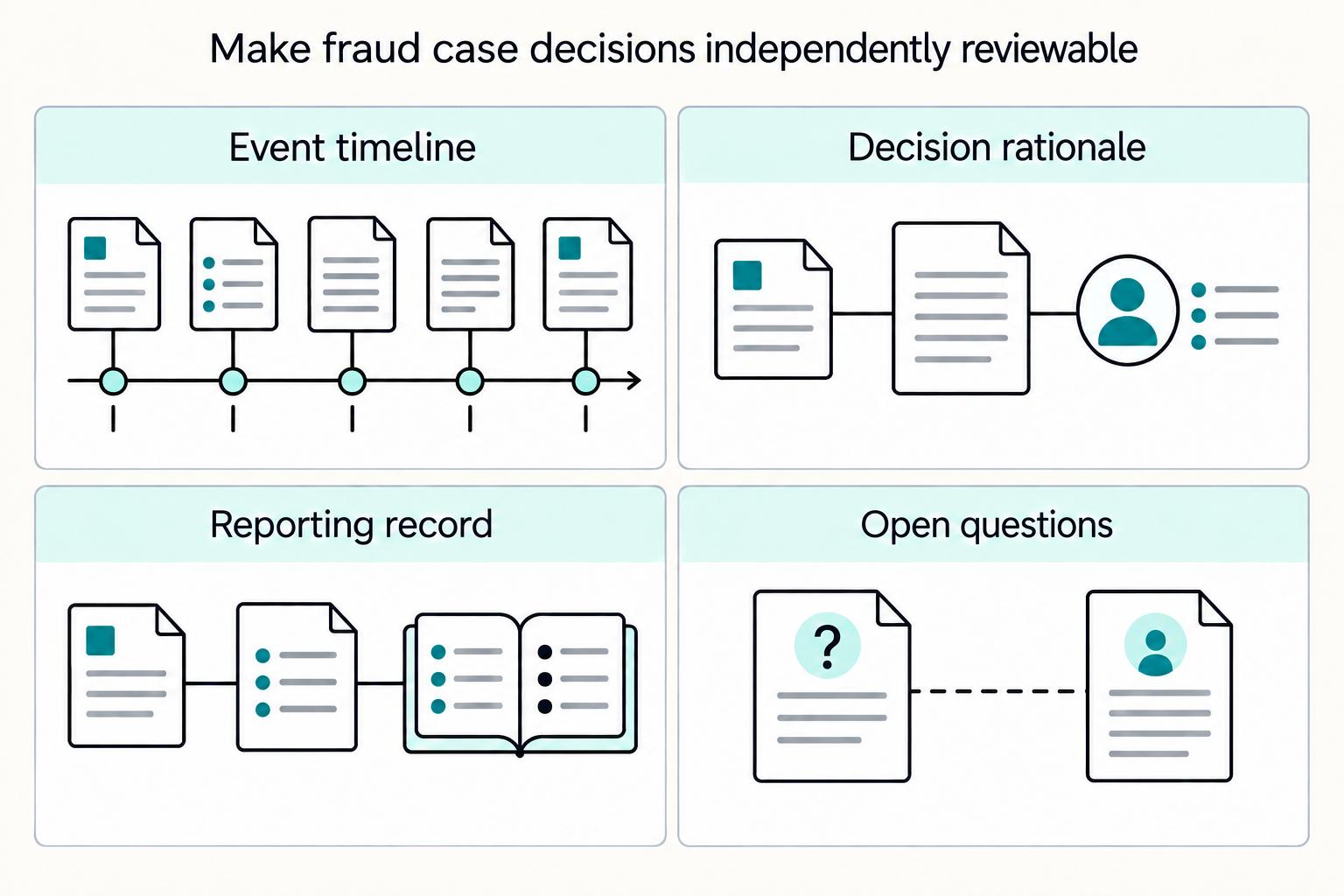
Top 10 Payment Fraud Patterns Hitting Freelancer and Platform Payouts
This is a decision list, not a generic warning-signs article. It helps you decide which pattern in your payout queue needs a payout hold, which belongs in manual review, and which should move straight to fraud escalation because the loss or legal exposure is already too high.

Stop Freelance Profit Margin Erosion Before It Hits Cashflow
Revenue can hold steady while the business underneath it gets weaker. What comes in matters, but what you keep after the work is delivered is the clearer signal of health.