
Quick Answer
Yes - outsourcing can reduce internal licensing effort, but only if your team verifies ownership boundaries in writing and tests them against real operations. The article’s recommendation is to compare full MoR, hybrid, and full in-house paths using a responsibility map, jurisdiction memos, and a go-live evidence gate. It does not treat $500K as guaranteed; it treats savings as a scenario to validate with partner fees, legal review, recurring renewals, and control quality.
Why Platforms Outsource Money Transmission to a MoR#
If you are evaluating outsource money transmission MoR licensing savings, treat it as an operating model decision rather than a vendor feature comparison. A Merchant of Record, or MoR, can change who carries parts of the licensing and compliance load and may affect how quickly you can launch, while still leaving your team with questions to answer when finance, auditors, or regulators ask harder questions later.
That distinction matters because licensing work is rarely a one-and-done filing. Even outside the platform context, licensing materials show a staged process with steps such as prefiling, filing, review, decision, and organization. In the OCC charters manual, the "Application Process" section starts at page 33, and later sections move into review and decision. That does not determine every platform's MoR obligations, but it is a useful reality check. The cost is often in sequencing, evidence, and ownership, not just application fees.
Here are the three paths this article compares:
- Full MoR outsourcing
You rely on a MoR partner for the operating model from day one. The appeal is speed. You may avoid standing up the full internal licensing motion early, but you also become more dependent on the partner's coverage, policies, and documentation standards.
- Hybrid rollout
You use MoR where speed matters most and build selective in-house capability where control matters most. This can help you learn faster and avoid an all-at-once build, but it also gives you two control surfaces to define, verify, and defend.
- Full in-house licensing
You own the licensing path, compliance posture, and operational proof end to end. The benefit is control, but so is the weight of execution. If licensing is a staged process with review and decision gates, every delay, missing artifact, and resubmission is yours to absorb.
The point of this comparison is not to prove that outsourcing always saves $500K. It is to help you test that claim as a scenario. Some costs move off your books, some stay with you, and some show up later in different forms, such as legal review, internal controls work, partner oversight, or rework when ownership was unclear at launch.
Before you get attached to any savings number, ask for a line-by-line responsibility map. You need to know who owns approvals, who produces evidence when questions arise, and which obligations stay with your team even after outsourcing. A common failure mode is building a business case from headline claims and generic outsourcing language, then discovering the cited rule was only a proposed rule or was not a final legal notice for your use case. If the ownership map is vague, the savings model is not ready for a go or no-go decision.
Who this list is for and how to pick a path#
Use the ownership map as your first filter. This list is most useful if you need a compliant launch path while responsibility boundaries are still being defined.
- Best fit: teams still sorting scope across states
If your immediate priority is launch speed with lower internal legal and ops lift, start MoR-first. Treat it as a sequencing choice, not guaranteed cost removal: you are deferring some internal buildout while you clarify what your team must still own.
- Probably not for you: teams with a mature compliance bench
If your team already runs recurring filing calendars and audit prep with clear ownership, evaluate hybrid or in-house earlier. A practical checkpoint is whether you can already produce review-ready evidence with named owners, dated approvals, and clear calculation logic. FinCEN's FBAR timing split is a good example of this discipline: some filers remain due April 15, 2026, while certain signature-authority-only filers are extended to April 15, 2027.
- Tie-breaker: evidence quality
If options look close, choose the path your team can evidence cleanly today. If you cannot show values converted to U.S. dollars, rounded up to the next whole dollar where required, and tracked separately by account, do not take on more direct ownership yet under Treasury-prescribed reporting rules.
Related: A Deep Dive into Florida's Money Transmitter License Rules. If you want a quick next step for "outsource money transmission mor licensing savings," try the free invoice generator.
What in-house licensing really requires before first scale#
In-house ownership is not just an initial filing exercise. Before you scale, you need repeatable controls for classification decisions, filing data quality, and deadline ownership so compliance does not depend on ad hoc judgment in each cycle.
| Area | Operational rule | Article detail |
|---|---|---|
| Evidence quality | Treat as a launch gate | Amounts are recorded in U.S. dollars and rounded up to the next whole dollar; $15,265.25 becomes $15,266; negative values are entered as 0 |
| Reproducible controls | Same result every time | Show exactly how values were converted, rounded, and recorded from system output to reviewer notes |
| Deadline calendar | Role-based and scope-specific | Many FBAR filers remain due April 15, 2026, while a narrower group with signature authority over, but no financial interest in certain accounts is extended to April 15, 2027 |
| Recurring operations | Budget beyond first-pass setup | If the team cannot maintain rule-by-rule execution across cycles, first-scale in-house ownership becomes a capacity problem |
- Treat evidence quality as a launch gate, not cleanup work
Under Treasury-facing reporting mechanics, precision is operational, not optional. For FBAR-related reporting, amounts are recorded in U.S. dollars and rounded up to the next whole dollar, so $15,265.25 becomes $15,266. If a computed value is negative, you enter 0, and foreign currency conversion follows the Treasury rate workflow.
- Design controls that reproduce the same result every time
Your team should be able to show, from system output to reviewer notes, exactly how values were converted, rounded, and recorded. If that logic cannot be reproduced quickly and consistently, direct in-house ownership will create review friction early.
- Run a role-based deadline calendar with explicit scope
Calendar discipline has to handle category splits correctly. FinCEN's notice keeps many FBAR filers at April 15, 2026, while a narrower group with signature authority over, but no financial interest in certain accounts is extended to April 15, 2027. If owners and evidence are not mapped to those distinctions, scaling in-house will outpace your controls.
- Budget for recurring operations, not just first-pass setup
The common miss is planning for kickoff work but underestimating ongoing process load. If your team cannot maintain rule-by-rule execution across cycles, first-scale in-house ownership becomes a capacity problem, not a paperwork problem.
Best option for speed and lowest internal licensing burden is full MoR outsourcing#
Treat full Merchant of Record (MoR) outsourcing as a speed option only after you verify the legal and operational boundaries in writing. What is established here is a verification standard, not blanket claims about licensing burden reduction, staffing savings, or faster launch outcomes.
| Check | What to get | Article detail |
|---|---|---|
| Ownership clarity | Written responsibility matrix | Shows who contracts with the customer, who receives funds, who handles refunds/disputes, and where your platform still controls payment logic |
| Contract source | Executed terms and explicit scope | The SEC exhibit titled "WALMART MONEYCARD PROGRAM AGREEMENT" dated May 27, 2010 is cited as a reminder to anchor decisions in agreement detail |
| Coverage schedule | Jurisdiction-by-jurisdiction and flow-by-flow list | Tie coverage to named entities and contract terms so you can assess what is actually covered |
| Legal reference check | Official-source verification | FederalRegister.gov says its web version is not an official legal edition; verify entries such as the FinCEN rule dated 09/30/2022 and the FTC rule dated 11/12/2024 |
- Start with ownership clarity, not sales language
Require a written responsibility matrix that shows who contracts with the customer, who receives funds, who handles refunds and disputes, and where your platform still controls payment logic. If that map is unclear, the model is not decision-ready.
- Use the contract as the source of truth
Outsourced financial programs are defined by agreement detail, not marketing pages. The SEC exhibit titled "WALMART MONEYCARD PROGRAM AGREEMENT" (dated May 27, 2010) is a practical reminder to anchor decisions in executed terms and explicit scope.
- Demand explicit coverage schedules
Before deciding, get a jurisdiction-by-jurisdiction and flow-by-flow coverage list tied to named entities and contract terms. Without that schedule, you cannot reliably assess what is actually covered.
- Verify legal references against official sources
FederalRegister.gov says its web version is not an official legal edition and should be verified against official editions for legal research, including entries such as the FinCEN rule dated 09/30/2022 and the FTC rule dated 11/12/2024. Apply the same standard to any MoR recommendation: no verified authority, no decision-ready package.
Choose full MoR outsourcing only when counsel-backed role analysis, contract ownership boundaries, and usable coverage schedules are complete and understood internally.
For a step-by-step walkthrough, see MoR vs. PayFac vs. Marketplace Model for Platform Teams.
Best option for balanced control is a hybrid MoR plus selective internal licensing#
If full outsourcing feels too restrictive but full ownership still looks premature, a hybrid Merchant of Record (MoR) model can be a workable middle path.
- Best fit is a clearly scoped split you can operate
Hybrid is most workable when you can define, in writing, which flows stay under MoR coverage and which flows your team owns directly. The goal is focus: avoid trying to stand up every control for every flow at once.
- The upside is faster operational learning in a bounded scope
This model lets your team build direct operating muscle in a limited slice while MoR coverage continues elsewhere. That only helps if you treat it as an execution program with explicit ownership, not just a commercial compromise.
- The main risk is ownership confusion
Hybrid breaks down when teams cannot state, per flow, which entity contracts with the customer, which entity receives funds, and who owns disputes, recordkeeping, and escalation. Keep a state-and-flow matrix, contract map, and control inventory so reviewers can verify MoR-owned versus internally owned controls without relying on memory.
- Verification standards must stay high
Apply the same source discipline used elsewhere in this article. FederalRegister.gov says its web version is not an official legal edition, so decisions that affect your operating model should be verified against official materials; apply the same rigor to any FinCEN or BSA-related analysis in your package.
Choose hybrid only when you can show clean control boundaries, a usable evidence pack, and named owners for each covered flow.
Best option for maximum control is full in-house licensing ownership#
Full in-house licensing is the highest-control path only if leadership is ready to fund permanent compliance and legal operations, not just initial filings.
- Best fit is sustained volume plus long-term ownership
This path fits teams that can carry ongoing licensing and compliance work as an operating function, not a one-time project. You should treat it as a permanent responsibility with named owners and executive attention after launch.
- What you gain is direct ownership of the posture
Your entity owns the compliance posture, recordkeeping approach, and escalation decisions end to end. That can make accountability clearer internally because the tradeoffs, controls, and documentation all sit with your team.
- What makes it hard is the layered compliance load
Operating a money transmitter business involves complicated license compliance at both federal and state levels, and the definition of money transmission varies by state. Counties, cities, and towns may also impose their own rules, so a state-only view can be incomplete. If counsel determines your model falls under Money Services Business expectations, handle Department of the Treasury registration as part of core planning.
- The biggest execution risk is maintenance after approvals
Renewal dates, fees, and required documents are time-consuming but critical, and this is where weak ownership usually shows first. Before go-live, require a practical evidence pack: license inventory, control owners, renewal calendar, required document list, and a state-by-state operating map for your model.
If that evidence pack is thin, stay with MoR or hybrid longer. Full ownership makes sense when your company wants the ongoing compliance burden as much as the control.
For a state-level example, see A Deep Dive into California's Money Transmitter License Requirements.
Side-by-side comparison of the three options#
Use this as a decision framework, not a final verdict. Treat speed, control, and burden as hypotheses until your team produces evidence for ownership, filings, and ongoing operations.
| Option | Best for | Launch speed | Internal team load | Control level | Recurring compliance burden | Key risks | Typical failure mode |
|---|---|---|---|---|---|---|---|
| Full MoR outsourcing | Teams prioritizing faster execution with partner-led operations | Often the fastest path in planning models (validate in your case) | Usually lower direct load, plus ongoing vendor oversight | Usually lower direct control | Usually lower direct burden on your team, but contract, reconciliation, and exception handling still need owners | Partner dependency, product constraints, weak visibility into underlying posture | Team treats outsourced as hands-off and cannot produce an internal evidence pack during audit, finance review, or partner escalation |
| Hybrid MoR plus selective internal licensing | Teams with concentrated corridors and capacity to run split ownership | Often medium (validate by market and flow) | Medium to high, because two models operate at once | Medium to high in selected areas | Mixed burden across partner and internal lanes | Boundary confusion, duplicate controls, migration mistakes | No one can clearly name ownership for MSB analysis, FinCEN Form 107 review, NMLS work, renewal tracking, or state artifacts |
| Full in-house licensing | Mature teams willing to own long-term operations | Often the slowest path in planning models (validate in your case) | Highest | Highest | Highest, because federal and state obligations stay internal | Underestimating maintenance, staffing, and state-by-state variation | Initial approvals are treated as done-state, then recurring filings, document refreshes, and control evidence drift |
| Jurisdictional variance | Any model spanning multiple states | Not a speed score; this is a scoping and evidence issue | Requires legal/compliance review in every model | Varies by model and flow | Varies by state and product structure | Treating California, Florida, and Montana as interchangeable | Expansion proceeds without state-by-state memos showing where the model changes and where no-state-license assumptions were verified |
| Unknowns you still need to prove | Any team claiming material savings | Not applicable | Front-loaded diligence | Not applicable | Not applicable | Building a business case on assumptions | Savings claims are approved before evidence exists on filings, renewals, partner fees, legal spend, internal headcount, and artifacts (for example surety bond and financial statements where applicable) |
A few concrete items should be explicitly mapped to owners before you claim savings: MSB analysis, FinCEN Form 107 applicability review, NMLS activity, and state artifacts such as surety bond and financial statements. Those are checkpoints to verify, not proof that each item applies to your exact model.
The jurisdiction row is the common overconfidence point. Treat that comparison as a required validation task with short state memos for each priority market.
FinCEN materials also show why deadline monitoring needs an owner. FBAR resources include date-specific notices (including 10/11/2024), with a further extension to April 15, 2027 for certain filers while other obligations remained due April 15, 2026. That is not proof of a money-transmitter duty for your model, but it is a concrete reminder not to hard-code compliance calendars without ongoing review.
Before approving a savings claim, require an evidence pack with:
- A responsibility map for MSB analysis, FinCEN Form 107 review, NMLS work, renewal tracking, and document retention
- State memos for California, Florida, Montana, and other priority markets
- A cost sheet covering partner fees, outside counsel, internal headcount, and recurring artifacts
Recommendation matrix (working heuristic, pending evidence):
- If speed > control, choose full MoR.
- If control > speed, choose full in-house ownership.
- If constraints are mixed, choose hybrid only after boundary ownership is documented.
Related reading: How to Have a Healthy Money Conversation with Your Partner.
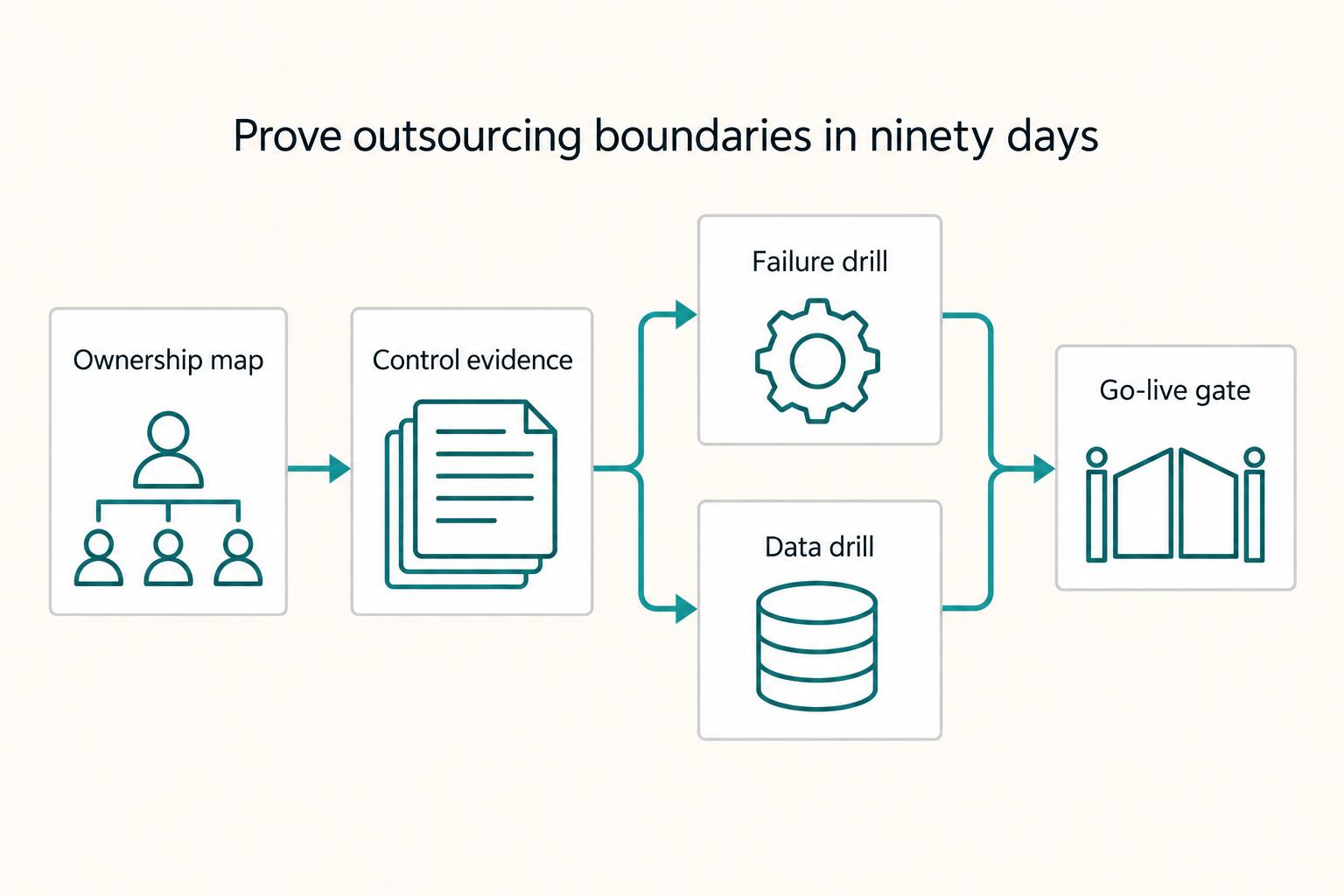
90-day implementation checkpoints and evidence pack#
Your first 90 days should end with a hard go/no-go decision based on testable ownership and evidence, not optimism.
| Period | Focus | Article detail |
|---|---|---|
| Days 1 to 30 | Lock boundaries and owners | Write a short boundary memo that names who owns each compliance decision, artifact, and escalation path across legal, compliance, finance, ops, and engineering |
| Days 31 to 60 | Build an evidence pack you can actually defend | Keep ownership maps, control narratives, renewal/deadline tracking, escalation paths, and reproducible reconciliation exports live |
| Days 61 to 90 | Pressure-test failures with real data | Run a failure drill and a data drill; FinCEN XML Schema 2.0 guidance warns submissions can be rejected when required elements are missing |
| Go-live gate | Require an end-to-end test | Do not approve expansion until compliance ownership, data evidence, and operational handoffs work end to end in a test |
- Days 1 to 30: lock boundaries and owners.
Write a short boundary memo that names who owns each compliance decision, artifact, and escalation path across legal, compliance, finance, ops, and engineering. If teams give different answers about ownership or handoffs, the model is not ready.
- Days 31 to 60: build an evidence pack you can actually defend.
Build a live artifact pack with ownership maps, control narratives, renewal and deadline tracking, escalation paths, and reproducible reconciliation exports. Keep deadline monitoring active: FinCEN notes show timing can change for specific groups because rulemaking may not be finalized, including a November 20, 2024 notice tied to an extension to April 15, 2027 for a specific signature-authority FBAR group, while other FBAR obligations remained April 15, 2026.
- Days 61 to 90: pressure-test failures with real data.
Run a failure drill and a data drill using realistic scenarios from your workflow, then verify your evidence can be produced without a scramble. At the field level, confirm required elements are always present (FinCEN XML Schema 2.0 guidance warns submissions can be rejected when required elements are missing), and confirm calculation rules are explicit (for example, whole-dollar rounding such as $15,265.25 to $15,266).
- Set and enforce the go-live gate.
Do not approve expansion until compliance ownership, data evidence, and operational handoffs work end to end in a test. If any team says "we handle that" but cannot show owner, document, and fallback path, treat it as unresolved.
Conclusion#
The real decision is not MoR versus no MoR. It is choosing the operating model your team can actually execute without creating hidden compliance debt.
- Match the model to your real constraint
If your main constraint is launch urgency and lean staffing, start with a Merchant of Record or a hybrid structure. If your main constraint is control over product design, margin, and compliance posture, earn your way toward in-house ownership later. That is the tradeoff here: cost versus control, not a universal winner.
The practical check is simple. Ask who owns the federal MSB analysis, who would file FinCEN Form 107 if your activity is treated as money transmission, and who keeps the evidence for that answer. If nobody can name the owner and show the document trail, you are not ready to claim reduced licensing exposure.
- Use the table and checkpoints to test assumptions
The comparison table is useful only if it answers operator questions. Which model gives you the fastest state expansion? Which one creates the highest internal load for renewals, evidence collection, and follow-up with regulators? Which one leaves you dependent on a partner policy choice you cannot easily change?
Then pressure-test those answers over a defined operating cycle. By the end of that period, you should be able to produce an ownership map, a license inventory or state memo set, a renewal calendar, and reconciliation evidence that matches the funds flow you described. One risk is treating outsourced money transmission or MoR licensing savings as a headline instead of a scenario. The 2016 Yale analysis is still the right warning: state definitions differ, and that fragmentation creates large, often redundant compliance costs. Your savings case is only credible after you test staffing, partner fees, and evidence pack quality against your actual state list.
- Take full ownership only when the boring parts are already working
In-house can be the right destination, but it is the wrong starting point for many teams. Filing is not the hard part. Keeping federal, state, and local obligations straight over time is. The cited guidance also points to recurring renewal cycles, which is exactly where underbuilt teams start to slip.
Use a stricter promotion rule. Move from MoR to hybrid, or from hybrid to in-house, only when your team can handle classification reviews, renewal tracking, and assumption changes without scrambling. If you need speed with controlled risk, begin with MoR or hybrid. Take full ownership only when your compliance ownership, records, and handoffs are already dependable under pressure.
Frequently Asked Questions
Do we still need a money transmitter license if we outsource to a Merchant of Record (MoR)?
Not automatically. A MoR changes the operating model, but it does not by itself prove your entity has zero licensing exposure across all states or funds flows. Verify the boundary in writing through the partner contract and a state-by-state review. If someone says "the MoR handles that" but cannot show the document trail, treat it as unresolved.
What exactly makes in-house licensing expensive beyond filing fees?
The expensive part is the state-by-state grind, not just the application check. A 2016 legal analysis described the burden as especially heavy because each state defines money transmission differently, which creates "large and often redundant compliance costs" across states. In practice, that can mean repeated legal analysis and administrative follow-up across jurisdictions.
Does the Money Transmission Modernization Act (MTMA) remove state-by-state complexity?
No. MTMA is about harmonization, not total uniformity, so you should expect state interpretation and practical differences to remain. It can reduce some variance, but it does not eliminate state-by-state compliance work. If you need the background, read A Guide to the Money Transmission Modernization Act (MTMA), then come back to your actual state list.
What is proven versus unproven in claims about outsourcing licensing savings?
What is supported is narrower than the headline. Outsourcing can shift administrative burden to an outside provider when the benefits are measurable. What is not supported here is any universal dollar outcome, including a blanket claim that every platform will save $500K. Treat the outsource money transmission MoR licensing savings idea as a scenario to test against your own staffing plan, partner fees, renewal burden, and evidence-pack requirements.
What should we decide first: jurisdictions, ownership model, or tooling?
Start with jurisdictions and transaction design, then choose the ownership model, and only then buy tooling. You cannot sensibly evaluate MoR versus hybrid versus in-house until you know where you want to operate and what your entity will actually do in the money flow. If the scope and responsibility boundary are still fuzzy, pause the software decision and finish the memo work first.
How should we evaluate differences between California, Florida, and Montana in expansion planning?
Do not treat California, Florida, and Montana as interchangeable just because they are all on the roadmap. Build a separate review for each jurisdiction that checks three things: how your product activity is characterized, what evidence or application packet you would need, and what fallback plan applies if assumptions change. The failure mode here is template thinking, especially when a state appears lighter on paper and the team stops documenting why.
Try a related tool
Researched and edited by the Gruv editorial team. Gruv builds cross-border billing, payouts, and finance-operations software for global businesses.
Sources
- bsaefiling.fincen.gov/docs/XMLUserGuide_FinCENFBAR.pdftrusted
- congress.gov/committee-report/106th-congress/house-report...trusted
- federalregister.gov/documents/2022/11/16/2022-23694/outsourcing-...trusted
- federalregister.gov/documents/2024/11/12/2024-25024/premerger-no...trusted
- fincen.gov/reporting-maximum-account-valuetrusted
- fincen.gov/report-foreign-bank-and-financial-accountstrusted
- home.treasury.gov/system/files/206/cr1590.pdftrusted
- irs.gov/pub/irs-pdf/p2104.pdftrusted
Educational content only. Not legal, tax, or financial advice.
Related Posts
Money Transmission Modernization Act and State Licensing Decisions
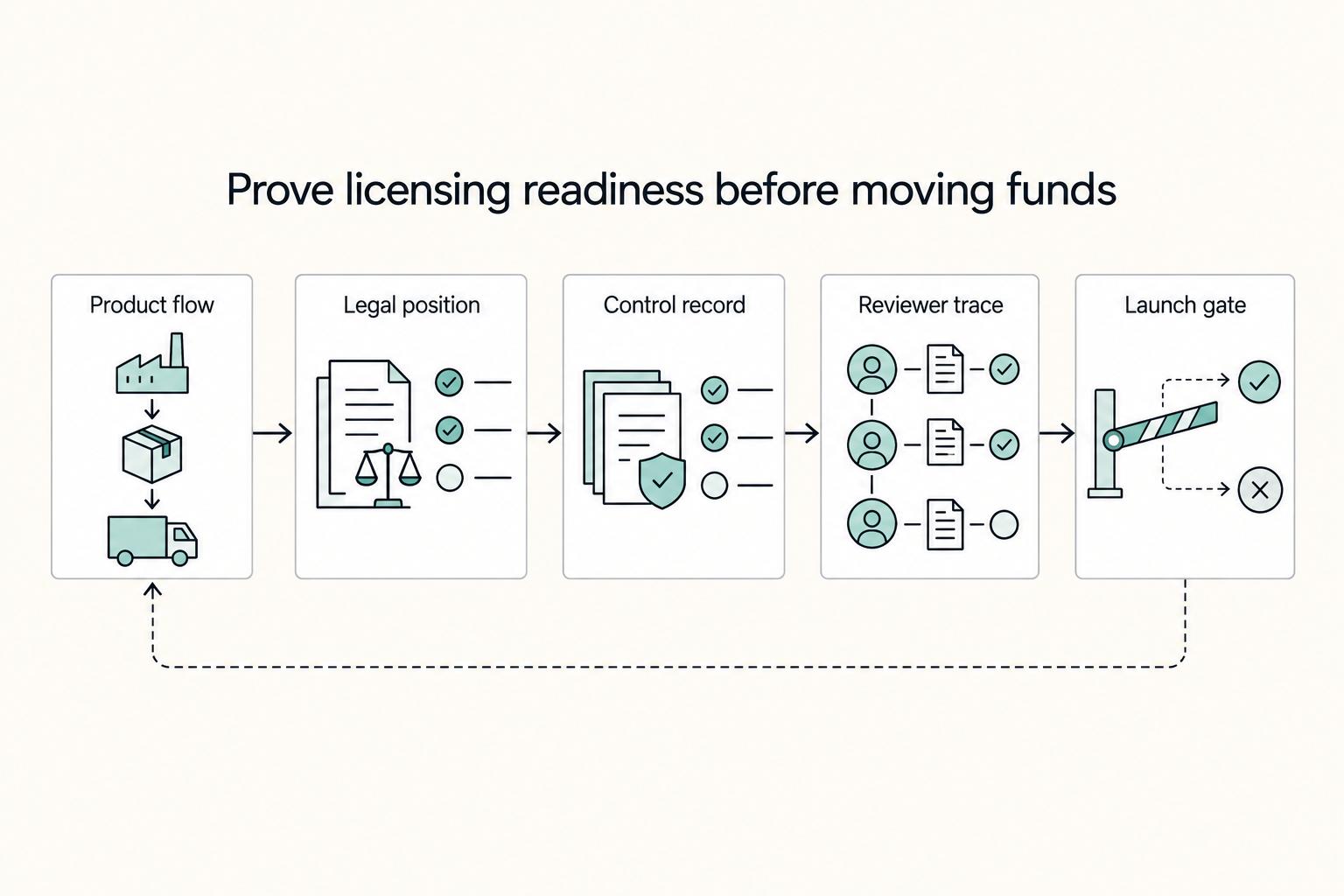
If you accept, hold, or pass through client funds across state lines, treat licensing analysis as a pre-launch requirement. One recurring risk is quiet scope creep: work that starts as basic billing can become controlled money movement without a clear decision point.
California Money Transmitter License Requirements for First-Time Filers
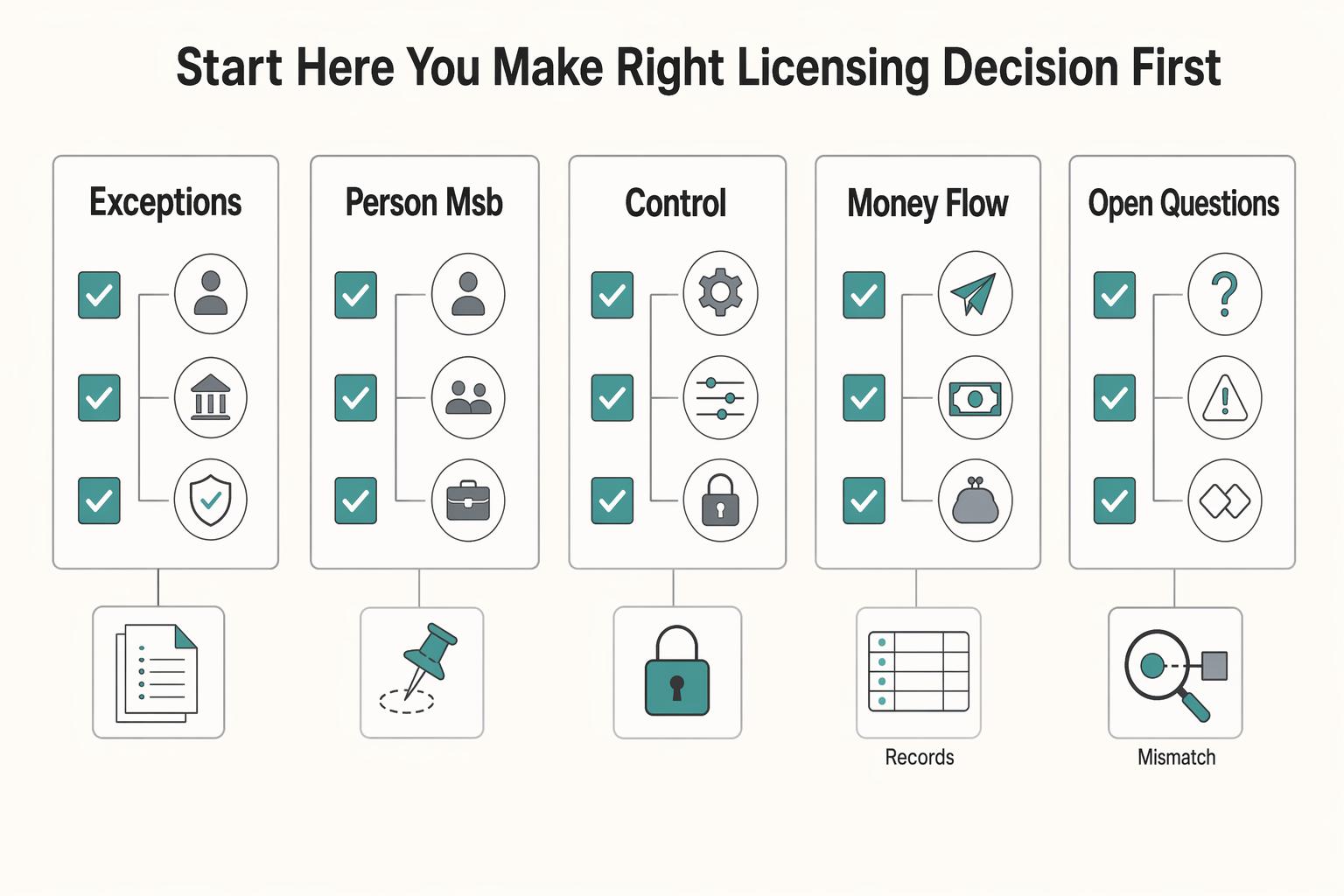
Start with scope, not forms. If you're evaluating a California money transmitter license, map your money flow first: what you control, for whom, and where control starts and stops.

A Deep Dive into Florida's Money Transmitter License Rules
Start by proving what your product actually does with customer value. If your notes cannot show where value enters your flow, where it sits, and where it goes next, you may not be ready to file.