
Quick Answer
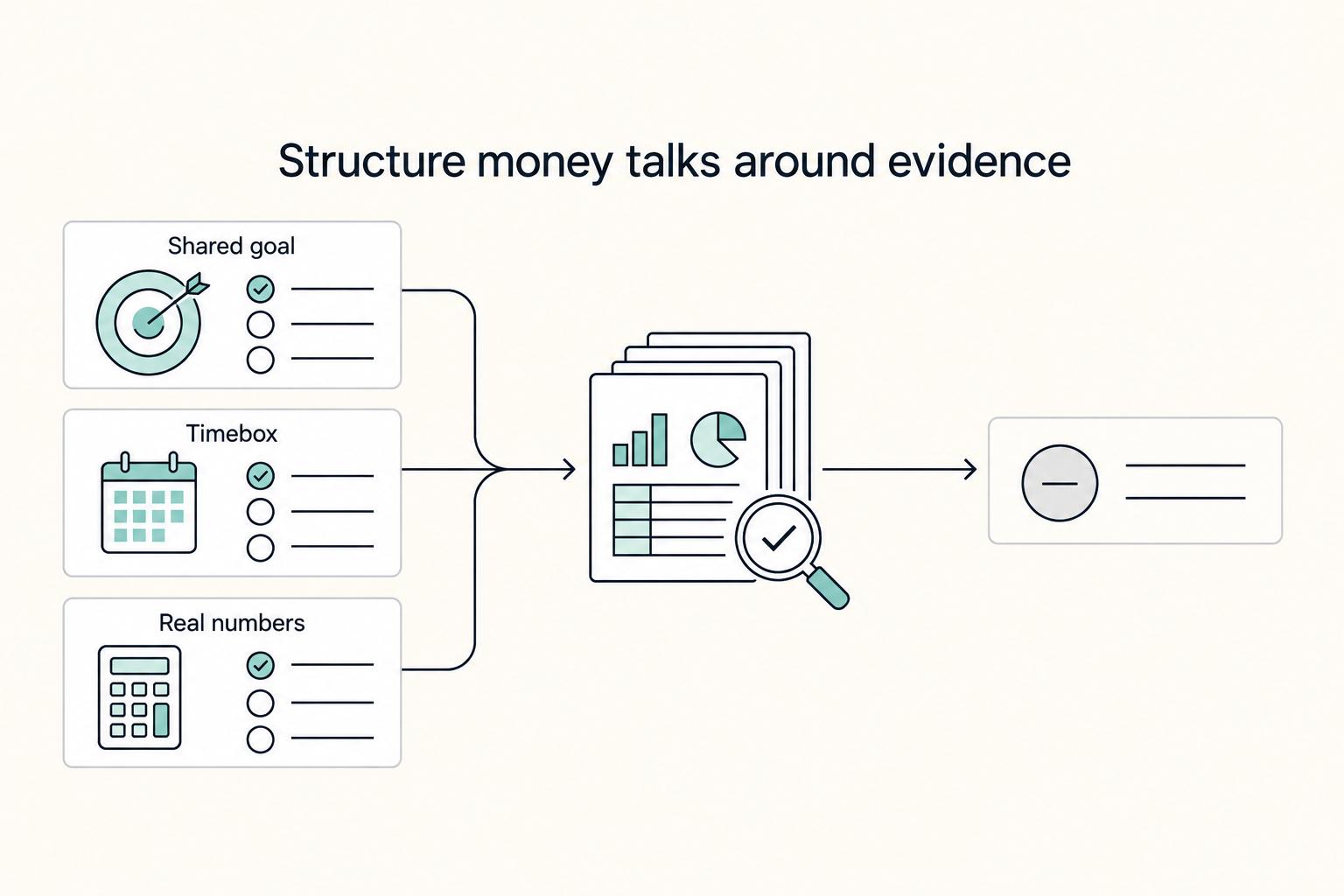
Start the money conversation as a short, factual ops review, not a blame session. Bring real numbers, set a time limit, agree that you are building a repeatable system, and leave with one shared note, clear roles, and simple If X, then Y rules for delays, late payments, or surprise costs. That keeps the talk calmer, more useful, and easier to repeat.
You don't need "a better money talk" - you need a couple cashflow operating system#
If you run a business-of-one, you do not need a vibes-based money talk. You need a repeatable system you can run.
Build a simple, repeatable couple cashflow system so the conversation produces decisions, not just feelings. Treat couple finances like any other high-stakes workflow: keep it humane, but anchor it in facts, roles, and next actions.
Relationships and finances are intertwined. That is why your financial planning cannot rely on vibes or memory, especially when income arrives in chunks or on odd schedules. You are not just discussing money. You are running operations together.
Before you start: redefine what "money talk" means#
Treat the conversation like a regular ops review, not a relationship referendum.
- Goal (say it out loud): "We're designing a system we can rerun. We're not assigning blame."
- Timebox: Put a clear time limit on the conversation as a starting constraint. Not because it solves everything, but because it forces clarity.
- Input standard: Bring real numbers, not recollections. If you argue from memory, you will argue forever.
One more mindset check: people often use "freelancer" as shorthand, but your household may function more like a tiny company than a solo gig. Use company-grade clarity.
The minimum viable Couple Cashflow OS (you can run monthly)#
Use these components as safe defaults for joint finances and communication.
1) Define the risks you are actually exposed to. List timing risks, delays, and any "lumpy" expenses that hit regardless of income timing.
2) Set governance with two roles. Keep it lightweight and visible.
| Role | Owns | Decisions they can make solo |
|---|---|---|
| Cashflow Operator | Tracks what came in, what must go out, and what sits pending | Routine bill pay, follow-ups, updating the shared note |
| Risk Approver | Approves exceptions and protects downside | New recurring expenses, higher-risk commitments, pulling from buffers |
3) Create one shared "decision log." One note titled "Household Money OS" beats ten scattered chats. Write down what you decided and what triggers a revisit.
In practice, if a payment slips and you feel the spiral start, you do not re-litigate trust. You open the note, follow the rule you already agreed on, and protect both cashflow and connection.
What to prepare before you start (so the conversation stays factual, not fuzzy)#
Prepare a shared, visible set of inputs and plan the conversation so it runs on evidence, not assumptions. If you are tempted to avoid it, you are not alone: 44% of people avoid talking about money with their partner. A little prep helps you show up clear instead of reactive.
Honesty and open communication matter here too. Skip transparency and everything stays fuzzy, even when you are trying to communicate clearly.
Step-by-step prep#
Step 1: Gather a few "reality" numbers you can both see. Use a spreadsheet or a shared note. Keep it simple: what is true right now, what is coming in, what is going out, and what has to be paid soon. Keep it operational and skip the blame story.
| Step | What to prepare | Why |
|---|---|---|
| Step 1 | Gather a few "reality" numbers you can both see: what is coming in, what is going out, and what has to be paid soon | Keep it operational and skip the blame story |
| Step 2 | Bring the handful of things that shape cash timing and obligations | So you are not arguing from vibes |
| Step 3 | Pick a specific time and place; create one shared note that functions as your audit trail | So you can reference later |
| Step 4 | Agree on de-escalation rules; make one rule about designing a system, not assigning fault; make another rule that allows a pause and a reschedule if either of you is getting too heated | So the conversation stays honest |
Step 2: Bring whatever explains real constraints. You do not need a filing cabinet. You just need the handful of things that shape cash timing and obligations, so you are not arguing from vibes.
Step 3: Set the container before you start talking. Pick a specific time and place where you can both focus. Create one shared note that functions as your audit trail: a running decision log you can reference later.
Step 4: Agree on a couple de-escalation rules you will actually follow. Keep them short and behavioral. Make at least one rule about designing a system, not assigning fault. Make another rule that allows a pause and a reschedule if either of you is getting too heated to stay honest.
Example: one of you expects money "soon," the other sees upcoming bills and panics. With receipts and a planned container, you shift from fear to a decision you can both live with.
How do I start a money conversation with my partner without conflict? (Use this 2-minute opener)#
Start by naming a shared goal, narrowing the scope to something manageable, and turning emotion into practical next steps. The opener matters because it lowers the threat level. You want alignment and decisions, not defensiveness.
Aim for calm, practical, and specific.
Step-by-step: a simple opener (copy, paste, say it)#
Step 1: Ask permission and set intent. Use a calm, operational ask:
- "Is now a good time to talk about money?"
- "I want us to make this easier on both of us, with less stress and more clarity."
Verify: you both say yes to talking, and you agree the goal is alignment, not blame.
Step 2: Set scope boundaries. Say these out loud. They work as your first de-escalator:
- "This is about the money situation, not our entire relationship."
- "We don't have to solve everything today, let's focus on the next practical step and revisit."
Verify: you both agree on the deliverable: a short plan you can check in on.
Step 3: Translate emotion into something you can act on. Ask one diagnostic question, then label it:
- "When money feels stressful, is it about uncertainty (timing), decisions (who decides), or safety (what happens if something goes wrong)?"
Then connect the feeling to a concrete next step, like clarifying dates, agreeing who decides what, or defining a basic fallback plan if income changes.
Quick translation table: feelings to operational clarity#
| If the feeling is... | Ask this | Tie it to... | Your next move |
|---|---|---|---|
| Uncertainty (timing) | "What feels unclear, and when?" | Timing, upcoming bills, expected income | Write down key dates and what's known vs unknown |
| Decisions (control) | "What needs two yes votes?" | Roles, responsibilities, boundaries | Agree on who handles what and what requires agreement |
| Safety (downside) | "What's the worst plausible event?" | Income dips, unexpected costs | Define a simple "If X, then Y" fallback plan |
Example: one of you expects a payout, the other worries about bills. Instead of arguing about trust, label it as uncertainty. Then agree on a short plan with a shared list of dates and one rule for what happens if money comes in later than expected.
If invoicing is part of what's creating stress, you can make the "timing" piece more concrete with a tool like How to Use Stripe Payment Links for Easy Invoicing.
Want a quick next step? Try the free invoice generator.
Map reality, name risks, set decision rights, and book the next review#
Map reality, name risks, set decision rights, and leave with one logged upgrade plus a calendar invite. The point is not to "talk better." The point is to walk away with a plan you can rerun when payments wobble.
| Step | Time | Action | Check |
|---|---|---|---|
| Step 1 | 5 min | Open one shared note and list every inflow you rely on; write your days-to-cash number | Agree on one baseline monthly expenses number (rent + food + insurance) |
| Step 2 | 10 min | Pick your top 3 risk events and write "If X, then Y" defaults | Label each event as a system problem or an emergency problem; confirm your SOW includes payment terms and your Termination clause supports stopping work for non-payment |
| Step 3 | 10 min | Assign two roles and decide what requires a two-yes decision | Each of you names one owned responsibility; capture decisions in one doc as an audit trail |
| Step 4 | 5 min | Send a calendar invite for the next review; pick one upgrade you can execute immediately | End with one next action and a date |
Step 1 (5 min): Map the cashflow reality (no stories, just flows)#
Action: open one shared note and list every inflow you rely on: retainers, project milestones, platform payouts. If cards are part of the mix, log the collection costs once so they do not surprise either of you later.
| Item | Amount | Notes |
|---|---|---|
| Domestic cards | 2.9% + 30¢ per successful transaction | Stripe Standard pricing |
| Manually entered cards | +0.5% | Add-on fee that can apply |
| International cards | +1.5% | Add-on fee that can apply |
| Currency conversion | +1% | If currency conversion is required |
| Monthly active account | $2 per monthly active account | Stripe Connect |
| Payout sent | 0.25% + 25¢ per payout sent | Stripe Connect |
| Setup fees | No setup fees | Standard plan |
| Monthly fees | No monthly fees | Standard plan |
| Hidden fees | No hidden fees | Standard plan |
Then write your days-to-cash number: the typical days between invoice sent and cash received. Keep it simple. Pick a number you both accept as "typical."
Check: agree on one baseline monthly expenses number (rent + food + insurance). If you cannot agree, pause and pull statements. Do not negotiate feelings.
Keep it concrete:
- Where have you seen payment holds: platform, bank, card processor?
- Are you collecting via card, for example Stripe Payment Links, or bank transfer? Log the fees once in plain language.
- If you want the mechanics, use: How to Use Stripe Payment Links for Easy Invoicing.
Step 2 (10 min): Name the risk events you're designing around#
Action: pick your top 3 risk events:
- Client pays late (late-payment risk)
- Client disputes (chargebacks)
- Platform or bank delays (payment holds)
Write "If X, then Y" defaults. Example: "If an invoice runs overdue, we follow up and pause new work per SOW."
Check: label each event as a system problem you can design around or an emergency problem that needs a fast stop-the-bleeding plan. Confirm your SOW includes payment terms and your Termination clause supports stopping work for non-payment.
Step 3 (10 min): Agree on the operating rules (who decides what)#
Action: assign two roles:
- Cashflow Operator: tracks invoices, expected payouts, and overdue follow-ups.
- Risk Approver: approves exceptions (discounts, extended terms, risky clients).
Decide what requires a two-yes decision: new recurring expenses, paying subcontractors, taking a client with a messy payment history.
Check: each of you names one owned responsibility. No "I thought you had it." Capture decisions in one doc as an audit trail.
Step 4 (5 min): Lock the next check-in + one improvement#
Action: send a calendar invite for the next review.
Pick one upgrade you can execute immediately: tighten SOW payment terms, change invoice cadence, or add a buffer account.
Check: end with one next action and a date. If a payout gets held, you do not re-litigate trust. You open the audit trail, follow the "If X, then Y" rule, and protect cashflow.
Should couples keep finances separate or combine them? Use the 3-model decision rule (separate/shared/hybrid)#
Pick the model that reduces operational risk in your couple finances, not the one that feels right in the moment. Once you have cashflow reality, risk events, and decision rights, the account structure becomes a tooling decision. You are optimizing for boring reconciliation and fewer repeat fights.
Step 1: Choose the model that matches your income pattern and your need for autonomy#
Action: decide based on what your money does, predictable or variable, not preference or tradition. The all-or-nothing frame breaks fast when client income is involved.
Use this operational comparison:
| Model | What it is (operational) | What it's good for | Where it breaks (plan for it) |
|---|---|---|---|
| Shared (one pool) | You pool incomes and pay all your expenses from a shared account. | Simple tracking as a couple. Often fewer transfers to manage. | Silent overspend risk. You need tighter rules for purchases and income volatility. |
| Separate | You maintain separate finances and split shared expenses. | Independence and personal control. | Splitting payments across different lenders and companies can get harder. You must reconcile monthly. |
| Hybrid (partially shared) | You keep personal accounts and open a joint account for shared expenses. | Easier splitting of shared expenses. Can help keep shared bills insulated from personal cashflow swings. | Requires clear funding rules and a consistent review cadence. |
Verification: you can answer, in one sentence, "How do shared bills get funded, and who notices when cash arrives late?"
Example: one partner runs a retainer business, the other ships project-based work with irregular payment timing. A hybrid setup can keep rent and utilities consistent while each person absorbs timing inside their own account.
Step 2: Install governance (this prevents the fight you'll otherwise repeat)#
Action: add two controls most couples skip.
- Exceptions policy (write it down): define what happens when someone wants a high-cost personal purchase or when a big expense spikes. Use two-yes approval for anything that can threaten shared bills.
- Monthly reconciliation note: log planned vs actual, plus a reason code you both accept (client delay, scope creep, FX, refund). Keep it factual, then decide one adjustment.
Verification: you end each month with one documented exception decision and one reconciliation line item you can point to without re-litigating intent.
Turn the conversation into a cashflow protection workflow (terms, tools, and traceability)#
Invoice on a schedule, collect through a defined path, and log exceptions so you never argue from memory. Your account model and meeting cadence do not protect you if collection is ad hoc. This is the operational layer that keeps cashflow predictable enough to stay calm at home.
Step 1: Standardize the "send invoice" moment (so cashflow stops depending on mood)#
Action: pick one invoice trigger and treat it like shipping a product.
- Choose a trigger: invoice on delivery, at a defined project checkpoint, or on a calendar date for retainers. Pick one per offer.
- Add a hard rule: "No work starts without a written SOW." If you want flexibility, allow exceptions only with documented two-yes approval in your Household Money OS note.
- Include payment mechanics in the SOW: list when you invoice, when payment is due, and what happens when a client requests changes or pauses work. Keep the language plain so you both can audit it later.
Check: you can answer in one sentence, "When do we invoice for this type of work?"
Step 2: Choose a primary collection tool and make "where is the money?" instantly answerable#
Action: define one default path for getting paid, then a fallback.
If you take cards with Stripe, the standard pricing is pay-as-you-go with no setup fees, monthly fees, or hidden fees, and 2.9% + 30¢ per successful transaction for domestic cards. The add-ons listed are +0.5% for manually entered cards, +1.5% for international cards, and +1% if currency conversion is required.
| Collection path | What you standardize | What you track in your household note |
|---|---|---|
| Card payment (Stripe) | One consistent "pay" path per invoice, same naming convention | Link created, invoice sent, payment status |
| Bank transfer | One set of instructions, one reference format | Transfer initiated, received, matched to invoice |
If you want the simplest "link per invoice" flow, use: How to Use Stripe Payment Links for Easy Invoicing.
Check: you can answer, "Where is the money right now?" using one of these states: drafted, sent, pending, paid, disputed, returned.
Step 3: Add guardrails and an audit trail (so joint finances stay calm under pressure)#
Action: run lightweight checks that prevent preventable surprises.
- Before starting work: confirm you sent the SOW and invoice (or deposit request) and logged the client's approval.
- Before a large delivery: confirm you sent the next invoice or checkpoint request.
- Before moving money into shared bills: confirm the payment shows as paid in your system, then log the transfer decision.
Example: a client asks to "start today" and "sort paperwork later." Your system replies: SOW first, invoice next, work starts after both show up in your log. That boundary protects money and relationships.
Check: your log includes (1) exceptions (discounts, extended terms, disputes) and (2) artifacts (invoice PDF, payment confirmation, and a short summary of any relevant emails) to maintain an audit trail you both trust.
How often should partners review money together? Pick an event-driven cadence (not "monthly because blogs say so")#
Use a steady baseline schedule, then add fast check-ins that trigger when timing or risk changes. Once invoicing and traceability are in place, cadence becomes your early-warning system. A calendar-only rhythm can miss problems until they hurt.
Before you start: define what "good" looks like#
Anchor your cadence to outcomes, not arbitrary dates. "Good" means you can pay bills, handle a shock, meet goals, and feel secure about today and tomorrow. Use that as your shared definition of success.
Also accept the operating reality: daily life runs on timing. If your income arrives irregularly or later than expected, you need triggers, not just meetings.
Step-by-step: baseline review + trigger reviews + pre-withdrawal checkpoint#
Step 1: Run a baseline review (budget, buffers, goals). Pick a consistent interval you both can actually keep. Keep it short and structured:
- Invoice pipeline: sent, pending, overdue, disputed, held (if applicable).
- Upcoming payouts: what you expect to land next, and when.
- Quick reconciliation: Reconciliation is comparing expected vs actual cash-in and cash-out so you catch drift early.
- Buffers: decide whether the buffer still covers your next set of debits. Build automatic buffers into pay.
Verify: you can both answer, "What cash is expected next, and what bills hit before then?"
Step 2: Add trigger check-ins (fast, factual, no spirals). Trigger these when reality changes, not when the calendar flips. Use this table as your default agenda:
| Trigger event | What you check together | Decision you log (audit trail) |
|---|---|---|
| Invoice slips into "overdue" | Follow-up date, pause rules, updated expected deposit date | Escalation plan (who sends what, by when) |
| Payout delay or hold (if it happens) | What got delayed, timing uncertainty, bill impact | Temporary transfer rule and buffer use |
| Scope creep | Extra time, extra cost, updated terms | Approve change order or stop-work boundary |
| Large tax or admin payment | Due window, cash timing vs debits | Hold-back amount and no-spend window |
Example: a platform delays a payout the same week rent drafts. You do a trigger check-in, reconcile expected vs actual, then log a temporary "no discretionary transfers" rule until the payout clears.
Step 3: Add a pre-withdrawal checkpoint (especially cross-border). Before you convert currency or move money internationally, confirm timing and fees first, then commit household spend. Paychecks do not always align with debits, renewals, and surprises. FX and transfers can make that timing mismatch harder to manage.
If you plan a move abroad or a paperwork-heavy period, align buffers to admin deadlines and renewal windows. Use: Japan Digital Nomad Visa: A Guide to the Program.
Common mistakes (and how to recover fast when things go wrong)#
Name the failure mode, pick a single fix, and log the next action before you stand up. Even with a good cadence, predictable failure modes show up. The recovery move is usually the same: stop arguing about intent, fix what you can control, and write down what happens next.
Step 1: Diagnose the failure mode (quickly)#
Use this quick classification before you argue about who or why:
| Failure mode | What it looks like in real life | The real problem |
|---|---|---|
| Avoidance (taboo mode) | You both "mean to talk," but never do | The unknown grows in the background |
| Therapy-only talk | Lots of feelings, no decision | No closure, so anxiety returns later |
| Assumption drift | "I thought we agreed" shows up constantly | Different definitions of "OK," "safe," or "affordable" |
| Premature combining | You merge everything before you've aligned on rules | Confusion and resentment when reality hits |
| One "bad cop" | One partner always tracks, reminds, escalates | Power imbalance, resentment, avoidance |
Talking about money can feel intimidating, even taboo. That is exactly why structure helps. Nearly half of couples argue about money, and 36% say it is one of the biggest sources of stress in their relationships. Money also touches major life decisions, like where you live, so it is not "just admin."
Step 2: Apply the recovery play (fast, specific, repeatable)#
Mistake: treating the talk like therapy-only (no decisions). Recovery: end every session with 1 decision and 1 next action, written down in plain language. Verify: you can both answer, "What changes before the next check-in?"
Mistake: combining finances before you've aligned on the rules. Recovery: slow it down. Agree what is shared, what stays personal, and what needs a quick "two yeses" before it happens. Verify: you can explain the rules the same way, without improvising.
Mistake: ignoring "what if" scenarios until something breaks. Recovery: pick one likely stress test, late income, surprise bill, uneven month, and agree on a simple plan for it. Verify: you can point to the plan before you are stressed.
Mistake: letting one partner become the "bad cop." Recovery: make the system visible and shared. Split responsibilities in a way that feels fair, and revisit if it is quietly becoming one person's job. Verify: neither of you feels like the parent or the scapegoat.
Build trust and cashflow at the same time (your copy/paste checklist)#
Use a 30-minute monthly checklist to turn money stress into clear roles, written defaults, and a simple audit trail you both trust.
Couple Cashflow OS is a repeatable system for how you handle money together: define the risks, assign decision rights, and leave with "If X, then Y" rules you can execute under stress. You are not trying to win a discussion. You are building a system that makes decisions traceable and reduces emotional replays.
Before you start (2-minute setup)#
Treat this like financial planning for a two-person company: shared visibility, one note, and one agreed target. The goal is not perfect forecasting. It is fewer surprises and faster decisions when income timing gets weird.
- Set a timer for 30 minutes and open one shared note titled "Household Money OS."
- Bring the last 60 to 90 days of invoices and payouts. Note any payment holds and chargebacks so you design around reality, not optimism.
- Decide the goal: traceable decisions (audit trail) plus cashflow survivability (buffer + rules).
Example: one partner feels fine because work looks busy, the other feels anxious because deposits arrive late. The OS resolves that loop by turning it into shared agreements, burn and buffer numbers, and explicit triggers, late-payment risk, holds, disputes, instead of vibes.
Copy/paste: 30-minute Partner Money OS Checklist (with verification)#
Use this verbatim, then save the note. That note becomes your reconciliation log and your memory, so you do not renegotiate the same thing every month.
- Pick a 30-minute slot + open one shared note ("Household Money OS").
Verify: both can access and edit it.
- Bring last 60-90 days of invoices + payouts (note any payment holds/chargebacks).
Verify: you can point to what is invoiced, pending, paid, held, or returned.
- Agree on monthly burn + minimum buffer target.
Verify: one sentence definition of burn you both accept.
- List top 3 risk events (late-payment risk, holds, disputes) + write "If X, then Y" defaults.
Verify: defaults include one action, one owner, and one timing trigger.
- Decide account model (separate/shared/hybrid) + how shared expenses get funded.
Verify: you can describe transfers in plain language.
- Assign roles: Cashflow Operator + Risk Approver (define what needs two-yes approval).
Verify: each role has a short task list.
- Confirm client controls: SOW required, payment terms defined, Termination path clear.
Verify: "No SOW, no work" sits in writing.
- Set review cadence: monthly + event-trigger check-ins.
Verify: next date booked on both calendars.
- Log decisions + exceptions (audit trail) and do lightweight reconciliation each month.
Verify: one planned vs actual line item gets updated monthly.
If collections friction is driving the stress, go one layer deeper on invoicing mechanics with How to Use Stripe Payment Links for Easy Invoicing. On standard pricing, Stripe lists no setup fees, monthly fees, or hidden fees and 2.9% + 30¢ per successful transaction for domestic cards, with additional fees shown for manually entered cards, international cards, and currency conversion. Use this as an explicit tradeoff conversation, not a surprise.
If you are planning cross-border logistics that tighten timelines, align buffers to admin lead times with Japan Digital Nomad Visa 2026 Planning Runbook.
Frequently Asked Questions
How do I start a money conversation with my partner without conflict?
Start small and keep it low stakes. Ask for a short money check-in, agree that the goal is to design a system rather than assign blame, and let either person pause and reschedule if emotions rise. Listen first, then propose the next practical step.
Should couples keep finances separate or combine them?
Choose the setup that helps you stay clear and coordinated. Separate, shared, and hybrid can all work if you define how shared costs get covered and how you will revisit the plan. If you stay separate, document responsibilities; if you share, set approval rules; if you use a hybrid model, define what is shared, what is personal, and how transfers happen.
How often should partners review money together?
Use a regular cadence you can both keep, then add quick check-ins when something changes. A delayed payment, unexpected expense, or another break in the plan is a good trigger. That keeps communication active without turning money into a daily status meeting.
What questions should couples ask each other about money?
Ask questions that surface habits, constraints, and decision rules. Focus on how each person prefers to budget, what feels unsafe, and which decisions need a clear yes from both of you. Keep the conversation practical instead of trying to cover everything at once.
How do freelancers talk to a partner about irregular income and payment delays?
Treat irregular income like an operations problem, not a morality play. Bring a simple view of what is expected, what is pending, and what is late, then agree on a few If X, then Y defaults for delays. When timing slips, follow the preset rule instead of arguing in the moment.
How can couples set money boundaries for shared expenses?
Set boundaries as rules you can follow even on a bad week. Define what counts as shared, what stays personal, and how exceptions get approved. Then document temporary cover-it-this-month decisions so ambiguity does not turn into conflict.
What should a couple do when one partner’s income is variable?
Stabilize the household with clear roles and clear rules. Decide who tracks due dates, who flags risk early, and how exceptions get handled without putting all the stress on one person. If income dips, pause discretionary spending first, then revisit transfers and timing.
Try a related tool
Researched and edited by the Gruv editorial team. Gruv builds cross-border billing, payouts, and finance-operations software for global businesses.
Sources
Includes 3 external sources outside the trusted-domain allowlist.
- milnepublishing.geneseo.edu/interpersonalcommunication/chapter/8trusted
- milnepublishing.geneseo.edu/interpersonalcommunication/chapter/8trusted
- pmc.ncbi.nlm.nih.gov/articles/PMC10632137trusted
- pmc.ncbi.nlm.nih.gov/articles/PMC10632137trusted
- npr.org/2021/08/16/1028081097/money-financial-intima...external
- nytimes.com/2025/11/19/podcasts/money-relationship-conve...external
- perfectunionny.com/blog/how-to-talk-about-money-in-your-relatio...external
Educational content only. Not legal, tax, or financial advice.
Related Posts

Japan Digital Nomad Visa 2026: Six-Month Planning Runbook
Treat this as your operating model: identify the right mission first, commit to one route, and keep dated records before you make irreversible plans. That is what keeps the rest of your timeline, paperwork, and decisions coherent.
How to Use Stripe Payment Links for Easy Invoicing
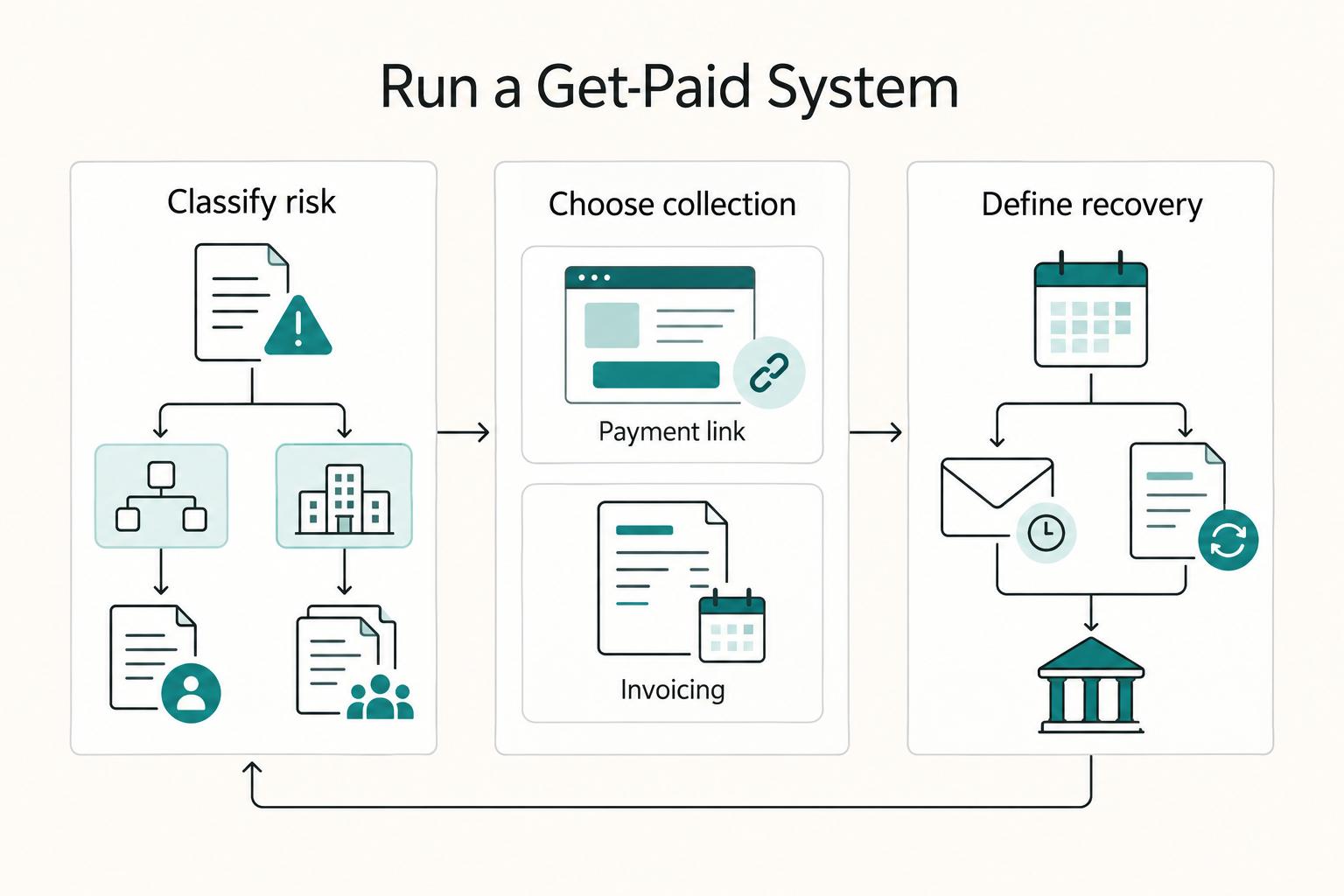
**Build a risk-first get paid system with Stripe Payment Links for fast collection and Stripe Invoicing for controlled follow-through.**

The Freelance Payment Penalty: A Modeled Audit of Platform Fees, FX Spreads, and Payout Delays
The money rarely disappears through a single, easy-to-spot fee. The real loss is stacked. A marketplace takes its commission, a processor adds a charge for international cards, a bank or payment company converts the currency at a spread, a platform holds the funds before release, and a wire sheds a little to intermediaries on the way in. Each layer looks defensible on its own, but the worker feels the combined result as a smaller deposit and a later payday.