
Quick Answer
Choose native MX when your onboarding, payout API, and ledger already support structured ISO 20022 fields. Use a short bridge only when MT traffic is still material, set a hard retirement date for it, and prove address and message readiness before you widen traffic.
Planning the ISO 20022 Payout Cutover#
Swift CBPR+ payment-instruction coexistence ended on 22 November 2025. That is a specific network milestone, not a universal rule for every payout rail, corporate channel or reporting message. For CTOs and solution architects, migration still requires choices about data capture, bank acceptance, reconciliation and safe cutover.
The main risk is architecture, not file-format conversion#
The hardest work sits in onboarding, routing, reconciliation and status visibility. As checked on 2 October 2026, Swift’s newer SR2026 announcement defers all payments changes previously planned for November, including the structured-address requirement, and says updated timing and approach will be communicated by December at the latest. Older pages still show 14 November 2026; use the newer announcement and obtain current bank-specific acceptance rules rather than treating that date as a network-wide rejection deadline.
This guide focuses on migration decisions, not policy restatement#
The goal is to compare viable paths for real platform stacks: native MX adoption, bridge-first translation, and hybrid corridor-by-corridor migration. We will highlight where each path tends to fail in production, including translation debt, message-scope confusion, and reconciliation gaps. Before widening traffic, validate hybrid/structured address messages with Swift tools. If your team cannot show accepted test messages, rejection reasons, and clear ownership by message family, cutover is not ready to scale.
Scope goes beyond payment initiation#
This guide covers platforms that own onboarding, routing, ledger links and status across multiple counterparties. Inventory CBPR+ payment instructions, reporting, FI/NBFI interbank MT101 relays and corporate SCORE or MA-CUG channels separately. The SR2026 extension changes the previously planned MT101 timing; it does not make every channel interchangeable.
The sections that follow use one lens: keep payouts moving now while reducing future mapping, exception-handling, and support burden.
How to choose the right ISO 20022 migration path#
Choose the path that matches your current message exposure and data quality, while reducing the translation and repair burden you carry past 22 November 2025. If your payout stack spans Swift CBPR+, Swift FIN, APIs/webhooks, and reconciliation outputs, decide by scope, data readiness, and participant-specific deadlines, not by a generic “ISO-ready” label.
1. Confirm you are actually in scope#
Use this decision framework if you run a cross-border payout stack with API integrations, callbacks/webhooks, reconciliation outputs, and bank or infrastructure connections touching CBPR+, FIN, or another cross-border leg. In that setup, migration choices affect onboarding data capture, routing logic, ledger references, and exception handling. If your 2026 roadmap is already prioritizing emerging-market payout corridors, use the same corridor list to stage ISO 20022 cutover evidence.
A domestic-only platform still needs its rail’s current message rules. It may have no CBPR+ or interbank MT101 exposure; do not impose Swift’s migration milestones without identifying the actual network and participant scope.
2. Score readiness against five criteria#
Before selecting native MX, bridge-first translation, or a corridor-by-corridor hybrid, check five areas:
- MT dependency: where MT still appears in production, especially Swift FIN and downstream bank-facing flows.
- MX readiness: whether your API payloads and internal models already support structured ISO 20022 fields.
- Initiation scope: distinguish FI/NBFI interbank MT101 relays from corporate channels and verify revised pain.001 timing.
- Address readiness: preserve the current required fields and identify the partner’s implementation schedule after the SR2026 extension.
- Translation limits: confirm covered messages, mapping loss, current availability and costs.
Two checkpoints should be non-negotiable before widening traffic: validate hybrid/structured-address messages with Swift tools, and review initiation systems/data formats before MT101-to-pain.001 changes.
3. Compare the three realistic paths#
CBPR+ rollout artifacts span pain, pacs, and camt, so migration should be planned by message family and operating surface, not as a single cutover.
| Option | Best for | Implementation effort | Operational risk during cutover | Dependency on Swift conversion behavior | Long-term interoperability with Fedwire Funds Service, CHIPS, and T2 |
|---|---|---|---|---|---|
| Native MX from edge to settlement | Teams already close to structured onboarding and schemas | Front-loads schema, validation, and partner coordination | Concentrates change into the migration window | Lower reliance on contingency conversion | Requires rail-specific validation; no automatic interoperability guarantee |
| Bridge-first translation | Teams with heavy MT exposure that need continuity first | Splits work into bridge now and cleanup later | Can reduce immediate disruption but extends exception handling | Higher reliance while translation remains in-path | Still needs later platform-side and rail-specific validation |
| Hybrid by corridor/rail | Multi-entity or multi-bank programs with uneven readiness | Spreads work across corridors and phases | Contains risk by corridor if governance is tight | Mixed dependency by corridor | Benefits are corridor-specific and still require separate validation |
4. Choose from route readiness and give bridges exit criteria#
Compare partner acceptance, structured-data completeness, critical message families, reconciliation and delivery capacity. A percentage of total volume does not establish readiness: a low-volume route can still carry material financial risk.
If a bridge is needed, document the supported routes, mapping limits, owner, costs and exit evidence. Set a review date and target retirement date that fit partner readiness; contingency processing availability and fees must be confirmed under current network terms.
Option 1 native MX from edge to settlement#
Native MX is usually the cleanest long-term path when your platform can already capture and pass structured ISO 20022 data, or when you are rebuilding payout services anyway. The core benefit is lower long-term operational drag because you avoid keeping MT-to-MX translation logic in onboarding, routing, webhooks, and reconciliation.
Best fit#
Choose native MX when onboarding, APIs and bank connections preserve the required structured data. Where a hybrid address is used, Swift’s published model requires structured Town Name and Country Code and limits remaining address lines. Whether an address is required depends on the party and identification method; an agent identified by BIC generally does not need its postal address.
Why it can beat a bridge#
Native MX reduces semantic drift between what your product collects, what your payment message sends, and what ops must reconcile later. That aligns with the broader interoperability problem in cross-border payments: harmonized message transmission is still a priority, and native structured messaging supports that better than repeated MT-era translation and reconstruction.
Native processing avoids relying on translation that may lose richer data. For interbank MT101 relays, track the revised pain.001 migration arrangements with the responsible bank. The previously described November 2026 contingency service should not be treated as a confirmed current release date or guaranteed fallback after the SR2026 extension.
Where delivery pressure shows up#
The tradeoff is front-loaded execution risk. You need tighter data contracts, earlier partner alignment, and message validation before scaling traffic.
Address migration remains a product and data-model task even though the planned 14 November 2026 network deadline was deferred. J.P. Morgan’s current guidance says unstructured addresses and FI/NBFI MT101 may continue beyond November 2026 until at least November 2027; its own modernization work continues on the original schedule. This is that bank’s guidance, not a final replacement date for every rail.
Make Swift validation tooling for hybrid/structured addresses a hard pre-production checkpoint. A common failure pattern is incomplete upstream capture, then missing or malformed Town/City and Country at message creation, which shifts avoidable repair work into operations.
Concrete use case#
This option fits a platform replacing legacy payout services: model the new stack around ISO 20022-native fields and use pain.001 where that initiation path applies, instead of standing up temporary Swift FIN/SwiftFIN translation handling you will later unwind.
Separate FI/NBFI interbank initiation from corporate SCORE or MA-CUG arrangements. Record the revised requirements agreed for each channel rather than carrying forward the superseded November 2026 deadline.
Option 2 translation bridge first then native migration#
Use a translation bridge when payouts must keep flowing, but your platform is not ready to run native MX end to end in the next release cycle. This is a continuity-first choice, not an end-state architecture.
Best fit#
This path fits teams operating in a mixed migration window where participant and infrastructure timelines are not fully aligned. That pattern is common in ISO 20022 programs, and dual-format coexistence has been used as a continuity measure during transition periods.
Why teams choose it#
A narrow bridge can preserve a currently supported legacy route while onboarding, APIs and reconciliation are upgraded. This only works if the bank accepts the route and mapping limitations are explicit.
Where it breaks#
The tradeoff is hidden debt: dual semantics, dual validation behavior, and more exceptions for operations. Data truncation risk also increases when richer ISO 20022 content is converted through legacy structures, which can create later repair work in acceptance and reconciliation.
Non-negotiables before you widen traffic#
Treat the bridge as a controlled exception with explicit exit criteria. Require:
- A route-by-route sunset plan for every bridge path
- Mapping evidence against the final ISO 20022 schemas and Technical Guidance expected by counterparties
- Participant readiness testing before production expansion
- Release-over-release exception tracking by route
Hard rule: if bridge exception rates rise release over release, stop adding new bridge routes and accelerate native MX completion.
Concrete use case#
A marketplace keeps a legacy MT initiation route stable for continuity while building the equivalent native MX route in parallel. The bridge stays narrow and time-bounded, and traffic expands only after native acceptance and reconciliation are proven.
Option 3 hybrid migration by corridor and rail#
Hybrid by corridor and rail is a containment approach when some parts of your payout stack can run ISO 20022 now and other parts still need temporary legacy compatibility. It should reduce migration risk in a mixed state, not normalize that mixed state.
Swift CBPR+ payment-instruction coexistence ended on 22 November 2025. Reporting and initiation have their own roadmaps, so a mixed architecture still needs route ownership, rollback boundaries and exit evidence.
Best fit#
Use this when readiness is uneven across corridors, bank partners, payout products, or internal consumers. Instead of one platform-wide cutover, move one corridor and rail boundary at a time so failures stay local and easier to reverse.
Why teams choose it#
The main gain is clearer control per corridor:
- Validate acceptance and reject behavior on a bounded route.
- Confirm reconciliation from provider reference through ledger posting to payout status.
- Keep rollback decisions tied to a known corridor and rail boundary.
Keep evidence beyond syntax: applicable sanctions, AML and payer/payee information controls need an identified responsible entity and an approved handoff. ISO 20022 formatting alone does not satisfy those obligations; do not impose a universal Travel Rule implementation on every platform.
Where it breaks#
The tradeoff is higher routing and support complexity. Mixed paths can make similar payouts behave differently by corridor or rail, and data handling can diverge between legacy and ISO 20022 flows.
If that divergence is not tightly managed, reject handling, reconciliation meaning, and operator runbooks drift apart. That is how a temporary hybrid model turns into long-lived operational debt.
Concrete use case and checkpoint#
A practical pattern is to migrate one well-understood corridor first while keeping other corridors on temporary compatibility paths until their controls are ready. The same corridor-first discipline also helps on global tournament prize payouts, where payout timing and routing still need clear rollback ownership.
Before expanding, require corridor-level evidence that acceptance behavior is stable, reconciliation remains accurate, and incidents or manual repair work are not getting worse. If those checks degrade, pause expansion and fix the corridor-specific break before widening traffic.
The minimum data model changes you cannot postpone#
The minimum change is to make beneficiary address data first-class in your core record before payout creation, not to rely on late mapping cleanup. Corridor phasing only stays stable when every route reads the same structured beneficiary data through onboarding, API submission, ledger records, and reconciliation.
1. Address primitives before everything else#
Prioritize structured postal address, hybrid address, and explicit Town Name and Country fields in the canonical beneficiary record. Do not treat these as free-text fallbacks that appear only in an outbound adapter.
The SR2026 extension supersedes the planned November 2026 address retirement for Swift payments. Domestic infrastructures and banks have their own schedules. Record the applicable route requirements and readiness dates; do not infer one global deadline from the presence of a cross-border leg.
For a retained MT channel, map town and country using the bank-approved message format. MT fields are not XML elements; for example, Swift’s corporate guidance illustrates country and town in numbered F-option components. Confirm field/options and current acceptance with the bank.
2. One field map across the four handoffs#
Use one ownership map so required fields do not disappear between systems.
| Handoff | Must own | What to verify before go-live |
|---|---|---|
| Onboarding capture | Structured/hybrid beneficiary address, Town Name, Country | Validate required address fields for the party, message and identification method |
| Payout API payload | Explicit beneficiary address objects | Reject requests missing fields required for the selected route with a clear reason |
| Internal ledger record | Canonical beneficiary snapshot used for submission | Support can reconstruct exactly what values were sent on a failed payout |
| Export and reconciliation artifacts | Structured address fields or stable references | Ops can tie rejects/returns/status events back to original beneficiary data without manual guesswork |
Required outbound fields need an owner across the relevant handoffs. Scope validation by message, party and identification method rather than requiring an address for every BIC-identified agent.
3. Roll out in the right sequence#
- Extend schemas for structured postal address, hybrid address support, Town Name, and Country.
- Backfill existing records with clear separation between confident normalization and operator-reviewed cases.
- Apply intake validation for the fields required by each route, party and message.
- Update UI and operator tooling so teams can view, edit, and troubleshoot structured fields.
- Certify with partners against the current agreed usage guidelines, message versions and revised release schedule.
Where contingency processing remains available, test its current network validation rules, covered message types and mapping limitations with the partner. Do not assume every unsupported MT instruction will be converted.
4. Late free-text becomes repair work#
Accepting unstructured address lines late in the flow pushes defects into production. Once stricter formatting is enforced, those records drive rejects and manual repair, and hybrid corridor models can hide the same root data defect behind route-specific behavior.
Treat late free-text fallback on cross-border payouts as an operational issue. If operators are repairing Town Name or Country outside core capture fields, pause corridor expansion and fix capture and validation first.
Build the model for structured semantics while tracking revised FI/NBFI MT101-to-pain.001 timing. Compatibility and costs depend on current network and bank terms after the SR2026 extension.
Message scope decisions that trip teams up#
The biggest post-schema mistake is assuming migration means one universal message state across channels. Treat scope as a channel-by-channel inventory: identify where MT101 or pain.001 is initiated, and where MT versus MX format is actually used in transit and validation.
1. Split initiation messages from transport reality#
Record the source instruction separately from the network message. An MT101 initiation or pain.001 request may be handled by a bank-specific adapter; record whether the next hop uses FIN or FINplus and which usage guideline applies.
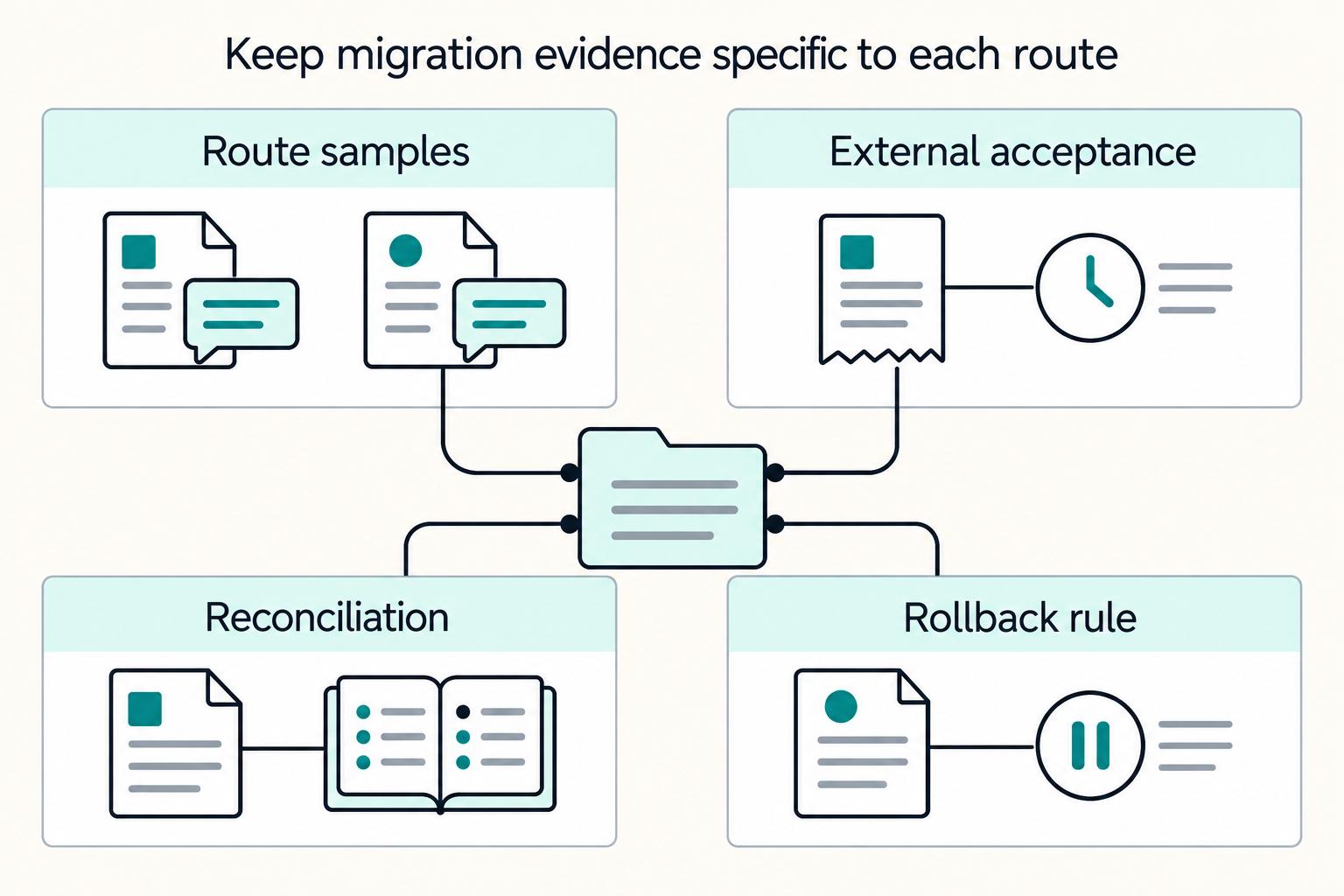
For each channel, record three fields: message produced at source, message validated before send, and message expected by the next party. Review existing initiation systems and data formats, then run Swift validation tooling on real outbound samples, not only on target-state schemas.
2. Separate interbank relay from corporate initiation#
FI/NBFI interbank MT101 relays and corporate SCORE or MA-CUG initiation are different scopes. The planned November 2026 relay migration was deferred with the payments changes. Obtain revised readiness and conversion arrangements for each channel directly from its owner.
If you support both participant types, document that split in design and support runbooks early. That prevents valid SCORE or MA-CUG traffic from being treated as out of policy.
3. Mark channels using FIN or FINplus#
Keep a channel map showing FIN and FINplus hops, message versions and responsible validators. A network connection does not prove the application preserves required data.
Flag every translation dependency and confirm current availability, validation and pricing. A bank-supported compatibility path is a bridge with limits, not evidence of native pain.001 readiness.
4. Publish a one-page owner sheet per message type#
Avoid ambiguity by assigning ownership per message family on one page. At minimum, name the producer, validator, downstream consumer, and rollback owner, and attach the sample payload, validation result, and rollback approver contact.
This keeps incident response practical: teams can see who owns the fallback path before a channel fails in production.
API and event contract changes that prevent long-term debt#
Contract design should make mixed MT/MX operations explicit; otherwise temporary compatibility logic becomes permanent debt.
1. Version for structured semantics, not legacy overloads#
Put the version boundary where meaning changes. ISO 20022 is structured by design, so your payout contract should carry structured elements explicitly instead of relying on free-text catchalls that require downstream guesswork.
Use a simple release check across real samples: confirm the same structured intent survives in the client request, your persisted record, provider submission, and operator-facing view. If any layer flattens meaning back into generic text, the contract is still ambiguous.
2. Keep retry identity tied to one payout intent#
Persist one durable business instruction, approved payload, provider request and key before sending. If submission times out, look up and reconcile the original outcome before sending a replacement or switching MT/MX routes. A new format, key or rollback route must not authorize a second payout.
Test lost responses, duplicate and concurrent callbacks, key expiry and cross-format fallbacks in a sandbox. Verify event signatures and protect financial effects under concurrent processing. Replay within the provider’s documented contract; unresolved outcomes require investigation rather than a new execution.
3. Expand events so failures are diagnosable#
A final failed status is not enough. Event payloads should distinguish where failure happened (your validation, external acceptance, network/message handling, or reconciliation) and preserve the external reason text with your internal classification.
That gives ops enough context to act without escalating every case to engineering. A practical check is whether ops can triage real rejected events directly from your event data, without opening provider portals or raw logs.
4. Require artifact-level traceability for each state#
Each payout state transition should map to concrete artifacts: original request, external reference, ledger posting, and reconciliation output. This is the control that keeps audit and incident handling reliable during long coexistence windows.
Reporting has a separate roadmap. J.P. Morgan’s current guidance retains November 2027 obligation-to-receive and November 2028 MT9xx retirement dates; verify the bank’s rollout and fields for your channel. Preserve original and external references through mappings instead of assuming one universal EndToEndId location in MT reports.
Testing sequence before each production cutover#
Run cutover as a gated sequence by path, not a single end-to-end test. If one rail or message family is weak, do not widen traffic because another path passed.
1. Build the matrix by rail and message family#
Split the matrix across Swift CBPR+, Swift FIN, MT101, pain.001, and MX acceptance paths so mixed migration states are visible instead of masked.
Use real payload samples for each path, including:
- Hybrid and fully structured addresses where required
- Cases before and after the partner-confirmed validation cutover
- Missing required fields, BIC-identified agents and partially structured legacy records
Test the current and target address rules with each partner, including its confirmed deployment dates after the SR2026 extension. A future value date alone does not establish which validation release applies.
Use current partner test tools and usage guidelines for the intended route. Schema-valid XML is insufficient: obtain external acceptance evidence before production rollout and reconcile the controlled live slice.
2. Verify the four signals that predict cutover risk#
Track these checkpoints on every matrix line:
- Schema validation pass rate
- Rejection reason distribution
- Reconciliation match rate
- Replay/idempotency behavior
Set your own thresholds, but keep the evidence comparable across releases.
Watch data truncation closely. In staggered migration windows, richer ISO 20022 data can be shortened or dropped across conversion paths, which can look fine in staging and then break reconciliation in production.
3. Gate every release with explicit evidence and rollback triggers#
Keep gating compact and operational:
| Test stage | Required evidence | Owner | Rollback trigger | Go/no-go rule |
|---|---|---|---|---|
| Pre-prod validation | Rail/message-family sample set, Swift address-validation outputs, reject-log review; sandbox lost-response, replay and concurrency evidence | Engineering lead | New validation failures on intended routes | No-go if acceptance is inconsistent across target paths |
| Controlled production slice | External acceptance and reconciliation artifacts from authorized single-writer traffic; no forced live duplicate tests | Engineering + operations | Reject clustering, duplicate-payout risk, or missing external references | Go only for limited traffic |
| Reconciliation sign-off | Match across original request, external/provider reference, and ledger/reconciliation outputs | Ops or finance owner | Match breaks or unexplained unmatched items | No-go for traffic expansion |
| Traffic expansion | Partner-side confirmation for impacted route, current production evidence pack, incident review | Product or release owner | Production-only failures after widening | Expand corridor-by-corridor or rail-by-rail |
If ops cannot review the evidence pack without raw-log digging, strengthen the gate before release.
4. Get partner confirmation before widening traffic#
Before expansion, require partner-side confirmation for the specific PMI/bank route you are widening. This reduces “green in staging, red in production” failures caused by environment-specific validation, routing rules, or participant readiness.
Handle the MT101 branch explicitly:
- Confirm revised interbank MT101-to-pain.001 scope and readiness after the SR2026 extension.
- Document corporate SCORE/MA-CUG channel requirements separately.
- Verify any accepted compatibility service and its current costs, limits and exit evidence.
Failure patterns to detect early and fix fast#
Detect specific data and execution failures: missing town/country in an address that requires them, truncated remittance or references during conversion, and ambiguous provider outcomes after timeout. Group rejects by route and message version so operators can identify the responsible mapping or validator.
- Reject missing route-required data before submission with actionable field errors.
- Compare identifiers and remittance data before and after MT/MX conversion.
- Hold uncertain submissions for authoritative outcome resolution; avoid replacement execution during rollback.
- Reconcile provider references, accounting entries and cash settlement before expanding traffic.
Pause expansion when required data is lost, reconciliation breaks or duplicate-payout risk appears. Keep applicable fraud and compliance controls effective through the mapping change, but investigate the concrete route failure before changing the architecture.
Plan the next readiness review#
A focused readiness assessment can cover message scope, data quality, API/event contracts and cutover evidence. Make its duration fit route complexity. Resolve missing owners, unsafe unknown-outcome handling and untested mappings before widening traffic.
Frequently Asked Questions
Is ISO 20022 mandatory for cross-border payouts now, or can we still operate on MT format?
For Swift CBPR+ payment instructions, coexistence ended on 22 November 2025. This does not end every corporate MT channel or reporting message. Inventory the participant, message and route, and confirm current acceptance and any supported conversion with the bank.
Which deadlines still matter after CBPR+ coexistence ended, especially around structured postal address requirements?
Swift’s newer SR2026 announcement defers payments changes previously planned for November 2026, including structured addresses; it promises an updated timing and approach by December at the latest. Older guidance showing 14 November 2026 is superseded for that network milestone. Banks and domestic infrastructures may have different implementation plans. Reporting and MT101 initiation require separate current roadmaps.
What fails first in production when a platform is not migration-ready?
A common early failure is message rejection rather than a full platform outage. Swift explicitly flags that messages may be NAK'ed after the end of coexistence, so start by checking where rejects cluster by bank, corridor, or message path. Then validate operational impact, because technical acceptance alone does not guarantee clean downstream payout processing.
Do conversion or translation services mean we can safely delay native MX format adoption?
Translation can support an accepted route but may truncate richer data and keep two validation models in use. Confirm current coverage, connectivity, pricing and limits with the bank. Use mapped samples and reconciliation evidence to decide when native migration is ready; translation availability alone is insufficient.
What is the minimum data model update needed to reduce payout exceptions quickly?
Start with the fields required by each message and party. For a hybrid address, Swift’s published model uses structured Town Name and Country Code with limited address lines; BIC-identified agents generally do not require their postal address. Preserve required identifiers, references and remittance semantics end to end and validate against current partner guidelines.
Who is impacted by MT101 coexistence changes, and how do FI/NBFI, SCORE, and MA-CUG cases differ?
FI/NBFI interbank MT101 relays differ from corporate SCORE and MA-CUG channels. The previously planned November 2026 relay migration was deferred with SR2026 payments changes. Confirm revised pain.001 readiness, accepted MT formats and any translation arrangements for your exact participant and channel; do not apply an interbank deadline to every corporate request.
Try a related tool
Researched and edited by the Gruv editorial team. Gruv builds cross-border billing, payouts, and finance-operations software for global businesses.
Sources
Includes 3 external sources outside the trusted-domain allowlist.
Educational content only. Not legal, tax, or financial advice.
Related Posts
How to Evaluate PCI DSS, SOC 2, and ISO 27001 for Payment Platforms
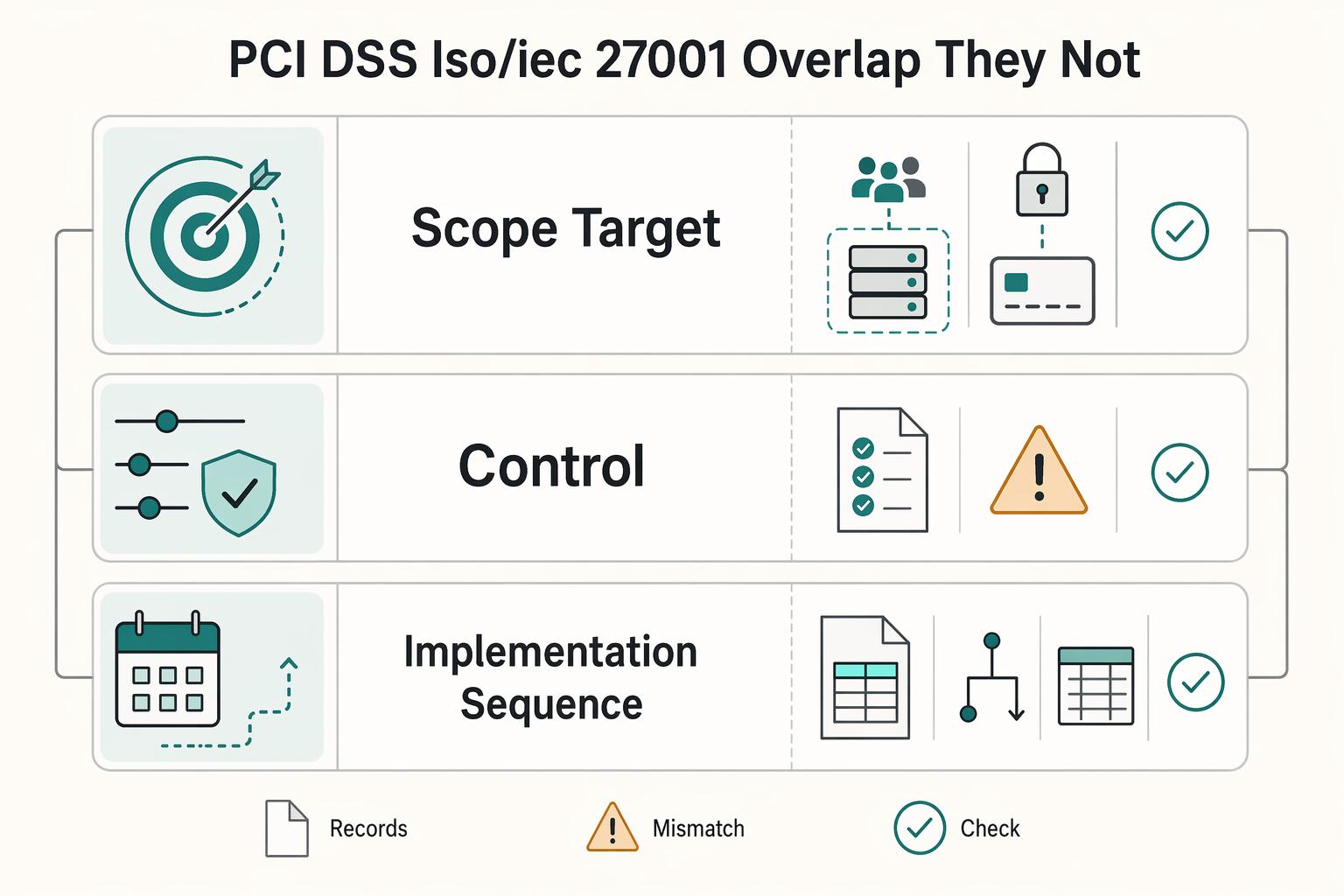
Certifications and regulatory authorisation answer different risk questions, so treat them as separate checks in payment-platform due diligence. For onboarding or renewal, focus on three things: what boundary is attested, who assessed it, and whether the activity also needs separate legal permission. This guide is for compliance, legal, finance, and risk owners evaluating `PCI DSS`, `SOC 2`, and `ISO/IEC 27001` without confusing them with UK regulatory status.
How Platforms Should Prioritize 5 Emerging-Market Payout Regions
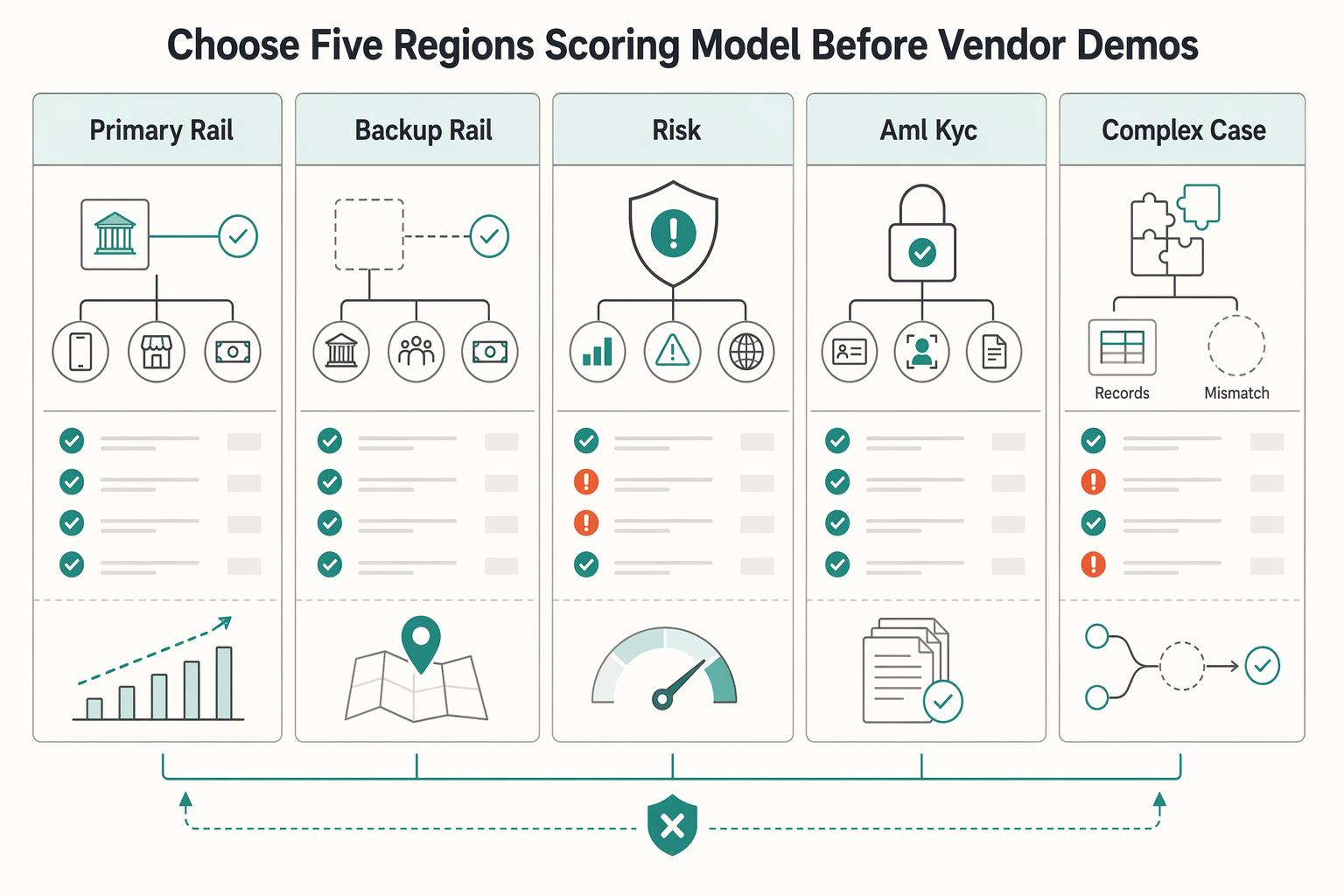
If you are choosing where to launch cross-border payouts in 2026, start with what your team can actually run. Too many "top" lists lean on hype or market-cap tables. That may work for headlines, but it does not help with execution.
Solving Esports Prize Payment Distribution: How Tournament Platforms Pay Winners Globally
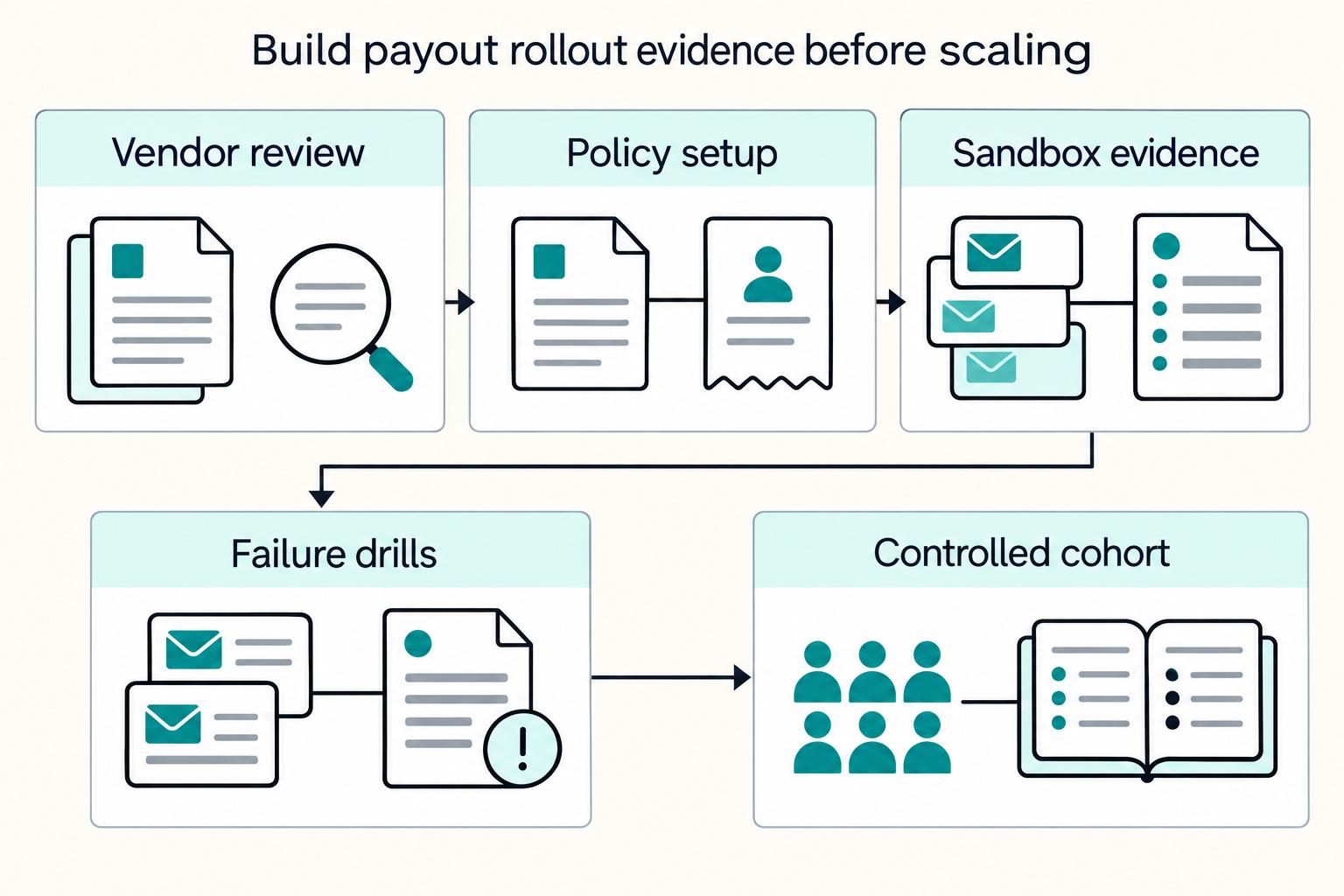
Choose your payout path based on your operating model and control requirements, not on esports messaging alone. Public pages from Payment Labs, Dots, and i-payout are useful for a shortlist, but they are not enough on their own to sign confidently or run payouts without finance and engineering surprises.