
Quick Answer
Portugal’s old NHR regime is not the normal entry route for a freelancer arriving in 2026. Prepare ordinary self-employed registration, invoicing, VAT, IRS, and social-security obligations. Assess any plausible IFICI activity-and-entity route in parallel, early enough for the January 15 deadline in the year following tax residence; it is not an automatic replacement for NHR.
Split old NHR assumptions from 2026 setup decisions#
If you are considering freelancing in Portugal in 2026, split the question in two. One lane is ordinary freelancer setup: opening activity, issuing invoices, handling VAT, filing IRS, and understanding Seguranca Social. The other is special tax status. Both need attention, but treating them as the same decision can lead you to price work, relocate, or choose clients on the wrong assumption.
Portugal still gives freelancers a clear ordinary route. You can open activity with Financas, invoice through the tax portal, and follow the operating rules in the government's self-employed obligations guide. What changed is the special-regime conversation. The Portuguese tax authority states that old NHR was repealed from January 1, 2024 and replaced by the tax incentive for scientific research and innovation, usually referred to in official material as IFICI.
That does not mean every freelancer lost every possibility of preferential treatment. Existing NHR holders keep their original term. Some people who became Portuguese tax resident in 2024 may still qualify under the transition rules. New arrivals in 2026 need an ordinary freelancer setup and, in parallel, an IFICI assessment if their activity and entity may fit. Assess the incentive early enough to meet its application deadline; do not delay ordinary obligations while waiting for that answer. For legacy continuity, Portugal NHR Tax Regime Decisions for 2026 Freelancers is a useful companion.
This guide separates the registration and reporting steps needed to operate from the narrower eligibility tests for a tax incentive. Use that distinction to build a workable budget and prepare the records relevant to your own activity.
- What old NHR still means in 2026, and what it does not.
- How to open activity, issue receipts, and keep your VAT setup clean.
- When Seguranca Social starts, how quarterly reporting works, and why take-home pay forecasts often go wrong.
- Where IFICI may fit, where the official materials say it does not, and what records you need before you rely on it.
What changed after Portugal's old NHR regime#
The Portuguese tax authority's NHR transition page now says the Non-Habitual Resident regime was repealed as of January 1, 2024 and replaced by the Tax Incentive for Scientific Research and Innovation. That sentence matters because it gives you the official framing: old NHR is no longer the open, default route that older freelancer content still describes.
The same page also says people who were already registered as NHR on January 1, 2024 keep the regime until the end of their original 10-year period. So old NHR is not dead for everyone. It survives for legacy holders. If you already have approved NHR status, the right question is not whether the regime exists in the abstract. The right question is how many years remain in your original term, what income categories you are actually using it for, and whether your current residency and filing records still support that position.
There is also still a transition story, but it is narrower than the generic online language suggests. The official page says a special transitional rule applies to people who became tax resident in Portugal by December 31, 2024, who were not considered Portuguese residents in any of the five years before the year for which NHR registration is requested, and who can show a prior link to Portugal through specific documents. The examples given by the tax authority include an employment promise, contract of employment, or posting agreement concluded by December 31, 2023; a lease or similar agreement concluded by October 10, 2023; or a residence visa or permit, or proof the process started, by December 31, 2023.
The deadline for a transition application with effect from 2024 was March 31, 2025. That deadline matters, but it does not justify a sloppy headline like closed forever in every case. The tax authority also says that if a qualifying person submits after March 31, 2025 and the request is granted, the regime takes effect only from the year of the application and the benefit still ends on the original 10-year clock counted from 2024. In practice, late filing can cost years.
| Your factual lane | What the official material supports | What you should do next |
|---|---|---|
| Already registered as NHR on January 1, 2024 | Legacy NHR continues through the original 10-year period | Confirm your remaining term, keep your records consistent, and do not assume new applicants get the same route |
| Became Portuguese tax resident in 2024, was nonresident in each of the five preceding years, and can document a prior link to Portugal | A transition route may still be relevant, but the March 31, 2025 deadline affects the year the benefit starts | Match your evidence to the official examples and calculate how many years are still left on the clock |
| Moving to Portugal in 2026 | The old NHR page does not describe a normal new-entry route for you | Prepare ordinary freelancer operations and assess any plausible IFICI route in parallel before its deadline |
What this means for a 2026 move#
For a new freelancer becoming resident in Portugal in 2026, old NHR should not be the foundation of the plan. The official transition page is built around people who were already in the system or who became resident by the end of 2024. That is why a 2026 mover should start with the ordinary self-employed operating route rather than treating old NHR as a general freelancer product that can still be switched on later.
This is also the point where you should drop lazy label-matching. Private sources often say NHR 2.0, IFICI, or other shorthand. The official materials used here are much cleaner: old NHR has one set of legacy and transition rules, and the current incentive is called IFICI. If another label does not map back to an official rule or official portal flow, do not price your move around it.
- Do not assume that old NHR is broadly open just because some legacy holders still benefit.
- Do not assume the 2024 transition route helps a person who only becomes resident in 2026.
- Do not assume that every use of NHR 2.0 or similar shorthand points to the same legal route as the official IFICI materials.
A safer rule is simple. If you cannot point to your exact lane on an official tax page, you do not yet have a tax planning conclusion. You only have a hypothesis.
Prepare the ordinary freelancer route alongside incentive review#
Ordinary registration is required even when you are exploring IFICI. Portugal’s open activity service says independent workers, including those working alongside employment, must submit a declaration of start of activity before starting, at the latest on the day stated as the start date. Review any plausible IFICI route alongside that setup rather than waiting until every operating record is complete.
The online workflow is direct but not trivial. Log in to Portal das Financas and submit the start-of-activity declaration in the activity section. The tax authority’s leaflet asks you to identify the applicable CIRS professional or CAE economic activity code, estimate turnover for the remaining calendar year, and provide the IBAN and BIC/SWIFT of an account in your name. Match the stated start date and VAT treatment to your actual work. A rushed filing can create reporting problems before your first client. If the banking side is unresolved, How Foreigners Can Open a Portugal Bank Account Without Payment Delays is a useful follow-on read.
If you want the tax authority's field-by-field backup, keep the official Inicio de atividade leaflet nearby while you file. It is still the best supplement to the shorter service page, especially when you need to understand why the portal asks for turnover, IVA details, or the CAE classification so early.
| Before your first invoice | Why it matters | Official source to use |
|---|---|---|
| Get access to Portal das Financas | You need the portal to open activity and later issue electronic receipts | Open activity service page |
| Choose the applicable CIRS or CAE code and start date | Your registration should reflect the activity you will actually perform | Open activity service page and start-of-activity leaflet |
| Estimate turnover and choose VAT treatment carefully | VAT regime decisions start from the activity declaration, not after several months of invoices | Open activity service page and VAT sections of the obligations guide |
| Store your filing proof | You may need it later for tax, social-security, or IFICI evidence chains | Portal das Financas and your own record-keeping process |
Use Portal das Financas as your operating system#
Once activity is open, Portal das Financas becomes the core system for your freelancer operations. The government's obligations guide explains that self-employed workers issue recibos verdes in the portal and choose between a receipt-invoice when they are paid at the time of issue, an invoice when payment will come later, and a receipt when the earlier invoice is finally paid. If you freelance across borders, that receipt flow matters because client type, client location, and VAT treatment all sit on the same operational path. If most of your EU clients pay by bank transfer, SEPA Transfers for Freelancers is a practical payment-side companion.
That is why the ordinary freelancer route is not a fallback. It is the real operating route. Even if IFICI later applies, you still need the ordinary workflow to be right. Portal access, receipt structure, VAT coding, annual IRS filing, and Seguranca Social timing do not disappear just because a tax incentive may also be in play.
- Open activity before the start date you intend to use.
- Keep your registered CIRS or CAE activity codes and actual services aligned.
- Use the portal’s invoice and receipt workflow correctly, or ensure another invoicing method meets the applicable legal requirements.
- Treat the first filing as the start of your audit trail, not as a disposable setup task.
Know when organized accounting becomes relevant#
At activity registration, organized accounting is required when estimated annual category B income exceeds 200,000 EUR and can be chosen below that threshold. The tax authority’s start-of-activity leaflet distinguishes later changes: an existing simplified-regime worker must move the following year after exceeding 200,000 EUR for two consecutive years, or by more than 25% in one year. Organized accounting requires a certified accountant. For social security, its default calculation uses taxable profit, with an option to request quarterly assessment under the applicable rules.
For most solo service freelancers, the immediate decision is not whether organized accounting sounds sophisticated. It is whether your expected turnover and client complexity justify it. If not, keep the route simple, but do not confuse simple with casual. Even the simplified route still needs clean VAT choices, timely receipts, and annual filings.
Handle invoices, VAT, and foreign clients correctly#
Everyday VAT and invoicing can affect cash flow before an incentive ever applies. Use the government guide for the portal workflow, then match your transaction to the current VAT Code for exemption eligibility and place-of-supply rules. An old NHR summary—or a simplified guide repeating an older VAT restriction—does not settle those questions.
Some activities are exempt by nature under Article 9 of the VAT Code. For a freelancer established or domiciled in Portugal, the current Article 53 turnover exemption uses previous-year annual turnover in Portuguese territory not exceeding 15,000 EUR, with a current-year estimate when starting activity. Export operations and related activities are excluded. The current wording no longer imposes a blanket ban on imports or organized accounting. Providing services to a foreign client is not automatically an excluded export; first determine where the service is taxable under Article 6, then apply the exemption conditions to the relevant turnover.
In the normal VAT regime, Article 41 generally requires monthly returns at prior-year turnover of at least 650,000 EUR and quarterly returns below it, with a monthly option. A new activity uses the current-year forecast for this test; special cases also exist. The usual submission deadline is the 20th of the second month after the relevant month or quarter; June and second-quarter returns are due by September 20. Check the current tax calendar for adjustments and payment deadlines. A normal-regime periodic return is still required when no invoices were issued.
For an ordinary service supplied to an EU business acting as a taxable person, the general Article 6 B2B rule places the supply where the recipient’s relevant establishment is located. Where that is another EU country and no specific service exception applies, use the foreign-client/Intra-UE workflow, validate the VAT number in VIES, and include the applicable reverse-charge wording. Report qualifying intra-EU services in the recap statement even if you use Article 53. Consumer services and exceptions such as services connected to property need their own treatment. For comparison, see How a UK LTD Should Invoice an EU Business on VAT Post-Brexit.
The same general B2B rule can place an ordinary service to a business established outside the EU outside Portuguese VAT, provided the recipient establishment and service meet that rule. Record the foreign client and the correct territorial classification on the invoice. A non-EU address alone does not establish the result: consumer services generally follow the supplier-location rule, with specific exceptions by service and location. Whether or not Portuguese VAT is charged, the income remains relevant to Portuguese category B reporting and applicable social-security calculations. For digital services, see Global VAT Compliance Map for Digital Services Platform Operators.
| Client type | Invoice and VAT handling | Common mistake to avoid |
|---|---|---|
| Client in Portugal | Issue the correct receipt through Portal das Financas and apply VAT or an official exemption where appropriate | Assuming the incentive regime decides VAT treatment |
| EU business client | For ordinary B2B services under the general rule: confirm recipient establishment/status, verify VAT number, use Intra-UE/reverse charge and recap statement | Applying the general B2B rule to consumers or to services with a specific exception |
| Non-EU client | For ordinary B2B services under the general rule, confirm the recipient establishment before treating supply as outside Portuguese VAT; assess B2C/service exceptions separately | Assuming every non-EU invoice has no Portuguese VAT, or that no VAT removes income-tax/social-security reporting |
Do not let the old NHR conversation hide basic VAT risk#
The reason so many Portugal freelancer discussions go off the rails is that they start with the tax incentive label and never come back to invoice mechanics. But Portuguese freelancer compliance is still built around receipts, IVA coding, IRS reporting, and Seguranca Social. Even a perfect IFICI application would not fix a worker who picked the wrong VAT path, failed to file a periodic return, or never matched the receipt flow to the actual transaction.
Article 53 is an exemption for qualifying operations, not a promise that all income below a global annual total avoids VAT. Keep domestic turnover separate from services whose place of supply is abroad, and review the export exclusion and the rules for leaving the exemption if your turnover changes. A foreign client, imports, or organized accounting alone should not be treated as an automatic disqualification under the current wording.
At year-end, the ordinary freelancer route still ends in annual income tax filing. The official annual IRS filing page remains part of the basic operating calendar regardless of whether you ever touch IFICI.
Price Seguranca Social before you promise take-home pay#
The detailed Seguranca Social practical guide for self-employed workers explains that the tax authority sends activity-start information to social security, which enrolls the worker where needed and notifies them of the framework and its effective date. Social security is therefore part of the activity-start process, not a separate afterthought.
For first-time independent activity, the framework normally takes effect on the first day of the 12th month following the month activity starts. For example, activity starting on any day in May 2026 normally takes effect on May 1, 2027; this is a calendar-month rule, not exactly 365 days after starting. Earlier coverage can be requested through the quarterly declaration flow in January, April, July, or October. Restarting previously covered activity normally takes effect on the first day of the restart month, so the first-time delay should not be assumed on every reopening.
That option matters because the guide says early opt-in can trigger a minimum contribution of 20 EUR. The practical tradeoff is clear. If you want social-protection coverage earlier, you may decide to start paying earlier. If you want to preserve cash in the first year, you still need to understand what is and is not counting toward your Portuguese contribution history.
| Moment in the lifecycle | What the practical guide says | Operational takeaway |
|---|---|---|
| Start of independent activity | AT sends the start-of-activity data to Seguranca Social | Opening activity with Financas also starts the social-security information chain |
| First-time self-employed worker | Framework normally starts on the first day of the 12th month following the activity-start month | Do not assume contributions begin immediately unless you choose earlier coverage |
| Earlier coverage | You can request earlier effect via the quarterly declaration months | Use this when benefit coverage timing matters more than preserving cash |
| Quarterly reporting cycle | Declarations are tied to the standard quarterly months and prior three-month income | Build a recurring calendar instead of handling contributions ad hoc |
How the contribution is calculated#
Under the quarterly assessment regime, relevant income is generally 70% of service revenue and 20% of revenue from producing and selling goods; qualifying hospitality, restaurant, and beverage services declared as such also use 20%. The monthly base is one-third of the quarter’s relevant income. Standard independent workers use a 21.4% rate; the guide lists 25.2% for Empresários em Nome Individual and EIRL holders in that social-security category, rather than for every service freelancer who works alone. Organized accounting normally uses the prior year’s taxable profit instead unless quarterly assessment is requested under the applicable rules.
Under quarterly assessment, where contributions are due, the guide sets a minimum contribution of 20 EUR per month when there is no relevant income or the calculated contribution would be lower. Organized accounting without the quarterly-assessment option instead uses a monthly base of one-twelfth of taxable profit, with a minimum base of 1.5 times IAS. That is a contribution base, not a 20 EUR contribution. Exemption cases need separate treatment. The maximum monthly base is 12 times IAS. The official 2026 IAS table gives IAS as 537.13 EUR, making that maximum base 6,445.56 EUR. Use the current IAS with the guide’s formula rather than copying its older euro examples.
This is especially important for service freelancers because the guide's 70% rule means contributions are not based on your entire gross service revenue in the same way a simple outsider summary might imply. That does not make the system light. It does mean the operating math is specific, and you need the official formula before you compare Portugal to another jurisdiction.
- Under quarterly assessment, relevant income for service work is generally 70% of the quarter's service revenue.
- Under quarterly assessment, the monthly contribution base is one-third of that relevant income.
- Standard self-employed workers use the 21.4% rate shown in the practical guide.
- Under quarterly assessment, where contributions are due and no exemption applies, a low or zero calculation normally leads to a 20 EUR monthly minimum contribution; organized accounting without that option has a minimum monthly contribution base of 1.5 times IAS.
When you may not need the standard self-employed contribution flow#
Portugal's social-security guide also makes clear that not everyone goes through the same self-employed track. Lawyers and solicitors are expressly outside the general self-employed regime. The guide also lists temporary workers in Portugal who already have mandatory social protection in another country as an excluded case, subject to the official exclusion request process. So if your move to Portugal is partial, temporary, or tied to another mandatory social-security system, do not assume the default self-employed contribution flow automatically governs you.
The employee-plus-self-employed exemption is conditional: the quarterly assessed monthly average of relevant self-employed income must be below four IAS; the salaried employer and freelance client must be different entities outside the same group; employment must provide mandatory coverage for all risks covered by the independent-worker regime; and the monthly average employment remuneration must be at least one IAS. In 2026 those thresholds are 2,148.52 EUR and 537.13 EUR respectively. These are monthly averages, not quarterly gross-revenue limits. Check that social security has recognized the exemption and provide proof or a request where the guide requires it.
That means some freelancers with a salary can reduce the independent-worker burden, but only when the facts line up cleanly. If your client, employer, and group structure are muddled, do not rely on the exemption until the paperwork actually supports it.
Your 2026 Portugal freelancer calendar#
One of the simplest ways to make Portugal workable after the NHR change is to move from tax-label thinking to calendar thinking. The official sources used here give you a workable calendar. Once you know the dates that drive activity setup, quarterly declarations, VAT returns, annual IRS, and IFICI filings, the country becomes easier to compare on operating certainty rather than on marketing narratives.
| Checkpoint | Official timing | Why it matters |
|---|---|---|
| Open activity | Before you start, and at the latest on the stated start date | This is the legal starting point for your freelancer activity |
| Self-employed quarterly declaration | By the last day of January, April, July, and October | Seguranca Social uses it to calculate contributions from prior-quarter income |
| VAT periodic return in the normal regime | Normal regime: monthly/quarterly under Article 41; usually the 20th of the second month after the relevant month or quarter, with June/Q2 due September 20; check current calendar | You still file even if no invoices were issued in the period |
| Annual IRS return | April 1–June 30 of the year following the income year, subject to applicable exceptions/calendar adjustments | Freelance category B income still needs annual tax reporting |
| IFICI application for a new resident | By January 15 of the year after becoming resident, unless a special transitional rule applies | Late filing can shorten the usable period of the incentive |
Use the calendar to assess the admin you need and plan ordinary compliance alongside any incentive application. Initial comparisons and professional advice can start with available records and labelled questions; do not wait for a perfect operating pack before checking a time-sensitive IFICI route. If Portugal is one option on your shortlist, compare it with Top Freelancing Countries in 2026 for Platform Expansion Decisions.
Where IFICI may fit and where it often does not#
The current official incentive regime in the materials used here is IFICI. The Portuguese tax authority's IFICI FAQ, official IFICI leaflet, and 2025 administrative guide all point in the same direction. To benefit, a person has to become Portuguese tax resident, must not have been resident in Portugal in the previous five years, must carry out an eligible activity in the right type of entity, and must not have benefited from NHR before, opted into Article 12-A, or previously benefited from IFICI.
The official materials also set a timing rule that freelancers should take seriously. The request must be submitted through Portal das Financas by January 15 of the year following the year in which the person becomes resident in Portugal. If filing happens late, the official FAQ and guide say the benefit only starts from the year of filing and runs for the remaining legal period. That sounds technical, but it changes money. A one-year delay can permanently remove one usable year from the 10-year window.
Under IFICI, qualifying Portuguese-source category A and B income can receive the 20% special rate. The official FAQ describes a general exemption for foreign-source income, except category H pensions, and 35% treatment for income paid by entities domiciled in listed preferential-tax jurisdictions. Determine the source under the applicable income rules: a foreign payer does not by itself make income foreign-source. For example, employment exercised in Portugal is Portuguese-source under Article 18 of the IRS Code. Incentive status therefore does not put every income stream on a blanket 20% rate or make every overseas payment exempt.
| Official IFICI lane | What the tax authority materials describe | Why freelancers should read it carefully |
|---|---|---|
| Teaching and scientific research | Higher education institutions, science-and-technology bodies, and technology and innovation centers appear in the official materials | Some service-contract work can fit here, but only in the exact cases the official FAQ supports |
| Highly qualified professions | The official materials name categories such as directors, science and engineering specialists, doctors, university professors, and ICT specialists, subject to entity conditions | Being skilled is not enough on its own; the entity conditions also matter |
| Qualified jobs in nationally relevant economic activities | AICEP and IAPMEI-recognized routes exist in the official framework | Several of these routes are job-based and not designed as generic freelancer catch-alls |
| Research and development or certified startup lanes | The official materials include SIFIDE-linked R&D work and certified startup situations | You need the exact entity and activity match, not a loose startup label |
What the official FAQs say about freelancers and service contracts#
This is the most important section for solo professionals who assume IFICI automatically covers category B work. The official FAQ gives one clear example in favor of a service-contract setup: a university professor teaching at a Portuguese higher-education institution under a service contract can benefit from IFICI if the other legal conditions are met. That matters because it proves category B or service-contract logic is not always excluded.
But the same FAQ also gives a clear counterexample. A person who has a service contract with an entity whose economic activity was recognized by AICEP under the relevant route is not eligible under that route, because the concept of posto de trabalho requires the existence of a contract of employment. That is exactly the type of nuance that gets lost when old NHR discussions are collapsed into a simple which regime is better headline.
For freelancers, the practical lesson is conservative and useful. Some IFICI lanes may fit some service-contract or category B situations. Other lanes are explicitly job-based and require an employment relationship. Therefore a generic solo professional invoicing foreign clients should not assume IFICI merely because the activity sounds high-skilled, innovative, or international.
| Scenario | What the official material supports | Operational conclusion |
|---|---|---|
| Generic copywriter, marketer, or consultant invoicing foreign clients from Portugal | Freelancer status and a foreign client alone do not establish the required IFICI activity/entity conditions | Prepare ordinary operations; assess the exact incentive route alongside them without assuming eligibility |
| University professor providing services to a Portuguese higher-education institution | The official FAQ gives a positive service-contract example under the teaching route | Possible IFICI lane, but still subject to the other legal conditions |
| ICT specialist working with a qualifying entity | The official materials list ICT specialists among highly qualified professions and impose entity conditions | Potential route, but only after the entity and profession tests are matched precisely |
| Freelancer relying on a loose startup narrative | The official materials refer to certified startups and specific activity links | Do not treat startup language alone as proof of IFICI eligibility |
What to archive if you rely on IFICI#
The 2025 IFICI guide is particularly useful because it goes beyond slogans and describes procedure and evidence. It says requests are made in Portal das Financas and may need supporting documents such as a copy of the employment contract when the activity is a job position, a permanent company certificate when the role is as a corporate-body member, academic qualification proof where applicable, and company declarations for some routes. It also says the responsible entities and the companies involved must keep the relevant documents for 10 years, and the beneficiary must also archive proof of the activity and the corresponding income.
That archive rule is the best clue about how Portugal expects this regime to be used. IFICI is not built as a casual, self-certified discount that you can retrofit from memory at tax-return time. It is built as a status with a file. If you want to rely on it, act like you will eventually need to hand another person a defensible document pack.
- Keep the portal submission proof and all later status notices.
- Store the contract type that matches your route, whether job contract, service contract in a supported lane, or corporate-body evidence.
- Keep qualification records and any entity confirmation required for the route.
- Archive the income evidence showing that you continued to earn qualifying income during the years you use the regime.
Build a document pack before you move#
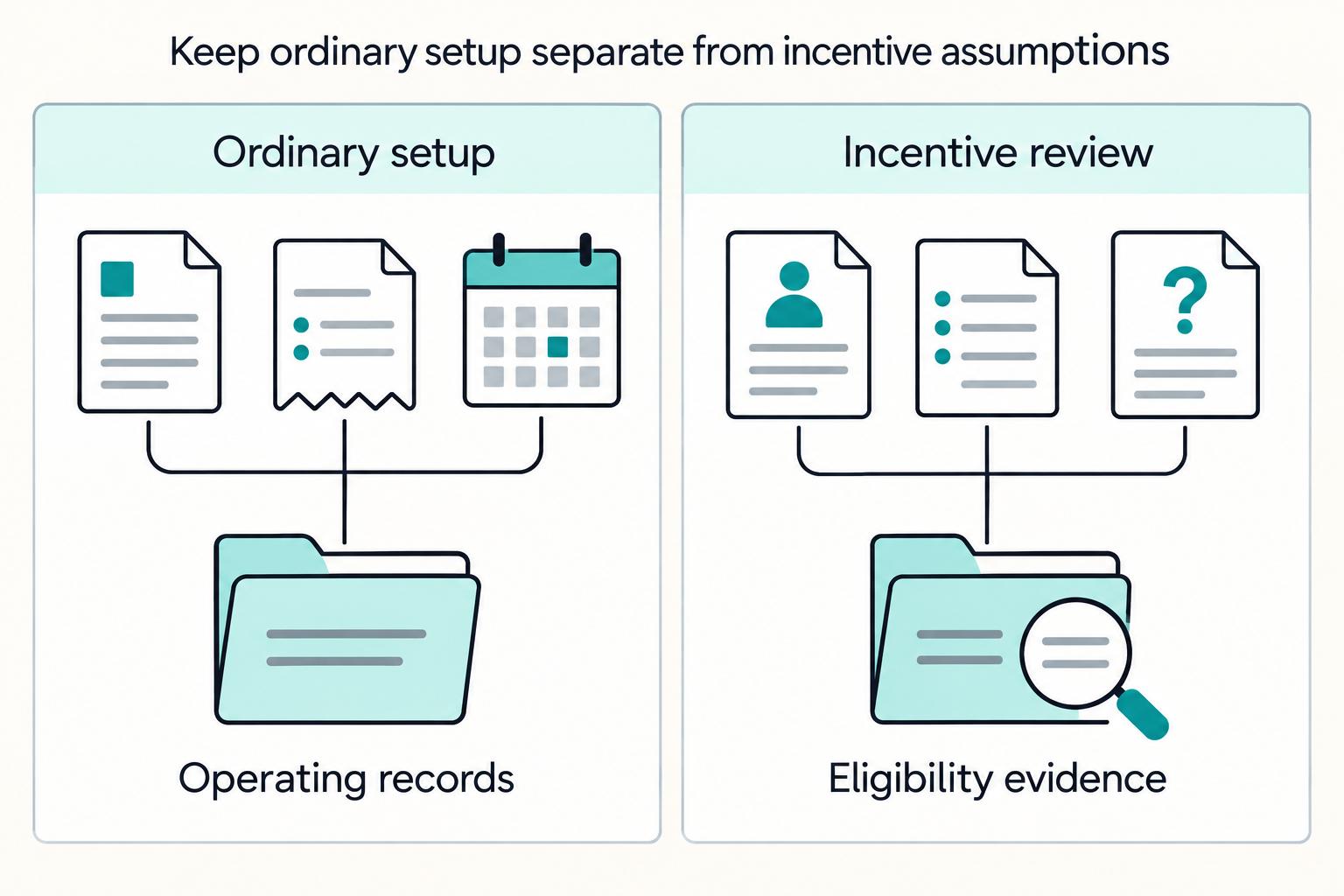
The easiest way to stay out of trouble in Portugal is to separate a move pack from a tax hypothesis. Your move pack is what you need to operate regardless of whether IFICI ever applies. Your tax hypothesis is the special-status story that may or may not survive review. If you bundle them together, you can end up delaying ordinary compliance because you are waiting on a special-regime answer that has not been proven yet.
Prepare ordinary operating records before you start the relevant work: portal access, the activity-start filing, activity-code alignment, VAT treatment, invoice workflow, and a social-security calendar. At the same time, open an IFICI file if your activity may fit, identify missing qualifications or entity confirmations, and track the January 15 application deadline. Discovery and advice can begin with available records; reliable eligibility evidence is needed before budgeting around the benefit.
| Document or record | Why you need it | Where the obligation shows up |
|---|---|---|
| Portal das Financas access and activity-start proof | You need it to start legally and to show when the activity began | Open activity service page and start-of-activity leaflet |
| VAT decision notes and sample invoice logic | Client location changes what you write on the receipt and whether VAT applies | Government obligations guide and VAT Code pages |
| Quarterly Seguranca Social calendar | Missing declaration deadlines creates avoidable compliance damage | Government obligations guide and Seguranca Social practical guide |
| Annual IRS filing folder | Category B income still has to be reflected in the Portuguese tax return | Official IRS filing service page |
| IFICI evidence pack, if relevant | The current incentive is document-heavy and not designed to be improvised | IFICI FAQ, leaflet, and 2025 guide |
A practical decision rule for 2026#
A workable decision rule for a freelancer is this. If Portugal still makes sense on the ordinary route, it may be a viable operating base. If Portugal only makes sense when you assume old NHR is somehow still broadly open, or when you assume IFICI will automatically validate a generic freelancer profile, then you do not have a viable plan yet.
- First ask whether you can operate legally as an ordinary freelancer.
- Then ask whether the VAT and social-security calendar is supportable with your current admin capacity.
- In parallel, check whether your exact activity and entity fit IFICI and record its application deadline.
- If the incentive is the only reason Portugal works, require the documentary proof before you relocate or sign long client commitments.
This is a better use of time than debating labels. It tells you where the move fails if it fails, and it keeps your operating route valid even if the special regime answer turns out to be no.
Conclusion#
The 2026 position is more useful than the older Portugal freelancer myth. Portugal still has an ordinary self-employed route: open activity, issue invoices and receipts, apply the relevant VAT rules, file IRS, and manage Seguranca Social. Old NHR is no longer the general entry route for a new freelancer move.
If you already hold NHR, verify your remaining term and keep your records aligned. If you became resident in 2024, check whether the transition rule and document list fit your case. If you are moving in 2026, prepare ordinary freelancer operations and assess any plausible IFICI route in parallel, early enough for its deadline. Use the exact activity, entity, contract, and income conditions rather than relying on a label.
A disciplined closeout sequence for Portugal looks like this:
- Open activity with Financas before you start and keep the filing proof.
- Map the invoice and VAT logic for Portuguese, EU, and non-EU clients before you quote fixed rates.
- Build a Seguranca Social calendar around the quarterly declaration cycle and the actual contribution formula.
- Assess any plausible IFICI route early and keep the exact eligibility evidence and application deadline.
That approach does not make Portugal less attractive. It makes the decision legible. And for a freelancer comparing countries in 2026, legible is better than optimistic.
If you need help structuring cross-border freelancer operations after the tax basics are clear, contact Gruv.
Frequently Asked Questions
Is NHR still available to a freelancer moving to Portugal in 2026?
Not as a broad default route. The official tax page says old NHR was repealed as of January 1, 2024. That immediately removes the main premise behind many older freelancer articles that still frame Portugal as if NHR were a standard new-arrival product. That said, the same official page also says legacy NHR holders keep their original 10-year period, and it describes a transition route for some people who became Portuguese tax resident by December 31, 2024, were not considered Portuguese residents in any of the five years before the year for which NHR registration is requested, and can show specific evidence of a prior link to Portugal. So the accurate answer in 2026 is narrower: old NHR still matters for some existing or transition cases, but not as the normal route for a newly arriving freelancer.
Can a self-employed freelancer use IFICI?
Only if the exact official route supports the activity and the entity. The official materials do not justify a blanket answer like yes, any high-skilled freelancer can use IFICI. The clearest official picture is more selective than that. The FAQ gives one positive example for a university professor working under a service contract at a Portuguese higher-education institution. It also gives a negative example for a service contract under an AICEP-recognized route because that route requires a contract of employment. So a freelancer should not ask whether self-employed work counts in the abstract. The correct question is whether the exact IFICI lane supports the exact activity and relationship being used.
When do Seguranca Social payments start for a new freelancer?
For first-time independent activity, the framework normally takes effect on the first day of the 12th month following the month activity starts. Starting during May 2026, for example, normally means May 1, 2027. This is a calendar-month rule, not exactly one year after the particular start date. Earlier coverage can be requested through the quarterly declaration flow in January, April, July, or October. Previously covered activity that restarts normally takes effect on the first day of the restart month. Check the notified effective date and any exemption rather than assuming every start receives a fresh year without contributions.
How should EU and non-EU clients be invoiced from Portugal?
For ordinary EU B2B services covered by Article 6’s general rule, confirm the recipient establishment and taxable-person status, validate the VAT number in VIES, use the foreign-client/Intra-UE workflow, and include the applicable reverse-charge wording. Qualifying intra-EU services require the recap statement even under Article 53. Specific service exceptions and consumer sales need separate VAT treatment. For an ordinary B2B service to a recipient establishment outside the EU, the general rule can place the supply outside Portuguese VAT. Use that invoice classification only after confirming the service and recipient conditions. Consumer services generally follow the supplier-location rule, subject to service-specific exceptions; a non-EU address alone does not justify no Portuguese VAT. The income still needs Portuguese income-tax and applicable social-security reporting.
Do I need quarterly declarations if I have organized accounting or a salaried job?
Not always. Organized accounting normally uses taxable profit communicated by the tax authority rather than quarterly self-declarations. The social-security guide allows eligible workers to request quarterly assessment, which brings the quarterly declaration obligation back. Confirm the regime actually applied to you instead of assuming organized accounting always removes that obligation. An employee who also freelances may qualify for an exemption when the entities are distinct and outside the same group, employment covers all required social-protection risks, monthly average employment remuneration is at least one IAS, and quarterly assessed monthly average relevant freelance income is below four IAS. In 2026 that is 537.13 EUR and 2,148.52 EUR respectively. Check recognition and any required proof; these are monthly averages, not quarterly gross-income thresholds.
If I became Portuguese tax resident in 2024 and missed the March 2025 transition deadline, is the story over?
Not necessarily, according to the official tax authority page. The transition page says that a later application may still be granted, but the regime only starts in the year of the application and still ends at the close of the original 10-year period counted from 2024. That is a very different answer from saying the route stays fully open. It means a late qualifying applicant may still have a route, but the cost of delay is real because part of the period may already be lost.
Researched and edited by the Gruv editorial team. Gruv builds cross-border billing, payouts, and finance-operations software for global businesses.
Sources
Includes 3 external sources outside the trusted-domain allowlist.
- dgaep.gov.pt/index.cfmtrusted
- info.portaldasfinancas.gov.pt/en/tax-information/getting-started-in-portug...trusted
- info.portaldasfinancas.gov.pt/pt/apoio_contribuinte/questoes_frequentes/pa...trusted
- gov.pt/servicos/abrir-atividade-nas-financasexternal
- gov.pt/guias/trabalhar-por-conta-propria-guia-para-...external
- sisscontent.seg-social.pt/documents/10152/14965/1009%2BTrabalhador%2Bi...external
Educational content only. Not legal, tax, or financial advice.
Related Posts
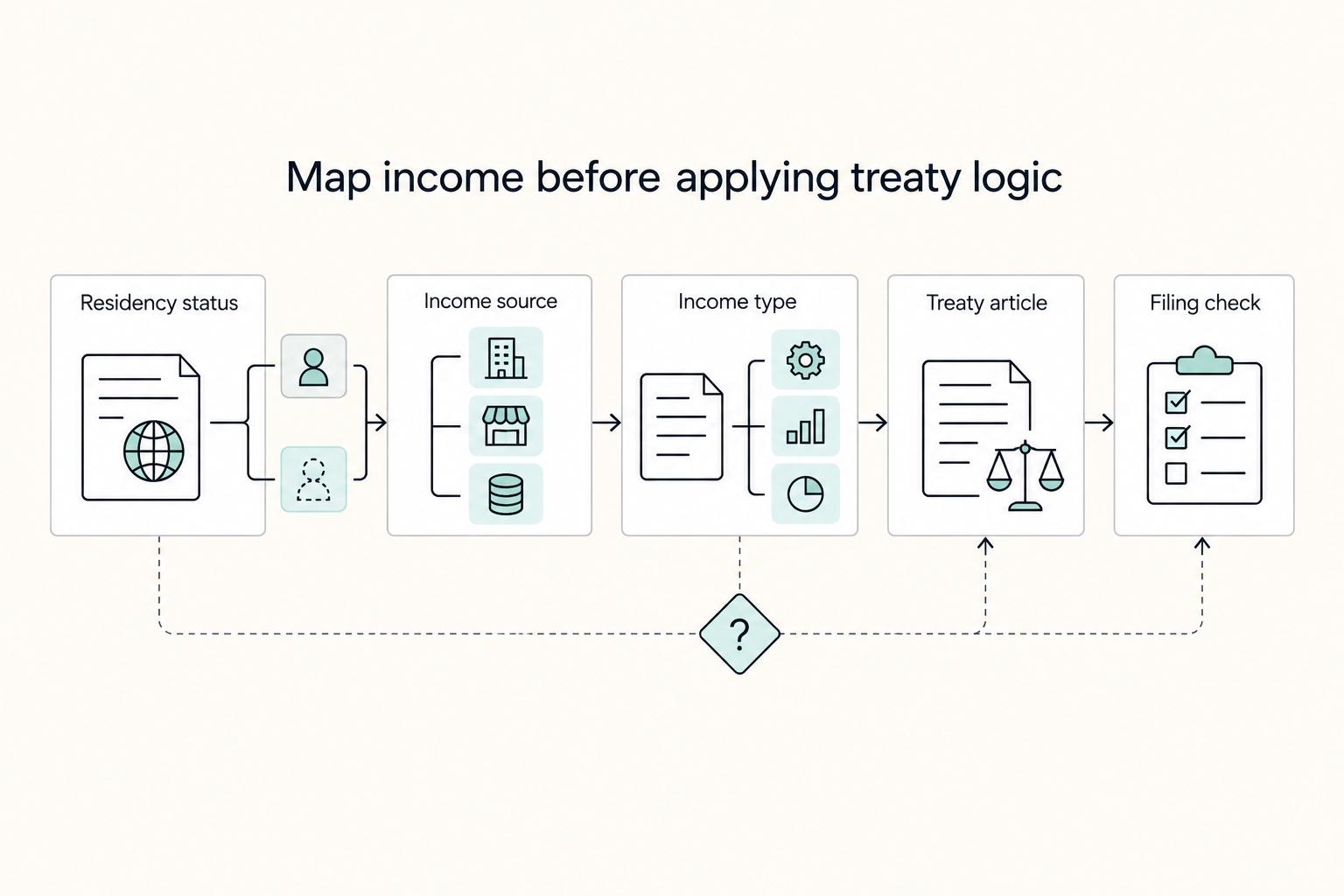
Portugal NHR Tax Regime Decisions for 2026 Freelancers
If you are planning around Portugal NHR in 2026, start by checking which legal path actually applies to you. Public pages still mix the legacy regime with newer labels, and that overlap is enough to push people into the wrong assumptions before they file a return, issue an invoice, or set pricing for the year.

Top Freelancing Countries in 2026 for Platform Expansion Decisions
This is not a generic roundup of attractive freelancer markets. If you are deciding where to expand payout and compliance coverage next, the useful question is not which country shows up most often in listicles. It is which country your team can support end to end without breaking onboarding, payouts, or downstream operations.

The Freelance Payment Penalty: A Modeled Audit of Platform Fees, FX Spreads, and Payout Delays
The money rarely disappears through a single, easy-to-spot fee. The real loss is stacked. A marketplace takes its commission, a processor adds a charge for international cards, a bank or payment company converts the currency at a spread, a platform holds the funds before release, and a wire sheds a little to intermediaries on the way in. Each layer looks defensible on its own, but the worker feels the combined result as a smaller deposit and a later payday.