

Quick Answer
Choose a hold only after identifying funds ownership and the legal, provider or contractual basis. Scope discretionary controls to supported exposure, record the amount, owner, review date and release conditions, and distinguish them from mandatory legal blocks. Release unaffected obligations only when funding and restrictions are separable, and resolve existing attempts before any replacement.
When a Temporary Fund Freeze Makes Sense#
Temporary holds and freezes are useful payment controls, but choosing the wrong one creates avoidable operational stress.
A payment hold delays access to funds. It does not decide the final outcome.#
A payment hold restricts availability of a defined amount under an applicable legal, contractual or provider basis. Record that basis before acting: an internal risk policy cannot grant authority to withhold someone else's funds. A risk alert calls for review, not automatic proof of fraud or permission for an indefinite restriction.
A hold and a freeze are different actions, so they should be chosen differently.#
Distinguish a transaction hold, rolling reserve, withdrawal restriction and account-wide restriction. They affect different funds and activities. A mandatory legal block is a separate category: it may require broader scope or prohibit release. Do not substitute a narrow internal hold when law requires blocking, or broaden a discretionary hold merely because broader controls are available.
This guide is for teams that need to decide quickly and keep a clear record.#
If you own compliance, legal, finance, or risk decisions, the practical question is which temporary control matches the signal in front of you. You also need a clear record of what triggered the control, what was reviewed, and what must be true before release. The sections that follow focus on those decision and release mechanics.
There is no single timing rule, so policy discipline matters more than folklore.#
Hold timelines vary by bank, region, and provider, so universal triggers and release timelines are not reliable. A stronger approach is to document why funds were held, who approved the action, what facts were checked, and what condition supports release. That is what helps keep a control proportionate while reducing unnecessary payout disruption.
If you're tuning the signals that trigger a freeze, see Fraud Detection on Payment Platforms with Rules and Machine Learning.
How to choose a hold control and who this list is for#
This guide compares six operational controls for authorized platform or provider programs. First identify who owns the funds, who has authority to restrict them, which agreement or law applies, and what that authority permits. A virtual-account label or merchant-of-record role alone grants no general freeze power.
Right audience#
This section is for compliance, legal, finance, and risk teams that decide when to delay funds, who approves that decision, and what evidence must be checked before release. The focus is policy and evidence quality, not just reacting to a fraud score.
Wrong expectation#
Do not expect one cross-platform threshold, hold rate, or release timeline that applies cleanly everywhere. If stakeholders ask for a single "normal" trigger, document your own platform-specific matrix instead of relying on market folklore.
Ranking lens#
Compare hold options using internal criteria such as fraud-loss containment, cashflow impact, review effort, and audit defensibility under your KYC, KYB, and AML controls. That lens makes the tradeoffs explicit before you scale a control.
Escalation rule, as a policy choice rather than a universal standard#
For a discretionary restriction, choose the narrowest authorized scope supported by the facts. Mandatory sanctions or court-directed restrictions follow their required scope instead. Keep the legal basis, amount, affected transactions or accounts, owner, review date and permitted release conditions in the case record.
Compare the six hold options before you implement#
Build the matrix around actual authority and funds ownership, then compare risk containment, user liquidity and review workload. The six controls are operational categories, not interchangeable legal powers.
The labels below describe possible operational scope. Confirm the provider capability and applicable authority for each control before using it; do not treat low/medium/high ratings as a legal permission or measured risk score.
| Control | Possible use when authorized | Affected scope | Release or review requirement | Main failure to prevent |
|---|---|---|---|---|
| Transaction hold | A specific unresolved transaction needs review. | Defined amount or transaction. | Resolve its stated basis; retain review date and applicable deadline. | Hold grows beyond the authorized amount or remains after its basis ends. |
| Rolling reserve | Contractually supported refund/dispute exposure needs ongoing coverage. | Defined percentage or amount from eligible transactions. | Track each tranche, permitted use and scheduled release. | Reserve is taken from unrelated funds or extended without authority. |
| Account restriction | Broader supported risk or a mandatory legal direction applies. | Only activities/property within the required scope. | Separate discretionary review from legally authorized unblocking. | Internal risk policy overrides law or captures unrelated property. |
| Withdrawal gate | The relevant balance is not available or is under an authorized review. | Affected balance and outgoing activity. | Verify actual available balance and resolve its basis. | A virtual-account label is treated as authority to retain all funds. |
| Batch delay | Some unexecuted obligations need authorized review. | Only affected items where funding and controls remain separable. | Resolve each item and retain original-attempt history. | Splitting a sent/unknown batch creates duplicate payouts. |
| Document restriction | An applicable provider or legal requirement prevents release. | Relevant payment/account, within its authorized scope. | State required artifact, sufficiency test and review deadline. | Every missing tax document becomes an indefinite freeze. |
Apply proportionality within the actual authority. Separate mandatory blocking from discretionary review, and reassess both scope and continuing basis at each review point.
Also distinguish outages from risk alerts. A delivery timeout can leave an attempt unresolved without establishing fraud or failure. Retrieve bank or provider evidence and keep investigation separate from any authorized fund restriction; do not send a replacement while the original can still complete.
Use a transaction-level review hold when risk is narrow#
When the signal is tied to one payment event, consider starting with a transaction-level hold for review instead of a broader freeze. That keeps the response proportionate. You isolate the flagged payment while you review it, rather than pausing payouts and possibly limiting new payment acceptance across the account.
When this is the right control#
Review unusual activity, changed transaction patterns or incomplete required verification against the account's context. A signal supports investigation; placing a hold also requires the applicable authority and a reason linked to the affected funds.
As a hypothetical example, an account with a recent average ticket of USD 400 receives a USD 5,000 order. Check whether a legitimate larger order explains it, which funds remain under your control, and whether the agreement permits a targeted review hold. Neither amount is a universal threshold.
What makes it useful#
The main advantage is scope. A temporary fund hold is a short-term delay while transactions are reviewed, which is generally less disruptive than a full freeze or closure.
A targeted hold can limit liquidity harm where the agreement permits it and the facts are transaction-specific. Document the amount, underlying concern, reviewer, review date and what evidence would resolve it. Do not infer permission from the fact that a narrower hold would be less disruptive.
The operator checks that matter#
Do not place this hold on a vague signal. Record a small evidence pack that shows why the event is out of pattern and what clears release. At minimum, capture:
| Check | What to record | Example |
|---|---|---|
| Amount pattern | flagged amount versus recent average ticket | $5,000 versus $400 |
| Documentation issue | specific documentation issue | incomplete verification; mismatched EIN; missing license |
| Provider request | whether the provider has requested more details in the dashboard | requested more details in the dashboard |
| Release condition | what document or confirmation resolves the hold | explicit release condition |
Where it goes wrong#
The common failure mode is scope creep. A narrow hold becomes harder to justify if repeated anomalies appear or documentation gaps spread beyond one event.
If further evidence broadens the concern, reassess the basis and scope before changing the restriction. Set escalation thresholds from actual exposure and provider rules, not an unsourced chargeback percentage.
Related reading: Account Reconciliation for Payment Platforms: How to Automate the Match Between Payouts and GL Entries.
Use a rolling reserve when disputes are trending but trust is not broken#
There is no universal threshold, standard percentage, standard duration, or platform-specific trigger you can rely on for deciding when a rolling reserve should be used.
What this section can support#
A rolling reserve sets aside eligible funds under agreed terms for refund or dispute exposure. Specify the percentage or amount, calculation base, affected transactions, permitted deductions, each tranche's release timing, review owner and exit conditions. Do not use a reserve to retain unrelated contractor earnings.
Verification standard before policy decisions#
For a product-specific example, Stripe Connect lets supported platforms create amount holds or percentage plans on connected-account funds; its platform-created reserves cannot exceed 180 days. That limit is not a universal deadline for Stripe restrictions or legal blocks. Confirm actual product eligibility and account terms before using the feature.
Practical implication for escalation#
As a hypothetical agreed reserve, retain 5% of eligible USD 1,000 proceeds for 30 days: USD 50 is reserved and USD 950 remains subject to the ordinary available-balance and payout rules. A later eligible USD 2,000 tranche adds USD 100 with its own release date. These are illustration terms, not recommendations. Track authorized deductions so released amounts are not double counted.
Separate account-wide restrictions from mandatory legal blocks#
Use a discretionary account-wide restriction only where the applicable authority and broader facts support its scope. Mandatory legal blocking can require restrictions regardless of an internal narrow-first preference. Legal or compliance owners must identify the relevant property, prohibited dealings and authorization needed to unblock it.
For example, OFAC explains that property required to be blocked cannot be transferred, withdrawn or otherwise dealt in without authorization. Ownership remains with the blocked person. This is different from a processor risk reserve or a request for more information; an internal reviewer cannot release legally blocked property merely because a timer expired.
Before you freeze an account, document:
- the actual legal, provider or contractual basis and who owns the affected funds
- why a hold on one or more transactions is not enough
- which facts make the risk account-wide
- who owns review and what conditions must be met before access is restored
The main tradeoff is customer harm. A full freeze can unfairly restrict legitimate users from accessing their own money. If the account operates across multiple jurisdictions, document ownership clearly because rules can differ by market.
When a freeze is tied to payout changes or updated bank details, see Wire Fraud Prevention for Platforms: How to Spot Spoofed Bank Details Before You Pay.
Gate withdrawals in Virtual Accounts when inbound funds are uncertain#
For an authorized virtual-account or ledger program, distinguish recorded credits from available funds. Restrict outward movement only as required by the provider, agreement or law for the affected balance. A pending credit is not necessarily available funding, but it does not justify freezing unrelated available balances.
This control is most useful when a credit appears before review is complete. The key point is scope: you are restricting outward movement on unresolved funds, not making an account-wide fraud determination.
Why this is the better middle ground#
Use a balance-specific gate where supported and sufficient under the applicable authority. Keep the affected amount and source reference explicit; a review state is not proof of fraud. Check whether an approved funded balance or credit facility legitimately permits other obligations to proceed.
What your release check should look like#
Because the guidance here does not provide universal release deadlines or cross-platform thresholds, use a consistent internal checkpoint before release or return decisions, for example:
| Checkpoint | What to confirm |
|---|---|
| External evidence | Match bank/provider reference, amount, currency, sender and actual outcome. |
| Available balance | Reconcile recorded, pending, reserved and available amounts; posting alone does not prove availability. |
| Authority and review | Record continuing basis, owner, review date and lawful release/return conditions. |
Where teams get this wrong#
Assign one current owner and a next review point. Escalate overdue reviews rather than silently extending a discretionary restriction. If the basis has ended or scheduled release is due, release according to the applicable rules; continuation requires a valid basis, not just queue backlog.
Send permitted factual updates about the affected amount/activity, required next action and next update. Do not promise a release date you cannot meet, imply confirmed misconduct from a risk alert, or disclose protected sanctions, suspicious-activity or investigation information.
Delay payout batches with partial release instead of platform-wide stops#
Where the provider and authority allow item-level separation, release unaffected, funded and unexecuted obligations while the affected items remain under review. A common funding shortfall, account-level block or mandatory legal restriction may prevent that separation.
The limit is evidence: the source guidance supports temporary fund-availability controls, staged release approaches, and data matching, but not a universal split threshold or one prescribed batch method. A practical rule is simple: when risk is recipient-specific or funding-specific, isolate that lane first.
Use it when risk is mixed, not account-wide#
Before splitting, establish which items have not executed and which funding is actually available. A provider accepted batch or timeout can conceal completed or still-live items. Investigate those outcomes before creating child instructions; a new batch identifier alone does not protect against duplicate payments.
What to split and what to keep constant#
Keep payment intent stable and split execution paths:
- Keep flagged, unexecuted items in a review lane with their obligation IDs, basis, owner and release condition.
- Release eligible, funded and unexecuted items with linked attempt references.
- Atomically guard each obligation across original and child batches; provider request-key windows do not replace that durable guard.
Your checkpoint should confirm which recipients are tied to a pending ACH or other unresolved funding event. It should also confirm whether funds are visible versus cleared, and the exact link between recipient, funding source, and hold reason. This is where data matching becomes operationally useful.
The main tradeoff is reconciliation discipline#
A key operational risk after the split is state and reconciliation drift. Problems show up when original batches, released subsets, and delayed subsets carry inconsistent statuses, or when retry states blur "not yet released" and "failed, then retried."
Keep a batch-level record of the original batch ID, child payout IDs, affected recipient IDs, funding-source reference, delay timestamp, reviewer, and release trigger.
Operator rule#
Split only eligible unexecuted items when their funds and restrictions are separable. For each release, reconcile original attempts and prevent a second execution. Apply any broader restriction only within its legal or contractual scope.
Related: Airline Delay Compensation Payments: How Aviation Platforms Disburse Refunds at Scale.
Trigger document-driven holds for compliance gaps, not just fraud patterns#
Use a document-related restriction only where the actual legal or provider requirement or valid agreement permits it. Identify whether the missing record prevents payment, changes withholding or reporting, or merely needs remediation; these are different outcomes.
Use a deficiency basis, not a suspicion basis#
A defensible document hold starts with a specific gap and a clear release condition. If you cannot name the exact deficiency, the hold is probably too vague.
A missing tax form does not universally permit withholding all earned fees. The tax owner must identify the applicable documentation and withholding rules, while the payment owner confirms any authority to delay release. Separate a valid payment restriction from a request to update records, and do not label a document gap as fraud.
Verify the form logic, not just the story#
Review against concrete artifacts, not narrative explanations. Your record should capture:
- the exact missing, stale, or conflicting document
- the policy or payout condition that requires it
- the reviewer, outreach date, and release condition
For example, if a provider requires a specific identity correction before enabling payouts, name the field and required evidence, use a secure submission channel, and record receipt separately from provider approval. A contractor's personal FEIE claim is not a generic payout-release condition.
A common failure mode is the endless hold#
Endless holds can come from unclear ownership or changing acceptance standards. When requests change over time without a final checklist, payout can stay blocked and escalation risk can rise.
Send one consolidated notice of permitted remediation requirements, review timing and available support or challenge path. Record any changed request and its basis. If a legal restriction prevents disclosure or release, follow that requirement; do not keep adding unrelated documents to extend a discretionary hold.
For a step-by-step walkthrough, see Device Fingerprinting Fraud Detection Platforms for Payment Risk Teams.
Build the minimum evidence pack every hold decision must have#
A hold decision is more defensible when another reviewer can reconstruct both the hold and the release from the file alone. Set one internal minimum record template and use it consistently. Keep coded fields and narrative notes separate so the file shows what happened, what was observed, what was decided, and what must be true before release. Treat this as your program standard, not as a universal legal template.
1) Fix your record set. Use a fixed case structure for every hold so reviewers are not piecing decisions together from scattered notes. Consistency is the control. If the same decision data appears in the same place each time, escalations and re-reviews are faster and more reliable.
2) Tie each claim to a retrievable artifact. For each assertion in the file, store the underlying system artifact, not just a summary note or screenshot. Stable identifiers and official documents are easier to audit later than ad hoc evidence. When you cite legal or regulatory materials, keep the official version in the case file when available:
- retain the applicable agreement version, provider instruction or actual legal authority
- record affected property or amount and any reporting/notice requirements identified by the responsible owner
- distinguish scheduled discretionary release from authorization needed to unblock legally restricted property
3) Separate facts, uncertainty, and judgment. Write notes so observed facts are distinct from assumptions and reviewer conclusions. If a point is unverified, label it that way and state what would confirm or disprove it. That makes legal and compliance review more credible and easier to challenge-test.
Release under the applicable authority and schedule, with a separate record of amount, owner and reason. Ending a reserve makes funds available under that program; it is not proof of bank receipt or an instruction to resend a previously dispatched payout. Continuing or extending a restriction needs a still-valid basis and required review, not merely unresolved internal paperwork.
Turn this checklist into a repeatable runbook with event logs, approvals, and release checkpoints in the Gruv docs.
Set escalation and release governance before the first incident#
If authority, handoffs, and communication rules are not set before a serious hold, decisions can drift and controls can become harder to defend at release.
| Governance area | What to define | Recorded detail |
|---|---|---|
| Authority by control depth | who can place, who can extend, and who can release | approver, timestamp, current rationale, and release condition |
| Handoff path | one internal path with a single current-owner field | what must be true for the next function to act |
| User communications | notice language aligned to the action taken and the facts you can support | template version, sender, and send time |
| Basis and review dates | Applicable agreement/provider/legal authority and scope | Version, affected amount, next review, deadline and continuing basis. |
1. Split authority by control depth (internal policy choice). For each hold type, decide and document who can place, who can extend, and who can release. Keep those approvals explicit in the case file for extensions and releases, including approver, timestamp, current rationale, and release condition. This helps avoid holds staying active without a fresh recorded decision.
2. Fix one internal handoff path for live incidents. Do not assume a universal sequence applies, so set one internal path your teams can execute under payout pressure. Use a single current-owner field and require each handoff note to state what must be true for the next function to act. That keeps ownership clear across risk, compliance, legal, finance, and operations when timing pressure is highest.
Record permitted notice content, affected activity or amount, secure remediation channel, review/update timing and support or appeal route where available. Keep restricted investigation and suspicious-activity information out of customer messages. Record delivery and updated notices in the case file.
Define placement, continuation and release under the actual authority. Follow scheduled discretionary releases and applicable deadlines, record any continuing basis, and escalate overdue reviews. Mandatory legal blocks require the appropriate unblocking authorization; an internal review timer cannot supply it.
Keep mandatory blocking and discretionary provider holds in separate runbook lanes. Resolve true versus false identity matches through authorized review, retain the applicable authority and reporting duties, and obtain any required unblocking authorization. A provider reserve schedule does not override a legal block.
What to implement first in the next 30 days#
In the next 30 days, prioritize consistency and release readiness over new fraud thresholds, because hold triggers and timelines are not universal across providers.
1. Build one control matrix. Create one matrix for transaction hold, reserve, withdrawal gate, batch delay, and full freeze. For each control, define:
- what risk it addresses
- who can place it
- what evidence is required
- what must be true to release it
- who owns the affected funds and which authority permits the control
- the affected amount, next review, applicable deadline and lawful conditions for continuation
A hold is not a failed payment. Scope discretionary restrictions to the supported exposure and actual authority. Follow mandatory blocking scope where applicable rather than substituting a narrow-first internal preference.
2. Require one evidence pack and one release checklist. Use one case-file standard for every hold event, regardless of rail or tool. Capture, at minimum:
- funds ownership, legal/provider/contractual basis and affected amount or property
- trigger event and reason code
- hold type and start timestamp
- approver
- provider reference and related ledger entry
- actions taken and user communication sent
- explicit release condition
Reviewers should be able to explain both placement and continuation. Escalate missed review dates, reconcile scheduled reserve releases and end discretionary restrictions when their basis ends. Keep legally blocked property restricted until release is authorized; ordinary hold timelines do not apply automatically.
Pilot partial release only in an authorized program, with available funding and item-level evidence that the original attempts cannot still execute. Track obligation IDs across child batches and keep mandatory or common funding restrictions intact.
Track held, released, and retry-eligible recipients clearly to reduce reconciliation and duplicate-payment risk. Pair this with clear compliance-hold templates that state what is under review, what is missing, where to submit it, what activity is affected, and when the next review point is.
4. Escalate legal review when policy coverage is behind risk. Escalate early when cross-market interpretation, restore-access handling expectations, or customer-harm exposure is unclear. If a hold can overreach, legal review should test authority and restore-access handling, not just approve wording.
Before expanding the policy, close any gap where placement is defined but lawful release, scheduled expiry, overdue review or customer challenge is not. Check the actual authority rather than treating unrelated regulatory documents as permission to hold funds.
For freezes tied to account-opening risk, see What Payment Platforms Must Know About Synthetic Identity Fraud.
If your next 30-day plan includes partial releases and tighter payout governance, review how Gruv Payouts supports controlled disbursement operations.
Frequently Asked Questions
What is the practical difference between a payment hold and a full account freeze?
A transaction hold affects defined funds, while an account restriction can affect a wider set of permitted activities. Labels vary by provider. Distinguish those discretionary controls from legally blocked property, which may prohibit dealings and require authorization to release.
When can a platform freeze funds for compliance reasons without overreaching?
Only within an applicable legal, provider or valid contractual basis. Identify ownership, affected property, permitted scope, reviewer and release conditions. An internal fraud score does not grant freeze authority. Mandatory blocking may require broader action; discretionary restrictions need review and cannot continue after their basis ends merely because a queue is slow.
Which events most commonly trigger temporary fund holds in Stripe and Shopify Payments style ecosystems?
Triggers depend on the provider and program; do not copy one processor's list to another. Review actual provider notices and the agreement for transaction patterns, refund/dispute exposure or required verification. Those signals need contextual review and an applicable basis before funds are restricted.
Who should approve, review, and release held funds inside a platform team?
Define who can place, extend and release each authorized control. As a workable model, risk reviews the signal, compliance/legal confirms authority and protected duties, and finance/payment operations execute and reconcile approved actions. Name one current case owner and review date; mandatory unblocking authorization cannot be replaced by ordinary internal sign-off.
What should a seller or contractor notification include during a compliance hold?
State the permitted facts: affected activity or amount, any information needed, a secure response channel, next review or update and available support or challenge path. Avoid alleging misconduct without evidence and exclude protected investigation or suspicious-activity reporting details.
How do you reduce fraud risk without creating avoidable chargeback and pre-arbitration spillover?
Use scoped authorized controls, keep contractually or legally unaffected obligations moving when permitted, and investigate delayed original attempts before replacement. Preserve separate external dispute deadlines and evidence: an internal hold does not pause a card-network or other dispute process. Do not create a duplicate refund or payout while another financial remedy can still complete.
What is known and unknown about hold timelines and trigger thresholds from current public guidance?
There is no universal hold window or trigger. For example, Stripe Connect platform-created reserves are limited to 180 days, with release rules specific to that product. That does not determine all processor restrictions or mandatory legal blocks. Use the applicable agreement, product rules and law for the case, and set internal review points without treating them as automatic legal release authority.
Researched and edited by the Gruv editorial team. Gruv builds cross-border billing, payouts, and finance-operations software for global businesses.
Sources
Educational content only. Not legal, tax, or financial advice.
Related Posts
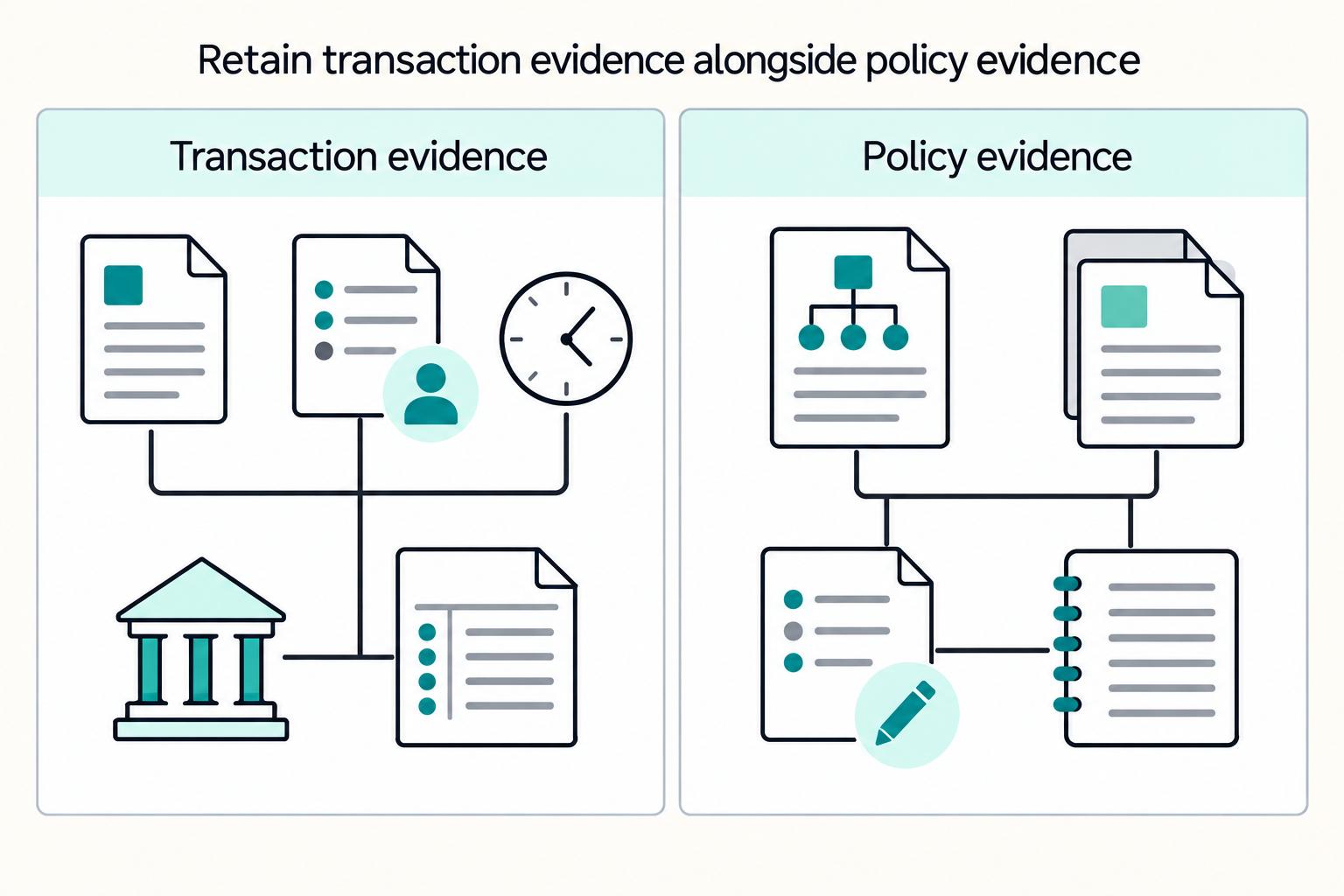
How Positive Pay Controls Check Fraud in Digital Payment Platforms
This list is for compliance, legal, finance, and risk owners who need to use Positive Pay without turning it into a bigger build than the risk justifies. The goal is practical: reduce check and electronic transaction fraud while keeping decisions and approvals auditable across products and bank relationships.
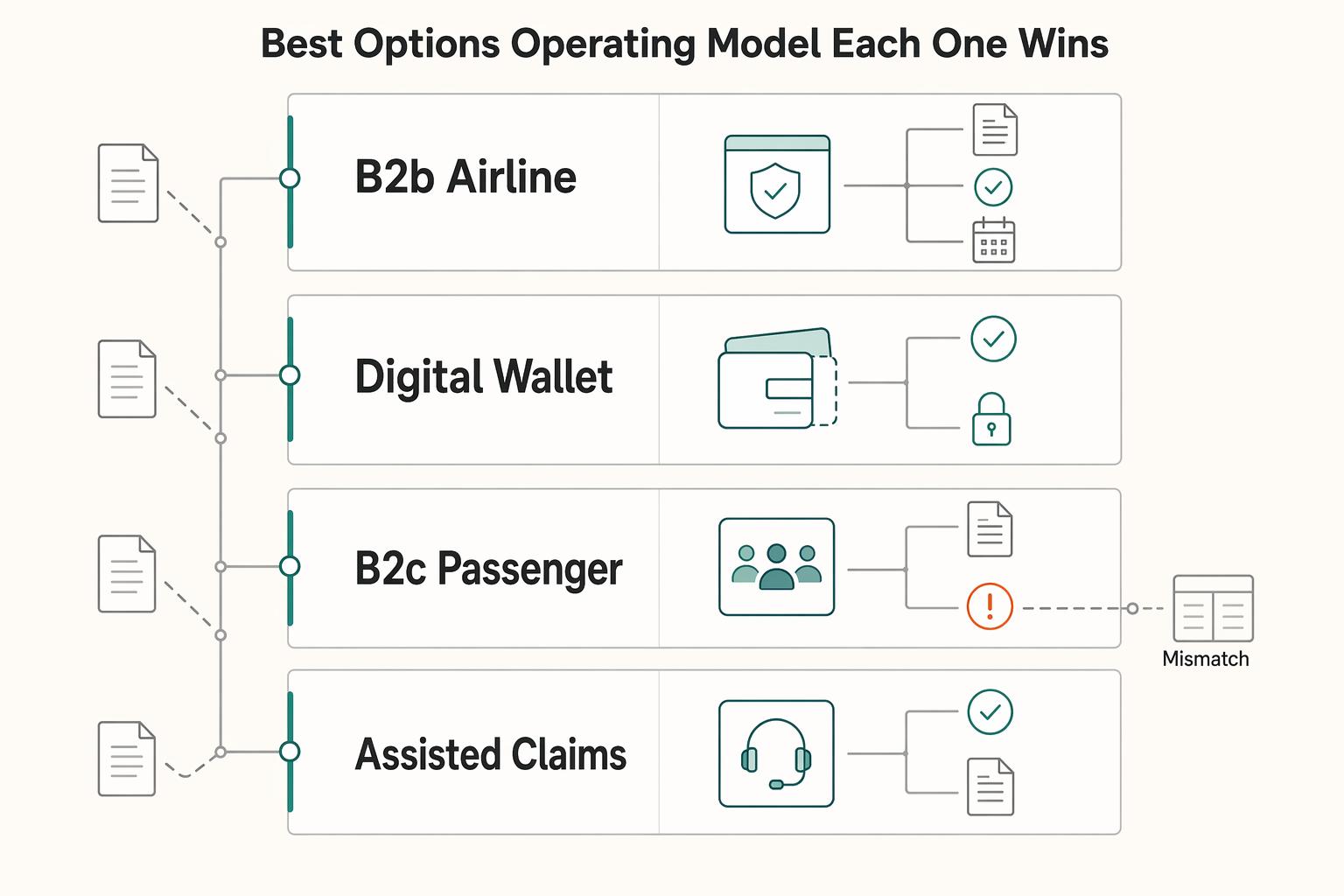
Airline Delay Compensation Payments for Customer Experience and Control
If you are evaluating an `airline compensation payments customer experience delays platform`, split the work into three lanes first: legally owed refunds, discretionary compensation, and outsourced claims recovery. Vendor pages often blur these together, but they lead to different policy choices, ledger treatment, and customer outcomes.
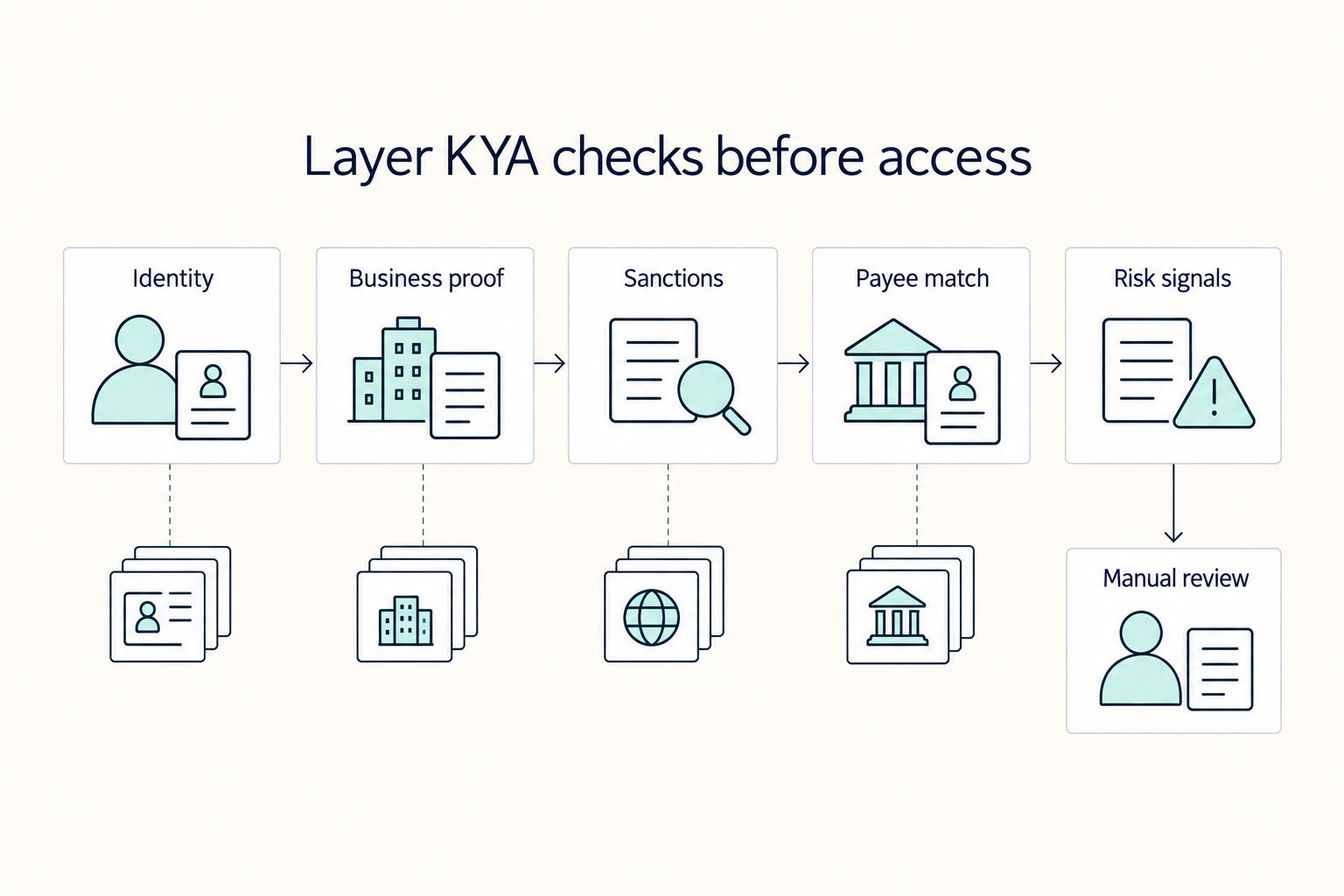
Know Your Artist (KYA): Checks to Reduce Streaming Fraud
Streaming fraud can distort royalty allocations, create payment disputes and expose a distributor to partner action. In a March 2026 guilty plea, DOJ described an operator using AI-generated songs and bot accounts to obtain more than $8 million in royalties. Identity checks can reduce impersonation and account abuse, but a verified person can still manipulate listening activity. Artist onboarding and post-release monitoring must work together.