
Quick Answer
Start with source separation for freelance project manager rates, then approve only what survives comparison checks. Use Upwork for live contract context, ZipRecruiter for labor-market spread, Wise for payout and currency context, and Reddit only for hypothesis generation. Build a pricing band plus a risk band, and stop rollout when they do not overlap. Final sign-off needs documented scope, geography, contract type, and capture-date evidence.
How to Benchmark Freelance Project Manager Rates for a Platform Launch#
You should not treat freelance project manager rates as a simple lookup. If you are making a launch or margin decision, ask what kind of source you are looking at, what that source actually measures, and whether it fits the market decision you need to make without mixing unlike data.
That matters because freelance pricing is messy even for freelancers. Wave's pricing guide, published March 19, 2021, notes that setting rates is one of the hardest parts of freelancing. Add different pricing models such as hourly, project-based, and value-based pricing, and a search result that looks precise can still be a poor fit for your market, role scope, or payout model. The better way to read this market is to separate the source types before you compare any numbers:
- Platform pricing signals
Start with marketplace-style evidence when you want signals from active freelance markets. This source type can be useful, but you still need to verify whether the listing or guide reflects an hourly rate, a project fee, or a value-based framing before you use it in a model. Its advantage is transaction context, even if scope definitions remain uneven.
- Salary-market context
If you use salary-style data, treat it as context rather than a direct freelance contract rate. Contract pricing can shift with project complexity, experience level, location, and demand. Its value is as a check, not a standalone answer.
- Anecdotal sentiment and practitioner accounts
Use stories and forum discussion to spot edge cases, not to set your budget. One practitioner account published April 12, 2024 describes freelance product-management work as often lasting three months or more, with one example running five months. That matters because engagement length can shape whether someone quotes hourly, by project, or on a more embedded basis. Anecdotal material gives you texture. It is not market-wide proof.
The goal of this list is narrower and more useful. It is not to declare one true number for a Freelance Project Manager. It is to separate marketplace signals, salary-market context, and anecdotal sentiment so you can build a defensible rate band. It should also help you note what is still unknown and avoid making decisions on a blended average that hides the real tradeoffs.
If you are deciding between a freelance project manager and broader advisory support, What to Pay Freelance Management Consultants: Day Rates and Project Fees gives a useful pricing comparison.
Selection criteria and who this list is for#
Use this list to make launch, margin, and payment-ops decisions, not to set your own freelance quote. Compare marketplace, hiring-platform, payments, and Reddit signals without treating every page that mentions a Project Manager as evidence for those rates.
| Check | What to verify | Article note |
|---|---|---|
| Role-scope clarity | What the page actually measures | Wisconsin DHS 83 is about "COMMUNITY-BASED RESIDENTIAL FACILITIES," so it is not a freelance pay benchmark |
| Geography fit | Separate United States and United Kingdom decisions early | The Wise pages used here are US-facing and should not be generalized to other geographies without local sources |
| Methodology transparency | Prefer sources that explain what they measure | The GSA Multiple Award Schedule page is procurement guidance for eligible government buyers, not a freelance rate benchmark |
| Decision usefulness | Keep sources that support market-entry, margin, or payout-risk decisions | Wise pricing is useful for transfer economics ("From 0.57%" and discounts above 25,000 USD), but it does not measure labor rates |
| Update reliability | Favor sources that appear actively maintained | Use sources current enough to support a launch memo |
Score each source on these five checks:
- Role-scope clarity
Confirm what the page actually measures: freelance contract pricing, salary-market listings, payment fees, or something else. For example, Wisconsin DHS 83 is about "COMMUNITY-BASED RESIDENTIAL FACILITIES," so it is not a freelance pay benchmark.
- Geography fit
Separate United States and United Kingdom decisions early. The Wise pages used here are US-facing, and those details should not be generalized to other geographies without local sources.
- Methodology transparency
Prefer sources that explain what they measure. An official page can still be the wrong input: the GSA Multiple Award Schedule page is procurement guidance for eligible government buyers (including FAR references tied to RFO-2025-01 through RFO-2025-53), not a freelance rate benchmark.
- Decision usefulness
Keep sources that directly support market-entry, margin, or payout-risk decisions. Wise pricing is useful for transfer economics (pay-for-use pricing, "From 0.57%," and discounts above 25,000 USD), but it does not measure labor rates.
- Update reliability
Favor sources that appear actively maintained and current enough to support a launch memo.
If a source fails two or more checks, treat it as directional only and require a second source before changing go-to-market assumptions.
Related reading: The Best Project Management Tools for Freelance Developers.
Upwork is best for live platform contract reality#
Use Upwork as your starting benchmark when you need live marketplace context, not as a standalone rate truth. UpBench is a strong support because it says its benchmark is grounded in real jobs from the global Upwork labor marketplace, with each task mapped to a verified client transaction. That helps with buyer willingness-to-pay context, even though it does not provide a clean Project Manager rate table.
Best for estimating live marketplace contract context for Project Manager work. Key differentiator platform-native signals tied to paid transactions, not salary pages or forum opinion.
The main limit is scope clarity. "Project Manager" can cover very different work, so snippet-level examples can look precise while mixing scope, seniority, and verticals. Treat this as benchmark context, not a complete market average.
Before you use it in a launch or pricing memo, run a quick verification pass:
- Confirm role scope in each posting or sample, and separate technical delivery work from general admin coordination or industry-specific PM roles.
- Record contract type (hourly or fixed-price) and geography so you do not silently blend unlike markets.
- Save the capture date, search term, screenshots, and a short note on why each sample matches your offer shape.
Keep rate benchmarking separate from platform-cost assumptions. Third-party summaries report a 10% freelancer service fee and a $4.95 contract initiation fee per new client relationship, with a simplified model noted in 2023, but those are not primary-source policy confirmations. One freelancer narrative reporting over $5,000 in annual fees is also anecdotal, so use it as a margin-risk prompt, not as a market-pay benchmark.
If you are weighing hourly against fixed-fee support, Moving From Hourly to Project Rates Without Hurting Cashflow covers the cashflow tradeoffs.
ZipRecruiter is best for labor-market baseline and spread#
Use ZipRecruiter as a labor-market sense-check after you set a marketplace benchmark, not as direct evidence of freelance contract pricing. It helps you test whether your assumptions look out of step with broader hiring-market signals while keeping contract-rate decisions anchored to marketplace data.
Best for checking broader hiring-market context around the title before market entry. Key differentiator high-volume hiring-platform signal rather than platform-native freelance transactions.
That distinction matters. ZipRecruiter is a subscription-based hiring platform that distributes job posts broadly, and a recruiter-focused guide calls it fast, high-volume, and self-serve. Treat that as employer-side context, not a direct proxy for scoped freelance delivery pricing.
How to use it without overreading it#
Use it second, after your marketplace benchmark. If ZipRecruiter context and marketplace evidence diverge, keep both and label the gap as comparability risk instead of forcing a single number.
Keep your verification pass simple:
- Capture the exact title used on the page and avoid blending different title buckets.
- Save geography and capture date so your comparison stays like-for-like.
- Label the source type clearly in your memo: hiring-platform context, not marketplace contract evidence.
Methodology awareness helps with interpretation. In its published comparison material, ZipRecruiter says that between September 2025 and January 2026 it contracted an independent research firm and used weighted criteria including Results & Effectiveness (25%), Pricing Value (20%), and Customer Support (10%). That supports a structured ranking approach, not PM-specific freelance contract-rate benchmarking.
The main failure mode is treating salary-style hiring context as interchangeable with freelance contract pricing. If the gap is large, treat it as a launch-risk flag and tighten role scope before changing rates.
For a step-by-step walkthrough, see How to Conduct a 'Pre-Mortem' to De-Risk a Large Freelance Project.
Wise is best for UK-oriented freelance pricing context#
Use Wise as a UK-oriented framing check, not as proof of UK market pricing for freelance project managers. It helps you compare how freelance charging is presented, including hourly and day-rate framing, but it is not direct evidence of UK project manager contract pricing.
Best for directional UK context when your current model leans heavily on US sources. Key differentiator it combines plain-language freelancer pricing guidance with payment-product details that are useful later for payout operations.
The main constraint is scope: the UK blog example is about freelance digital marketing, not project management. Treat it as structure for your comparison memo, not a role-specific benchmark.
How to use Wise without overstating it#
Keep these inputs separate in your evidence pack:
- UK blog guidance on freelancer charging models (directional context)
- US pricing pages marked for US residents
- Wise Business product pricing (product economics, not market pay norms)
That separation avoids model drift. For example, pricing details like mid-market-rate messaging, "From 0.57%," and discount language starting at 25,000 USD are relevant for payment-cost assumptions, not for UK contractor rate validation. Likewise, track page variants (/gb/blog/... vs /us/pricing/... and /us/pricing/business) and keep the UK pricing-change date note (26/11/2025) tied to your capture date.
The main failure mode#
The common mistake is reading Wise Business fee language as market-rate evidence. Product statements such as one setup-fee framing and "All in for 31 USD" describe account costs, not what UK clients pay freelance project managers. Use Wise for packaging and payment-ops context, then pair it with role-specific demand signals before changing your rate band.
If the launch budget also depends on build scope, Pricing a SaaS MVP Project as a Freelance Developer helps frame the engineering side of the estimate.
Reddit is best for sentiment checks and edge-case hypotheses#
Use Reddit as a hypothesis channel, not a pricing benchmark. In this evidence pack, you cannot use it as support at all because no r/Upwork source is provided on this topic.
The only forum-style source here is an Ask HN thread (item 29581125, Dec 16, 2021) with 1665 points and 1058 comments. It covers software developer work patterns, not project manager pricing, so it cannot support market-rate conclusions.
Keep the verification standard strict:
- Do not present Ask HN metrics as Reddit sentiment.
- Do not use forum anecdotes as proof of market-clearing rates.
- Do not treat Wise pricing pages as practitioner sentiment.
If you include Reddit in your process, log the exact thread URLs and treat recurring themes as claims to validate elsewhere before changing pricing assumptions.
For the operating side of the engagement, The 3-Stage Notion Setup for Freelance Project Management shows a simple way to manage scope, timelines, and handoffs.
Quick comparison table for operator decisions#
Use one table to keep unlike inputs separate before you approve any rate assumption.
| Source | Source type | Geography fit (US/UK) | Role-scope clarity | Methodology confidence | Best for | Do not use for | Decision use |
|---|---|---|---|---|---|---|---|
| Upwork | Marketplace signal | Depends on listing location and buyer context | Medium (titles can bundle different delivery scopes) | Medium when tied to timestamped listings/contracts | Marketplace pricing signal | Salary-style market averages or UK assumptions on its own | Primary source for platform willingness-to-pay checks |
| ZipRecruiter | Labor-market estimate signal | Often used for US spread; treat UK mapping separately | Medium to low when title scope is broad | Medium for dispersion, not contract-clearing price | Labor-market spread | Presenting as live freelance contract pricing | Secondary source to pressure-test assumptions against wider pay expectations |
| Wise | Payments/pricing source | Cross-border payout and currency context (not a wage source) | Low for role scope | Medium for fee mechanics | Directional payout/currency context | Claiming freelance market rates from transfer/card fees | Secondary source for payout-friction and margin realism checks |
| Anecdotal sentiment source | Varies by thread; often unclear | Low unless scope/outcome are explicit | Low | Sentiment validation | Benchmark medians or approval-ready rate assumptions | Tertiary hypothesis input only |
This table only works if each row stays in its lane. Wise can support payout realism because its pricing pages state that fees vary by currency, some sending costs start from 0.57%, it uses the live mid-market rate with an upfront fee, and discounts begin above 25,000 USD monthly transfer volume; it does not provide project manager pay benchmarks.
Apply the same separation to contract context. FAR Part 16 is titled "Types of Contracts" (effective 03/13/2026, FAC 2026-01), and the cited FTA FAQ says cost analysis is required before negotiation and award in that scenario and references reimbursements based on a fixed hourly rate. Use that as a contract-structure check, not a universal rule for every freelance deal.
Approval rule: require one primary source and one secondary source before signing off on a new vertical or city cluster assumption. In your notes, capture URL, capture date, geography, title/scope, contract type, and whether the input is a listing, estimate, fee page, or opinion thread.
Decision rules for rollout planning and payment constraints#
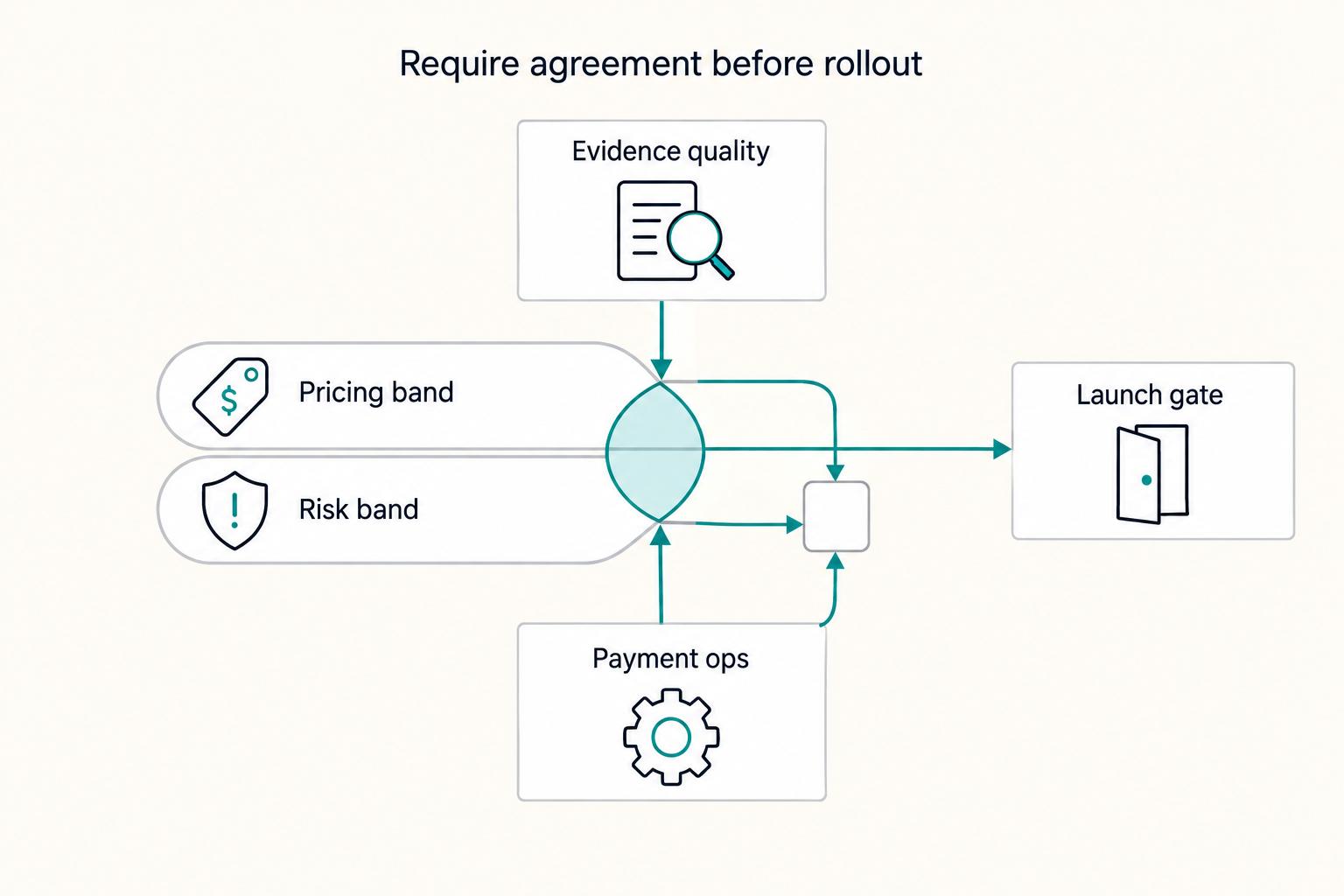
Use one launch gate: do not approve rollout until pricing, risk, evidence quality, and payment-ops checks agree.
| Reference | What the article says | Scope |
|---|---|---|
| Form 8938 and FBAR | Form 8938 does not replace FBAR when FBAR is required | IRS / FinCEN filing relationship |
| FBAR filing location | FBAR (FinCEN Form 114) is filed with FinCEN, not the IRS | Filing agency |
| Maximum account value | Use a reasonable approximation of the greatest value during the calendar year and round to the next whole U.S. dollar | FinCEN guidance |
| Certain signature-authority filers | Extended to April 15, 2027 | Cited FinCEN notice |
| Other individuals with FBAR obligations in that notice | Remain at April 15, 2026 | Cited FinCEN notice |
| Form 8938 example threshold | More than $50,000 on the last day of the tax year, or more than $75,000 at any time | Specified individuals living in the U.S. who are unmarried or married filing separately |
- Build two bands, and treat non-overlap as a stop sign.
Set a pricing band from the channel you will actually sell through, and a risk band from broader pay dispersion. If the bands do not overlap, do not average them. Delay rollout or narrow scope before you commit.
- Anchor the source pair by market.
For a United Kingdom-first launch, anchor on Wise plus one non-UK cross-check. For a United States-first launch, anchor on Upwork plus ZipRecruiter. Keep the same rule in both cases: one primary signal plus one secondary signal before you commit to a vertical or city cluster.
- Ship an evidence pack before you ship the market.
Require source notes, a role-scope definition for Project Manager, and an explicit unknowns section. At minimum, log URL, capture date, geography, title string, contract type, and source type (listing, salary estimate, fee page, or anecdote). If methodology is missing, mark it as unknown instead of smoothing it over.
- Model payment ops and filing requirements before margin approval.
Treat tax/compliance checks as part of rollout planning, not cleanup. The IRS states Form 8938 does not replace FBAR when FBAR is required, and FBAR (FinCEN Form 114) is filed with FinCEN, not the IRS. FinCEN also defines maximum account value as a reasonable approximation of the greatest value during the calendar year, and reporting rounds to the next whole U.S. dollar (for example, $15,265.25 becomes $15,266). Keep due dates scoped to filer type: the cited FinCEN notice says certain signature-authority filers were extended to April 15, 2027, while other individuals with FBAR obligations in that notice remain at April 15, 2026. For Form 8938, the IRS page includes an example threshold for specified individuals living in the U.S. who are unmarried or married filing separately (more than $50,000 on the last day of the tax year, or more than $75,000 at any time); do not treat that example as universal.
If any one of these four checks is unresolved, treat the market as unproven.
Related: How to Price a Copywriting Project.
Conclusion#
The practical takeaway is simple: treat freelance project manager rates as a comparability problem, not a lookup exercise. You get a usable decision only when the source type, role scope, geography, and payout reality all describe the same market you plan to enter.
- Keep each source in its lane
Marketplace listings, salary-style aggregators, payment-provider pricing pages, and forum threads should not be blended into one neat average just because they mention project management or freelance work. Use marketplace evidence for live contract reality, salary-style context for dispersion, and sentiment threads for hypotheses you still need to test. The verification step is boring but decisive: your evidence pack should show the URL, capture date, geography, title string, contract type, and a short note on what the source actually represents. The common failure mode is false precision, where a board slide shows one rate band built from unlike sources that were never comparable.
- Pressure-test margins with payout costs before you approve rollout
A quoted rate can look workable until transfer costs and payment handling show up. Wise is useful here because its pricing pages are explicit about mechanics: fees vary by currency and start from 0.57%, it says it uses the live mid-market rate, and it states that users pay for usage with no subscriptions or plans. If your model depends on large transfers, check the 25,000 USD discount threshold instead of assuming the same cost profile at every payout size. If your margin only survives before those checks, pause and re-scope the market entry.
- Do not mistake adjacent pricing contexts for freelance market proof
Procurement language can sound reassuring, but it answers a different question. The General Services Administration describes the Multiple Award Schedule as commercial solutions at pre-negotiated prices for eligible buyers, which is useful procurement context, not a freelance marketplace benchmark. That distinction matters because the same title can sit inside very different buying structures. If someone brings in catalog or government pricing to justify a launch number, treat it as a context note, not as rate evidence.
If you want one approval rule, use this one: move forward only when your benchmark stack, your definition of Project Manager, and your operating constraints all point in the same direction. If they do not, the right move is usually to gather one more clean source, tighten scope, and delay the decision rather than defend a number you cannot explain.
Frequently Asked Questions
Why do marketplace and hiring-platform sources show different freelance project manager rates?
Treat disagreement between marketplace and hiring-platform rates as uncertainty to investigate, not as a signal to average numbers together.
Which source should I trust first when entering a new market?
This guide does not provide market-entry rate evidence by source, so it cannot support a fixed source-order rule. Start with data that matches your actual geography and contract context, then cross-check before committing a pricing decision.
Can I use salary-style data to price freelance contracts?
If salary-style data is used, treat it as context only until contract-specific evidence supports the final pricing assumption.
How should I compare United States and United Kingdom benchmarks without overfitting currency differences?
Keep any US-versus-UK comparison provisional, and avoid forcing alignment through a single conversion step; overfitting can look correct on a narrow check while failing in broader use.
Is Reddit useful for pricing decisions or only for qualitative sentiment?
Treat forum posts as hypotheses and verify them with stronger primary data before they influence pricing decisions.
What is the minimum evidence pack I should require before approving a new market rollout?
Any minimum checklist for market rollout is internal policy. Confirm the required evidence standards with your organisation before approving expansion into a new market.
When should I pause expansion because benchmark disagreement is too large?
Pause when disagreement is still large enough that assumptions cannot be clearly explained and defended with documented evidence.
Try a related tool
Researched and edited by the Gruv editorial team. Gruv builds cross-border billing, payouts, and finance-operations software for global businesses.
Sources
- acquisition.gov/far/part-16trusted
- acquisition.gov/sites/default/files/page_file_uploads/far-co...trusted
- bsaefiling.fincen.gov/docs/XMLUserGuide_FinCENFBAR.pdftrusted
- docs.legis.wisconsin.gov/code/admin_code/dhs/030/83.pdftrusted
- fai.gov/sites/fai/files/2022-02/FAI-Project-Managers...trusted
- fincen.gov/reporting-maximum-account-valuetrusted
- fincen.gov/report-foreign-bank-and-financial-accountstrusted
- gsa.gov/buy-through-us/purchasing-programs/multiple-...trusted
Educational content only. Not legal, tax, or financial advice.
Related Posts

Pricing a SaaS MVP Project as a Freelance Developer
If you want to protect margin, treat your quote as a risk decision, not a market-average guess. The headline number matters less than the assumptions and scope boundary underneath it.
How to Price a Copywriting Project
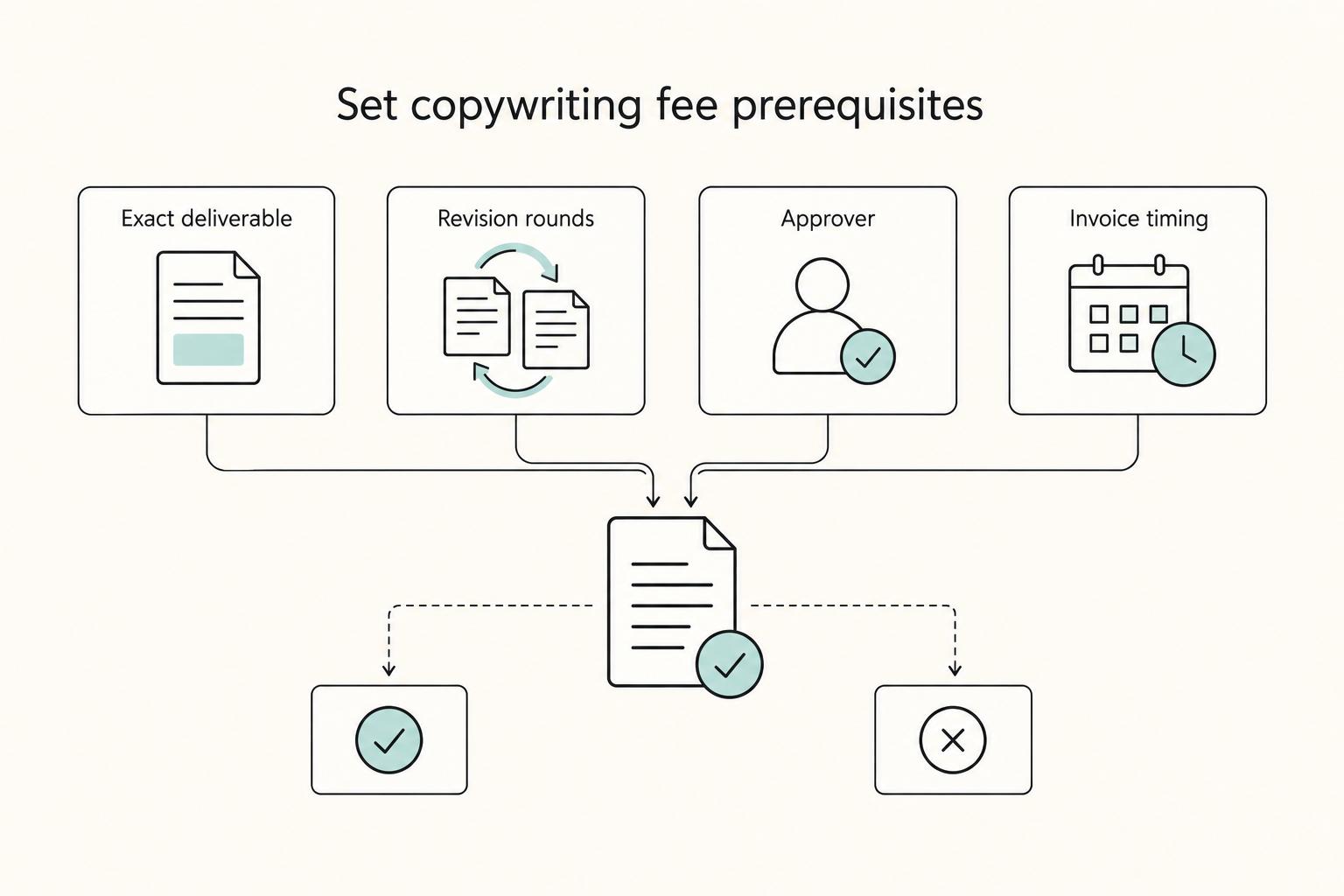
If you want fewer payment arguments later, set the project fee around decisions you can document: the scope of work, exact deliverables, clear payment terms, and a dated invoice schedule. That keeps pricing tied to what the client is buying, instead of quietly agreeing to extra work, open-ended revisions, or approval delays that eat margin.
What to Pay Freelance Management Consultants in Day Rates and Project Fees
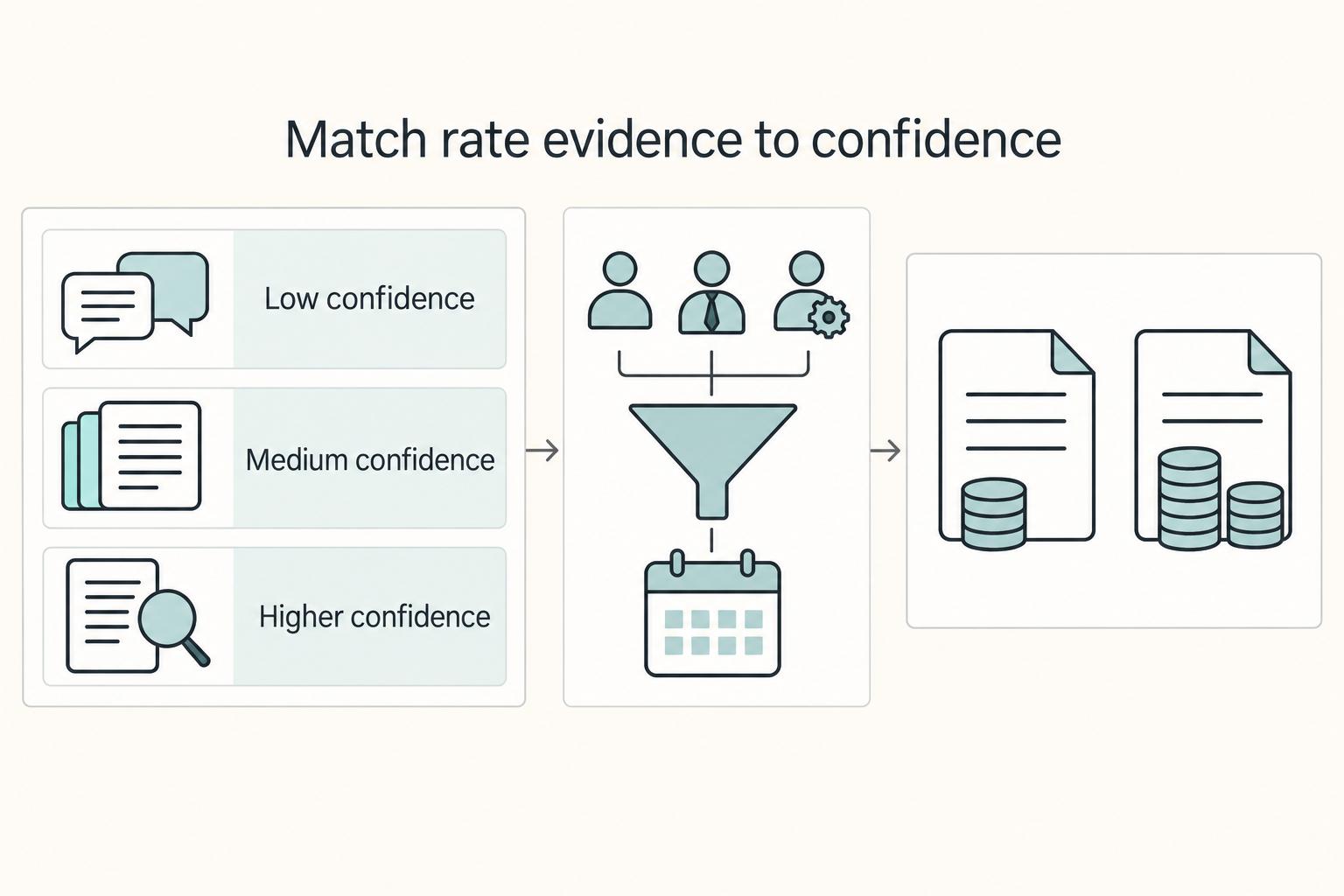
If you need a rate you can defend in a budget review, broad internet averages are not enough. Many pages targeting **freelance consultant rates** flatten different roles, pricing models, and source types into one number. That is exactly how teams approve a fee they cannot justify a week later.