
Quick Answer
Use a range, not a single benchmark, for freelance consultant rates, then convert that range into a day rate or project fee only after scope is defined. The article recommends weighting consultant-specific evidence such as Consulting Success above mixed freelancer summaries, documenting assumptions before conversion, and choosing pricing structure by uncertainty level. For cross-border work, fee approval should wait until reporting and payout constraints are confirmed, including checks tied to Form 8938 and FBAR where relevant.
How Freelance Management Consultants Price Their Work#
If you need a rate you can defend in a budget review, broad internet averages are not enough. Many pages targeting freelance consultant rates flatten different roles, pricing models, and source types into one number. That is exactly how teams approve a fee they cannot justify a week later.
A better starting point is to separate pricing language from market evidence. Consultants do not all price the same way. Consulting Success groups fees into three main models: hourly, project-based, and value-based pricing. Those are not interchangeable labels. An hourly quote tells you who pays for time. A project fee tells you who carries scope risk. A value-based fee can work when the outcome can be tied back to the work in a way your finance team will accept.
The next reset is source quality. We are not going to treat different benchmark pages as one blended truth. They answer different questions and deserve different levels of confidence. Consulting Success is consultant-specific and says its guide is backed by a 2023 study of nearly 1,000 consultants. That makes it useful for understanding how consultants structure pricing and think about fee growth.
Even there, you have to read the numbers carefully. The same snapshot says 79% were actively looking to increase fees, while 39% had never tried value-based pricing. That tells you something about market behavior, not a clean rate card.
Compare that with a broad roundup. Clockify's freelance-jobs page says its data was gathered in January 2023 and shows a publication date of April 19, 2023. That can still be useful context, but it is not a tight benchmark for a freelance management consultant. Thumbtack is narrower in a different way. Its freelance marketing consultant page reports a range of around $65 to $150 per hour, with most people paying around $75 per hour. Those numbers may help as a market signal for one service area, but they are not a universal benchmark.
That is the operating point of this article. We will use consultant-focused studies, platform summaries, and anecdotal discussion as inputs with different confidence levels, not as interchangeable evidence. Where access is limited, we will say so. For example, the Lenny's Newsletter result in our research was paywalled, so it should not carry decision weight beyond the fact that it is not fully reviewable.
The goal is practical. Turn noisy benchmarks into a payment decision you can approve, whether you need an hourly quote, a project fee, or value-based pricing that matches how you define outcomes. Related: A Biotech Consultant's Guide to IP Protection in Contracts.
Start with terms and evidence quality before discussing price#
Compare rates only after you define the role, the pricing model, and the evidence quality. If you skip that, you will compare unlike numbers and underbudget the engagement.
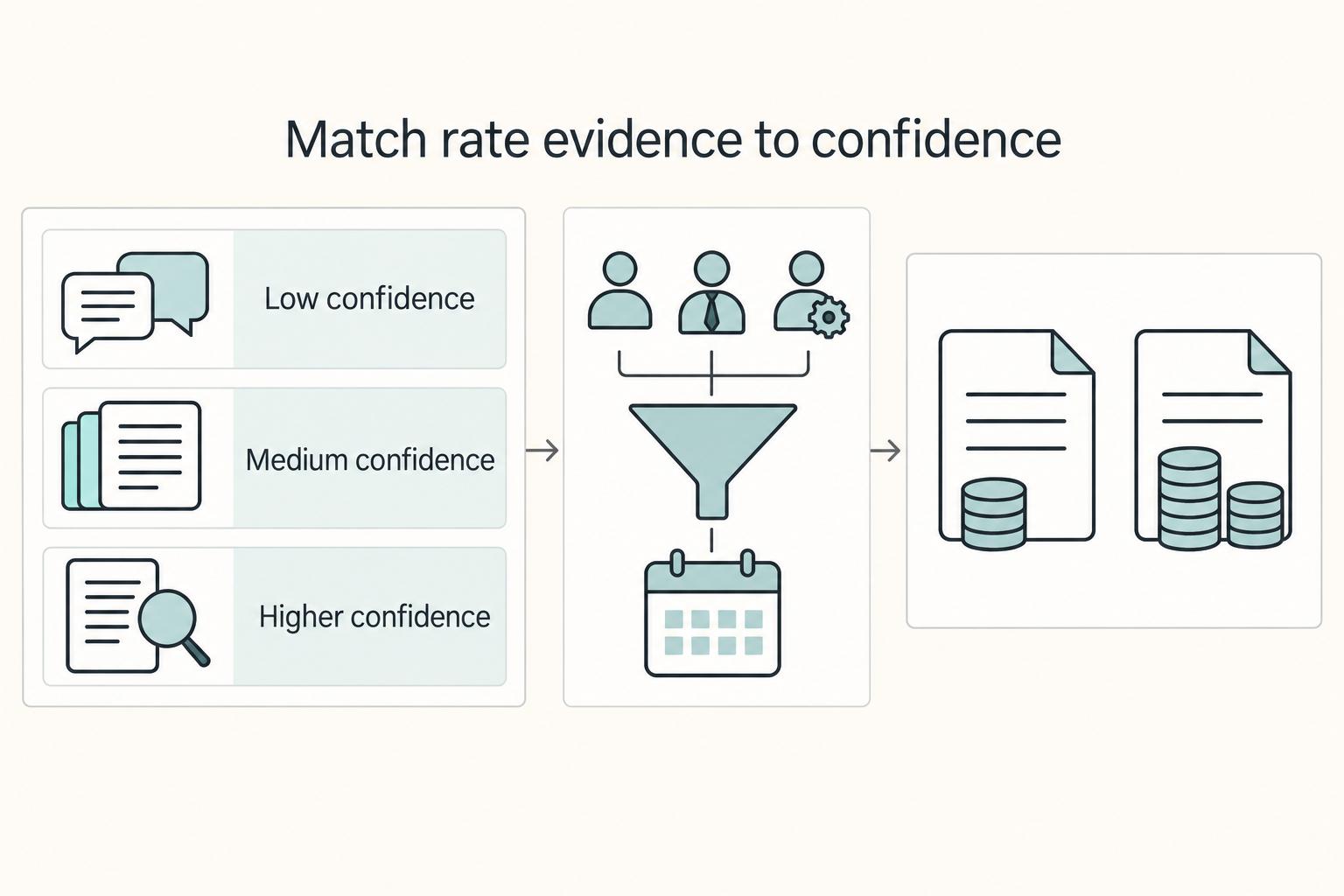
| Confidence | Source type | Useful for | Limit |
|---|---|---|---|
| Low confidence | Anecdotal community threads and forum discussions | Market language and sentiment | Not benchmark truth |
| Medium confidence | Broad platform or roundup summaries | Context | Often role-mixed |
| Higher confidence | Consultant-focused studies such as Consulting Success | Rate comparison after the role, pricing model, and evidence quality are defined | If methodology is unclear, do not use the source as your approval anchor |
For pricing decisions, treat "consultant" as a specific working setup, not a generic freelancer label. Indeed describes a consultant as someone who independently decides schedule, clients, and pricing. Use that as a practical rate-setting lens, then confirm the actual role scope and contract structure before accepting any market average.
Next, separate billing models before you compare price points. Consulting Success groups three main models: hourly, project-based, and value-based. These are different risk allocations, not interchangeable units: hourly prices time, project fees shift more scope risk to the consultant, and value-based pricing depends on a defensible link between work and outcome.
Use a simple confidence ladder for market inputs:
- Low confidence: anecdotal community threads and forum discussions. Useful for market language and sentiment, not benchmark truth.
- Medium confidence: broad platform or roundup summaries. Useful for context, but often role-mixed.
- Higher confidence: consultant-focused studies, such as Consulting Success, which says its guide is backed by a 2023 study of nearly 1,000 consultants.
If a number is only available through a snippet or secondary citation, treat role definitions, sample mix, and normalization method as unknown until you can verify them. If those details are unclear, do not use that source as your approval anchor.
For a step-by-step walkthrough, see Create a Freelance Brand Style Guide You Can Use Every Day.
Benchmark ranges by source type so teams stop arguing over one number#
Use source-type comparison, not a blended average, as your pricing baseline. When two benchmarks conflict and one mixes freelancers broadly, default to the consultant-specific source and widen contingency instead of averaging.
| Source | Population | Unit | Confidence label | Use case |
|---|---|---|---|---|
| Hubstaff | Broad freelancer/platform summary population | Confirm whether the page reports worker-pay units (for example hourly) before comparing | Medium for market context, lower for consultant fee setting | Use to sanity-check market direction, not to approve consulting budgets. |
| Clockify | Broad freelancer/platform summary population | Verify unit consistency before use | Medium for context, lower for consultant budgeting | Useful as a rough reference after role and unit matching. |
| Consulting Success | Consultant-focused pricing lens | Explicitly frames hourly, project-based, and value-based pricing | Higher | Best anchor for consulting budgets because it compares fee structures rather than implying one universal number. |
| ZipRecruiter | Broad role-title/freelancer-style market mix | Check for annualized vs hourly presentation before comparing | Lower for freelance management consultant pricing | Use only as an outside context bound. |
| Bonsai | Freelancer-oriented benchmark/guidance lens | Confirm whether unit is hourly, project, or mixed | Medium to low | Helpful for freelancer market feel, weak as a standalone consulting budget basis. |
| Upwork Freelance Forward survey | Freelance market context and sentiment | Not a direct consultant fee benchmark | Context only | Use for operating context; do not use for price approval. |
| Exploding Topics | Demand/trend context | Not a pricing unit | Context only | Use to gauge category momentum; do not use to set fees. |
Before sharing a range internally, check three items: who was counted, which unit was used, and whether methodology is visible. MoreMomentum's service-benchmarking point is relevant here: services benchmarking is less common, and leaders may lack unbiased evidence, so low-transparency sources should carry less weight.
Consulting Success's 2025 guide is the strongest anchor in this set because it treats pricing as a fee-structure decision (hourly, project-based, value-based), not a single market average. Keep broad freelancer benchmarks as background only, and anchor true consulting budgets on consultant-specific evidence with added contingency.
Convert hourly quotes into day rates and project fees you can approve#
Do not approve a converted rate until scope and effort assumptions are explicit. Start with the outcome, map the work, then convert hourly billing into day-rate or project-fee options.
A direct hourly-to-day multiplication can misprice the work. Freelancer calculator guidance notes that billed time is often only part of total working time (often 50-70%) and says to factor in expenses, taxes, billable hours, and profit goals before setting rates.
Start with outcomes, then convert#
- Scope the outcome. Define the decision or deliverable you are buying, not just activity.
- Map effort assumptions. List interviews, workshops, analysis blocks, readouts, review cycles, revision rounds, and client dependencies.
- Convert to pricing models. Use hourly as the base input, then package into day rates or project fees once scope boundaries are clear.
| Engagement shape | Scope anchor | Assumptions to document before pricing | Conversion path | Best default |
|---|---|---|---|---|
| Diagnostic sprint | Defined diagnosis, findings deck, final readout | Interview count, workshop count, analysis blocks, readout count, revision limit | Hourly baseline -> planned billable hours -> day rate or fixed sprint fee | Capped hourly discovery, then project fee when scope is stable |
| Implementation support | Milestones, workstream support, recurring decision support | Meeting cadence, ownership of artifacts, dependency points, escalation path, review cycles | Hourly baseline -> reserved day blocks or milestone project fee | Project-based pricing when deliverables and dependencies are explicit |
| Retainer-like advisory | Ongoing access and guidance | Included calls, response expectations, recurring artifacts, overage handling | Expected hours -> monthly fee or recurring day allocation, with overage terms | Retainer with clear inclusions and hourly excess terms |
Match the model to uncertainty#
If scope is ambiguous, start with capped hourly discovery. If deliverables and acceptance are clear, move to project-based pricing. If outcome impact is measurable, test value-based pricing with explicit baseline and attribution assumptions.
Consulting Success frames hourly, project-based, and value-based pricing as core models. In its cited 2023 study of nearly 1,000 consultants, 39% reported never having tried value-based pricing, so treat value pricing as a fit decision, not a default.
Where fixed fees fail#
Fixed fees usually break when review paths and scope boundaries are unclear: hidden stakeholder rounds, undefined acceptance criteria, and open-ended revision loops.
Before onboarding, run one checkpoint: document assumptions, exclusions, and change triggers in writing. If those boundaries are not explicit, the converted fee is not approval-ready.
Choose the pricing model by risk ownership, not by habit#
Choose the model based on who should carry uncertainty, not on what your team usually buys. In a freelance management consultant engagement, hourly, project-based, and value-based pricing shift risk in different directions.
| Model | What you are paying for | Risk sits mostly with | Best fit | Common failure mode |
|---|---|---|---|---|
| Hourly billing | Time spent | Client, because total cost rises with added effort or delay | Ambiguous scope, changing requirements, discovery work | Budget drift when reviews, meetings, or client-side delays expand effort |
| Project-based pricing | Defined scope and deliverables | Consultant, unless scope and approvals are vague | Clear outputs, short review path, stable stakeholders | Scope disputes when deliverables are named but acceptance and signoff are not |
| Value-based pricing | Outcome claim | Shared, only when attribution and payout rules are explicit | Measurable outcome with a credible baseline | Disputes over causality, measurement window, or payout approval |
A practical way to compare models is the revenue-model lens: what is the unit of value, when does payment happen, and what pricing structure is used. Hourly prices time, project fees price a scoped package, and value-based pricing ties payment to an outcome.
Use a concrete rule for approvals: if your internal decision latency is high, avoid strict fixed fees and use milestone-based structures. If multiple approvers can slow signoff, a milestone structure reduces scope-drift fights and makes repricing triggers clearer.
On hourly billing, treat strong claims carefully. A Sept. 5, 2023 Hacker News thread includes practitioner comments that hourly means paying for time, not results, and can push clearer requirements; that is anecdotal color, not market evidence.
Consulting Success is useful as directional guidance, not proof. Its 2025 retainer guide frames retainers as a shift from one-off projects to recurring revenue and says retainers can be priced on value rather than hours. That still does not make a value-based deal approval-ready by itself. You need internal baselines, a defined measurement window, and auditable attribution before variable payout is credible.
For founders, the tradeoff is straightforward: value-based can increase upside, but only when attribution is auditable and governance can approve variable spend. If either is weak, use milestone fees with hourly overage terms.
Adjust by geography and vertical before committing go-to-market budgets#
Do not use one global rate card after you choose a pricing model. Geography and vertical context change who you compete with, what buyers compare, and how reliable your budget assumptions are.
| Context check | What the article says | Budget implication |
|---|---|---|
| Country | Label every rate input by country | If the source was built for another market, treat it as directional only |
| Buyer location | Label every rate input by buyer location | Buyers may evaluate local, regional, and cross-border options differently |
| Australian benchmarks | Cemoh explicitly says its guide covers Australian benchmarks | Do not treat it as a universal anchor |
| Industry complexity | Industry complexity is a stated pricing factor | Do not assume one sector's pricing logic transfers cleanly to another |
| New country and vertical at once | Stage commitments in phases | Paid discovery, then a capped pilot, then broader rollout |
A United States benchmark can help for US deals, but it does not automatically transfer to North America as a whole or to Central America. The takeaway is the pattern, not regional price bands: management consulting is global, yet many companies still hire within a 50 miles radius. So even with similar scope, buyers may evaluate local, regional, and cross-border options differently.
Use a simple check on every rate input: label it by country, buyer location, and delivery model. If the source was built for another market, treat it as directional only. Cemoh explicitly says its guide covers Australian benchmarks, so it should not be treated as a universal anchor.
Apply the same discipline by vertical. Industry complexity is a stated pricing factor, so do not assume one sector's pricing logic transfers cleanly to another, even at similar seniority.
If you are entering a new country and vertical at once, stage commitments in phases: paid discovery, then a capped pilot, then broader rollout. That lowers the risk of treating early assumptions as precise budgets.
Handle cross-border compliance and contract constraints before finalizing fees#
Before you approve cross-border freelance consultant rates, assign one owner to confirm tax reporting artifacts, potential penalty exposure, and payout release conditions that can change timing or total cost.
| Reference point | Amount or trigger | Context |
|---|---|---|
| General reportability under IRS guidance | Aggregate foreign assets exceeding $50,000 | Do not treat one threshold as universal |
| Specified domestic entities | $50,000 (year-end) | Form 8938 instructions show filer-specific thresholds |
| Specified domestic entities | $75,000 (any time during the tax year) | Form 8938 instructions show filer-specific thresholds |
| Failure to report foreign financial assets on Form 8938 | $10,000 penalty | Build a timing buffer into fee terms instead of promising immediate release on invoice approval |
| Continued failure after notification | Additional penalties up to $50,000 | Penalty exposure can change total cost materially |
| Certain underpayments tied to non-disclosed foreign financial assets | 40 percent penalty | Penalty exposure can change total cost materially |
For U.S. reporting, start with FATCA and Form 8938. Certain U.S. taxpayers with financial assets outside the United States must report those assets, and Form 8938 is attached to the annual tax return. If a U.S. taxpayer is not required to file an income tax return for the year, they do not file Form 8938 for that year.
Do not treat one threshold as universal. IRS guidance says reportability is generally tied to aggregate foreign assets exceeding $50,000, while Form 8938 instructions also show filer-specific thresholds, including $50,000 (year-end) and $75,000 (any time during the tax year) for specified domestic entities.
Also check whether FBAR (FinCEN Form 114) applies alongside Form 8938. The IRS provides a comparison resource to determine whether Form 8938, FBAR, or both are required, and FinCEN can publish event-specific filing extensions.
What to verify before legal signs off#
| Artifact or issue | Why it matters | Operator check |
|---|---|---|
| Form 8938 / FATCA | Can create reporting duties and penalty exposure | Confirm responsible owner, filer category, and whether foreign assets are in scope |
| FBAR / FinCEN Form 114 | Separate filing may apply in parallel | Get written confirmation that FBAR was evaluated |
| Schedule SE or treaty claims (for example, US-Switzerland) | Country/program treatment can vary | Route these claims to tax review and keep written sign-off in the deal file |
| Penalty exposure | Misreporting can raise cost materially | Document who tracks deadlines and remediation steps |
The penalty risk is concrete: the IRS describes a $10,000 penalty for failure to report foreign financial assets on Form 8938, potential additional penalties up to $50,000 for continued failure after notification, and a 40 percent penalty for certain underpayments tied to non-disclosed foreign financial assets. Build a timing buffer into fee terms instead of promising immediate release on invoice approval.
Contract language that saves rework#
State in the contract that payout timing starts only after required tax documents, entity/payment checks, and exception review are complete. If your payout program uses compliance gates (for example, KYC/KYB/AML, where enabled), write release conditions into the fee terms so finance is not forced into ad hoc exceptions.
A short red-flag checklist is enough:
- no approved fee without ownership of tax forms and foreign-account reporting review
- no onboarding without verified entity and payment details
- no treaty-based assumption, including under the US-Switzerland Tax Treaty, without documented tax review
- no exception case without a named approver and written release conditions
If the cross-border setup is unclear, slow fee approval before first-payout risk compounds.
Build the internal decision packet that gets fast approval#
Fast approval comes from a packet that makes your pricing decision easy to verify and easy to execute. If approvers still need to chase scope, tax-document status, or payout terms, the quote is not ready.
Use a one-page packet with attachments only where needed. The goal is not to prove one "correct" market number. The goal is to document the pricing model choice, scope assumptions, and operating logic clearly enough for Finance/AP to approve without rework.
| Packet element | What to include | Why it matters |
|---|---|---|
| Source table | A short table of the benchmark sources you used, with a confidence note for each | Shows your inputs without overstating certainty |
| Pricing model choice | State hourly billing or fixed price project fee | Prevents approvals from drifting between time-based and deliverable-based logic |
| Scope assumptions | Deliverables, exclusions, review rounds, acceptance criteria, and change triggers | Keeps fixed-fee work from turning into open-ended work |
| Contingency logic | What happens if scope expands, timing slips, or approvals stall | Gives Finance/procurement a rule before disputes start |
Document model choice explicitly. One source recommends starting by confirming whether the freelancer prefers hourly or fixed-price payment. Another describes hourly billing as a common starting point, but also flags disputes when clients question hours. So if you choose hourly, state how time is tracked and who approves it.
For Finance/AP checkpoints, keep it plain: confirm payment method, confirm correct IRS tax documents are collected, confirm agreed payment terms, and define payout timing for each project-fee milestone. For each milestone, keep the same evidence set: approved scope version, invoice, acceptance note or approval email, and payout status.
If you run platform-scale contractor payments, keep one audit trail from request to payout. At minimum, track request date, worker classification note (such as 1099 independent contractor where applicable), pricing model, tax-document status, invoice status, and payout status in one searchable place. If you want a lightweight system for that, see Using Airtable as a CRM for a Solo Marketing Consultant.
Run this checklist in one meeting before approving freelance consultant rates:
- benchmark confidence is named and not overstated
- model selection is documented as hourly billing or fixed price
- scope assumptions and contingency logic are written
- payment method, terms, and IRS tax-document status are confirmed
- milestone evidence is defined for each project-fee payout
- a clear go/no-go owner is assigned
If any item is missing, pause approval and close the gap first.
Conclusion#
A common mistake is not picking the wrong number once, but acting as if one number can carry scope and risk by itself. With freelance consultant rates, the better move is to approve a defensible range, choose the pricing model that fits the engagement, and clear the compliance path before launch.
That is why many teams separate three decisions that often get mashed together. First, decide which sources are actually comparable. Hubstaff explicitly distinguishes a freelancer from a consultant and notes that consultants tend to earn more, so broad freelancer averages are not a clean proxy for management consulting work. Freelancermap also points in the expected direction: higher qualifications and more experience correlate with higher hourly rates. Those are useful signals for setting bands, not proof of one universal market price.
Second, price the work only after the scope can survive review. If scope is still moving, use capped hourly discovery and convert later. If deliverables, exclusions, and acceptance criteria are already named, move to a day rate or project fee with change triggers written down before onboarding. A practical checkpoint is simple: do not approve the quote until assumptions, exclusions, approver, invoice timing, and milestone evidence are visible in one place. Repricing risk often appears after hidden stakeholder rounds, revision loops, or vague acceptance language.
Third, treat compliance and payout operations as part of the commercial decision. GSA's Multiple Award Schedule highlights "regulatory compliance" alongside "fair and reasonable pricing," and the Texas Grant Management Standards include a pre-award risk review plus performance and financial monitoring and reporting. Private teams can apply the same principle: separate price reasonableness from approval risk, documentation readiness, and payment release conditions.
If you are entering a new market or launching a new program, confirm market coverage, contractor eligibility, and payout constraints before you lock the fee structure. Then finalize your day-rate and project-fee bands with a short decision packet: source table, chosen pricing model, scope assumptions, exclusions, and contingency logic. That sequence is less glamorous than chasing a single benchmark, but it can keep approvals moving and reduce rewrite risk after kickoff. Related reading: Freelance Financial Management That Protects Cashflow First.
Frequently Asked Questions
What do freelance management consultants typically charge per hour, per day, and per project?
There is no single number you should treat as authoritative here. IMC USA notes that, because of antitrust and price-fixing guardrails, professional associations may avoid discussing specific fees. Use the earlier benchmark table as a range input, then convert only after scope is clear. If the quote is hourly, turn it into a day rate and project fee using named effort assumptions, not guesswork.
Why do different sources show different numbers for similar roles?
They can cover different populations, pricing units, and definitions of “consultant.” For example, Indeed presents guidance on calculating hourly consultant rates and reviewing other pricing methods, while Consulting Success says its fee guidance is backed by a 2023 study of nearly 1,000 consultants. When numbers conflict, give more weight to the source that matches your role and pricing model.
When should I pick hourly billing instead of project-based pricing?
Pick hourly billing when scope is still moving or the problem needs discovery first. Consulting Success defines the hourly method plainly as charging by the hour, and that simplicity is useful early. If you do this, require a cap, time-tracking method, and a named approver for hours before work starts.
When does value-based pricing make sense, and when is it too risky?
Use value-based pricing only when the business outcome is measurable and attribution is credible enough for Finance to review later. Consulting Success lists value-based pricing as one of the three main models, but also says 39% of surveyed consultants had never tried it. That is a reminder that adoption is still uneven. If you cannot define the baseline, the outcome metric, and the payout trigger in writing, it is usually too risky.
How should I budget consultant fees when entering a new country with limited local benchmarks?
Start with a wider band, not a fake precise number. If you are entering a new country and a new vertical at the same time, stage the work: approve a capped discovery phase first, then reset the rate or project fee once you have local evidence. That costs less than locking a fixed fee on weak assumptions.
Which compliance items can delay or change total payout cost in cross-border engagements?
This section does not provide country-specific tax or compliance thresholds. Treat legal and compliance requirements as jurisdiction-specific, and confirm terms with qualified counsel before final approval. IMC USA also states its fee-setting content is informational and not legal advice.
What is the minimum evidence I should require before approving a consultant rate?
Require a short source table, the chosen pricing model, and written scope assumptions. Also confirm who approves changes and how invoice and acceptance evidence will be documented before payout. If key assumptions or approval evidence are missing, the rate is not ready to approve.
Try a related tool
Researched and edited by the Gruv editorial team. Gruv builds cross-border billing, payouts, and finance-operations software for global businesses.
Sources
- comptroller.texas.gov/purchasing/docs/grant-management-print.pdftrusted
- fincen.gov/report-foreign-bank-and-financial-accountstrusted
- gao.gov/assets/gao-20-195g.pdftrusted
- gsa.gov/buy-through-us/purchasing-programs/multiple-...trusted
- handbook.usi.edu/sites/default/files/pdf/pdf_generator/employ...trusted
- irs.gov/businesses/corporations/fatca-information-fo...trusted
- irs.gov/forms-pubs/about-form-8938trusted
- opm.gov/policy-data-oversight/hiring-information/com...trusted
Educational content only. Not legal, tax, or financial advice.
Related Posts
Using Airtable as a CRM for a Solo Marketing Consultant
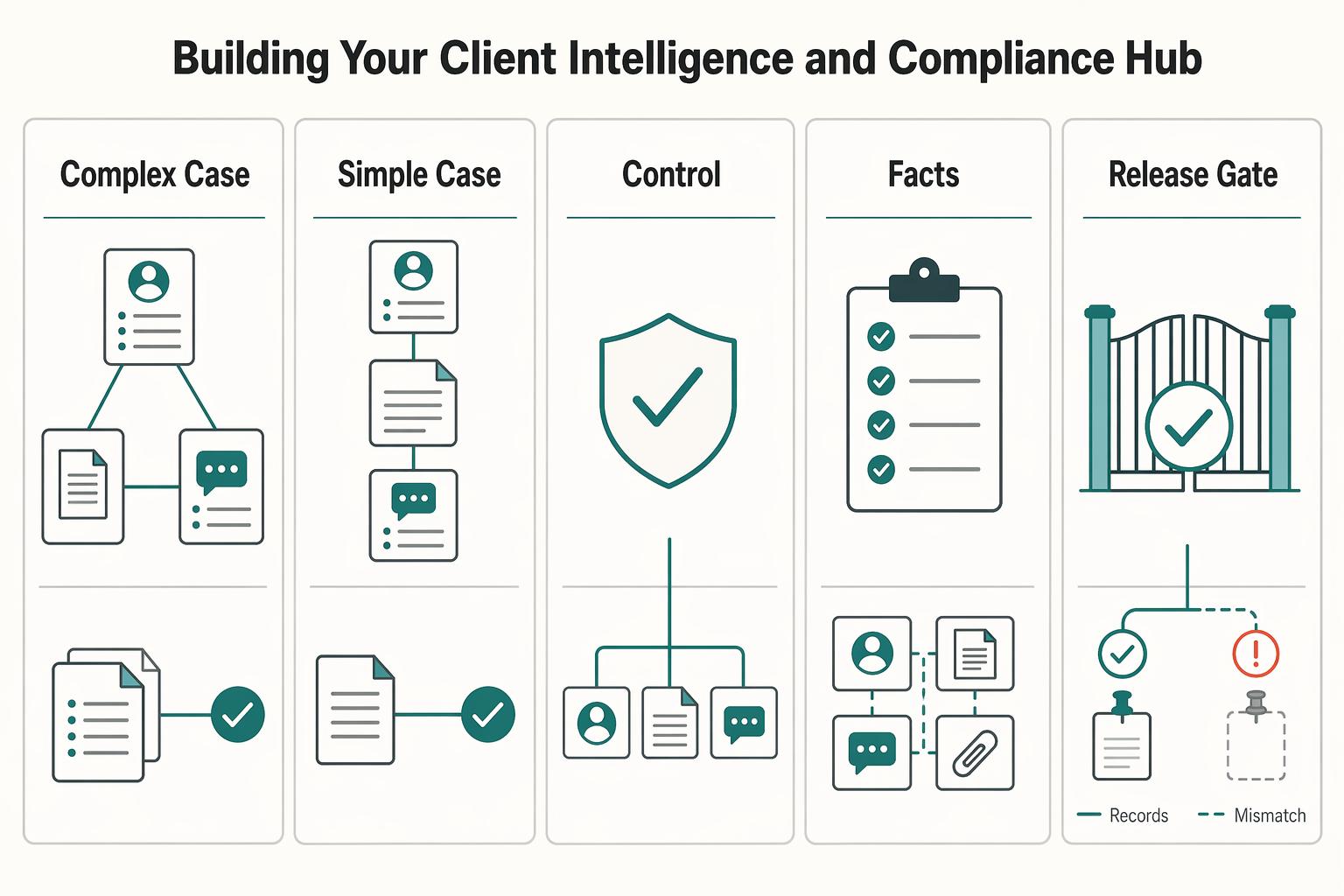
**[Airtable](https://www.airtable.com/) can work for consultants when you run it as one connected system, not one bloated table.** If your client work is spread across email, notes, spreadsheets, and memory, it gets harder to prioritize outreach and keep conversations moving.
How US Financial Consultants in Switzerland Use the Tax Treaty
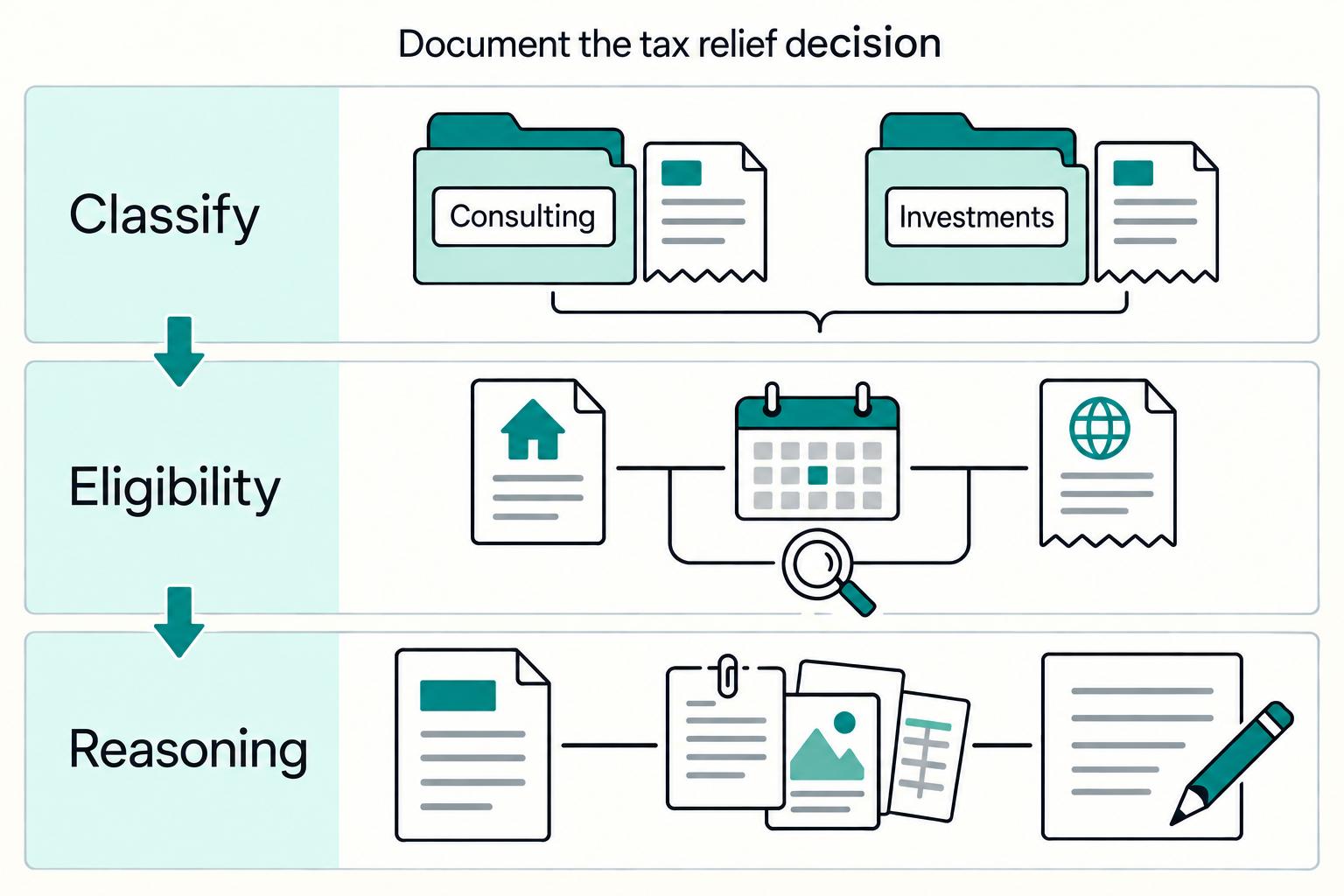
As a U.S. financial consultant in Switzerland, your biggest risk may not be a market downturn. It may be one misunderstood treaty line that costs you thousands. Building a successful business around your expertise is hard enough. Cross-border compliance adds a steady layer of uncertainty.
A Biotech Consultant's Guide to IP Protection in Contracts
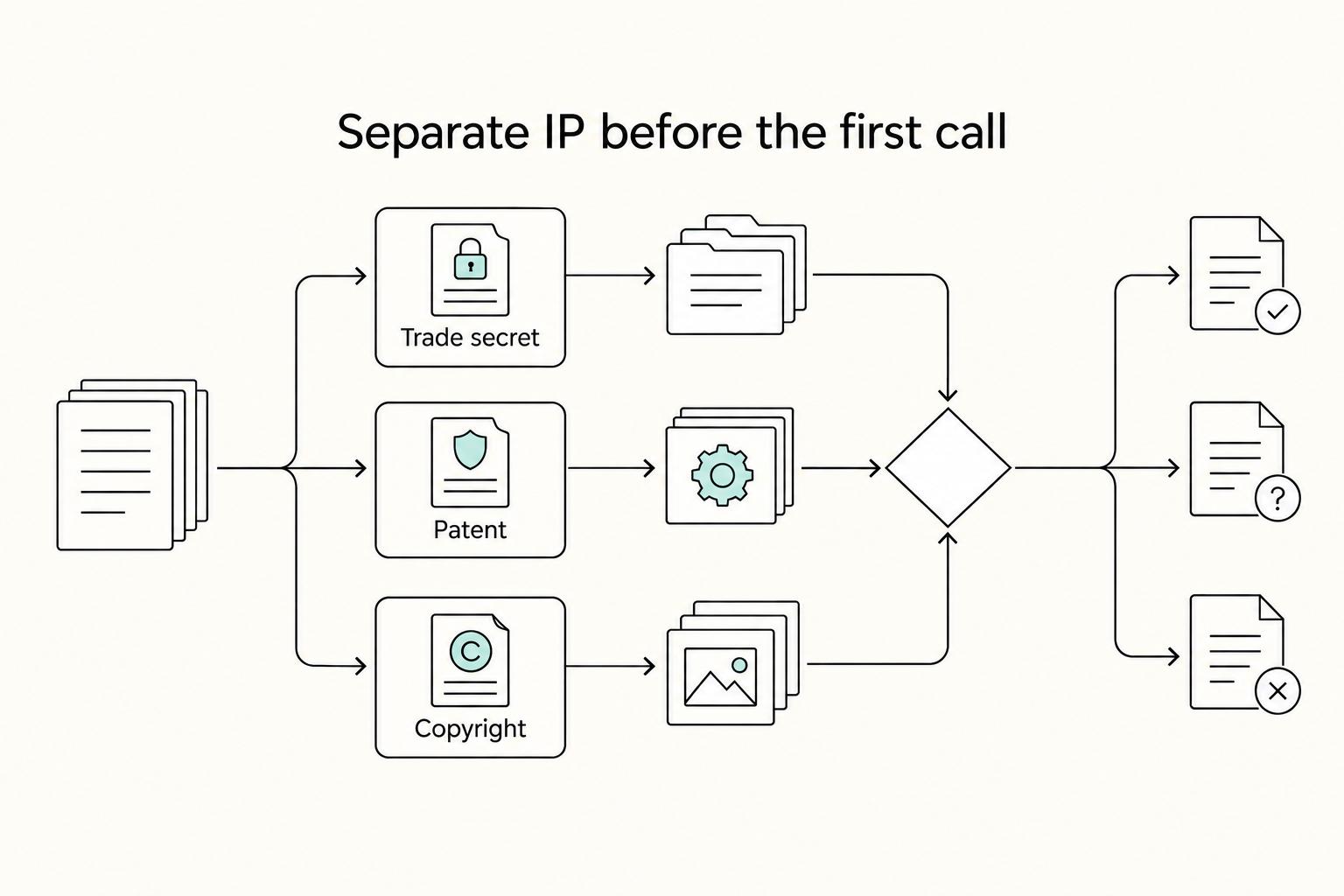
For biotech consultants, protection starts before any contract markup. The job is straightforward: document what you already own, control what you disclose, and separate reusable IP from client-paid outputs before the first call.