
Quick Answer
Start by treating this as an execution gate, not a career move: a freelance HR consultant launch is viable only when one market can be contracted, invoiced, reconciled, and paid out without ad hoc fixes. In practice, pick one jurisdiction (such as UK or Dubai), one service format, and one buyer profile, then validate legal route, Client agreement terms, Scope of work boundaries, and payout exception handling before spend. If those controls are incomplete, defer launch.
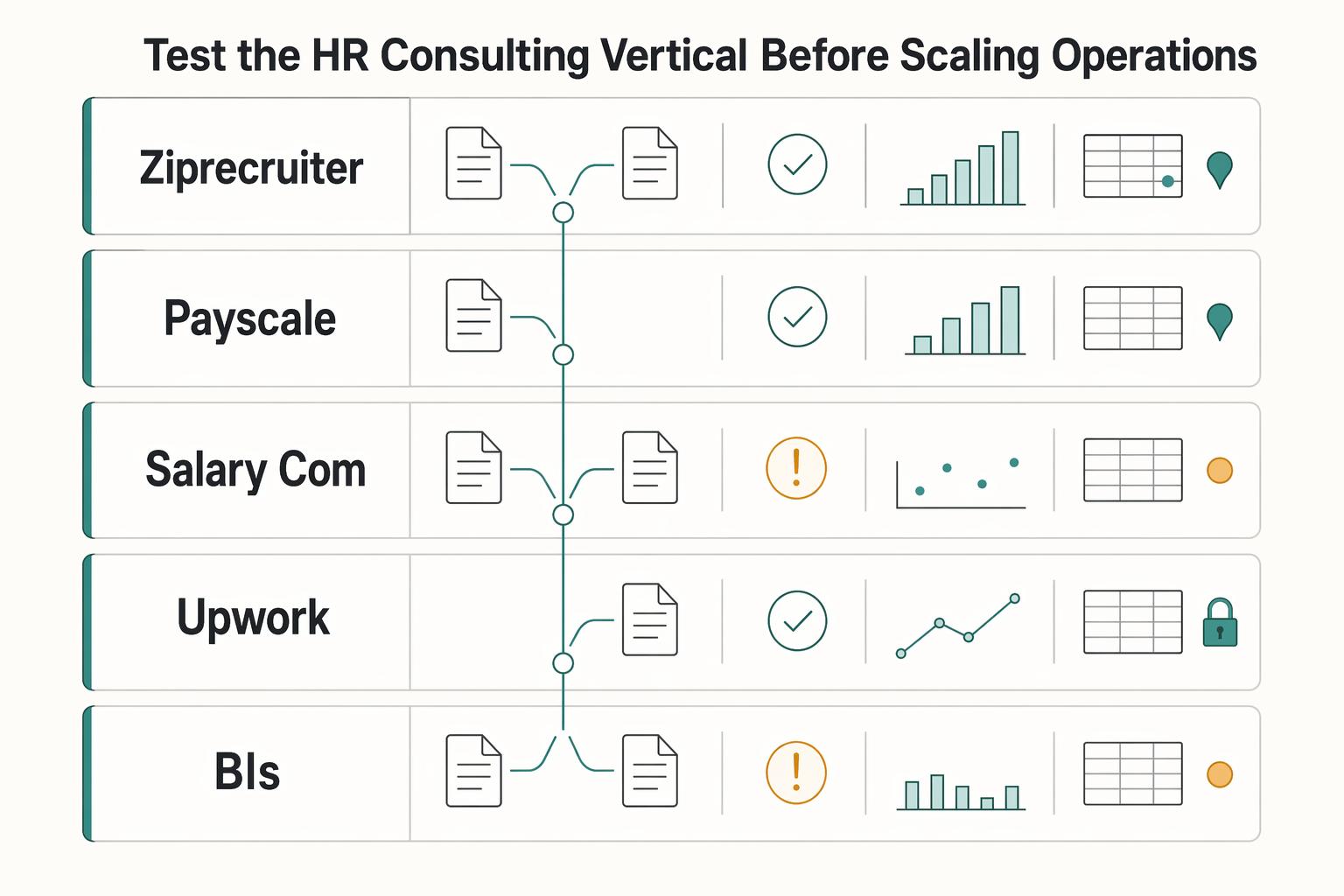
Test the HR consulting vertical before scaling operations#
Use this freelance HR consultant guide to answer a practical launch question: is this vertical worth entering in a specific country before you spend on acquisition, onboarding, or payout operations? This is not career advice. It is a decision tool for judging market viability, engagement design, and operating controls with enough precision for Finance/AP, Payments Ops, and product teams to approve or reject the launch for concrete reasons.
| Source | Figure | Context |
|---|---|---|
| ZipRecruiter | $34,865 per year | US Freelance Human Resources Consultant; as of Mar 26, 2026 |
| PayScale | $84,354 | Consultant, Human Resources (HR) in 2026 |
| Salary.com | $138,134 | as of Mar 01, 2026 |
| Upwork | $29 to $150 per hour | depends on experience and scope |
| BLS | $72,910 median annual wage | Human Resources Specialists in May 2024; employee benchmark |
Step 1. Define the decision as a service-launch question. A freelance HR consultant is an HR professional who provides advice, guidance, and support on a contract or project basis rather than as a full-time employee. The definition is simple, but the operating implications are not.
You are not evaluating a job title or a general talent pool. You are evaluating whether a repeatable service can be sold, contracted, invoiced, reconciled, and paid out across one or more countries without creating manual exceptions from day one.
Step 2. Bound the evidence before you trust the market story. One reliable earnings benchmark, a universal success-rate baseline, or a standard timeline to first client is not established. The pay signals are too inconsistent to use as launch math on their own.
ZipRecruiter reports $34,865 per year for a US Freelance Human Resources Consultant as of Mar 26, 2026. PayScale reports $84,354 for a Consultant, Human Resources (HR) in 2026. Salary.com reports $138,134 as of Mar 01, 2026. Upwork shows hourly pricing from $29 to $150 depending on experience and scope. The BLS median annual wage of $72,910 for Human Resources Specialists in May 2024 is useful context, but it is an employee benchmark, not a freelance consultant benchmark.
That spread is your first verification point. Before anyone models pricing, CAC tolerance, or payout margin, check whether the source refers to an employee salary, a marketplace rate, or a title with mixed employment types. If that distinction is unclear, treat the number as directional noise, not planning data.
Step 3. Put operations ahead of go-to-market spend. Launch readiness here means you can explain the full path from signed agreement to invoice issuance, payment confirmation, reconciliation, and payout release in a way another operator can audit. If you cannot document that sequence yet, the market may still be interesting, but it is not ready for scaled spend.
One common failure mode is mistaking visible freelancer demand for operational viability. Broad marketplace rates can signal potential buyer demand, but they do not tell you whether your engagement terms, tax handling, approval checkpoints, or payout exceptions will work cleanly across countries. That is the lens for this guide: less attention on headline upside, more attention on whether you can launch with controls you can repeat. If you want a deeper dive, read A Biotech Consultant's Guide to IP Protection in Contracts.
Define the operating model and target market#
Define one offer, one buyer, and one engagement structure before you expand. Most launch noise starts when the label, service scope, and buying motion get blended together.
Step 1. Separate the label from the offer. Freelance HR Consultant and Independent HR Consultant are often used interchangeably, but buyer perception can still differ. "Freelance" may be read as shorter-term support, while "independent" may be read as a broader consulting relationship. If you position the work as independent consulting, verify that the engagement terms still fit the contractor lens: behavioral control, financial control, and the relationship of the parties.
Step 2. Pick one offer type and accept its tradeoff.
| Offer type | Revenue pattern | Operational load |
|---|---|---|
| Advisory | Usually tied to scoped guidance | Lighter delivery structure, but outcomes must be defined clearly |
| Project delivery | Usually tied to one defined result | More coordination, approvals, and scope control |
| Retainer agreement | Recurring monthly fee for ongoing work or access | Works best when the client has ongoing needs and active internal usage |
Step 3. Filter ICP before expanding. Start with three screens: client size, urgency of the Human Resources (HR) problem, and decision-maker access. In B2B environments, assume access can be slower because buying decisions are often made by multiple stakeholders, not one sponsor.
If demand is still unclear, narrow further: choose one HR outcome and one buyer persona first, then add adjacent services only after you can repeat the sale and delivery motion reliably.
You might also find this useful: A Strategic Consultant's Guide to Structuring a Retainer Agreement.
Compare jurisdictions before launch#
Choose jurisdictions you can operate compliantly end to end before you optimize for demand. The core risk is not interest; it is whether onboarding, contracting, and money movement are clear enough to audit. If that path is unclear, cross-border non-compliance can halt expansion.
Build a market table before you pick the first country#
Use one comparison sheet for the UK, Dubai, and each next-target market so ops, legal, and payments work from the same view.
| Market | Legal setup friction | Payment rails | Tax/admin overhead | Enforcement practicality |
|---|---|---|---|---|
| UK | Clear setup routes: Sole trader (simplest to set up and keep records), Limited company (legally separate from owners), or Partnership (partners share personal responsibility) | Do not assume coverage. Verify invoicing, collection, reconciliation, and payout steps end to end | Structure choice affects how tax is paid and legal responsibilities are handled | Typically easier to map when the structure and contracting chain are explicit |
| Dubai | Commercial setup and work authorization must both be mapped; Freelance License is one route for independent professionals | Treat rails as a validation item, not a given. Confirm collection, reconciliation, and payout under the chosen route | Admin load includes licensing and work-permit compliance | Working without a valid UAE work permit is illegal; MoHRE lists 13 permit types, and listed permit categories are valid for 2 years |
| Next target market | Unknown until locally validated | Unknown until provider and finance validation is complete | Unknown until local tax and filing duties are mapped | Validate with local counsel; each added jurisdiction introduces a different legal framework |
In practical terms, UK setup decisions are usually about choosing the right structure. Dubai decisions need a split check: commercial permission and work permission are separate controls.
Separate policy blockers from process blockers#
Do this before spending on go-to-market.
Policy blockers
- The consultant cannot legally work under the proposed setup.
- The contract model conflicts with local operating or work-permit rules.
- Local counsel advises that a different legal route is required.
Process blockers
- The payout path from invoice to settlement is not documented.
- Contracting entity, collection account, and payout account are unclear.
- Required applications, documents, or approvals are not assigned to owners.
Your verification pack should name the market, legal route, contracting entity, collection account, payout account, and approver. For Dubai, include a specific work-authorization review line. For any new market, plan for jurisdiction-specific counsel on local labor and employment issues.
Apply a strict launch rule#
Use an internal launch gate: defer any market until legal onboarding and payout operations are documented end to end and signed off internally. The goal is to avoid launching where permissions, ownership, and fund flows are still ambiguous.
A practical sequencing rule is simple. If you want a lower-friction first move, the UK can start with a sole trader route and later formalize into a limited company. If Dubai is strategically important, budget for extra validation because licensing and work permission are separate risk areas, even where bundled UAE procedures have been reduced from 15 steps to 5 and from 30 working days to 5 working days. Related: A freelance IT consultant's guide to 'Business Interruption' insurance.
Choose legal and risk setup before first contract#
Before first delivery, lock three things: your entity path, your minimum contract/data terms, and named risk ownership. The practical default is to start with the simplest compliant setup, then upgrade only when client requirements or your liability profile justify it.
Pick the entity that matches your actual starting risk#
Choose the structure that fits how you will operate on day one, not what looks most established. In the UK, a Sole trader is the simplest structure to set up and keep records for, and entity choice affects both tax and legal responsibilities. That means the legal name on the proposal, invoice, bank account, and Client agreement should align.
| Structure | Setup note | Use case | Threshold or caveat |
|---|---|---|---|
| Sole trader | Simplest structure to set up and keep records for | Usually the cleanest start for a solo consultant testing demand | If you earn more than £1,000 in a tax year (6 April to 5 April), you must register for Self Assessment as a sole trader |
| Limited company | Legally separate from owners | Use earlier when a client requires it or when you want clearer legal separation for higher-risk work | It is usually easier to move later from sole trader to a limited company |
| Partnership | Partners share personal responsibility | Use only when partners are genuinely sharing the business | Partnership brings HMRC registration plus partnership tax and legal responsibilities |
For a solo consultant testing demand, a sole trader route is usually the cleanest start, and UK guidance supports that path because it is usually easier to move later from sole trader to a Limited company. Use a Limited company earlier when a client requires it or when you want clearer legal separation for higher-risk work. Use a Partnership only when partners are genuinely sharing the business.
Use readiness, not optics, as your checkpoint: in the UK, if you earn more than £1,000 in a tax year (6 April to 5 April), you must register for Self Assessment as a sole trader.
Finalize the minimum contract stack before delivery#
Set your baseline contract stack before any work starts. Your Client agreement should state who is contracting, what is being delivered, and the signed terms governing delivery.
If you process client data on the client's behalf, written controller-processor terms are required before delivery. For UK GDPR contexts, include the required Article 28(3) processing details and ensure processor actions are tied to the controller's documented instructions unless law requires otherwise.
Readiness gate before kickoff:
- Signed commercial terms
- Written controller-processor terms where processing applies
- Named data roles and processing instructions
- A clear incident-response owner and client-notification decision owner
Treat insurance and incident ownership as launch decisions#
Treat Professional indemnity insurance as a requirement check, not a default. It is a hard requirement where regulators or client contracts require it, and not a universal legal rule for every HR consultant in every market.
If it is not mandated, it can still help as a trust signal for larger buyers or higher-consequence advisory work. Confirm insurance requirements during procurement, not after approval.
Do not leave incident ownership undefined. Your incident response plan should be ready to activate and linked to business continuity, disaster recovery, and crisis management. If you cannot name the incident lead, escalation path, and client contact before kickoff, defer delivery.
For a step-by-step walkthrough, see A Cybersecurity Consultant's Guide to Professional Indemnity Insurance.
Package services and pricing with decision rules#
Once your legal setup is in place, package each offer as a defined Scope of work and pick pricing based on delivery pattern, not preference.
Turn each service into a scoped product#
Define each offer as an outcome with clear boundaries, not a list of activities. A Scope of work should state requirements, deliverables, timelines, payment terms, and acceptance criteria so both sides can tell when work is complete and approved.
Use a simple test: if someone can read the SOW and still not tell what "done" means, the offer is too vague. Scope discipline matters because scope creep is a common project-failure driver, so write limits for revisions, meetings, and support instead of leaving them implied.
Choose pricing by delivery pattern#
Use project pricing for finite, deadline-bound outcomes. Use a Retainer agreement for recurring operational support.
| Decision point | Project fee | Retainer agreement |
|---|---|---|
| Buyer predictability | High budget predictability for a defined outcome | Predictable recurring spend for ongoing access |
| Your utilization risk | Higher if work expands or takes longer than planned | Lower when capacity and response boundaries are defined |
| Scope-change exposure | High unless change control is explicit | Lower for recurring work, but rises if "support" is undefined |
For fixed project fees, treat firm-fixed-price logic as your risk baseline: price is not adjusted for your actual cost experience. In practice, if effort runs over, the loss sits with you, so this model works best when deliverables, timeline, and handoff are tightly defined.
Retainers fit when the client is paying in advance to secure ongoing services rather than a one-off completion event.
Set one anti-ambiguity rule in every contract#
As a standing rule, include acceptance criteria and explicit out-of-scope language for every paid service in the Client agreement and SOW.
Before kickoff, verify that the document set shows deliverables, timelines, payment terms, and what happens when requests fall outside scope. If that language is missing, you are still selling uncertainty instead of a scoped service. Related reading: A Guide to Selling Your Freelance Business or Agency.
Build a client acquisition system that qualifies demand#
Build acquisition to qualify demand, not just generate activity. Once your offer and pricing are scoped, your system should consistently surface buyers who match a packaged service and can move forward. Treat LinkedIn as one channel in that system, not the strategy itself.
- Define channel roles and one qualification screen.
Use three lanes: outbound, referrals, and partner channels. Apply the same screen in each lane: buyer role, problem urgency, fit to one packaged offer, decision-maker access, and realistic timing. If a lead cannot be matched to a named service and a clear next step, it is not qualified yet.
- Use credibility artifacts that speed buyer decisions.
Prioritize concise proof over broad commentary: clear before/after process outcomes and explicit engagement options tied to the work you sell. A buyer should be able to see quickly who you help, what changes after the engagement, and how to buy.
- Run LinkedIn with compliance hygiene.
Use LinkedIn for visibility and outreach, but align profile and outreach practices with the LinkedIn User Agreement, LinkedIn Privacy Policy, and LinkedIn Cookie Policy. Avoid workflows that depend on scraping, large-scale profile copying, or bot-driven connection requests/messages, and review your data-capture and storage practices before launch.
- Track weekly quality metrics by source.
Review a small weekly metric set across outbound, referrals, and partner channels:
| Metric | What it tells you | What to check |
|---|---|---|
| Qualified conversations | Whether outreach is producing buyer-level discussions | Does the contact match ICP and a defined offer? |
| Proposal-to-close ratio | Sales conversion from proposal to signed work | Are losses driven by scope, price, or buyer fit? |
| Lead source quality | Which channel converts qualified leads into sales | Which source closes cleanly after qualification? |
Referrals merit focused attention because trust in known-person recommendations is materially high; Nielsen cites 88% globally. If a channel drives meetings but not sales, tighten your qualification screen or reduce that channel's share.
Structure engagements for control and margin#
Control and margin improve when you structure the engagement before kickoff and keep scope decisions explicit throughout delivery. Use one operating sequence for every project: Project onboarding, execution checkpoints, change control, and Project closing.
- Design the engagement before work starts.
Start with a repeatable structure, even if your documents are short. During onboarding, confirm objectives, exact scope, timeline, and responsibilities on both sides. During execution, set checkpoints tied to deliverables or decisions. For change control, define how new requests are reviewed and approved. For closing, make the final stage explicit so remaining tasks are completed and outcomes are documented.
Before kickoff, verify that one document set clearly names tasks, deliverables, timelines, and responsibilities. That baseline is your Scope of work.
- Standardize the three artifacts that carry the engagement.
Keep three artifacts in every engagement: the SOW, the Service-level agreement (SLA) when service commitments are needed, and a risk/exception log.
| Artifact | What it controls | What to verify before kickoff |
|---|---|---|
| Scope of work | Tasks, deliverables, timelines, responsibilities | Deliverables are listed and responsibility is clear on both sides |
| Service-level agreement (SLA) | Service commitments between consultant and client | Commitments are explicit and limited to what you sold |
| Risk/exception log | Identification, tracking, and mitigation of issues | Open risks are recorded with a current mitigation, not buried in email |
The SOW sets boundaries. The SLA defines service commitments between provider and customer. The risk log gives you a place to identify, track, and mitigate issues before they escalate.
- Write failure handling into the engagement, not into apology emails.
Treat late inputs, approval stalls, and scope expansion as expected conditions with predefined responses. If client inputs or approvals are late, log the exception and move dependent dates instead of compressing delivery silently.
For scope changes, use formal change control. Scope creep is gradual expansion beyond the original plan and is associated with delays and extra costs. When new work is requested, update the SOW or issue revised scope before starting it. If approvals stall, pause dependent work, log the blocker, and request a named decision owner.
- Match governance depth to buyer context.
Enterprise engagements usually need heavier onboarding and tighter SLA governance because more stakeholders and handoffs increase coordination risk. Reduce that complexity by explicitly defining objectives, scope, and stakeholders up front. In larger organizations, an initial onboarding phase can take two to three months, depending on size.
SMB engagements can use lighter documentation, but still need strict scope boundaries. Keep the SOW concise and out-of-scope language clear. If the work is sensitive, recurring, or timing-dependent, keep the SLA and risk log even in a lighter SMB setup.
Close with intent: end at Project closing, not at the last call. Finish remaining tasks, record outcomes, confirm deliveries, and document any open exceptions that must carry into a new engagement.
Set up payment and payout operations for cross-border delivery#
For cross-border delivery, release payouts only after four gates pass in order: invoice issued, collection confirmed, reconciliation complete, and payout release approved by policy.
| Gate | Required check | If not met |
|---|---|---|
| Invoice issued | Tie each invoice to one engagement ID, the client entity, the payee, and the intended destination account | Before money moves, verify each invoice maps to one approved recipient profile |
| Collection confirmed | Drive downstream actions from verified payment status | If status is failed or still pending, hold payout release until settlement is confirmed |
| Reconciliation complete | Reconcile collected funds to your ledger or payout batch before settlement close | Reconcile first, then release payout by policy |
| Payout release approved | Define payout timing as policy because schedules vary by country and industry, and some automatic flows are T+2 or slower | Promise a release rule, not a universal timeline |
Step 1. Issue invoices against a named engagement record. Tie each invoice to one engagement ID, the client entity, the payee, and the intended destination account. Before money moves, verify each invoice maps to one approved recipient profile.
Step 2. Confirm collection before treating funds as available. Drive downstream actions from verified payment status, not assumptions. If status is failed or still pending, hold payout release until settlement is confirmed.
Step 3. Reconcile first, then release payout by policy. Reconcile collected funds to your ledger or payout batch before settlement close. A payout reconciliation report helps you confirm which underlying transactions are included in each payout batch. Set treasury basics up front: use a dedicated Business bank account once business money starts moving, and separate business inflows/outflows from personal funds. Define payout timing as policy because schedules vary by country and industry, and some automatic flows are T+2 or slower. Promise a release rule, not a universal timeline.
Step 4. Build exception handling before volume. Assign an owner for failed or returned payouts and capture the evidence pack: destination details used, payout ID, reason code (if available), and next action date. Incorrect destination information is a common cause, and returned payouts are often sent back within 2-3 business days (longer in some countries). If an expected payout has not landed after 10 business days, contact the bank with the Trace ID.
Use idempotency keys for retryable payment or payout requests so repeated attempts return the same result instead of creating duplicate effects. Keep an audit trail for status changes, retries, approvals, and reversals. If payout visibility and exception recovery are still manual, cap launch volume until operational telemetry is in place.
Conclusion and copy/paste launch checklist#
If you want this offer to hold up in the real world, do not optimize for speed first. The safer path is to choose markets you can actually operate in, lock the engagement structure before delivery starts, and keep payment handling traceable from invoice to payout.
- Confirm market viability and write down unknowns.
Start with your target-market assumptions, then separate what you know from what you are still guessing. Capture buyer, pain point, sales path, legal setup constraints, and payout handling in one place. Verification point: if you cannot explain who buys, how you contract, and how money clears without digging through old emails, the market is not ready. Red flag: undocumented unknowns can turn into custom exceptions later, especially across countries.
- Choose the entity path and complete the legal basics.
For a UK launch, the supported starting choices are Sole trader, Limited company, or Partnership. A sole trader is the simplest to set up and keep records for; a limited company is legally separate from its owners and requires appointing directors and registering for tax; a partnership brings HMRC registration plus partnership tax and legal responsibilities. Verification point: your chosen structure should match the contracts you expect to sign and the records you can actually maintain. Tradeoff: the lightest setup is not always the right liability posture, but complexity without a clear need is its own risk.
- Finalize the contract set before you sell actively.
A practical minimum pack can include a Client agreement, a Scope of work, and a Service-level agreement (SLA). The client agreement should cover services, compensation, payment, expenses, and term length. The SLA should state how performance is measured and approved, plus what happens if service levels are missed. Verification point: two team members should classify the same request the same way as in-scope or out-of-scope. Failure mode: if approval rules and consequences are vague, scope creep starts after kickoff, not before.
- Stand up acquisition channels with qualification rules.
Use one channel as a starting point, not the whole demand plan. Add referrals or partner introductions, then define what counts as a qualified conversation before you spend time writing proposals. Verification point: every lead should be tagged by source, buyer role, and likely engagement type. Red flag: if most conversations end with "can you also do this other thing?", your offer is still too loose.
- Build checkpoints from Project onboarding to Project closing.
Do not stop at kickoff. Your engagement should have explicit Project onboarding, execution approvals, scope-change handling, and Project closing. Closeout matters because project closure is where you finish remaining tasks, record what happened, and note what you learned. Verification point: every project should end with completed deliverables, final approval, and a short closeout record. Failure mode: teams remember to start projects and forget to close them, which leaves disputed work and missing lessons.
- Validate invoicing, reconciliation, and payout exceptions before scaling.
Before payout release or settlement close, compare records for consistency: invoice, ledger, and bank or collection records should agree. If your payment stack supports retry protection, use idempotency keys so repeated requests do not create duplicate effects. Verification point: test one normal payment, one failed transfer, and one retry case before increasing volume. Red flag: if reconciliation and exception recovery are still manual, cap volume until you can trace every movement cleanly.
This pairs well with our guide on How to Upsell and Cross-Sell Existing Freelance Clients.
Frequently Asked Questions
What is the practical difference between a freelance HR consultant and an in-house HR lead?
An in-house HR lead is an internal management role that plans, coordinates, and directs HR administration across the organization. A consultant is external and should be engaged through a defined agreement with clear services and term. In the U.S. tax context, contractor status turns on behavioral control, financial control, and the relationship of the parties, not on whether someone is called a consultant.
What do I need in place before taking a first client across borders?
Before taking a first client, make sure your core agreement is explicit on services provided, compensation, payment terms, expenses, and term length. Define scope and service expectations up front so approval and delivery are clear. If those basics are still unclear, pause and finalize them before the engagement starts.
When should I use a project fee instead of a retainer agreement?
Use a project fee when the work ends with a defined task and endpoint. Use a retainer agreement when the client is buying ongoing access or recurring support, because a retainer is an advance-payment arrangement for future services. Retainers can add scope risk if response times, included work, and exclusions are not written down.
What must be in an HR consulting contract to prevent scope creep?
At minimum, spell out the services provided, compensation, payment terms, expenses, and the length of the term. To keep control after kickoff, add clear acceptance criteria, out-of-scope examples, and a change-approval method. A good test is whether two people reviewing the same request would reach the same in-scope decision.
How should onboarding and SLA checkpoints change by country?
Keep the service definition explicit in every market. An SLA should define the service, how performance is measured and approved, and what happens if levels are missed. Where country conditions differ, adjust approval and documentation steps rather than reusing assumptions from another market.
What are the first warning signs that a market is not ready for rollout?
A market is not ready when core engagement controls are still unclear: services, payment terms, expenses, term, and service expectations. Repeated scope disputes and unclear approvals are early warnings. If you cannot clearly trace what was agreed and what is included, defer rollout.
Which performance signals show this vertical is scalable, not just busy?
Look for repeatability, not noise: contracts and delivery controls that hold across clients with only light edits. If every deal needs a custom rewrite or constant exception handling, you have activity but weak operating consistency. The key checkpoint is whether scope, payment terms, and service expectations stay clear as volume grows.
Try a related tool
Researched and edited by the Gruv editorial team. Gruv builds cross-border billing, payouts, and finance-operations software for global businesses.
Sources
Includes 2 external sources outside the trusted-domain allowlist.
- acquisition.gov/far/16.202-1trusted
- bls.gov/ooh/business-and-financial/human-resources-s...trusted
- bls.gov/ooh/management/human-resources-managers.htmtrusted
- irs.gov/taxtopics/tc762trusted
- law.cornell.edu/wex/retainer_agreementtrusted
- sba.gov/business-guide/launch-your-business/open-bus...trusted
- asana.com/resources/project-closureexternal
- gartner.com/en/digital-markets/insights/b2b-ideal-custom...external
Educational content only. Not legal, tax, or financial advice.
Related Posts
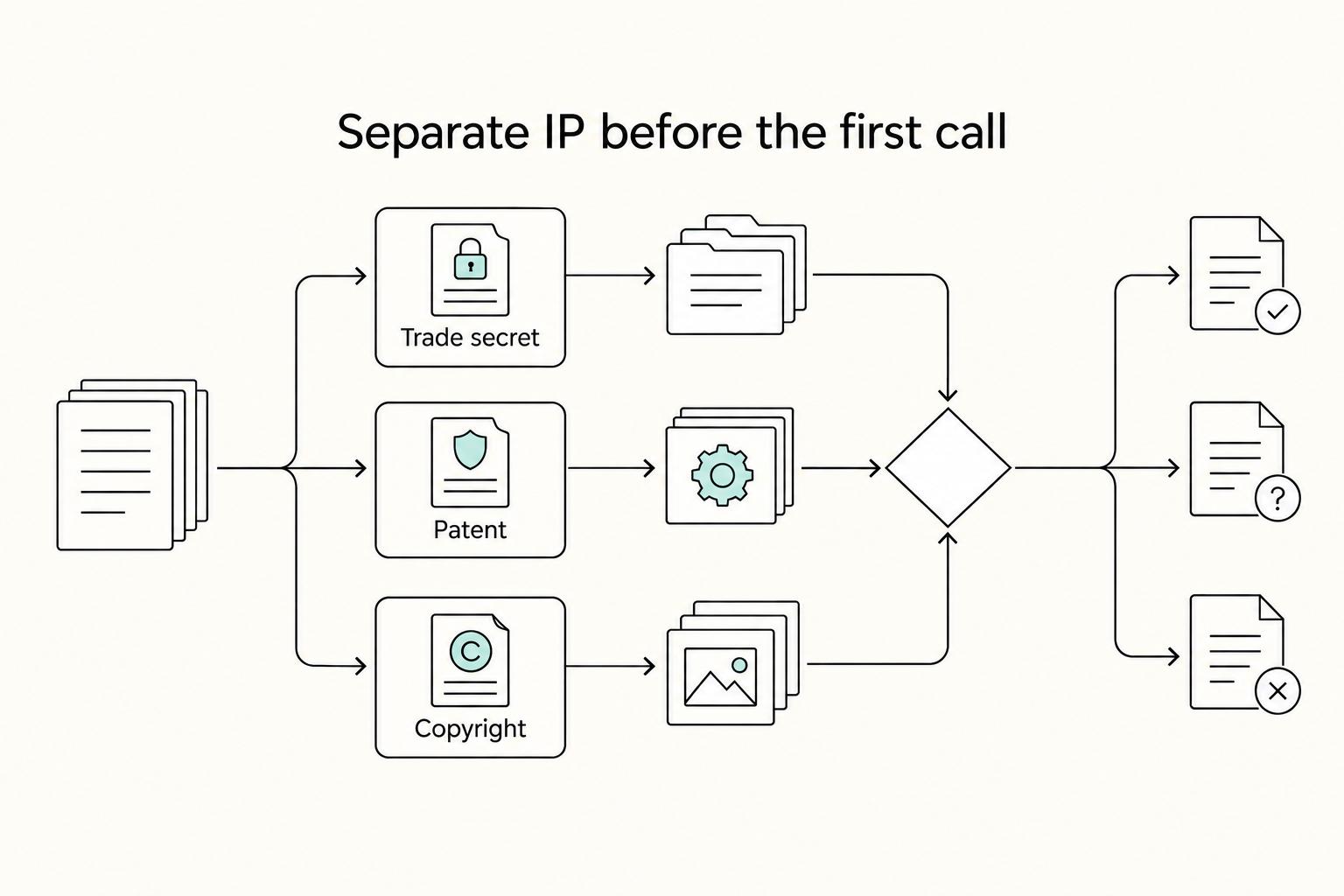
A Biotech Consultant's Guide to IP Protection in Contracts
For biotech consultants, protection starts before any contract markup. The job is straightforward: document what you already own, control what you disclose, and separate reusable IP from client-paid outputs before the first call.
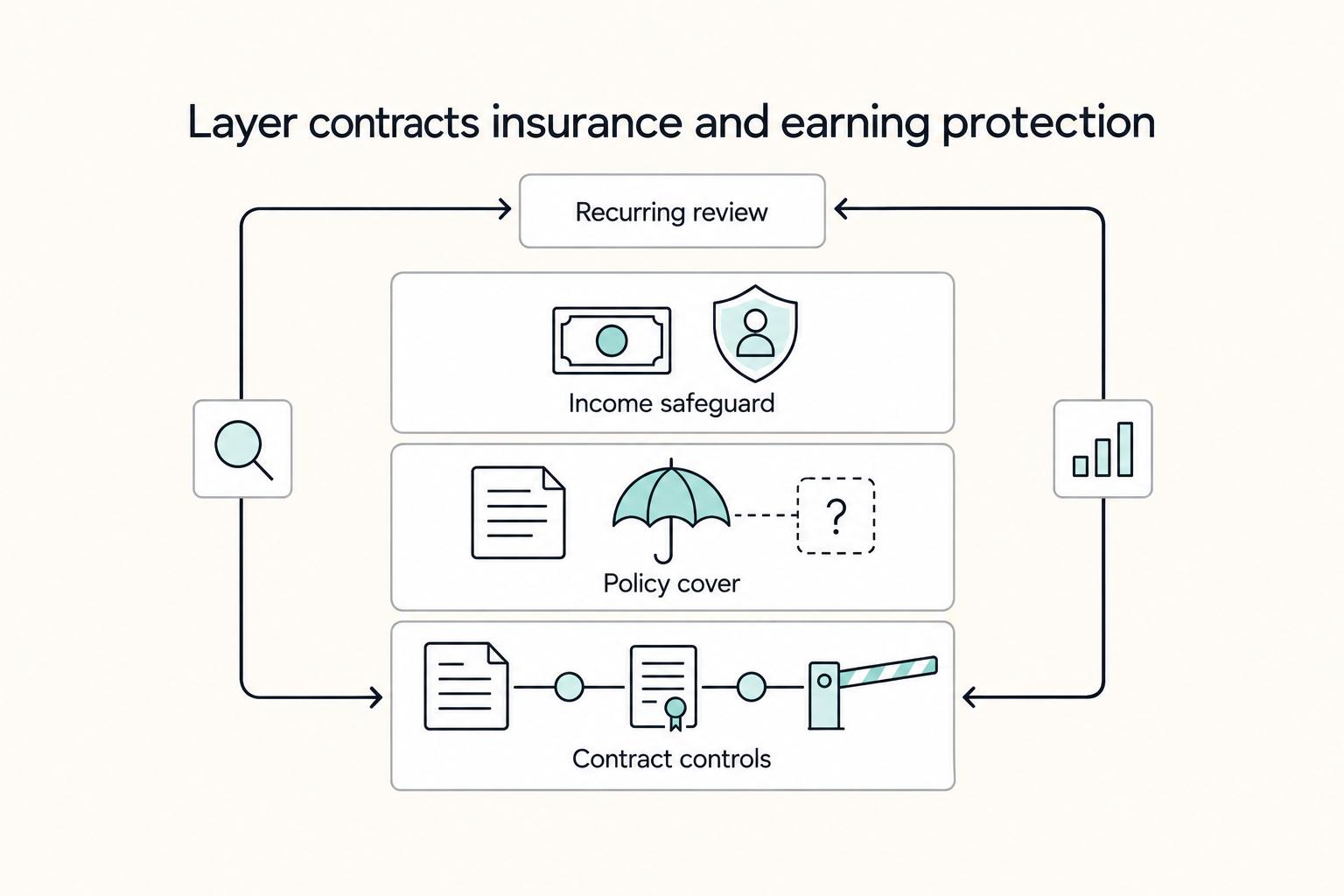
A freelance IT consultant's guide to business interruption insurance
Build resilience in three steps: lock down contract risk first, insure the risks you cannot contract away, and protect your own ability to earn. If the first step is weak, you end up buying insurance for problems you could have prevented in the contract.
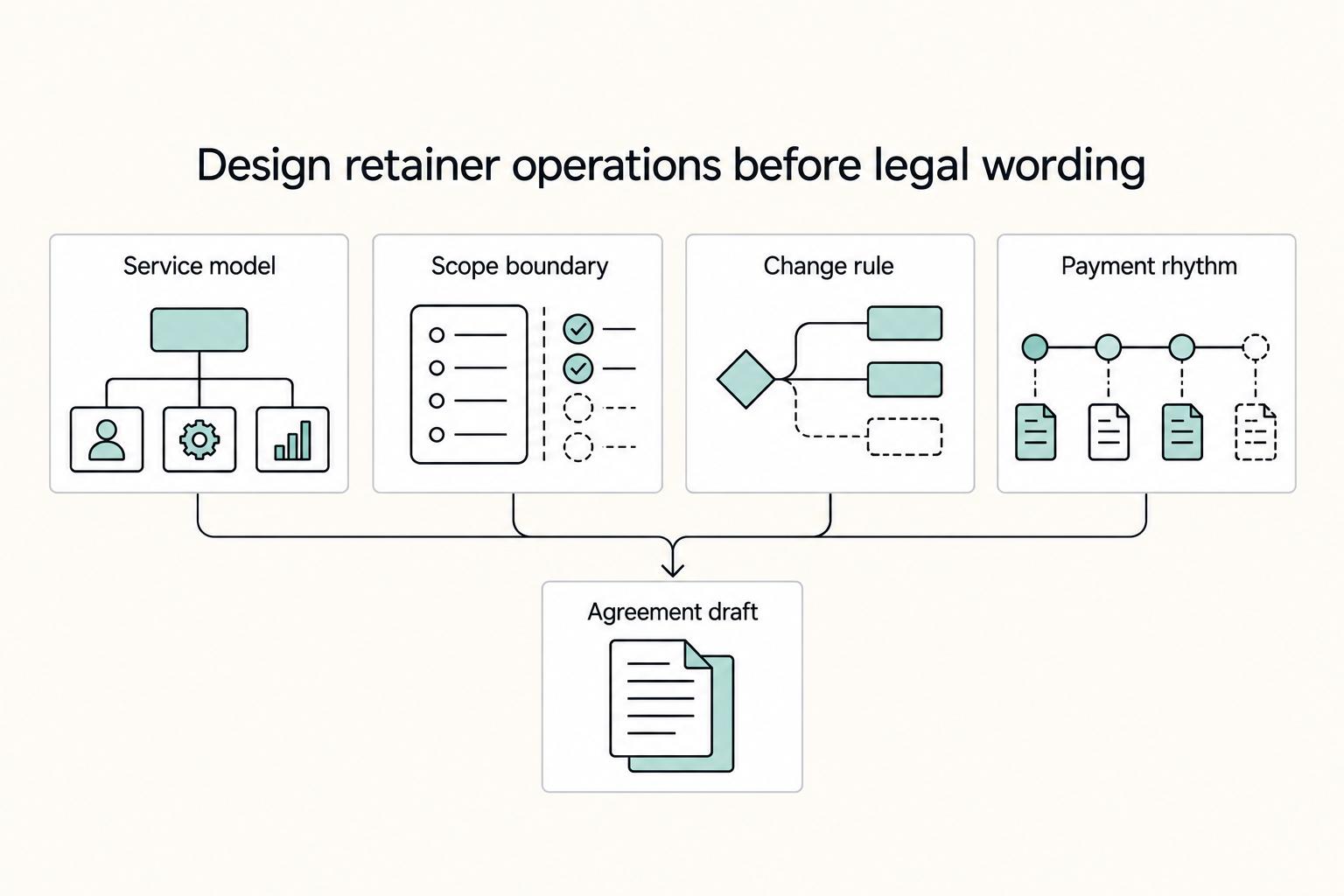
A Strategic Consultant's Guide to Structuring a Retainer Agreement
**Build your consulting retainer agreement to control scope, stabilize cash flow, and set expectations early.** Scope creep is what happens when work quietly expands beyond what the client approved. The drift can hit your calendar, your margin, and delivery quality. As the CEO of a business-of-one, your agreement is not paperwork. It is the system that protects your time and decisions.