
Quick Answer
To receive international payments in Pakistan, choose the rail by use case and verify the inbound leg separately from local movement. Common options include bank transfers or SWIFT, provider receive flows such as Wise or Payoneer, and remittance-style services such as Western Union or Xoom. Treat RAAST as a local rail unless a provider explicitly confirms cross-border inbound support, and confirm IBAN, routing fields, FX handling, and reconciliation before go-live.
Match Pakistan payment rails to your operating model#
If you want to receive international payments in Pakistan without creating finance issues later, choose the rail that fits your operating model, not the provider name your team recognizes first. Pakistan is a multi-rail market. Bank transfers are common, mobile-wallet routes are common, and MTOs are also used in practice. The right setup depends on who is sending, how often they pay, and how much control you need over FX and reconciliation.
Step 1 Pick for the payment shape, not the logo#
Start with the use case. Occasional one-off receipts and repeat platform collections do not create the same operational demands. Traditional bank transfers are widely used and often treated as secure and reliable, including for larger transactions, but they are not always fast. One estimate puts the transfer window at 3-5 business days.
Do not judge a route only by the visible transfer fee. Bank-transfer paths can carry higher charges and weaker FX outcomes, so the credited amount can differ from what your team expects if you ignore conversion points or intermediary deductions.
Step 2 Separate inbound receipt from local money movement#
Do not assume every rail does the same job. Treat RAAST as a local-payments decision that you validate separately, while cross-border receipt may still rely on bank-transfer and MTO-type paths depending on provider and corridor. If you need reach for international senders, get explicit provider confirmation before you assume a domestic rail can handle inbound cross-border funds.
That separation affects more than delivery speed. It changes who owns FX, what transfer metadata you receive, how exceptions are handled, and how much day-to-day reconciliation work your team inherits.
Step 3 Build around operator checkpoints before go-live#
Before you choose a provider, confirm sender requirements, recipient requirements, and exact routing fields. For bank transfers, one checkpoint is non-negotiable: provide the recipient IBAN to the sender.
Verify onboarding prerequisites early as well. One cited requirement is a valid CNIC, so record what was required and when you verified it as part of launch readiness.
Step 4 Re-verify anything that can drift#
Treat rail fit as fairly stable and provider specifics as volatile. Pricing, corridor eligibility, policy terms, and some operational rules can change, so re-check them before go-live instead of carrying them forward as fixed facts.
Build failure handling into your launch plan. A cited source explicitly flags account suspension, policy changes, and service termination as real platform-level risks, so define a primary rail, a fallback, and the exact status your finance team will treat as funds available.
Define where RAAST fits and where it does not#
Set the boundary early: based on the evidence here, RAAST is described as Pakistan's instant payment system, so treat it as a local payment rail unless a provider explicitly confirms more.
Step 1 Draw the evidence boundary#
The supported claim is narrow but useful. RAAST is framed as an instant payment system in Pakistan. That supports local-rail planning, not an automatic assumption about inbound international collection.
The same source also notes vague timelines and possibly hurried launch-era communication. Use that as a reminder not to stretch early rollout language into current capability claims.
Step 2 Separate inbound receipt from local movement#
This is a routing-design question. One method can handle inbound receipt, and another can handle local disbursement. Do not assume one label covers the full flow.
When a provider mentions RAAST, ask which leg it actually covers: local payout, inbound receipt, or both. Then confirm required receiver fields, destination types, and status tracking from initiation through local credit.
Step 3 Use a no-assumption rule for international sender reach#
If your model depends on senders abroad, require provider-level confirmation in writing before you treat RAAST as part of the inbound path. "Instant" does not automatically mean "internationally reachable."
Keep a dated verification record with supported corridors, receiver requirements, and any exclusions. If that record is missing, treat the setup as unverified.
Prepare the prerequisites and evidence pack before you compare providers#
Do the prep before provider calls. A useful comparison starts with a clear dossier, complete routing fields, and written confirmations.
Step 1 Build a pre-launch dossier#
Define flows by use case first, then map providers to those flows. Document target corridors, sender types, the typical payment profile, and whether each flow is invoice collection, platform payout, or remittance-like receipt in Pakistan.
Use one practical checkpoint: a reviewer should be able to answer who pays, from where, for what, and into which endpoint. If that is unclear, your comparison is premature.
Step 2 Gather the evidence pack for onboarding and review#
Treat State Bank of Pakistan, foreign-exchange regulations, and anti-money-laundering compliance as scope markers for your evidence pack. SBP guidance here is import-focused, so do not treat it as a complete inbound business-payment onboarding checklist.
Organize documents by flow and review stage so you can respond quickly when a provider asks for support. If a provider confirms a route but cannot clearly state what documentation or payment-type limits apply, keep that route marked unverified.
Step 3 Define routing fields before commercial scoring#
Make complete payment instructions a launch gate. For international wires, you need domestic-transfer details plus cross-border identifiers, including beneficiary bank name, bank address, and SWIFT/BIC, and IBAN where required.
Keep field standards explicit in your template: SWIFT/BIC is 8-11 characters, and IBAN can be up to 34 characters. Also confirm whether an intermediary bank is needed for your corridor, and whether destination support is bank account only or includes endpoints tied to Easypaisa, Bank Alfalah, or other provider-supported routes.
Step 4 Create a dated verification log#
Use a dated log per provider and corridor so decisions rest on evidence, not call notes. Track what was confirmed, whether that is inbound receipt, local payout, or both, along with required receiver fields, unsupported payment or destination types, confirmation date, and internal approver.
Apply the same standard to Wise, Payoneer, SadaPay, NayaPay, and bank routes. If a claim is not documented with date and owner, treat it as unverified. If you also manage outbound disbursements, keep the corridor log aligned with our Pakistan payout operations guide so inbound and outbound assumptions do not drift apart.
Compare receiving options by use case not by marketing claims#
Compare rail types first, then compare providers within each rail type. If you mix all brands into one list, you can miss real differences in fee logic, receiver setup, and reconciliation behavior.
Step 1 Separate rail families before scoring#
Start by putting routes into separate buckets: SWIFT bank rails (HBL, UBL, Meezan Bank), MTOs (Western Union, Xoom), and platform flows (Wise, Payoneer, fintech apps`). Then score each row only on fields you can document for your corridor and payer-receiver setup.
Step 2 Use a strict matrix and leave unknowns unverified#
| Rail family | Example route/provider | Sender eligibility | Receiver requirement | Speed range | Fee visibility | FX conversion point | Reversal/status handling | Business suitability | Not for this use case |
|---|---|---|---|---|---|---|---|---|---|
| SWIFT bank rail | HBL / UBL / Meezan Bank | Confirm with the relevant authority | Bank-route fields (for example IBAN where the route requires it) | Confirm with the relevant authority | Confirm with the relevant authority | Confirm with the relevant authority | Confirm with the relevant authority | Score only after written route confirmation | Do not approve from "fastest" anecdotes |
| MTO | Western Union / Xoom | Confirm with the relevant authority | Provider-specific receive flow | Confirm with the relevant authority | Confirm with the relevant authority | Confirm with the relevant authority | Confirm with the relevant authority | Treat as a separate operating model from account-to-account settlement | Do not force into recurring B2B settlement without written acceptance |
| Platform flow | Wise non-Swift / non-wire receiving | Verify your route directly | Account details for supported receive paths | Confirm with the relevant authority | This route is listed as free for listed non-Swift/non-wire currencies | If conversion is used, the provider says live mid-market rate plus upfront fee | Verify trace/return handling for your exact route | Keep separate from Swift/wire economics | Do not merge with Swift/wire in one row |
| Platform flow | Wise Swift/wire receiving | Verify your route directly | Account details plus Swift/wire sender path | Confirm with the relevant authority | Fixed per-payment fees are listed (including 6.11 USD, 2.16 GBP, 2.39 EUR) and Swift fees across additional currencies | Model conversion separately where used | Verify trace/return handling for your exact route | Useful when payer can only send wire/Swift | Do not assume all receiving is free |
| Platform flow | Payoneer / other fintech apps | Confirm with the relevant authority | App/account flow (verify directly) | Confirm with the relevant authority | Confirm with the relevant authority | Confirm with the relevant authority | Confirm with the relevant authority | Keep separate until evidence is complete | Do not approve based on brand familiarity |
Step 3 Split Wise into two rows#
Do not collapse this provider into a single receiving line item. List non-Swift/non-wire receiving and Swift/wire receiving as separate rows, because the fee model is different.
For auditability, store the dated pricing view and the regulator-standardized format artifact in your verification log.
Step 4 Add a hard stop column#
Give every row an explicit "not for this use case" decision so teams do not stretch a convenient test path into the wrong production flow.
If reliability and traceability matter more than first-transfer speed, favor rows with clearer status visibility and reconciliation signals over "usually faster" claims.
Apply decision rules for rail selection and rollout sequence#
Set rollout order from actual payer behavior: launch one primary route your senders already use, then add one fallback route you can verify and reconcile with written evidence.
Step 1 Start from invoice payer behavior#
For global invoice payers, start with Bank transfers or SWIFT, then add one platform path such as Wise or Payoneer as fallback.
Do not use PayPal US fee terms as a Pakistan launch decision. The referenced page is US-scoped and PayPal directs users to its Policy Updates page for fee changes.
Before approval, store dated evidence for sender route, receiver requirements, and the pricing or policy view you relied on.
Step 2 Keep remittance receipts in a separate lane#
If you intentionally support one-off personal receipts, keep remittance paths such as Western Union, Xoom, or Easypaisa-linked flows in a separate policy lane.
Do not auto-promote a successful one-off remittance test into recurring invoice collection without fresh written approval for that use case.
Step 3 Choose traceable operations over speed claims#
If finance control matters, pick the route you can consistently identify, match, and investigate when a payment is delayed or returned, not the route described as "usually faster."
For this provider, keep non-Swift/non-wire receiving separate from Swift/wire receiving in your matrix. The cited pricing lists fixed per-payment Swift receiving fees including 6.11 USD (USD), 2.16 GBP (GBP), and 2.39 EUR (EUR), and says conversion uses the live mid-market rate.
Keep the dated pricing view and the regulator-standardized format artifact in your verification log.
Step 4 Activate in stages with explicit failover rules#
Go live with one primary rail, one fallback rail, and prewritten failover triggers tied to operational evidence.
Use triggers such as missed settlement windows, unresolved return or trace cases, or provider-term changes that you cannot re-verify in time.
Assign an owner and required evidence for each trigger so failover decisions stay repeatable instead of ad hoc.
Design the money flow and reconciliation path before launch#
Do not launch until you can trace one inbound payment from payer initiation to the moment your team marks funds available. After rail selection, the main risk is usually operational: losing control of references, status evidence, and settlement-state clarity as volume grows.
Step 1 Map the lifecycle as distinct states#
Treat the flow as separate states, not one generic "payment received" event.
A practical internal map is: payer initiation, provider reference capture, receipt confirmation, conversion event if any, wallet or ledger posting, and final payout status.
For each state, define what proof exists and where it is stored. At minimum, keep a timestamp, amount, currency, source of truth, and the identifier that connects to the next state.
In Pakistan planning, keep payment types explicit. The RAAST case-study categories include Bulk Payments, Merchant Payments, P2P Payments, and Request To Pay, and it defines individual P2P as non-business. If your use case is business receipt collection, do not treat personal-style credits as interchangeable.
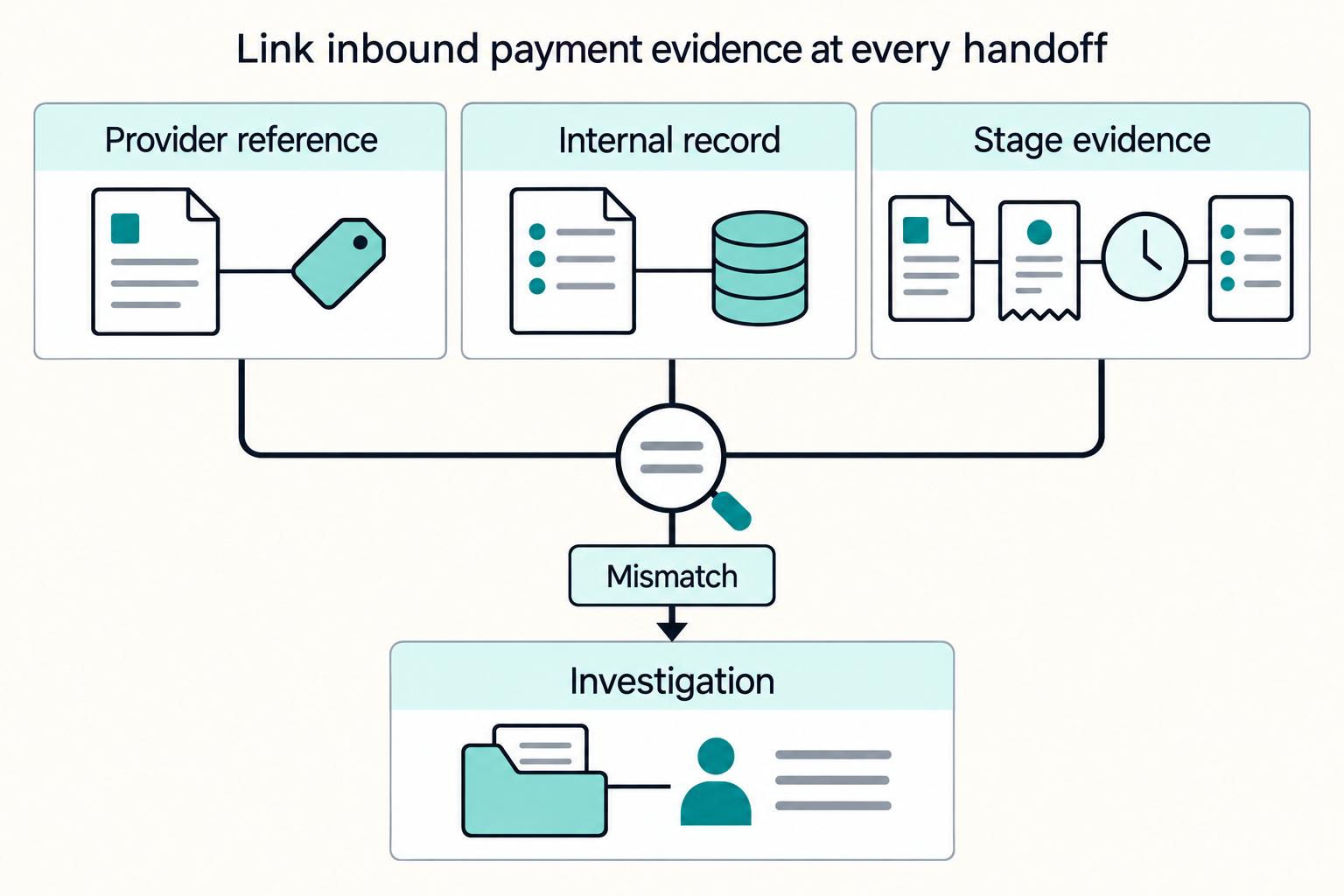
Step 2 Require a checkpoint at each handoff#
Set an internal rule that each handoff must be verifiable before funds are marked available.
A common control pattern is to line up three artifacts: the external provider reference, your internal transaction ID, and a settlement or completion confirmation from the source you trust for that stage.
This is your control design, not a claim about default behavior of any Pakistan rail. The RAAST glossary's CSM (Clearing and Settlement Mechanism) is a useful reminder that acknowledgement and settlement are different stages.
Before launch, run a pilot payment and ask at each state: what field proves this happened, and who can retrieve it quickly without engineering support?
Step 3 Use automation only after field-level verification#
If your Gruv setup supports it, use automation to reduce manual error: Virtual Accounts for inbound bank transfers, webhook status events, and idempotent posting for safe retries. But verify exact behavior first, rail by rail and provider by provider.
Before go-live, confirm in writing:
- Event names and payload fields
- Which identifiers arrive at each stage
- Retry behavior for repeated statuses
- Which statuses are provisional vs terminal
Store that confirmation with date and owner in your verification log.
Step 4 Predefine exception handling and route to investigation#
Treat unmatched deposits, held or returned credits, and delayed confirmations as investigation cases with a clear owner and evidence checklist. Do not run these through ad hoc chat triage if you need reliable reconciliation.
Your template can stay simple: payment type, expected route, amount and currency, known references, current status, last verified source, and escalation contact. Also record whether customer-facing availability stays blocked while the case is open.
For Pakistan context, keep one governance check in mind: the RAAST material identifies SBP oversight and separates oversight, operator, and settlement concepts. Your records should let you explain not just that funds appeared, but what payment type was expected and where the transaction currently sits in the chain.
Control FX leakage with explicit conversion policy#
Once the payment path is reconciled, make FX an explicit approval step, not an automatic side effect. If you want to receive international payments in Pakistan, set a written rule for where conversion happens, who can trigger it, and what qualifies as a valid quote. The same control boundary matters when you design currency conversion in a payment API, because quote timing and conversion ownership need to stay machine-readable.
Step 1 Separate the three FX decisions#
Treat these as separate decisions, even if one provider bundles them:
- Where conversion happens
Sender-side provider, receiving platform, or bank after receipt.
- Who controls timing
Your team triggers conversion, or the provider converts automatically.
- How quote freshness is handled
If timestamp, expiry, or rate basis is unclear, stop and re-quote.
That freshness rule is your internal control, not a documented provider, Payoneer, or bank policy. For Payoneer and bank FX, ask for exact fee and conversion disclosures, then log them with date and owner.
Step 2 Measure landed amount, not rate language#
Use net outcome, not marketing labels, as the decision metric. Track sender debit, explicit fees, and recipient credit after conversion.
This provider is a useful disclosure benchmark: it says it uses the live mid-market rate with a separate upfront fee, shows payer cost and expected recipient amount before sending, and offers a regulator-standardized pricing view. If a provider cannot show payer amount, fee line, rate basis, and expected recipient amount together, treat FX visibility as limited.
A common failure mode is comparing one rail with full fee detail and another with only net credit. The same provider explicitly warns that some services can present low-cost or free transfer language while embedding charges in the exchange rate.
Step 3 Compare rails on one identical scenario#
For Pakistan route decisions, compare rails on the same base case: same source and destination currencies, amount, recipient type, and settlement assumption.
Include for each rail:
- Sender debit amount and currency
- Explicit pre-execution fees
- Shown rate basis if provided
- Expected recipient amount
- Actual settled recipient amount
- Quote timestamp or expiry evidence
- Who controlled conversion timing
- Rail used (for example, SWIFT, Wise, Payoneer, bank FX)
If a provider only gives a range or generic promise, mark it not comparable yet.
Step 4 Use concrete pricing artifacts where available#
Record fee treatment by rail and currency, not as one generic provider fee.
| Example receipt type | Fee treatment shown |
|---|---|
| Receiving USD wire and Swift payments | Fixed fee per payment 6.11 USD |
| Receiving GBP Swift payments | Fixed fee per payment 2.16 GBP |
| Receiving EUR Swift payments | Fixed fee per payment 2.39 EUR |
The same pricing material also states sending or conversion fees can start from 0.57%, and volume discounts begin after 25,000 USD equivalent, with the window that resets on the first. That does not confirm your Pakistan corridor outcome, so verify eligibility before using any tier assumptions in margin planning.
Step 5 Enforce reject-and-requote#
If quote freshness is unknown, stale, or cannot be evidenced later, reject conversion and re-quote. This can add delay, but it reduces avoidable FX variance.
Use a simple decision rule: prefer routes that show fee lines, rate basis, and expected recipient outcome before execution. If those three items are missing from your evidence pack, FX control is not yet strong enough to scale confidently. If you need a standing policy for spreads and customer trust, use our FX markup policy guide for marketplaces before you widen corridors.
Build compliance gates for market entry in Pakistan#
Treat compliance as a launch gate, not a provider checkbox. For Pakistan entry, map controls to your exact flow across State Bank of Pakistan context, Pakistani tax laws, foreign exchange regulations, and anti-money laundering compliance. If ownership is unclear across sender, platform, and receiver, pause expansion.
Step 1 Map the flow before assigning controls#
Document the real path first: sender type, receiving entity, rail, where FX occurs, and payout destination in Pakistan. Then assign accountable owners for KYC, sanctions or restricted-use screening, payout eligibility, and record retention.
Provider material can bundle claims such as conversion, fraud mitigation, and compliance without clarifying who owns each control. Use a responsibility matrix and resolve any ambiguous "shared" ownership before launch.
Step 2 Set four go/no-go gates#
Use the same four gates for every provider and corridor:
- Onboarding and KYC completeness
Require a complete onboarding record, approval status, approver, and date.
- Sanctioned-use and restricted-activity screening
Screen counterparties and payment purpose before payout.
- Payout eligibility
Confirm the receiver and route are eligible for the intended use case.
- Documentation retention
Keep an audit-ready evidence pack for each approval decision.
For recency control, log the publication date of provider guidance used in decisions, for example, July 25, 2025 or 17 November 2025, alongside the approval record.
Step 3 Separate policy from operations#
Keep legal obligations in policy, and keep execution steps in runbooks and approval queues. Policy defines what must be true before payout. Operations define who checks, where the item waits, and who can approve exceptions. For overrides, record policy basis, approver, and supporting evidence.
Step 4 Treat unclear responsibility as a risk flag#
If a provider cannot clearly document compliance responsibilities across sender, platform, and receiver, treat that as a launch risk. Apply the same caution when fast-processing claims are not matched by clear screening, payout-eligibility, and record-retention ownership.
Also keep source hierarchy clear: SBP Working Paper Series content is discussion-oriented and explicitly not official SBP policy. Use it as context, not as sign-off authority.
Run a phased pilot with go or no-go checkpoints#
Run a narrow pilot first, and do not expand until the first corridor is fully traceable and reconciled end to end, even if transfer speed looks good.
Step 1 Limit the pilot on purpose#
Keep the pilot intentionally small so failures are visible before you add scale. Use a controlled cohort and limited rails as an operating choice, not as a Pakistan market rule.
Choose a cohort that matches your real launch motion. If your launch depends on recurring client invoices, test invoice-shaped payments with real references and expected settlement handling. If remittance-style receipts are also in scope, test them as a separate path instead of blending success metrics.
Your checkpoint is straightforward: every transaction should be traceable from payer initiation to recipient confirmation. You should be able to match payer reference, provider reference, internal transaction ID, and final settlement confirmation without manual guesswork.
Step 2 Test scenarios that can break your process#
Design scenarios around your intended Pakistan flows, including failure handling. If these paths are part of your offer, include a recurring client payment, a delayed SWIFT case, and a remittance-path receipt through an Easypaisa or Bank Alfalah endpoint.
Do not score outcomes on speed alone. Use delayed cases to test where a payment is stuck, who owns investigation, and what evidence you can provide while unresolved. Use remittance-path cases to test whether receiving details, payer narrative, and final posting still reconcile when flow logic differs.
For each scenario, save an evidence pack as you run it: timestamps, amount sent, amount received, any displayed quote, conversion timestamp if available, references, exports or screenshots, and the person who approved the result. If a decision relies on a provider policy page or regulatory note, log the exact version or access date used.
Step 3 Set hard gates before the first payment lands#
Define go or no-go gates before testing starts. At minimum: confirmed corridor and use-case eligibility, stable conversion behavior in your records, exception handling time within your internal threshold, and a documented owner for each escalation path.
Treat FX consistency as a required check, not a bonus signal. Pakistan program context explicitly references a market-determined exchange rate and proper FX market functioning. That is useful context, but not a promise about your rail outcomes. Test repeated payments across different days and compare sender debit, any displayed quote, intermediary deductions, and final recipient credit. If records do not line up cleanly, stop expansion.
Step 4 Expand only after milestone-style sign-off#
Use binary, evidence-based sign-off. In Pakistan's financing context, formal milestones had immediate consequences: the IMF's first SBA review on January 11, 2024 enabled an immediate disbursement of SDR 528 million. Apply that same milestone discipline to your pilot.
A pilot is not a pass just because money arrived. If traceability, exception ownership, or reconciliation is still unclear on the first corridor, adding corridors multiplies ambiguity. Expand only when settlement status is clear, exceptions meet your preset threshold, and each escalation path has a named owner.
Common mistakes and how to recover fast#
Most recoveries are not rebuilds. They are controlled resets: replace assumptions with current provider evidence, then re-test route economics and controls.
Step 1 Re-baseline market assumptions#
The mistake is treating market chatter or another country setup as launch truth for Pakistan. Recover by rebuilding a verification log for each rail: current provider page, eligibility notes, support confirmation when needed, access date, and internal approver.
A rail is not verified until you can show what the product is, how it receives funds, and any route caveats from current provider material.
Step 2 Recalculate on net receipt, not headline fee#
The mistake is comparing sticker fees instead of landed amount. Recover by re-running comparisons on net receipt after FX treatment and route-specific handling, especially on SWIFT and remittance paths where deductions may sit outside the first quote.
Keep the exact fee view in your evidence pack. The cited platform separates receiving categories, marks SWIFT receiving as fixed-fee-per-payment items, warns that some providers hide fees in exchange rates, and provides a regulator's standardized format view. Save that view, the quote timestamp, and the access date so your team compares like for like.
Step 3 Pre-approve a fallback rail#
The mistake is discovering backup options during an incident. Recover by pre-approving a secondary path, for example Wise, Payoneer, or a direct bank route, and documenting who triggers the switch, what sender instructions change, and which references remain mandatory.
Run one live switch test before launch so fallback success does not break reconciliation.
Step 4 Enforce audit evidence at every handoff#
The mistake is weak traceability. Recover by requiring payer reference, provider reference, internal transaction ID, amount sent, amount received, FX quote if shown, and final settlement confirmation before marking a payment complete.
If any field is routinely missing, pause expansion and fix capture first. Fast recovery depends on proving what happened without guesswork.
Conclusion and copy-paste launch checklist#
Use a strict sequence and require evidence at each gate: define rail scope in Pakistan, separate the RAAST question, compare options by use case, set FX policy, install compliance ownership, then pilot before scaling.
- Define inbound rails and fallback first.
Decide your approved inbound mix (SWIFT/bank, remittance-style path, platform flow) and name one fallback rail per corridor. Keep RAAST as a separate local-leg check from the inbound international leg. Verification: record sender type, receiver endpoint, and fallback route for each approved path. Red flag: if a provider cannot clearly explain both legs, keep it provisional.
- Validate payment instruction prerequisites before price comparisons.
Confirm beneficiary details exactly as required, including IBAN if applicable and intermediary-bank SWIFT BIC when an intermediary bank is used. Missing required fields can cause delays or returns. Copy/paste checks:
- Confirm IBAN or equivalent beneficiary identifier, if applicable
- Confirm payout destination details in provider-required format
- Confirm onboarding and entity documents are complete
- Confirm whether an intermediary bank is expected and capture its SWIFT BIC
- Re-verify provider eligibility and policy terms at launch time.
Re-check current terms for Wise, Payoneer, Easypaisa, and bank routes using live pages and dated evidence. Public guidance can change without notice, so save the page, access date, and any support confirmation for gaps. Operator note: labels like "Fixed fee per payment" and values such as 6.11 USD can be useful evidence artifacts, but U.S.-scoped pages are not Pakistan-corridor approval.
- Set FX policy before first live receipt.
Document where conversion happens, who approves it, and what to do when quote freshness or landed amount is unclear. Use transparent models, for example disclosed upfront fee plus exchange-rate method, as your comparison baseline. If X, do Y: if quote clarity is insufficient, re-quote or use the fallback rail.
- Approve compliance gates and owners.
Tie controls to State Bank of Pakistan, foreign exchange requirements, and AML obligations through named ownership, required documents, retention rules, and clear escalation paths. Failure mode: unclear ownership across team, provider, and bank leads to unresolved exceptions and weak audit evidence.
- Pilot, reconcile every path, then sign off.
Run controlled scenarios and require matching records across payer instruction, provider reference, internal transaction ID, amount sent, amount received, and settlement confirmation before marking funds available. Include one normal path and one stressed path, for example delayed SWIFT or manual follow-up. Go/no-go: if traceability and reconciliation fail in the first corridor, pause expansion.
Frequently Asked Questions
What are the main ways to receive international payments in Pakistan?
Most teams start with three buckets: bank or wire routes such as SWIFT, provider receive flows, and remittance-style services. Product names like Wise or Payoneer are only a starting point, not proof of Pakistan eligibility. Check how funds are received, which sender identifiers are required, and whether wire and non-wire receipts are priced differently.
Is PayPal available for receiving business payments in Pakistan?
Do not answer this from generic PayPal pages or market chatter. The PayPal fees page cited here is scoped to United States accounts and says its rates apply to residents of that market or region. If PayPal is part of your plan, get Pakistan-specific confirmation directly and keep that record in your evidence pack.
What should operators compare first when choosing rails?
Compare fee transparency and FX handling first, then confirm that the rail gives enough reference and status data for clean reconciliation. Keep wire or SWIFT receiving separate from non-wire receiving because the fee model can differ. Save the current pricing view and any standardized fee-format artifact before signoff.
Are remittance apps enough for a business receiving model?
They can work for occasional, low-complexity receipts. They often become weak for repeatable finance operations if reference and settlement evidence is incomplete. Before approval, verify that your team can retain sender detail, provider reference, amount sent, amount received, and final settlement confirmation.
How should we think about RAAST in this context?
Treat RAAST as a separate local-operations question, not proof that cross-border receiving is covered. Validate the inbound international leg and the local Pakistan leg independently. If a provider cannot clearly explain both legs, keep the launch decision provisional.
What is usually still unknown before go-live?
The usual unknowns are corridor eligibility, current provider policy terms, and documentation or compliance ownership across sender, provider, and receiver. Close those gaps with evidence such as the current pricing page, access date, standardized fee view if available, and the exact support response used to confirm a rule. If any of that is missing, treat the launch answer as incomplete.
Researched and edited by the Gruv editorial team. Gruv builds cross-border billing, payouts, and finance-operations software for global businesses.
Sources
Includes 1 external source outside the trusted-domain allowlist.
- fastpayments.worldbank.org/sites/default/files/2022-05/Pakistan_RAAST_C...trusted
- fastpayments.worldbank.org/sites/default/files/2021-11/Fast%20Payment%2...trusted
- imf.org/-/media/files/publications/cr/2024/english/1...trusted
- wise.com/us/pricing/send-moneytrusted
- jpmorgan.com/content/dam/jpm/cib/complex/content/treasury...external
Educational content only. Not legal, tax, or financial advice.
Related Posts

The Freelance Payment Penalty: A Modeled Audit of Platform Fees, FX Spreads, and Payout Delays
The money rarely disappears through a single, easy-to-spot fee. The real loss is stacked. A marketplace takes its commission, a processor adds a charge for international cards, a bank or payment company converts the currency at a spread, a platform holds the funds before release, and a wire sheds a little to intermediaries on the way in. Each layer looks defensible on its own, but the worker feels the combined result as a smaller deposit and a later payday.
How to Respond to a Subpoena for Business Records
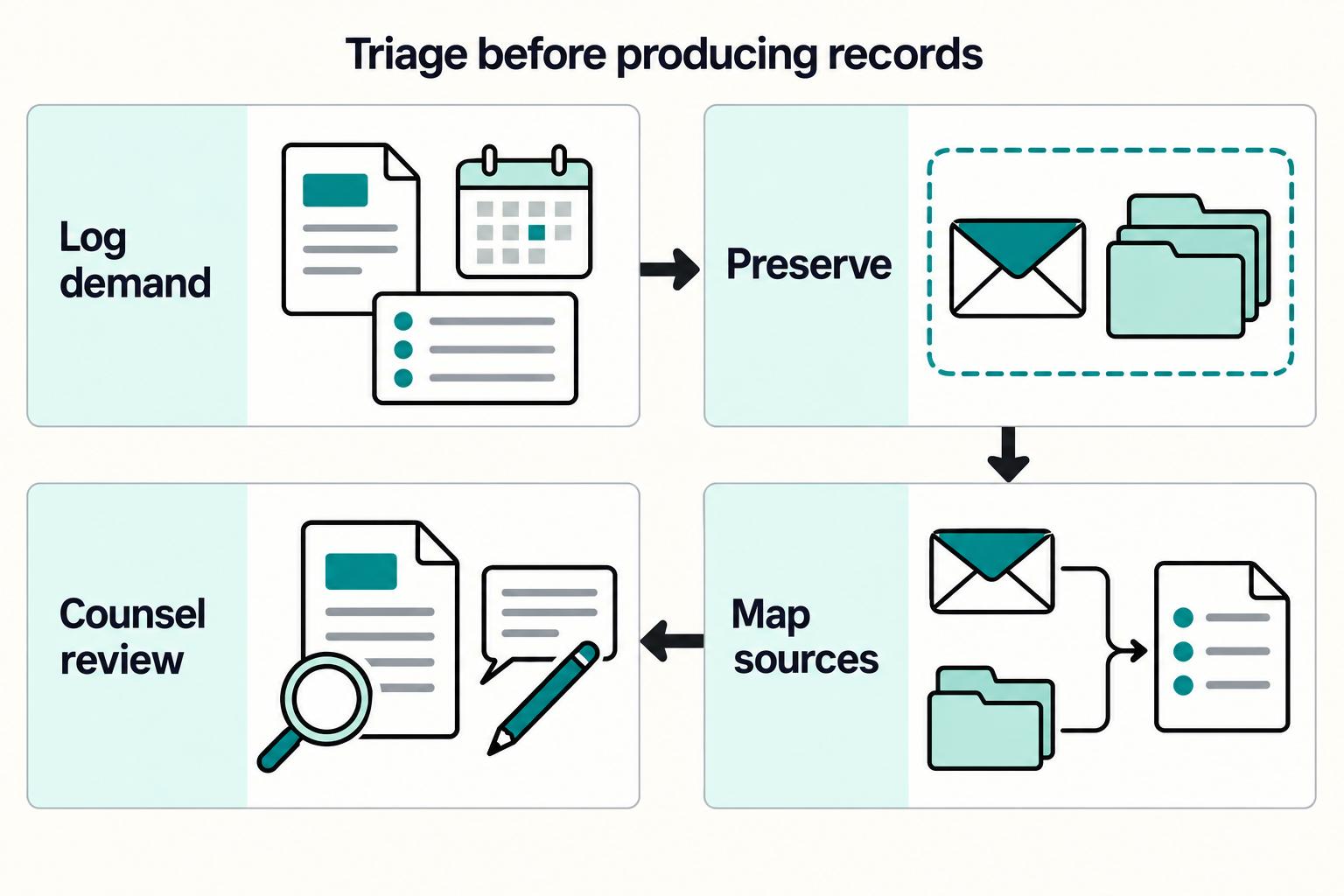
Move fast, but do not produce records on instinct. If you need to **respond to a subpoena for business records**, your immediate job is to control deadlines, preserve records, and make any later production defensible.
A US Expat's Guide to Investing in UCITS ETFs to Avoid PFIC Issues
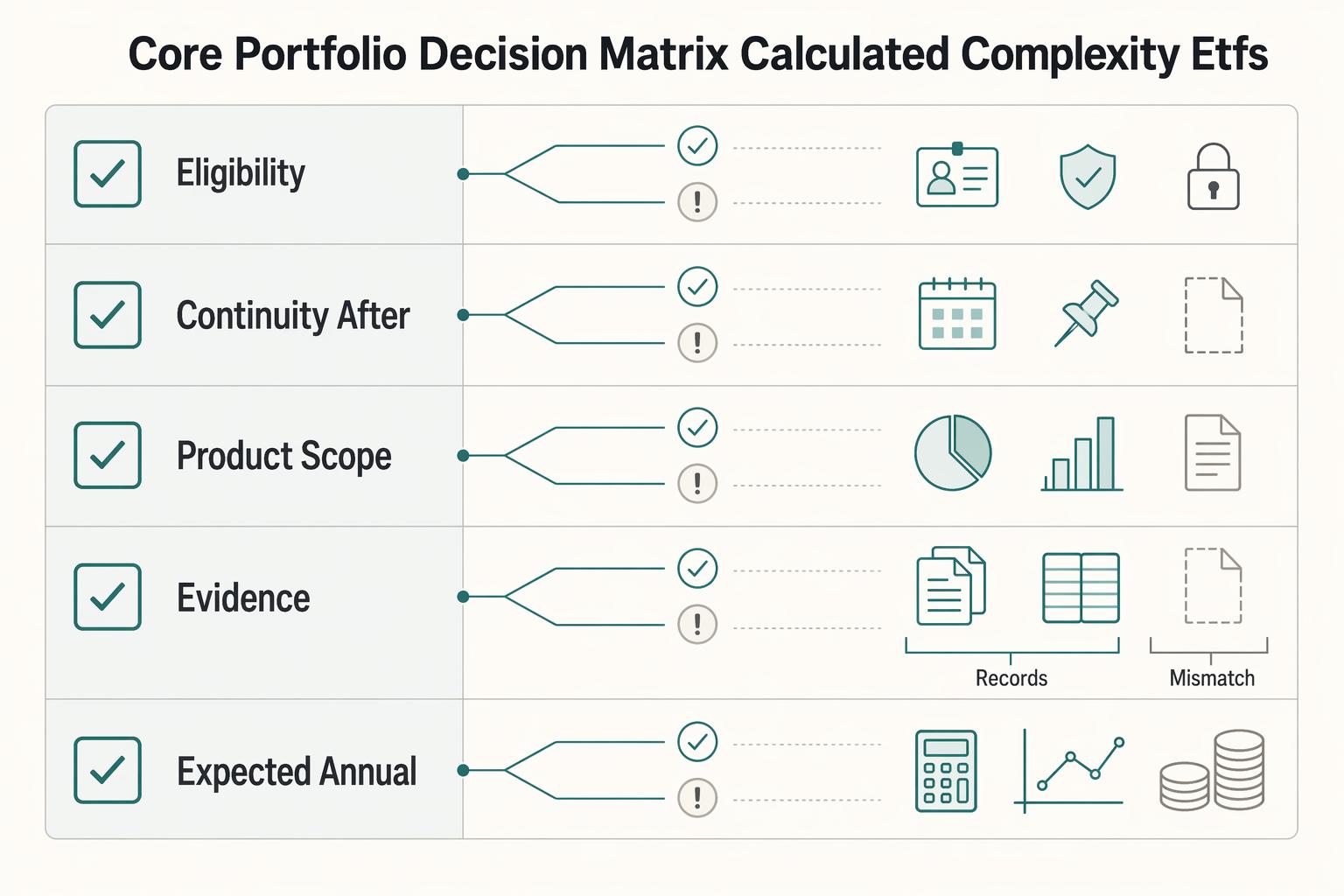
The real problem is a two-system conflict. U.S. tax treatment can punish the wrong fund choice, while local product-access constraints can block the funds you want to buy in the first place. For **us expat ucits etfs**, the practical question is not "Which product is best?" It is "What can I access, report, and keep doing every year without guessing?" Use this four-part filter before any trade: