

Quick Answer
Set an explicit FX policy that names who pays the spread, where exceptions are allowed, and how payout amounts are disclosed. Start with one default model, then apply corridor guardrails only where your internal records justify them. Before launch, verify every payout can be traced from quote or rate source to conversion, status events, and ledger posting. In API flows, reject expired quotes, use an idempotency key on money-moving writes, and monitor webhook transitions so retries do not create duplicate actions.
Why FX markup policy is now a product decision, not just a treasury setting#
Treat FX markup as a product policy from the start. If it stays buried in a processor default or treasury setting, you are still making a product choice, just without clear ownership.
Step 1 Treat the rate decision as part of the payout experience#
In cross-border payouts, exchange-rate handling is not just a back-office input. It shapes the amounts shown to contractors and how your team explains the final amount when a payout lands. Set ownership and communication expectations up front.
A simple rule helps here. If the rate logic changes the amount visible in your payout UI, email, receipt, or ledger, Product should co-own it with Finance and Engineering. Once a contractor can see or feel the effect, it is a product decision.
Step 2 Name the tradeoff before you write any policy#
Every FX markup choice creates tradeoffs across pricing policy, payout communication, and support handling. A higher spread or a lower spread is not automatically right.
Start with visibility. Before you debate policy, make sure you can trace one payout from quote or rate source to conversion, then to payout status, then to ledger posting. If you cannot reconstruct that path quickly, you are not ready to tune pricing.
A common failure mode is hidden spread logic inside processor settings that Finance understands but Product and Support do not. That is where inconsistent explanations and avoidable disputes usually start.
Step 3 Build the guide around decisions you can operate#
This guide focuses on choices you can run day to day, not abstract principles. The sections that follow walk through who absorbs FX cost, when corridor-specific guardrails may make more sense than one global rule, how to disclose rate timing and net payout clearly, and how to recover from stale quotes, failed conversions, and payout exceptions without creating reconciliation problems.
One operator detail matters early. If your policy language or disclosures borrow from legal or regulatory text, verify the source. FederalRegister.gov says its prototype content is informational, is not an official legal edition, and does not provide legal notice or judicial notice. The eCFR says its content is authoritative but unofficial. In the cited excerpt, Title 17 is displayed as up to date as of 4/01/2026 and last amended 3/31/2026.
In practice, your evidence pack should include the exact text version reviewed, who approved it, and where the final policy lives. That discipline matters later when you need to explain a payout, defend a disclosure, or change the rule without losing auditability.
Related reading: How Supply and Demand Dynamics Should Set Your Marketplace Payout Strategy.
Want a quick next step? Try the free invoice generator.
What to prepare before you set any FX markup rule#
Before you set any FX markup rule, create one shared record of what was reviewed and how the decision was approved.
- Build one evidence pack from internal records, and keep the exact version reviewed with the policy draft.
- Define and document the approval path up front so the final rule has a clear decision record.
- If you reuse regulatory wording, save the exact source text and version used. FederalRegister.gov says it "is not an official legal edition of the Federal Register," so treat it as informational, not final legal notice.
Choose who absorbs FX cost with an explicit model#
Once you have a baseline, make one explicit policy decision: who absorbs FX cost by default. Keep that rule in plain language so Finance, Product, Engineering, and Support apply the same logic.
| Model | Who absorbs FX cost | What to define for marketplace payouts | What to define for split payouts |
|---|---|---|---|
| Platform-funded | Platform | Default rule, exception owner, and review cadence | Whether every leg follows the same payer rule |
| Contractor-funded | Contractor | Default rule, disclosure language, and exception path | Whether each leg shows its own estimate and payer |
| Hybrid | Shared between platform and contractor | How cost is split, where exceptions apply, and who approves changes | Which leg uses shared cost and which follows standard policy |
Pick one default model first, then document where exceptions are allowed. If you cannot explain the default and exception path before payout confirmation, the policy is not ready for rollout.
Add narrow cohort logic instead of forcing one rule everywhere. You can apply reduced markup to selected corridors, contractor tiers, or payout bands while keeping a standard policy for the long tail, but every exception should be tied to a field you can verify from your own records.
Before confirmation, show three things consistently in product: the rate basis used for the quote, the expected payout amount, and who absorbs the spread. The practical checkpoint is simple: a contractor should be able to answer those three points from the confirmation view alone.
Set corridor guardrails instead of one global markup#
Use corridor guardrails instead of one global markup when you want payout pricing that is easier to explain and govern across routes.
Step 1 Build corridor tiers from your own operating signals. Start with internal payout history and group corridors using signals you can verify in your own records, such as execution variability, payout success issues, and dispute or return patterns. The goal is a tier list you can defend, not a perfect forecast.
| Corridor tier | Corridor volatility | Average payout size | Failure and return pattern | Acceptable FX margin band |
|---|---|---|---|---|
| Stable core | Lower relative movement in recent executions | Larger or recurring payouts | Lower operational noise | Narrow band |
| Standard mix | Moderate movement | Mixed ticket sizes | Some rejects or exceptions | Standard band |
| Fragile long tail | Higher movement or less consistent outcomes | Smaller or irregular payouts | Repeated rejects, returns, or disputes | Wider band with stronger review and disclosure |
Step 2 Turn guardrails into execution rules. A guardrail only matters if it changes behavior before money moves. Define what counts as a breach for each tier in your policy, and require review when a corridor keeps breaching. For larger conversions, route to manual approval using your documented internal threshold.
Step 3 Require evidence for tier or rule changes. When you tighten or relax a corridor rule, log why and who approved it. Keep a compact evidence pack with the review window, payout volume context, examples of issues observed, and the decision owner so later disputes and reconciliation reviews stay traceable.
Step 4 Run this as a living policy. Keep a fixed review cadence plus event-driven reviews for repeat breaches, and record each change with effective date and rationale. One versioned corridor register helps Finance, Product, Ops, and Support apply the same rule set in practice.
Design payout disclosure that reduces support tickets and distrust#
Disclosure should answer the payout question before a ticket is opened: what rate was shown, when it changed, and what was finally paid.
Step 1 Show rate state and timing clearly#
Label each rate state in the payout flow so users can tell an estimate, a committed quote, and an executed conversion apart. If you show an indicative rate, mark it as indicative; if you show a firm quote, show that it is firm and when it expires; after execution, show the conversion timestamp tied to the spot trade.
| Rate state | What to show | Where to show it |
|---|---|---|
| Indicative rate | Mark it as indicative | Payout details and payout notices |
| Firm quote | Show that it is firm and when it expires | Payout details and payout notices |
| Executed conversion | Show the conversion timestamp tied to the spot trade | Payout details and payout notices |
Keep the same timing markers in the two places users check first: payout details and payout notices.
Step 2 Put net payout logic in the payout context#
For cross-border payments, show gross amount, net payout, and fee or spread treatment together in the payout UI and notice. Do not send users to dense terms pages just to understand why the received amount differs.
For split payouts, explain each leg separately and state that net amounts can differ across corridors. Show leg-level amounts in notices instead of only a blended total.
Step 3 Keep records complete but operator views privacy-safe#
Keep everyday ops views masked, and keep full payout evidence in controlled records for investigation and reconciliation. Under GDPR, this helps you balance operational access with data protection.
A practical baseline is to avoid exposing confidential or personal data in broad workflows; even the eCFR feedback page explicitly says, "Please do not provide confidential information or personal data." When policy notes cite regulatory text, log the version context you reviewed (for example, "up to date as of 4/01/2026" and "last amended 3/31/2026" on the referenced eCFR page).
If Support can explain payouts from masked views and Compliance or Finance can reconstruct them from controlled records, your disclosure design is working.
Related: Maverick Spend in Platforms: How to Stop Off-Contract Contractor Payments Before They Drain Margin.
Implement quote execution and retry controls in your API flow#
Your API should enforce quote timing, make money-moving writes safe to retry, and treat webhook failures as operational incidents. That is how you avoid duplicate actions and payout differences you cannot explain.
| Control area | Required action | Traceability detail |
|---|---|---|
| Quote validity | Check quote expiry immediately before conversion or payout creation; if it is stale, reject the request and require a fresh quote | Record the rejection in the ledger with the original quote ID and your internal reason code |
| Idempotency | Apply an idempotency key to conversion creation, payout creation, and other payout-related create or update writes | Retries reuse the same key for the same request so the server can return the original result instead of performing the action twice |
| Webhook transitions | Route webhook transitions into alerts for quote expiry, payout rejection, and provider-side updates | Carry and join on your own request ID, quote ID, conversion ID, payout ID, and ledger reference across the flow |
Step 1 Enforce quote validity before conversion or payout creation#
Check quote expiry immediately before you create a conversion or payout. A quote is meant to lock exchange-rate context and fees for a limited window, so if it is stale, reject the request, require a fresh quote, and record the rejection in the ledger with the original quote ID and your internal reason code.
Define lock windows per provider path instead of assuming one TTL across flows. Some paths support 5 minute, 1 hour, or 24 hour quotes. In practice, submit an expired quote and confirm the system creates no conversion, no payout, and one traceable ledger record showing that a re-quote was required.
Step 2 Apply an idempotency key to every write that can move money#
Use an idempotency key on conversion creation, payout creation, and other payout-related create or update writes. Retries must reuse the same key for the same request so the server can return the original result instead of performing the action twice.
Keep key design simple and durable in your own systems. Respect the 255-character limit, and persist your own correlation record rather than assuming provider retention is indefinite, since some APIs may prune keys after they are at least 24 hours old. Test the timeout case where the first request succeeded but the response was missed, then verify a retry returns the original object, not a duplicate.
Step 3 Route webhook transitions into alerts and end-to-end traceability#
Treat webhook transitions as asynchronous source-of-truth events and route them into alerts for quote expiry, payout rejection, and provider-side updates. Failed deliveries can retry immediately and then continue from retry queues for up to 30 days, so ownership and follow-up cannot be optional.
Do not assume perfect event order. Carry and join on your own request ID, quote ID, conversion ID, payout ID, and ledger reference across the flow; where supported, include quote ID and recipient account ID in transfer creation so execution stays linked.
Final verification: every payout should be traceable from request -> quote -> conversion -> payout status -> ledger posting, with enough detail for Finance to reconcile payables activity to the general ledger.
Handle exceptions with compliance and tax-aware rules#
Handle exceptions with explicit policy rules, not ad hoc inbox decisions. Classify the case, apply release gates, keep tax dependencies visible, and require override evidence.
| Exception class | Next action | Record detail |
|---|---|---|
| Failed conversion | Re-quote or retry | Include the class, blocked action, original quote or payout ID, and next permitted action |
| Beneficiary mismatch | Data correction and hold | Include the class, blocked action, original quote or payout ID, and next permitted action |
| Corridor outage | Rail change or queue hold | Include the class, blocked action, original quote or payout ID, and next permitted action |
| Policy override for strategic accounts | Explicit business approval for non-standard pricing or routing | Include the class, blocked action, original quote or payout ID, and next permitted action |
Step 1 Classify the exception before anyone touches the payout. At minimum, separate failed conversion, beneficiary mismatch, corridor outage, and policy override for strategic accounts. These can all show up as "payment failed" in Ops, but each needs a different next action and evidence set: re-quote or retry, data correction and hold, rail change or queue hold, or explicit business approval for non-standard pricing or routing.
Checkpoint: each exception record should include the class, blocked action, original quote or payout ID, and next permitted action. If one screen does not show whether a case is retryable or approval-only, the classification is too loose.
Step 2 Gate release with compliance checks, not agent judgment. If a payout is high risk under your internal rules or shows unusual velocity, run it through your approved KYC, KYB, and AML gates before release. Keep the sequence strict: review first, release second, and log which gate caused the hold.
Step 3 Keep tax-document dependencies explicit for contractor cohorts. Even when payout execution and tax ops are separate, your exception queue should show whether the workflow depends on a W-8, W-9, or Form 1099 path so holds and reroutes do not break downstream reporting. Do not infer tax status from corridor, currency, or bank country.
If you support FEIE or FBAR informational workflows, label them separately from payout eligibility. FEIE applies only to a qualifying individual with foreign earned income who files a return reporting that income. One physical presence route requires 330 full days in a 12-month period, and those days do not have to be consecutive. Use FBAR's proper name, "Report Foreign Bank and Financial Accounts," and do not use it as a generic reason to block or release payment.
Step 4 Require an evidence trail for every manual override. No manual override should proceed without three attachments: supporting evidence, approver identity, and a post-incident reconciliation note. The note should state what was overridden, why the normal gate was bypassed, and how Finance will reconcile the payout back to ledger and tax records.
Final verification: sample ten overrides and confirm each has the full attachment set, a named approver, and a reconciliation note Finance can use.
Track both margin health and contractor trust with one review pack#
Use one monthly review pack to make pricing decisions in one place, but treat thresholds and KPIs as internal policy choices, not externally validated benchmarks.
Step 1 Build one pack around corridor decisions, then keep definitions stable. Track the same measures and labels month to month so Finance, Ops, and Engineering are reviewing the same reality. If definitions shift between teams, your policy decisions will drift.
Step 2 Attach internal evidence for every movement in results. Pair your summary metrics with the underlying operational artifacts your teams already use, for example reconciliation and exception records, so reviewers can trace what changed before proposing a markup change.
Step 3 Apply a hard decision rule before raising markup. If margin improves while payout complaints rise, fix disclosure and quote timing first, then re-evaluate markup. This keeps the review pack operational instead of turning it into a retrospective report.
If you include legal references in the appendix, verify FederalRegister.gov text against an official edition before you rely on it for legal research. When legal asks for precision, cite the exact rule document, for example the CFTC Final Rule in 17 CFR Part 23, effective November 13, 2020, rather than a copied excerpt.
For a step-by-step walkthrough, see How to Build a Trust and Safety Program for Your Contractor Marketplace.
Copy-paste launch checklist for your first 30 days#
Use this as an internal operating checklist, not a claimed regulatory requirement. The core standard is simple: if you cannot show reliable cost information, you are not ready to judge whether the policy works.
- Approve one policy memo across Finance, Product, and Ops.
Define your cost-allocation model, corridor guardrails, and contractor disclosure copy in one document. Keep the cost inputs and evidence sources explicit so pricing logic, product copy, and support handling stay aligned. GAO-09-3SP (released on March 2, 2009) states that reliable cost information is required for evaluations.
Verification point: Finance, Product, and Ops should answer the same three questions the same way: reference rate, who absorbs spread, and what the contractor sees. Red flag: approvals exist only in chats or slides, so exceptions are handled from memory instead of records.
- Test live controls with evidence, not screenshots.
Before wider launch, run real payout attempts and preserve the full trace: request, quote, conversion attempt, payout event, webhook updates, and ledger postings. Quote-expiry rejection, idempotency key behavior, webhook monitoring, and ledger traceability are valid operating checks here.
Verification point: a reviewer can reconstruct one payout end to end without hidden logs. Red flag: you cannot show why a stale quote was rejected or whether a retry replayed safely.
- Expand by corridor only after measured review.
Do not treat rollout as a global switch while visibility is thin. Start where outcomes are observable, then review margin, payout exceptions, and contractor feedback weekly against the same evidence pack before broadening scope. This aligns with GAO's emphasis on effective management practices and program performance measurement.
Verification point: each review includes corridor-level economics plus a short note on complaint or confusion themes. Red flag: aggregate margin improves while support volume rises in a few lanes you are not isolating.
- Assign one owner and one record set for ongoing updates.
Name one owner for policy updates, exception notes, and reconciliation evidence so changes remain traceable. For U.S. regulatory references, remember the eCFR is authoritative but unofficial; the cited Title 17 page is current as of 4/01/2026 and last amended 3/31/2026, so legal language should still be checked against an official edition before being treated as settled policy.
After 30 days, the target is practical: one policy, one evidence trail, and clear ownership for updates.
For a related policy-control layer, see Guided Buying for Marketplace Operators: How to Enforce Preferred Vendor and Rate Policies.
Frequently Asked Questions
What is `FX markup` in a marketplace payout flow?
For this guide, treat it as a policy term you need to define explicitly in your own pricing memo, ledger logic, and contractor disclosure. The practical rule is consistency: Finance, Product, Support, and reconciliation should all be using the same formula and the same label. If they are not, margin reporting can become hard to interpret.
What is the difference between `interbank exchange rate`, `mid-market rate`, and the rate my contractor receives?
Do not assume those labels mean the same thing, and do not leave them implicit in UI or support macros. Treat those terms as undefined by default, so your job is to state which reference rate you use internally, which rate you show externally, and which rate actually settles the payout. One risk is using one reference label in contractor messaging while booking a different one in the ledger.
Who should absorb FX cost in `marketplace payouts`, the platform, the contractor, or a hybrid model?
The cited materials do not settle that choice for you. What they do support is the decision standard: GAO says, “To make those evaluations, reliable cost information is required,” so pick a cost-allocation model only after you can evaluate it with reliable cost data. If cost impacts are not measurable, the decision is mostly opinion.
Should we use one global markup or corridor-based `FX margin` bands?
Do not assume one model is always right. The operator answer is to avoid simplification that hides cost variance: if your cost data is not reliable enough to compare outcomes by segment, fix that first rather than locking in a global policy. A red flag is when one easy default makes reporting cleaner but leaves recurring complaints unresolved.
How should we handle expired quotes and stale conversions in API-driven payouts?
This guide does not give a required API behavior, so do not invent one and call it compliance. Define an internal policy that is explicit, repeatable, and traceable in records, including how you document quote timing and repricing decisions. Without that documentation, disputes are harder to resolve consistently.
Which controls matter most for auditability and compliance in cross-border payout exceptions?
Start with evidence quality, not policy slogans. The strongest source-backed controls here are reliable cost information and careful handling of legal references. GAO-09-3SP, released on March 2, 2009, states that reliable cost information is required to evaluate goals and costs, and notes that federal standards have been issued for required cost accounting. If you cite U.S. regulatory text, remember the eCFR is “authoritative but unofficial”; the Title 17 page referenced here is current as of 4/01/2026 and last amended 3/31/2026, so any legal position should still be checked against an official edition.
Try a related tool
Researched and edited by the Gruv editorial team. Gruv builds cross-border billing, payouts, and finance-operations software for global businesses.
Sources
- cftc.gov/sites/default/files/2020/09/2020-16489a.pdftrusted
- cftc.gov/sites/default/files/idc/groups/public/@newsr...trusted
- congress.gov/bill/119th-congress/house-bill/3633/texttrusted
- ecfr.gov/current/title-17/chapter-II/part-242trusted
- federalregister.gov/documents/2020/09/14/2020-16489/cross-border...trusted
- federalreserve.gov/reportforms/formsreview/FR_Y-9C_Draft_Instru...trusted
- federalreserve.gov/boarddocs/supmanual/trading.pdftrusted
- fincen.gov/report-foreign-bank-and-financial-accountstrusted
Educational content only. Not legal, tax, or financial advice.
Related Posts

GDPR for Marketplace Platforms: How to Handle Contractor and Seller Personal Data Compliantly
Treat this as an operating decision, not a policy exercise. If you own compliance, legal, finance, or risk for a platform, your job is to decide who owns each GDPR duty. You also need to define what evidence must exist, what your team reviews on a recurring basis, and which issues need escalation before a launch or vendor change goes live.
Maverick Spend in Platforms: How to Stop Off-Contract Contractor Payments Before They Drain Margin
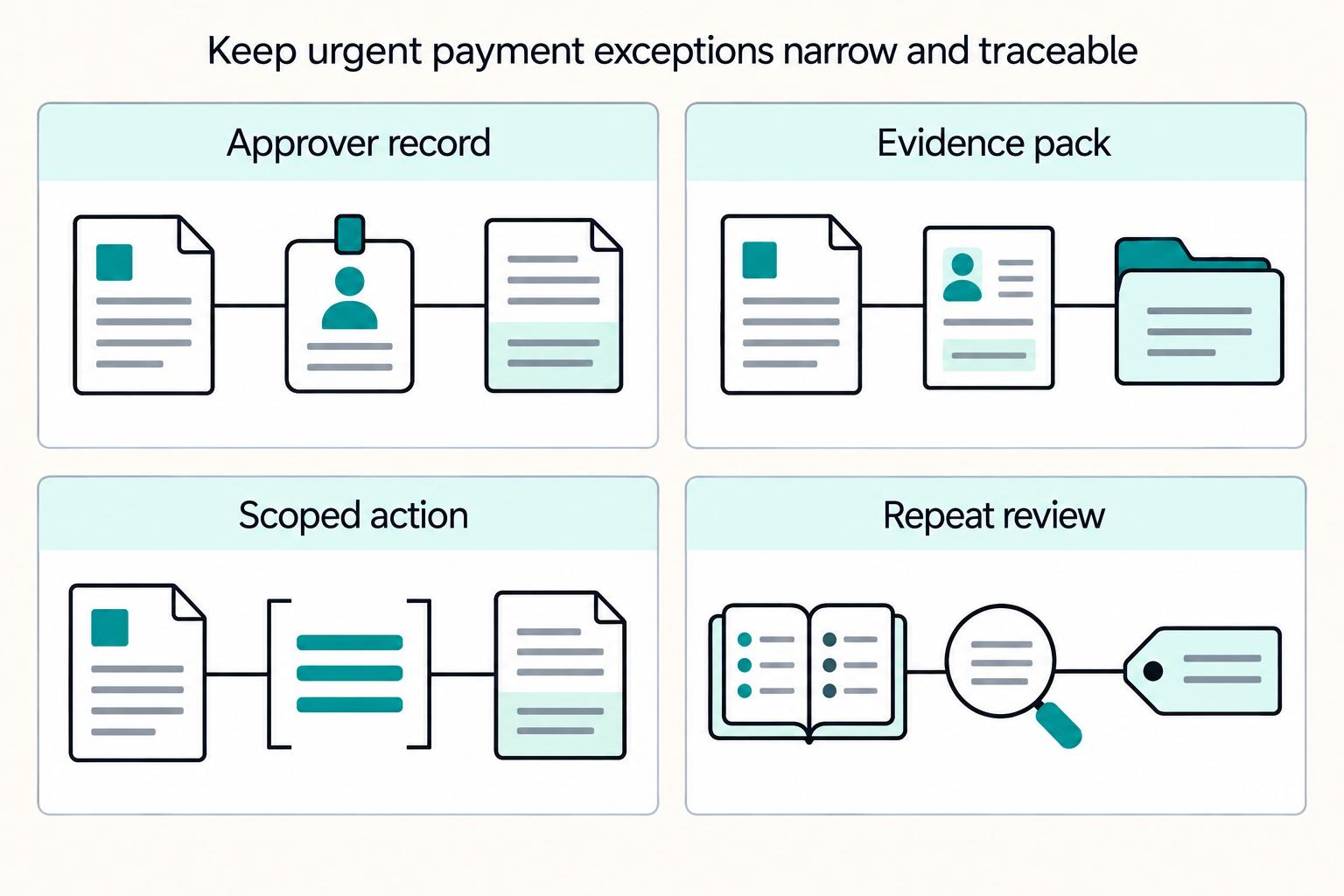
Off-contract contractor payments become dangerous when they repeat. Small off-policy spend adds up, fragments data, and weakens compliance. Teams usually discover it later during invoice review, audit, or reconciliation.
Guided Buying for Marketplace Operators Enforcing Preferred Vendor and Rate Policies
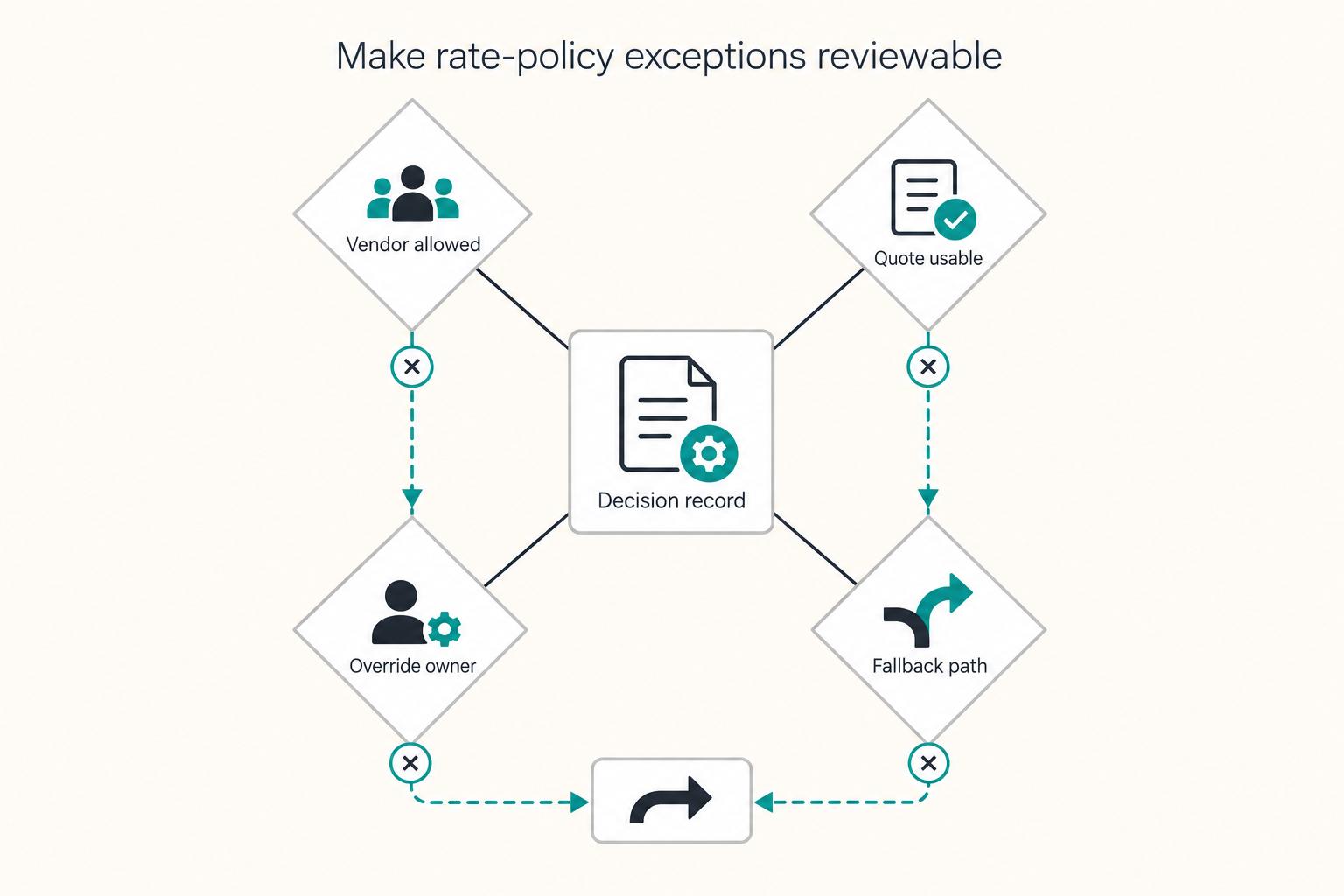
Treat guided buying as a control layer, not a shopping convenience. For marketplace operators, the real job is to steer supplier choice, enforce policy, and keep compliance decisions attached to the transaction instead of scattered across inboxes and side spreadsheets.