
Quick Answer
Use an economics gate first: intervene only when retained value exceeds concession and channel cost. Build decisions in sequence from Behavioral Signal Detection to Predictive Churn Scoring, then trigger action after a verification gate. For payment-friction churn, prioritize Merchant of Record (MoR) billing state and retry outcomes before discounts. Track post-save performance with ARPU and Customer Lifetime Value (CLV), and keep a no-intervention path for bad-fit cohorts.
Spot Churn Risk Before Customers Cancel#
Churn prevention is not a rescue desk for accounts that are already halfway out the door. It is a monetization layer that helps you decide when to intervene, what kind of intervention is worth funding, and when churn is actually the right outcome because the customer is a bad fit or the revenue is unprofitable.
That framing matters because many teams still treat retention as a logo-saving exercise. The better question is whether you are protecting net revenue quality. In practice, that means combining Behavioral Signal Detection with Predictive Churn Scoring. Then you judge both through economics that finance will recognize: ARPU, which is revenue divided by subscribers or users, and Customer Lifetime Value (CLV), which is the total expected revenue from a customer across the full relationship. If a save motion preserves an account but destroys margin, it is not a win.
The practical promise of this kind of platform is simple: spot risk before cancel intent becomes explicit, then act with enough context to choose the right response.
Churn prediction, in plain terms, uses customer data and machine learning to forecast who is likely to stop using a product or cancel. The signal layer is what makes that useful in operations. Usage drops, complaint patterns, and billing history can all act as early warnings. A score then turns that messy input into something product, CS, lifecycle, and finance teams can use.
Amplitude represents an analytics-first path for early, predictive churn work. Airship represents an activation-first path, with cross-channel engagement across app, web, push, SMS, email, and in-app touchpoints. Akira AI is a useful example of a more packaged AI-led approach, where behavioral signals and churn scores are positioned as early, data-driven engagement. These are patterns, not interchangeable outcomes, and the right choice depends on how your team actually operates.
That operating reality often extends past product telemetry. If churn risk is tied to payment friction, the Merchant of Record (MoR) matters because it is the entity legally responsible for processing customer payments. If remediation depends on treasury or payout visibility, virtual accounts matter because they are unique account numbers created within physical bank accounts. For Gruv-style operators, that's the point. Retention decisions are only as good as the commercial and operational rails behind them.
So the standard for the rest of this list is strict. We are not asking which tool can send the most messages. We are asking which platform approach helps you keep the right revenue, intervene with discipline, and stop spending retention budget where the payback is weak.
Related: What Is a Subscription Lifecycle? How Platforms Manage Trial Active Paused and Churned States.
Who this list is for and how to choose#
Use this list if your team is trying to protect revenue quality and margin, not just save logos. If your telemetry is unreliable, fix instrumentation first, because weak event data leads to weak churn decisions.
- Best fit: teams that own retention and economics together. This list is for teams that evaluate interventions with ARPU and Customer Lifetime Value (CLV), not just gross saves, and can act on those tradeoffs across CS and finance.
- Not a fit yet: teams without tracking discipline. Reliable churn work depends on behavioral product events, usage/session metrics, billing and transaction records, and support interactions. You should have a documented tracking plan and tracking strategy, plus QA gates so production data is trusted.
- How this list selects tools. The key filters are signal depth, intervention control, economics visibility, and operating fit with CS and finance. Cross-channel execution matters when interventions need to run across email, SMS, web, app, and push.
- Minimum readiness checkpoint before buying. Define churn states consistently, document at-risk cohorts, and assign escalation ownership across CS, product, support, and finance. Keep shared documentation active so definitions, intervention rules, and accountability stay aligned.
The 5 platform options that actually change churn outcomes#
Once your churn states, cohorts, and owners are defined, pick the platform type that matches the churn cause you need to fix first. If root cause is still unclear, start analytics-led. If churn is driven by payment or compliance friction, start with billing or lifecycle controls. Use messaging speed only after your risk signals are reliable.
- Unified analytics hub for root-cause clarity
Choose this when product, CS, and finance do not agree on why accounts are at risk. Amplitude-style predictive churn scoring can segment users by their likelihood of a future action, not only by past behavior, which helps surface risk earlier. The tradeoff is slower activation: analysis does not retain customers by itself. You still need clean handoffs into CS workflows, CRM audiences, or campaign tools, plus reliable joins across product, support, and billing data.
- Engagement automation layer for campaign speed
Choose this when your risk signals are already trusted and the bottleneck is response speed. Airship-style orchestration unifies cross-channel messaging across app and web destinations, with channels such as SMS and in-app messaging available. The tradeoff is over-messaging risk. Keep a verification gate so retention journeys trigger on confirmed risk signals, not on isolated activity noise.
- Vertical AI-agent stack for telecom-like service models
Choose this when service operations need packaged detection, scoring, and action in one system. Akira AI describes a flow that starts with behavioral signal detection, adds churn scoring, then automates outreach while tracking outcomes and refining future strategy. The tradeoff is lower model transparency. Ask for release-level evidence on top input signals, thresholds, and blind spots before you tie results to ARPU goals.
- Billing-led retention control for payment-friction churn
Choose this when involuntary churn, failed collections, or plan-fit issues are the main leak. Merchant of Record control matters here because the MoR is the entity legally responsible for processing customer payments, and interventions can be tied to actual billing state. This gets stronger in high-volume operations: batch processing lets you submit many payment or modification requests together. The tradeoff is operating complexity across product, finance, and support.
- Compliance-aware lifecycle control for regulated cross-border flows
Choose this when activation, payout timing, or continuity is blocked by KYC/AML process friction rather than product value. In regulated onboarding, AML/CFT-compliant steps are required, so churn prevention often comes from clearer status paths and better-timed interventions. The tradeoff is process overhead by design. Validate compliance state before you send resolution messages, and plan for governance shifts such as the 1 January 2026 move of EU-level AML/CFT responsibilities from EBA to AMLA.
You might also find this useful: Churn Rate Benchmarks by Industry: What Payment Platforms Should Expect and Target.
Compare the options on speed control and net revenue risk#
Choose based on the tradeoff between execution speed and retained-revenue quality: how fast the system can act, and how much margin risk it creates when interventions are wrong.
| Option | Best for | Core systems | Signal depth | Activation speed | Intervention precision | Economics visibility (ARPU/CLV/LTV) | Governance burden | Failure mode |
|---|---|---|---|---|---|---|---|---|
| Unified analytics hub | Diagnosis and prioritization | Amplitude + CS data | Strong for future-likelihood segmentation | Moderate unless connected to send channels | Strong for cohort prioritization; not instant recovery on its own | High | Medium | False urgency from weak identity stitching; model drift if predictions are not monitored |
| Engagement automation layer | Fast outreach | Airship + CRM channels | Moderate; often depends on upstream risk logic | Fast with predefined-condition automation and behavior-triggered sends | Good when triggers are validated | Medium | Medium | Channel fatigue and over-messaging when limits/suppression are weak |
| Vertical AI-agent stack | Service-heavy operations | Akira AI-style agents | Strong packaged behavioral signal detection | Fast once configured | Strong for targeted offers to at-risk users | Medium, with CLV tracking | Medium | Intervention logic can be hard to challenge without a clear evidence pack; model quality can drift |
| Billing-led retention control | Payment-friction churn | MoR + ledger events | Lower behavioral depth, high payment-state fidelity | Moderate | High for retries, plan changes, and failed-collection recovery | High | Medium to high | Cross-team sequencing errors can trigger outreach before billing resolution |
| Compliance-aware lifecycle control | Regulated payouts | KYC/AML + payout ops | Lower behavioral depth, high process-state fidelity | Slower when policy checks gate action | High when messaging matches exact account/compliance state | High when continuity and payout state drive value | High | Process overhead and false urgency if you message before status confirmation |
The core split is signal-rich diagnosis versus channel-fast execution. Analytics is strongest when you need predictive segmentation on likely future behavior; automation is strongest when verified risk events must trigger quickly.
If you run automation-led programs, enforce message limits and suppression before launch to control fatigue risk. If you run predictive programs, treat drift monitoring as mandatory so old behavior patterns do not drive current interventions.
Billing-led and compliance-aware models can be slower but often protect net retention quality when churn is operational. Confirm payment truth (MoR plus ledger state) before outreach, and confirm exact KYC/AML status before any "fix now" messaging, especially in EU-regulated flows after the AML/CFT mandate transfer on 1 January 2026.
Use a simple rule: if speed is the priority and your signals are already trustworthy, choose automation first. If retained margin quality is the priority, start with analytics and set economics guardrails before scaling campaigns. If the churn driver is payment failure or compliance friction, billing or lifecycle control usually outperforms message-led saves.
For a step-by-step walkthrough, see How to Use a Community to Reduce Churn and Increase LTV.
Use intervention rules that protect margin not just logos#
Start with churn cause, then clear an economics gate before you offer any concession.
- Product-value decay
Start with product and CS action, not discounts. Use cancellation reasons, support interactions, and usage behavior to diagnose where value is breaking, then target that friction before you spend retention budget.
- Service-friction churn
Fix the service or support breakdown before you offer credits. If the issue is still unresolved, fix it first and then follow up with targeted outreach.
- Billing-failure churn
Treat involuntary churn differently from voluntary cancel risk. Prioritize payment operations, retry timing, and support outreach before discounts, since retry quality is a core driver of failed-payment recovery; Stripe reports smart retries can recover $9 in revenue for every $1 spent on Billing.
- Compliance-friction churn
Match outreach to the account's current process state. Generic save messaging before status is clear can add confusion and support load without improving retention.
Put an economics gate in front of every save offer. Expected retained LTV should cover concession and channel cost, and you should track post-save performance in ARPU and CLV, not logo count alone. A hard red flag is any cohort with implied LTV/CAC < 1.0, which is value-destructive; 3x LTV:CAC is a common rough health benchmark.
Add one explicit non-intervention rule for persistently bad-fit cohorts. Some accounts have a weak path to profitability, and finance teams often protect retention spend for customers worth keeping instead of loading unprofitable offers.
Build the signal stack in the right order#
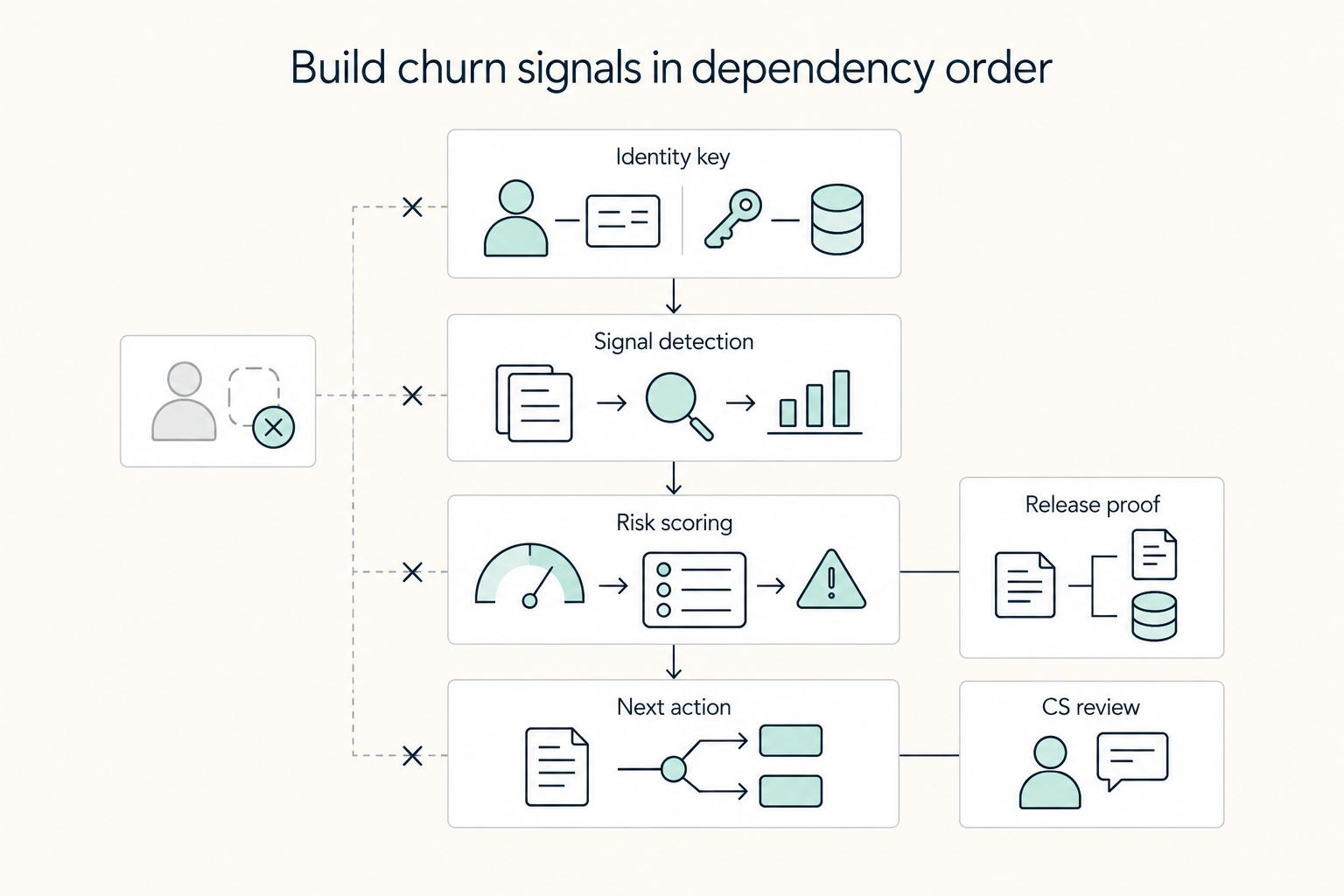
Build in sequence: identity and event integrity first, Behavioral Signal Detection second, Predictive Churn Scoring third, and Next-Best-Action triggers last. Reversing that order can amplify bad signals instead of improving retention.
- Lock identity before you trust any risk signal
Product usage events, support events, billing events, and sentiment tags need to resolve to the same account identity key, or your account view is unreliable. A stable User ID is the anchor. A common failure mode is placeholder values like None: if multiple users share that value, distinct users can collapse into one profile and distort account-level risk. Before you model anything, verify missing IDs, duplicate-like IDs, and whether cross-device behavior is reconciling under one account.
- Stand up Behavioral Signal Detection before scoring
Start with interpretable signals that map to the right account and arrive in time: usage shifts, support friction, billing anomalies, and sentiment tags. Use data-quality checks for completeness, validity, consistency, and uniqueness so missing and duplicate-like patterns are caught early. Also check detection-to-action lag; if signals arrive after the user has already entered a cancel path, the stack is too late.
- Add Predictive Churn Scoring only after inputs are stable
Score risk only after the signal layer is stable. A grounded example is a churn score estimating termination likelihood in the next three months. Keep inputs and decision horizon explicit. If you use thresholds, treat them as configurable rules, not defaults: one cited setup maps churn score < 20 to a lighter path and churn score > 60 to a stronger intervention.
- Gate Next-Best-Action with conditions, CS review, and release evidence
Next-Best-Action should trigger only when configured conditions are met. Before full automation, keep a Customer Success (CS) review loop so frontline teams can challenge model output with context and judgment. For each model release, keep a compact evidence pack with top signals, known blind spots, and decision thresholds. If CS repeatedly overrides the same recommendation, treat that as a model issue to fix.
Related reading: How EOR Platforms Use FX Spreads to Make Money.
Connect retention actions to execution channels and money movement#
Once your signals are trustworthy, execution is where churn programs usually break. The usual failure is running the right intervention in the wrong channel or before a money-state change is confirmed.
- Map each intervention to one channel and one source of truth
Assign each action type to a primary execution channel and system of record. Use SMS when you need immediate reach through an SMS API, and use In-App Messaging when the customer is active in-session and you want less interruptive outreach. If the case needs human handling, route it through support ticketing so email, messaging, phone, and social interactions stay in one workspace. This is the simplest way to reduce conflicting customer messages across teams.
- Route finance-linked churn to money rails, not only messaging
If risk is tied to failed collection, payout timing, or billing friction, send the action to the rail that can actually resolve it. For example, billing retry should happen before concession logic when recovery may still succeed through automated subscription or invoice retries. Where supported, Virtual Accounts can help confirm allocation because they map unique account numbers to a settlement account. If you operate with a Merchant of Record (MoR), check MoR-owned liabilities (such as tax, PCI, refunds, and chargebacks) before making plan migration or refund commitments.
- Use a practical sequence before calling anything resolved
A workable order is outreach -> remediation option -> policy checks -> status confirmation -> audit log. This is not universal, but it keeps customer promises aligned with operational reality. If you trigger payment recovery, confirm retry outcome first. If you offer a payout-related fix, confirm payable-batch state and payout timing before sending a "resolved" message.
- Make retries duplicate-safe and gate every re-trigger with status checks
Retries should be idempotent so repeated API calls do not create duplicate objects or duplicate updates. For batch payouts, duplicate-protection controls like reused sender_batch_id rejection windows also help. But idempotency alone is not enough once downstream systems are involved, so check message delivery state, billing outcome, ticket status, and payout/batch state before each repeat action. Keep key IDs (for example, idempotency keys and batch IDs) in your audit trail so repeated triggers do not create duplicate concessions or contradictory customer updates.
We covered this in detail in How to Calculate and Manage Churn for a Subscription Business.
Govern model behavior so retention does not create new risk#
Retention controls should reduce churn risk, not add messaging fatigue, compliance friction, or audit exposure. The goal is fewer, better-timed interventions you can explain and measure.
- Set message-pressure guardrails
Use rate limiting, frequency capping, and suppression lists together. Caps help prevent over-messaging that drives notification opt-outs or disengagement, and suppression lists can dynamically block messaging across channels. Validate that recently contacted accounts are suppressed across every active channel, not just one campaign tool.
- Use holdouts to test real impact
Keep a true holdout so you can compare treated and excluded audiences on your goal events. A practical holdout range is 1% to 10%, and some tooling supports only one active holdout experiment at a time, so sequence tests deliberately. If intervention activity rises but holdout outcomes stay similar, treat that as a signal to tighten targeting.
- Track false positives and false negatives explicitly
Measure both outcomes from the confusion-matrix view, then recalibrate Predictive Churn Scoring when intervention cost rises without retained value. False positives increase avoidable intervention spend, while false negatives leave preventable churn unaddressed. Review misses by cohort and signal source, not only aggregate model accuracy.
- Align interventions with compliance gates and auditability
Document where KYC, KYB, and AML requirements can block an instant resolution, and make sure customer messaging matches the real processing path. For finance-impacting actions, keep audit-ready logs that show who did what, where, and when, plus why the action was triggered.
Conclusion#
The point is not to buy an early churn-prevention platform and start sending save offers. It is to choose the model that matches how your business actually loses customers, then apply economic discipline so every intervention has to justify its cost.
-
Match the platform model to the failure mode. If your biggest problem is not knowing why customers are slipping, start with an Amplitude-style analytics hub. Customer churn analysis is valuable because it segments users by behavior, identifies at-risk groups, and points to specific actions. If you already trust your signals and need faster execution, an Airship-style layer for cross-channel orchestration is a better fit because journeys can adapt in real time instead of relying on static one-off campaigns. If churn is mostly payment friction, move billing recovery earlier in the stack, since automated retries on failed subscription and invoice payments directly target involuntary churn.
-
Treat scores as inputs, not permission slips. Predictive churn scoring can tell you where to look first, but it does not decide whether a discount, product fix, billing retry, or no action is the right move. A useful checkpoint is whether your team can explain three things before launch: the risk type, the intervention logic, and the expected revenue outcome. A common failure mode is when a model flags risk, automation fires immediately, and you end up with broad concessions or channel fatigue without durable retention gains.
-
Prove impact on a small cohort before you automate at scale. Run a limited A/B test with a real holdout, then measure retained revenue quality rather than raw saves. That is the difference between activity and evidence. Amplitude's retention guidance is clear that teams should test strategies and measure outcomes, and that discipline matters more as automation gets easier. If the treatment improves short-term retention but depends on heavy discounting or fails to beat the control, do not scale it yet.
That is the practical takeaway from this list: early signals matter, adaptive execution matters, and billing recovery belongs in the retention stack when payment failure is the issue. But teams that reduce preventable churn over time are usually the ones that connect analysis, intervention choice, and measurement into one decision chain.
Your next step should be narrow and testable. Pick one option from the comparison table, choose one at-risk cohort, define the intervention you want to test, and measure revenue quality before you expand automation. That is how you make this work without turning your retention program into a louder version of guesswork.
Frequently Asked Questions
What is early churn prevention using behavioral signals in a platform business?
It uses observed patterns, not just cancellations, to estimate churn risk at the customer or account level and trigger action before the account leaves. In practice, that means combining behavioral analytics, churn prediction, and activation so your team can respond to product drop-off, support friction, billing problems, or poor feedback while there is still time to change the outcome.
Which behavioral signals should we track first if our data stack is still maturing?
Start with the highest-signal basics: activity frequency, feature usage, session recency, support tickets, billing events, and feedback scores. Those are the inputs Amplitude explicitly calls out, and they can be enough to spot early risk before you expand into a much larger signal set.
How do we choose between an analytics-led approach and a cross-channel automation-led approach?
If you still need to understand why customers churn and which cohorts are worth saving, choose analytics first. If you already trust your signals and need fast execution across channels, choose cross-channel orchestration, where journeys can adapt in real time. The tradeoff is speed versus clarity: automation moves faster, but it can amplify bad assumptions if your risk inputs are weak.
How do we decide whether to offer a discount, a product fix, or no intervention at all?
Match the action to the risk type. If the issue looks like involuntary churn, such as failed payments or service issues, prioritize payment processing fixes and support before concession-heavy offers. If the account is a persistently bad fit or unprofitable segment, no intervention can be the right call.
How do we prove churn prevention is improving net revenue quality, not just short-term saves?
Use outcome measures tied to retained revenue quality and payment recovery, and validate impact with controlled testing against a comparable non-intervention group. Without that comparison, short-term “saves” can overstate real improvement.
What teams should own churn prevention decisions across product, CS, marketing, support, and finance?
No single function should own it alone. The grounded pattern is cross-functional collaboration with shared incentives and unified data. When teams are siloed, retention actions and priorities become inconsistent.
When should we intentionally not intervene with an at-risk account?
Skip intervention when the account is clearly bad fit or structurally unprofitable. Low levels of churn can be natural and sometimes healthy for those segments.
Try a related tool
Researched and edited by the Gruv editorial team. Gruv builds cross-border billing, payouts, and finance-operations software for global businesses.
Sources
Includes 1 external source outside the trusted-domain allowlist.
- docs.stripe.com/billing/revenue-recovery/smart-retriestrusted
- eba.europa.eu/legacy/regulation-and-policy/regulatory-acti...trusted
- eba.europa.eu/regulation-and-policy/anti-money-laundering-...trusted
- en.wikipedia.org/wiki/Average_revenue_per_usertrusted
- sloanreview.mit.edu/article/firing-the-right-customers-is-good-b...trusted
- stripe.com/resources/more/merchant-of-recordtrusted
- stripe.com/resources/more/churn-management-101-a-tactic...trusted
- airship.com/platform/orchestrate-customer-journeysexternal
Educational content only. Not legal, tax, or financial advice.
Related Posts
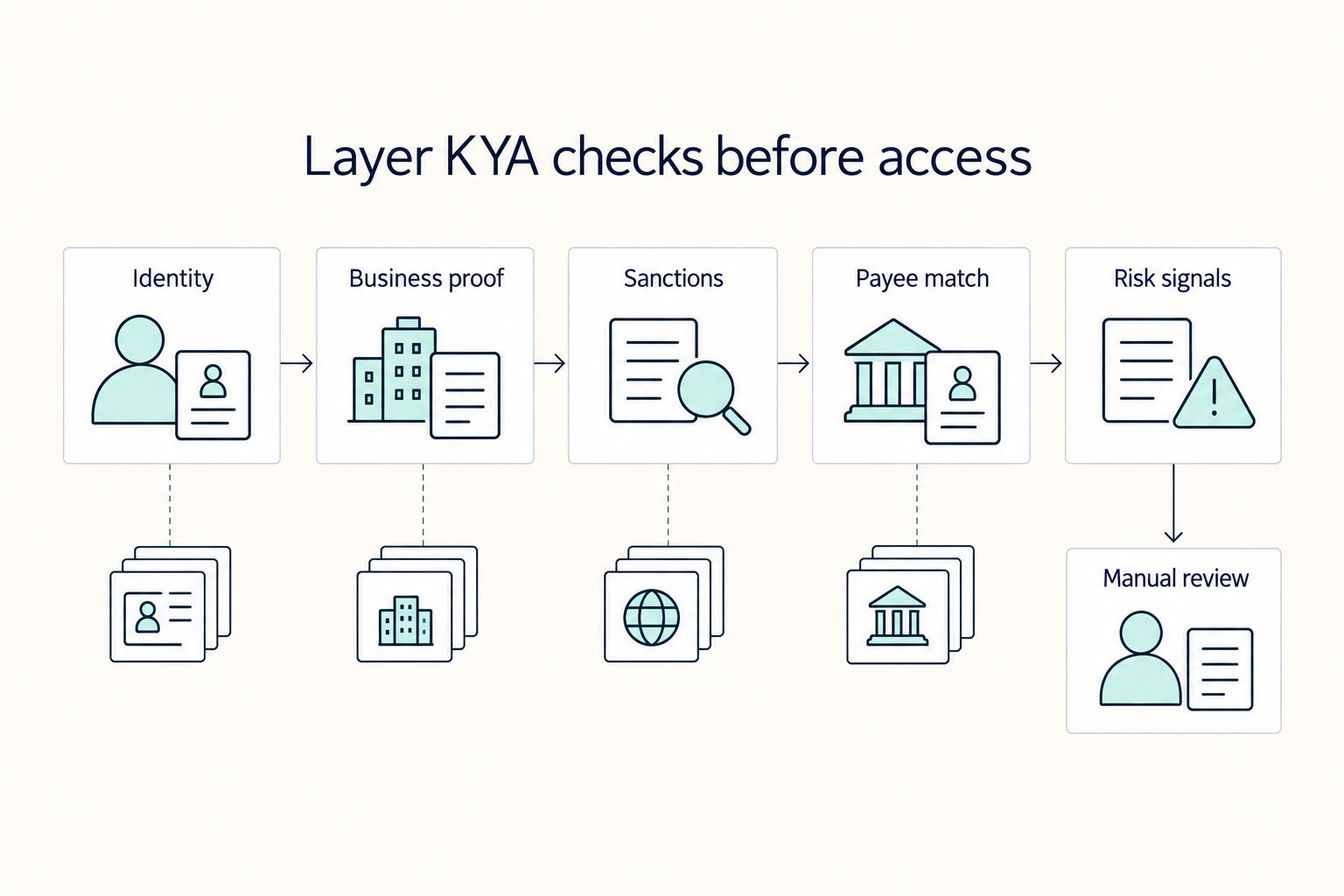
What Is Know Your Artist (KYA)? How Music Platforms Stop Streaming Fraud Before It Starts
So this piece stays practical. You will see where basic identity checks end, where KYA adds real value, and where enhanced review is worth the extra operational load. You will also see a failure mode many teams miss: collecting signals without a clear action path. A flag that does not route to a defined approve, hold, or reject decision is not much of a control.
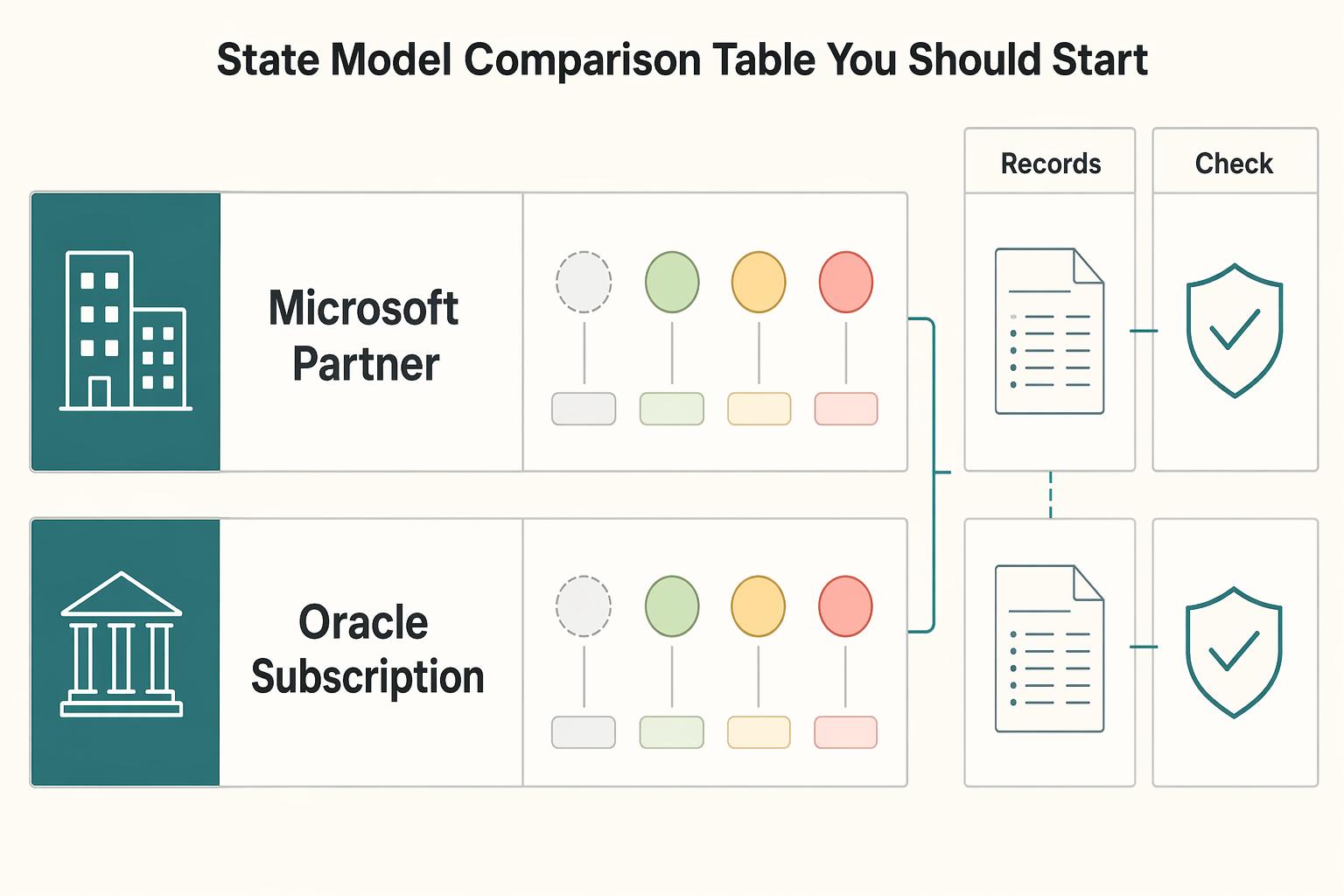
What Is a Subscription Lifecycle? How Platforms Manage Trial Active Paused and Churned States
Subscription lifecycle states matter only when they tell your team what happens next. In **subscription lifecycle states platform management**, a label like `Active` or `Suspended` should tell finance, billing ops, and product what changes in charges, access, edits, and reconciliation.

Churn Rate Benchmarks by Industry for Payment Platforms
If you run a payment platform, start with this assumption: there is no single churn benchmark you can safely copy from search results. Published benchmarks come from different market cuts, including broad industry datasets, B2B SaaS reports, subscription-app reports, and payment-method segments. These are not directly comparable without normalization.