
Quick Answer
Start with a controlled pilot, not a full rollout. You can pay contractors in Ukraine through local rails only after your servicing bank confirms the exact flow in writing under NBU Resolution No. 18, including contractor type, currency handling, and required documents. In practice, teams should test Privat24 for Business separately, keep Monobank assumptions out of production until verified, and require clear status tracking plus reconciliation evidence before scaling.
What to line up before paying contractors in Ukraine#
- Start from viability, not certainty. Ukraine can be a workable contractor payout market, but it is not a place to approach with old assumptions. One source updated on May 20, 2025 notes that, despite the ongoing war since 2022, Ukraine's IT sector remains resilient and operational. That tells you the market is active enough to evaluate seriously. It does not mean your payout design is ready to launch.
The practical constraint is how policy and payment treatment apply to your flow when you go live. Paying independent contractors in Ukraine still requires local tax adherence and proper contract management. So your first question is not, "Can we add Monobank or Privat24?" It is, "Can we prove our exact contractor flow is supportable today under the current banking-policy environment in Ukraine?" If you cannot answer that with dated evidence, keep this in pilot planning rather than your first production wave.
- Rank rails by evidence, not familiarity. Monobank, Privat24, and adjacent options should be judged by what your team can verify, not by what contractors happen to know. A local rail belongs in your first launch wave only when you can explain who gets paid, in what currency, under what documentation, and how failed payouts are recovered. If those answers are incomplete, move that rail into a controlled pilot or a later phase.
This is where teams often misread the problem. Remote banking services are part of the operating market, so local rails can look straightforward on the surface. In practice, the risk usually sits in policy interpretation, reconciliation visibility, and exception handling. A payout path that looks fast is still the wrong launch choice if finance cannot trace status changes or compliance cannot defend the contractor and contract setup behind the payment.
- Make the go or no-go call from a real evidence pack. The point of this guide is to help you reach a decision you can defend internally: first-wave launch, limited pilot, or no-go for now. Your minimum proof set should include a dated policy view, your intended contractor profile, expected payout currencies, contract model, and written bank or provider responses for the flows you actually plan to send. If exchange-rate volatility matters to your margin or the contractor experience, decide before launch whether you need multi-currency account support or other treasury controls.
One red flag is simple: if product, treasury, and compliance describe the Ukraine flow differently, stop and reconcile that before you build. Another is leaning on a single local rail without a fallback.
What to prepare before you evaluate payout rails#
Do this prep before Monobank, Privat24, or provider calls. Without it, you will get generic answers and still not know whether your flow is launchable.
| Prep item | Details | Checkpoint |
|---|---|---|
| Profiles | Payer entity, contractor type, contract model, and settlement currency by flow, including hryvnia versus foreign currency handling | Have a one-page matrix |
| Evidence pack | Intended payout corridors, expected batch volume, required settlement windows, tolerance for payout exceptions, contractor agreement inputs, onboarding fields, and payout reference data | Build before vendor discussions |
| Owners | One owner each for regulatory interpretation, treasury, and product integration; treasury decides whether multi-currency accounts or hedging are relevant | Assign owners early so decisions do not stall |
| Policy date | Date the policy note on the day of evaluation and tie assumptions to NBU Resolution No. 18 and current FX restrictions | Pause rail evaluation if the note is stale or owners disagree on interpretation |
- Define payer and contractor profiles first. Map the payees you actually plan to support, including FOPs and legal entities, and note whether each flow settles in hryvnia or foreign currency. Keep this tied to contract management and local tax adherence, since both are part of compliant contractor payments in Ukraine.
Checkpoint: have a one-page matrix with payer entity, contractor type, contract model, and settlement currency by flow.
-
Build a minimum evidence pack before vendor discussions. Write down intended payout corridors, expected batch volume, required settlement windows, and your tolerance for payout exceptions. Include the documents and data your teams will rely on, such as contractor agreement inputs, onboarding fields, and payout reference data for reconciliation.
-
Assign owners early so decisions do not stall. Set one owner each for regulatory interpretation, treasury, and product integration. Treasury should also decide whether exchange-rate volatility makes multi-currency accounts or hedging relevant for your margin or contractor experience.
-
Set and enforce an as-of policy date. Date your policy note on the day of evaluation, and tie assumptions to NBU Resolution No. 18 and current FX restrictions without guessing beyond what you can verify. If that note is stale or owners disagree on interpretation, pause rail evaluation and refresh it first. You might also find this useful: How to Pay Contractors in Ethiopia: Telebirr and NBE FX Rules for Platform Operators.
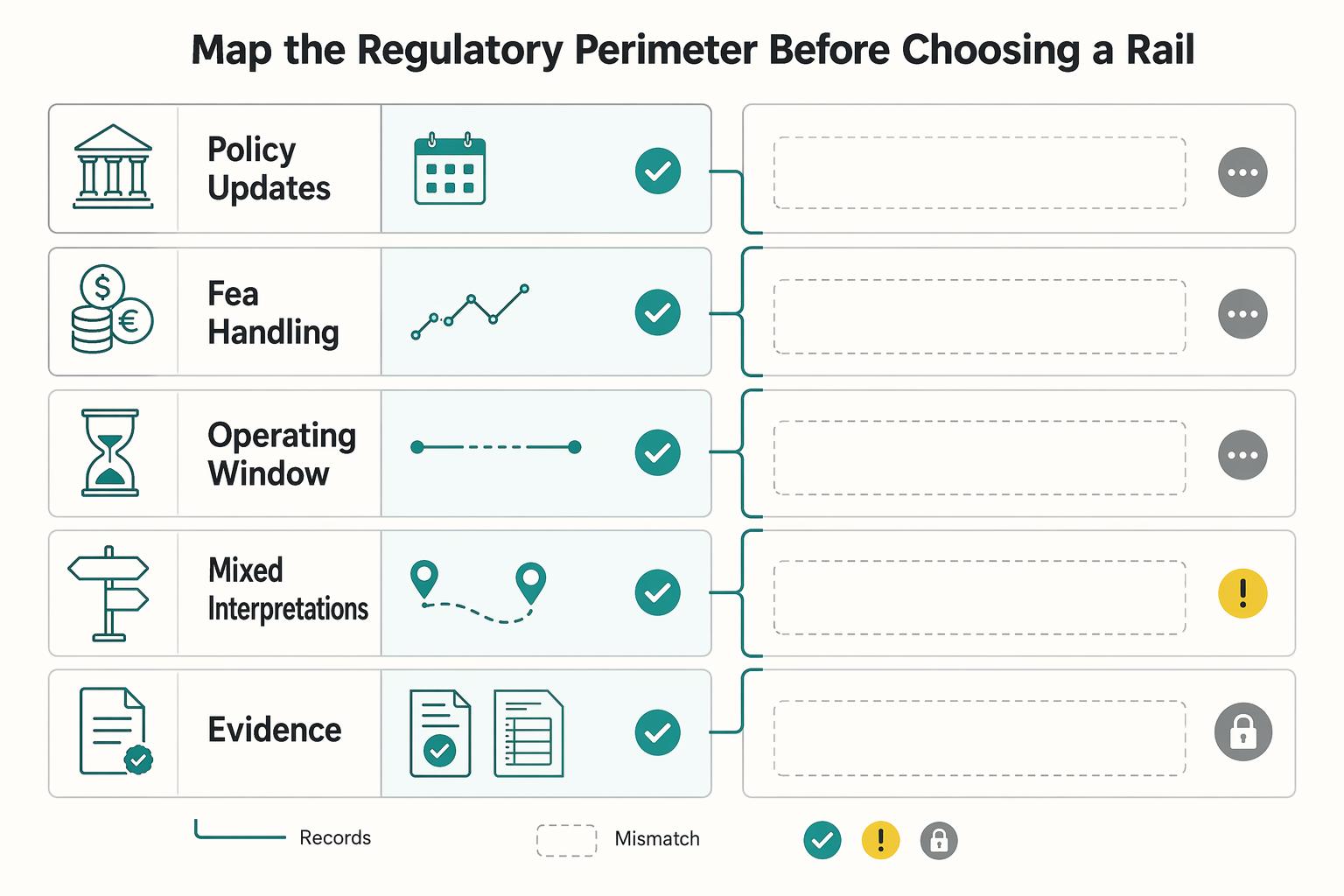
Map the regulatory perimeter before choosing a rail#
Treat NBU easing as a signal, not a launch approval: your rail is only launch-ready after a servicing bank confirms your exact contractor flow in writing under Resolution No. 18 (adopted 24 February 2022, as amended).
| Check | Grounded detail | Action |
|---|---|---|
| Policy updates | NBU announced FX easing starting 14 January 2026 and another easing package effective 04 April 2026 | Keep NBU-confirmed changes separate from bank-confirmed treatment for your flow |
| FEA handling | PrivatBank uses the Foreign Economic Activity path for entrepreneurs and legal entities, with contract submission and document upload through Privat24 for Business | Ask for written confirmation of FEA treatment, required documents, and FOP versus legal entity differences |
| Operating window | Listed FX business transactions run during active trading hours 9:30 am to 3 pm | Resolve any payout promise that assumes handling outside that window before launch |
| Mixed interpretations | Legal-entity flows may be confirmed while FOP flows are not | Launch a controlled pilot for the confirmed segment only |
| Decision record | Store a dated policy note, the bank/provider response, internal legal/compliance approval, and a next review date | Retain the evidence for auditability |
Step 1. Separate public policy changes from your use-case approval. The NBU announced FX easing starting 14 January 2026 and another easing package effective 04 April 2026. Those are confirmed public updates, but they do not automatically approve every contractor payout model. Keep a two-column policy note: NBU-confirmed change vs bank-confirmed treatment for our flow. If the second column is blank, the rail is still unproven.
Step 2. Validate Foreign Economic Activity handling with the servicing bank. For PrivatBank, use its Foreign Economic Activity path for entrepreneurs and legal entities, including contract submission and document upload through Privat24 for Business. Ask for written confirmation of which flows are treated as FEA, which documents are required, and whether treatment differs for a FOP versus a legal entity.
Also test operations, not just interpretation: PrivatBank states listed FX business transactions run during active trading hours (9:30 am to 3 pm). If your payout promise assumes handling outside that window, resolve that mismatch before launch.
Step 3. Use a hard decision rule when interpretations differ. If legal-entity flows are confirmed but FOP flows are not, do not scale both. Launch a controlled pilot for the confirmed segment only, keep the other segment out of scope, and track where the flow breaks (onboarding, document review, FX conversion, or settlement).
Step 4. Capture evidence for auditability. Store four artifacts for each decision: a dated policy note, the bank/provider response, internal legal/compliance approval, and a next review date. For PrivatBank, retain the contract submission path and Privat24 for Business document instructions. If someone cites "up to 20 thousand US dollars per application" from the FEA page, do not treat it as your operating limit unless the bank confirms it applies to your contractor scenario.
For the broader operating model behind contractor payouts, see How to Pay International Contractors With Fewer Delays and Disputes.
Compare Monobank and Privat24 for contractor payout operations#
Choose the rail you can observe and recover, not the one that only sounds fast. If speed looks similar, prioritize clearer status visibility, stronger exception handling, and cleaner reconciliation output.
Compare Monobank, Privat24, and Privat24 for Business separately#
Keep unresolved fields explicit until you have direct confirmation for your exact flow.
| Rail | Account type support | Contractor onboarding friction | Payout status visibility | Exception handling | Reconciliation export quality | Limits | Required documents | Settlement timing | What is confirmed today |
|---|---|---|---|---|---|---|---|---|---|
| Monobank | Unresolved | Unresolved | Unresolved | Unresolved | Unresolved | Unresolved | Unresolved | Unresolved | No confirmed operational evidence in the current pack for these fields |
| Privat24 | Unresolved | Unresolved | Unresolved | Unresolved | Unresolved | Unresolved | Unresolved | Unresolved | No confirmed operational evidence in the current pack for these fields |
| Privat24 for Business | Unresolved | Unresolved | Unresolved | Unresolved | Unresolved | Unresolved | Unresolved | Unresolved | Evaluate separately from Privat24; current pack still does not confirm these fields |
Use this as a working decision sheet. If cells stay unresolved after provider review, treat the rail as operationally unproven.
Use a clear recommendation and fallback rule#
- If a rail cannot provide clear status tracking and exception recovery, do not use it for finance-sensitive or high-volume batches.
- If coverage is partial across your contractor mix, keep the local rail narrow and route uncovered cases to a validated fallback.
- If limits, required documents, or settlement timing remain unresolved, keep that rail in pilot scope only.
Wise is a more measurable fallback because it publicly states mid-market FX, variable sending fees from 0.57%, volume discounts above 25,000 USD equivalent, and a Wise Business set-up fee of 31 USD. Treat those as pricing signals only, not proof for every corridor or contractor scenario. Payoneer can be a contingency candidate, but verify its pricing and operating behavior directly before relying on it.
For this section's decision rule, pick the rail with better observability and recovery, then use fallback routing where Monobank or Privat24 coverage is still unresolved.
Related: How to Pay Contractors in Morocco: CIH Bank CMI and Bank Al-Maghrib FX Rules.
Decide where alternative rails fit in your payout stack#
Treat alternative rails as role-based, not interchangeable. Keep Monobank and Privat24 in the local-rail lane, and use Wise and Payoneer as coverage or resilience layers until they prove your exact contractor flow.
| Rail | Stack role | What is confirmed | What you need before primary use |
|---|---|---|---|
| Monobank | Local rail | No confirmed operational evidence in the current pack for contractor payout handling | Status states, reject reasons, export quality, limits, required documents |
| Privat24 / Privat24 for Business | Local rail (business path tested separately) | Privat24 for Business must be evaluated separately because business and document handling sit there | Exact document path, payout release logic, FX review impact, reconciliation evidence |
| Payoneer | Resilience candidate | Verify pricing and operating detail directly | Commercial terms, payout observability, exception recovery, Ukraine flow fit |
| Wise | Coverage or resilience layer | Public pricing mechanics are visible: mid-market rate, fees vary by currency from 0.57%, discounts after 25,000 USD monthly volume, no subscriptions or plans, and Wise Business shows a 31 USD set-up fee | Corridor fit, contractor onboarding friction, payout states, Ukraine-specific exception handling |
Step 1. Score by operating use case, not brand familiarity. For first-payout success, test the same pilot scenario on each rail and require one successful payout, one failed payout with a clear reason, and one finance export that matches the provider reference. Contractor preference matters, but recoverability should carry more weight.
Step 2. Prioritize reconciliation and policy-change sensitivity. If a rail cannot provide usable references and exports for finance, it is costly to run even when the app flow looks simple. Apply the same standard to NBU updates: if a provider cannot explain how changes affect your flow, keep that rail out of primary routing.
Step 3. Set segment routing and an exit condition before launch. Route only the segments each rail can actually support, and keep mixed or unresolved cohorts on a validated fallback path. Define an exit trigger per rail, such as unresolved compliance interpretation or repeated payout reliability issues, so you can de-risk quickly.
For a step-by-step walkthrough, see How Platform Operators Pay Creators Globally Across YouTube, Twitch, and Substack.
Build the launch sequence from pilot to scale#
Run a controlled pilot on one rail first, then scale only when your team can trace each payout from initiation through reconciliation without ambiguity.
Step 1. Start with one cohort and one primary rail. Use a small contractor cohort and keep them on one route for the full pilot window. The goal is not volume; it is to confirm one complete operating path, including failure handling, before you add secondary routing.
Step 2. Keep the operating sequence fixed. Use the same order every time: onboarding checks, payout initiation, status confirmation, ledger reconciliation, then finance sign-off for the next volume tier. If a payout can be sent but status or reconciliation is unclear, treat the pilot as incomplete.
A practical rule is to store your internal payout ID and the provider reference in the same record before finance marks a payout complete. If those identifiers are hard to match, reconciliation will become your bottleneck.
Step 3. Add duplicate protection before scaling volume. Retries are where pilots often break. Reuse the same idempotency key for the same intended payment and retain the first provider reference returned, so timeouts or manual resends do not create duplicate disbursements.
For unknown-outcome cases, block manual resend until the team reviews the original reference, status history, and ledger entry together.
Step 4. Gate scale-up with explicit verification checks. Promote a rail only after predefined checks pass and finance approves the next tier.
| Checkpoint | What to verify | Red flag |
|---|---|---|
| Failed payout ratio | Failures are counted from one consistent status source | Teams disagree on what counts as a failure |
| Unresolved exceptions age | Open issues have owner and created time | Exceptions stay open across multiple payout cycles |
| Reconciliation completion window | Ledger entries match provider references within your close window | Finance closes from screenshots or inbox threads |
Keep a dated internal note for policy interpretation during the pilot. If that interpretation changes, pause the next scale step and revalidate before increasing volume.
Set controls for FX policy and compliance drift#
Treat policy controls as a live system, not a one-time setup task.
| Control | Required detail | Required action |
|---|---|---|
| Ownership | One named owner for Ukraine payout policy monitoring | Require a recurring review of NBU announcements with dated log entries for each review cycle |
| Assumption register | Effective date, impacted flow, owner, evidence link, and next review date; reference NBU Resolution No. 18 where relevant | Maintain a dated assumption register |
| Alerts and escalation | Change alerts for the policy inputs your team depends on | Define a manual escalation path across policy, finance, ops, and product whenever a change affects payout decisions |
| Copy and SOPs | Bank review, current FX restrictions, and documentation expectations | Align product copy and ops SOPs and avoid overpromising payout timelines |
Step 1. Assign clear ownership and cadence. Set one named owner for Ukraine payout policy monitoring and require a recurring review of National Bank of Ukraine (NBU) announcements, with dated log entries for each review cycle.
Step 2. Maintain a dated assumption register. Track every policy-sensitive assumption with its effective date, impacted flow, owner, evidence link, and next review date. Where relevant, explicitly reference NBU Resolution No. 18 in that record so interpretation points are easy to audit.
Step 3. Pair automated alerts with manual escalation. Use change alerts for the policy inputs your team depends on, and define a manual escalation path across policy, finance, ops, and product whenever a change affects payout decisions.
Step 4. Keep external and internal promises compliance-first. Align product copy and ops SOPs to bank review, current FX restrictions, and documentation expectations, and avoid overpromising payout timelines when policy interpretation can shift. Related reading: Pay Contractors in Mexico With SPEI for Platform Operators.
Common failure modes and how to recover#
Most rollout failures here are recoverable if you act quickly: pause unverified flows, separate entity logic, tighten reconciliation, refresh policy assumptions, and keep a tested fallback rail ready.
| Failure mode | Recovery |
|---|---|
| Launching on assumed FX treatment | Pause the affected route, revalidate treatment with your bank counterparties for the exact flow, then reroute only the exposed payouts. |
| Mixing contractor entity types in one path | Split onboarding and eligibility checks by entity path (including FOP vs legal entity where relevant), then re-underwrite anything you cannot classify cleanly. |
| Weak reconciliation across payout events | Enforce provider-reference capture at initiation and run daily exception triage before any retry decisions. |
| Stale assumptions during martial law-era updates | Trigger a policy refresh, update effective dates in your assumption register, and re-approve rollout scope before reopening routes. |
| Single-rail dependency | Pre-approve and minimally test a fallback rail (for example, Wise or Payoneer) so continuity does not depend on one provider. |
For Wise specifically, keep fallback planning grounded in the cited pricing pages: usage-based charging with no subscriptions/plans, advertised sending fees from 0.57%, volume discounts above 25,000 USD (or equivalent), and a Wise Business setup fee shown as 31 USD. Treat those figures as counterparty-specific reference points only, since the cited pages are for residents in United States.
Final recommendation and copy paste launch checklist#
Treat Ukraine as a controlled launch, not a plug-and-play rail add. Launch only when your assumptions are documented, your route choices are validated for the exact flow, and failed payouts can be recovered without breaking reconciliation.
- Freeze policy assumptions with dated evidence.
Record the payer entity, payee type, currency path, rail, and the date each NBU/FX assumption was last checked. Keep written bank or provider responses in the same approval record.
- Validate Monobank, Privat24, and Privat24 for Business by contractor segment.
Confirm fit in writing for account type, status visibility, reconciliation exports, exception handling, and required documents for your flow. If any point is unresolved, keep that route in pilot or on hold.
- Separate FOP and legal-entity onboarding and payout rules.
Classify payees before money moves, tie them to the correct contract record, and route each only through the reviewed path for that segment.
- Pre-approve fallback routing to Payoneer or Wise.
If Wise is in your fallback, log current reference economics from Wise U.S. pricing pages: upfront pricing, "From 0.57%," no inflated mid-market exchange rate, discounts over 25,000 USD (or equivalent), and a one-time setup fee of 31 USD.
- Set pilot success gates before scaling.
Define target payout reliability, max age for unresolved exceptions, and reconciliation completion timing. Do not increase volume until retries and exception closure are proven in production-like conditions.
- Assign a named owner for policy monitoring and escalation.
Make one owner accountable for assumption refreshes, bank notices, and stop/go decisions after changes. That matters in remote banking environments where operational and cybersecurity gaps can affect reliability; practical training and simulation drills should be part of readiness. If you want to confirm support for your exact program, Talk to Gruv.
Frequently Asked Questions
Can platforms pay contractors in Ukraine through Monobank or Privat24 today?
Treat the answer as flow-specific, not a blanket yes. You should launch only after a bank or counterparty confirms in writing your exact payer entity, payee type, currency path, and any documentation condition for that route. If that confirmation is missing, keep the corridor in pilot or on hold.
What changed as NBU continued easing FX restrictions, and what is still uncertain?
The practical takeaway is that some sources may signal easing, but this section does not include National Bank of Ukraine primary text to confirm the current scope. What remains uncertain without fresh bank confirmation is whether your exact contractor flow is allowed, what documents are required, and whether treatment differs for FOPs versus legal entities. That is the red flag. Teams often mistake a general easing signal for approval of every payout pattern.
How should we choose between Privat24 and Privat24 for Business for contractor payouts?
Do not choose on name recognition or assumed business fit. Ask for written answers on the points that affect operations most: supported account type, payout status visibility, reconciliation export quality, exception handling, and any required documents for your contractor mix. If a provider cannot answer those clearly, the right move is a narrow pilot, not a scale launch.
When should we route payouts through Payoneer or Wise instead of local rails?
Use an alternative rail when local coverage is partial, when you need a pre-approved fallback, or when local reconciliation is too weak for safe retries. For Payoneer, this section does not include grounded pricing or policy specifics, so treat route economics and limits as unconfirmed until your provider confirms them. For Wise, the pricing pages cited here are useful reference points only: Wise says there are "no subscriptions or plans," fees vary by currency, sending can start "From 0.57%," and discounts begin once monthly volume passes 25,000 USD or equivalent, resetting on the first of the month. Wise Business also shows a one-time setup fee of 31 USD, but those pages are for U.S. residents, so do not assume the same economics for every Ukraine corridor.
What must we verify for FOP versus legal entities before launch?
Do not assume FOP and legal entities follow the same onboarding or approval path. This section cannot verify exact FOP-versus-entity requirements, so confirm those details in writing before launch. At minimum, keep clean classification and contract records, and ensure your process supports local tax compliance and proper contract management. If a payee cannot be classified confidently as FOP or legal entity, stop that case and do not force it through the default route.
How often should we re-check National Bank of Ukraine policy updates after go-live?
Set a recurring review cadence, but do not rely on calendar reviews alone. Re-check whenever the National Bank of Ukraine issues a policy update, your bank sends a notice, or you change payer entity, payee type, currency, or rail. A good checkpoint is an assumption register with an effective date and named owner, so you can show exactly what was revalidated and when.
Try a related tool
Where Gruv fits
Researched and edited by the Gruv editorial team. Gruv builds cross-border billing, payouts, and finance-operations software for global businesses.
Sources
Includes 2 external sources outside the trusted-domain allowlist.
- bank.gov.ua/en/news/all/nbu-prodovjuye-pomyakshennya-val...trusted
- bank.gov.ua/en/news/all/nbu-polipshiv-umovi-dlya-zboru-k...trusted
- dspace.znu.edu.ua/jspui/bitstream/12345/26519/3/0063014.pdftrusted
- lib.iitta.gov.ua/id/eprint/733835/1/SHS_Web_Conf_100.pdftrusted
- wise.com/us/pricing/card-feestrusted
- wise.com/us/pricing/businesstrusted
- api.teadmus.org/storage/published_books/MECHANISM_FOR_THE_IM...external
- drive.fintechua.org/UAFintechCatalog19-en.pdfexternal
Educational content only. Not legal, tax, or financial advice.
Related Posts

Paying Contractors in Sri Lanka with CBSL and LankaPay Decision Checks
Start with regulatory certainty. For a platform operator, Sri Lanka should not be screened from a payout product page or a rail feature list first. Real institutional signals exist, but they still do not prove that your exact contractor payout flow is permitted, eligible, and operationally supportable.
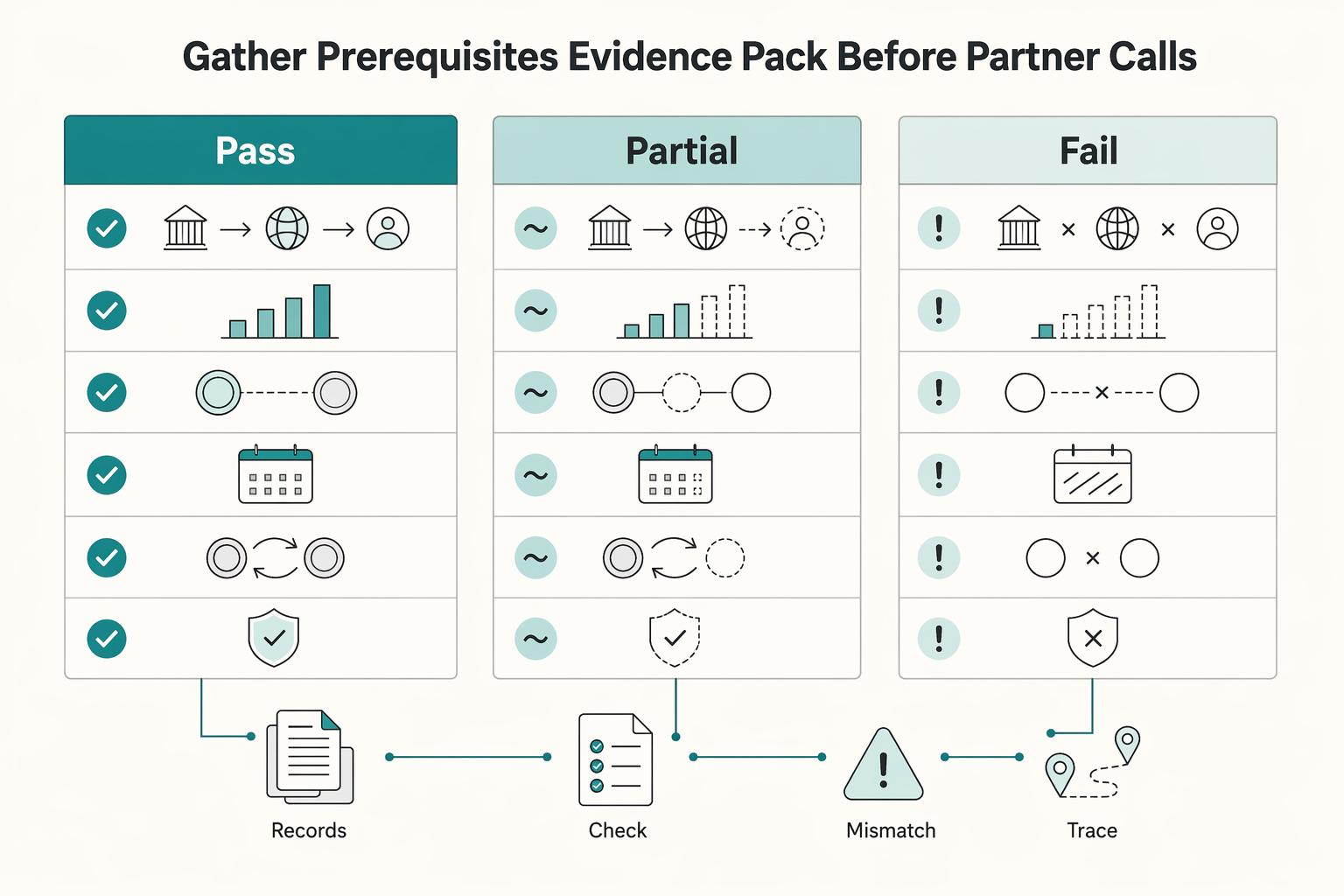
Paying Contractors in Morocco with CIH, CMI, and Bank Al-Maghrib FX Constraints
Treat Morocco as an operational validation decision, not just a commercial opportunity. The real question is whether you can verify, with current primary evidence, that your contractor payout path works through the institutions you plan to use.

Pay Contractors in Ethiopia with Telebirr and NBE FX Checks
This brief is for platform founders and operators who need a go/no-go answer on Ethiopia before they spend engineering, compliance, or go-to-market budget. The real question is not whether contractors exist in Ethiopia or whether digital payments exist. It is whether your exact payout model looks feasible enough, based on actual evidence, to justify real work now.