

Quick Answer
Start by opening one incident record and assigning one message owner before any outbound notice. Then tier the incident by payout impact, start four SLA clocks (acknowledgment, meaningful update, resolution target, escalation trigger), and send channel-specific templates from one verified packet. If the contract names a Contracting Officer or another formal recipient, deliver that notice path first and keep operational updates aligned to the same facts. End the case only after payout batches and ledger evidence match.
Why this matters for payout operations#
Set the operating promise. Treat payment-delay communication as an operational control, not a courtesy note you improvise under pressure. This guide helps you run delays in production with clear service expectations and reusable templates that still hold up when the situation gets messy.
An SLA sets expected service levels, how they are measured, and what remedies or penalties apply when levels are missed. In payout operations, your notices should tie back to measurable commitments, clear ownership, and a verifiable next checkpoint.
Before you send anything, confirm three basics:
- current owner
- affected payout scope
- exact timing for the next update
If any of those are missing, your message may reduce silence but still leave people guessing.
Treat the delay as a reconciliation and trust incident. A delayed payout is a reconciliation and trust incident, not just a messaging task. Finance, ops, and product can hold different pieces of the status, and contractors feel that mismatch quickly when updates conflict.
Research on payment practices points to a familiar failure pattern: delays can cascade operationally, and a single missed payment or dispute can erode collaboration quickly. Those findings come from a specific context, but the same trust risk can appear in payout environments when updates are inconsistent. Uncertainty and inconsistent updates damage trust fast.
Use one operator rule: if the external status does not match the internal finance view, align on a single incident view before broad outbound updates. That protects contractor trust and gives you a cleaner audit trail.
Draw the boundary with legal review. Use this guide as an operating standard, not legal advice. Templates and clear service-level expectations create consistency, but they do not override contract language, notice clauses, or jurisdiction rules.
That is why legal review stays in scope. Significant contracts without an associated SLA reviewed by counsel are more open to misinterpretation.
Standardized templates still help. They reduce guesswork, clarify responsibilities, and make incident records easier to review later. Just keep the order clear: use standardization to speed response, then defer to contract terms and counsel review when formal notice requirements control.
What to prepare before the first delay notice#
Before anyone sends a delay message, lock down the documents and roles so the notice follows the contract record, not team memory.
| Preparation step | What to confirm | Record or limit |
|---|---|---|
| Pull controlling documents | Which document controls notices; which defines service responsibilities; whether changes require a formal method | If additional changes require order modification (Standard Form 30), do not change commitments through email language |
| Confirm sender and approver | Named sender, approver roster, and escalation approver | Confirm whether finance or operations is authorized for official notice or only for operational communication |
| Define formal recipient list | Every recipient maps to a clause or named contract role | Capture the required title and the named person if listed |
| Open one incident record | Incident ID, governing contract reference, sender of record, recipient list, current owner, and next update time | Use one shared reference point before the first outbound notice |
Pull the controlling documents. Start with the contract notice clause, the current Service Level Agreement (SLA) or SLA template, and your internal approval path. Do not assume the statement of work stands alone. In some cases, the active SOW is governed by a master contract, so the notice rules sit above the day-to-day document.
Verify three points first:
- which document controls notices
- which document defines service responsibilities
- whether changes require a formal method
If the contract requires order modification (Standard Form 30) for additional changes, do not try to change commitments through email language.
Confirm who can send and who can approve. Set a named sender and approver roster before the incident starts. Contract administration is often assigned to specifically identified individuals, so sender authority is a contract check, not a convenience choice.
If a finance or operations team usually sends delay updates, confirm whether it is authorized for official notice or only for operational communication. Name an escalation approver up front so outbound messages stay consistent when pressure rises.
Define the formal recipient list. Build the recipient list from contract roles, not from the last email thread. If the contract names a Contracting Officer or another contract-administration contact, capture the required title and the named person if listed.
Use one test: every recipient should map to a clause or named contract role.
Open one incident record before outbound notice. Open one incident record in your tracker before the first outbound notice. This is an operational control, not a contractual requirement, and it gives every later action a shared reference point.
At minimum, include the incident ID, governing contract reference, sender of record, recipient list, current owner, and next update time. Keep the record usable for objective SLA monitoring based on factual data, including review checkpoints such as the annual SLA review.
Classify delay severity and start SLA clocks#
Classify severity immediately. If you wait for a full diagnosis before you set a provisional tier, the SLA can become a retrospective argument instead of a working commitment.
SLAs can be used for both internal and external service-provider relationships, so define this as an internal operating model first.
Classify by payout impact first. Start with contractor payout impact, then investigate root cause in parallel. Treat these labels as your operating model for payout incidents, not a universal standard.
Set one explicit internal rule for blocked payroll-like or mission-critical contractor payouts. For example, some teams provisionally classify this as Priority 1 - Business Stopped while root cause is still unknown, then re-tier as evidence improves.
| Tier | Trigger condition | Named owners | Response obligations |
|---|---|---|---|
| Priority 1 - Business Stopped | Payroll-like or mission-critical contractor payouts are blocked, or a core payout batch cannot release | Finance lead (impact), ops lead (diagnosis), legal reviewer alerted as needed | If your SLA uses a four-clock model, start acknowledgment, first meaningful update, resolution target, and escalation trigger timers |
| Priority 2 - Major degradation | Large contractor cohort delayed, repeated failed release attempts, or likely expansion beyond the original batch | Finance lead primary, ops lead active, legal reviewer as needed | Run the same clock set with tighter checkpoints and early scope-review triggers |
| Priority 3 - Material delay with workaround | Subset of payouts delayed, with a workable alternate release path | Ops lead primary, finance lead approves commitments | Use workaround paths only when reconciliation and approvals remain intact |
| Priority 4 - Minor delay or isolated exception | Small number of contractors affected, no broad release failure | Finance ops owner | Track defined checkpoints and monitor for expansion |
| Priority 5 - Small service request | Inquiry, correction, or one-off exception not yet delaying a scheduled payout | Queue owner with finance oversight | Track through internal SLA timers; escalate if payout timing risk appears |
Keep the triggers concrete so operators can triage quickly. Useful language looks like "scheduled payout batch blocked," "manual release path available," or "impact expanding beyond original contractor set."
If your internal SLA uses four clocks, start them immediately. Once the tier is set, start acknowledgment, first meaningful update, resolution target, and escalation trigger timers. "Issue in progress" is not a timer.
Define each timer in your internal SLA so ownership and status stay verifiable:
- acknowledgment confirms the incident is recognized and owned
- meaningful update states what was verified, what is still unknown, and the next checkpoint time
- resolution target states the current committed end state
- escalation trigger defines when authority changes because commitments are at risk
Before the first notice goes out, record due times and owners for the clocks you run.
Assign ownership by tier so breaches trigger action. A tier without named owners can fail when the first checkpoint slips. At minimum, assign a finance lead, an ops lead, and involve a legal reviewer when notice obligations or contract exposure may apply.
Make the handoffs explicit:
- finance lead owns payout-impact classification and outbound commitments
- ops lead owns diagnosis and release-path decisions
- legal reviewer joins on escalation triggers or likely formal notice scenarios
If a severe incident may require formal submission, confirm early whether an authorized person must sign. The incident record should always show the selected tier, factual trigger, live clocks in use, named owners, and next update time.
Before locking your tier matrix, align each SLA clock to concrete payout states in Gruv Payouts.
Decide exactly who gets notified and in what sequence#
Set recipients and order from your agreement artifacts, then document one internal sequence from that decision. The provided guidance does not define a universal payout-delay recipient order, so record your sequence as an internal operating rule in the incident record.
Read the agreement for named notice recipients. Check the notice clause and your current agreement set, including MOA, ISA, and SLA artifacts plus your SLA template. If a contract names a formal role, route that as a separate notice path from routine contractor updates.
Do not assume your usual day-to-day contact satisfies formal notice terms. Record the exact clause or excerpt, named role, approved sender, and send status before broad outbound updates.
Set the internal sequence explicitly. Once formal-recipient requirements are clear, define the order for the rest of the audiences: affected contractors and internal stakeholders. Keep this as an internal risk-control rule, not a legal claim.
Before sending, confirm four checkpoints:
- whether a formal recipient is required
- which contractor cohort is affected
- one approved fact set: severity, impact, and next update time
- one sender of record
If the incident is narrow and no formal recipient is specified, you can compress the sequence as long as every audience gets the same facts.
Lock one sender of record. Assign one owner for outbound updates and require other teams to reuse that same message. The title can vary. The control is consistency.
Track recipients, message version, sender, and next update time in the incident record. This helps prevent parallel, conflicting updates and keeps notice execution aligned with your SLA documentation process.
Related reading: Mobile-First Payment UX: Designing for Contractors on the Go.
Build the notice packet before sending anything#
Before you send, lock one reusable notice packet so every outbound message starts from the same verified facts. This packet is an internal control, not a universal legal form.
| Packet item | What to verify | Handling note |
|---|---|---|
| Governing contract or solicitation reference | Match the current solicitation materials | Include it in the reusable packet |
| Designated formal recipient | Recipient details match the current solicitation materials | Use the formal contact path named in the solicitation when one is specified |
| Current owner/contact metadata | Verify it before send | Keep internal follow-up ownership explicit |
| Confirmed impact scope | Keep confirmed impact separate from suspected impact | If scope is still unclear, state the narrower confirmed scope and expand later if needed |
| Next timeline checkpoint | Include the next checkpoint in the applicable inquiry or response window | Reuse the same checkpoint across email, letter, and in-product updates |
| Internal release gate | Confirm whether a blocker is the true release gate or a related open task | Keep gate notes separate from contract-bound communication requirements |
Assemble the minimum incident facts. Create one packet the sender of record can reuse across email, letter, and in-product updates. Include the governing contract or solicitation reference, the designated formal recipient, current owner/contact metadata, and the next timeline checkpoint in the applicable inquiry or response window. Treat internal operating fields as internal controls, not contract-mandated requirements unless the contract says so.
Verify each field before send. Confirm the governing document and recipient details match the current solicitation materials, and keep confirmed impact separate from suspected impact. If scope is still unclear, state the narrower confirmed scope and expand later if needed.
Add routing controls operators can act on. Impact details and communication routing should not be mixed together. Use the formal contact path named in the solicitation when one is specified, and keep internal follow-up ownership explicit so action is not improvised mid-incident. If participation is limited to pre-qualified contractors, confirm eligibility before submitting inquiries or proposal-related communications.
Also include contract-bound communication controls when they apply. The Ohio excerpt shows that communications can be governed by an existing contract, and the Oklahoma excerpt shows formal communication can be restricted to a single named contracting officer with explicit contact details. Failure to follow required contact rules can result in a response being treated as non-responsive and excluded from further evaluation.
Record internal gates separately from communication requirements. If an internal release gate may block payout, record that gate as its own line item. Keep internal gate notes separate from contract-bound communication requirements so external notices stay accurate. Before sending, confirm whether a blocker is the true release gate or a related open task.
For a step-by-step walkthrough, see Quarterly Tax Payment Calendar for Contractors: All Four Deadlines and How to Calculate Each.
Send the initial notice with channel specific templates#
Start from one shared fact set across the channels you choose, then adapt tone and length without changing meaning. The first notice should establish clear ownership and a review checkpoint, not just offer reassurance.
Use one notice packet as the source for every version. Keep responsibilities and expected service-level language explicit, and include a checkpoint that can be reviewed with factual data. Follow any agreement-specific required-information terms before sending.
Formal delay notice letter
Dear [Recipient Name/Title],

This is formal notice that [what is delayed] for [who is affected] is delayed. Current confirmed scope: [confirmed scope].

Next update: [date/time with timezone, if set]. At that checkpoint, we will confirm [specific status item].

Escalation contact: [name/title/email/phone, if applicable].

Sincerely, [Sender of record] [Team/Department] ```

Formal-recipient variant when your contract names one: "This notice is being sent to the contract-designated recipient under the agreement notice terms."

**Accounts Payable Department email**

```text Subject: Payment delay update for [cohort/batch]

Hello the contractor's name,

The Accounts Payable Department is notifying you of a delay affecting [who/what is affected]. Confirmed scope: [scope].

Next update: [date/time with timezone, if set]. We will confirm [specific status item].

Escalation contact: [team/mailbox, if applicable]. ```

High-volume cohort variant line: "You are receiving this update because your account is in the affected payout cohort for [batch/date range]."

**In-product notification**

```text Title: Payment delay update for [cohort/payment type]

Body: A delay is affecting [who/what is affected]. Next update by [time/timezone, if set]. We will confirm [specific status item]. Escalation: [support path, if applicable]. ```

Keep this short for visibility, but keep the same verified facts as the letter and email. If contract notice terms apply, confirm whether in-product notice is supplemental or sufficient before relying on it alone.

| Channel | Use it when | Strength | Watchout |
| --- | --- | --- | --- |
| Delay notice letter | Formal record quality matters most | Structured, durable correspondence | Slower drafting and routing |
| Accounts Payable Department email | You need detailed updates quickly | Fast with good detail | Version drift across replies |
| In-product notice | Broad visibility is needed fast | Immediate reach at scale | Can be too brief without packet alignment |

## Run an update cadence that stays credible under pressure

After the first notice, credibility comes from a reliable update clock, not from having the full root cause. Define your cadence in your incident template, and keep sending updates while the investigation is still in progress.

| Cadence control | Operational rule | Why it helps |
| --- | --- | --- |
| One authoritative record | Keep cadence, incident facts, and approved notice language in the same source of truth | Cuts outdated-copy errors and gives you an audit trail |
| Send every scheduled update | "Status unchanged" is still a useful update if it shows what was checked and what happens next | Keeps updates moving while the investigation is still in progress |
| One fact packet across channels | Formal letter, AP email, and in-product notice can vary in length, but they cannot vary in meaning | Prevents contradictions when ownership shifts or when finance and legal both review language |
| Rule for missed updates | If a scheduled update is missed, send a short delay notice, restate the latest verified status, and name the next update time | Avoids untracked silence |

**Publish the cadence from one authoritative record.** Keep cadence, incident facts, and approved notice language in the same source of truth so AP, ops, and product are not working from different versions.

Pressure creates version drift quickly. A centralized record cuts outdated-copy errors and gives you an audit trail of what was promised, when it changed, and who changed it.

**Verification point:** before the second outbound update, confirm that the published cadence, current owner, and last approved fact set match the incident record.

**Send every scheduled update, even when status is unchanged.** "Status unchanged" is still a useful update if it shows what was checked and what happens next.

Each update should state:

1. What was verified since the last message
1. What remains unchanged
1. What will be checked next, and by whom

If you use Gruv, name the checked source in plain language, such as payout status in Gruv. Keep it operational and specific, not reassuring but vague.

Example: "Status unchanged since the 14:00 UTC update. We verified affected payouts remain in the same status in Gruv. Next check: incident record review at the next scheduled update."

**Keep one fact packet across channels.** Your formal letter, AP email, and in-product notice can vary in length, but they cannot vary in meaning.

Before each send, align a small internal evidence block:

- Last update timestamp
- Verified source checked
- Current scope
- Next checkpoint
- Approver or sender of record

This prevents contradictions when ownership shifts or when finance and legal both review language.

**Set an internal rule for missed updates before you need it.** Do not assume a universal mandatory escalation rule applies, so document your house standard in the incident record and apply it consistently.

If a scheduled update is missed, send a short delay notice, restate the latest verified status, and name the next update time. The key is to avoid untracked silence.

## Escalate with explicit triggers and named owners

Escalation should trigger from observable events, not from confidence in the root cause. Define what event forces escalation, who owns it, and whether it remains operational or also enters the contract notice path.

**Define triggers that do not depend on full diagnosis.** Use triggers like an SLA timer breach, expanding contractor impact, or repeated failed release attempts. That keeps containment moving even while the investigation is still underway.

**Map each trigger to named owners and notice recipients from the contract.** Keep role names exactly as written in your contract records, for example, `Contract Manager`. If the contract notice path names additional recipients, include them exactly as required by those terms.

**Separate operational escalation from legal escalation.** Operational escalation handles incident control and update continuity. Legal escalation handles formal notice mechanics under the contract's notices section. Do not assume a universal legal threshold for payment-delay notice events; use only contract-defined notice conditions.

**Use one compact escalation matrix in the incident record.** Define the deadline clock type, `Business Day` versus `Calendar Day`, and the outbound message required for each trigger.

| Trigger | Operational owner | Legal owner/recipient path | Deadline clock | Required outbound message |
| --- | --- | --- | --- | --- |
| SLA timer breach | Named incident owner | Contract notice owner per notices section | Business Day or Calendar Day (as defined in contract) | Delay update with current scope and next checkpoint |
| Contractor impact expansion | Finance/Ops owner | Contract Manager and any contract-named recipients | Business Day or Calendar Day (as defined in contract) | Scope-change update with affected cohort and next action |
| Repeated failed release attempts | Release/settlement owner | Legal/contract path if contract-defined notice conditions are met | Business Day or Calendar Day (as defined in contract) | Failed-attempt update with containment and next release window |

If contract documents conflict during escalation, apply the contract's order-of-precedence rule. If contract text conflicts with law or regulation, legal authority controls.

## Close the incident with reconciliation and audit proof

Closeout should confirm what your records show and what was communicated, not just a provider status update.

**Verify outcome in your internal record before archiving the case.** Treat third-party status as an input, then confirm that your incident record, ledger view, and contractor-facing outcome are consistent. In Gruv terms, keep the closeout tied to traceable records and the final contractor communication so the case can be reviewed end to end without rebuilding context from chat threads.

**If FEIE came up during the incident, document the fact pattern exactly.** Capture when services were performed, when income was received, and what was said about FEIE or [Form 2555/2555-EZ](https://www.irs.gov/instructions/i2555).

Keep one timing point explicit. Even when income is received later, FEIE is applied to the year the income was earned. Excluded foreign earned income is still reported on a U.S. tax return.

**Record FEIE test details only when they were actually discussed.** If the conversation referenced the [physical presence test](https://www.irs.gov/individuals/international-taxpayers/foreign-earned-income-exclusion-physical-presence-test), note the exact elements: `330 full days` during any period of `12 consecutive months`. Also note that a "full day" means `24 consecutive hours` from midnight to midnight.

If tax-home status in a foreign country was mentioned, record that as part of the discussion trail, not as a tax conclusion.

**Store a short post-incident summary that improves the next response.** Include the settlement path label used in your ops flow, the key confusion point, and the final outbound message.

## Common mistakes that create repeat delays and how to recover

Treat repeat delays as a control issue, not only as a new payment issue. The recovery path is to treat each delay notice as controlled accounting information with clear content, format, flow, and timing.

**Do not send apology-only updates.** If a message does not state what happens next, send a corrected notice with a clear next checkpoint and record the correction in your internal records.

Your control check is consistency. The communication trail and the incident record should show the same checkpoint. When that alignment is missing, review and follow-up become harder.

**Fix recipient or form errors quickly.** If the wrong audience or the wrong form was used, issue a corrected notice in the current cycle. Then store the correction and send-time record in your internal records.

If you use standardized notice forms, keep versions controlled. Section 40-6 (HRS) supports that approach: standardized accounting forms promote operational efficiency and consistency.

**Reclassify handling when facts change.** When circumstances change, update the handling path and next checkpoint so timing stays explicit and current. This aligns with the control principle that operations should manage the content, format, flow, and timing of information.

**Do not keep a case closed if reconciliation evidence is incomplete.** Keep it in review until your internal records and communication history are aligned and reviewable.

Section 40-2 (HRS) ties reliable operations to the design and implementation of adequate internal controls. If the team cannot produce a coherent evidence trail, review whether the case was closed too early.

Related: [Invisible Payouts: How to Remove Payment Friction for Contractors Without Sacrificing Compliance](/blog/invisible-payouts-remove-payment-friction-contractors-compliance).

## Copy and paste checklist for your next delay event

Use this as a live operator check: one owner, one evidence trail, and one set of clocks from first notice to closure.

- [ ] **Create one incident record and assign one owner.**

Open one incident record as early as possible, before broad outbound email, chat, or in-product notice. If you use Gruv plus another tracker, pick a single source of truth and link the rest. Every delay message should reference the same incident ID.

- [ ] **Confirm contractual recipient requirements first.**

Check the notice clause and recipient list before drafting. If the agreement requires written notice to a Contracting Officer or other designated recipient, send it there as required. In contracts that use FAR 52.213-4, written notice is required as soon as reasonably possible after an excusable delay begins, and another federal clause can limit some delay-related cost recovery when written notice is late, including a 20-day lookback.

- [ ] **Classify severity and start SLA clocks immediately.**

Set a tier as soon as you confirm a real payout interruption, then start timers for acknowledge, update, resolve, and escalate. A published SLA matrix uses Priority 1 for "Business Stopped" and Priority 5 for small planned requests. Use your own labels if needed, but apply them consistently. One published Priority 1 example uses: SCR entry in 15 minutes, callback in 30 minutes, assignment or dispatch in 1 hour, and resolution in 4 hours.

- [ ] **Build a complete notice packet before first send.**

Include impact scope, affected payout batches, root-cause category, current tier, named owner, and next checkpoint. If a blocker is documentation or compliance-related, state the status clearly instead of using generic "payment delayed" language.

- [ ] **Send the initial notice through the correct channel and template.**

Use formal notice format when contract terms require it, and use operational templates for broader affected groups. Each version should clearly state what is delayed, who is affected, current tier, next update time, and escalation contact.

- [ ] **Run scheduled updates and escalate on timer breach.**

Keep updates moving even when root cause is still under investigation. If no status changed, state what was verified and what is next. If you miss a committed checkpoint, send a catch-up update immediately and trigger escalation. One published example ties Priority 1 escalation alarms to 2 hours with 2-hour intervals.

- [ ] **Close only after reconciliation, then record process changes.**

Do not close on "processed" alone. Close after reconciling released funds to payout batches and underlying transactions. In Gruv, attach the closure evidence your team relies on, then document approved SLA-template changes as post-incident follow-up.

When you are ready to turn this checklist into an auditable workflow with webhooks and status surfaces, start in the [Gruv docs](/docs).
Frequently Asked Questions
What should a contractor payment-delay notice include to be operationally complete?
There is no universal required checklist to point to. Treat operational completeness as alignment between the contract notice terms and your internal policy, and make the current status and next checkpoint explicit. Keep notice records consistent so your communication trail stays coherent.
Which SLA metrics matter most for delay communication quality?
Use specific, measurable targets. That is what makes SLA commitments usable when disputes arise. The SLA guidance emphasizes measurable objectives such as response and resolution times and treats missed deadlines as core risk events. Keep commitments and measurement fields distinct, as shown in RFP #19-087, Exhibit G for SLAs and Exhibit H for Performance Metrics, to reduce ambiguity in review.
How should we set priority tiers for delayed contractor payouts?
There is no universal payout-delay tier model, so define tiers in your own contract framework and internal SLA. The operating requirement is consistency: document how you classify incidents and apply that method the same way across cases. If a case no longer fits its tier under your documented criteria, reclassify it under that framework and communicate the change.
When do we send a formal delay notice letter instead of a normal email update?
Send a formal delay notice when the governing contract requires a specific notice form, method, or recipient. If the agreement is silent, route the decision through internal policy and approval rules instead of assuming one channel is always sufficient. If that rule is unclear, treat formality as unresolved and escalate before sending.
What is policy-defined versus legally uncertain when contracts span jurisdictions?
Policy-defined items are the controls you set internally. Legally uncertain items are the parts that depend on contract terms and jurisdiction. Government agreement guidance supports this split by emphasizing minimum consistency and minimum state requirements across agreements. Standardize your internal process, then validate notice expectations per agreement.
How often should we update contractors when resolution time is still unknown?
There is no universal update cadence for when resolution time is still unknown. Set and communicate checkpoints in your contract or internal SLA, and keep updating against those checkpoints even when status has not changed.
Try a related tool
Researched and edited by the Gruv editorial team. Gruv builds cross-border billing, payouts, and finance-operations software for global businesses.
Sources
- acquisition.gov/far/part-37trusted
- ags.hawaii.gov/wp-content/uploads/2025/10/2022-Annual-Repor...trusted
- caloes.ca.gov/wp-content/uploads/PSC/Documents/Agreement-6...trusted
- cybergrants.fl.gov/download/agency_term_contracts/DMS-2223-153B...trusted
- dam.assets.ohio.gov/image/upload/procure.ohio.gov/pdf/7222019135...trusted
- democracy.lbhf.gov.uk/documents/g4225/Public%20reports%20pack%2014...trusted
- dot.ca.gov/-/media/dot-media/programs/traffic-operation...trusted
- irs.gov/individuals/international-taxpayers/foreign-...trusted
Educational content only. Not legal, tax, or financial advice.
Related Posts

The Best Way to Pay a Team of Contractors in Latin America
If you need to pay contractors in Latin America without cashflow surprises, start with risk, not convenience. Cross-border payouts can break on delays, hidden FX loss, or compliance friction, so the cheapest-looking option is not always the safest one to run.
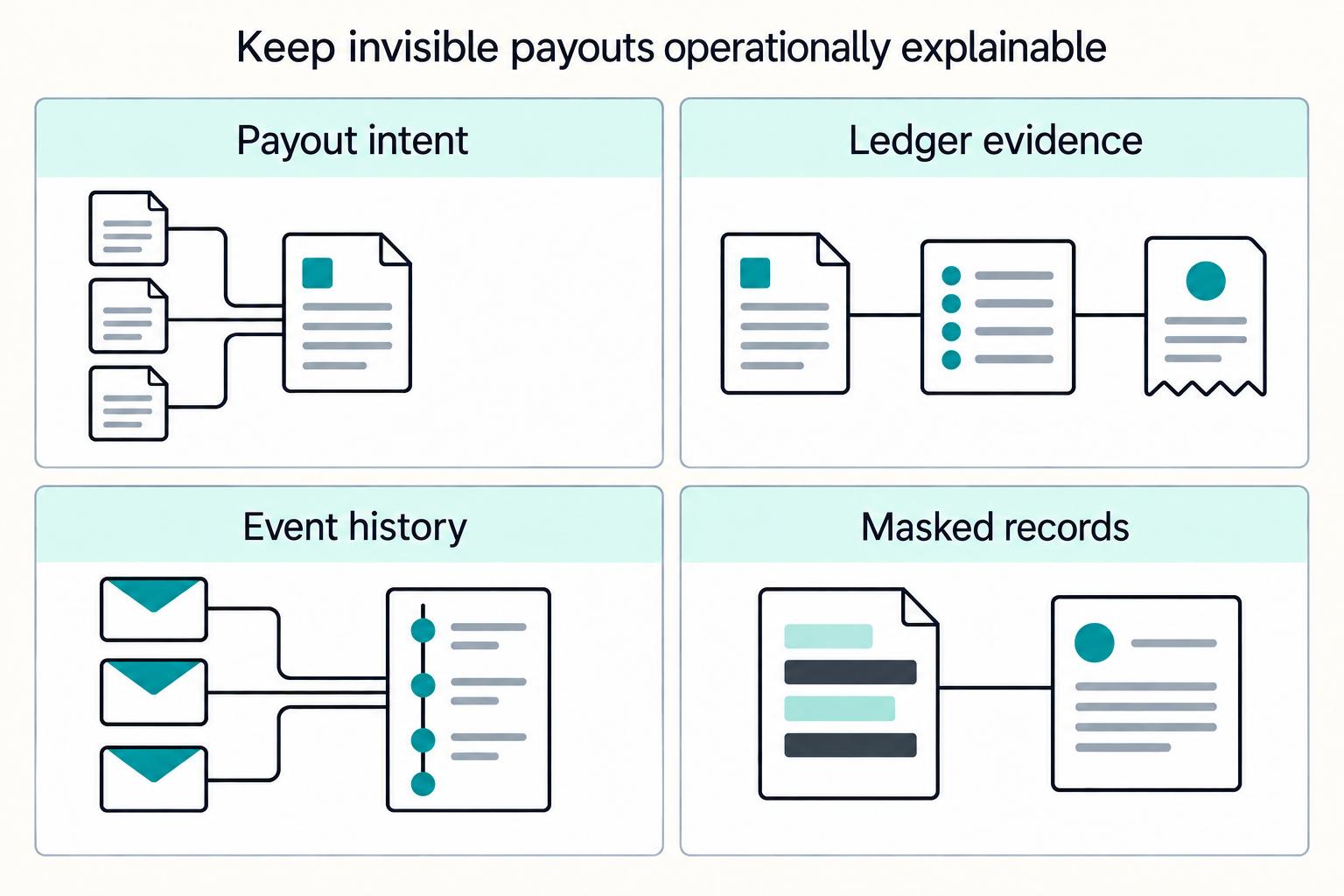
Invisible Payouts: How to Remove Payment Friction for Contractors Without Sacrificing Compliance
Invisible payouts should make life easier for contractors without hiding the controls your team needs. Contractors should get a predictable, low-friction flow, while internal teams can still enforce and document payout decisions when needed. If you run contractor payouts at scale, you need both outcomes at once. We recommend treating every easy payout as a controlled release path your team can replay later.
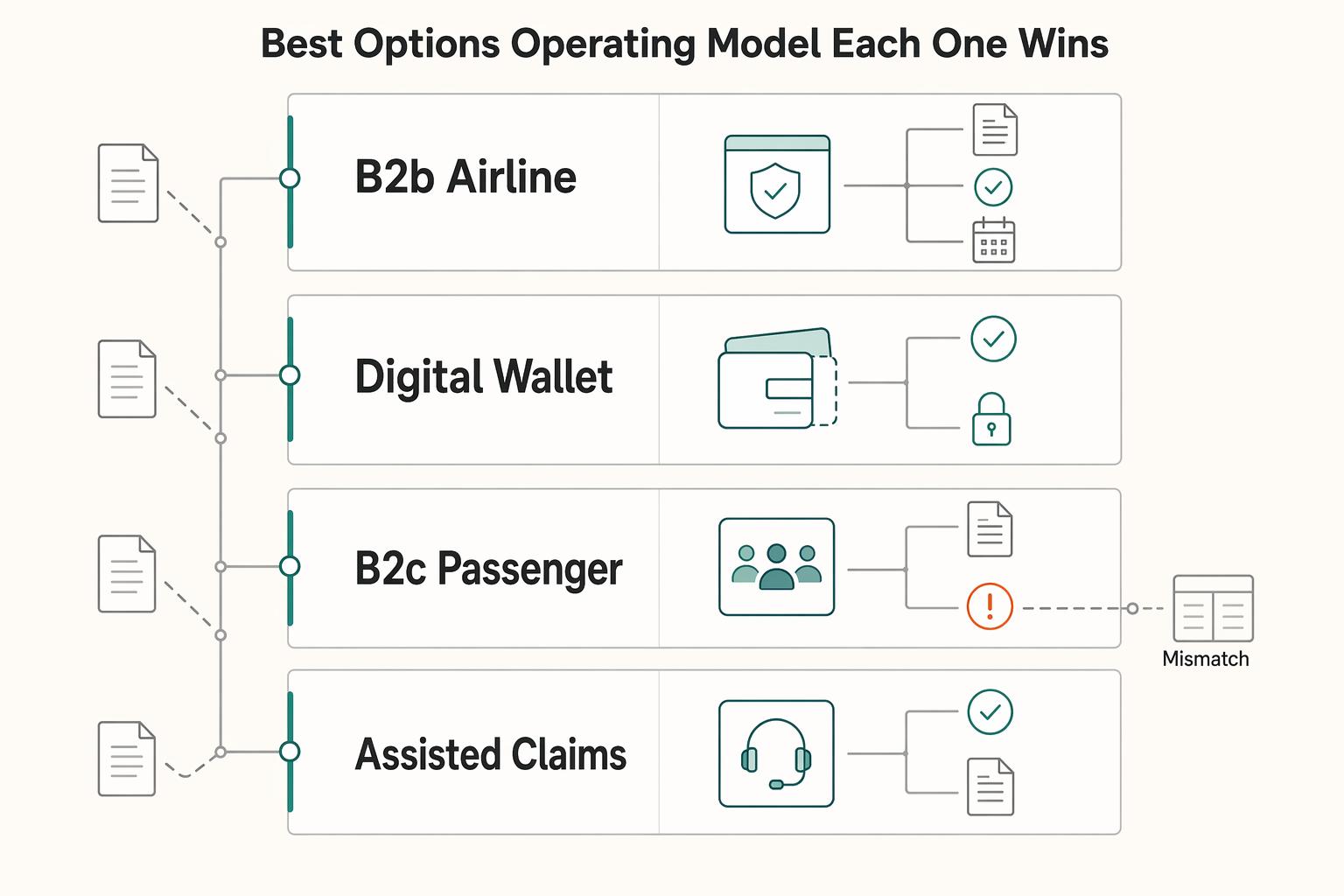
Airline Delay Compensation Payments for Customer Experience and Control
If you are evaluating an `airline compensation payments customer experience delays platform`, split the work into three lanes first: legally owed refunds, discretionary compensation, and outsourced claims recovery. Vendor pages often blur these together, but they lead to different policy choices, ledger treatment, and customer outcomes.