

Quick Answer
Agree the invoice currency, due date and fee allocation, then choose a supported receiving route for each contractor. Use bank payouts for a team with an existing invoice process, or a contractor platform when its workflow is useful. Pilot receipt and reconciliation before batching, and resolve unknown transfers before switching rails.
For a LATAM contractor team, choose the payment setup by the currency and account each person can actually use. A company sending USD to Mexico, Colombia and Argentina may need three different receiving paths. The best default is a supported bank payout with a clear quote and traceable receipt; add a contractor-management platform when its contract and invoice workflow saves enough administration to justify the full cost.
Agree what counts as payment before comparing providers#
Put the invoice currency, due date, fee allocation and accepted receiving method in the contract. If the invoice is in USD but the contractor receives pesos, specify who chooses the conversion rate and when it is fixed. A platform balance, a submitted bank transfer and a usable bank deposit are different events. Agree which event satisfies the payment obligation, subject to applicable law.
Check the actual working relationship and local invoicing requirements before onboarding. A transfer provider does not determine whether someone is correctly classified as an independent contractor. Similarly, paying in foreign currency does not remove the contractor’s local reporting obligations. Keep tax and contract decisions separate from the payment rail.
For a US payer, the IRS generally sources personal-service income where the work is performed, rather than where the payer is located. Form W-8BEN documents foreign status for individuals in applicable situations; entities and other income categories use different forms. It is not a universal LATAM prepayment permit, and it is not the form for claiming an exemption on an individual’s US-performed personal services. Record work location and payee status before deciding documentation or withholding.
Compare three practical payment setups#
| Setup | Best operational fit | Cost and control boundary |
|---|---|---|
| Wise Business bank payouts | A team with supported routes that already manages contracts and invoices | Transfer-specific quote; verify sender business and recipient eligibility |
| Deel contractor workflow | A team needing a contractor account, invoice workflow and withdrawal choices | Employer-side product charges plus withdrawal, FX and possible bank costs |
| Payoneer receiving and withdrawals | Contractors who already use a supported Payoneer account and cash-out route | Receiving, sending and bank withdrawal are separate fee events |
| Your bank’s international transfer | A verified recipient bank that accepts the agreed currency | Sending, intermediary, recipient-bank and FX charges can differ |
Wise’s current batch guide supports up to 1,000 payments from an uploaded file after Business verification, with team approval where configured. It also says batch payments are not available for Brazilian businesses. That is a sender-account restriction; it is not a statement that no Brazilian recipient can receive money.
Deel separates a contractor’s available balance from withdrawal to a bank or another supported method. Its September 2026 help guide requires a verified contractor account and matching recipient name; available methods depend on jurisdiction. Its advertised local withdrawal fee does not include every possible provider or exchange charge. Use the contractor’s actual withdrawal preview and arrival estimate, alongside the payer’s product quote.
Payoneer’s current pricing page lists separate fees for receiving, sending, conversion and withdrawal, with account and corridor differences. A low-cost payment into the account does not guarantee a low-cost bank cash-out. Ask the contractor to price the complete withdrawal path for the intended amount and currency, and check any applicable account fee.
Make the country checks specific#
| Destination | Concrete receiving check | Operational consequence |
|---|---|---|
| Mexico, MXN | Wise’s MXN guide requires the recipient’s full name and 18-digit CLABE and excludes specified banks | Validate the actual bank and details; distinguish sending to MXN from funding from MXN |
| Colombia, COP | Recipient identification must match bank records; bank-specific declarations or receipt steps may apply | Complete bank activation and verify business-route eligibility before payment |
| Argentina, ARS | Wise’s ARS guide asks for full name, address, 22-digit CBU and 11-digit CUIT/CUIL | Confirm limits and whether ARS receipt fits a USD-denominated contract |
For Mexico, the restrictions on sending from MXN are different from the requirements for a foreign payer sending to MXN. Do not apply a Mexican-citizenship funding rule to every overseas company paying a Mexican contractor. Keep the payment direction and funding currency explicit in the route record.
For Colombia, Wise’s dedicated COP guide lists supported banks and restrictions on certain business categories, while its general currency overview states a broader business-payment restriction. Obtain confirmation for the actual business account and route before selecting it. For Bancolombia, the dedicated guide describes Abono Automático activation; other banks have different receipt steps. A published personal-transfer option is insufficient evidence for a company payout.
For Argentina, a transfer of ARS to a local account is different from a USD transfer or retaining USD in a provider balance. Confirm the destination currency and the recipient bank’s documentation for the actual service payment. Do not describe every USD balance or wallet as an exemption from local foreign-exchange or tax rules.
Compare equal outcomes, not equal send amounts#
Use the same invoice and intended net outcome for every quote. Record total payer debit, provider fee, exchange rate, recipient amount, withdrawal costs, expected timing and quote expiry. If a provider can guarantee the recipient amount, preserve that commitment. If intermediary deductions remain uncertain, disclose that uncertainty and agree how a shortfall will be handled.
Here is an invented $1,000 invoice comparison. These are examples, not current provider prices. Assume a same-currency destination and that the contract requires the contractor to receive the full $1,000.
| Example route | Payer debit | Received before correction | Implication |
|---|---|---|---|
| A: $8 sender fee, no recipient deduction | $1,008 | $1,000 | Invoice paid in full under the assumption |
| B: $25 sender fee and $15 deducted in transit | $1,025 | $985 | A $15 shortfall remains to resolve |
| C: $5 sender fee, then a 1% withdrawal deduction | $1,005 | $990 at the bank | The balance credit alone hides a $10 cash-out cost |
To net $1,000 after a hypothetical 1% deduction on the entire withdrawal, the gross withdrawal would need to be $1,000 ÷ 0.99, or approximately $1,010.10 before rounding and any fixed charges. Do not simply add $10 and assume the fee calculation disappears. For conversion, compare a quoted recipient amount in the agreed currency, rather than mixing USD debits with local-currency totals.
Run a monthly payout batch with independent approval#
- Match each invoice to the engagement, accepted deliverable and due date.
- Verify the recipient’s current authorized account and route; independently approve destination changes.
- Freeze the approved amount, currency, quote and fee allocation with a stable obligation ID.
- Fund and submit the batch early enough for funding, conversion, holidays and the quoted arrival window.
- Track each item through provider processing, recipient receipt and reconciliation; a batch can have mixed outcomes.
Keep the invoice, approval, provider transfer reference and recipient evidence together. Reconcile differences as fees, FX, partial payments or unresolved cases. Provider confirmation and bank receipt should support the status you report; a dashboard’s “sent” label should not be relabeled as bank credited.
Store the business obligation separately from transfer attempts. Prevent two approvals or workers from reserving the same unpaid amount. Apply provider idempotency where available, but retain your own invoice-level duplicate control. A spreadsheet uploaded twice can otherwise create two batches for the same obligations.
Recover failures without paying twice#
A timeout or delayed status is an unknown outcome. Query the existing transfer and investigate before resubmitting. Give the contractor the reference, current status and next update time. A backup rail is useful after the original attempt has been resolved; it should not become a second payment while the first can still complete.
For a confirmed rejection or return, record the cause and funds outcome, verify corrected beneficiary details and reapprove against the unpaid balance. Changes to currency or fees need a new quote and consent where the contract requires it. Retain the original attempt so finance can explain the full movement.
Pilot representative recipients in each intended corridor before moving the whole team. Include a bank-data correction and a provider-status delay in a controlled rehearsal. Assess usable receipt, total cost, record completeness and support resolution, then schedule payments against actual due dates. Keep an owner for exceptions rather than allowing an unresolved first payout to silently delay later amounts owed.
Frequently Asked Questions
Which provider is best for a LATAM contractor team?
Use supported bank payouts when you already manage contracts and invoices. Consider a contractor-management workflow when its administrative features justify the full product and withdrawal costs. Verify each country, currency and account route; a regional coverage claim is insufficient.
Does a Wise Mexican-citizenship rule prevent foreign companies paying Mexican contractors?
The cited citizenship restriction concerns sending from MXN. Sending to MXN has a separate recipient workflow, including CLABE and bank eligibility. Verify the foreign payer’s own business account and funding route.
Is a contractor’s platform balance the same as receiving payment in their bank?
No. Balance credit and withdrawal are separate events with possible fees, FX and processing time. Agree the payment-completion event in the contract and measure the outcome promised to the contractor.
Do all LATAM contractors need Form W-8BEN?
No universal requirement follows from being in LATAM. US documentation depends on payee status, income type, work location and applicable withholding rules. W-8BEN is for individuals in its defined scope, not every entity or personal-service scenario.
When can we switch to a backup payment method?
First resolve whether the original attempt failed or returned and confirm the remaining unpaid balance. Do not issue a second payment merely because the first is delayed or has an unknown outcome.
Try a related tool
Researched and edited by the Gruv editorial team. Gruv builds cross-border billing, payouts, and finance-operations software for global businesses.
Sources
Includes 3 external sources outside the trusted-domain allowlist.
- irs.gov/individuals/international-taxpayers/source-o...trusted
- irs.gov/instructions/iw8bentrusted
- wise.com/help/articles/2663240/guide-to-batch-paymentstrusted
- wise.com/help/articles/2932354/guide-to-mxn-transferstrusted
- help.letsdeel.com/hc/en-gb/articles/7338494928913-How-Contract...external
- help.letsdeel.com/hc/en-gb/articles/14391381019537-About-Withd...external
- payoneer.com/pricingexternal
Educational content only. Not legal, tax, or financial advice.
Related Posts

The Freelance Payment Penalty: A Modeled Audit of Platform Fees, FX Spreads, and Payout Delays
The money rarely disappears through a single, easy-to-spot fee. The real loss is stacked. A marketplace takes its commission, a processor adds a charge for international cards, a bank or payment company converts the currency at a spread, a platform holds the funds before release, and a wire sheds a little to intermediaries on the way in. Each layer looks defensible on its own, but the worker feels the combined result as a smaller deposit and a later payday.
How to Respond to a Subpoena for Business Records
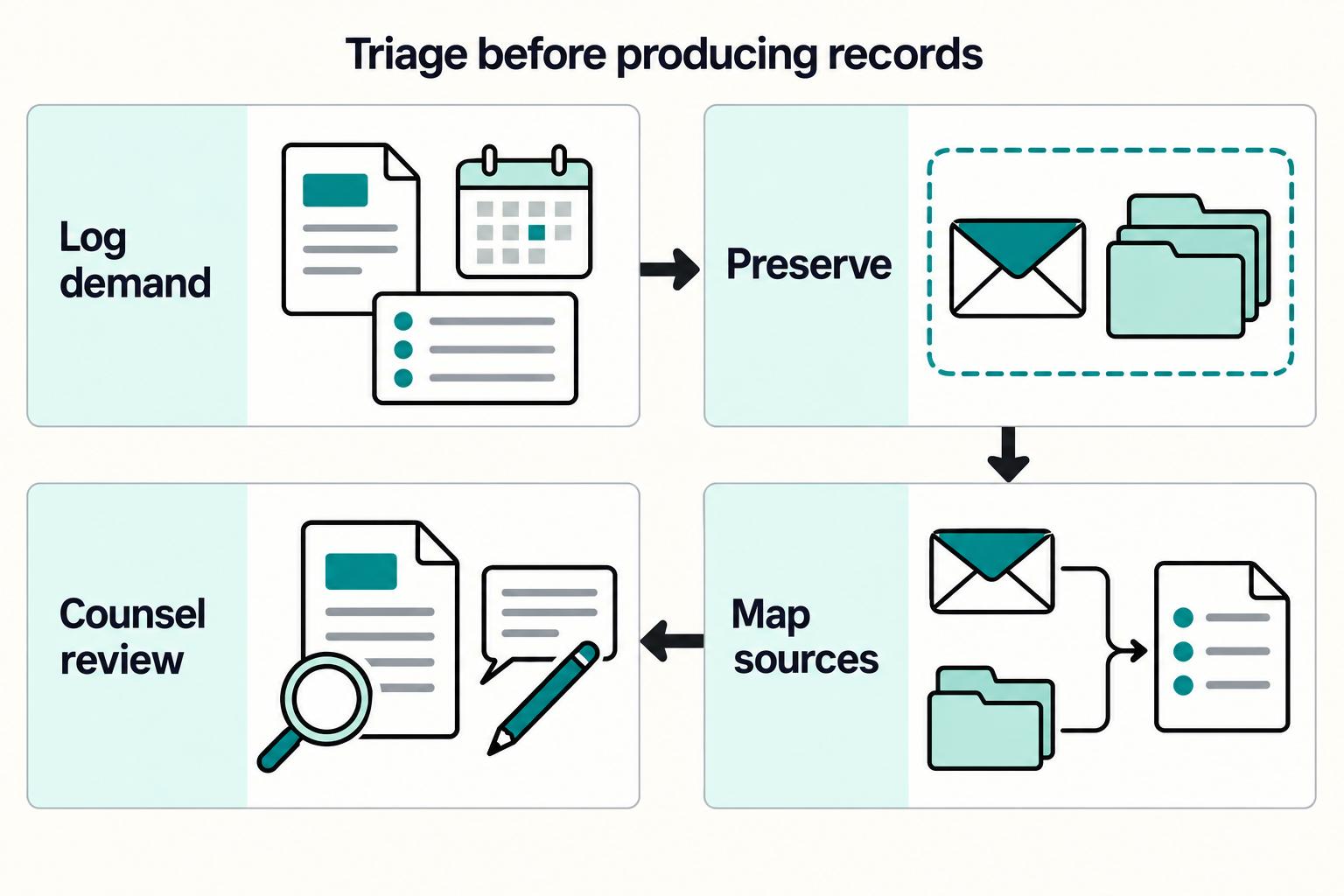
Move fast, but do not produce records on instinct. If you need to **respond to a subpoena for business records**, your immediate job is to control deadlines, preserve records, and make any later production defensible.
A US Expat's Guide to Investing in UCITS ETFs to Avoid PFIC Issues
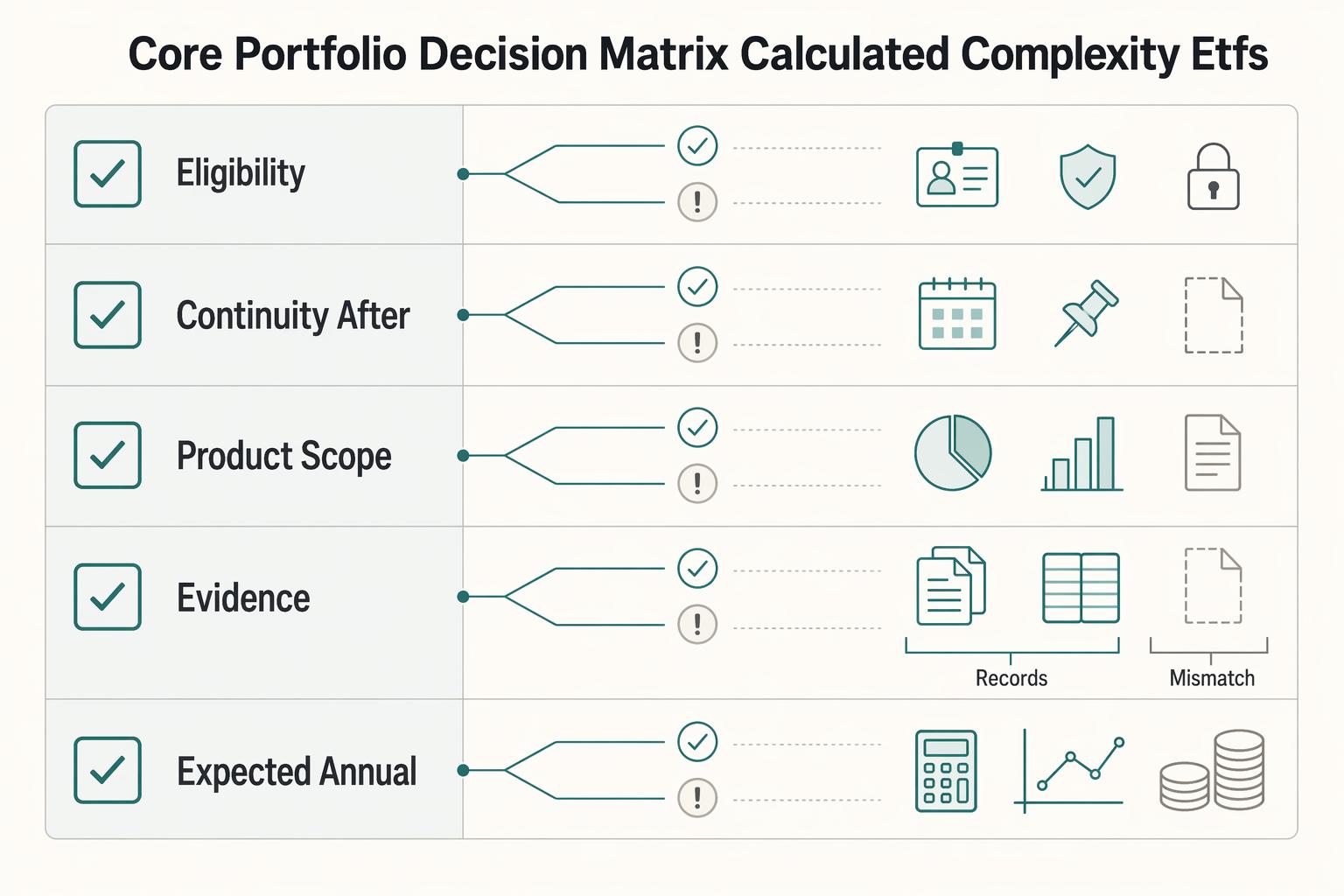
The real problem is a two-system conflict. U.S. tax treatment can punish the wrong fund choice, while local product-access constraints can block the funds you want to buy in the first place. For **us expat ucits etfs**, the practical question is not "Which product is best?" It is "What can I access, report, and keep doing every year without guessing?" Use this four-part filter before any trade: