
Quick Answer
Choose a payout model by tying compensation to a clear payable trigger and auditable evidence, not by chasing headline rates. For media publishing contributor payouts, the article recommends comparing per-article, royalty, performance-linked, and unpaid lanes against statement reproducibility, dispute handling, and cross-border constraints. It also stresses contract controls such as syndication rights, exclusivity terms, and kill fee logic before volume expansion.
How to choose a contributor payout model#
Contributor payouts in media look simple until you try to make them hold up in real operations. The real decision is not which rate looks attractive in a recruiting message. It is which model still works when your revenue source, contract terms, attribution logic, and payout operations all have to line up.
That matters early, before scale. If you are planning to add countries, contributor tiers, or new content formats, payout design becomes a product and finance decision at the same time. A fixed article fee behaves very differently from an engagement-linked payout when margins tighten, traffic swings, or contributor disputes start landing in support.
A practical way to think about payouts is to start with the monetization engine underneath them. In one public Medium example, readers pay a subscription fee of $5 per month for unlimited reading, and writers earn based on engagement on their articles. The operator lesson is straightforward. Payout logic sits downstream of reader revenue and content performance. It is not separate from them. If your platform runs on subscriptions, ads, syndication, or a mix, the payout model has to match that cash reality.
Public examples often highlight upside more than mechanics. NewsBreak's creator messaging promotes "high RPM payouts," but that is not enough to build policy from. You still need to know what event triggers earnings, what counts as valid performance, when balances become payable, and what evidence you can produce if a contributor challenges the numbers. If you cannot answer those points in writing, the model is not ready for scale.
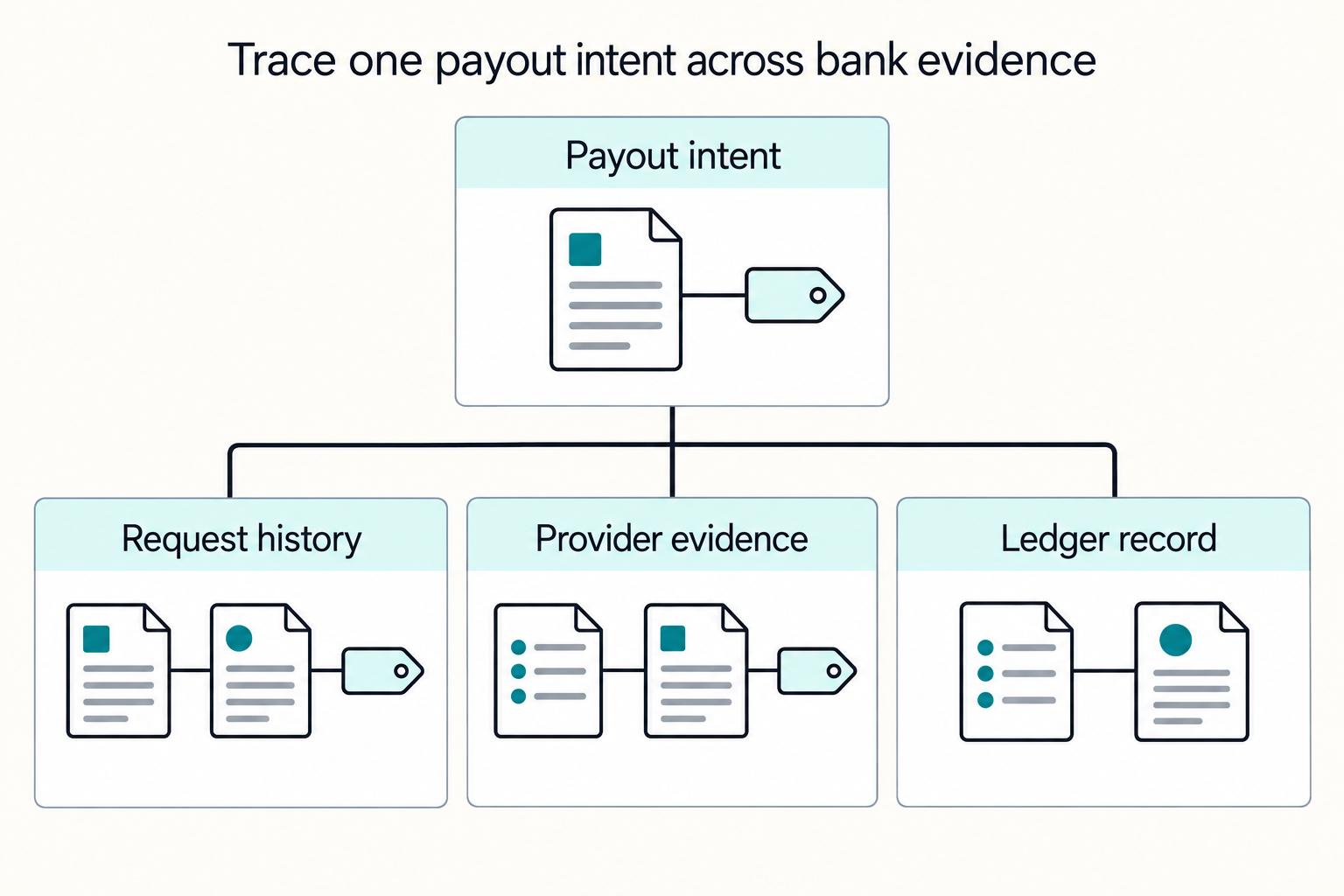
A good checkpoint is to define the payable event before you debate rates. Is payout created by article acceptance, by engagement, by subscription activity, or by some later settlement event? Then define the evidence pack behind it: accepted deliverable record, attribution data, statement logic, and payout ledger entry. One common risk is launching variable payouts before attribution is stable. That can lead to manual adjustments, contributor mistrust, and finance teams spending their time on exceptions instead of clean batches.
It also helps to separate contributor recognition from contributor compensation. Elsevier's description of CRediT makes clear that it is a taxonomy for recognizing individual contributions and reducing authorship disputes. That can improve role clarity, especially when multiple people shape one piece, but it is not a payment contract. You still need explicit commercial rules for who gets paid, for what, and on what timeline.
So the practical question throughout this guide is straightforward: choose the model that stays reliable under your unit economics, legal terms, and payout infrastructure, not the one that looks most generous in isolation.
The payout models you are actually choosing between#
You are choosing the payable event and contract structure, not just a headline rate.
- Per-article fee: fixed payment for an accepted deliverable. It is straightforward to plan and reconcile, but long-tail upside needs a separate rule if you want to reward it.
- Royalty model: payout follows contract terms such as rate logic and any advance/recoup mechanics. It only scales cleanly when statements make both the calculation and payable trigger explicit.
- Performance model: payout follows a metric-linked formula (for example, pageview-based logic). It is only as reliable as your attribution records and your ability to reproduce each statement.
- Unpaid contributor program: lower direct payout spend, higher operational burden. Use clear quality gates, rights terms, and a path for strong contributors to move into paid lanes.
Across all four, define the payable event, evidence trail, and dispute path before launch.
Related reading: FATCA and W-8 Tax Compliance for Platforms: When to Release, Hold, or Withhold Foreign Payouts.
The contract clauses that decide who really gets paid#
Once you choose a payout model, contract language decides how cash actually moves. If expansion depends on reuse across titles, regions, or partners, lock down syndication rights terms before negotiating headline fees.
| Term | When it matters | What to define or align |
|---|---|---|
| Syndication rights | If expansion depends on reuse across titles, regions, or partners | Specify channels, territories, term, and whether reuse includes third-party distribution or only owned properties |
| Earn-out clause | For deals with advances | Use the same logic across the contract and statement format for advance balance, credited earnings, and when additional amounts become payable |
| Agent commission terms | When contributors evaluate net pay | Keep statement labels consistent across the contract, reporting, and payout files so gross earnings, deductions, and net payable reconcile cleanly |
| Exclusivity clause | Before approval | Define what is restricted, for how long, and whether it applies to the full work, excerpts, or substantially similar pieces |
| Kill fee clause | Before approval | Define the payment trigger if commissioned work is not published, plus the evidence required to approve or deny payment |
For deals with advances, treat the earn-out clause as a release trigger for new cash, not a back-office detail. Your review checkpoint is whether the contract and statement format use the same logic for advance balance, credited earnings, and when additional amounts become payable.
Review agent commission terms the same way: contributors evaluate net pay, not just gross terms. Keep statement labels consistent across the contract, reporting, and payout files so gross earnings, deductions, and net payable reconcile cleanly.
Rights language carries the operational risk. Under U.S. copyright law, Title 17 includes a chapter on copyright ownership and transfer, and Chapter 1 defines a collective work as separate and independent contributions assembled into one whole. If your business model depends on assembling and reusing contributions, vague rights terms can break execution even when rate cards look strong.
Use these checks before approval:
- Syndication rights: specify channels, territories, term, and whether reuse includes third-party distribution or only owned properties.
- Exclusivity clause: define what is restricted, for how long, and whether it applies to the full work, excerpts, or substantially similar pieces.
- Kill fee clause: define the payment trigger if commissioned work is not published, plus the evidence required to approve or deny payment.
If reuse is central to your market plan, review the rights schedule and payout statement template together. That pair usually gives a clearer read on who gets paid, when, and for which uses than the headline number alone. If you also need to account for bank fee leakage, see Intermediary Bank Explained: How Correspondent Banking Adds Fees to Your Payouts.
Compare payout models with operator-grade criteria#
Before you debate headline rates, use one operator matrix: if the payable logic is not easy to evidence and explain, the model will be hard to trust in production.
| Model | Predictability | Quality incentives | Admin overhead | Fraud exposure | Contributor retention risk |
|---|---|---|---|---|---|
| Per-article fee | High | Medium (depends on acceptance criteria and quality gates) | Low to medium | Low to medium | Medium |
| Royalty rate | Medium to low (depends on statement clarity and recoup logic) | High when contributors trust reporting | Medium to high | Medium | Medium to high if payout logic is unclear |
| Per-pageview payout | Low to medium (depends on attribution stability) | High when metrics are transparent | High | High if metric controls are weak | High when contributors cannot reproduce results |
| Unpaid contributor program | High for cash planning, low for contributor earnings certainty | Low unless promotion-to-paid rules are explicit | Medium to high (moderation/editing load) | Medium | High |
Treat Reedsy, Digiday, and Reddit r/publishing as directional context only. For all three, mark payout rates, current terms, and enforceable contract mechanics as unknown until you verify current rate cards and signed-language equivalents.
| Model | Earn-out clause | Exclusivity clause | Kill fee clause | Syndication rights |
|---|---|---|---|---|
| Per-article fee | Usually not central; define if advances or staged payments exist | Define scope and duration if used | Define acceptance/rejection trigger and payment outcome | Define reuse scope, channels, territories, and term |
| Royalty rate | Core control; define recoup and payable transition clearly | Define where exclusivity limits contributor reuse | Define payment treatment for commissioned but unpublished work | Core control for reuse economics |
| Per-pageview payout | Usually secondary unless combined with advances/recoup | Define competitive posting limits and timing | Define handling when publication is canceled after work is delivered | Define whether external redistribution changes metric eligibility |
| Unpaid contributor program | Typically not applicable | Define carefully to avoid overreach | Define if any partial-payment exception exists | Define ownership, reuse permissions, and withdrawal terms |
If forecasting confidence is low, start with per-article fee plus explicit quality gates, then layer variable components only after attribution and statement logic are trustworthy.
Where current SERP advice is thin for platform operators#
Use SERP content to get oriented, not to set payout policy. For contributor payouts, treat what ranks as hypothesis input until you can verify current contract terms, jurisdiction, and payment mechanics.
Reedsy-style author-economics explainers can frame incentives, but they are not country-by-country payout operations guides for publisher-as-platform workflows. Digiday is closer to the model, but its contributor-pay comparison is dated (April 9, 2014), so it is evidence of model diversity, not current implementation detail.
Forum anecdotes, including Reddit-style rate discussions, have the same limit: they can suggest questions, but they are not contract-standard guidance across jurisdictions or contributor tiers. If a source cannot show agreement version, rights terms, jurisdiction, contributor tier, and payout timing, do not use it as rollout policy.
Search prominence is also not an operations-quality filter. The News/Media Alliance comments describe Google at approximately 90 percent global search share, and search-focused trackers may document ranking winners rather than payout implementation. Operator rule: confirm publication date, verify current contract or rate-card evidence, and then map findings to your own agreement, tax-flow, and country payout assumptions before launch.
Cross-border constraints that should change your payout design#
Your payout model should follow cross-border constraints, not the other way around. Choose economics only after you map where contributors can be onboarded, paid, and reconciled without manual exceptions becoming the default path.
Start with the country and program matrix#
The operating backdrop is still constrained: BIS (March 2026) describes cross-border payments as costlier, slower, less accessible, and less transparent than domestic payments, and flags limited interoperability as the most binding constraint. The FSB's 2025 progress report also keeps legal, regulatory, and supervisory frameworks as a core workstream. In practice, expansion design is downstream of country and program conditions.
| Matrix field | What to track |
|---|---|
| Contributor lane | Whether a contributor lane is open |
| Onboarding and policy gates | Which onboarding and policy gates apply in your program |
| Payout routes | Which payout routes are approved |
| Documentation | What documentation your process requires |
| Settlement behavior | Expected settlement behavior |
| Exceptions owner | Who owns exceptions |
Build a country-by-program matrix before pricing. Track, at minimum, whether a contributor lane is open, which onboarding and policy gates apply in your program, which payout routes are approved, what documentation your process requires, expected settlement behavior, and who owns exceptions. Doing this makes failure points visible before funds are released.
Model choice changes operational load#
A fixed per-article fee is usually simpler to approve, batch, and reconcile. One accepted deliverable can map cleanly to one payable event and a narrower dispute surface.
A per-pageview payout typically creates more moving parts. Earnings depend on attribution inputs, cutoff timing, adjustments, and repeated recalculation across a period, which increases batch volume and reconciliation effort. If attribution is not stable across markets, treat that as a rollout constraint.
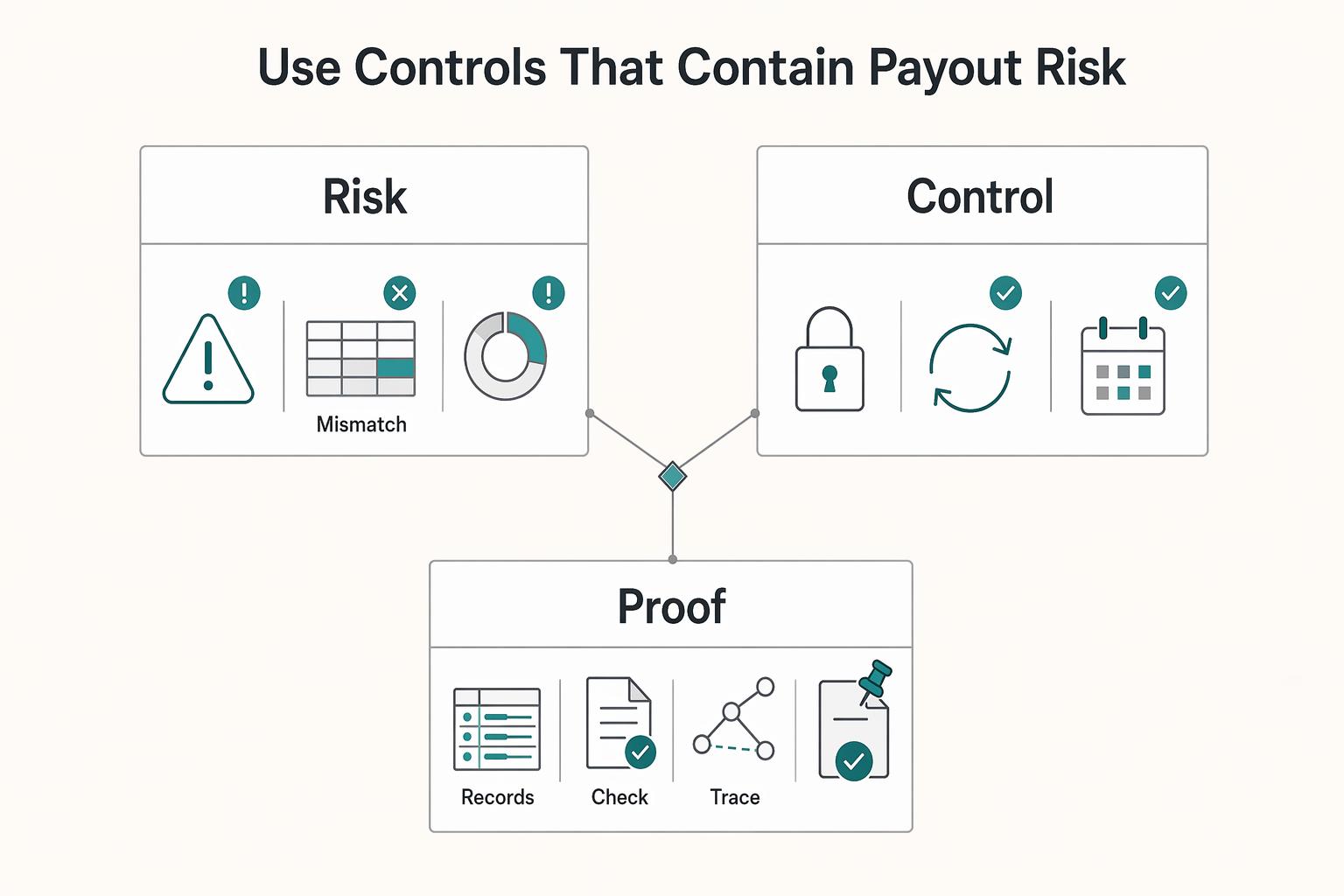
Use controls that contain payout risk#
Whatever tooling you use, risk control is operational: compliance-gated payout release, idempotent retries, audit-ready ledger records, and batch status tracking. If you are using Gruv, enable those controls where supported before opening a new market.
Use a market-level evidence pack as a launch checkpoint. Require:
- policy gates and approval owner
- payout failure handling and retry path
- document flow from capture to review
- reconciliation export format for finance and support
If a policy decision depends on legal notice, keep the official edition or counsel-approved memo in that pack rather than relying on an unofficial XML rendering alone.
If your model includes ad revenue share, see Automating DSP and SSP Settlements for Programmatic Advertising Payouts.
Decision rules by stage, content type, and growth target#
Treat growth and scaling as different decisions, then set payout rules accordingly. Growth can increase users and value while costs surge, while scaling is about adding revenue without matching cost growth, so your payout model should change as evidence quality improves.
Early stage: optimize for clear decisions, not complex upside#
If margin visibility is weak, default to a per-article fee with narrow syndication rights. Use a per-pageview payout only after you can consistently value content pieces and reproduce earnings from the same source data and cutoff rules.
A March 2026 HBS working paper reports stronger media effects for early-stage startups and weaker effects for high-reputation VCs, and it links post-investment news-coverage gains with higher odds of subsequent financing. That supports a practical rule: do not let short-term visibility signals drive a payout model your ops team cannot verify.
Reuse-heavy catalogs: only use royalty mechanics with explicit operating rules#
If your model depends on evergreen reuse, a royalty rate can fit, but only with clear exclusivity clause and earn-out clause terms in the contributor documents and reporting flow. Keep the rule simple: if reuse economics matter, contributors should be able to see how reuse-related earnings are calculated, when they appear, and who handles disputes.
For subscription businesses, portfolio management depends on evaluating each content piece's value contribution. If you cannot do that reliably, reuse-based payouts will be hard to trust.
Broad funnels: avoid hidden cost transfer#
If growth depends on a wide contributor funnel, do not default to an unpaid contributor program unless you can absorb the moderation, review, and conversion cost. More submissions can grow activity while making scaling harder.
Use tighter collection contributor agreement controls in premium editorial lanes than in open contribution lanes, because higher-sensitivity content needs stricter acceptance and rights handling.
For a step-by-step walkthrough, see How PROs Collect Performance Royalties and How Platforms Distribute Payouts.
Execution checklist for launch and first 90 days#
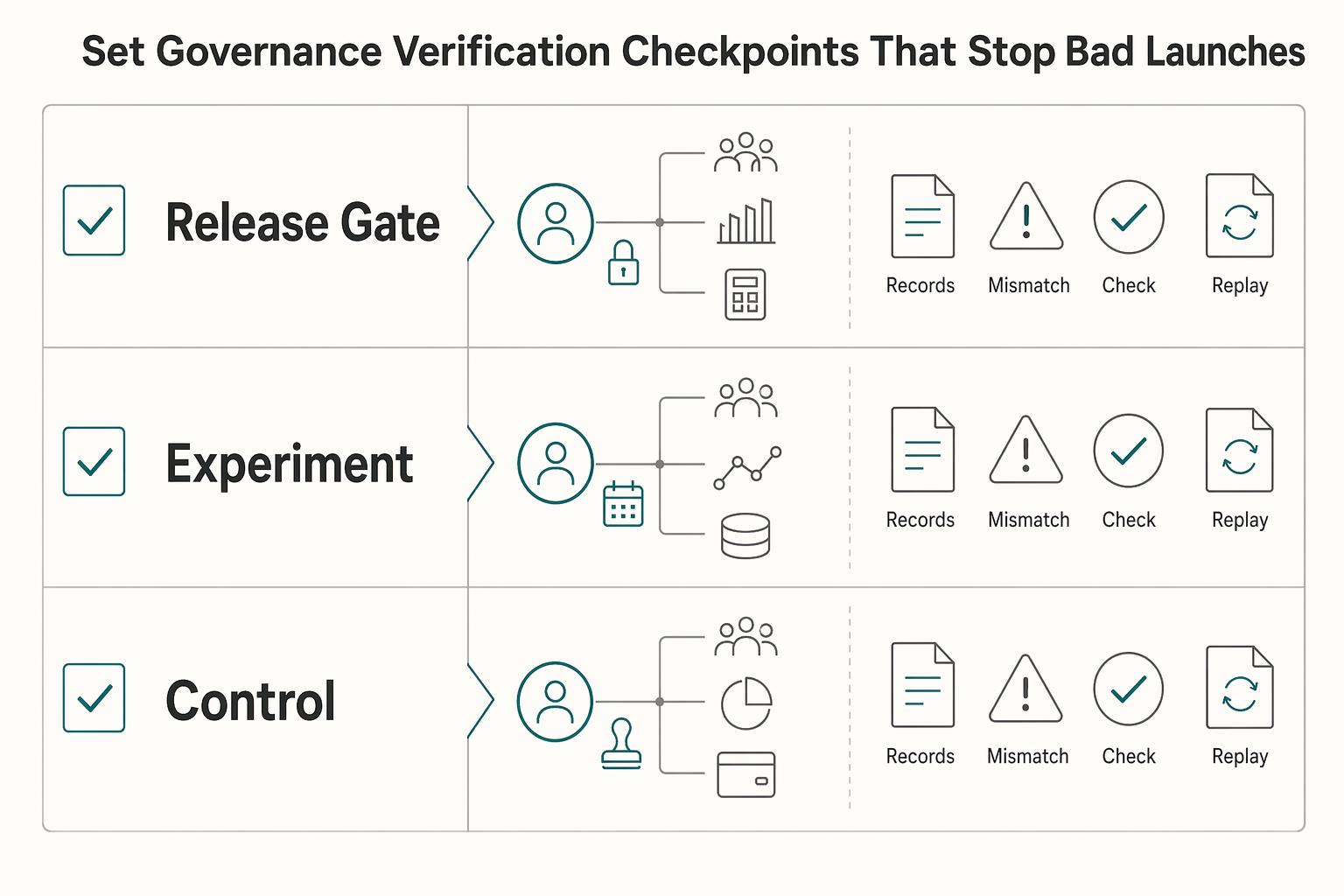
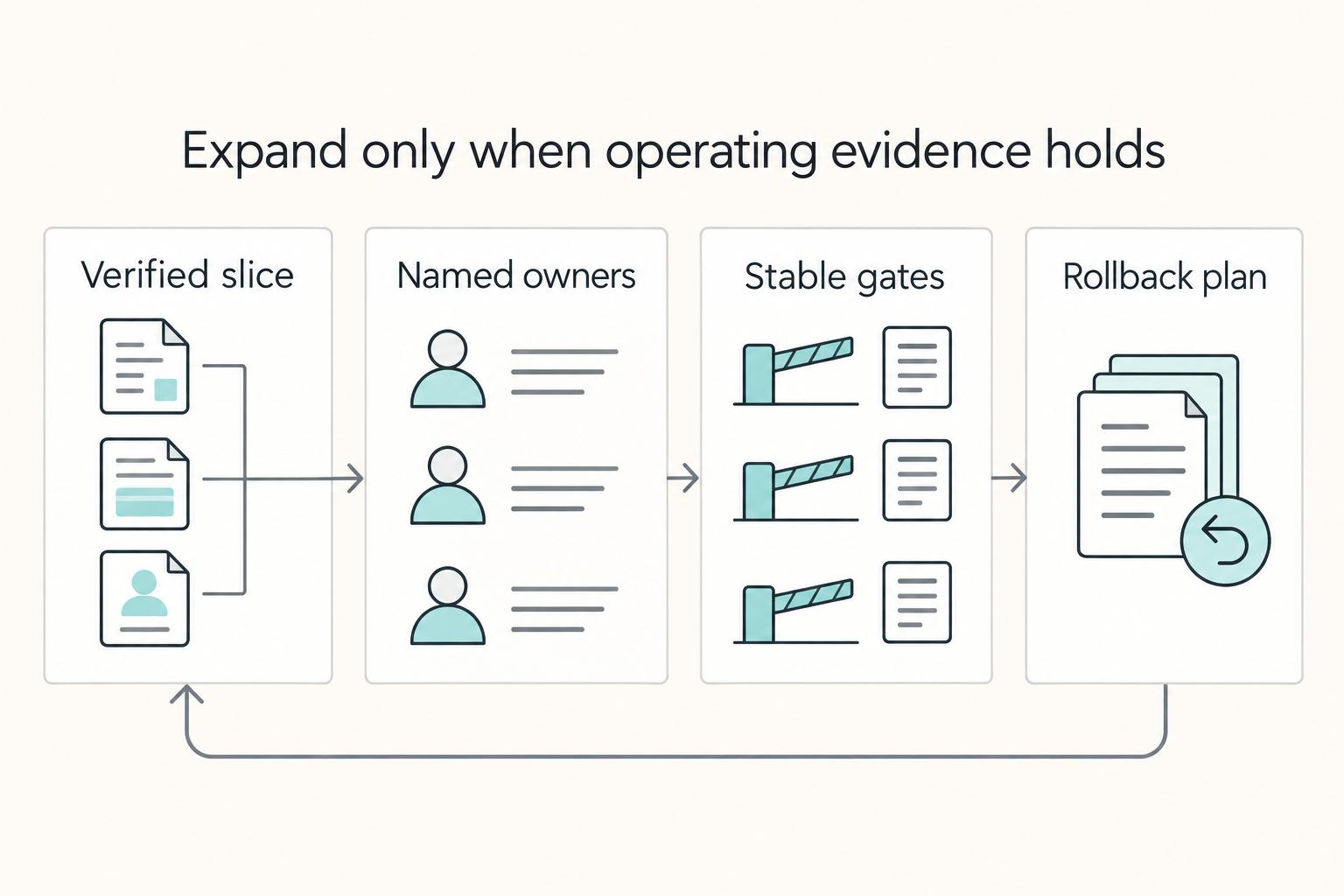
Use a tracked 30-60-90 checklist with named owners across editorial, finance, and ops. The first 90 days are where clarity on goals, expectations, and execution discipline matters most, so treat this as a risk-control system, not a loose handoff.
| Workstream | Define up front | Follow-up |
|---|---|---|
| Contributor agreement | Finalize the collection contributor agreement, kill fee clause, exclusivity clause, and syndication rights | Keep one current agreement version, an approval matrix, a sample contributor statement, and a clear owner for clause questions |
| Payout path | Define payout batches, duplicate-protection behavior, status updates, and an exception queue | Run dry tests for a normal payout, a duplicate trigger, and a failed disbursement |
| Compliance review | Define KYC/KYB triggers, tax profile capture points, and market-level policy overrides, and assign owners for manual review decisions | Run a monthly review on payout predictability, contributor quality, dispute rate, and operational incident volume |
Lock the contributor agreement before you invite volume#
Before onboarding, finalize the collection contributor agreement and key clauses, including kill fee clause, exclusivity clause, and syndication rights. Document what should happen when work is accepted, rejected, revised, killed, or reused so teams are aligned before payouts begin.
Keep one current agreement version, an approval matrix, and a sample contributor statement in the same launch pack, with a clear owner for clause questions.
Make one payout path work end to end before scaling it#
Before scaling, set up one reproducible path from approved content to contributor payout. In that path, define payout batches, duplicate-protection behavior, status updates, and an exception queue for failed disbursements.
Run dry tests for a normal payout, a duplicate trigger, and a failed disbursement so each case has a clear next action. In parallel, map invoice and approval states to ledger events, confirm reconciliation exports, and set contributor statement cadence.
Define compliance gates and review them monthly#
Define KYC/KYB triggers, tax profile capture points, and market-level policy overrides up front, then assign owners for manual review decisions. Do not leave block/unblock rules to first-live-cycle improvisation.
For days 1-90, run a monthly review on payout predictability, contributor quality, dispute rate, and operational incident volume, with explicit goals and expectations for each cycle.
Conclusion#
A durable advantage in contributor compensation decisions comes from matching model economics to documented contributor status and real operating constraints, not from picking the most fashionable compensation idea. When roles, rights, and approval evidence are fuzzy, any model gets harder to budget, explain, and defend as volume grows.
So the next move should be concrete. Build your model comparison table first, then build a country and program constraint table before you scale intake. The first should force a side-by-side view of predictability, reporting burden, dispute risk, and retention tradeoffs across your candidate models. The second should show where approval rules and onboarding requirements differ, so you are not assuming one contract and one process fit every market.
One control is easy to underrate because it looks editorial rather than financial: contributor accountability. PNAS recommends adopting common and transparent standards for authorship, using the Contributor Roles Taxonomy, or CRediT, and including contribution role information in article metadata. It also recommends requiring authors to use the ORCID persistent digital identifier. That is not just publication hygiene. It gives you a clean verification checkpoint before approval. Confirm the person being paid is the person attached to the work, that their role is recorded consistently, and that the metadata, agreement, and payable all point to the same classification.
Frontiers makes the classification rule even sharper. Only individuals who made a substantial contribution should be listed as authors, and status must be clearly defined as either named author or contributor. It also states that paying for authorship without contribution is unethical and prohibited. The practical failure mode is straightforward. Editorial accepts the work, finance prepares the payment, and only later does someone discover that credit, contribution status, and contract treatment do not line up. At that point, the dispute is no longer about rate alone. It becomes a documentation and accountability problem.
That matters even more in a media environment where the old top-down communications model is weaker. Carnegie's blunt assessment is that "That system has collapsed." More contributors, more channels, and more reuse opportunities mean the loose edges get exposed faster.
If you want a practical sequence, do it in this order: compare models, map country constraints, lock contributor classification and terms, then scale volume. If you want to pressure test the forecast after that, pair this work with subscription-billing design and separate fee planning so your margin assumptions stay realistic from content approval through final settlement.
Frequently Asked Questions
What are the main contributor payout models in media publishing?
Two models appear in practice: royalties framed as a percentage of net income per book sold (Routledge) and unpaid contribution in one Forbes contributor's personal account.
Why can’t publishers simply increase contributor rates?
This guide does not analyze rate strategy directly. It does show that contract terms need clear review (copyright, length, royalties, delivery date) and that submission operations can be capacity-limited, which can constrain programs even before pricing changes.
How does an earn-out clause change real contributor take-home timing?
This guide does not describe earn-out mechanics. A supported practical step is to review the draft contract and discuss terms with the editor before signing.
When is per-pageview payout better than per-article fee?
This guide does not give a per-pageview payout formula or a direct comparison framework. The examples here are limited to one personal Forbes account and Routledge contract guidance, so this decision should be treated as case-specific.
Do unpaid contributor programs still make sense for growth?
Sometimes, but only with clear expectations and enough editorial capacity. One Forbes contributor wrote, based on his own experience, that he was never paid and was asked to write one post per week. That is useful as a caution, not as an industry rule. The Mighty also notes it can process only a limited number of external submissions each month, which highlights real operational limits.
Which contract terms matter most for syndication and reuse?
Start with the key contract terms: copyright, length, royalties, and agreed delivery date. Routledge also says each contributor to an edited book must sign a contributor agreement and a permission verification form, and that standard contracts include an acknowledgment to open access (with an optional addendum).
What should operators verify before rolling out payouts in a new country?
Verify contract basics, contributor agreements and permissions for edited books, and realistic editorial intake capacity.
Try a related tool
Researched and edited by the Gruv editorial team. Gruv builds cross-border billing, payouts, and finance-operations software for global businesses.
Sources
- acquisition.gov/far-overhaul/far-part-deviation-guide/far-ov...trusted
- assets.publishing.service.gov.uk/media/5fa557668fa8f5788db46efc/Final_report_...trusted
- bis.org/publ/bppdf/bispap167.pdftrusted
- copyright.gov/title17/92chap1.htmltrusted
- ecfr.gov/current/title-2/subtitle-A/chapter-II/part-200trusted
- federalregister.gov/documents/2025/01/15/2025-00636/framework-fo...trusted
- govinfo.gov/content/pkg/USCODE-2021-title17/html/USCODE-...trusted
- gsa.gov/system/files/prize-challenge-toolkit-2026.pdftrusted
Educational content only. Not legal, tax, or financial advice.
Related Posts
Media Subscription Billing Decisions for Paywalls, Metering, and Bundling
**A metered paywall is only a good business decision if your billing operations can support it.** For platform founders, the real question is not whether reader revenue sounds attractive. It is whether digital publishing subscription billing and paywall metering can survive the messy parts of launch: failed renewals, entitlement sync, invoicing, tax treatment, and local payment movement.
Subscription Billing for Media Publishing with Metered Paywalls and Gifts
Treat this as a contract and access problem first, not a pricing-page tweak. For teams working through subscription billing in media publishing with metered paywalls and bundles, the common challenge is getting product, finance, and engineering to agree on exactly when access starts, pauses, resumes, and ends. If your team cannot explain that in plain language before launch, you are not ready.
How Intermediary and Correspondent Banks Change Payout Outcomes
Intermediary and correspondent bank payout fees are often a settlement-path issue, not random noise. When your sending bank and receiving bank are not directly connected, other banks can enter the path, and each handoff can change what the beneficiary receives.