
Quick Answer
Set your commission by working backward from the economics you must keep per segment, not by copying a “typical” marketplace rate. The article’s direct advice is to model the full stack first, including Stripe card charges, PayPal fee categories like Chargeback Fees and Payouts, payout operations, and support load. Then choose who pays the fee and verify one traced order from checkout to payout to ledger before rollout. If that traced path does not hold margin, change the structure before changing the headline percent.
How to Choose a Marketplace Commission Rate#
If you are trying to decide the marketplace commission fees percent to charge, do not start with "what do other marketplaces charge?" Start with "what can our model support after the full cost stack shows up?" This article is for founders, product leaders, and finance teams that need a commission policy they can defend in planning, in board reviews, and after launch.
| Fee component | Published amount | Notes |
|---|---|---|
| Marketplace commission fee | 10.75% | Capped at $75 per product sold |
| Transaction fee | 2.5% + $0.30 | Listed alongside commission |
| Payment processing fee | 2% | For non-US sellers paid through PayPal; capped at $20 |
Commission pricing is common because the operator earns a percentage or flat fee from each sale. That sounds simple, which is why teams often anchor on a clean headline number like 10% per sale. The problem is that the headline can look healthy while the economics underneath are not. Commission is only one layer of monetization, and marketplaces often include additional fee types that change the real margin picture.
A useful reality check is how fee structures work in practice. TCGplayer, for example, describes a marketplace commission fee as a fee sellers pay for making a sale, but its pricing also includes a fixed transaction component. Its published fee table shows a 10.75% commission, capped at $75 per product sold, plus a transaction fee of 2.5% + $0.30. For non-US sellers paid through PayPal, it also notes a 2% payment processing fee capped at $20. You do not need to copy that structure, but it is a clear reminder that a single percent rarely tells the whole story.
That tension carries through the rest of this article. A rate that looks attractive on a slide can get squeezed when additional fee layers are included, and commission models still depend on enough transaction volume to reach profitability. High commission rates also create market risk. Sellers may resist them or raise prices to offset the fee, which can pressure participation. So the right answer is not a folklore benchmark. It is a rate and fee design that holds up in both your margin math and your marketplace behavior.
By the end, you should have three practical outputs for your next planning cycle. First, a decision model that separates headline commission from net economics. Second, a rollout sequence that connects pricing decisions to checkout, payouts, and finance reporting. Third, a validation checklist so you can test whether the commission you chose is holding up in live transactions, not just in a spreadsheet.
Start with the economics before anyone argues over the percent.
Related reading: How to Invoice for Billable Hours vs Project Fees in QuickBooks.
Start with the economics that actually matter#
Set your commission from net take, not from a headline percent. If finance and product have not agreed on the target net take rate by segment, you are not ready to set a commission.
| Stripe input | Published amount | Applies when |
|---|---|---|
| Domestic card baseline | 2.9% + 30¢ per successful transaction | Published domestic card baseline |
| International card add-on | +1.5% | International cards |
| Currency conversion add-on | +1% | When currency conversion is required |
Use clear definitions up front:
- Commission rate: the headline percent you charge on each transaction.
- Net take rate: what remains after payment processing, payout operations, dispute handling, and ledger reconciliation costs under GMV.
Use real cost inputs early, and label them clearly. Stripe's published domestic card baseline is 2.9% + 30¢ per successful transaction, with add-ons like +1.5% for international cards and +1% when currency conversion is required. PayPal pricing varies by payment method, and its merchant fee schedule explicitly includes categories such as Chargeback Fees and PayPal Payouts.
Set a hard rule in your process: no one picks a commission percent until product and finance can trace one sample order from checkout to payout and reconcile each fee bucket in the ledger.
Benchmarks from CS-Cart, Gameflip, and similar roundups can help frame a range, but only as directional context. They do not replace your unit economics.
Choose who pays before you choose the percent#
Decide fee incidence before you debate the headline rate. For planning, use this rule: if seller onboarding is the bottleneck, test buyer-paid or split-fee variants; if checkout is fragile, start with seller-paid and keep buyer pricing simple.
Grounded evidence here is limited and directional. A Startups.com community thread (4 answers, over 10 years old) argues that per-transaction charges are easier to accept because providers pay on realized revenue, while upfront supply-side charges can feel like paying for potential. It also suggests delaying supply-side "tax" until you have critical mass.
Seller-paid vs buyer-paid vs split: use as test hypotheses#
| Design | Conversion risk | Seller acquisition friction | Margin predictability | Support burden | Communication complexity |
|---|---|---|---|---|---|
| Seller paid | Lower buyer-price surprise risk when pricing is clear | Higher if sellers feel charged before enough demand | Often easier to model per transaction | Lower to medium | Lower |
| Buyer paid | Higher risk if fee visibility is late or unclear | Lower for seller activation | Can improve margin optics, but depends on checkout behavior | Medium to high | Medium to high |
| Split fee | Balanced but sensitive to implementation details | Medium | Medium to strong when rules are explicit | High on refunds/disputes if policy is unclear | High |
Use marketplace examples as verification, not as facts#
eBay, Mercari, Facebook Marketplace, G2A, Eneba, Kinguin, and Swappa are useful comparison targets, but do not assume current policy from memory. For this section, treat them as live checks you need to verify, not benchmark facts.
- Capture the seller fee page, buyer checkout fee display, and refund/cancellation policy on the same date.
- Run one sample order path, from listing to checkout to refund scenario, and record where fees appear, who pays, and what is reversed.
Practical recommendation for planning#
If you test explicit buyer fees, prioritize clarity over internal margin optics: disclose early, use plain labels, and keep receipt/refund wording consistent across product, support, and finance. If you need both access fees and transaction fees, treat it as a deliberate hybrid model, not incremental add-ons; see hybrid pricing models.
Related: How Interchange Fees Change the Price You Need to Charge.
Build the commission backward from net take by segment#
Build your commission backward from net take, not forward from a headline percent. If net take does not stay positive after payment, payout, dispute, compliance, and support costs by segment, the commission is not ready.
Model costs at the segment level first, not marketplace-wide. A domestic payment and an international order should not share one cost assumption.
PayPal separates domestic and international based on whether sender and receiver are in the same market. Its US business pricing page also lists different starting rates by payment method, including 2.89% + $0.29 (card processing), 3.49% + $0.49 (PayPal or Venmo), and 4.99% + $0.49 (Pay Later). Treat these as starting inputs to validate, not final rates to copy.
Reference inputs#
| Input | What to model | Verification checkpoint | Confidence grade |
|---|---|---|---|
| GMV | Order value and order mix by segment | Use ledger-backed orders split by market, payment method, and seller type | A = measured, B = sampled, C = forecast |
| Payment processing | Processor percent + fixed fee per transaction | Record the exact fee page and update date used (for example, PayPal business fees page last updated February 9, 2026) | A = billed/contracted, B = current published pricing, C = estimated |
| Payout costs | Payout fees and method differences | Check the specific payout product (PayPal has a dedicated Payouts section) | A/B/C |
| Fraud and dispute allowance | Chargebacks, dispute fees, refund leakage | Use segment-level dispute data; PayPal has dedicated Chargeback Fees and Dispute Fees sections | A/B/C |
| Compliance overhead | KYC/KYB, tax review, reconciliation, manual ops | Translate team/vendor effort into per-seller or per-order cost | A/B/C |
| Support load | Tickets driven by fees, refunds, payout confusion | Tag fee-related tickets so estimates can be replaced with measured cost | A/B/C |
| Target contribution margin | Required margin after variable costs | Confirm target with Finance before pricing tests | A = approved, C = aspirational |
Use the equation in the right order#
Estimate segment-level costs first, including converting fixed per-order costs into a percent of GMV. Set minimum viable commission second: the lowest take rate that covers the full cost stack plus target contribution margin. Test price tolerance third.
A common failure mode is one blended processor assumption across all orders. That hides margin erosion in low-AOV orders, international corridors, and higher-cost payment methods. Keep an evidence pack for each assumption: fee page, update date, market, payment method, and confidence grade.
If modeled net take turns negative under realistic processor assumptions, do not keep tuning the headline percent. Change the structure instead: who pays, minimum fees for low-value orders, or a hybrid model.
Price for cross-border reality and compliance overhead#
Do not price cross-border segments with one blended commission when compliance intensity differs. If identity, tax, or reporting work is heavier in a segment, use segment-specific commission bands so you do not underprice high-friction corridors or overcharge low-friction ones.
Where cross-border cost actually rises#
KYC, KYB, and AML gates are not distributed evenly across seller types, corridors, or payout methods. An individual seller, a business seller, a domestic payout, and a cross-border payout can create different exception rates, manual review load, and support burden. Even with vendor tooling, retries, document collection, account restrictions, and escalations still add operating cost.
A practical pre-launch check is to split onboarding and payout exceptions by seller type and country pair, then compare approval time, manual touches, and support tickets. If you cannot produce that view, your compliance cost is still a guess.
Tax and reporting details that affect policy#
Tax and documentation workflows can add real operating work. VAT, GST/HST, W-8, W-9, and 1099 processes can change what data you collect, what gets validated, how support responds, and what records finance retains. Treat those as policy and pricing inputs early, not cleanup after launch. If Canada is in scope, review GST/HST platform fee rules.
For U.S.-connected cross-border activity, reporting layers can stack. The IRS states FATCA reporting for certain U.S. taxpayers is in addition to FBAR filing on FinCEN Form 114, and certain U.S. taxpayers may need to report specified foreign financial assets on Form 8938. FinCEN also allows periodic account statements to determine maximum account value if they fairly reflect the calendar-year maximum, and values are reported in whole U.S. dollars (for example, $15,265.25 is recorded as $15,266).
Requirements and timelines vary by jurisdiction and program, so confirm policy with legal and tax review before launch or expansion. For another process-heavy walkthrough, read How to Handle an EEOC Discrimination Charge.
Translate the pricing model into product and payment operations#
Your pricing model only works when product, payments, and finance all land on the same number for the same transaction. If fee logic lives only in a spreadsheet, leakage usually shows up first at checkout and then gets exposed in payout and reconciliation.
Write fee events before you build flows#
Define fee events in the product spec before implementation: what is charged, when it is charged, what amount it uses, who pays it, and what happens on refund, retry, or reversal. A headline commission is rarely enough once minimums, subscriptions, listing fees, or category logic are in play.
| Fee example | Amount or timing | Note |
|---|---|---|
| Amazon Individual plan | $0.99 per item sold | Account fees can be per item sold |
| Amazon Professional plan | $39.99 per month | Account fees can be monthly |
| Amazon referral fees | 8-15% | Cited minimum of $0.30 |
| Amazon category pricing | Tiered by sales price | Some categories are tiered |
| Roblox upload fees | Paid before an asset is submitted for approval | Fees can happen before a sale |
Marketplace examples show why. Amazon seller costs can include account fees, referral fees, and fulfilment charges rather than one single commission line. The Individual plan is stated as $0.99 per item sold, while the Professional plan is $39.99 per month; referral fees are typically 8-15% with a cited minimum of $0.30, and some categories are tiered by sales price. Roblox also shows that fees can happen before a sale, since applicable upload fees may be paid before an asset is submitted for approval.
Use an explicit execution order and keep it consistent: pricing rule in product spec, fee calculation at checkout, payout logic, ledger posting, reconciliation export, then exception handling.
Make operational touchpoints explicit#
Keep fee components separate in transaction data so finance can explain outcomes without reverse-engineering configs. At minimum, keep gross amount, commission basis, flat fee, minimum fee trigger, seller net, buyer total, currency, and fee version clear and traceable.
If you are implementing on Gruv, keep API fields, webhook-driven async status updates, and ledger reporting aligned to one fee model. Also decide Merchant of Record and Virtual Accounts responsibilities upfront, because those choices can shift where costs and operational ownership land.
Catch leakage before customers do#
Most leakage comes from execution drift: stale fee configs, payout mapping mismatches, non-idempotent retries, and reconciliation breaks between product and finance views. Store the applied fee-rule version on each order and carry it through payout and ledger records so you can reconcile outcomes directly.
Before rollout, run a full trace set instead of a single happy path. Include a normal sale, refund, minimum-fee case, tiered-fee case, and one failed payout or async retry; reconcile invoice, checkout fee, seller net, payout, ledger entries, and export. Do not launch until net take matches your pricing model without manual spreadsheet patches.
You might also find this useful: Building Subscription Revenue on a Marketplace Without Billing Gaps.
The mistakes that make marketplaces undercharge or overcharge#
Most undercharging and overcharging comes from treating commission as a copied headline number instead of a tested operating model.
- Copying a "typical percent" without rebuilding your own margin stack. Pulling a rate from Reddit, Facebook, or competitor teardowns is a shortcut, not validation. Before approving a fee, require a segment-level margin view and primary policy pages or rate cards for any external reference.
- Treating seller-paid vs buyer-paid as a UI label. Partitioned pricing separates a base price from mandatory surcharges, and buyers may not fully process every price component. If you move part of the fee to the buyer, validate total-price perception and checkout behavior, not just modeled take rate.
- Hiding compliance and tax work inside "fixed overhead." If review, onboarding, or operations effort changes by segment, model it as variable cost. If a single percentage cannot absorb that effort, use a structure that reflects the real work instead of forcing one flat rule.
- Using one global commission policy where market mechanics differ. One marketplace-fee example notes category and brand variation and suggests details are likely in a rate card, which is exactly why secondhand summaries are risky. Keep market rules tied to current primary documents; if a pricing assumption is not backed by one, treat it as unverified.
If you want a deeper dive, read Recurring Billing for Marketplaces: How to Charge Buyers and Pay Sellers on the Same Cycle.
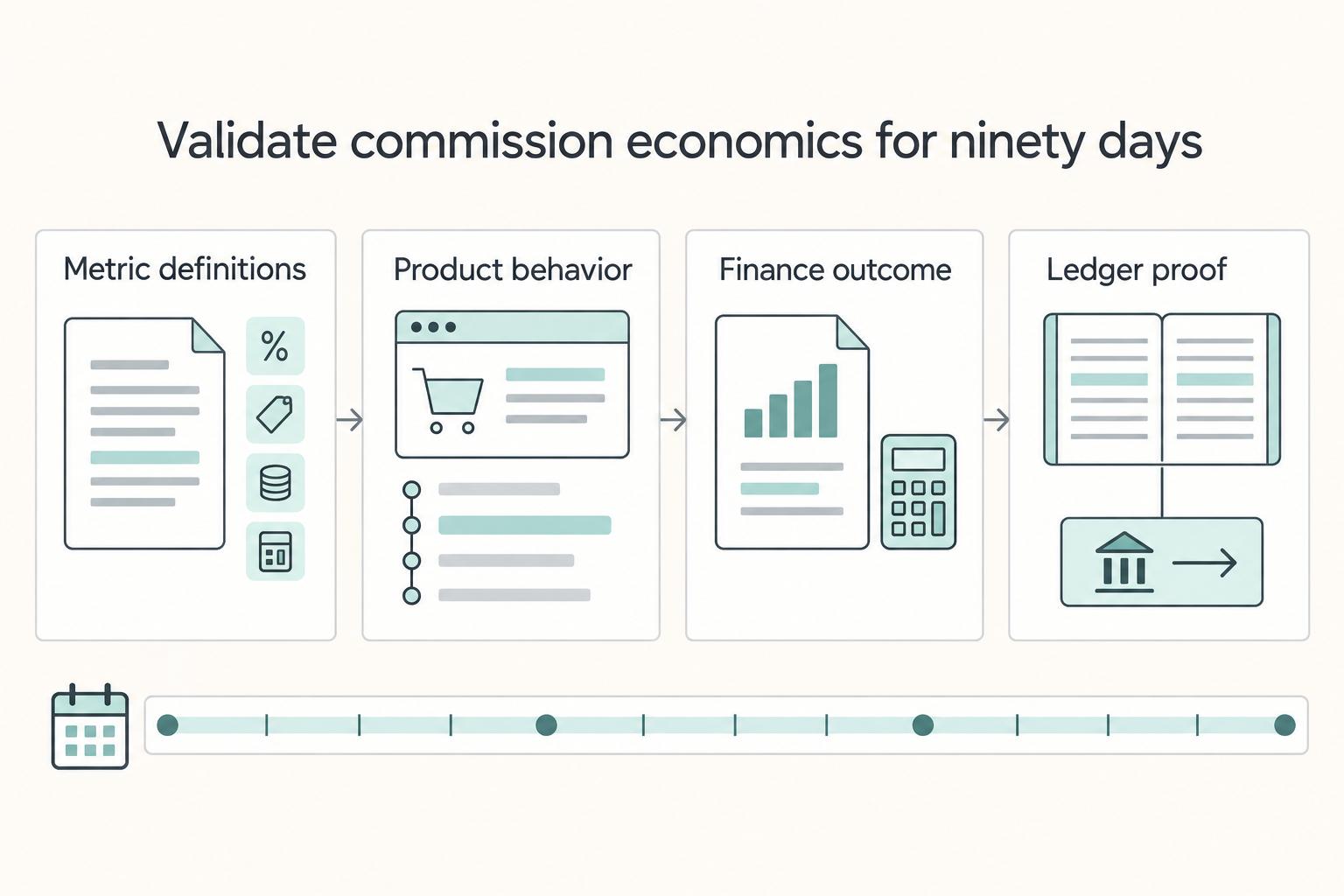
Run a 90-day decision and validation checklist#
Use this 90-day cycle to prove your commission model in real operations before you scale it. The goal is to confirm that your fee logic holds across product behavior, finance outcomes, and ledger-backed results, not to optimize for a headline percent.
Start with the margin sheet from the last section and convert it into a dated decision record. Lock definitions for GMV, headline commission, net take, payment cost, payout cost, support cost, and compliance cost, and assign named owners in product and finance for each metric.
| Phase | What to do | Evidence to keep | Decision rule |
|---|---|---|---|
| Weeks 1 to 2 | Gather baseline data by segment and lock definitions | Recent order history, current fee configs, payout paths, dispute and support cost views | Do not model new pricing until GMV and net take reconcile to the same baseline |
| Weeks 3 to 5 | Model 2 to 3 fee structures and run sensitivity tests | Assumption log with confidence grades for conversion, seller activation, processing, payout, support, and compliance | If net take turns negative under realistic assumptions, change structure before testing at scale |
| Weeks 6 to 8 | Run a controlled test through your API and webhook events | Test cohort definition, fee calculation outputs, payout split records, and monitoring for conversion and seller activation | Stop if dashboard metrics improve but ledger-backed net take does not |
| Weeks 9 to 12 | Review outcomes and publish change rules | Ledger review, rollback criteria, approval record, versioned pricing memo | Keep, adjust, or roll back based on ledger results, not modeled intent |
Treat source quality as part of the model too. FederalRegister.gov pages shown here are not official legal editions, and eCFR is authoritative but unofficial, so log the source type, version date, and verifier for any legal or policy assumption that can move margin.
Do not underweight onboarding cost-to-serve. One marketplace policy example includes a know your customer review and credit verification during onboarding, so segments with heavier review should carry higher cost assumptions.
In execution, validate the payment flow end to end. Marketplace payments are complex, often require automatic splitting between seller payouts and platform commissions, and provider choice should be checked for country support, currencies, fees, and integration complexity. Trace a sample order from checkout through split and payout into the ledger, then confirm reported net take matches the model.
If commission alone still misses margin targets, move to Hybrid Pricing Models: How to Combine Subscription Fees Plus Usage Charges on a Single Invoice or add recurring billing where value is ongoing rather than purely transactional.
For a step-by-step walkthrough, see Choosing Between Subscription and Transaction Fees for Your Revenue Model.
Conclusion#
The right answer is rarely a universal percent. The better question is whether your commission structure still works after real transaction costs, real buyer and seller behavior, and the overhead your team actually carries. If you are still asking for one clean benchmark, you are probably too early to lock pricing.
That is the practical takeaway behind all the benchmark noise around marketplace commission pricing. Even within Amazon, public summaries do not point to one stable number. One source describes a typical referral-fee range of 8 to 15%. Another shows 6 to 45% depending on category, alongside examples like a $0.30 minimum referral fee, a $1.80 fixed closing fee for some media items, and a Professional plan subscription of $39.99 per month. If your pricing memo treats any marketplace number as a portable truth, stop and verify the exact category or plan context before you use it.
The real red flag is internal inconsistency. If product explains the fee one way at checkout, finance models it another way in margin planning, and ops handles exceptions using a third interpretation, your pricing decision is not ready. You do not need perfect certainty before launch, but you do need one shared fee logic that holds from the user-facing fee through to internal reporting. If that explanation breaks when someone asks about minimum fees, account fees, or other transaction-based charges, fix the model before you scale volume.
A measured rollout beats a confident guess. Start with a narrow segment, define what success means before launch, and compare modeled results against what actually booked after the first cycle. One useful checkpoint is simple: review a sample of completed transactions and confirm that the realized economics match the assumptions in your pricing memo, including any non-commission fee layers. One common failure mode is underestimating the effect of "small" extras that sit beside commission and slowly compress profit.
You should also expect the structure to change over time. Buyer-paid, seller-paid, and split-fee designs create different tradeoffs, and those tradeoffs will not stay constant as categories and market conditions shift. If one segment starts carrying more complex fee treatment, move away from a single flat rate and reprice that segment directly. The winning move is not finding the one percent to charge. It is building a fee model you can explain, verify, and revise without surprising your customers or your own team.
Frequently Asked Questions
What percent should a marketplace charge as commission?
There is no universal answer, and that is the point. Start from the net take you need after payment, payout, support, dispute, and compliance costs, then back into the headline rate instead of copying a number from another marketplace. Platforms can also vary by plan or service level, not just one flat rate. DoorDash, for example, offers Basic, Plus, and Premier pricing plans rather than a single universal commission setup.
Is a 10% commission actually “typical,” or just a rough starting point?
Treat 10% as a rough starting hypothesis, not a defendable benchmark. This guide does not support a universal "typical" rate, and relying on one can create underpricing or false confidence. If you use any external number in your memo, label it as directional only and verify your own margin against ledger-backed results before rollout.
Should payment processing fees be included in commission planning or treated separately?
Include them in planning even if you show them as a separate line item in product or finance reporting. A commission headline can look healthy while payment costs quietly erase margin, which is why your model should reconcile to net take, not just GMV less commission. One practical check is to trace a sample order from checkout through payout and into the ledger to confirm the modeled payment cost actually matches what settled. As one example, a third-party writeup says seller fees can cover payment processing and buyer protection.
How do I decide whether buyers, sellers, or both should pay marketplace fees?
Choose based on where your conversion risk sits. If seller acquisition and onboarding are the bottleneck, test buyer-paid or split-fee structures. If checkout conversion is fragile, lean toward seller-paid and keep buyer pricing simple. Also remember that marketplaces often use more than one fee type, including transaction, commission, listing, subscription, and referral fees, so "who pays" is often a mix, not a single switch.
When should I move from a single commission rate to segmented pricing?
Move when cost-to-serve is clearly different by order value, seller type, payout path, or market. A simple example from a third-party writeup on Facebook Marketplace describes a seller fee of 5% per shipment or $0.40 for items $8.00 or less. That shows why low-value orders may need a different structure than higher-value ones. If one segment consistently needs more support, review, or exception handling, a single rate will usually hide the loss.
How do tax and compliance requirements change commission decisions in cross-border marketplaces?
They raise the odds that one global fee will be wrong. Cross-border expansion can change operational and compliance requirements, so your pricing memo should keep version-dated tax and compliance assumptions and note who verified them. As a verification step, check the current platform or category schedule in the source environment itself. Walmart Marketplace, for example, maintains a referral-fee schedule guide for contract categories and shows update dates, including Mar 8, 2026.
Try a related tool
Researched and edited by the Gruv editorial team. Gruv builds cross-border billing, payouts, and finance-operations software for global businesses.
Sources
- brookings.edu/wp-content/uploads/2019/12/ES-12.12.19-Barwi...trusted
- bsaefiling.fincen.gov/docs/XMLUserGuide_FinCENFBAR.pdftrusted
- cdn.careers.bloch.umkc.edu/wp-content/uploads/sites/130/2021/11/Profess...trusted
- cms.gov/cms-guide-medical-technology-companies-and-o...trusted
- ecfr.gov/current/title-2/subtitle-A/chapter-II/part-200trusted
- economics.virginia.edu/sites/economics.as.virginia.edu/files/inline...trusted
- federalregister.gov/documents/2024/10/08/2024-21867/regulation-n...trusted
- fincen.gov/reporting-maximum-account-valuetrusted
Educational content only. Not legal, tax, or financial advice.
Related Posts

Canada GST/HST for Platform Fees: How Marketplaces Decide What to Charge, Track, and Report
You can make defensible calls on **canada gst hst platform fees** without building a large tax operations function, but only if your controls are explicit and documented. The core questions are straightforward: who is making the supply, what is being charged, which rate applies, and what evidence supports that treatment.
Recurring Billing for Marketplaces: How to Charge Buyers and Pay Sellers on the Same Cycle
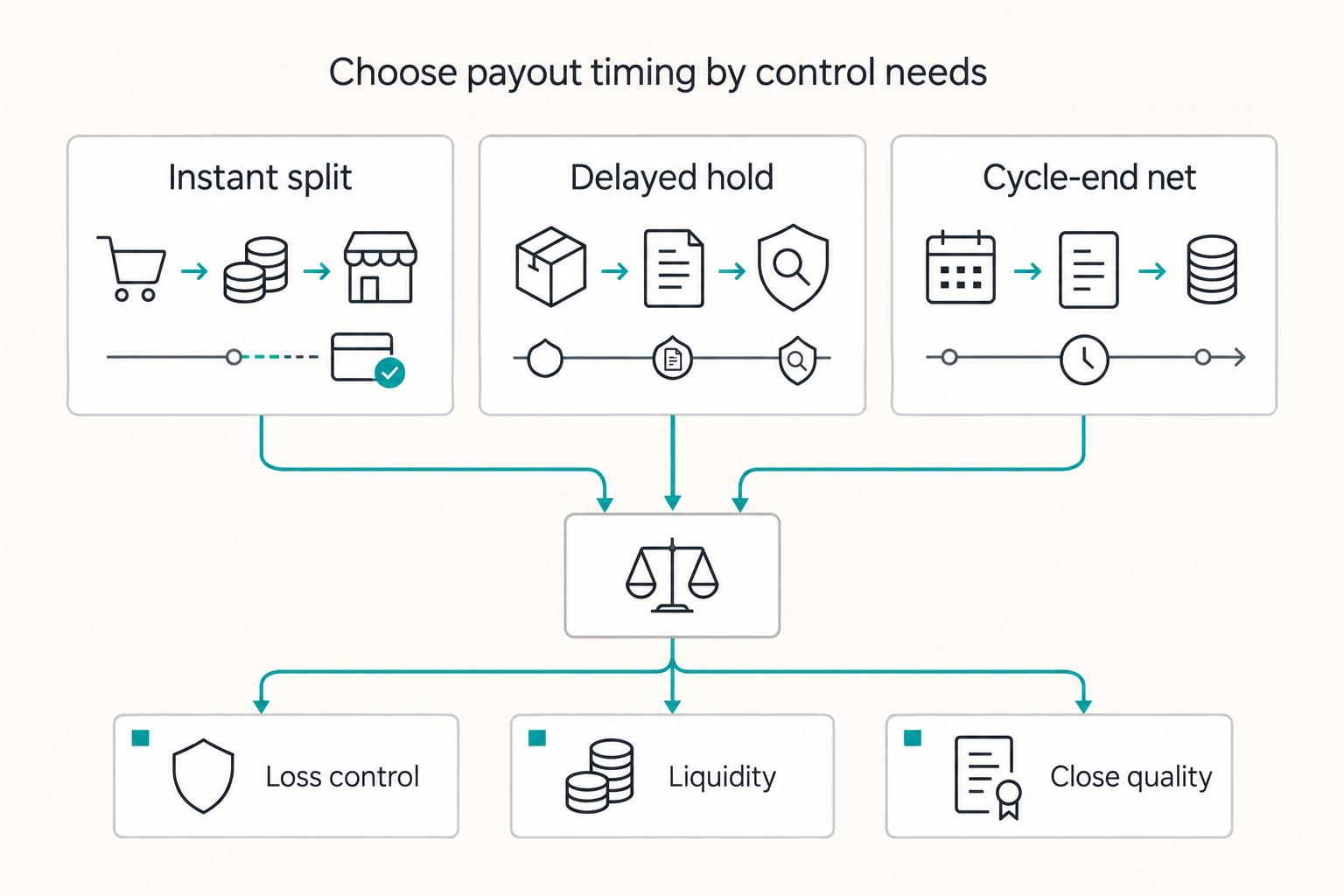
**Recurring billing in a marketplace works best when buyer charges, seller payouts, and finance close follow aligned cycle logic.** When checkout timing, payout timing, and finance close are designed separately, you can end up with charges that succeed, payouts that stall, and records that only make sense after manual cleanup.
Hybrid Pricing Models for One Subscription and Usage Invoice
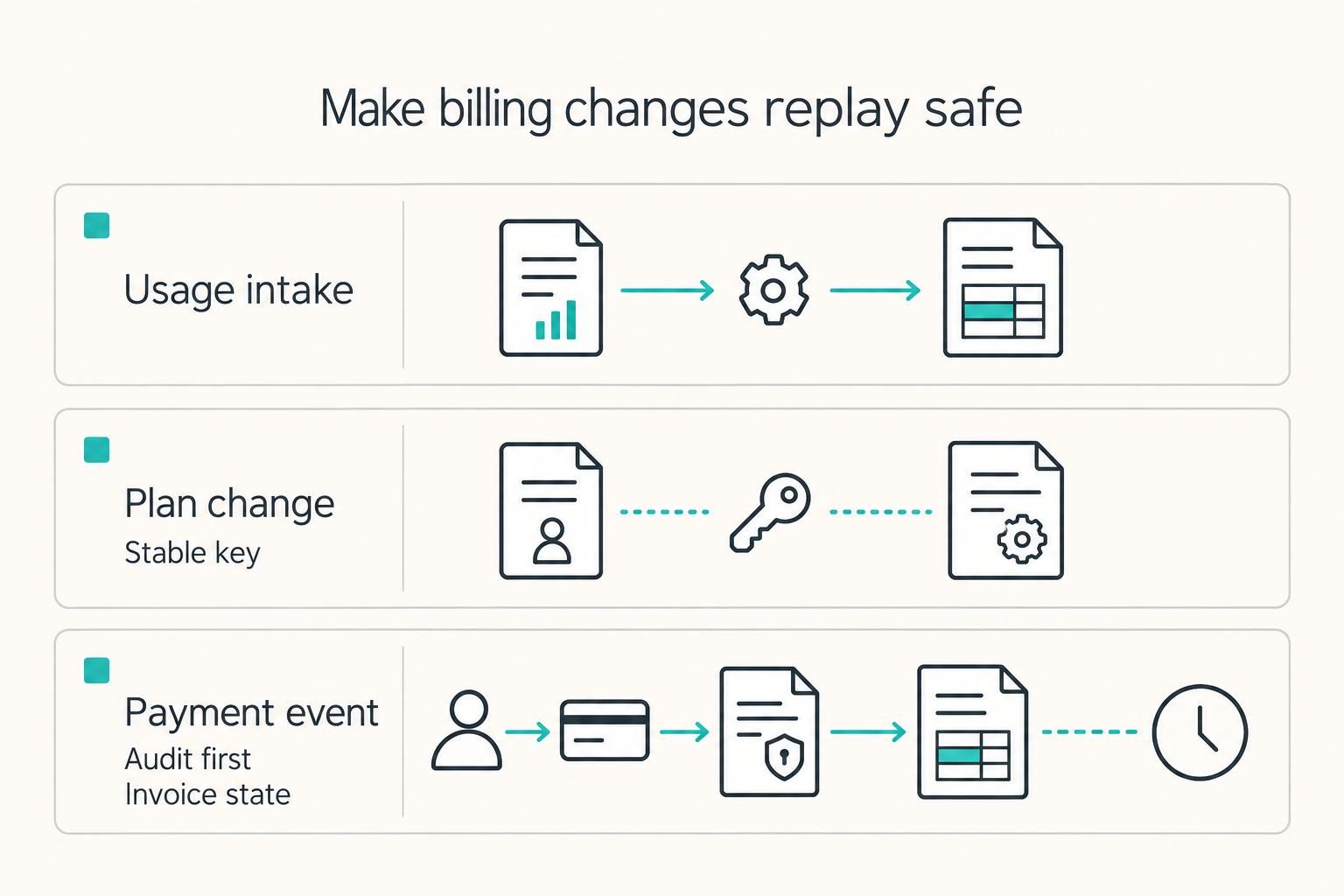
Treat this as a billing and operations project, not just a pricing exercise. A hybrid pricing model can be commercially strong. The real test is whether you can put a recurring subscription fee and usage-based charges on a single invoice without forcing Finance to stitch things together at month-end.