
Quick Answer
Start by freezing the record: sort events by phase, assign fixed exhibits like E1-E3, and map each factual line to dated support before drafting. For an eeoc discrimination charge, that sequence keeps contract language and real-world practice from getting blurred. Then verify the notice stage in the document you actually received and route all agency messages through one case owner. If any key point lacks support, mark it as a gap and stop there.
The Independent Contractor's Gambit: Responding to an EEOC Charge#
When an eeoc discrimination charge arrives, get control of the record before you decide how to respond. The safest sequence is simple. Clean up the documents, build the timeline, confirm the process path, and assign clear ownership.
That order matters because most bad responses start the same way. Someone drafts too soon, fills factual gaps from memory, and then has to unwind the narrative when the documents do not line up. If you slow down long enough to organize the file first, every later decision gets easier. You also give yourself a better chance to see whether the real issue is classification, a communication problem, a chronology problem, or a deeper conflict between the written agreement and actual practice.
Step 1. Review the contract against real-world practice#
Your first judgment call is whether the paper record and day-to-day reality tell the same story. Start with two passes. First, what the contract says. Then, what actually happened in practice.
Break your notes into phases such as onboarding, steady-state work, and the exit or change period. That keeps you from forcing one explanation across periods where control, access, or approval patterns shifted.
This phase-by-phase review is where a lot of clarity appears. A contractor relationship can look one way at the start, another way during active delivery, and another way once problems, scope changes, or ending communications begin. If you treat the whole relationship as one undifferentiated block, you can miss the exact point where the written terms stopped matching the real pattern of work.
Read the contract line by line for the practical points that matter most in your file: scope, independence, payment, tools, access, supervision, and termination. Then test each point against dated records. If the agreement says the contractor controlled work methods, look at what the actual approvals, scheduling messages, system permissions, or revision patterns show. If the agreement says the contractor used their own tools, compare that against access records and workflow realities. If termination terms are clear on paper, check whether the exit communications followed that structure or drifted into something else.
You are not trying to make the contract disappear, and you are not treating practice as irrelevant. You are trying to identify where they align, where they diverge, and when that changed. Those dates matter because they keep your response from turning vague. A dated mismatch is something you can analyze. An undated mismatch usually becomes speculation.
A useful working method is to keep one short note for each phase with three columns in your own file: what the contract says, what happened in practice, and what record supports that conclusion. That gives you a clean base for later drafting and keeps you from mixing conclusions with evidence too early.
Do this
- Compare scope, independence, payment, tools, access, supervision, and termination terms against actual behavior.
- Track each phase separately when control, systems, or approval patterns changed.
- For every material point, tie it to a dated record.
- Mark mismatches directly instead of softening them into broad summary language.
- Keep notes on what changed, when it changed, and what document shows the change.
Avoid this
- Writing one broad summary before you test the facts phase by phase.
- Explaining away contract and practice mismatches without isolating and dating them.
- Treating onboarding language as if it proves how the relationship worked later.
- Letting one strong document override a run of later records that point the other way.
If one material point has no dated support, pause drafting and close that gap first.
Step 2. Build exhibits before drafting language#
If you draft from memory, you will almost always end up rewriting. Build the file first, then write from the file. Keep three working documents open at once so each statement has a home and a purpose:
- Chronology: date, event, people, source, exhibit ID
- Exhibit map: what each document proves
- Claim-to-evidence sheet: each factual sentence mapped to support
This separation matters. The chronology should stay factual. The exhibit map should tell you why each record matters. The claim-to-evidence sheet should let a reviewer test every sentence without guessing what you meant.
The discipline here is simple but important. The chronology answers, "What happened, and when?" The exhibit map answers, "Why is this document in the file at all?" The claim-to-evidence sheet answers, "What exactly supports this sentence I want to say?" If you collapse those into one messy draft, it gets harder to spot weak support, duplicated records, or unsupported phrasing.
Build the chronology in order and resist the urge to interpret while you are assembling it. If a document is incomplete, flag it. If a date is missing, note that gap instead of forcing it into place. If two records conflict, preserve both and record the conflict directly. You can analyze contradictions later, but smoothing them over during collection does not help you.
The exhibit map should be practical, not decorative. A good entry is not just the filename. It should tell you what the document helps establish: onboarding terms, scope change, payment pattern, access change, approval chain, complaint timing, or exit communication. That way, when you draft, you are not rereading the whole file to remember why each item mattered.
The claim-to-evidence sheet is where overstatement gets caught. If you write a sentence like "work was done independently," you should be able to point to the records that support that wording. If the support is narrower than the sentence, tighten the sentence. This step keeps a response from sounding more confident than the documents allow, and a second reader should be able to follow the events and support without your narration.
Do this
- Assign stable exhibit IDs early (
E1,E2,E3) and keep them fixed. - Prefer preserved originals and complete threads where available.
- Keep chronology factual and keep interpretation in a separate note.
- Use the same exhibit IDs across your timeline, draft, and internal review comments.
- Note whether a record is original, copied, partial, or missing context so reviewers know what they are looking at.
Avoid this
- Renaming exhibits mid-draft.
- Relying on partial screenshots when full context is needed.
- Mixing argument into the timeline.
- Pulling isolated messages without preserving the surrounding thread when sequence matters.
- Drafting a narrative first and then searching for documents to match it.
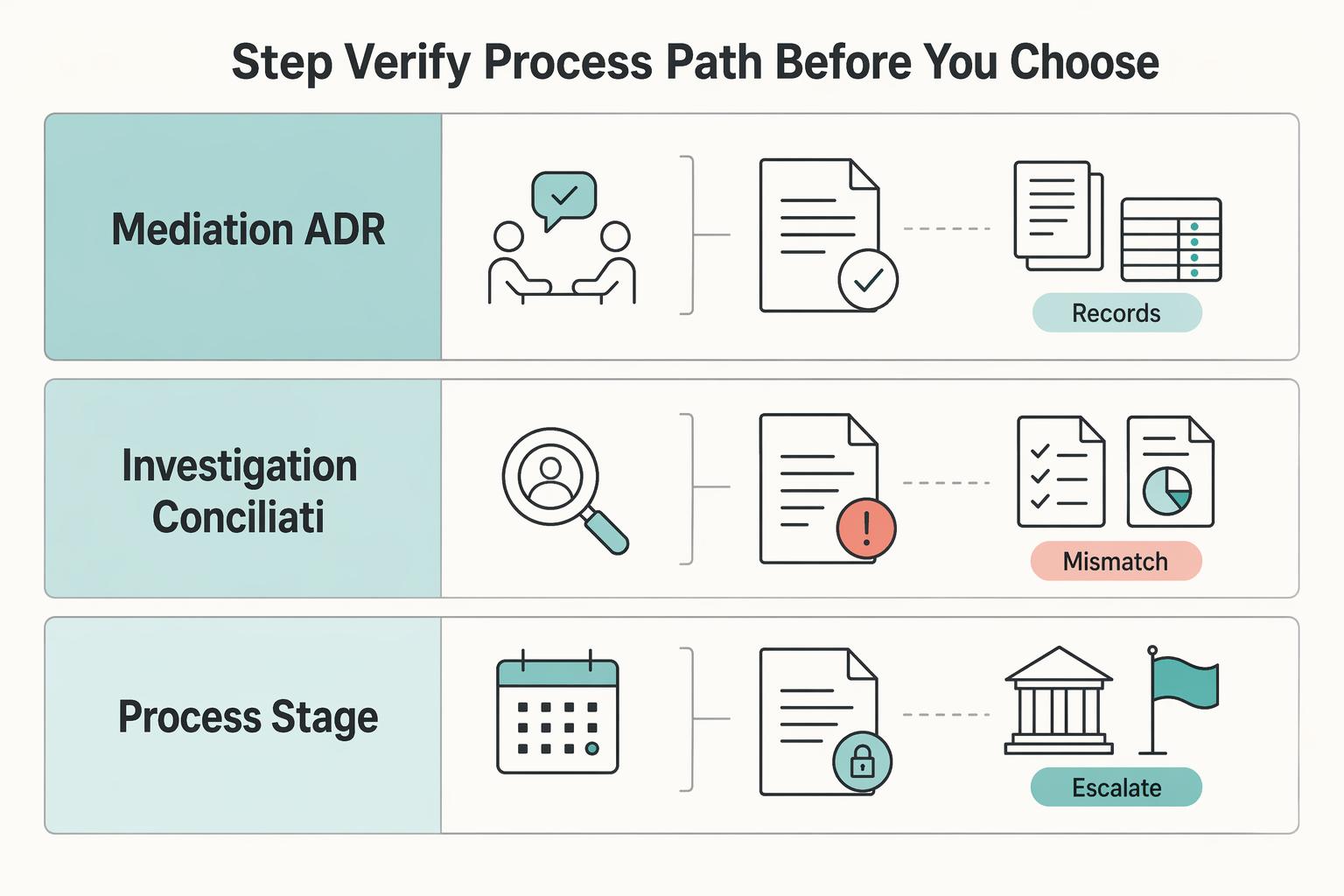
Step 3. Verify the process path before you choose it#
Do not let urgency push you into the wrong lane. The EEOC describes administrative mechanisms including investigation, mediation, and conciliation, along with litigation enforcement. That is your cue to verify the process language in the actual notice or official communication in hand before you commit to a response style.
| Path (working label) | What to verify now | What evidence qualifies | Escalation trigger when records conflict |
|---|---|---|---|
| Mediation mentioned in your notice | Confirm your notice explicitly mentions mediation. Confirm who has authority to discuss resolution. | Phase timeline, key contract set, highest-risk communications, authority note. | Contract terms and daily-practice records point in opposite directions on control or status. |
| Investigation/conciliation/litigation language mentioned | Confirm the instructions in your notice, including any stated format, page, or timing rules. | Full chronology, stable exhibit map, signed agreements, SOWs, invoices, access records, full message threads. | Any material statement lacks dated support, or records disagree on dates or participants. |
| Process stage still unclear | Confirm what the communication actually labels the next step as before drafting a stage-specific response. | Preserved originals, version history, authority memo, clean claim-to-evidence file. | Missing originals, preservation gaps, or witness accounts that conflict with documents. |
The practical point is straightforward. Match your evidence pack to the process language you can verify, not the path you assume you are on.
From the provided EEOC excerpt alone, details such as whether mediation is voluntary or confidential, typical mediation timelines or session length, and specific filing or response deadlines are not established. Treat those points as unknown until you verify them from current official materials in your matter.
That means reading the actual notice and making sure your internal team is using the same stage label. It is common for people to speak loosely and call everything a "charge," a "complaint," or a "case," but those shortcuts create problems when the response package does not fit the process.
A mediation-oriented package is not the same as a fully supported agency-facing factual submission. A later-stage review usually requires a cleaner chain of originals, version control, and approval discipline than an early internal file repair.
The fastest way to create avoidable risk is to answer a stage you have not verified. If your documents are still disorganized, or if your internal team is arguing over what phase the matter is in, that confusion is itself a sign to stop and verify rather than improvise. Once you confirm the path, pressure-test whether your current file is actually good enough for that path. If it is not, the right next move may be to repair the record first rather than produce a rushed narrative. If you still cannot tell whether the problem is a document gap or a deeper status conflict, escalate for counsel review.
Do this
- Verify the current notice language first.
- Bring an evidence pack that matches the path you choose.
- Confirm who has authority to approve submissions, attachments, and resolution discussions.
- Use the exact label from the document in hand in your internal notes and draft headers.
Avoid this
- Assuming you remember program details.
- Leading with a narrative that outruns your file support.
- Letting internal shorthand replace the stage label shown on the actual notice.
- Treating a path decision as final when the notice in hand says something else.
Step 4. Contain the matter so operations stay stable#
A messy response process creates its own problems, so contain the matter early. Assign roles the same day and keep those lanes separate. A contained process protects both the response and the business. Without role discipline, people start forwarding documents casually, replying from different channels, or mixing case discussion into ordinary delivery updates. That creates confusion about who is speaking for the business and increases the risk that sensitive details spread farther than they need to.
Do this
- Set one case owner for agency-facing communications.
- Set one factual reviewer to check every statement against exhibits.
- Set one operations owner to protect delivery without discussing case details.
- Keep a same-day log: date, sender, channel, document, request, owner, next action, file location.
- Keep a single source of truth for the current draft, current exhibit set, and open issues list.
Avoid this
- Having multiple people reply to the agency from different channels.
- Letting case updates scatter across side chats or delivery boards.
- Asking operations staff to explain case facts they do not own.
- Reusing informal internal language in external communications without review.
Use a neutral external script when scheduling changes are needed: "I am handling a private business matter through the formal process. Delivery remains covered, and I will confirm any scheduling changes directly."
That script works because it protects continuity without inviting unnecessary discussion. Your operations communications should stay focused on deadlines, staffing, handoffs, and deliverables. They should not drift into allegations, legal theories, or document debate. If an operational adjustment is needed, state the adjustment and keep moving.
The same principle applies internally. Not everyone needs the full file. The case owner needs the full picture. The factual reviewer needs the exhibits and draft support. The operations owner needs enough information to keep work moving, not the substantive details of the matter. Keeping those lanes clean makes later review easier and reduces accidental inconsistency. If case facts start leaking into operations updates, re-centralize ownership before sending anything.
Once the file, path, and owners are set, the next failures usually come from mislabeling the process or blending fact with inference. The FAQ below is meant to keep you out of those traps. If you want a deeper dive, read Germany Freelance Visa: A Step-by-Step Application Guide. If your timeline shows scope drift, document it cleanly before your response by rebuilding deliverables and change terms with the SOW generator.
Follow one sequence for records, evidence, sources, and communications#
If you need one working sequence to follow, use this: separate records by function, lock the evidence file, verify official source records, and centralize communications. That order keeps you from drafting too early or widening the audience before the file is ready.
Step 1. Separate the issues into lanes#
Start by separating the matter into four lanes: verified records, working assumptions, sensitive information, and open questions. This is a control step, not busywork. For every item you keep, tag it with date, source, and exhibit ID. If one record belongs in more than one lane, keep the same exhibit ID and note each lane role separately.
This lane method prevents two common mistakes. First, it stops assumptions from being treated as settled facts. Second, it stops sensitive material from spreading through the general working file without purpose. One document may support multiple points at once, but that does not mean it should be duplicated with different labels or left unstructured.
The point is not to over-categorize. The point is to make later review faster. When you return to draft, you should be able to pull verified records quickly, identify unsupported points, and flag sensitive material for restricted handling before circulation. By this stage, every material statement you might use later should already map to a lane, date, and exhibit.
Step 2. Lock the evidence file and test integrity#
The file should be stable before the narrative is. Build one master chronology and one exhibit index with fixed labels such as E1, E2, and E3. Store originals in read-only form and work from copies so filenames, order, and timestamps stay intact. Mark unsupported points as gaps, not facts.
Integrity testing means more than collecting records. It means checking whether the file still makes sense when someone else opens it. Can they see the sequence? Can they identify where a statement came from? Can they tell whether a document is complete or partial? Can they spot where context is missing?
This is also the stage to test for internal consistency. If the chronology says one thing and the draft says another, fix it. If an exhibit is cited for a point it does not clearly support, tighten the wording or replace the support. If a timeline depends on a date you cannot verify, mark it as a gap and stop treating it as settled.
A stable evidence file saves time later because it reduces rework. Once labels shift, filenames drift, or later notes overwrite earlier source control, every review pass gets slower and less reliable. A reviewer should be able to match each statement to a document without your verbal explanation.
Step 3. Verify the source record before external action#
Before you rely on a source page, verify the source itself.
| Checkpoint | Trigger | Required proof | Owner | Immediate next action |
|---|---|---|---|---|
| Official source check | You plan to rely on a government page | Confirm the page is on an official .gov domain | Single case owner | Pause and verify if the domain is not official |
| Secure-channel check | You may upload, submit, or share sensitive information | Confirm lock icon or https:// is present | Single case owner | Do not share sensitive information until secure |
| Document-identity check | You are citing a specific EEOC document | Match the page title to the document in your file | Single case owner | Pause drafting until the title is verified |
| Version-control check | A downloadable file is available | Save the downloadable PDF version and record access date | Single case owner | Use one controlled copy for all review passes |
If any checkpoint is unclear, verification is your next action.
One practical way to keep this straight is to ask two questions before any draft goes out. What exact document are we relying on? What exact file supports the response we plan to send? If either answer is unclear, you are not ready. The next step is verification, not narrative.
For this EEOC source, keep the page date shown (February 18, 2022) in your file notes.
Step 4. Control communications and protect business continuity#
Once the record is organized, keep the handling tight. Assign one owner for all case communications, keep a same-day log with the date, sender, recipient, topic, attachments, and next action, and keep case traffic separate from delivery operations.
For sensitive information, use a hard channel check every time. Share it only on official, secure websites. Confirm the site is an official .gov domain and uses a lock icon or https:// before upload, submission, or download. If you use an EEOC page, preserve the exact page details and downloadable PDF version when available, and note your access date.
Limit business updates to operational facts. Do not circulate sensitive case details in general operations channels.
That separation protects you in two ways. It keeps the response process cleaner, and it keeps ordinary business activity from becoming a second file full of unnecessary commentary. If the case owner needs input from operations, request the narrow operational fact required, document it, and return the operations team to business work. Do not turn general project channels into case discussion threads.
A same-day log is especially useful when the matter starts moving quickly. It gives you a clean record of what came in, who handled it, what was sent out, and what remains open.
If your process still feels chaotic after you assign owners and lock the file, that is information. It usually means either source verification is incomplete, the evidence is not yet stable, or the roles are not being respected. Fix that first. The best response usually comes from disciplined handling, not speed alone. Related: Canada's Digital Nomad Stream: How to Live and Work in Canada. After this case is stabilized, lower repeat risk by tightening your baseline engagement terms in the freelance contract generator.
EEOC Response Timeline and Documentation Checklist#
Anchor your response workflow to the EEOC filing and mediation process published by the agency. Start with filing-charge-discrimination, confirm mediation rules in questions-and-answers-about-mediation, and validate retaliation-risk controls in retaliation guidance.
| Decision Point | Why It Matters | Action in First 48 Hours | Evidence to Lock |
|---|---|---|---|
| Charge scope | Defines exposure boundaries | Map each allegation to a factual response lane | Signed contracts, SOWs, communications timeline |
| Forum choice | Changes speed and cost profile | Assess mediation eligibility and agency process rules | EEOC notices, scheduling records |
| Retaliation controls | Prevents secondary claims | Freeze manager messaging and escalation path | Training logs, policy acknowledgments |
| Record integrity | Protects credibility under review | Issue legal hold and preserve system exports | Email exports, HRIS snapshots, access logs |
Evidence Intake Matrix#
| Source System | Owner | Retention Risk | Verification Check |
|---|---|---|---|
| Email/Chat | People manager + HR | Deletion windows | Export to read-only archive with hash |
| Time/Attendance | Operations/Payroll | Backfill edits | Capture system audit trail with timestamps |
| Performance Notes | Manager + HRBP | Version drift | Compare draft vs final with author metadata |
| Complaint Intake | HR/Legal | Inconsistent intake detail | Normalize to one issue log with incident IDs |
Communication Guardrails Table#
| Audience | Allowed Message | Do Not Say | Channel |
|---|---|---|---|
| Employee who filed | Process steps and anti-retaliation commitment | Outcome predictions or blame statements | Documented email + follow-up call |
| Direct manager | Need-to-know process obligations | Speculation about motive or protected status | Manager briefing note |
| Wider team | Business continuity and staffing updates | Details of allegations | Operational stand-up with script |
| External counsel | Facts, chronology, and decision requests | Unverified assumptions | Privileged legal memo |
For the most current procedural checkpoints, cross-check the EEOC FAQ library at federal-sector FAQs before finalizing submissions.
Frequently Asked Questions
Can your contract alone decide the case?
This guide does not establish that. It does not provide verified EEOC outcome rules, and it does not support treating contract text alone as a decision rule. Treat this point as unresolved here and confirm it with official case-specific materials.
How do you tell initial contact, a filed matter, and a lawsuit apart?
This guide does not provide verified distinctions, deadlines, or stage rules for those labels. Treat stage classification as unconfirmed in this section unless you have the controlling official notice or court filing.
Does fact versus inference really matter that much?
Yes, in a narrow sense for this review: only facts supported by the approved excerpts are confirmed. Anything outside those excerpts should be treated as unverified until checked against official records.
What if timing, retaliation, or sensitive records are in play?
EEOC filing deadlines, mediation timing, retaliation standards, and confidentiality/FOIA handling details require verification against official procedure guidance. Confirm each point with the relevant authority before proceeding. | Trigger | What it means for you | Immediate next step | | --- | --- | --- | | You are relying only on the FederalRegister.gov web page | The page is informational and not the official legal edition | Verify the corresponding official PDF on govinfo.gov before relying on it (Verify official PDF) | | Document identity fields are missing or inconsistent | You may be using the wrong record | Re-check title, date, document number 2016-11458, and citation 81 FR 31376 (Verify document identity) | | Your question requires EEOC stage rules, deadlines, retaliation tests, mediation timelines, or confidentiality specifics | Those points require additional authority | Mark as unknown and escalate to official procedure-specific authority (Need additional authority) |
Can you rely on an online legal source you found during research?
Not by itself. FederalRegister.gov can help you locate the record, but this page is a prototype informational resource and not the official legal edition. It includes a checkpoint to the official PDF on govinfo.gov, and until ACFR grants official status, the XML rendition does not provide legal or judicial notice. Verify the official record before relying on details such as 2016-11458 (81 FR 31376) for a legal conclusion.
Try a related tool
Researched and edited by the Gruv editorial team. Gruv builds cross-border billing, payouts, and finance-operations software for global businesses.
Sources
Educational content only. Not legal, tax, or financial advice.
Related Posts

Germany Freelance Visa Application Path for Freiberufler and Gewerbe
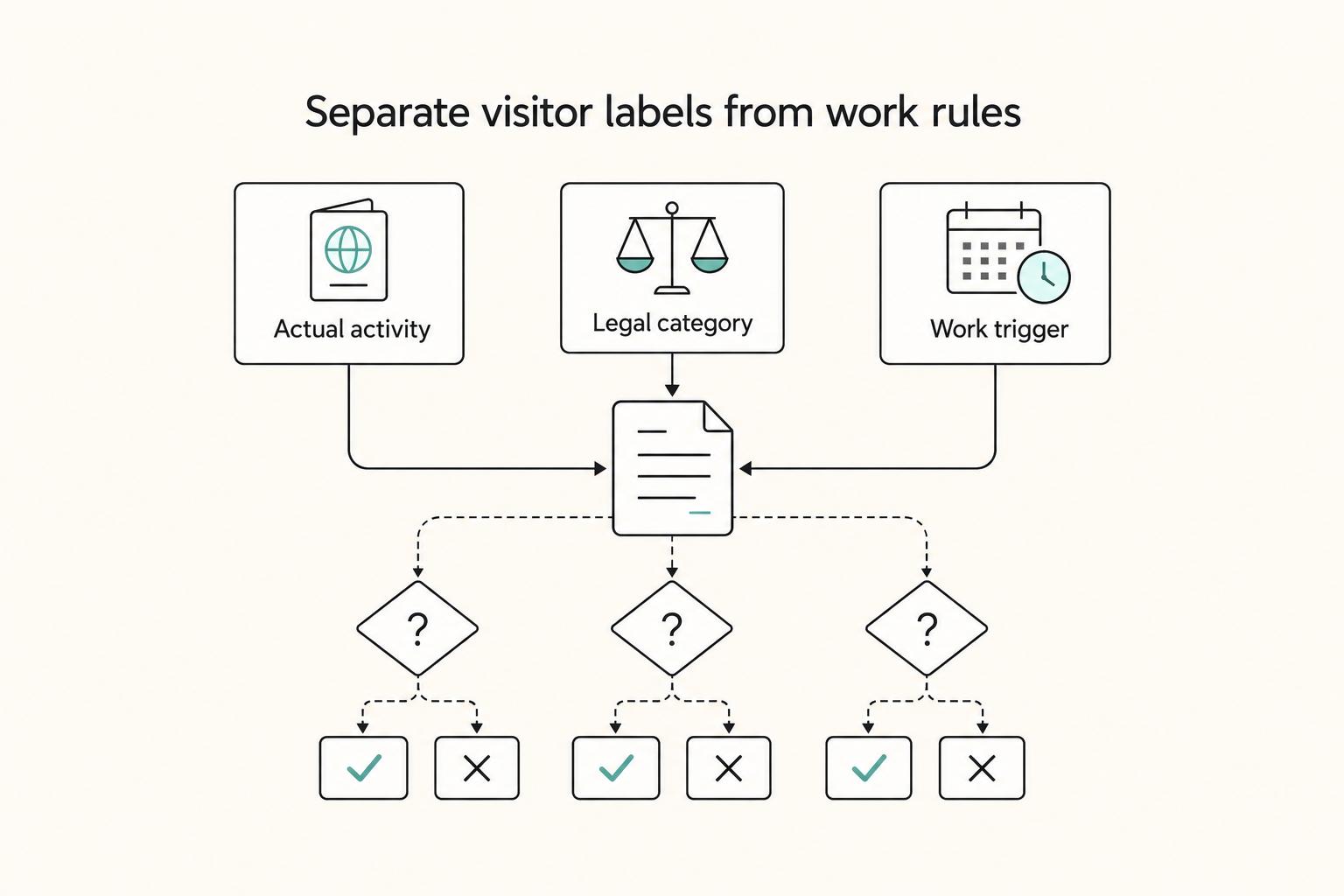
Choose your track before you collect documents. That first decision determines what your file needs to prove and which label should appear everywhere: `Freiberufler` for liberal-profession services, or `Selbständiger/Gewerbetreibender` for business and trade activity.
Canada Digital Nomad Visa Planning for Visitor Status and Work Permits
The phrase `canada digital nomad visa` is useful for search, but misleading if you treat it like a legal category. It is shorthand for existing Canadian status options, mainly visitor status and work permit rules, not a standalone visa stream with its own fixed process. That difference is not just technical. It changes how you should plan the trip, describe your purpose at entry, and organize your records before you leave.
The 'At-Will' Employment Doctrine in the US Explained
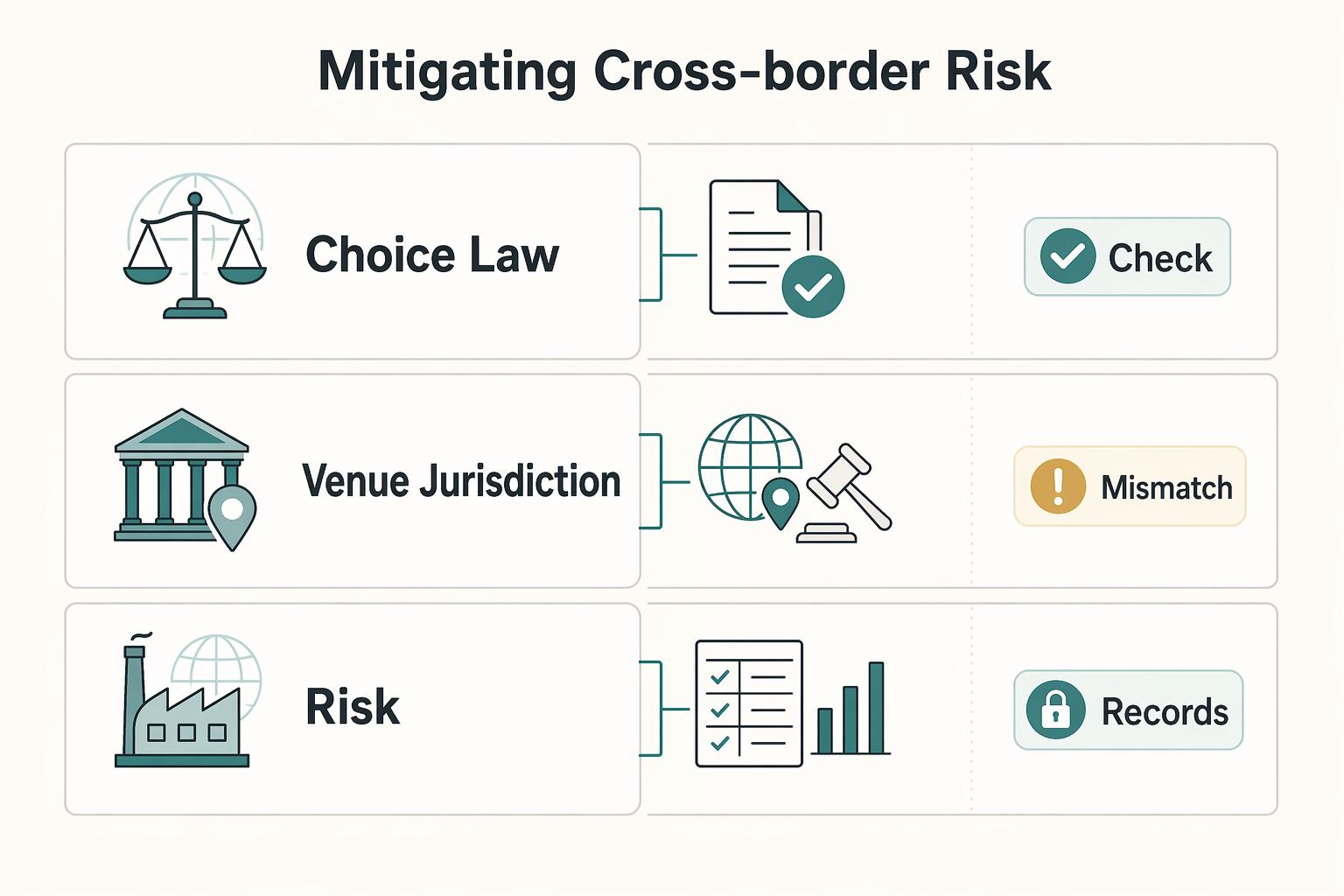
If you are a true contractor, at-will employment is not the default. Your relationship with the client should be business-to-business, and a key risk is misclassification, not just contract termination.