
Quick Answer
Map every currency touchpoint first, then assign one owner and one source record to each exposure line. For platform teams, the working order is scope, lifecycle mapping, KPI setup, and policy actions. Use ledger exports, ERP entries, payout logs, and balance snapshots as the evidence pack. If a monthly figure cannot be traced to a timestamped event, pause hedge expansion and fix visibility before acting.
How to Measure FX Exposure Across the Platform#
Platform CFOs do not need another generic FX explainer. You need a decision-ready way to see where currency exposure starts, how it moves through finance and operations, and when you should convert, hedge, escalate, or deliberately wait.
Treat FX as an operating problem, not a treasury side topic#
Treat currency risk as an operating issue first. On a platform, it shows up well beyond treasury: when you collect in one currency, hold balances in another, settle vendors or creators in a third, and then explain the result on the balance sheet.
Start by assuming exposure exists in more places than your monthly finance pack shows. If revenue and supplier payment currencies differ, you can feel strain between collection and settlement. Our first checkpoint is simple: name the exact points where exposure starts, who owns the data, and who signs off on the financial impact.
Measure the real money path before debating hedges#
Before you debate hedging, map the actual money path. Focus on the flows that matter in practice: collection, balance holding, conversion, payout, and reporting. The right action depends on how your platform actually moves money. A business that can hold and manage balances in different currencies through multi-currency accounts is making a different decision from one that converts every incoming payment immediately.
If your current exposure view depends on spreadsheets, email approvals, or manual rekeying, treat that as a red flag. Manual FX programs invite human error, and failures can stay hidden until close or payout day. Build your first evidence pack from records you can verify: ledger exports, ERP entries, payout files, and balance snapshots tied back to a named source of record.
Use a simple checkpoint: can you trace every reported exposure line to an event you can prove happened? If you cannot reconcile a currency balance to the ledger or payout data, your problem is visibility first, not hedge design.
Verify vendor claims before you build around them#
When public material is unclear, verify capability instead of filling in the gaps yourself. This matters most when you compare providers such as HedgeFlows, Kyriba, Kantox, and MillTech. Do not infer feature parity from websites, case studies, or product summaries.
We ask for proof that will hold up at close and in day-to-day control: a sample exposure report, reconciliation detail back to source transactions, and a clear audit trail for conversions and exceptions. If a tool reduces manual intervention by systematizing process steps, that helps. If it cannot show you how the team produced a number, do not rely on it for board reporting.
In the sections that follow, we turn that stance into an operating plan. The sequence is straightforward: define scope and ownership, map the money lifecycle, build reports people trust, and then make cleaner conversion and hedging decisions from that data. That order matters. It keeps you from treating a data problem like a market-risk problem.
Set prerequisites before you measure anything#
Before you compare reports or debate hedging, lock governance and scope first. If ownership or inputs are unclear, measurement turns into a reconciliation dispute instead of usable FX risk management.
Assign owners by decision lane#
Treat ownership as part of the control design. Define one approver for reported exposure, one owner for FX policy and response, and one owner for source-data reliability across your ERP, payout stack, and ledger or wallet systems.
Use a simple check: every exposure line should map to one approver, one data owner, and one escalation path. If teams cannot reproduce a number from source events, fix ownership and data flow before you expand reporting. That gives you a cleaner starting point at close, when time pressure is highest.
Freeze the exposure perimeter#
Lock the perimeter before you pull reports. Include intercompany transactions, receivables, payables, wallet balances, and pending payouts across currencies, including smaller lanes that seem immaterial.
A common failure is scoping only major exposures and missing smaller ones. Write the perimeter down, test it against one recent month, and treat any out-of-scope balance or pending payout as a gap to close. If your perimeter moves month to month, your trend lines will be hard to trust.
Clear constraints and assemble the evidence pack#
Clear reporting and data-handling constraints early so report distribution does not stall later. Confirm which fields your internal compliance requirements allow you to share, mask, or exclude in reporting artifacts.
Start with an evidence pack you can defend:
- Chart of accounts mapping
- ERP exports
- Payout logs
- Existing treasury reports
If you cannot tie any item back to a named source of record, stop and fix that first. You will save time later by fixing the lineage now instead of explaining it after the report is out. For a step-by-step walkthrough, see Currency Risk for Platforms Collecting USD and Paying INR.
Map exposure across the full platform money lifecycle#
Map exposure as money movement, not just report tabs. Build a clear path for each material currency lane from first receipt to final posting so you can separate live flow risk, booked positions, and forecast risk before you make decisions.
Trace every currency touchpoint#
Document each lane as discrete steps: collection, hold, conversion, payout, return or refund, and ledger posting. If your operating model uses Virtual Accounts or Merchant of Record branches, map those branches explicitly in the same flow.
Keep the map usable: for each touchpoint, record the source event, source system, and accounting destination. Your check is whether you can follow the transaction reference cleanly into the ledger or ERP entry. Include places where money sits in wallets or local accounts, because those pauses change the timing you need to explain.
Split exposure by type before reporting#
Do not use one blended number for different risk decisions. Split lines into:
- transactional flow exposure (receivables, payables, pending payouts, in-flight conversions)
- balance sheet exposure (foreign-currency positions already booked)
- forecast exposure (expected future flows, including intercompany transactions)
This keeps the response logic clean: booked positions drive reporting impact, while flow and forecast lines drive timing, conversion, and forecast-reliability decisions. If you collapse them into one figure, you make it harder to tell whether the issue is settlement timing, accounting impact, or forecast quality.
Centralize inputs and test control breaks#
Use a central aggregation layer, typically a Treasury Management System or equivalent, to consolidate ERP, banking, and payout inputs. With ERP and banking integration, you can improve efficiency, lower operational risk, and make data checks easier, including outlier review, forecast-variance review, and hedge-coverage assessment. If available, use centralized bank account management for reconciliation and transaction tracking rather than spreadsheet-only workarounds.
Run explicit break checks in that layer, including stale or missing ERP mappings, unmatched deposits, duplicate webhook ingestion, and manual spreadsheet overrides. Keep the verification standard high: each reported exposure line should trace back to a ledger-backed event trail and a named system of record before you use it for reporting or action.
If you want a deeper dive, read Foreign Exchange Risk for Platform Operators: How to Identify Measure and Mitigate FX Exposure.
Choose the KPI set and reporting cadence that drives decisions#
Choose a small KPI set that directly drives action, and run it inside your broader risk-management system rather than as a standalone dashboard. The report should help leadership measure and control risk with clear limits, guidelines, and ownership.
Define a small KPI set with named owners and source data#
For a 2026 reporting cycle, keep the KPI set short and tied to decisions, and build it on a management information system you use to monitor and report risk. We use one framework across teams so you consolidate exposure consistently.
| KPI | What it should show | Owner | Primary source | Decision use |
|---|---|---|---|---|
| Gross exposure by currency | Open position before offsets | Treasury or finance | Central exposure layer / MIS | Shows where risk is concentrated |
| Net exposure by currency | Residual position after approved offsets | Treasury or finance | Same controlled source with documented logic | Triggers convert, hold, or escalate decisions |
| Forecast vs actual variance | Gap between expected and realized flows | FP&A with treasury review | Forecast inputs and posted actuals | Confirms forecast reliability for action |
| Conversion timing lag | Delay between exposure creation and execution | Treasury or payments ops | Execution and settlement records | Flags execution slippage risk |
| Hedge coverage | Share of residual exposure covered under policy | Treasury | Hedge records plus exposure reporting | Checks alignment to approved risk parameters |
| Exception counts | Data/control breaks affecting exposure quality | Finance ops or engineering owner | Reconciliation and exception logs | Surfaces control risk before market impact |
If a KPI cannot trigger a decision, an escalation, or a control fix, it probably does not belong in the monthly pack. Verification checkpoint: every KPI needs a named system of record and a retrievable event trail.
Fix visibility before you expand derivative hedging#
If visibility is weak, fix that before you add hedge complexity. Expanding hedging on late, manual, or inconsistent inputs increases the chance of acting on the wrong exposure view.
A sound process starts with complete measurement, then applies limits, guidelines, and other risk parameters. If measurement is unstable, treat hedge expansion as premature and fix the data path and reporting controls first.
Set review cadence by risk class and publish assumptions openly#
Set review cadence by risk class, not by calendar habit. Higher-volatility or faster-moving corridors should run tighter review loops, while lower-volatility lanes can run lighter cycles with clear exception triggers.
Close each report with explicit assumptions and unknowns, including both quantitative and qualitative limits in the current view. That keeps model boundaries visible and avoids false precision in leadership decisions. It also gives operators a clear place to flag what changed since the last cycle.
We covered this in detail in How to Handle Currency Gain and Loss Reporting for a Multi-Currency Platform.
If you need a quick practical tool alongside this work, try the free invoice generator.
Build the monthly currency risk report your board and operators both trust#
A monthly currency risk report earns trust when every decision-level number traces back to operating evidence. In a 2026 board pack, we build two linked views: a board summary for direction, impact, and decisions, and an operator pack for currency-level proof, control breaks, and ownership. You want the first view short enough to approve an action, and the second detailed enough to defend it.
Split the report into a decision view and a proof view#
Use one decision layer and one proof layer, and keep them linked. Keep the board summary focused on what leaders need to approve or escalate: whether risk is up or down, the expected financial impact, and the action proposed this month. Link each headline number to operator line items so treasury, finance ops, and engineering can inspect exposure, failed controls, and pending escalations without rebuilding the report.
| View | Primary audience | What it must answer | Required link back |
|---|---|---|---|
| Board summary | Board, CFO, finance leadership | Risk direction, likely financial impact, action requested | Drill down to currency line items and open exceptions |
| Operator pack | Treasury, finance ops, engineering | Gross and net exposure by currency, failed controls, pending escalations | Event trail, conversion log, and ledger export reference |
| Tax and jurisdiction overlay | Finance ops, tax, compliance reviewers | Whether documentation or filing status is delaying payout or conversion decisions | Case status, document state, and reviewer notes |
Practical check: every board figure should trace to a currency-level line with a timestamp, source record, and owner. If your team cannot tie a line to a ledger-backed event trail, we mark it as provisional and keep it out of final action requests.
Attach evidence artifacts and force action fields#
Make the report executable, not just readable. For each major line item, include relevant policy exceptions, stale-quote rejects, conversion logs, and an audit-ready trail from request to ledger export.
Require four action fields on every material exposure or exception: owner, due date, mitigation path, and whether the response is derivative hedging or an operational change. If those fields are missing, the item is not ready for green status. That small discipline stops open items from turning into narrative-only updates.
Surface tax and jurisdiction blockers as operating context#
If payout timing depends on tax documentation, surface that status in the monthly pack. W-8, W-9, FEIE, FBAR, and 1099 workflow status can affect whether payouts are released, reworked, or held. That can change exposure posture even if market rates do not move.
Keep FEIE context precise. FEIE applies only to qualifying individuals with foreign earned income who file a U.S. tax return reporting that income. Under the physical presence test, eligibility uses 330 full days in a 12-month period; those days do not need to be consecutive, and they count only while the tax home is in a foreign country. Use that as payout-timing and exception context, not as a corporate FX policy rule. For a related scenario, see Currency Pegging Risk for Platforms: What Happens When a Currency Devalues Overnight.
Set action rules for quotes, conversions, and hedging decisions#
Once your report is traceable, the next control is policy rather than prediction. Set explicit action rules so teams are not making ad hoc market-timing decisions in day-to-day execution.
Write execution rules into the board-approved FX policy#
Put these rules in your board-approved FX policy, with clear governance and delegated authority. Define who can execute, who can approve exceptions, and when the team must escalate.
The policy should enforce consistent responses when quote validity, exposure drift, or forecast variance create decision pressure. Keep those paths explicit so treasury, finance ops, and engineering work from the same playbook.
Practical check: every conversion decision should tie back to three artifacts in the operator pack: the rate type used, the execution timestamp, and the approving owner. If one is missing, treat it as an exception.
Choose speed or certainty deliberately#
Do not treat speed and certainty as the same thing. Faster execution paths can improve operational throughput, while tighter quote controls can improve price certainty, but each choice changes slippage and process risk.
A common failure mode is control drift: finance models exposure with one rate assumption, ops executes on another, and the variance is misread as pure market movement. Set one policy-aligned approach per flow and enforce it consistently. If you want exceptions, define them up front rather than in the middle of execution.
Separate operational conversion from derivative hedging#
Keep operational conversion and derivative hedging distinct. Use operational conversion for routine pay-in, hold, and payout flows, especially where exposure can be reduced through normal netting and settlement discipline.
Reserve hedging for residual or forecast exposure that remains material after operational controls. That keeps derivatives focused on market risk instead of process noise, and it makes governance easier to enforce.
Compare platforms using operational proof, not feature pages#
If demos look similar, choose the platform that leaves a cleaner, more traceable close process with less manual cleanup. Compare HedgeFlows, Kyriba, Kantox, and MillTech on evidence quality, not feature-page language.
Score the evidence trail, not the brochure#
Use one scorecard for every vendor: reconciliation depth, audit-trail clarity, and exception handling. Ask each vendor team to walk one event end to end, from request to approval to execution to exception record to the export finance will use at close.
A simple checkpoint: can they produce one evidence pack for a single conversion or payout with the source record, approving owner, execution timestamp, and final finance export? If that trail is split across emails, spreadsheets, and screenshots, finance still carries the operational risk. Run the test the same way for every vendor so the output is comparable.
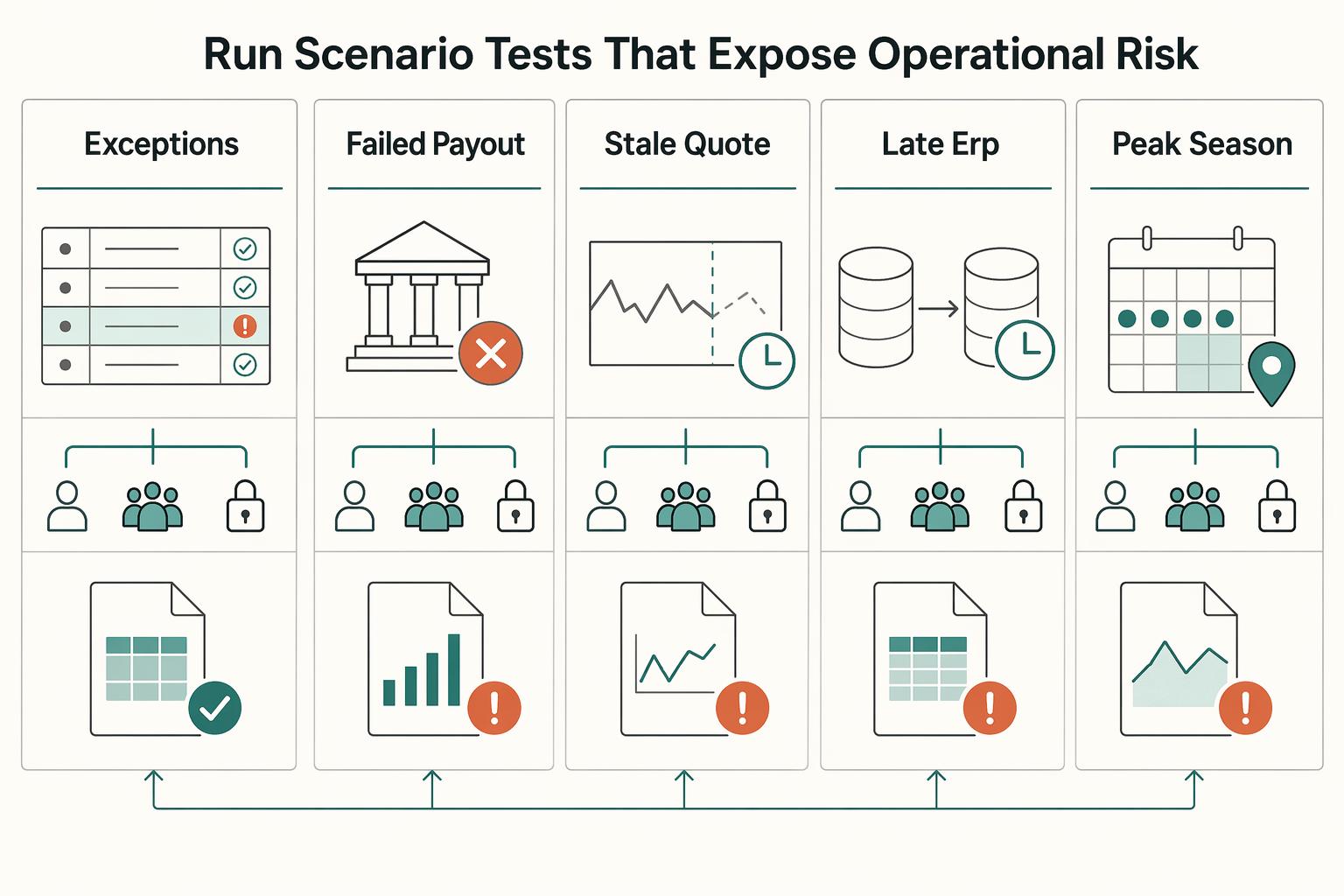
Run scenario tests that expose operational risk#
Do not rely on a guided happy-path demo. Run the same stress cases for every vendor and review the exact outputs your operators would use.
| Scenario | What to ask for | Red flag |
|---|---|---|
| Intercompany flow mismatch | How the mismatch is detected, routed, and reflected in reporting | Discovered only during manual close cleanup |
| Failed payout batch | Exception record, retry history, and impact on reported exposure | Reprocessed with no visible trace of failure |
| Stale quote at execution | Rejection or re-quote record tied to approval history | Execution continues without a clear exception trail |
| Late ERP sync | How delayed data is flagged and how freshness limits appear in exports | Export appears complete when source data is late |
| Peak-season pressure | Performance and exception visibility when volumes rise and volatility widens spreads | Reporting quality degrades when activity spikes |
You are looking for how the system fails, who sees it, and what the export says while the issue is unresolved. Peak periods matter in this test because daily volumes can rise to 10-20 times normal levels, volatility can widen spreads, and regional seasonality can create overlapping risk windows across global operations.
Demand integration proof that survives close#
Ask vendors to prove behavior under real operating conditions, not checkbox capability claims. For APIs, webhooks, idempotent retries, role-based approvals, and export quality, test with representative data and failure timing so you can see how the platform behaves when records are late, duplicated, or delayed past a quote window.
Then inspect the finance-close export directly. If two tools are otherwise close, choose the one whose export needs fewer side calculations, manual joins, and narrative cleanup.
Avoid common FX reporting failures and recover quickly#
If FX reporting is late, unclear, or hard to reconcile, treat recovery as a traceability problem first: verify source lineage, decision ownership, and compliance handoffs before you add manual workarounds.
Map source systems and assign one owner per exposure field#
Build a source map for each reported exposure line and tie every field to both a system record and a named owner. The checkpoint is practical: trace one monthly report line to its underlying ledger-backed event, source export, and finance-close output. If that path is not clear end to end, fix the handoff before you change KPI narratives. Otherwise you are explaining noise instead of solving it.
Document escalation logic and sign-off paths#
Write down which exceptions are escalated, who signs off, and where that approval record lives. Then test one exception case and confirm the approver, timestamp, and outcome are visible in the same control trail finance uses at close. If that trail is fragmented, policy drift is likely even when dashboards look clean.
Make compliance status visible in the execution flow and review misses monthly#
Define where your team checks KYC, KYB, and AML status in the payout workflow, and make sure incomplete status cannot pass unnoticed into execution. Run a monthly miss review and update KPI definitions, data contracts, and approval rules based on what failed in practice.
Conclusion#
Our approach is operational, not theoretical: capture exposure reliably, report it in a form people can act on, and connect every number to a clear decision rule. If your FX reporting still depends on manual spreadsheet stitching, treat that as the next problem to fix before you add more hedging activity or more volume.
- Confirm the exposure perimeter and owners.
Start by naming every currency touchpoint in scope, including payroll and EOR payments, plus other in-scope cross-border inflows and outflows. Then assign owners across finance, ops, and engineering. The check is simple: for each exposure line, you should be able to name both the system of record and the person accountable for keeping that feed complete.
- Reconcile reported exposure to system-of-record and ERP-backed source records.
Do not accept a report that only ties to a spreadsheet total. Trace at least one material currency position from the report back to source records in your core systems or ERP. If you cannot trace one leg, assume the number is incomplete. Manual, spreadsheet-based currency programs are vulnerable to human error.
- Publish two linked views with actions attached.
Use one summary view for decision-makers and one operator view for day-to-day execution. The operator view should make exceptions and stale inputs visible, with clear owners and due dates. If you do not name an owner, the issue will likely roll into next month unchanged.
- Test conversion and hedge rules against one recent incident.
Pick a real case such as a late system sync or a forecast miss that led to a poor conversion decision. Re-run it using your current rules: should the team have converted earlier, escalated, or waited? This is a fast way to see whether policy works in live operating conditions, not just on paper.
- Review failures monthly and tighten controls before you scale.
Currency volatility can produce real losses. Automation will not guarantee outcomes, but systematizing process steps can reduce manual intervention and strengthen the value you get from ERP and trading tools. If you are about to increase cross-border volume or complexity in 2026, review the last month's misses first and close those gaps before expanding.
Keep that checklist close to your month-end process. Used consistently, it gives you a reporting discipline people can trust, which is what makes faster conversion and hedging decisions possible in the first place. Related reading: IRS Form 1042-S for Platform Operators: How to Report and Withhold on Foreign Contractor Payments.
Frequently Asked Questions
How should FX exposure be measured across receivables, payables, and payouts?
Start with the full exposure perimeter, not just booked balances. Group receivables, payables, and payouts by currency, then split positions into transaction risk, where value changes between transaction date and settlement, and translation risk, where reported values move when foreign-currency items are translated into your reporting currency. A useful check is to trace one currency line back to its source records across billing, payment, payout, and ledger data. If part of that chain sits outside the report, the exposure view is incomplete.
What should a monthly currency risk report include for both the board and operations teams?
Your leadership view should show the overall exposure position and its main components. The operator view should go one level lower with currency-level detail, open exceptions, source gaps, and clear owners for each fix. Keep it focused on the currencies that matter most rather than letting a long tail hide the signal.
How often should FX exposure be refreshed in high-volatility versus low-volatility currency corridors?
Do not use one universal cadence. Set refresh timing based on volatility and decision windows, and tighten review loops when major settlements or forecast changes are pending. The real test is whether treasury can provide the CFO timely and accurate reports before conversion, payout, or close decisions are made.
What is the biggest failure mode in FX reporting, and what is the fastest fix?
A common failure is manual exposure capture, often combined with incomplete scope. The fastest fix is usually not another spreadsheet. It is an end-to-end source map that includes all company exposures, plus one named owner for every critical field and feed.
When should a team prioritize data capture improvements over derivative hedging?
Prioritize capture improvements first when exposure identification is still manual, visibility is weak, or forecasts are unreliable. Derivative hedging can address residual risk, but it does not correct bad measurement. If reports rely on manual bridges or unexplained overrides, improve capture and reconciliation before expanding hedge activity.
How can finance and engineering split ownership without creating reporting gaps?
Finance should own policy, exposure definitions, and report sign-off. Engineering should own the reliability of source events, mappings, and change control in ERP, payout, and ledger integrations. Hidden risk can come from internal functions including treasury, trading, and technology. The handoff point should be written down: when a payout flow changes, engineering updates the mapping and finance revalidates the reporting logic.
Try a related tool
Researched and edited by the Gruv editorial team. Gruv builds cross-border billing, payouts, and finance-operations software for global businesses.
Sources
- federalreserve.gov/boarddocs/supmanual/trading/trad_p2.pdftrusted
- financialresearch.gov/working-papers/files/OFRwp0002_FlanneryGlass...trusted
- irs.gov/individuals/international-taxpayers/foreign-...trusted
- irs.gov/individuals/international-taxpayers/figuring...trusted
- sec.gov/files/ctf-written-input-proof-state-financia...trusted
Educational content only. Not legal, tax, or financial advice.
Related Posts
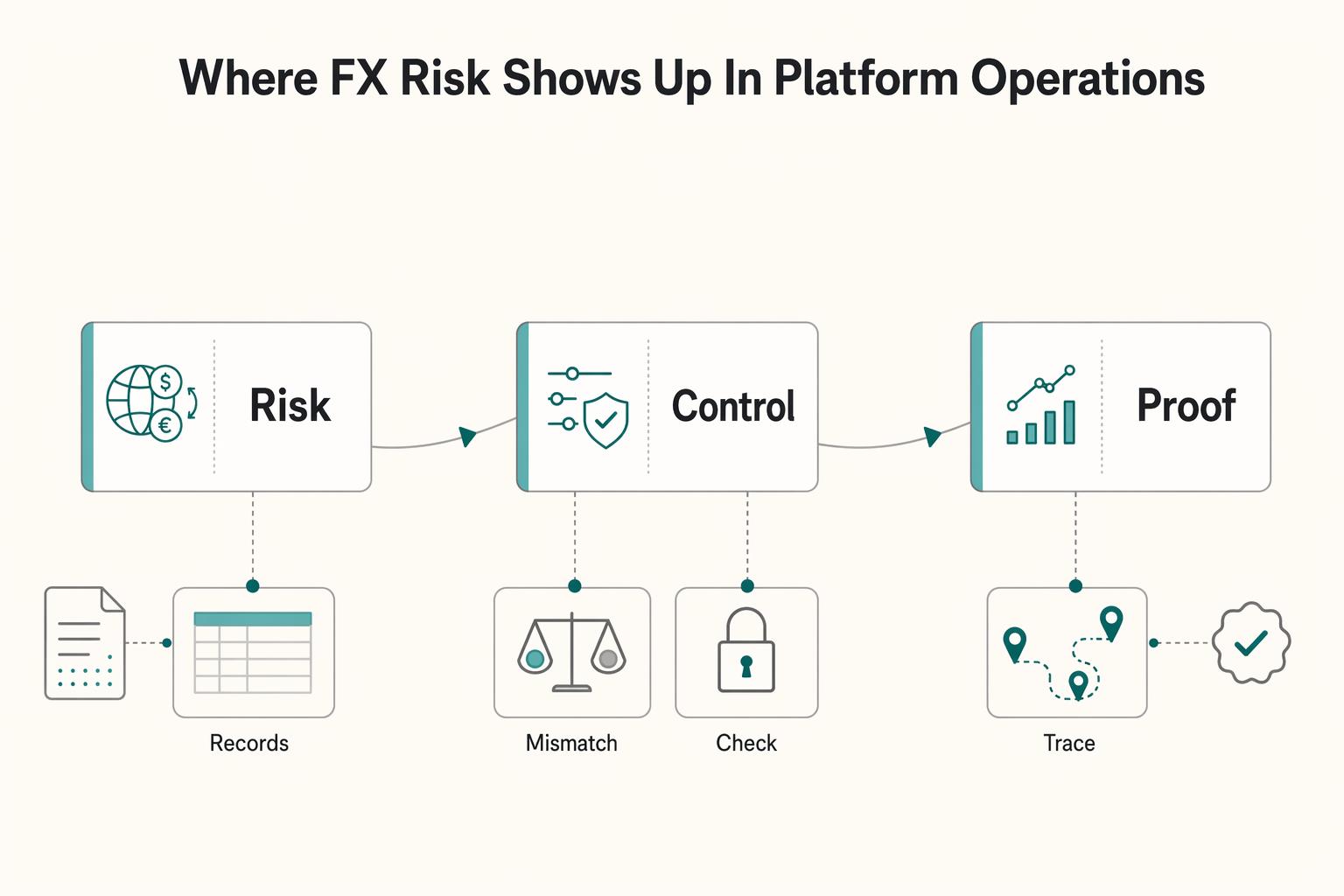
Foreign Exchange Risk for Platform Operators and the Decisions That Cut FX Exposure
Foreign exchange risk is not just a problem for large multinationals. If your marketplace, embedded payments product, or contractor payout stack touches more than one currency, exchange-rate moves can affect margins and financial stability in very practical ways.
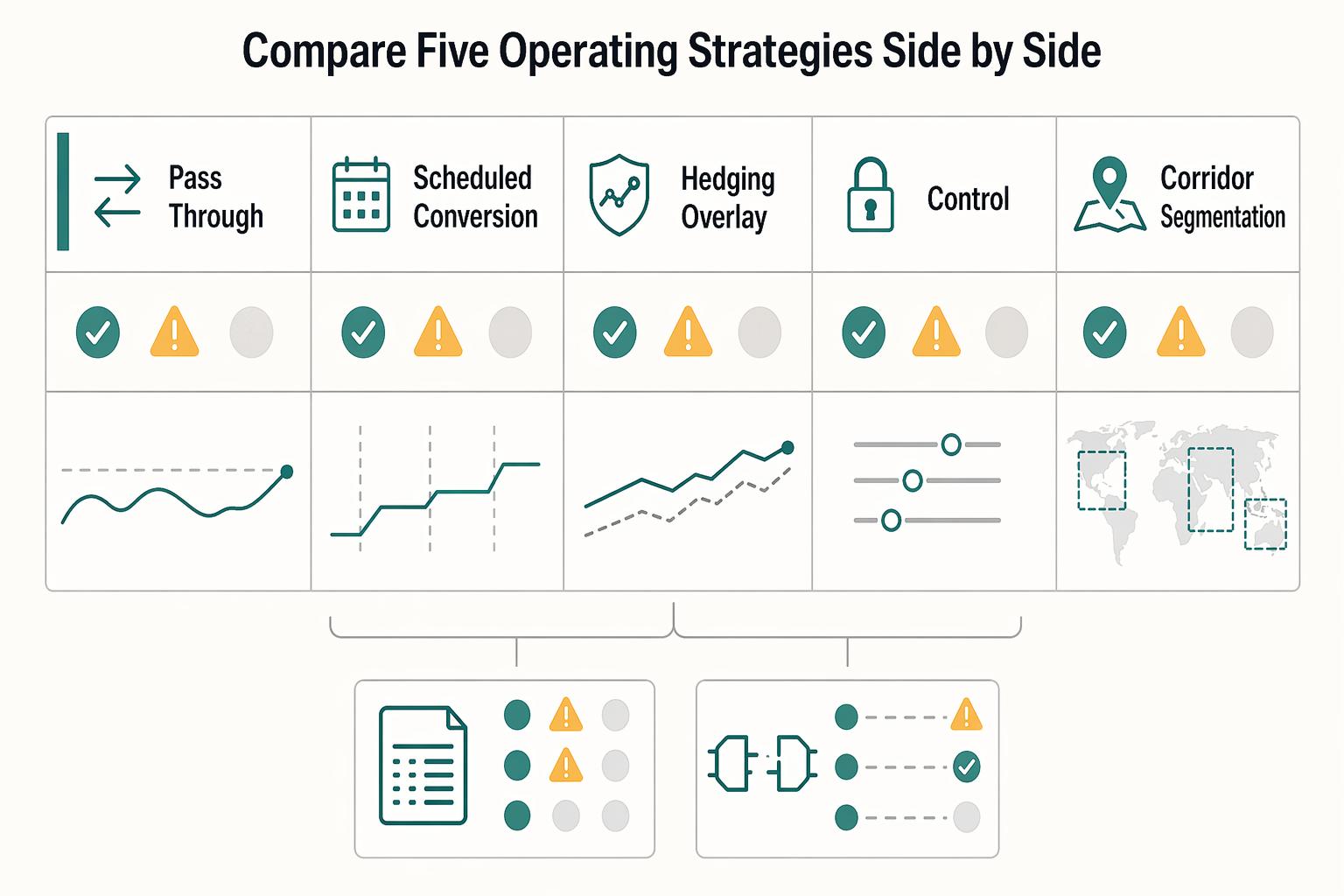
When a Currency Peg Breaks and Your Platform Still Has to Pay
For a platform that collects, converts, and pays across borders, a currency peg is more than background macro context. It is a policy regime that can affect assumptions in your pricing, treasury, and payout logic. The core risk is not predicting markets. It is avoiding product and finance decisions that only work while a pegged rate stays stable.
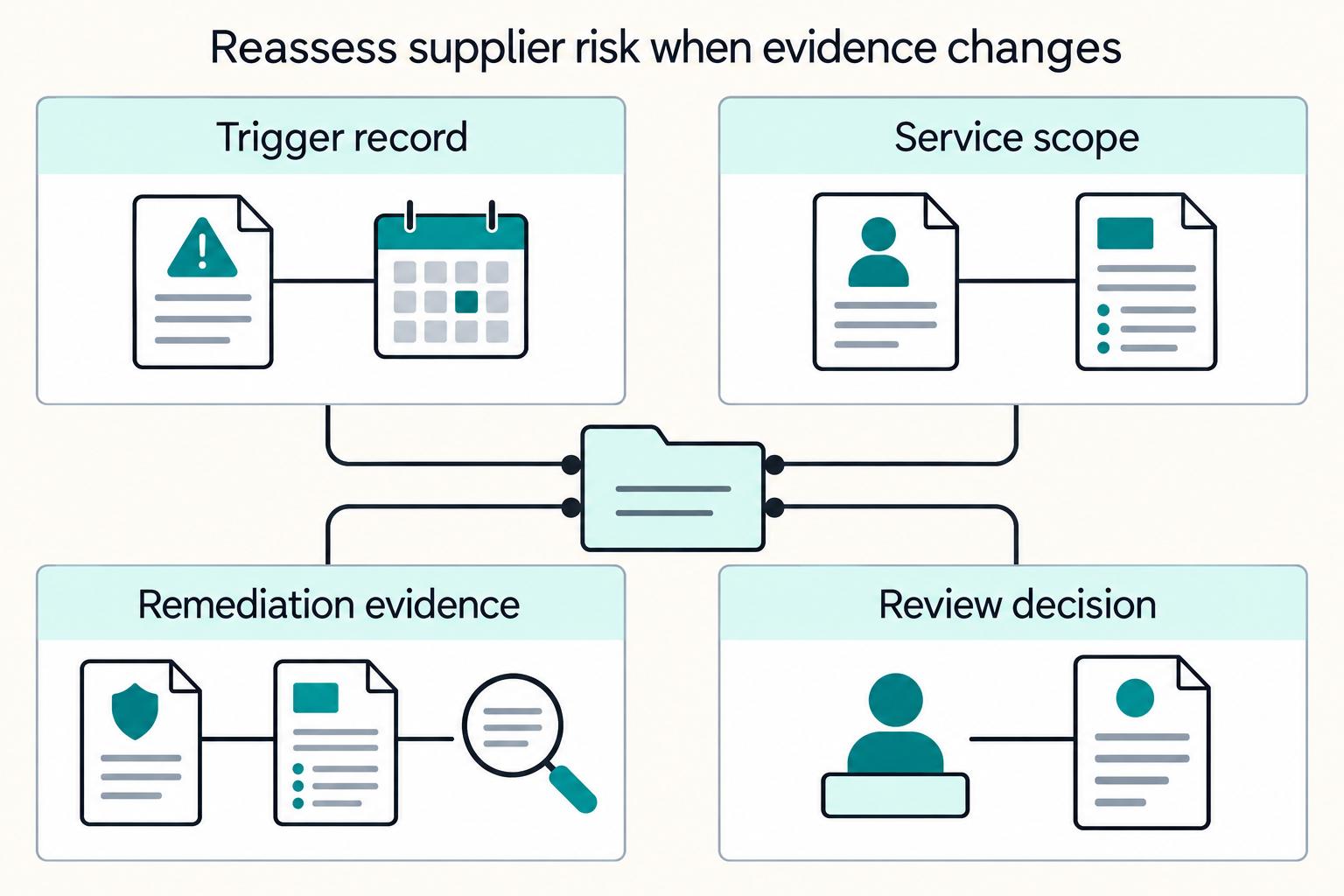
Assessing Supplier Risk Across a Payment Platform Vendor Base
**Treat supplier risk as a control function, not a procurement task.** If a third party can affect payouts, customer data, service continuity, or your ability to meet legal obligations, oversight typically needs shared ownership across compliance, legal, finance, security, and operations.