

Quick Answer
Separate deductible expenses freelancers spain into two tracks from day one: IRPF and VAT. Approve only when the file has a compliant invoice, a clear business purpose, and proper registry entry such as the Libro registro de facturas recibidas where required. If mixed use, travel, home office, or vehicle evidence is weak, hold the claim and escalate. The safest operating model is gate-based review, not category labels.
When you review freelancer costs in Spain, a common mistake is treating "deductible" as a simple category question#
When you review freelancer costs in Spain, a common mistake is treating "deductible" as a simple category question. It is not. It is a control question that runs across two separate tax tracks, IRPF and VAT, each with its own filing path and timing, within a formal inspection framework.
This guide is for finance, legal, and risk owners who need to make workable decisions on deductible expenses for freelancers in Spain without turning every review into specialist tax research. The aim is practical. Decide what can move forward, what should be held for review, and what evidence has to exist before a cost is allowed into reporting.
In Spain, that starts with keeping IRPF and IVA separate from the outset. AEAT handles IRPF installment payments through Modelo 130 for entrepreneurs and professionals in direct estimation, while IVA reporting runs through Modelo 303. That split matters in day-to-day operations. A cost may be commercially legitimate and still need different treatment, different evidence, or a different escalation path depending on which return it affects. You should not assume symmetry between the two just because the purchase is the same.
The first checkpoint is simple and often skipped. Every expense needs a clear tax destination before it is approved. Ask which filing track it belongs to, whether the period is correct, and whether the record would stand up in an inspection. AEAT's Calendario del contribuyente exists for a reason. Deadline control is not just admin hygiene. If timing is wrong, even a supportable expense can create avoidable compliance noise.
The second checkpoint is evidence quality. This guide stays focused on what you can actually defend: document standards, review gates, and the cases that need escalation instead of optimistic booking. That matters because Spain uses a formal framework for tax management and inspection procedures. The governing backdrop is the Reglamento General de las actuaciones y los procedimientos de gestión e inspección tributaria, which is why a "common expense category" is not the same thing as an approved deduction.
A useful starting rule is this: if you cannot explain the business link, filing path, and supporting record in one short note, the item is not ready for IRPF or IVA treatment. One failure mode is approving from labels alone, then trying to backfill support later when quarter-end closes or an inspection request arrives.
So this is not a long list of supposedly deductible items. It is a tighter decision structure for Spain, with clear known versus unknown boundaries under current tax rules, and enough operator detail to keep reviews consistent when the facts are messy. For a step-by-step walkthrough, see Accrued Expenses for Freelancers: Better Close Decisions.
What deductible expense means in Spain#
In Spain, a deductible expense is a business-linked cost that is documented and recorded correctly. For IRPF, the expense must be linked to the activity, properly recorded, and adequately justified. For VAT, you also need the invoice (or equivalent supporting document) and the required registry entry, including the Libro registro de facturas recibidas.
| Check | What to verify | If missing |
|---|---|---|
| Billing document | A valid billing document is available before booking | The expense is not ready for IRPF or VAT treatment |
| Business purpose | The file shows a clear business purpose | The expense is not ready for IRPF or VAT treatment |
| Book entry | There is an entry in the expense book or other required books | The expense is not ready for IRPF or VAT treatment |
Use a simple approval test before booking: a valid billing document, a clear business purpose, and entry in the expense book or other required books. If any part is missing, the expense is not ready for IRPF or VAT treatment.
Mixed use needs explicit allocation. If an item is partly personal and partly business, the personal portion is not fully deductible by default. For VAT, use is generally expected to be direct and exclusive to the activity; in some non-investment mixed-use cases, input VAT can be denied in full, while in others partial deduction is possible only when business affectation is proven.
Treat a "commonly deductible category" as a starting label, not approval. The Spanish Tax Office tests whether the evidence meets the requirements, not whether the category sounds normal for a freelancer. We covered this in detail in Quarterly Taxes in Spain for Freelancers Using Modelo 303 and 130.
Build the IRPF and VAT decision map before reviewing expense categories#
Separate IRPF and VAT decisions before you approve any expense category. A file can be supportable for IRPF because it is linked to the activity and properly recorded, but still too weak for VAT if business use is not direct and exclusive. When that split appears, hold the VAT deduction and escalate instead of forcing symmetry.
For IRPF, start with business linkage and proper registration in the books. For VAT, apply the stricter business-use test for non-investment goods and services. Advisory guidance also treats IRPF-versus-VAT deductibility differences as a common confusion point, so this map should come before category-level approval.
| Category | IRPF first view | VAT first view | Minimum evidence |
|---|---|---|---|
| Office costs | Potentially deductible if clearly linked to the activity and recorded | Support only when business use is direct and exclusive; mixed use increases risk | Billing document with number, date, and counterparty tax ID (NIF), clear business description, expense-book entry |
| Professional services | Often supportable when the service is clearly for the activity and properly booked | Can be easier to defend when clearly business-facing, but still needs document integrity and business-use support | Supplier document with NIF, service description, date, expense-book entry, supporting contract or email if description is vague |
| Travel | Possible for IRPF when the trip is tied to the activity and properly recorded | Do not assume VAT recovery from receipts alone; weak business-purpose evidence should trigger a hold | Supporting document, date consistency, business-purpose note, meeting/client support, expense-book entry |
| Fixed assets | Do not approve from category label alone; confirm whether separate asset treatment is required | Apply the same business-use gate; personal overlap is a red flag | Supplier document with NIF, number and date, classification note, proof of professional use, relevant book entry |
Use one status table for consistency across reviewers:
| Eligibility status | When to use it |
|---|---|
| Clearly deductible | Business link is clear, document is complete, booking is done, and timing is consistent |
| Partially deductible with allocation | Mixed use is present and you have a defensible business allocation for IRPF, with VAT reviewed separately |
| High challenge risk | Personal use is visible, description is vague, booking trail is missing, or dates do not fit the claimed event |
| Confirm with the relevant authority | The file may be valid, but current sources do not support a reliable rule; route to specialist review |
Apply the four verification gates every time#
- Business link: Can you explain in one sentence how the cost supports the freelancer's activity?
- Document integrity: Does the billing document include at least invoice number, issue date, and counterparty NIF/tax ID?
- Book entry: Is it recorded in the required books, not just stored in email or export files?
- Timing consistency: Do document date, service period, and booking date align?
If IRPF appears supportable but VAT business use is weak, split the path: proceed with IRPF handling and pause the VAT claim for review. This is especially important in mixed-use and travel-heavy files, where support often looks stronger than the VAT evidence actually is.
For more background, read The Best Bank Accounts for Freelancers in Spain.
Set invoice acceptance rules before any deduction is booked#
Make the document gate non-negotiable: if there is no compliant invoice, do not book the deduction in either IRPF or VAT. In Spain, the invoice is the primary support for a deductible expense, so payment proof alone is not enough.
Use an intake checklist that confirms the minimum invoice fields before booking:
| Checkpoint | What to verify before booking | Why it matters |
|---|---|---|
| Number and issue date | Document number (and series where applicable) and issue date | Missing structural fields is a basic validity failure |
| Supplier and tax ID | Supplier identity and NIF, plus recipient identity or NIF where required | Identity and tax identification are mandatory content |
| Description of operations | Clear description of goods/services, not only a merchant label | Supports business-purpose review |
| Taxable base | Data needed to determine the base imponible and its amount | Supports the claimed amount and transaction basis |
| VAT data | VAT quota shown separately | Required invoice content for VAT support |
Apply one intake rule consistently: no compliant invoice, no deduction booking. Route those files to a finance/tax review queue instead of substituting bank charges, card statements, or generic receipts for tax documentation.
Then enforce traceability from invoice to books and reporting output. Keep a clear chain from supplier invoice to expense-book entry, ledger posting, and reconciliation export. For VAT records, received invoices should be recorded in receipt order and entered by settlement/payment time or the legal deadline.
For corrected invoices, use a two-step internal approval as an operational control. First, confirm the correction fixes the formal defect. Second, confirm whether IRPF treatment, VAT treatment, or both must be updated before refiling.
This pairs well with our guide on Spain Beckham Law Decisions for Freelancers on Tight Filing Windows.
Handle mixed-use, home office, and vehicle claims with pass-fail tests#
After invoice validity, the next gate is business affectation: if you cannot show the expense is tied to the activity, do not book the claim. For mixed-use cases, make the pass-fail decision before IRPF and VAT treatment.
IRPF requires a business link. For VAT, AEAT states that goods used alternatively or simultaneously for business and other purposes are not treated as directly and exclusively affected, and partial deduction requires proof of at least partial business affectation.
| Claim area | Pass if | Fail or escalate if | Why it matters |
|---|---|---|---|
| Home office costs | The file shows documented partial business use of the habitual home and an allocation worksheet tied to that use | Missing documentation of partial affectation, full deduction claimed by default, or no support for the percentage used | AEAT links utility deductibility to partial affectation of the habitual home |
| Mixed-use expenses | Clear business link, valid document, and a consistent allocation between business and personal use in the books | Unsupported allocation percentages, or a usage narrative that conflicts with the document trail | Mixed-use goods/services are not directly and exclusively business-affected for VAT |
| Vehicle claims | Exclusive-use claim is backed by evidence, or partial-use treatment is applied and reviewed | Exclusivity claimed without proof, visible private use, or inconsistent usage narrative | For tourism vehicles, VAT starts from a general 50 por ciento presumed business affectation |
For home-office utilities, apply the rule as an allocation control, not a blanket deduction. AEAT guidance refers, from 1 enero 2018, to applying 30 por 100 to the proportion represented by business-use square meters, so your file should show how that percentage was derived.
Vehicle files should face the strictest challenge. If exclusivity is claimed, require evidence that supports it; if that evidence is weak or inconsistent, classify the claim as high risk and escalate before filing. Need the full breakdown? Read Spain Tax Residency for Mobile Freelancers Who Need Defensible Records.
Review travel and training claims with escalation triggers#
Travel and training are deductible only when the file shows a clear link to the current economic activity, not just proof of payment. If that link is weak, escalate before return prep.
For travel claims, AEAT groups gastos de locomoción, manutención y estancia and points to artículo 9 del Reglamento del Impuesto for requirements and limits. A train ticket, hotel invoice, or card charge proves spending, but not deductibility by itself.
| Claim type | Routine deductible with evidence | Escalate before return prep |
|---|---|---|
| Travel to client work, conferences, or similar activity trips | Valid supporting document, dates consistent with the work calendar, and a short business-purpose note tied to the activity | Missing business-purpose note, dates that conflict with the engagement, or itinerary that appears partly personal |
| Meals during business activity | File shows the meal happened in the course of the activity and in a restauración y hostelería establishment | Claim depends on snippet-only cap amounts, business context is unclear, or documentation is weak |
| Training costs | Course, conference, or congress is directly connected to current professional activity, with supporting document and expense-book entry | Training is unrelated to current activity, or there is no supporting document or no expense-book entry |
A practical control is a one-line trip memo on each claim: who was met, what business activity it served, and why the timing fits. That is a direct test of correlación con los ingresos.
Apply the same standard to training. AEAT includes gastos de asistencia a cursos, conferencias, congresos, etc. as deductible examples only when they correlate with activity income. If VAT is deducted, make sure the supporting invoice is held and the expense is entered in the Libro registro de facturas recibidas.
Meal claims need tighter handling. AEAT has a dedicated rule for gastos de manutención del contribuyente, and the expense must arise in the activity context. If your source excerpts are incomplete, mark meal-cap specifics as needs current confirmation and escalate instead of operationalizing unverified limits.
Control fixed assets and amortization so year-end filings stay clean#
Treat fixed-asset classification as a control point, not a cleanup task. If a purchase is booked as a fixed asset, handle it through amortization rather than as a one-period current expense, and only book deductibility where the applicable requirements and general rules are met for IRPF.
| Record | When used | Details |
|---|---|---|
| IRPF Libro registro de bienes de inversión | Required in estimación directa and mandatory since 1 de enero de 2019 even when accounting is voluntarily kept under the Código de Comercio | Used within the IRPF books for fixed assets handled through amortization |
| Internal asset register | Keep it so each invoice is linked to the asset file | Asset description and supplier document ID; booking method; start-of-use date; treatment already applied and pending by period; IVA regularization flag where relevant |
| IVA investment-goods register | Required when regularización de bienes de inversión applies under artículos 107 a 110 de la Ley del IVA | Invoice-identification data; fecha del comienzo de su utilización; prorrata anual definitiva; regularización anual |
Do not rely on a universal euro cutoff or a default useful-life rule. When the file does not clearly support current-expense treatment versus amortized treatment, escalate before return preparation.
In estimación directa, professionals are required to keep a Libro registro de bienes de inversión within the IRPF books, and this has been mandatory since 1 de enero de 2019 even when accounting is voluntarily kept under the Código de Comercio. Keep an asset register that links each invoice to:
- asset description and supplier document ID
- booking method (
current expenseoramortized asset) - start-of-use date
- treatment already applied and treatment pending by period
- IVA regularization flag, where relevant
For IVA, do not assume the same obligation applies in every case. The IVA investment-goods register is required when regularización de bienes de inversión applies under artículos 107 a 110 de la Ley del IVA; in that case, records must include invoice-identification data, fecha del comienzo de su utilización, prorrata anual definitiva, and regularización anual. Misclassifications can distort IRPF timing and weaken IVA traceability, so run a periodic reclassification check against the expense book before filings close.
You might also find this useful: Accounting and Bookkeeping for Freelancers: Track Income Expenses and Taxes Year-Round.
Run a monthly deduction control checklist for inspection readiness#
Run the same five checks every month, in order, and only export claims that pass all five. That keeps invalid documents and weak business-linkage claims out of the filing pack before return prep.
Close in the right order#
| Step | What to confirm | Action or note |
|---|---|---|
| Document validity | Confirm the factura completa includes the required legal fields, including full identity details for supplier and recipient and the relevant Número de Identificación Fiscal | If core fields are missing, do not accept the deduction |
| Category mapping | Map each cost to the right tax category before filing decisions | Separate current expenses from items already routed to fixed-asset treatment and amortization |
| Allocation review | For mixed-use costs, confirm the percentage, method, and supporting note | An unsupported percentage is not inspection-ready |
| Exception escalation | Route borderline items to finance and risk before filing | Use this especially where business relevance is likely to be challenged in an inspection |
| Filing-pack export | Export only claims that cleared the first four gates, with linked evidence | Only export claims that pass all five checks every month |
- Document validity
Confirm the factura completa includes the required legal fields, including full identity details for supplier and recipient and the relevant Número de Identificación Fiscal. If core fields are missing, do not accept the deduction.
- Category mapping
Map each cost to the right tax category before filing decisions. Separate current expenses from items already routed to fixed-asset treatment and amortization.
- Allocation review
For mixed-use costs, confirm the percentage, method, and supporting note. Deductibility depends on business linkage and proper record-book support, so an unsupported percentage is not inspection-ready.
- Exception escalation
Route borderline items to finance and risk before filing, especially where business relevance is likely to be challenged in an inspection.
- Filing-pack export
Export only claims that cleared the first four gates, with linked evidence.
Keep a defense file, not just a ledger#
For each claim type, keep an evidence pack that can stand on its own in a tax inspection: supporting invoice, a short business-purpose note, the allocation method for partial claims, and the approval log.
The business-purpose note should clearly connect the expense to the activity and to the expense records. For partial claims, keep the calculation basis, not only the final percentage.
Set a Spain-specific retention rule in writing. AEAT states invoices and tax justifications tied to tax obligations must be kept for 4 años, and archives must preserve authenticity, integrity, legibility, and access. AEAT guidance links this duty to Ley 58/2003, art. 29.2.e and Ley 37/1992, art. 165.Uno.
Assign owners and separate Spain logic#
Assign named owners so controls are enforceable: finance for tax acceptability, risk or compliance for exception governance, and a shared exception-review SLA that resolves items before filing deadlines.
If you operate across markets, label this control set as Spain-specific. Do not reuse autónomo invoice, IRPF linkage, or VAT evidence logic in another country without a separate review. Related: A Guide to the 'Autónomo' System for Freelancers in Spain.
Conclusion#
The strongest operating model for deductible freelancer expenses in Spain is not a bigger category list. It is a stricter approval logic that separates IRPF, VAT, and proof. Keep those as three distinct checks and most bad filings stop looking like edge cases and start looking like routine rejects or escalations.
For IRPF, the anchor is still simple: the cost has to be linked to the activity and correlated with income. For VAT, the test is narrower and more formal, because AEAT requires the deduction conditions to be met simultaneously and the taxpayer must hold the proper supporting document. That means you should not force symmetry between the two taxes. If an expense looks commercially real and supportable for IRPF but the VAT file is missing a compliant document, hold the VAT deduction until the record is corrected.
That is why document control matters more than category naming. Your intake rule should be blunt: without a valid invoice, do not place VAT into the deductible lane, and route the case for additional review before final treatment. AEAT's content rules require basics such as the issue date and the supplier's NIF and name or company name, and VAT documentation rules point back to Real Decreto 1619/2012, de 30 de noviembre. A common failure mode is treating a receipt, screenshot, or incomplete supplier bill as "good enough" because the spend itself sounds business-related. For VAT, a non-compliant supporting document does not prove the right to deduct unless it is rectified.
The practical next move is modest, not heavy. Implement two internal control tables first. Use one to compare IRPF treatment, VAT treatment, and minimum evidence by expense type. Use the second to label each case as clearly deductible, partially deductible with allocation, high challenge risk, or unknown from current source support. Then run a short monthly internal checklist against those tables. The checklist does not need to be elaborate if it catches the right points: document validity, business link, expense-book entry, allocation support where relevant, and escalation where the evidence pack is thin.
Keep the evidence pack tight and repeatable. In challenged files, a weak point is often not only a missing document field but also a missing story of the expense. You want the supporting document, the ledger record, a short business-purpose note, and any allocation logic or exclusivity support for mixed-use items. If you cannot show what the expense was for, why it belonged to the activity, and whether the VAT conditions were actually met, you do not have a filing position, only a hopeful one.
So the sensible finish is this: standardize the checks you know are grounded, especially document acceptance and proof of business use, and send unresolved gray areas for specialist review instead of improvising policy from habit. Related reading: Spain's Autónomo Tarifa Plana for New Freelancers in 2026.
Frequently Asked Questions
What makes an expense deductible for freelancers in Spain?
For IRPF, the core test is whether the cost is linked to the economic activity and correlated with income generation. AEAT also requires the expense to be justified, primarily by invoice, and recorded in the accounting records or libros-registro. A familiar category like software, travel, or office costs is not enough on its own.
How should teams treat expenses that are partly personal and partly business?
Do not approve mixed-use claims just because someone proposes a percentage. AEAT states that assets used simultaneously for business and private needs generally cannot be treated as affected to the activity, so these files need stricter review. If the business-use logic is not documented and reproducible, escalate rather than book a partial deduction.
Can freelancers deduct home office and vehicle costs in full?
Not by default. For home utilities in a partially affected main residence, AEAT uses a formula from 1 enero 2018 based on 30 por 100 of the proportion linked to the affected square meters, unless a different percentage is proven. For passenger vehicles in IRPF, exclusive business use is the key pass-fail test, so full deduction is a high-risk position without evidence of exclusivity.
What proof is usually needed to defend deductions in a tax inspection?
Start with a compliant supporting document, but do not stop there. AEAT is explicit that an invoice is not privileged proof of the reality of the transaction if the Administration challenges it, so the file should also contain evidence that supports the business link and the corresponding booking in mandatory records. If the file cannot show what the expense was for and how it connects to the activity, it is weak in a tax inspection.
How should finance teams separate IRPF and VAT decisions on the same expense?
Treat them as two tests, not one. VAT deduction has its own simultaneous requirements and requires holding the proper supporting document adjusted to the legal rules. It also fails where there was no intention to use the goods or services in the business activity. If the IRPF link looks arguable but the VAT business-use case is thin, hold the VAT recovery and escalate.
Are travel and meal expenses automatically deductible if receipts exist?
No. For meals, AEAT says the expense must be directly related to the exercise of the economic activity, and the rule only works when the required conditions are met. More broadly, receipts alone do not make travel or meals deductible. You still need the business link, proper supporting documentation, and consistent recording.
Try a related tool
Researched and edited by the Gruv editorial team. Gruv builds cross-border billing, payouts, and finance-operations software for global businesses.
Sources
Includes 3 external sources outside the trusted-domain allowlist.
- sede.agenciatributaria.gob.es/Sede/ayuda/manuales-videos-folletos/manuales...trusted
- sede.agenciatributaria.gob.es/Sede/ayuda/manuales-videos-folletos/manuales...trusted
- spenceclarke.com/articles/deductible-expenses-for-the-self-em...external
- taxlawconsulting.es/en/deductible-expenses-for-self-employed-wor...external
- xolo.io/es-en/faq/xolo-spain/category/all-you-can-de...external
Educational content only. Not legal, tax, or financial advice.
Related Posts
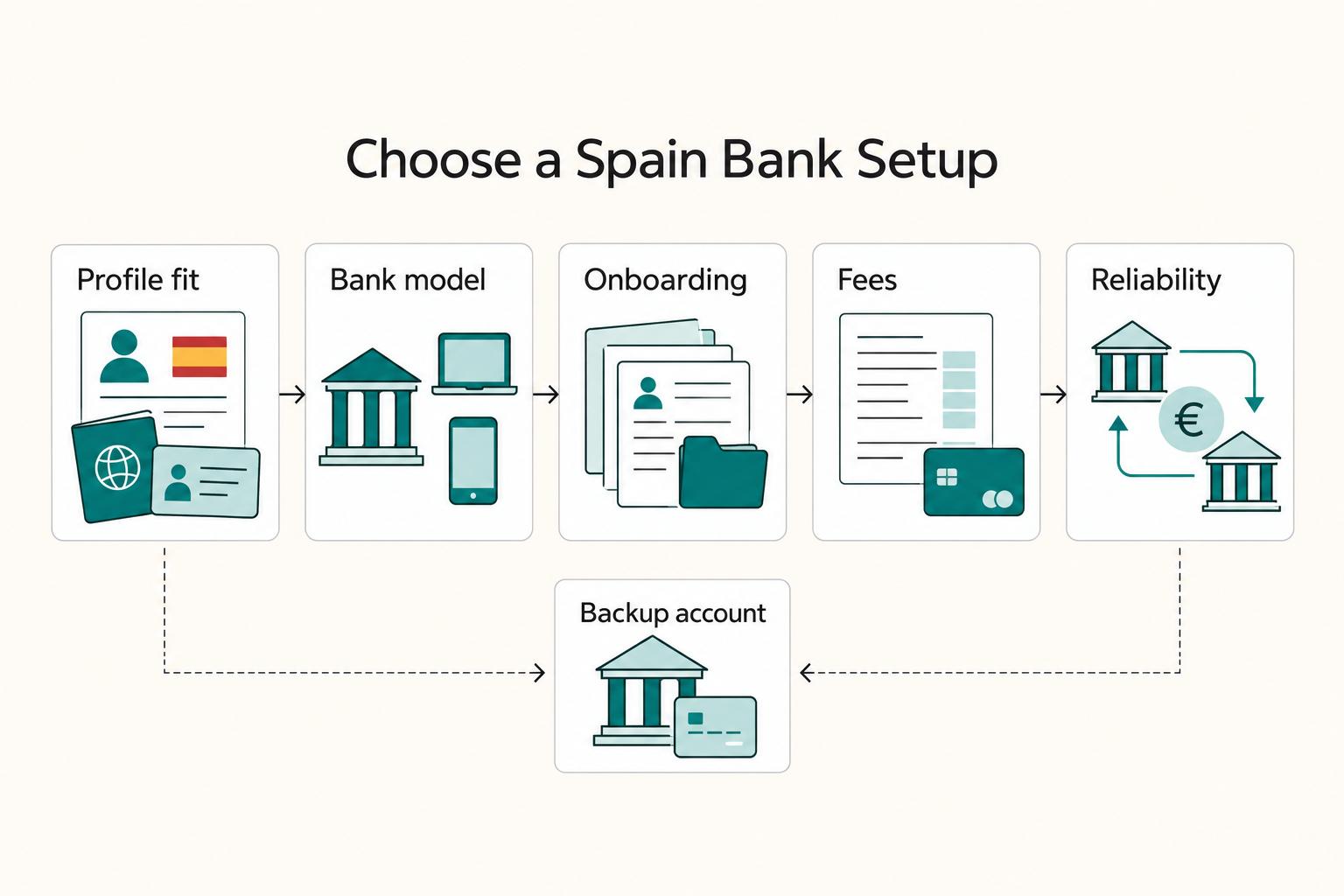
Freelancer Bank Accounts in Spain: Choosing a Primary and Backup Setup
Choose your setup as a risk decision, not a brand ranking. Pick one primary account for daily inflows and keep one backup account active in the same planning session.
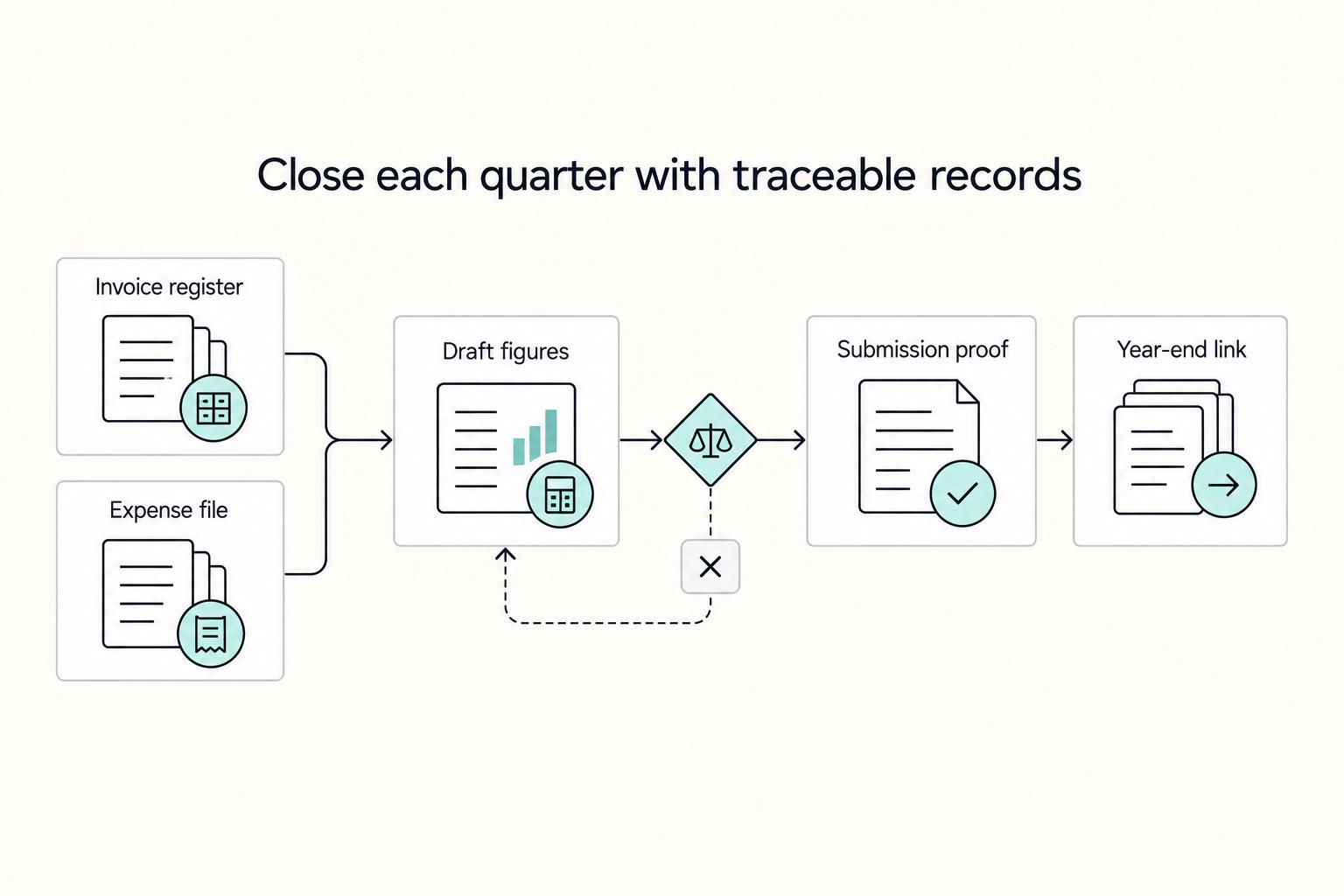
Spain Autonomo System for Freelancers Who Want Compliance Control
Low-stress compliance comes from predictable execution, not tax-shortcut bets. Keep filings clean, document decisions, and set escalation triggers before deadlines.

Accounting and Bookkeeping for Freelancers Year-Round
Treat freelancer finance as a year-round money trail, not a tax-season rescue job. For teams handling accounting and bookkeeping for freelancers at scale, the workable model is a controlled process from invoicing through bookkeeping and review, not a set of isolated tasks.