
Quick Answer
Start by treating cohort movement as a trigger for investigation, not proof, then map each drop to a product lane or a money lane. Use one Acquisition cohort and one Behavioral cohort, and require matching IDs across the retention table, Ledger records, payout reconciliation reports, and Webhook logs before making changes. If recurring-charge events look healthy but transaction-level settlement does not, pause decisions, fix state mapping, and only then run controlled fixes with owner handoffs.
What Cohort Analysis Shows About Subscriber Retention#
Cohort analysis is useful for subscriber retention only when it works like an operating control, not a dashboard you admire and move on from. When a subscriber cohort weakens, the useful question is not just "what changed in the curve," but "what decision follows, and who owns it?"
At its core, cohort analysis groups users by shared characteristics or behaviors and tracks how those groups perform over time. That matters for subscriber churn because aggregate retention can hide where losses really start. Product teams often stop at the visible path, such as setup completion, paywall views, or recurring-charge clicks. Finance and ops teams cannot stop there, because a retention drop may come from payment-side issues that show up only in settlement and payout reconciliation records.
That is where retention work usually breaks down. A product chart may suggest users are disengaging, while a payout reconciliation report points to an issue in a settlement batch, or a transaction-level settlement report explains the same movement more credibly. If you do not connect those views, you can end up shipping a UX fix for what is really a payment or reconciliation problem. Just as important, cohort movement alone does not prove causality, so treat the chart as a trigger for investigation, not proof.
Start with one practical checkpoint: if your app events show successful recurring charges but your transaction-level reporting does not support that story, pause the analysis before you make changes. That mismatch is a red flag, not a rounding issue. One common failure mode is labeling subscribers as churned or recovered from product events while settlement and payout reconciliation records still do not align. Once that happens, every downstream retention conclusion gets weaker.
If your current cohort review feels interesting but not practical, this guide is meant to fix that. The useful version of this work ties each retention movement to an operational cause lane and an owner who can verify it. You will leave with a step-by-step method to define cohorts, set event boundaries that survive reconciliation, separate product friction from payment friction, and hand off issues cleanly between product, finance, and ops.
You will also get the parts teams usually skip: failure checks before action, ownership handoffs when a drop needs escalation, and a copy-and-paste operating checklist for weekly review. The goal is simple. When a retention cohort table moves, you should know what evidence to pull next, what can invalidate the read, and whether the first fix belongs in setup, billing, payment review, or payout execution.
What cohort analysis should control in subscriber retention operations#
Your control objective is simple: every meaningful move in the Retention cohort table should map to an operational cause category, not just "engagement changed."
Step 1. Define cause lanes before reading the curve#
Set the control rules first: explicit inclusion criteria, return criteria, and retained vs churned states. If two teams would classify the same subscriber differently, the table is not decision-ready.
Use two lanes from day one:
- Product-side: Onboarding and Paywall friction.
- Money-side: failed payment outcomes and Payout batch timing, since payout-related batches close on their own cadence.
Step 2. Start narrow with one cohort of each type#
Start with one high-volume Acquisition cohort and one high-risk Behavioral cohort. The acquisition view gives you a baseline tied to when users joined. The behavioral view gives you a likely failure pocket tied to key in-product actions, such as onboarding or paywall behavior. Together they give you a broad baseline plus a likely failure pocket without diluting ownership.
Step 3. Use metrics to trigger investigation, not prove cause#
Treat cohort movement as a routing signal, not proof. Before acting, verify event definitions and confirm Webhook logs are traceable for asynchronous subscription or payment state changes. Otherwise, you may assign a product fix to what is actually a money-lane issue.
If you want a deeper dive, read Streaming Platform Churn Analysis: Why Subscribers Leave OTT Services and How to Win Them Back.
Prerequisites and evidence pack before you touch a cohort chart#
Do not interpret a retention move until your evidence pack is complete and traceable end to end. If the chart gets ahead of the records, you get debate about symptoms instead of a decision about what failed.
Step 1. Assemble one evidence pack with matching IDs#
Build one shared pack that product, finance, and ops can read without translation. Include cohort definitions, a tracking taxonomy, an event data dictionary, accounting extracts, payout reconciliation reports, and Webhook delivery logs.
| Artifact | What to verify |
|---|---|
| Cohort definitions | Keep identity consistent with the cohort table and other records |
| Tracking taxonomy | Include it in the shared pack product, finance, and ops can read without translation |
| Event data dictionary | Review event definitions before trusting event-driven diagnostics |
| Accounting extracts | Use the same subscriber or account key that joins cleanly across records |
| Payout reconciliation reports | Each payout should reconcile with the batch of transactions it settles |
| Webhook delivery logs | Review webhook attempts at the failed-attempt level, not only final status |
Check identity consistency first: the subscriber or account key should join cleanly across the cohort table, event records, accounting rows, payout reconciliation report, and webhook logs. Then review webhook attempts at the failed-attempt level, not just final status, before you trust event-driven diagnostics. If your payout reconciliation report cannot reconcile each payout with the batch of transactions it settles, stop and fix that before reading the cohort.
Step 2. Map compliance gates before blaming product#
Mark compliance gates that can pause access, activation, or payouts before you assign product blame. Typical gates include KYC, KYB, AML review, and VAT validation.
For EU VAT checks, VIES responses are valid or invalid, so that can be a clean segmentation flag when a cross-border flow depends on VAT status. In U.S. account-opening contexts covered by 31 CFR 1010.230, beneficial owner identification for legal entity customers is a due-diligence requirement. If a retention drop clusters in users exposed to those checks, segment them first and compare against users who never hit the gate. Verify timestamps so pending, approved, and rejected states line up with activation and payout timing.
Step 3. Tag tax artifacts and assign owners before review starts#
If tax paperwork affects setup or payment eligibility, include completion status in your review materials before the review starts. That can include Form W-9, Form W-8 BEN, and Form 1099-NEC status for segments where nonemployee compensation reporting applies.
Use FBAR only where applicable: track FinCEN Form 114 status for applicable U.S. persons, especially when aggregate foreign accounts exceed $10,000 during the calendar year. Treat all tax and compliance artifacts as risk signals, not proof of churn. Keep ownership explicit: product owns experiment design, finance owns payment truth, and ops owns exception queues and escalation timers.
Step 1 define cohorts and event boundaries that survive reconciliation#
Define cohort membership and retention states before you read the curve. If a cohort cannot be reconciled to Ledger, transaction, and matching records, treat it as directional, not decision-grade.
1. Build the cohort taxonomy first#
Start with two cohort types, not one blended view:
- Acquisition cohort: grouped by when users joined, such as signup or first subscription period.
- Behavioral cohort: grouped by what users did in-product, such as completed Onboarding or reached Paywall.
This split keeps timing-of-entry issues separate from milestone-completion issues. Keep each inclusion rule tied to a named event and a joinable subscriber or account ID across your event and accounting data.
2. Set hard event boundaries against financial states#
Define "active," "renewed," and "churned" with financial-state evidence, not UI-only signals.
- Active: service entitlement is still valid, with no unresolved billing state that invalidates access.
- Renewed: recurring charge is supported by accounting and transaction records used for matching.
- Churned: subscription is discontinued in-period, not just in a failed attempt or temporary retry state.
Reconciliation is the control here: transaction records and accounting records should agree. Where they diverge, use a simple internal rule: pause decisioning and fix instrumentation or state mapping before shipping retention actions.
Billing retry states are a common boundary error. In Apple subscription flows, invalid billing can move users into retry, and collection attempts can continue for up to 60 days. If you count those users as churned on first failure, you will overstate churn.
3. Choose the cohort window that matches the intervention#
Use daily, weekly, and monthly views intentionally. Each is useful, but each hides something.
| Window | What it reveals | What it hides | Typical intervention user |
|---|---|---|---|
| Day | Sharp breaks after setup, paywall exposure, billing attempts, or provider incidents | Longer retention shape and small-sample stability | Product and ops during active incident review |
| Week | Early trend changes with less noise than day view | Exact event-day timing and short-lived spikes | Cross-functional weekly review |
| Month | Durable retention movement and finance-friendly period comparison | Retry timing, short outages, and milestone friction inside the month | Finance and leadership for confirmed trend reads |
Stability check: cohort membership should stay constant across day, week, and month views. Only reporting granularity should change.
For a step-by-step walkthrough, see How to Conduct a Functional Analysis for Transfer Pricing.
Step 2 build retention views that separate product friction from payment friction#
Once cohort membership is stable, use two linked views so product and payment issues do not get mixed together: a standard Retention cohort table for behavior, plus a payment overlay keyed to transaction, Settlement, and Payout execution states. If a cohort drop appears only in the financial overlay, treat it as a payment-operations signal first.
Build the two linked views#
Keep behavior and money movement side by side. Use Amplitude, Mixpanel, or Google Analytics 4 to track how each Acquisition cohort behaves over time, then pair that with an accounting-derived view for financial status. Those analytics tools help you see grouped behavior over time; they are not the financial source of truth.
In the financial overlay, tag each cohort period using your Ledger, transaction reports, and payout reconciliation outputs. A practical view includes transactions still pending, transactions moved to available balance, and failed payouts. Keep the checkpoint strict: every flagged cell should trace to a report date, settlement batch reference, or transaction extract finance can re-run.
Mark the renewal path explicitly#
Track the renewal path as explicit checkpoints for each Acquisition cohort: trial end, Renewal attempt, retry outcome, and post-recovery retention in the next period. This sequence is what separates product friction from payment friction.
Use a simple decision rule. If users drop before renewal attempts and financial records remain clean, inspect onboarding and paywall flow first. If the drop begins at renewal or retry outcomes, inspect billing flow, status timing, and recovery handling first.
Add exception overlays that explain false churn#
Flag exceptions separately, because they can distort retention reads even when top-line volume looks stable.
| Exception | What to flag | Why it matters |
|---|---|---|
| Unmatched deposits in Virtual Account flows | Transfers that cannot be auto-reconciled | They can remain in customer balance until manual reconciliation |
| Delayed provider updates | Product events arrive before transaction or payout status updates | Timing gaps should not be misread as churn |
| Duplicate-risk retries without an Idempotency key | Log request ID and key presence on retries | Missing keys are a clear risk signal |
- Unmatched deposits in Virtual Account flows: a virtual bank account number is a unique incoming transfer reference, but transfers that cannot be auto-reconciled can remain in customer balance until manual reconciliation. Watch invoices more than 30 days overdue and transfer-matching attempts at five or fewer invoices, since those are more likely to miss automatic matching.
- Delayed provider updates: add a lag flag when product events arrive before transaction or payout status updates, so timing gaps are not misread as churn.
- Duplicate-risk retries without an Idempotency key: log request ID and key presence on retries. An Idempotency key helps prevent duplicate POST operations during retries, and missing keys are a clear risk signal.
With these views together, retention analysis becomes a cause-assignment workflow instead of a single chart read. Related reading: How to Create a Document Retention Policy.
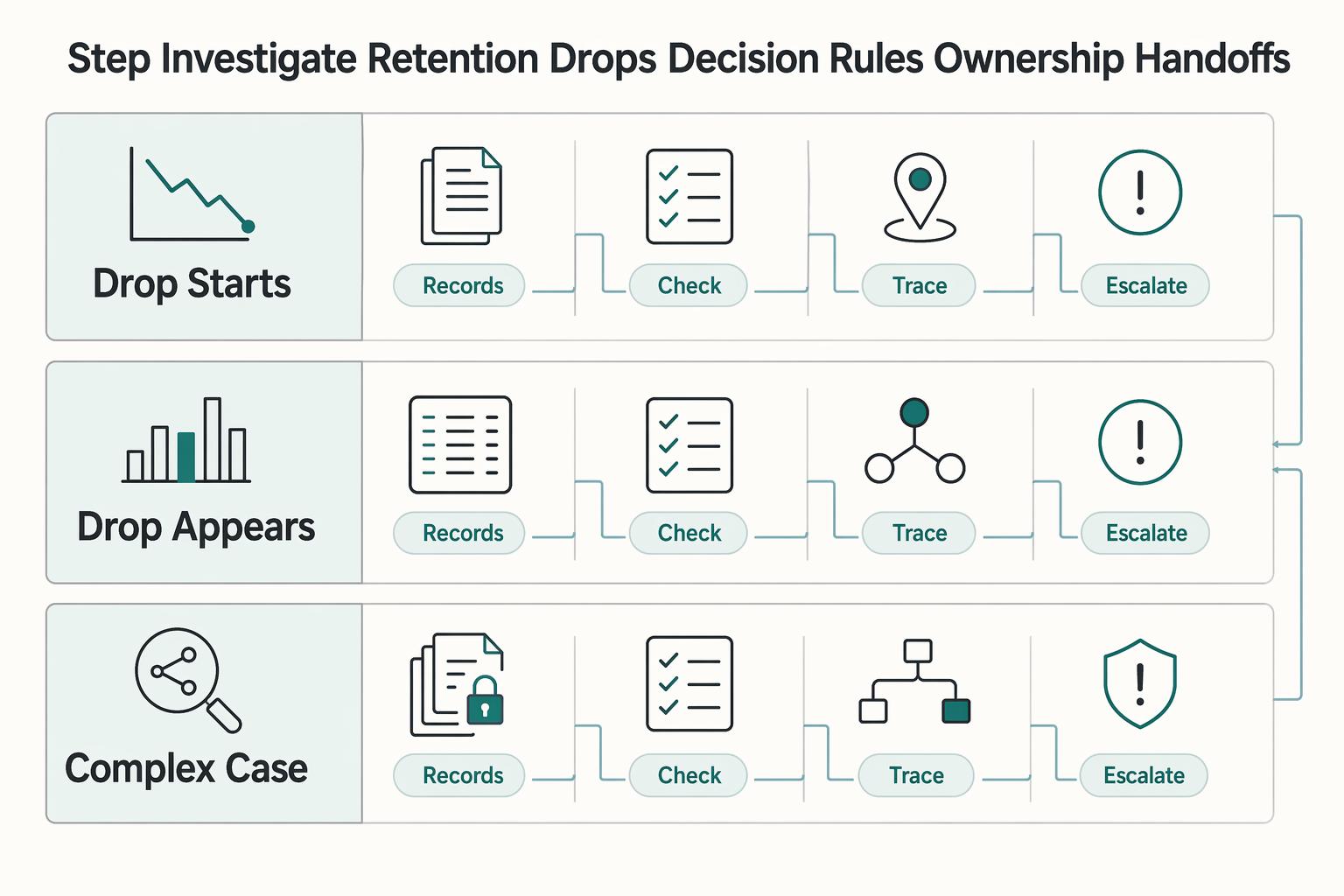
Step 3 investigate retention drops with decision rules and ownership handoffs#
Start with routing, not debate. When a cohort drops, use one decision table that assigns the lane, owner, first query, and escalation point so the issue becomes practical in the same review cycle.
Vague ownership is where retention analysis stalls: product reviews behavior, finance reviews records, ops reviews exceptions, and no one owns the next move. This step turns the drop into a named diagnostic path with explicit handoffs.
| Signal in cohort view | Likely cause lane | Owner | First diagnostic query | Escalation point |
|---|---|---|---|---|
| Drop starts before first successful Renewal, especially before Onboarding completion or Paywall hit | Product-side friction | Product owner | Which affected cohort IDs failed setup, missed paywall, or exited before any billing attempt? | Escalate when the assigned owner cannot resolve within the defined triage path |
| Drop starts at Renewal attempt or retry outcome | Billing and recovery | Finance or billing ops | For affected cohort IDs, how many attempts failed, how many recovered on retry, and did retry timing change? | Escalate when recovery behavior is outside expected policy or prior cohort pattern |
| Drop appears after successful billing while money-side overlays show lag or failures | Settlement or payout reliability | Finance ops | Which transactions are still pending, unreconciled, or failed in the same cohort window? | Escalate when reconciliation cannot explain the cohort delta |
| Failures cluster by market, program, or entity type | Compliance gating | Ops or compliance | Did KYC, KYB, or AML requirements, review rules, or document prompts change for that market/program? | Escalate before shipping UX fixes |
Route early-drop and post-renewal drops differently#
Use a hard split at first successful Renewal. If the drop happens before renewal, prioritize Onboarding and Paywall diagnostics first. If users never reached a billing attempt, payment-side diagnostics are usually secondary.
If the drop starts at renewal or after, prioritize failed-payment recovery and money movement checks. Failed payments can be recoverable, so confirm retry behavior before treating users as churned. If you use Stripe Billing, the documented default Smart Retry reference point is 8 tries within 2 weeks; verify the affected cohort actually received the configured retries and status updates.
Check market/program clustering before changing UX#
If failures cluster by market or program, run a compliance check before you change UX. KYC requirements must be fulfilled before connected accounts can accept payments and send payouts, and verification requirements vary by country/region and legal-entity context.
Compare affected cohorts against recent verification-policy changes and review outcomes for that exact market or program. In provider-managed flows, treat past-due requirements as a diagnostic clue. In Stripe's cited Custom-account schedule, payment capability pause can follow payout pause by an additional 14 days; treat that as provider-specific, not universal.
Require a complete handoff packet#
Do not hand off retention issues with only a chart screenshot. Require these artifacts every time:
- Incident note: observed signal, assigned lane, owner, and escalation path
- Cohort IDs affected: including the cohort definition used
- Reconciliation delta: whether finance can tie the drop to transaction, ledger, or payout records
- Verified rollback condition: what invalidates the fix if UX improves but financial integrity worsens
Step 4 execute fixes with controlled experiments and idempotent rollout checks#
Run fixes in controlled phases, or you will not know whether retention improved or noise shifted. Use this sequence: patch instrumentation first, release to a limited cohort second, verify Webhook integrity third, then expand by cohort slice.
Step 4.1. Patch instrumentation before changing behavior#
If the retention read is unreliable, fix measurement before you change product behavior. Repair event mapping and logging first when drops are tied to late or missing financial status updates, then test copy, pricing, or setup changes.
Start with a percentage rollout and keep a holdout for comparison. Before expansion, confirm that the same cohort IDs reconcile across app events, accounting state, and webhook deliveries.
Step 4.2. Make every retry replay-safe#
All billing and payout retries should include an Idempotency key. Repeated requests with the same key should replay the same result instead of creating a second object, which helps prevent duplicate financial events from distorting retention outcomes.
Treat idempotency as necessary but not sufficient. Log the key, store the first response, and verify retries reference the same key and return the same outcome. Also watch replay windows: keys can be removed after at least 24 hours, so late retries can behave like new operations.
Step 4.3. Contrast fixes and set launch gates before expanding#
Do not combine a pricing-copy change and a payout-reliability fix into one release if you need a causal read. Run a controlled comparison, then compare downstream Renewal and Subscriber churn movement by cohort.
Set go/no-go criteria before launch and enforce them during rollout:
- retention improves in the exposed cohort and remains stable in the next review window
- Reconciliation error volume stays stable as exposure increases
- exception queue time stays within your current operating range
- Webhook monitoring shows expected event delivery, including payout failure events with usable
failure_code
If retention improves while matching errors or exception handling worsens, hold expansion.
Common mistakes that corrupt retention decisions and how to recover#
Even a solid rollout can still lead to the wrong call if your retention view is unreliable. Before you explain causes, verify that the evidence is trustworthy.
| Mistake | How to recover |
|---|---|
| Blended views hide operational differences | Re-cut cohorts into Acquisition cohort and Behavioral cohort splits, then confirm the same boundaries, start dates, and event definitions across review windows |
| Product analytics, the Ledger, and settlement outcomes disagree | Validate affected users in a transaction-level settlement view and confirm each transaction still maps to its payout association when automatic payouts are part of the reconciliation path |
| Policy-affected users are not segmented | Isolate users who hit KYC or AML gates before blaming UX |
| Payout-batch exceptions sit outside the retention review | Include successful, returned, and non-executed payouts, plus payout.failed events and failure_code values |
- Re-cut cohorts before proposing fixes. Blended views can hide operationally important differences, so start with Acquisition cohort and Behavioral cohort splits. Confirm the same cohort boundaries, start dates, and event definitions across review windows. If they changed, restate the baseline before attributing movement to setup, pricing, or churn recovery work.
- Stop interpretation when product analytics, the Ledger, and settlement outcomes disagree. Cross-system gaps are a data-repair issue first, not a retention insight. Validate affected users in a transaction-level settlement view, then confirm each transaction still maps to its payout association when automatic payouts are part of your reconciliation path.
- Segment policy-affected users before blaming UX. If your flow includes KYC or AML gates, isolate those users in retention analysis. Verification requirements can block or pause payment and payout progress, so concentration of churn in that segment should be routed to compliance or ops before product design changes.
- Bring payout-batch exceptions into the same retention review. Include successful, returned, and non-executed payouts, plus
payout.failedevents andfailure_codevalues. If exceptions rise while headline retention looks stable, treat the retention read as potentially delayed or misclassified until exception logs are reconciled.
Related: eLearning Subscription Retention: How EdTech Platforms Reduce Churn with Cohort-Based Billing.
Conclusion#
The practical takeaway is simple: cohort insights are most useful for retention when you tie them to accounting truth, assign an owner, and act on explicit decision rules. A retention curve can tell you which group changed, but only matching records and operating ownership can help you test whether the change came from setup, a paywall break, a failed billing path, or a money movement issue.
That is why the useful version of this process is not just a chart. It is a weekly operating check where cohort shifts are tested against reconciled cash records at regular intervals, because reconciliation exists to catch when accounting changes are needed and to keep records accurate. If your product analytics says recurring charges are up but the reconciled Ledger does not support the same movement, treat that as a data or mapping problem first, not a win.
Use this as a copy-and-paste weekly checklist:
- Verify data integrity.
Check that cohort boundaries, event definitions, and Ledger mappings still match. Your verification point is whether product-side counts and reconciled financial records tell the same story for the review window. If they do not, stop analysis until the mismatch is explained.
- Review cohort shifts.
Look at one stable Acquisition cohort and one Behavioral cohort rather than a blended average. Cohort retention is useful here because it separates users by start time, which makes differences between groups visible instead of hidden inside an aggregate metric.
- Classify the root cause lane.
Decide whether the movement is product-side or money-side. If the drop appears before first successful billing, inspect setup and paywall events first. If it appears after that point, check payment records, payout paths, and retry behavior.
- Assign one owner.
Put a single team or person on the next diagnostic step. Shared awareness is fine. Shared accountability can stall these reviews.
- Launch the fix carefully.
Patch instrumentation before you change customer-facing logic if the data is suspect. For billing or payout retries, confirm your API path uses an idempotency key so you can safely retry requests without duplicating the operation.
- Confirm post-change movement.
Recheck the affected cohorts after the change lands and compare that movement against accounting and matching outputs, not just app events. If the curve improved but cash records did not, the fix is not proven.
If you need to map this into your own stack, review the docs and confirm coverage for Virtual Account support, Merchant of Record scope, and payout controls where supported. A virtual account is a unique account number inside a physical bank account. That can matter for routing and matching context. A merchant of record is the entity legally responsible for processing customer payments. Check those details in writing before you build your retention process around them.
Frequently Asked Questions
What is cohort analysis for subscriber retention on a platform?
It is a way to group users who share a common characteristic, such as acquisition date, and analyze how that group performs over time. In retention work, you are looking at what share of subscribers in that cohort have not churned by period end instead of relying on one blended retention number. That makes it easier to see whether a change is isolated to a specific signup window or subscriber segment.
Acquisition cohort or behavioral cohort first for an operations team?
For a first pass, start with either an acquisition cohort or a behavioral cohort. Use an acquisition cohort when you want a baseline tied to when subscribers first generated positive MRR, then add a behavioral cohort to test whether a specific user behavior aligns with stronger or weaker retention.
How often should teams review a retention cohort table?
There is no universal cadence that fits every platform. Review it often enough to catch changes before the next decision point, but only after the underlying data is stable enough to interpret. A practical checkpoint pattern is to watch early and later horizons such as Day 1, Day 7, and Day 30.
What does a sudden retention drop actually tell you?
It tells you that a specific group’s behavior changed over time, not that you have already found the cause. Your first check is whether cohort definitions or measurement definitions changed between periods. If those are clean, use the drop to narrow the search lane: acquisition timing, behavior milestones, or a financial-record mismatch.
What can cohort analysis not tell you without better data?
It cannot prove causality by itself. Cohort views show that a group changed, but they do not identify a single root cause on their own. Without clean event definitions and traceable financial records, the chart can point you to a problem area but not close the case.
Which is the source of truth when product analytics and ledger records conflict?
For financial truth, use reconciled accounting records, not product analytics events. A general ledger is the accounting record of past company transactions, and reconciliation helps determine whether accounting changes are needed when records disagree. If analytics says "renewed" but the reconciled ledger does not support it, treat that as a measurement or mapping issue until matching is complete.
Try a related tool
Researched and edited by the Gruv editorial team. Gruv builds cross-border billing, payouts, and finance-operations software for global businesses.
Sources
Includes 2 external sources outside the trusted-domain allowlist.
- docs.stripe.com/reports/payout-reconciliationtrusted
- docs.stripe.com/webhookstrusted
- ecfr.gov/current/title-31/subtitle-B/chapter-X/part-1...trusted
- europa.eu/youreurope/business/taxation/vat/check-vat-n...trusted
- irs.gov/forms-pubs/about-form-w-9trusted
- irs.gov/businesses/small-businesses-self-employed/re...trusted
- amplitude.com/explore/analytics/cohort-retention-analysisexternal
- amplitude.com/blog/cohorts-to-improve-your-retentionexternal
Educational content only. Not legal, tax, or financial advice.
Related Posts
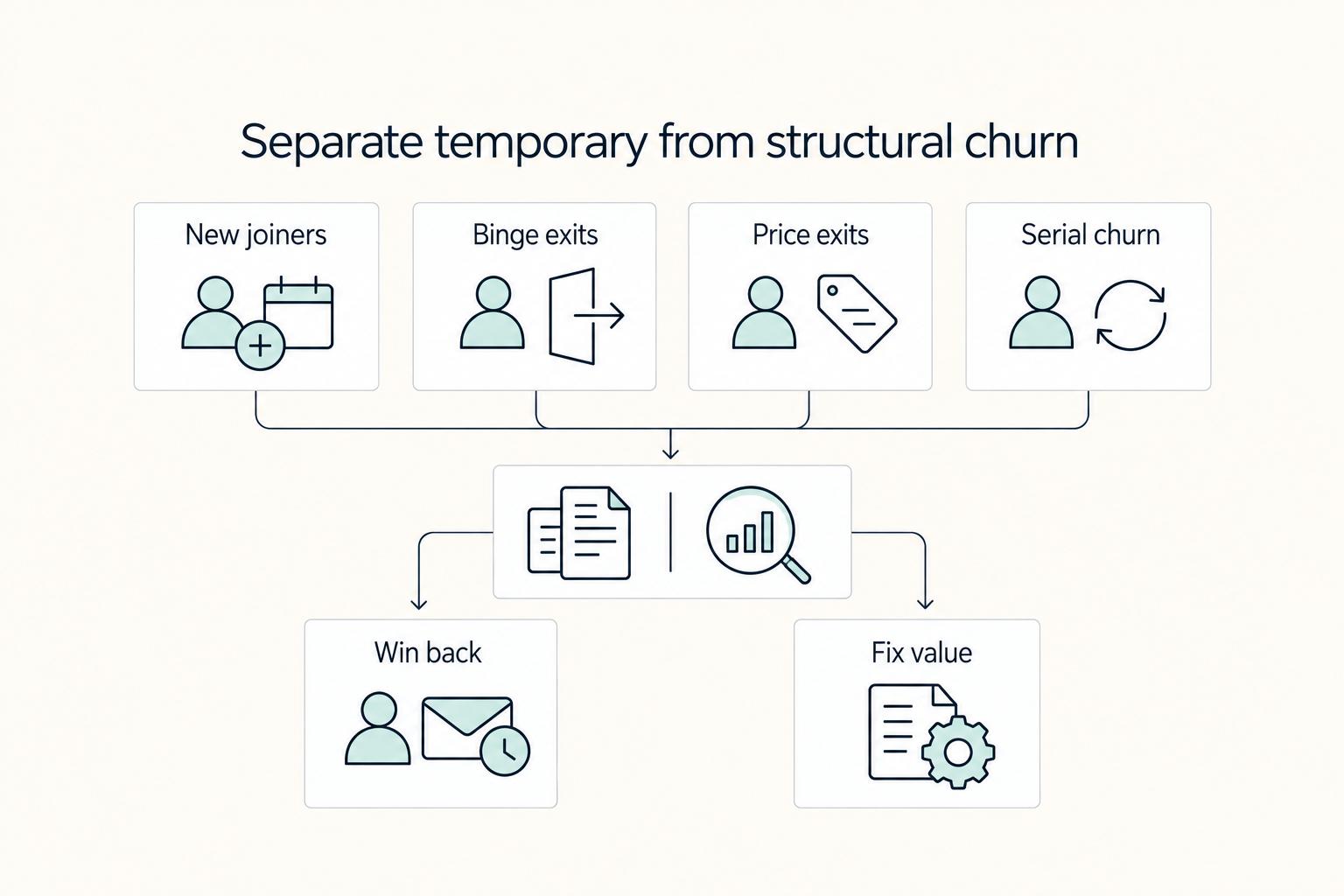
Streaming Platform Churn Analysis: Why Subscribers Leave OTT Services and How to Win Them Back
If you are doing **streaming platform churn analysis OTT**, your first move is not a discount or a copy of whatever a major platform just tried. First separate temporary churn from structural churn, then choose the retention lever that fits the exit pattern before you scale into another market.
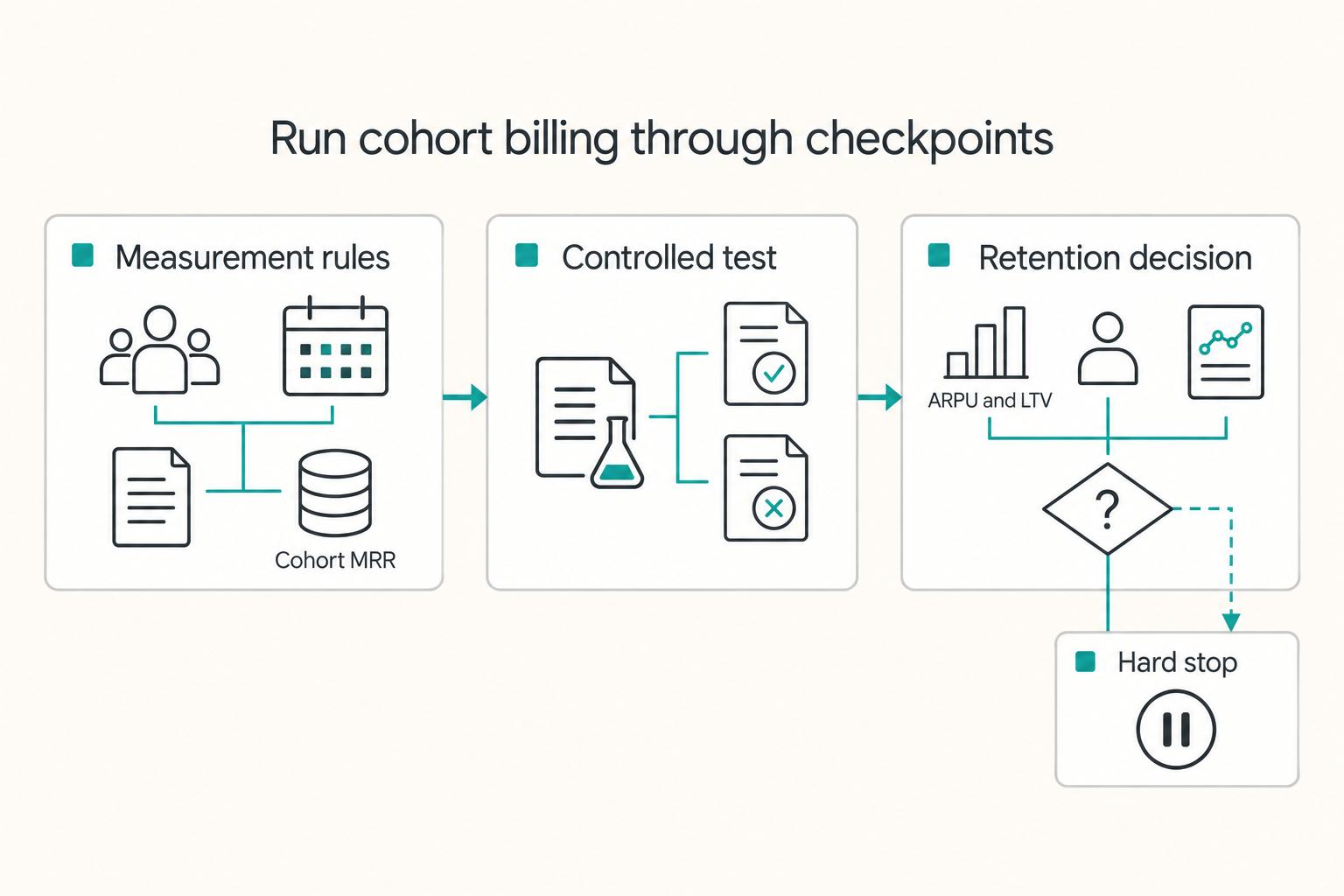
How EdTech Platforms Reduce Churn With Cohort-Based Billing
This is not really a pricing-page decision. It is a billing and measurement decision you need to explain, measure, and operate without mixing up product churn, billing churn, and reporting noise. That is the real job behind **elearning subscription retention cohort billing**, especially once finance asks why retention moved and ops has to prove the answer.
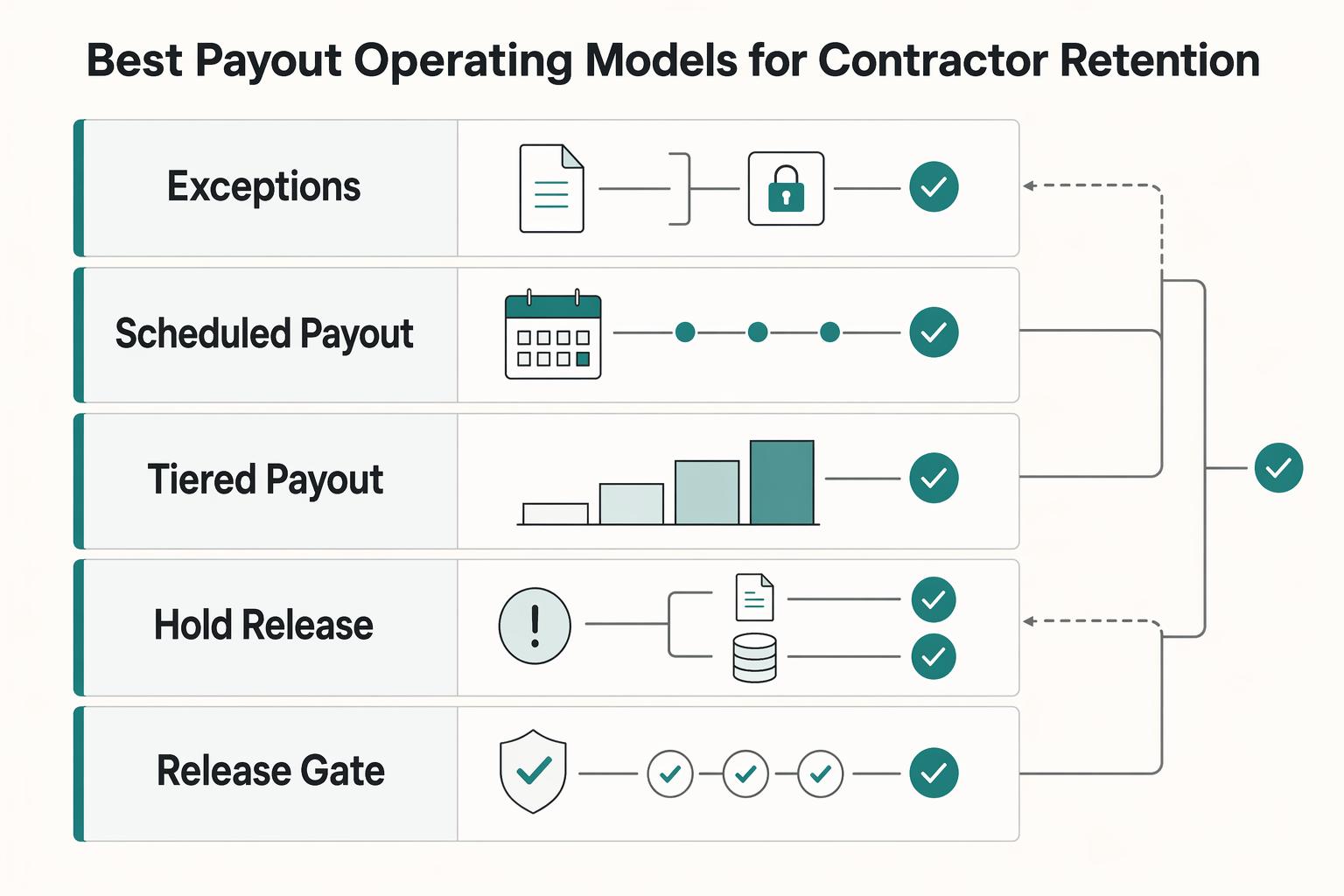
Bad Payouts Are Costing Your Supply in Two-Sided Platforms
Payout issues are not just an accounts payable cleanup task if you run a two-sided marketplace. They shape supply-side trust, repeat participation, and fill reliability. They can also blur the revenue and margin signals teams rely on.