

Quick Answer
Define the target first, then benchmark: write role family, scope type, and deliverable model before comparing any country rates. Use employee compensation data as directional context, not a final contractor decision. Then require evidence ownership across KYC, KYB, AML, and document flow checks such as W-8, W-9, and Form 1099 handling where relevant. Treat the output as an operating decision list for each country-vertical pair: launch, delay, or stop.
Benchmark Pay Before You Expand#
Start with the right question: are you looking at employee pay data, or trying to make a contractor decision? Employee salary and compensation benchmarks can be useful input, but they are not the answer here. Those sources are built to compare employee pay against market rates. Contractor pricing can depend on additional variables, including scope, engagement structure, and whether the work can be onboarded and paid the way you expect.
That distinction matters because expansion work often starts with employee-style assumptions. You see a market rate, treat it as decision-ready, and start allocating product or GTM time. The first checkpoint is simpler: verify whether your source describes employee compensation packages, or whether it can support a contractor pricing decision at all. If it cannot, label it directional market pricing and move on.
The point of market pricing is not to make a cleaner spreadsheet. It is to decide, by country and vertical, where you can launch now, where you should wait, and what still needs proof before you commit resources.
Employee benchmarking sources can still help with that early picture. They are often used to compare compensation with industry standards, stay within budget, and attract and retain talent. Some compensation data also comes from people analytics tools that surface labor market trends, hiring practices, and talent availability. For founders, that makes these sources useful for reading market pressure and competitiveness. The red flag is treating them as if they already answer contractor scope, engagement structure, or payability.
This guide turns broad market inputs into an operating judgment. You will define the role and scope you are actually benchmarking, prepare the evidence pack, grade source quality, and convert market signals into launch choices.
The outcome should be a short list with teeth: launch, delay, or stop. A market can look attractive on headline rates and still fail once the evidence is thin or the assumptions do not hold in a specific vertical. If your current analysis cannot tell you what must be validated before GTM spend, you do not have a benchmark yet. You have early research.
That is the standard here. The goal is not to mirror employee compensation benchmarking or optimize for pay equity inside an employee org chart. It is to use market pricing carefully so you can make better country and vertical decisions with less false confidence.
Define the benchmark target before you touch rate data#
Define the comparison target in writing before you open any rate sheet. If you cannot state the contractor role family, scope type, and deliverable model on one page, do not compare rates across countries yet.
Define the work before you collect market pricing#
Start with the role definition, then move to market data and pay comparison. For each contractor target, write three fields first: role family, scope type, and the actual deliverable.
Use one checkpoint before any country comparison: if two people on your team read the brief and picture different work, the target is not normalized.
Separate employee compensation benchmarking from contractor benchmarking#
Treat employee compensation benchmarks as directional context, not a contractor decision by themselves. Those sources compare job descriptions and pay ranges for similar employee roles and surface market salary levels, which is useful input but still employee-shaped input.
Write a one-page benchmark charter before you open the rate sheet#
Tie the charter to your compensation philosophy and the expansion objective that matters most right now: margin, speed, or talent quality. Include the target role, normalized scope, deliverable model, target countries, and which sources are directional versus decision-ready.
| Charter item | Grounded detail |
|---|---|
| Compensation philosophy | Tie the charter to your compensation philosophy |
| Expansion objective | Margin, speed, or talent quality |
| Target role | Include the target role |
| Normalized scope | Include the normalized scope |
| Deliverable model | Include the deliverable model |
| Target countries | Include the target countries |
| Source status | Mark which sources are directional versus decision-ready |
If that charter does not help you reject weak comparisons quickly, you still have research, not a benchmark you can operate from.
If you want a deeper dive, read The Best Way to Pay a Team of Contractors in Latin America.
Prepare the evidence pack and owners#
Do not start rate analysis until your evidence pack is complete and decision owners are explicit. If a rate cannot be tied to a defined role context, country context, payment context, and accountable owner, treat it as directional, not decision-ready.
Assemble the input pack#
Use one working file built from your benchmark charter. Include role taxonomy, target countries, payment rails, and internal HRIS and payout records so you can compare like with like.
Do not store headline rates alone. NetSuite's salary benchmarking guidance notes that pay comparisons need context, including company size, industry, location, training, and necessary education. For this workflow, keep the closest equivalents beside each rate row: role family, scope type, deliverable model, country, currency, and payment rail.
Minimum row-level checks: source name, extraction date, owner, and country code. If a source is undated or informal, mark it directional only or exclude it.
Define the document and policy gates#
Before analysis, list the document and policy gates that can affect rollout readiness in each market. If relevant to your workflow, track where forms or records such as W-8, W-9, or Form 1099 handling sit in the process, without assuming requirements that are not yet validated.
Keep this as a structured register. For each gate, record when it is collected or reviewed, what counts as complete, and who owns approval or escalation. Apply the same owner clarity to KYC, KYB, and AML policy checkpoints used by your team.
Set the verification checkpoints#
Before analysis starts, run three checks: source freshness, internal data completeness, and audit-trail readiness. You should be able to show the original source, the cleaned version, and why each input was accepted, limited, or rejected.
Also avoid treating peer anecdotes as market truth. Benchmarking networks can transmit pay-setting effects across firms, so one visible data point can distort your baseline if you do not control for context.
For a step-by-step walkthrough, see How Platform Teams Calculate Contractor Net Pay After Deductions.
Normalize roles and contract structures across markets#
Normalize the work definition first, then benchmark pay. If the same title represents different responsibility levels across countries, keep those rows out of the same benchmark set.
Map roles to common responsibility bands#
Map each target role into a small set of shared bands based on skill depth, decision authority, and expected output. Salary benchmarking is the use of market pay data to identify typical pay for an internal position, so contractor benchmarking needs an explicit translation layer when scopes are looser.
Keep each band description short and repeatable. For each role row, record the band label, included responsibilities, excluded responsibilities, and the owner who approved the mapping. Then test sample rows across markets. If reviewers cannot place them consistently, tighten the band definitions before using the data.
Title matching is the common failure mode. If labels like "senior engineer" are doing most of the classification work, your benchmark will drift.
Split engagements by scope pattern before comparing rates#
Segment records by scope pattern before comparing rates: retainer, project, or hourly. Assign one pattern per row in the working file, plus a short note on what is being purchased. If that is unclear in the source, mark the row as directional only.
Use a simple row-level check before pay-band decisions:
- Scope pattern is clear.
- Expected output is clear.
- Responsibility band is clear.
If any of the three is missing, exclude that row from pay-band setting.
Add classification checkpoints and split markets when assumptions diverge#
Add a visible checkpoint for independent contractor classification review and local compliance constraints before you set benchmark ranges. The file should show review status, decision owner, and whether unresolved issues block launch.
Treat the framework as locally customizable. If two markets need materially different scope assumptions or classification handling, maintain separate benchmarks instead of forcing a single global rate card. For a related example, read How to Build a Contractor Rewards Program Using Your Platform Wallet.
Build a source stack and grade data quality by market#
Once your roles and scope patterns are clean, make source confidence the next gate. Build a mixed source stack by market, then grade each source before it influences rate bands or launch decisions.
Assemble a tiered source mix#
Use four source types in your working file: government databases, industry salary surveys, data-sharing networks, and crowdsourced salary websites. The goal is coverage, not equal weighting.
| Source type | Best use | Common gap |
|---|---|---|
| Government databases | Baseline local labor context and broad pay direction | Often employee-oriented and slower to reflect niche scopes |
| Industry salary surveys | Clearer role definitions and segmentation | Periodic updates and may not reflect contractor-specific scope |
| Data-sharing networks | Fresher peer signals from participating companies | Coverage can skew by company type |
| Crowdsourced salary websites | Directional read and outlier checks | Method and sample quality are often less transparent |
Organizations should not rely only on outdated salary tables or annual surveys. Use this mix to balance recency with fit.
Score each source before you use it#
Create a source register and score each source on recency, role match quality, geography fit, and sample credibility. Keep short accept/reject notes so another operator can apply the same logic.
Use concrete source details where available. Oyster's article is dated July 1, 2024 and says inputs include role, seniority, and country, with output as low, mid, and high salary figures. Rippling's article is dated April 24, 2024 and states access to benchmark data across more than 40,000 startups. These details help you grade relevance, but they do not make a source contractor-specific by default.
Reconcile conflicts openly#
When sources disagree, do not average by default. Prefer the source with tighter role and geography fit and clearer methodology, then record why. If disagreement remains material and you cannot explain it from the source details, keep the number directional and hold band-setting decisions.
Keep a live unknowns log for contractor-only gaps#
Maintain a short "what we still do not know" log beside the source register. Track missing contractor-only details, the pricing impact, and the owner for resolution. If an unknown could materially change payable rates or margin assumptions, treat it as a launch blocker.
Turn market rates into payable rates on your platform#
A market rate is payable only when the tax assumptions behind it hold for the contractor profile you are pricing. Before you treat a benchmark as launch-ready, test whether your economics depend on FEIE outcomes that may not apply.
For U.S.-return scenarios, keep these constraints explicit in your planning model:
| Planning check | Grounded constraint |
|---|---|
| Physical presence | 330 full days in foreign country/countries during any 12 consecutive months (the days do not have to be consecutive). |
| Tax-home context | Days abroad count for this test only while the taxpayer's tax home is in a foreign country. |
| Pass/fail boundary | If 330 full days is not reached, the physical presence test is not met. |
| Reporting requirement | Excluded foreign earned income is still reported on a U.S. tax return. |
| FEIE caps | Maximum exclusion: $130,000 (2025) and $132,900 (2026) per qualifying person; a married couple can exclude up to $260,000 in 2025 if both qualify. |
| Housing limit | Housing-expense limitation is generally 30% of the FEIE maximum ($39,000 for 2025; $39,870 for 2026). |
If a quoted rate only works under best-case eligibility, treat that rate as conditional and document the dependency before rollout. The benchmark should reflect what your platform can pay under validated assumptions, not just what looks attractive in a base case.
Related: How to Use Gusto for Payroll for a Small US-Based Agency.
Decide launch order with explicit pass delay stop rules#
After you have a payable rate, set launch order by defendability, not headline margin. If two country-vertical options are close, prioritize the one with stronger auditability and lower exception load.
Rank each country-vertical pair on three axes#
Score each pair on talent competitiveness, payable feasibility, and compliance readiness. Keep scoring simple, but make the evidence clear enough that another operator could review it and reach the same decision.
| Axis | Evidence note | If missing |
|---|---|---|
| Talent competitiveness | Use a dated note with source set, data freshness, unresolved conflicts, payout-path owner, and expected exception types | Treat the score as unproven |
| Payable feasibility | Use a dated note with source set, data freshness, unresolved conflicts, payout-path owner, and expected exception types | Treat the score as unproven |
| Compliance readiness | Use a dated note with source set, data freshness, unresolved conflicts, payout-path owner, and expected exception types | Treat the score as unproven |
Use a dated evidence note for each score: source set, data freshness, unresolved conflicts, payout-path owner, and expected exception types. If that trail is missing, treat the score as unproven.
Set pass, delay, and stop rules before debating upside#
Define the decision rule before comparing market opportunity so weak operational evidence does not get overridden by an attractive rate card.
| Decision | Use it when | Required pre-launch proof |
|---|---|---|
| Pass | All three axes are supported and key unknowns are narrow enough to govern | Source-confidence note, named owner, documented exception path, and current policy-status check |
| Delay | The market may work, but one or two gaps need remediation | Gaps are explicitly logged with owner, due date, and remediation path |
| Stop | Core assumptions are too weak to govern launch risk | No reliable source trail, no clear governance path, or unresolved unowned unknowns |
Break close calls with governance strength#
Choose the pair your team can explain and defend under review. The OCC Payment Systems booklet (Version 1.0, October 2021) explicitly includes compliance risk in payment-systems risk coverage and includes both prior-notice and after-the-fact notice pathways. It also notes that references to reputation risk were removed as of March 20, 2025 (OCC Bulletin 2025-4).
So in close decisions, prefer the option with clearer review history, current policy status, and an owned exception plan. If you cannot show who reviewed the payment path and how the risk is governed, move that pair to delay or stop.
Catch common benchmarking failures before they become rollout mistakes#
Salary benchmarking is useful context, but it is not contractor-specific proof, so treat it as one input rather than a launch decision by itself.
| Failure | What to do instead |
|---|---|
| Employee benchmarking logic appears | Pause and re-scope the contractor work before you set rates |
| Single-source certainty | Require a short comparison note across sources and record conflicts instead of forcing a false consensus |
| Study findings used as contractor proof | Use those findings as employee-pay evidence, not proof of contractor payable-rate performance |
Rebuild scope when employee benchmarking logic appears#
If your process starts from salary benchmarking, pause and re-scope the contractor work before you set rates. The grounded evidence here defines salary benchmarking as market-salary data for internal positions in an employee compensation context, so it should not be treated as direct contractor pricing logic. Use it to inform judgment, then validate contractor scope separately.
Avoid single-source certainty#
Do not let one aggregated third-party source carry the full decision. A single source can still be useful, but it can also hide assumptions about role matching and market context that you have not pressure-tested. Require a short comparison note across sources and record conflicts instead of forcing a false consensus.
Keep study findings in their proper lane#
The cited results (including 87.6% benchmark use and a reported 25% reduction in salary dispersion) describe employee-pay settings, not contractor payout outcomes. Use those findings as evidence of how common and influential benchmarking can be, but do not treat them as proof of contractor payable-rate performance.
Conclusion#
Use your benchmarking method to decide where you can launch cleanly, not to produce a cleaner version of salary research. The number that matters is what your platform can actually support after scope, source quality, and country-specific operating constraints are reviewed, not simply the market's apparent pay rate.
- Define the role before you price it.
Write down the normalized role, seniority, and work arrangement first, for example: hourly, retainer, or project. This is your first checkpoint. If two reviewers cannot read the scope and agree on what work is included, you do not have a benchmark target yet. A common failure mode is treating employee-style salary benchmarks as a direct proxy for contractor rates across markets.
- Build a benchmark you can defend.
Use multiple source types where possible, then score each source for recency, role match, geography fit, and credibility. The categories here are useful: government databases, industry salary surveys, crowdsourced salary websites, and data-sharing networks. Also compare internal versus external pay at the band level, because a benchmark that cannot explain your own offered rates is weak. If a source is in your benchmark, it should have a short accept or reject note, not just a pasted number.
- Convert market visibility into payable economics.
NetSuite and ADP describe salary and compensation benchmarking as market comparison exercises, which is helpful context, but expansion decisions may still need one extra move: translate that market view into a rate your operating model can execute. Your verification point here is simple: Finance, Payments Ops, and Legal should all be able to say the quoted rate is operationally payable, not just market-plausible. If the market looks attractive but exceptions, compliance checks, or payout friction make execution messy, treat that as launch risk, not an ops footnote.
- Set pass, delay, or stop rules by country and vertical.
You do not need fake precision to make a good call. Use these as internal decision rules, not source-defined thresholds. If the source confidence is solid, the role is normalized, and the payable math still works, pass. If the role match is shaky, local assumptions are unresolved, or the internal-versus-external comparison breaks down, delay until the missing proof is closed. If the legal basis is fuzzy or the economics only work when you ignore operational reality, stop.
- Record unknowns and the next review date before GTM commitment.
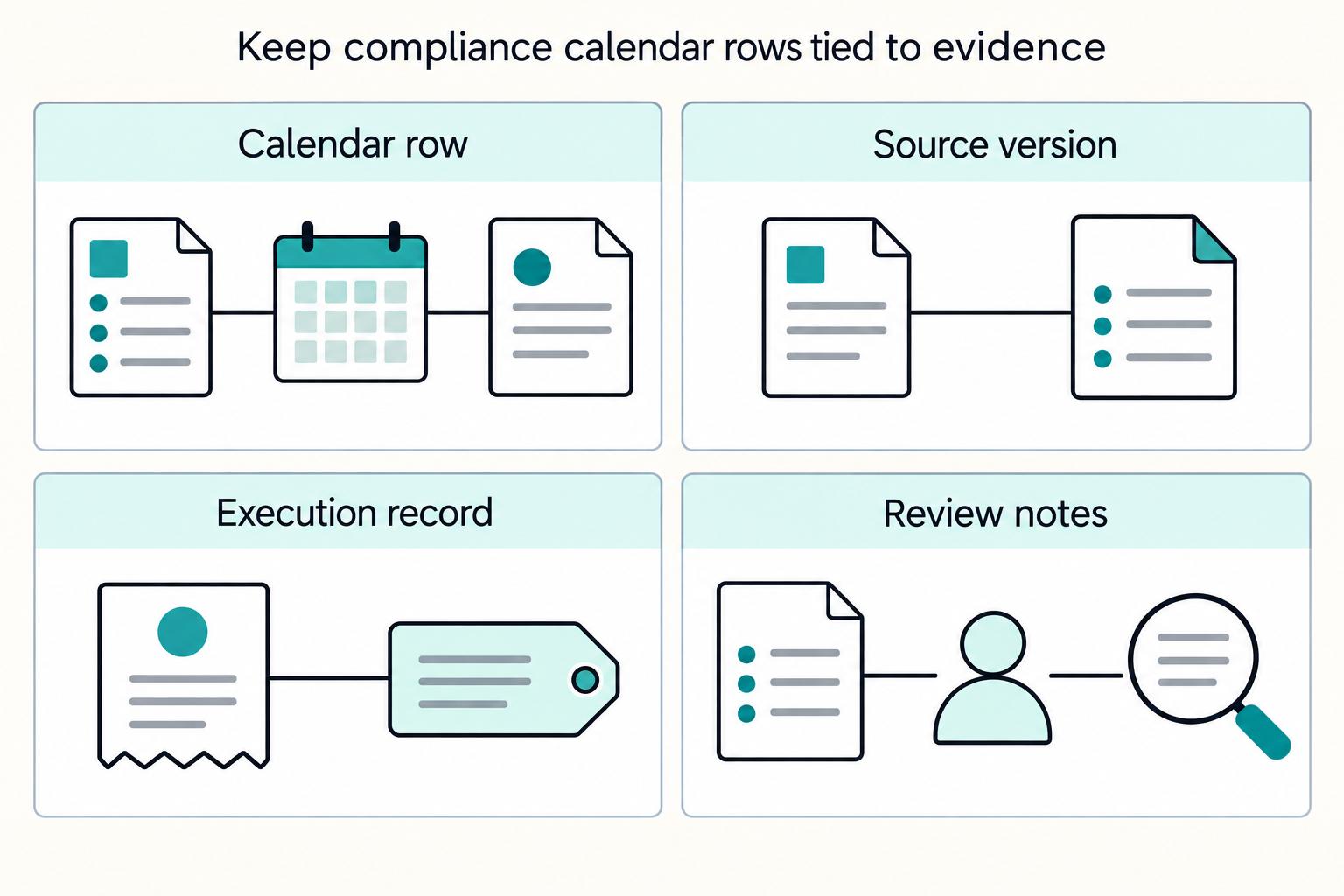
Every country-vertical decision should leave behind a short memo with open questions, named owners, and a re-benchmark cadence. That log is not admin overhead. It is how you avoid launching on stale assumptions, especially where local laws vary by country. If you need help operationalizing that cadence, this companion guide on building a global contractor payment compliance calendar is a practical next step.
Frequently Asked Questions
What is a contractor pay benchmarking methodology in platform operations?
This section’s sources do not provide a contractor-specific benchmarking methodology. A safer interpretation is to use market inputs as one input, then account for operational realities such as transaction costs before treating a number as decision-ready.
How is contractor benchmarking different from employee compensation benchmarking?
ADP defines compensation benchmarking as analyzing salaries and hourly wages to keep employee pay competitive and aligned with market rates. That is useful background. This section does not establish a contractor-specific method, so employee salary benchmarking should not be treated as a complete contractor-pay framework.
What is the minimum reliable source mix for a new country benchmark?
There is no evidence-backed minimum source count or weighting formula in this section’s sources. Instead, apply reliability checks such as recency, role match, and geography fit, and document why each source belongs in your evidence pack.
How should we handle conflicting signals across surveys and crowdsourced data?
Do not collapse unlike sources into one number without review. Keep a short conflict log, then prioritize sources with clearer methodology and stronger role and geography fit.
How do we compare internal offered rates to external market rates without overfitting?
This section does not provide a validated formula for internal-versus-external rate calibration. Compare broad patterns first, and avoid repeatedly tuning the benchmark to explain isolated exceptions.
What should be validated before approving expansion into a new country and vertical?
Verify legal or regulatory assumptions against official sources before approval. For example, FederalRegister.gov states its prototype display is not the official legal edition, and its XML rendition does not provide legal notice to the public. If the legal basis is unclear, pause approval until it is verified.
Try a related tool
Researched and edited by the Gruv editorial team. Gruv builds cross-border billing, payouts, and finance-operations software for global businesses.
Sources
- acquisition.gov/afars/appendix-aa-table-contentstrusted
- documents.dps.ny.gov/public/Common/ViewDoc.aspxtrusted
- dodcio.defense.gov/Portals/0/Documents/CMMC/AssessmentGuideL2.pdftrusted
- eia.gov/analysis/studies/powerplants/capitalcost/pdf...trusted
- fai.gov/sites/fai/files/2022-02/FAI-Project-Managers...trusted
- fdic.gov/formsdocuments/apgm.pdftrusted
- federalregister.gov/documents/2025/12/23/2025-23702/global-bench...trusted
- gao.gov/assets/gao-20-195g.pdftrusted
Educational content only. Not legal, tax, or financial advice.
Related Posts

The Best Way to Pay a Team of Contractors in Latin America
If you need to pay contractors in Latin America without cashflow surprises, start with risk, not convenience. Cross-border payouts can break on delays, hidden FX loss, or compliance friction, so the cheapest-looking option is not always the safest one to run.
How to Use Gusto for Payroll for a Small US-Based Agency
Gusto is a strong primary payroll system when your agency mostly runs U.S. payroll. Once you start paying people outside the U.S., it becomes one part of a broader stack, because sending money and carrying compliance responsibility are different jobs.
Build a Global Contractor Payment Compliance Calendar for Monthly, Quarterly, and Annual Obligations
A usable first version of your **global contractor payment compliance calendar monthly quarterly annual** should work as a control document, not just a list of dates. Keep monthly, quarterly, and annual obligations in one place, assign clear owners and reviewers, and define when unclear rules or missing evidence must be escalated. If you are building version 1, we recommend starting with the obligations your team can evidence today and marking the rest for legal review.