
Quick Answer
Use one deterministic case flow for returns and NOCs, then enforce it across every intake channel. Keep the sequence fixed: ingest raw payload, normalize to internal fields, resolve to the original transfer, post one authoritative state, and publish downstream status from that state. Treat webhooks as early signal, keep `ACHRetNOCInq` for investigation lookups, and use file intake as reconciliation backstop. Separate return and NOC clocks, keep retry cutoffs configurable, and require an evidence pack before any manual closure.
ACH Returns and NOCs in One Event Pipeline#
For many platform teams, ACH Returns and Notice of Change (NOC) handling belongs in the main payment path, not in a side inbox for exceptions. If you split receipt, matching, posting, and customer-facing status too early, problems show up fast. Your books diverge from the product, actions get duplicated on replay, and unresolved items sit in logs with no clear owner.
That matters more with ACH. It is an electronic bank payment system for payments between bank accounts in the United States, processed in batch windows set by the Federal Reserve under NACHA rules. In plain terms, you are not building around one real-time signal. You are building around payment behaviors, platform actions, and operational events that arrive over time and still need one authoritative internal answer.
I will use one working stage sequence throughout: ingest, normalize, resolve, post, publish status. Those names are not a legal standard. They are working terms that keep engineering, finance, and support talking about the same record at the same point in processing.
Start from the state change, not the alert#
A return or NOC message becomes useful the moment you receive it, but receipt alone is not the outcome that matters. The real decision is which transfer it belongs to, what internal state should change, whether money movement or ledger effects should follow, and what your users should see after that decision is made.
That is why the authoritative step should be the internal state transition, not the notification itself. If alerts or dashboards become the first source of truth, support will eventually say a payment failed while finance still shows it as pending, or an operator will retry a case that was already posted once. The better pattern is simple: decide the state once, then let downstream views read from that result.
Use one named sequence#
Those five stages are straightforward, but each one is a real control point:
- Ingest the source message and preserve what arrived.
- Normalize it into your internal event shape so later logic does not depend on one provider payload.
- Resolve it to the original transfer or move it into investigation if you cannot match it cleanly.
- Post the authoritative internal outcome exactly once.
- Publish status so product, support, and ops see the same answer.
Two operator details are worth baking in from day one. First, keep an evidence pack for each event that ties the raw inbound record to the normalized event, the match result, the posting result, and any manual intervention. Second, replay safety is a design requirement, not cleanup. If the same message shows up twice, your processor should confirm the prior result rather than post side effects again.
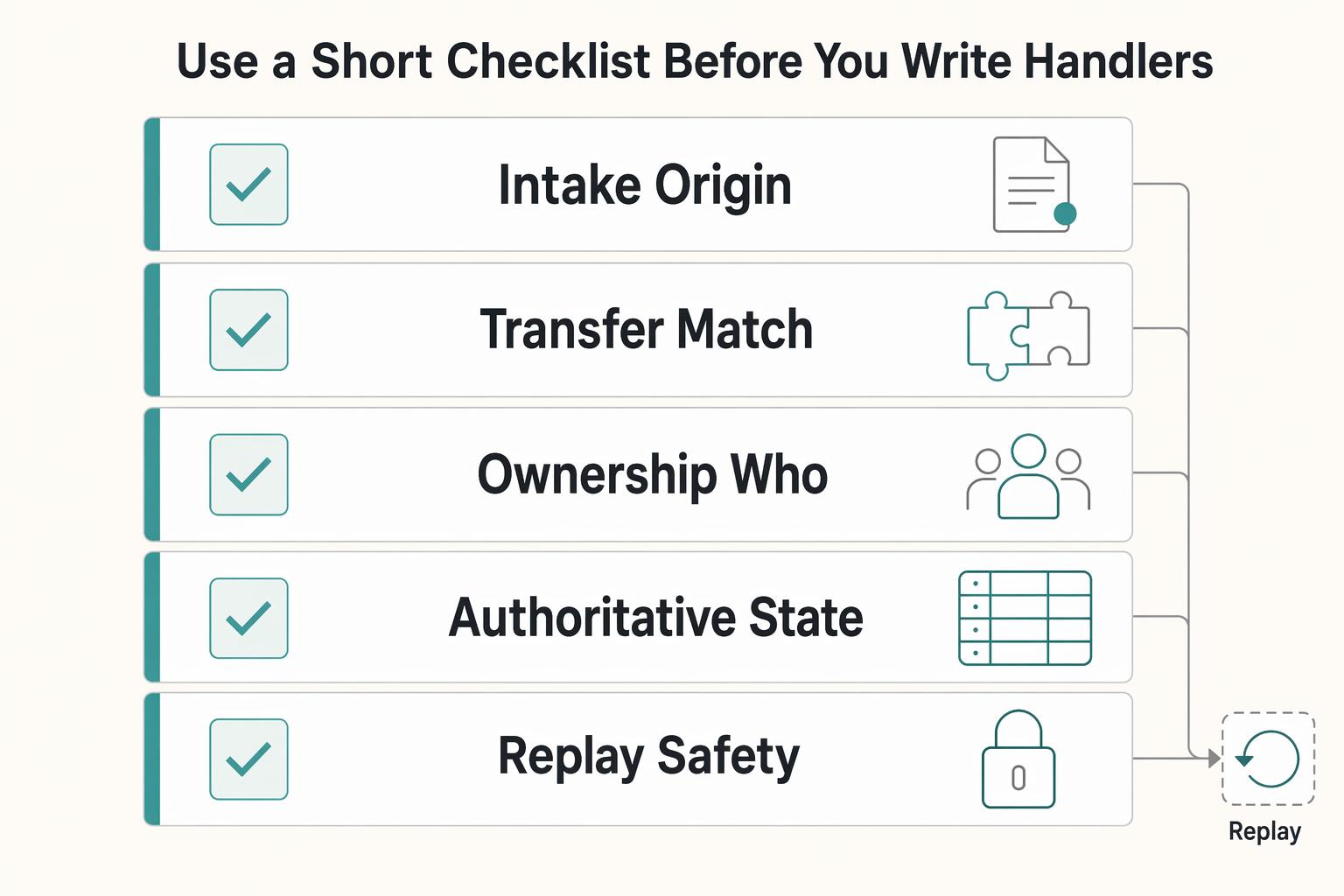
Use a short checklist before you write handlers#
Before you build any code path, make sure you can answer these five questions for every inbound return or NOC. If any answer is fuzzy, stop there, because that is often the first sign of reconciliation debt later:
- Intake origin: where did this message come from, and can you prove which source produced it?
- Transfer match: which original payment should it attach to?
- Ownership: who handles the case if the match is missing, ambiguous, or disputed?
- Authoritative state transition: what exact internal status should change after review?
- Replay safety: if this arrives again, what prevents duplicate posting?
The rest of this article builds from that sequence and those checkpoints. If you want the broader platform design context around payment event ownership, read Machine Payments Protocol Implementation Guide for Platforms. If your next step is the origination side rather than the return side, the companion piece on ACH API integration for platform transfers is the natural follow-on. For a step-by-step walkthrough, see FedNow vs RTP vs ACH for U.S. Platform Payout Routing.
Set the ground truth for returns and NOCs before writing code#
Set the internal contract before you build handlers, or different teams will make different decisions from the same event. Use a three-part implementation checklist: term definitions, a normalization contract, and an action map that still holds if integrations change.
| Artifact | What you define | Verification checkpoint |
|---|---|---|
| Term definitions | What your team means by ACH Return and Notification of Change (NOC) as internal labels (not provider wording) | Two people from different teams classify the same sample record the same way |
| Normalization contract | Minimal canonical fields: event_class, posting_intent, customer_status, ops_state | Core logic reads only internal enums, and raw provider values are stored unchanged for audit and replay |
| Action map | Per event class, allowed state change, escalation trigger, and RACI (decides, executes, approves exceptions) | A reviewer can predict the internal outcome from the table without reading code |
Do not leave ownership implicit. For each event class, name who decides the internal state, who executes the action, and who approves exceptions. This is what prevents unresolved-case drift when teams assume someone else will check it.
Run one cross-functional tabletop test before implementation. Give engineering, finance, and support the same sample inbound payload and require each team to produce the same normalized record, posting intent, customer status, and owner. Pass only if all three match and an exception approver is named; fail if any team proposes a different ledger effect, customer message, or escalation path.
If you are designing origination in parallel, pair this with ACH API Integration: How to Programmatically Initiate and Track ACH Transfers from Your Platform. Related: Payout Method Comparison Tool for Platform Operators Across ACH, SEPA, PIX, and UPI.
Choose your intake channel based on control and latency needs#
After you define what returns and NOCs mean internally, decide one thing early: which channel can establish posting truth. A practical pattern is to set one deterministic source-of-record path first, use inquiry for investigations second, and use push only for earlier awareness.
| Intake mode | Primary purpose | Operational risk tradeoff | Minimum contract checks |
|---|---|---|---|
| Scheduled file delivery | Deterministic intake and reconciliation backstop | Better completeness control, with slower visibility and more batch operations | Auth and delivery method, file naming and schema/version handling, expected arrival window, partial-file/reject behavior, replay behavior, parser behavior on unknown fields |
| On-demand inquiry endpoint | Record-level lookup when ops must confirm a specific item | Strong for case handling, weak as a primary posting trigger because usage is selective and operator-driven | Auth, rate/timeout behavior, error contract, response schema/version handling, identifiers returned, behavior when an item is missing or pending |
| Push notifications | Earlier awareness and faster triage | Faster signal, higher risk if treated as final posting truth | Signature/auth checks, retry behavior, duplicate delivery handling, ordering assumptions, schema/version change handling, response codes that trigger resend or dead-letter paths |
Use the channels in sequence. Anchor your posting decisions to the path with the strongest completeness and replay behavior. Add inquiry so support and finance can resolve one-off cases without waiting for the next scheduled intake. Add push when earlier case creation or alerting matters, but keep awareness separate from final posting truth unless your contract and controls explicitly support that.
What to verify before build#
Keep the exact interface contract in your evidence pack: spec version, sample payloads, auth method, failure behavior, and version-handling rules. If formal terms are referenced through FederalRegister.gov, verify them against the linked official printed PDF or edition before you treat that language as legally reliable.
Dual-path acceptance checklist#
Approve a dual-path design only when these are named and tested:
- Deduplication key: use provider item ID, event class, and effective date, or your documented equivalent.
- Reconciliation cadence: compare source-of-record counts with awareness-path counts on a documented schedule.
- Disagreement ownership: a named posting-truth owner decides the outcome, a named case owner works the case, and a named exception approver signs exception outcomes.
- Failure behavior: if push arrives without a matching source-of-record item, move to investigation state and avoid a second ledger effect.
- Schema drift test: replay one payload with an added unknown field and one with a missing noncritical field before go-live.
If you are designing intake and origination together, pair this with ACH API Integration: How to Programmatically Initiate and Track ACH Transfers from Your Platform.
Related: Machine Payments Protocol Implementation Guide for Platforms.
Define a canonical event model that survives provider differences#
Use one internal contract for every intake channel, and treat it like a definitions exhibit, not an informal mapper. If engineering, ledger, and ops do not share one term registry, the same event will eventually be interpreted two different ways.
One practical pattern is to separate existence from activation. The model can exist on an internal effective date, but a parser or provider mapping should not go live until it passes a named commencement checkpoint.
Minimum canonical contract#
Your canonical record should always do four things: identify the case, classify the event, preserve source evidence, and constrain state changes. Define your internal meanings for ACH Return and Notification of Change (NOC) in the registry first; if those meanings are not explicit, classification is guesswork.
Keep identity in two layers: a business key for the case, and source identifiers for each provider or channel. The business key resolves multiple inbound messages to one case. Source identifiers preserve traceability.
| Canonical block | Contract intent | Required vs optional | Primary owner |
|---|---|---|---|
| Event identity | Business key plus retained source identifiers | Required | Engineering + Ledger |
| Event classification | Internal event type (ACH Return or Notification of Change (NOC)) from your definitions registry | Required | Ops + Engineering |
| Source evidence | Raw payload reference, channel/provider, receipt timestamp, source schema/version note | Required | Engineering |
| Processing state | Explicit allowed transitions, transition timestamps, replay result, duplicate result | Required | Engineering + Ops |
| Derived operational fields | Routing, queueing, and reporting fields beyond the core contract | Optional (must have a named purpose) | Ops |
Store both artifacts: the immutable raw message and the normalized projection used for operations. Persist parser or mapper version and definitions-registry version with each projection. Rule of thumb: if term meaning changes, reprocess from raw; if you only add derived fields, append a new projection instead of rewriting history.
Run two acceptance checks before go-live. Replay the same source message twice and confirm the second pass resolves to the same case, not a new posting candidate. Then send two channel variants for the same business event and confirm they converge on the same business key and event type.
This model stays reliable only if engineering, ledger, and ops keep day-to-day ownership of it. For the outbound side of the same flow, use ACH API Integration: How to Programmatically Initiate and Track ACH Transfers from Your Platform. For a broader contract and state-machine framing, see Machine Payments Protocol Implementation Guide for Platforms.
Implement processing order that prevents reconciliation debt#
Use one deterministic, fail-closed processing contract for every inbound return or NOC event to reduce duplicate financial impact and channel-by-channel reconciliation drift.
Define the contract as an internal operating rule, not an ACH-mandated sequence, and enforce it in order:
- Ingest the event and store the raw payload.
- Validate required fields and schema fit.
- Deduplicate against existing case or event identity.
- Resolve the related business case, or mark it unresolved.
- Post authoritative state.
- Publish derived updates such as status views, notifications, routing, and reporting.
If any gate is not met, stop before posting and move the case to investigation.
Keep one hard boundary: only authoritative posting can change financial state. Everything published after that is a recoverable projection. If a downstream publish step fails, replay should rebuild projections without creating a second financial posting.
For operator usability, require each case checkpoint to include owner and next action, not just IDs:
| Checkpoint | Required operator fields |
|---|---|
| Received and validated | Timestamp, owner, current state, next action |
| Matched or unresolved | Timestamp, owner, current state, next action |
| Posted or blocked | Timestamp, owner, current state, next action |
| Published, failed, or pending | Timestamp, owner, current state, next action |
That discipline also makes changes easier to absorb when the processing environment moves. The Federal Reserve's new priced-service fee schedules became effective January 1, 2025, and the same notice reports 99.0 percent FedACH cost recovery after a platform modernization implemented in 2021, with ongoing investment in capabilities and resiliency.
For adjacent implementation detail, pair this with ACH API Integration: How to Programmatically Initiate and Track ACH Transfers from Your Platform and Machine Payments Protocol Implementation Guide for Platforms.
Set timing windows and retry boundaries your ops team can enforce#
Use two separate clocks, one for returns and one for NOCs, and stop retries before ownership gets ambiguous. Every case record should answer three questions without log access: what clock is running, what triggers escalation, and what state closes the case.
A practical operating pattern is:
- Start the channel clock when the first expected signal is due or the first attempt begins.
- Escalate to ops when your documented retry or wait boundary is crossed, or when data cannot be trusted.
- Close only when disposition is recorded and evidence is attached.
| Channel | What clock runs | Escalation trigger | Automation owner state | Ops owner state | Case closes when |
|---|---|---|---|---|---|
Webhooks | Event-awareness clock from expected update window | Expected update not received by your configured boundary, or payload cannot be validated | awaiting_webhook | backstop_required | Matching event is confirmed from a backstop channel, or the case is dispositioned as no event |
SOAP via ACHRetNOCInq | Investigation clock from first lookup attempt | Inquiry attempts cross your documented retry boundary, or results are inconsistent | inquiry_retrying | manual_investigation | Operator records final disposition with request/response artifacts |
Inbound ACH Returns and NOC's file | Intake-completeness clock from expected receipt cycle | Expected file is absent, unreadable, or incomplete after your receipt boundary | awaiting_file | intake_gap_review | File is reconciled, or the gap is dispositioned with evidence |
These are internal control states, not ACH-mandated labels. Keep that boundary explicit, especially because the supplied source excerpt is a Federal Register contents page dated Monday, October 23, 2023 and does not provide ACH timing or retry guidance.
Keep return risk and NOC correction on different clocks#
Do not age ACH Return and Notification of Change (NOC) cases together. Returns are financial-risk and posting cases; NOCs are correction cases. When they share one queue clock, teams either close financially open work too early or leave correction work open longer than needed.
Use separate required-field checklists so each case is auditable:
-
ACH Returnrequired fields: -
source channel and source reference - canonical event ID - related transfer or payment ID - receipt timestamp - matched or unresolved status - posting status - customer-visible state at receipt - current owner and next action
-
Notification of Change (NOC)required fields: -
source channel and source reference - canonical event ID - related customer or account record - receipt timestamp - correction status - affected bank-detail fields - current owner and next action - next origination that must be blocked or reviewed - resolution timestamp when corrected
If your transfer-side identifiers are still inconsistent, fix that first in ACH API Integration: How to Programmatically Initiate and Track ACH Transfers from Your Platform. Then align replay and closure boundaries with Machine Payments Protocol Implementation Guide for Platforms.
Late returns are exception control, not normal retry#
If a return arrives after success was already shown, move it straight to an ops-owned exception state. Do not let standard in-window automation keep running as if nothing changed.
Require an evidence pack before closure:
- raw source payload
- canonical event ID
- original transfer ID
- journal or ledger reference (if posted)
- timestamps for success shown and return received
- operator decision note
Until the cutoff is verified and documented, mark the record with unresolved-state copy such as Current cutoff pending official, bank, or provider verification. For broader cross-border context, see International ACH Transfers: Complete Guide for Platform Cross-Border Payouts.
Build operator-facing controls and evidence packs, not just API handlers#
The bar here is simple: an operator should be able to close the case without asking engineering to read logs. Keep the same three-step flow, and make each step end in one outcome only: trace the case, export the evidence, and resolve owned alerts.
Step 1 makes the case traceable#
Make one case view answer three questions: what arrived, how your system interpreted it, and what happened downstream. Use your existing anchor key, for example ACHRecId if that is already your internal key, so operators can pull one full timeline from search to resolution.
Required views in that case screen:
- raw intake record
- normalized event interpretation
- downstream posting or handling state
Run a quick acceptance check on one live return and one live NOC: from the anchor key, can an operator reach both the original intake payload and the current outcome in one screen? If not, the pipeline is still fragmented for operations. If transfer identifiers are still weak, fix that first in ACH API Integration: How to Programmatically Initiate and Track ACH Transfers from Your Platform.
Step 2 makes the handoff exportable#
The export is a handoff artifact, not a reporting extra. Keep one consistent schema across returns and NOCs, and use explicit columns so finance or audit can filter and review without reopening the app.
| Field group | Details |
|---|---|
| Case and event IDs | internal case ID and canonical event ID |
| Source reference | source channel and source reference |
| Classification and status | event classification and current handling status |
| Related record | related transfer, payment, customer, or account reference |
| Timestamps | receipt timestamp, latest transition timestamp, and resolution timestamp if closed |
| Ownership and notes | current owner, last human intervention, and disposition note |
| Pending requirement | Current retention requirement pending official, bank, contract, or internal policy verification |
At minimum, the export should include the fields above.
Handoff acceptance check: can a reviewer determine money state, customer-visible state, and current owner from the export alone?
A practical pattern is to separate checkpoint fields instead of overloading one status value. In the TX-RAMP "Archer Search Report," Certification Expiration Date and Provisional Certification Expiration Date are distinct fields, and provisional rows may rely on the provisional field. Apply that same field-separation discipline to your case exports.
Step 3 makes alerts ownable and auditable#
Alerts only work when ownership and history are explicit. Define clear queue states, document the escalation handoff between teams, and keep each transition auditable.
For every manual intervention, record:
- actor
- timestamp
- reason
- action taken (including replay, override, or reclassification when applicable)
For sensitive data, keep masked fields by default, and log any unmask access. If alert ownership is still scattered across jobs and inboxes, align it to a single lifecycle model as described in Machine Payments Protocol Implementation Guide for Platforms.
Handle common failure modes with explicit recovery paths#
Use explicit recovery states, not ad hoc fixes: when a case fails, the next state and required evidence should already be defined.
| Failure mode | Required recovery path | Required control or evidence |
|---|---|---|
Duplicate delivery across Webhooks and file pulls | Merge duplicates into one logical event | One idempotency key, with only the first validated event allowed to change posting state |
| Return cannot be confidently linked to the original payment | Move to investigation and block closure | Required case evidence bundle before any manual resolution |
Open Notification of Change (NOC) correction | Gate the next origination for that account | Release only after corrected details are saved, verified, and the case state is updated |
| Inbound schema drift | Fail closed into schema review | Capture parser/schema version at ingest and run contract tests before release |
| Operator session state invalidated (for example, sign-out in another tab) | Force re-entry through a clean reload path | Explicit UI recovery message and auditable re-entry to the same case |
Step 1. Collapse duplicate delivery into one logical event. Intake channel is transport evidence, not identity. Enforce one deterministic winner rule so duplicate arrivals add metadata only and do not create a second posting outcome.
Step 2. Route unmatched returns into investigation with required evidence. If matching confidence is not sufficient, stop normal flow and require a complete evidence bundle before the case can progress. This keeps manual resolution auditable and consistent.
Step 3. Keep open NOC corrections as hard gates. An open correction stays operationally blocking until the corrected details are verified and the case state is explicitly updated. Do not treat this as a soft reminder.
Step 4. Quarantine schema drift and version changes. Parse-contract changes should fail closed, then move through schema review and contract testing before downstream posting resumes. Use concrete checkpoints in your engineering evidence trail, for example tracked repo state such as moov-io/ach-test-harness commit 557e316, so operators and engineers can verify what version was in effect.
For ACH-rule specifics not established by official, bank, provider, or contract records, for example formal deadlines or threshold-based timing rules, keep behavior policy-driven and explicitly marked as internal control until verified.
Conclusion#
A practical choice is one documented pipeline, and the payoff is operational, not cosmetic. If your team routes return and correction events through the same intake, normalization, case-state, and evidence path, it becomes easier to maintain one shared record and one recovery process when an event does not match cleanly.
That only holds if your controls are documented at the same level as your handlers. Keep the raw source payload, your canonical event, and the case timeline together so an operator can verify what arrived, what your code concluded, and what changed next without digging through logs. If a term, status, or correction rule is defined differently across provider docs, contracts, or legal text, do not smooth those differences away in code. The broader lesson from official glossaries is simple: definitions can vary by contract or statute, and ambiguity needs an explicit decision, not an assumption.
If the bigger issue is consistent state handling across more payment rails, compare this approach with Machine Payments Protocol Implementation Guide for Platforms. Before rollout, validate four things in your own stack:
- Intake coverage: every path you depend on is accounted for, authenticated, and tied back to the same case record. Miss one path and you create orphaned events that finance has to reconcile by hand.
- Canonical event integrity: the normalized record can be recreated from the immutable source payload, and replay protections prevent duplicate money movement or duplicate operator tasks.
- Retry and escalation boundaries: unresolved cases stop in an explicit investigation state instead of looping forever. If your documentation does not clearly support an automatic retry or correction, keep it manual until verified.
- Evidence-pack readiness: an operator can export the source payload, normalized event, timestamps, decisions, and manual notes for review. If you cannot assemble that pack quickly, you are not ready for a real exception.
Be strict about document quality when you validate those rules. Official references should at least pass basic authenticity checks such as a .gov domain and HTTPS, but your provider agreement, processor documentation, and bank procedures are what should drive production behavior. Use outside references to clarify language, not to invent handling rules your counterparties have not confirmed.
If your next gap is transfer creation and status tracking, read ACH API Integration: How to Programmatically Initiate and Track ACH Transfers from Your Platform. Final step: confirm your current runbook against provider and bank documentation, then run an ops drill before production rollout. A single deterministic pipeline is only real once your team can process a messy case end to end, show why each state changed, and recover without improvising.
Frequently Asked Questions
What is the practical difference between an ACH Return and a Notification of Change (NOC)?
Treat them as separate event types from day one. The overview explicitly lists ACH Returns and Notice of Change (NOC) as different topics, but it does not assign team ownership, approvers, or SLAs. Verify those boundaries in your provider docs and internal policy before you let either path change money state or bank instructions.
What timing assumptions are safe to encode?
Encode only what is clearly supported here: ACH is processed in batch windows set by the Federal Reserve and governed by NACHA rules. Do not hardcode return deadlines, retry windows, or correction cutoffs from this section. Keep those values configurable until current provider documentation, bank requirements, and your operations policy verify the rule or cutoff to use.
Which fields should we persist for traceability?
A conservative starting point is to persist the raw source payload and your normalized event for later review. ACHRecId, a status timeline, and evidence links may be useful, but this section does not establish any of them as required, standardized, or sufficient on their own. Verify the minimum traceability set with audit, ops, and provider teams before you lock your data model.
How do we choose an initial implementation scope without overbuilding?
Start with the areas the overview actually calls out: payment behaviors, platform actions, operational considerations, and operator-facing sections such as Operations and Origination Limit. If your next decision is how to initiate and monitor transfers, the practical companion is ACH API Integration: How to Programmatically Initiate and Track ACH Transfers from Your Platform. If you are standardizing event ownership across more payment types, compare the same decisions against /blog/machine-payments-protocol-implementation-guide-platforms before you expand scope.
Try a related tool
Researched and edited by the Gruv editorial team. Gruv builds cross-border billing, payouts, and finance-operations software for global businesses.
Sources
- agendalink.fortbendcountytx.gov/docs/2025/CCTR/20250826_4015/65285_R25-004.B...trusted
- boonemo.gov/clerk/WebPublish/commission/orders/2019/2019...trusted
- capitol.tn.gov/Archives/Joint/committees/fiscal-review/cont...trusted
- das.nebraska.gov/materiel/purchasing/6264/1%20AT&T%206264%20Z...trusted
- dir.texas.gov/it-solutions-and-services/glossary-termstrusted
- downloads.regulations.gov/BSC-FFM-2026-0001-0001/attachment_17.pdftrusted
- energy.gov/sites/default/files/edg/media/DE-RW0000005.pdftrusted
- federalregister.gov/documents/2023/11/24/2023-25925/federal-rese...trusted
Educational content only. Not legal, tax, or financial advice.
Related Posts
Machine Payments Protocol Implementation Guide for Platforms
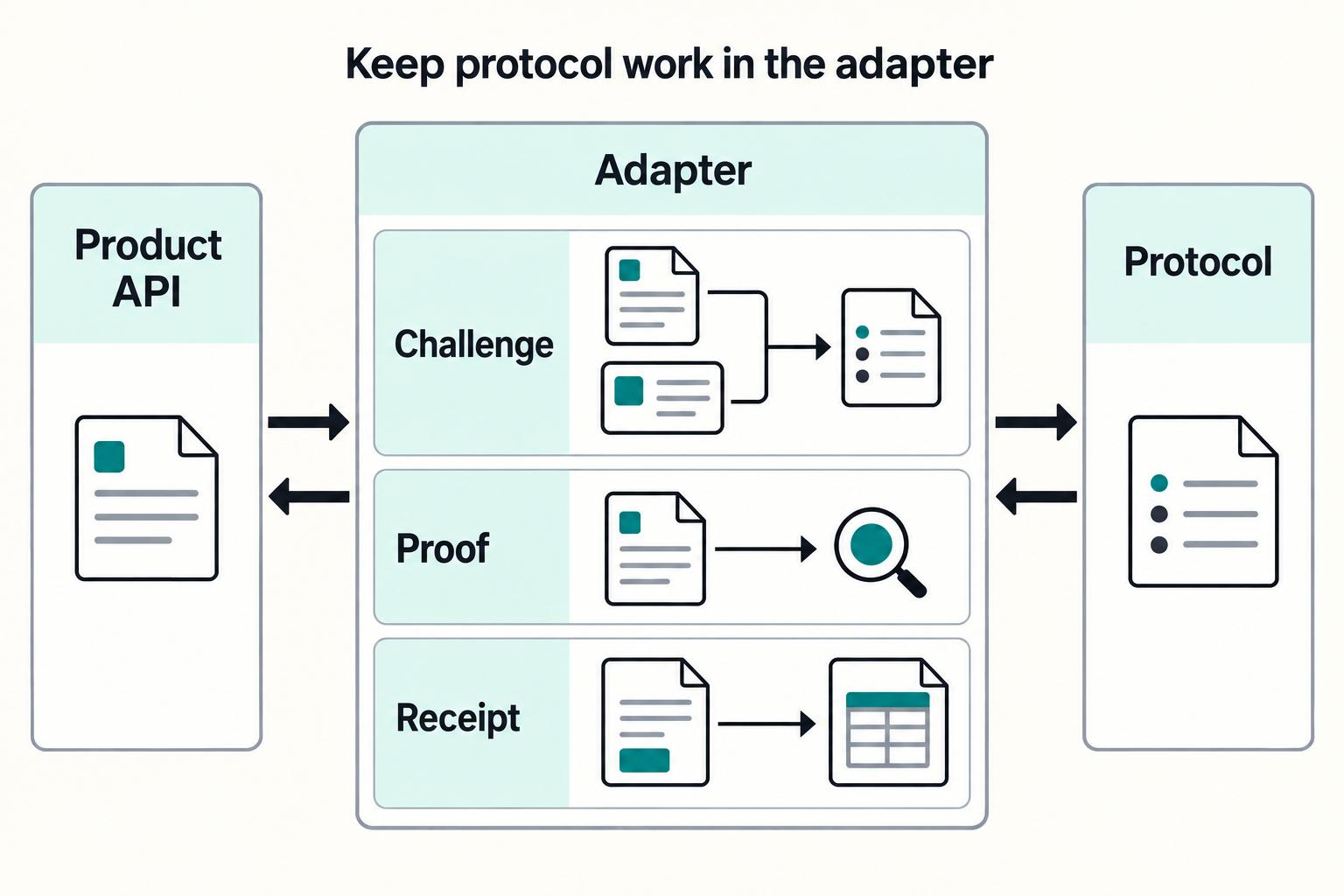
Machine Payments Protocol can be piloted now, but it is not a plug-in billing toggle. In a machine payments protocol implementation, the main risk is usually not whether HTTP `402 Payment Required` exists. It is choosing the wrong payment pattern for your traffic and controls, then creating reconciliation gaps, payout surprises, or brittle edge behavior.
ACH API Integration to Programmatically Initiate and Track Transfers in Your Platform
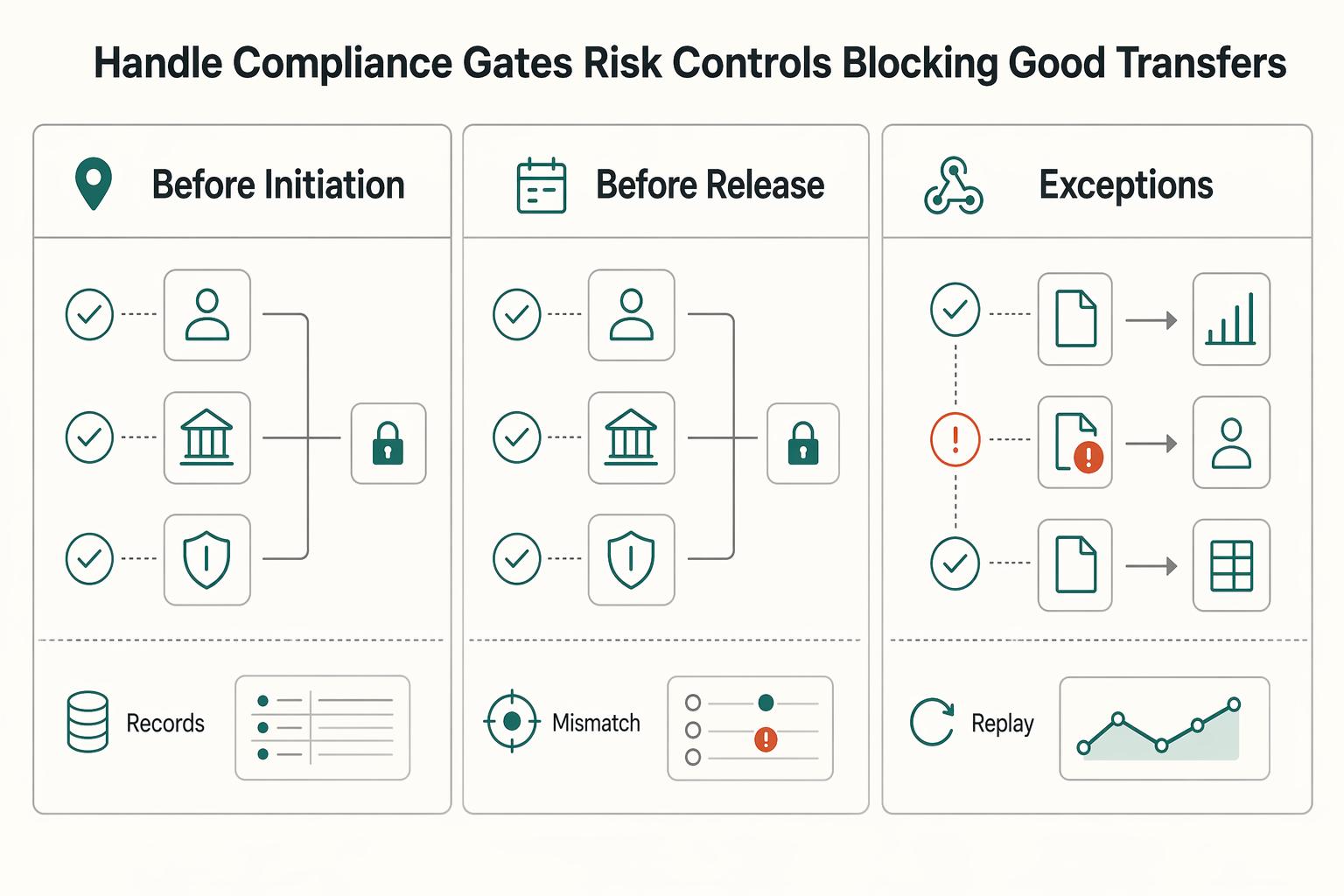
Treat this as an architecture guide, not an ACH 101. An ACH API lets your platform initiate, send, and track ACH payments. The harder part is often not the first create-transfer call. It is deciding where transfer intent lives, how asynchronous status updates enter your application, and which records you keep when finance or support asks what happened to a specific payment.
International ACH Transfers for Platform Operators
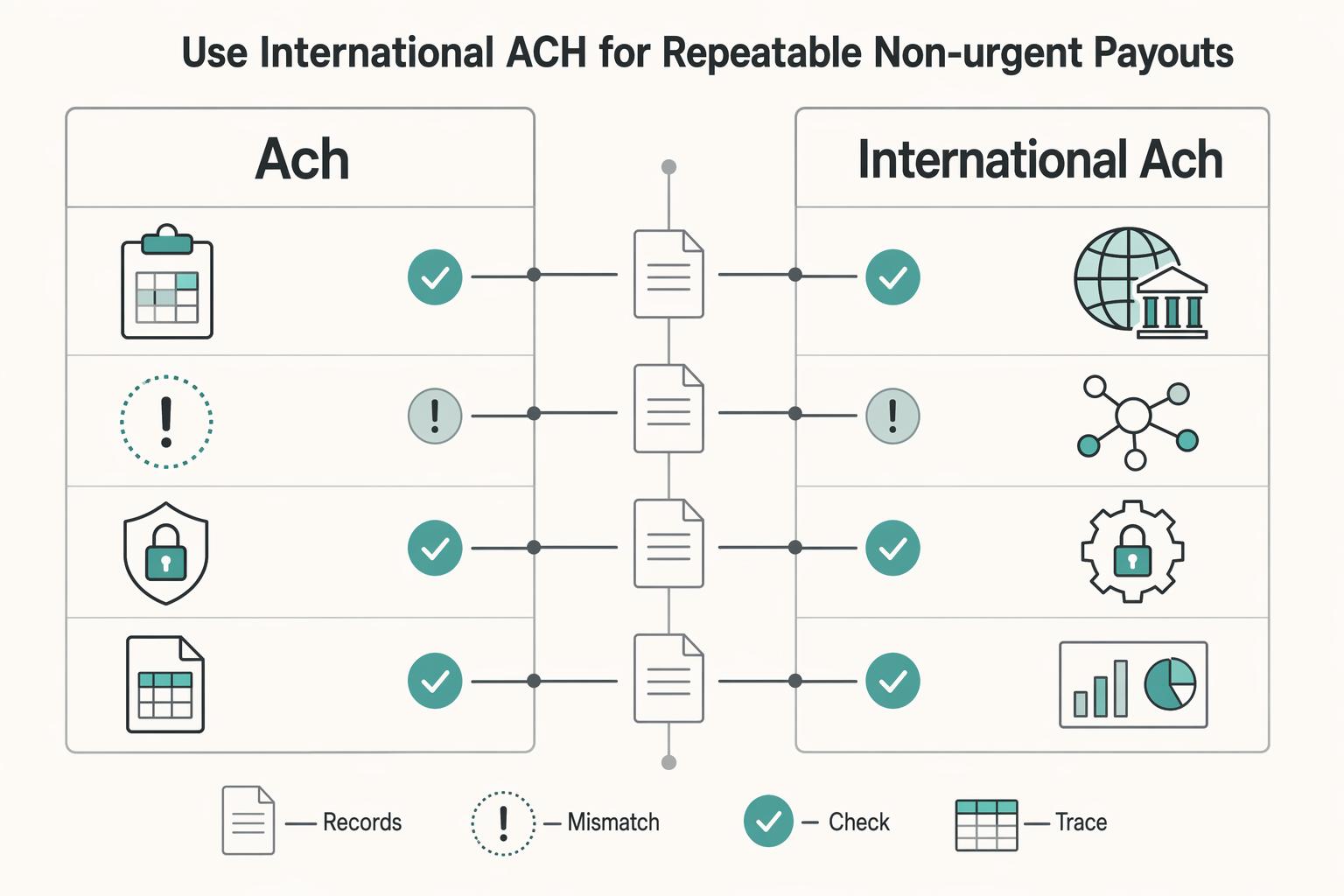
**International ACH can fit repeatable, non-urgent cross-border payouts when lower payout cost matters and you can still control approval, submission, recipient credit, and reconciliation.** For finance, ops, and product owners, this is less a payment-method debate than an ownership and control problem.