
Quick Answer
Treat worldschooling for a nomad family as an operations project you plan in advance. Use a phased timeline to decide constraints, build a document inventory, and lock a repeatable weekly school-and-work cadence before you travel. Keep one source-of-truth folder, verify destination rules on official sources, and use fallback resets when schooling, admin, or family energy starts to drift.
You want the freedom of worldschooling - without turning your family into a full-time logistics desk#
Run your worldschooling move like an operations project so learning stays steady and your work stays reliable. You already want the lifestyle. What you need now is execution that survives real life: deadlines, sick days, flaky WiFi, and rules that change faster than your optimism.
Worldschooling, at its core, means you center learning on travel, cultural exploration, and real-world experience, not textbooks. One definition nails the mindset: it's "not just homeschooling with a passport." Journalist Lisa Ling captures the payoff in plain language: "The best education I have ever received was through travel."
Remote work and expanded online learning platforms are also helping more families discover worldschooling. Feasible does not mean effortless.
What you're actually solving (not "what is worldschooling?")#
You already get the concept. Your bottleneck looks like this:
| Constraint | What "breaks" first | Operational fix you need |
|---|---|---|
| Learning continuity | Kids drift, parents improvise daily | A repeatable weekly cadence and a simple record of progress |
| Travel and entry rules | You discover a requirement late | A requirements tracker you can update and re-use (with "varies by destination" flags) |
| Remote-work reliability | Calls collide with transit days | A connectivity plan, time-zone rules, and a quiet-space standard |
Treat this as a relocation system, not a vibe. Connect these constraints early. That's how you avoid the late-night scramble where one missed detail or one chaotic week cascades into everyone melting down.
What you will build: defaults, planning window, documents, fallbacks#
This works like a phased relocation playbook. You will build:
| Output | What it covers |
|---|---|
| Clear default learning approach | A baseline you return to when things get messy |
| Planning window | Plan backwards from departure with decision checkpoints |
| Document inventory with uncertainty labels | Separate "commonly needed" from "destination-specific" and mark anything that varies by destination or program as unconfirmed until you verify it |
| Fallback paths | Pre-decide what you do when housing falls through, internet fails, or learning stalls |
- A clear default learning approach. You can blend styles, but you need a baseline you return to when things get messy.
- A planning window (template, not magic). Plan backwards from departure with decision checkpoints, so you change destinations early instead of patching problems late.
- A document inventory with uncertainty labels. Separate "commonly needed" from "destination-specific," and mark anything that varies by destination or program as unconfirmed until you verify it.
- Fallback paths. Pre-decide what you do when assumptions break (housing falls through, internet fails, learning stalls).
Example: you land, your client adds meetings, and your child loses momentum. You do not renegotiate life every morning. You pull your default cadence, run two weeks of structure, and keep moving without panic.
If you want one starting point for the destination and visa research phase, use Global Digital Nomad Visa Index to organize your shortlist. Then confirm details on official sources for your exact destination.
If you want a deeper dive, read A Guide to Using Case Studies to Win Freelance Clients.
Worldschooling vs. Unschooling: what are we actually committing to?#
Worldschooling combines travel with education, using the world as a classroom. Unschooling rejects a set curriculum in favor of following a child's interests. Commit to the operating model first (who sets pace, what counts as "school," and how you prove progress), then let destinations and curricula follow. You are treating this like an ops project, which means you need clean definitions so your weekly cadence, records, and travel plan do not fight each other.
The plain-language definitions (and what they force you to do)#
Worldschooling treats place and travel as the primary input. One worldschooling resource defines it as "the practice of combining travel with education, where families use the world as their classroom." Practically, that means you plan learning around real-world experiences like cultural immersion, historical site visits, language exposure, and hands-on learning outside a traditional classroom.
Think Roman ruins in Italy as your history "text." Or Tokyo transit systems as a live unit on mapping, civic design, and math.
Unschooling treats the child's interests as the primary input. A resource on unschooling defines it as "a type of homeschooling that involves the rejection of a set curriculum in favor of following a child's interests," and notes that schedules stay flexible without recreating school at home. Operationally, you commit to observing, resourcing, and documenting learning without relying on a preset scope and sequence.
Homeschooling is often used as the umbrella term for all of this. It can look structured (lesson plans, workbooks, online classes) or flexible (including unschooling). Some places attach specific requirements to home education. Treat those as jurisdiction-specific and verify them, rather than assuming "worldschooling" or "unschooling" automatically fits.
| Approach | Default driver | Your weekly commitment | Best for a digital nomad family when... |
|---|---|---|---|
| Worldschooling | Location and experiences | Plan field learning, capture artifacts (photos, notes, reflections) | You want travel to meaningfully shape education |
| Unschooling | Child-led interests | Provide resources, protect unstructured time, keep a lightweight log | You can tolerate uneven coverage week to week |
| Structured homeschooling | Predictable outputs | Run scheduled blocks, track progress consistently | You need clean records or easier transitions |
Decision shortcut (use this like a tie-breaker)#
- Choose worldschooling when your plan relies on location as a teacher (example: Alps geography, a city's museums, local language exposure).
- Choose unschooling when your plan relies on child-led pacing, and you can hold boundaries without a prewritten syllabus.
- Choose structured homeschooling when you need predictable outputs for portfolios, reporting, or re-entry to a school system.
Example: your child fixates on trains after riding metros in Tokyo. In an unschooling-leaning week, you double down on that interest (maps, model-building, reading). In a worldschooling-leaning week, you still anchor learning in place (stations, neighborhoods, signage), even if the "topic" changes later.
Is worldschooling right for our family - and what breaks first?#
Worldschooling fits when your family can run travel and education as one system you can actually maintain. Pressure-test your model against real constraints so your plan stays sustainable instead of collapsing under real-life friction.
Fit test: where your system will snap#
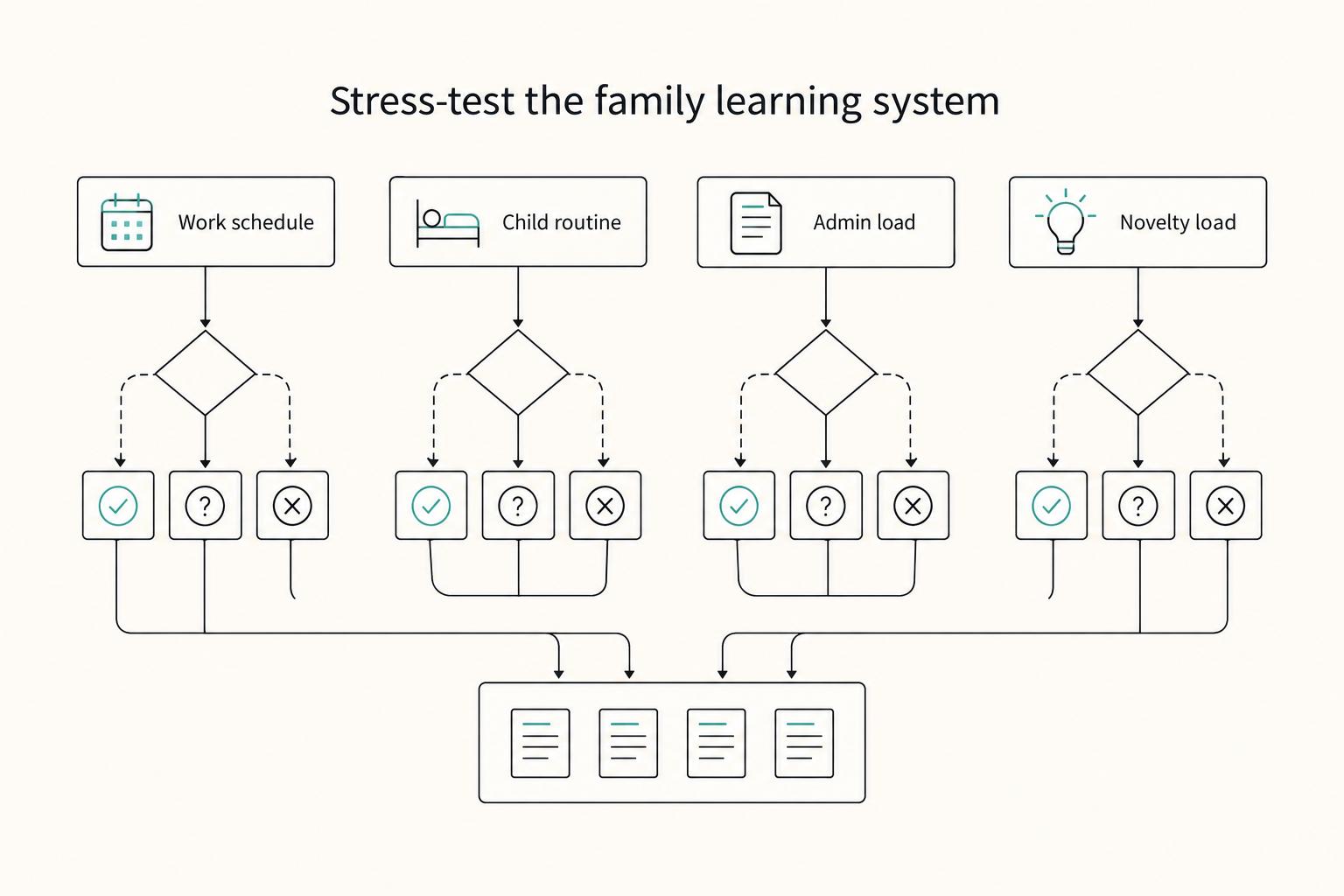
Worldschooling "merges travel with intentional education," which means you cannot rely on vibes to carry the week. Run this fit test like an operator: name the failure point, watch for early signals, and install a default response before you book anything.
| Pressure point | What tends to break | Early warning signal | Safe operational move |
|---|---|---|---|
| Two working adults with recurring calls | Learning becomes "whenever," then becomes "not happening" | You skip learning days after a heavy workday | Assign one adult as schedule owner for school blocks, even if you favor unschooling |
| Child needs routine and predictable peers | Motivation drops when everything changes at once | More friction at transitions (new city, new house, new rules) | Build anchors: recurring classes, a weekly club, or a repeat "same days, same places" rhythm |
| Parents dislike admin | Logistics crowd out education | You delay planning because it feels like too much | Reduce moving parts: fewer accommodation changes, one calendar, one checklist |
| Family expects constant novelty | Everyone burns out | You "push through" fatigue with more activities | Schedule rest weeks and lower the field-trip bar on purpose |
Example: you plan a month of family travel across SE Asia while both parents keep full client coverage. You can still worldschool, but you need non-negotiable study blocks and a protected "world day" each week. Treat them like meetings.
Non-negotiables audit + safe-default pilot#
Write these down in one shared note. If you cannot answer one item, treat it as a stop sign.
| Area | What to answer | Grounded details |
|---|---|---|
| Immigration constraints | What stay permission will you use, and what are the requirements where you're going? | Start your research in The 2025 Global Digital Nomad Visa Index, then verify details on official government sources; in the US, use .gov pages when they apply |
| Education constraints | What records will you keep? How will you handle a transition back to a school system if you need it? | Portfolio, learning log, reading list |
| Work constraints | What time zones must you cover? What counts as "good enough" connectivity and quiet space for calls? | Define what counts as "good enough" connectivity and quiet space for calls |
If you feel unsure, choose the safe default: run a single-destination pilot before you add more complexity. You lower variables, you learn your cadence, and you turn this into a repeatable system instead of an experiment your calendar cannot support.
The Relocation + Learning Operating System (your mental model before tactics)#
Run worldschooling like one connected system, so a change in travel or work doesn't quietly break school, paperwork, or cashflow. You have pressure-tested fit. Now install the mental model that prevents rework.
If you plan travel, learning, work, and life-admin in separate tabs, you will miss dependencies and pay for it in week one. The cleanest way to think: every decision creates downstream proof, schedule, and budget consequences.
A long-stay move can come with documentation, timelines, and renewal reminders. That paperwork can shape travel dates. Travel dates shape work availability. Work availability shapes what your learning rhythm can realistically sustain.
The dependencies you need to keep linked (even if you hate admin)#
You do not need to overcomplicate this. You just need to keep the major moving parts connected so one change doesn't cascade into chaos.
| Dependency | What to sanity-check |
|---|---|
| Stay permission + paperwork | What you need to apply, carry, and renew (rules vary by jurisdiction) |
| Learning plan + evidence | What "counts" for your family and what you can actually do on heavy travel weeks |
| Work reality | Meeting windows, deep work needs, and delivery dates |
| Household admin + money | Housing, health coverage, renewals, and cashflow |
A practical way to do that is to regularly sanity-check:
- Stay permission + paperwork: what you need to apply, carry, and renew (rules vary by jurisdiction).
- Learning plan + evidence: what "counts" for your family and what you can actually do on heavy travel weeks.
- Work reality: meeting windows, deep work needs, and delivery dates.
- Household admin + money: housing, health coverage, renewals, and cashflow.
You'll hear a wide range of approaches in the community. The Wander Worldschool podcast frames its mission as: "Here we share inspiring travel, educational and worldschooling journeys of lots of different families!" That variety helps, but it can hide a truth. You still need a cadence that survives real constraints.
"Source of truth" + ownership (stop relying on memory)#
Set up one place where your family stores decisions and proof, with cloud access and (when needed) offline access. Keep it consistent so you can retrieve what you need quickly.
Then assign ownership. Ambiguity creates dropped balls. Example: one parent assumes the other tracked a renewal date, while the other assumes "school will happen naturally" through family travel.
Fix that with named owners and a simple recurring check-in that covers: upcoming deadlines, travel days, the learning plan, and budget reality.
Finally, add a stabilizer you can repeat: a class, a meetup, or a temporary home base. Not everyone needs this, but many families find that one recurring anchor makes the whole system easier to sustain.
A roughly 90-day runway: constraints, education stance, weekly rhythm#
If you want a simple way to go from idea to action, a roughly 90-day runway can help: lock constraints first, choose your education stance, then turn it into a weekly rhythm you can actually sustain. The system is only useful if it turns into calendar actions. Here is a planning cadence that aims to reduce last-minute reversals for a family.
Phase-by-phase: what to decide, build, and lock#
This works best when you treat planning as three phases, not one giant to-do list.
| Phase | Primary goal | What "done" looks like | Common failure to avoid |
|---|---|---|---|
| Early phase | Decide constraints before you design the "dream plan" | You can explain your non-negotiables, your capacity, and your education stance | Picking a plan first, then discovering you cannot support it with your admin, work, or learning reality |
| Middle phase | Build supports and remove single points of failure | You have a clear owner for each moving part, plus simple backups for the basics | Treating "we'll figure it out later" as a strategy |
| Late phase | Turn intentions into a weekly operating rhythm | Your first-week schedule and landing checklist live in your source-of-truth folder | Overplanning "perfect" learning, then running out of energy once life starts |
Constraints first: decide where you need stability and where you can tolerate change. The goal is not the "best" plan, it's the plan you can repeat without constant resets.
Education stance: pick your default mode (unschooling, something more structured, or a blend) and set a minimum weekly baseline you will protect even on busy weeks. Unschooling is often described as living and learning without school, with learning driven by curiosity rather than curriculum. The Living Joyfully podcast feed captures the mindset shift well: "Choosing to live and learn without school isn't as intimidating as you might first imagine." Use that as permission to keep it simple, not as permission to wing it.
If you want outside momentum, The Unschooling Summit (2026) is described as a free virtual event lasting three days, featuring 90+ unschooling experts and advocates.
The decision checkpoint you must enforce#
As you get close to starting, demand clarity. If you cannot clearly list (1) your rules, (2) what you'll need to show or share (if anything), and (3) who owns each task, pause and change scope.
Example: you plan too many transitions, then realize your work cadence needs stable weekdays and your child needs predictable peer time. The operator move is to simplify: choose one stable routine, tighten the weekly baseline, and reduce transitions until your system runs clean for a full month.
What paperwork do we need, and what varies by country/program?#
Start with the basics (passports, visas, vaccinations) and assume requirements vary until you confirm them for your destination. Paperwork is the constraint that quietly kills timelines. The goal here is not perfection. The goal is a structure you can reuse without rebuilding your stack every time you change plans.
Your document inventory: two buckets that prevent rework#
Most travel delays come from mixing "universal travel identity" with destination-specific requirements. Separate them up front, then you stop rebuilding the stack every time you change a country.
| Bucket | What goes in it (practical definition) | Why it matters | Your operator move |
|---|---|---|---|
| Always-in-your-kit | The core identity and travel documents you use to cross borders repeatedly | Border crossings happen more often than deep paperwork checks, and small misses cascade | Keep them accessible while traveling |
| Destination-specific | Anything tied to a specific visa/entry pathway or public health rules | Visa rules vary widely between destinations, and officials can ask for different proof sets | Build this only after you pick the exact destination and entry pathway |
A solid starting point for your "always" bucket is what the Worldschooling Q&A podcast episode calls out explicitly: passports, visas, and vaccinations (and it also mentions documents like IDPs). Use that as your baseline, then layer in whatever else applies to your route.
The same episode flags a common failure point: passport expiration dates matter. Check them early, and do not assume you have "plenty of time."
It also notes that some countries require vaccines like Yellow Fever for entry, so treat health requirements as destination-specific until you verify them.
For education, keep your framing simple and defensible. A World Travel Family resource puts it plainly: "A Worldschooling curriculum is made up of the countries and places you take your children, plus any academic or informal components." That sentence helps you explain education continuity without overselling a rigid "curriculum."
What "varies by country/program" really means (treat as unknowns)#
When you see families argue online about what's "required," treat it as unconfirmed until you verify the rule for your specific destination and circumstances.
Likewise, longer stays or different visa paths can come with additional steps. Only the official guidance for the destination and program can tell you what applies.
If your situation is complex (for example, custody or guardianship questions), consider getting qualified help to interpret the requirements.
How do we run school + remote work without burning out? (the weekly cadence system)#
Run worldschooling like a system: keep a few repeatable routines, then let travel and place-based learning do a lot of the teaching. Once paperwork stops being the fire drill, the next failure mode is daily execution. You try to do "school," full remote work, and constant planning all at once, and you grind everyone down.
A useful mindset reset comes from Wonder Year's worldschooling backgrounder: "you absolutely can educate your kids on the road." The same piece notes parents still "worry that they're not teaching enough" and feel pressure because "they often feel pressure to have their whole worldschooling plan figured out."
You do not need a perfect plan. You need something you can keep doing.
Wonder Year also argues you already have the three most important ingredients for educating your kids:
- you love and want the best for them;
- with every question you ask and excursion you take, you model curiosity;
- having chosen to travel as a family, you recognize that the world is a very good teacher.
A sustainable rhythm: repeatable routines + real-world learning#
Build around anchors, not a rigid schedule. Your anchors should survive timezone shifts, transit days, and client surprises.
- Keep a simple, repeatable routine for core skills (reading, writing, math, or equivalent skill work) that your child can count on.
- Make room for longer stretches where they build or investigate something they care about.
- Use the location as the "text" when you can. Experiential learning is already happening through real-world experiences while traveling, even when you are not manufacturing formal lessons.
Example: you land in a new city and the week is messy. You still keep one small routine you can reliably complete, and you treat one outing as learning, not "extra." That keeps momentum without pretending you run a normal school week.
Tooling, continuity, and artifacts (keep it lightweight, but real)#
Pick one primary structure and commit for a month before you swap.
| If your family needs... | Choose this approach | What you track (minimum viable) | What to avoid |
|---|---|---|---|
| External pacing and clear sequence | A structured online program (or a single curriculum spine) plus worldschooling experiences | A simple "done list" and a short note on what clicked | Stacking multiple platforms "just in case" |
| Maximum flexibility (unschooling-leaning) | Interest-led projects with simple routines for fundamentals | A brief snapshot of what you did (a few photos or sentences, plus what they built or explored) | Mistaking "no plan" for "no follow-through" |
If you anticipate transitions back into a school system, some families also keep a simple monthly snapshot (for example: a writing sample, a reading list, a math snapshot, and a few project or site notes) so it is easier to explain what your child has been working on. Related: How to Write a Compelling Case Study.
Risk controls and fallback paths (because plans will break)#
Build fallback paths before you need them: define "trigger conditions" and a simple reset plan for schooling, morale, and admin so a bad week cannot turn into a bad month. You have a weekly cadence. Now add safety rails so you can keep running it when travel, energy, or attention slips.
Worldschooling rewards flexibility, but it punishes vague expectations. Blair Lee, M.S. captures the predictable spiral families hit: "Concern that they aren't doing 'enough.' Concern that they're 'late' or 'behind.'" The operator move is to replace guilt with a decision rule you can follow even when you are tired.
The Big 5 operational risks (and the default you choose in advance)#
Use this as your control panel. You do not negotiate with yourself in the moment. You follow the rule you already chose.
| Risk | Early warning signal | Safe default mitigation you set up now |
|---|---|---|
| Schooling drift (common in unschooling-leaning weeks) | Lots of activity, few finished artifacts | Run a short structured reset: temporarily simplify the plan, complete a small set of clearly defined tasks, then return to interest-led learning. |
| Writing avoidance | Talking replaces producing | Anchor a tiny writing habit because writing practice supports "clarity, critical thinking, organization, and depth of exploration." |
| Admin pile-up | You stop tracking what matters | Keep one place for key info and do a simple weekly review so small tasks do not silently become big ones. |
| Family morale dip | More friction, less curiosity | Schedule recovery time on purpose: quieter days, familiar meals, earlier nights, lighter plans. |
| Parent overload | You feel behind in work and schooling | Reduce scope: keep only the core learning anchors and one family rhythm until you stabilize. |
Example: you hit a new city, everyone feels off, and your child floats between ideas without finishing. You trigger the structured reset, capture one writing sample, and call it a win. Momentum returns, then you reopen unschooling projects.
Fallback path logic (don't improvise under stress)#
Define a minimum viable week you can run anywhere: predictable work windows, a couple of learning anchors, something place-based, and built-in rest. If you cannot execute that for a full week, treat it as a signal to simplify your plans, not a personal failure.
Finally, keep your philosophy grounded. The Buzzsprout page for "The Way to Bliss - Worldschool Hubs and Worldschooling" (February 09, 2025, Season 1, Episode 5) describes "Frenchitivity" as "a philosophy and now a way of life that follows three main principles...Possibility, Creativity and Tranquility." You can chase possibility without sacrificing tranquility. Build your system so your family can recover quickly and keep moving.
The confident close: your "safe default" plan + next steps you can run this week#
If you want a simple default, run worldschooling like an ops system: constrain variables early, keep your routines light, and keep your documents organized. You have mapped the constraints, clarified what varies by country or program, and built the baseline routines. Now you need a plan you can execute without turning your digital nomad family into a full-time logistics desk.
Your safe default (a practical constraint, not a philosophy)#
Worldschooling, unschooling, and family travel often get easier when you constrain variables early. Treat this as your baseline operating mode:
- One destination: fewer moving parts, fewer surprises.
- One learning cadence: one weekly rhythm you can run even when travel disrupts sleep and work.
- One proof stack: one "source of truth" folder that survives device loss and last-minute requests.
Example: you land, your coworking day collapses, and your kid melts down. If you already agreed on core blocks and you can pull up your document pack fast, you recover instead of renegotiating everything under stress.
Next steps (do these over the next week or so)#
Use this as your sequence:
- Pick 2 candidate destinations. Pressure-test them using the same questions an experienced nomad asks: budget (move plus monthly expenses), intended stay length, time of year, citizenship, and whether entry requirements match how long you can realistically stay.
- Validate your stay pathway on official sources. If you're considering any longer-stay option (including a "digital nomad" style program), compare pathways at a high level, then confirm requirements on government pages. Rules vary by country and by program.
- Draft your one-page education approach. State what you run (worldschooling, unschooling, or structured homeschooling), then write your weekly cadence in plain language.
- Build your document inventory now. Request replacements early. Application week always arrives faster than you expect.
| Decision area | What you decide | What you verify (official sources) |
|---|---|---|
| Stay framework | Tourist stay vs. longer-stay permission | Eligibility, proof list, key steps |
| Education plan | Worldschooling vs. unschooling vs. homeschooling | Any reporting or enrollment expectations |
| Work reliability | Meeting windows, deep work blocks | Local connectivity options, backup plan |
Copy/paste checklist (planner-ready):
- ✅ Destination shortlist + stay pathway confirmed on official sources (rules vary by country/program)
- ✅ Document inventory built + scans stored offline and online
- ✅ Initial housing plan with cancellation deadlines
- ✅ Connectivity plan (primary plus backup)
- ✅ Weekly school/work cadence agreed + first month's learning portfolio template
If you want to reduce uncertainty further, run this like a project: assign owners, set deadlines, keep proof packs, and hold a weekly review. The digital nomad lifestyle "allows you the ultimate freedom to decide when and where you work." Your systems protect that freedom when education enters the mix.
Frequently Asked Questions
What is worldschooling?
Worldschooling is commonly described as educating your kids while living outside your home country. One source puts it plainly: “worldschooling is educating your kids in a country other than your own.” You will also see “Worldschooling” and “World Schooling” used interchangeably, and this guide treats both spellings as acceptable.
How is worldschooling different from unschooling?
Worldschooling is about where learning happens (in a country other than your own), not a single method. Families use lots of different learning approaches while worldschooling, and labels like “unschooling” can mean different things to different people, so define your terms early and make sure your plan matches your real travel and work constraints.
What should a nomad family do first before worldschooling?
Start by understanding the legal landscape for schooling while abroad, because “each country, and often each region within a country, has its own specific set of rules.” Then build your “source of truth” folder (for example: identity, immigration, education records, health, finance, bookings) so you stop hunting for documents when pressure hits. Finally, run a small pilot stay to validate your weekly cadence before you scale up.
What timeline should families follow before a long-stay move?
Use a simple three-phase runway: decide constraints, build proof, operationalize your first month. Concretely: lock your destination and stay framework first, gather documents and confirmations second, then agree on a weekly school and work rhythm third. Example: if you cannot explain your stay permission and schooling plan in two minutes, you are not ready to book a long-stay lease.
What paperwork is typically needed, and what depends on destination rules?
Paperwork and requirements vary, so treat anything destination-specific as unknown until you verify it. LearnSpark frames understanding legal requirements as a crucial first step, because rules vary by country and even region. A simple way to stay sane is to separate what you keep organized for yourself from what a destination might require: | Category | Often stable (for your own organization) | Most likely to vary by destination | |---|---|---| | Identity | core identity and family records | whether additional formalities are needed | | Schooling | your learning plan and learning artifacts | local reporting or enrollment rules (if applicable) | | Immigration | a clean, organized “proof stack” | entry/residency requirements and any local processes |
Is worldschooling right for our family setup?
It fits when you can run repeatable routines inside change. If your digital nomad family already manages remote work well, you can layer education on top with fewer surprises. Also note: some sources say kids living abroad for extended time often count as “third culture kids,” which can shape identity and social needs, so plan anchors, not just adventures.
What are the biggest operational risks and how do we reduce them?
The big risks stay boring: legal ambiguity, admin drift, schooling drift, and morale crashes. Reduce them with pre-committed controls: verify rules on official sources, keep one doc system, define a minimum viable week, and trigger a structured reset when output disappears. If you need a starting point for stay options, use the 2026 Global Digital Nomad Visa Index to shortlist, then confirm details on official government sites.
Try a related tool
Researched and edited by the Gruv editorial team. Gruv builds cross-border billing, payouts, and finance-operations software for global businesses.
Sources
Includes 6 external sources outside the trusted-domain allowlist.
- pmc.ncbi.nlm.nih.gov/articles/PMC7640709trusted
- pmc.ncbi.nlm.nih.gov/articles/PMC7640709trusted
- adamandlinds.com/blog/the-complete-guide-to-worldschooling-ev...external
- adamandlinds.com/blog/the-complete-guide-to-worldschooling-ev...external
- joinprisma.com/blog/worldschoolingexternal
- meetthearshads.com/guide-to-becoming-a-worldschooling-familyexternal
- meetthearshads.com/guide-to-becoming-a-worldschooling-familyexternal
- wonderyear.com/what-is-worldschooling-2external
Educational content only. Not legal, tax, or financial advice.
Related Posts

The 2026 Global Digital Nomad Visa Index for 50+ Countries
Start with legal fit, not lifestyle filters. The practical order is simple: choose a route you can actually document, then decide where you want to live. That single change cuts a lot of wasted comparison work and stops you from falling in love with places that were never a real filing option.

Use Case Studies to Win Better-Fit Freelance Clients
The point of case studies is not to sound impressive. It is to help a buyer approve you faster by lowering the risk they feel when hiring an outside specialist. When your proof is vague, scattered, or hard to verify, clients often default to someone whose work feels easier to trust.
How to Write a Compelling Case Study
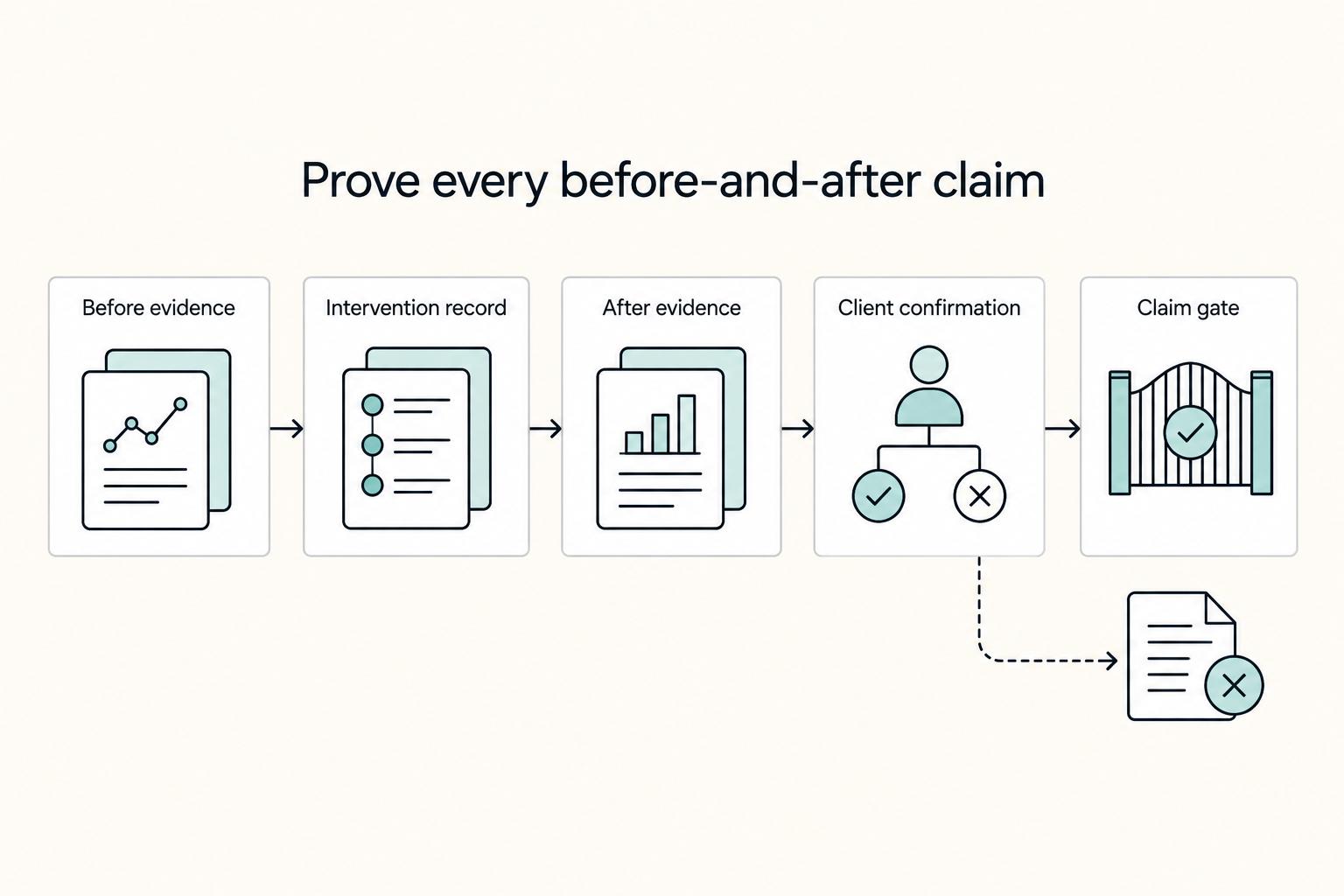
A case study should help a buyer make a decision, not just feel good about your work. Treat it as decision evidence: a detailed account of a business problem, the solution you delivered, and the results that followed. The strongest versions use client-centered proof, documented facts, and a clear [challenge-solution-results structure](https://libguides.usc.edu/writingguide/assignments/casestudy). They do not lead with praise, drift into product-centered copy, or make vague claims that sound like promotion.