
Quick Answer
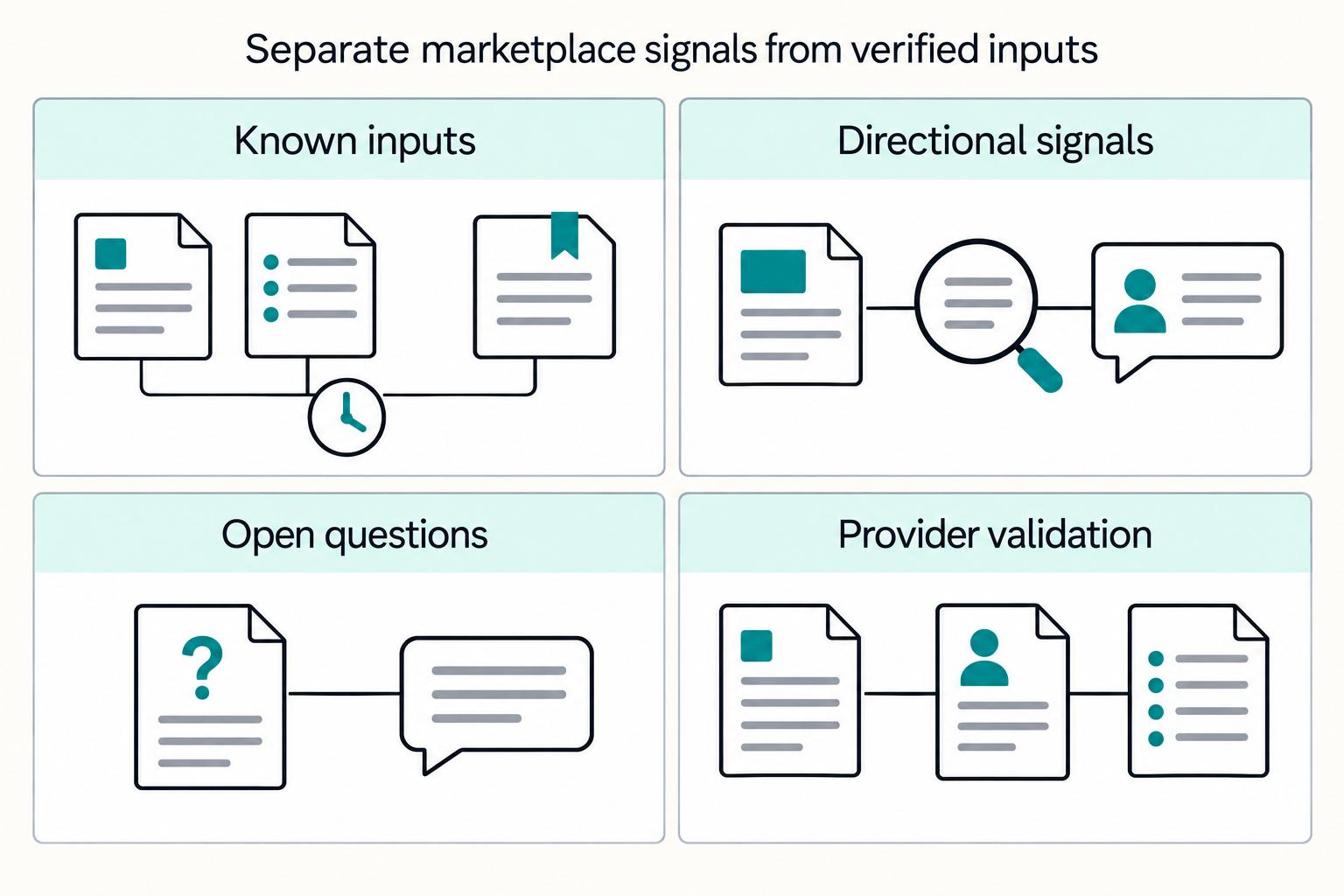
Approve B2B marketplace expansion when the actual country and program support your collection and payout flow, costs fit the commission model, and buyer-to-seller funding obligations are understood. Use forecasts as context. Test a limited pilot against defined payment outcomes, exception capacity and close criteria before scaling.
How payments shape country expansion decisions#
B2B payment options are expanding, but a marketplace still has to collect from buyers, reconcile receipts and pay sellers through a supported funds flow. For 2026 expansion, distinguish broad market forecasts from the country, pricing and operating evidence needed for your launch.
We make expansion decisions operations-first, not trend-first. The U.S. Treasury treats instant-payment adoption and cross-border improvement as parallel priorities. That reminder matters because speed and cross-border reliability are not substitutes. Treasury's report is from September 2022, so it is not a 2026 forecast. It still supports one durable point: the hardest parts often decide whether we can launch.
A broad B2B market forecast includes transactions well beyond marketplaces. It cannot establish buyer adoption, seller acceptance or available margin for your vertical. Use it to frame the opportunity, then validate the actual collection and payout model.
Cross-border is where that tension is most visible. Stripe highlights fragmented infrastructure, low transparency, high friction, and compliance delays in B2B cross-border payments. If your launch depends on cross-border performance, plan for exceptions and validate provider capabilities before you commit.
This guide turns market signals into an expansion decision: which collection methods fit buyers, what the funds flow costs, who funds timing gaps and which operating conditions must hold before scale.
- confirm the collection and payout paths you plan to use
- assign clear ownership for compliance and exception review
- document how payment status changes and failures will be traced
Related: Platform-to-Platform Payments: How to Build B2B Settlement Between Two Marketplace Operators.
Define the terms before comparing markets#
Define the terms first or your comparisons will mislead you. A country or vertical can look attractive on demand, GMV, or take rate. It can still create cash-flow and operations risk once you account for when payment is due and when it is actually collected.
For this article, B2B payments are more than a single buyer payment event; they also include payment terms and collection timing. This matters because payment-term clocks are not always aligned. Suppliers may start from invoice date, while buyers may start when a compliant invoice is received. That changes how Net 30, Net 60, or Net 90 behaves in practice.
Treat AR process design as an operating reality, not just wording. If your reconciliation still depends on spreadsheets, email, and manual work, visibility drops and forecasting gets worse.
Use GMV and take rate for volume and monetization context, then identify whose receivable is measured. A seller’s gross invoice, a platform’s commission receivable and funds held for payout are different balances. AR and DSO comparisons are useful only when the entity, revenue basis, period and calculation method agree.
Before you compare markets, create a written glossary for:
- when payment terms start
- what counts as a compliant invoice
- when funds count as collected
- how overdue invoices are counted
For a hypothetical portfolio, a low average collection time can coexist with a small set of very old, high-value invoices. Read DSO alongside aging by count and value, and keep disputed or uncollectible balances visible. An average alone does not explain which sellers or the platform are funding the delay.
What current reports prove and what they do not#
Forecasts, provider prices and collection benchmarks answer different questions. Juniper describes broad market direction. Stripe’s localized prices illustrate fee components. Upflow’s 2024 report describes collections observed within its own platform. None establishes that your proposed corridor is available or profitable.
As checked on October 3, 2026, Stripe’s US standard online-card price is 2.9% plus $0.30 for a successful domestic card transaction, with an additional 1.5% for international cards and 1% when conversion is required. These are country- and product-specific processing inputs, not a full marketplace quote. Connect, payout, FX, refund and dispute costs depend on your program and contract; keep them as separate model lines.
Confidence labels by source#
| Evidence | Useful for | Limit |
|---|---|---|
| Juniper September 2025 forecast | Broad B2B payment-value direction and virtual-card acceptance constraints | Not observed 2026 marketplace GMV or corridor-specific availability |
| Stripe localized pricing | Specified product fee components | Not total marketplace cost or a cross-country quote |
| Upflow 2024 report | Collection and aging comparisons within its platform population | Not a representative census of every marketplace or a universal launch threshold |
| Provider program confirmation | Actual collection/payout methods, entities, currencies and limits | Retain the dated scope, contract and any conditions |
Durable signals versus stale assumptions#
Two signals are worth using as directional inputs. Juniper's 23rd September 2025 release forecasts global B2B payments value from $186 trillion (2025) to $224 trillion (2030). Juniper also flags an adoption constraint for virtual cards: supplier acceptance remains a major hurdle.
A forecast can coexist with a practical acceptance constraint. A supplier that will not accept virtual cards does not become reachable because projected transaction value is growing. Validate buyer and seller behavior alongside live provider scope and commercial terms.
The unknowns that should stop a market decision#
Juniper’s press release describes a 19-player competitor assessment and a research suite spanning over 61,000 datapoints across 61 countries over five years. That is broad B2B coverage, not a marketplace-specific country ranking or evidence of your vertical’s collectable demand.
For collection benchmarks, Upflow explicitly describes trends from its own platform. Match the report’s segment and calculation method to your own data before using a comparison. A difference can reflect payment terms or portfolio mix rather than a defective payment rail.
Model a hypothetical $1,000 domestic-card order with a $50 platform commission. If the platform bears the US processing price above, the $29.30 processing cost leaves $20.70 of commission before payout costs, disputes, support or other expenses. That is a contribution calculation, not the seller’s proceeds or gross bank receipt. Separately, if a contract requires paying the seller $950 on day 7 while the buyer pays on day 60, the marketplace must fund a 53-day gap. Confirm who bears that obligation and loss risk before treating GMV growth as available cash.
Build a country and vertical expansion scorecard#
For expansion decisions, use a scorecard as a launch gate, not a market-sizing exercise. If compliance burden is high and rail readiness is limited or unknown, you should delay launch even when demand looks strong. To keep unknowns from getting buried, use explicit statuses such as Ready, Limited, Unknown, and Blocked.
Market scorecard template#
| Market | Payment rail readiness | Virtual accounts availability | Compliance burden | FX exposure | Dispute/return complexity | Vertical filter (GMV concentration, invoice size, payout frequency, take rate pressure) | Launch decision |
|---|---|---|---|---|---|---|---|
| Country / corridor | Ready / Limited / Unknown / Blocked | Confirmed / Partial / Unknown | Low / Medium / High | Low / Medium / High | Low / Medium / High | Summary of the four filters | Proceed / Pilot / Hold / Delay |
Two checks keep the scorecard honest:
- Real-time adoption is increasing, but ACH and card displacement is still uncertain. "Instant payments exist" is not enough for you to mark a market as ready.
- Faster routing to a destination bank does not guarantee end-to-end completion. Delays can still appear in the beneficiary leg.
Apply vertical filters before approving demand-led expansion#
Apply the same four filters in every market:
- GMV concentration: concentrated versus long-tail seller mix
- Typical invoice size: whether your flow requires detailed remittance traceability
- Payout frequency: monthly versus high-frequency payout operations
- Take rate pressure: margin room to absorb payment and FX friction
In invoice-heavy verticals, remittance quality and an accurate remaining balance can matter more than checkout speed. Test partial payments, grouped invoices and deductions against the references your finance team will actually receive.
Make decision rules explicit before scoring#
Set the rules before you score, or teams will talk themselves into avoidable risk.
| Condition | Check | Action |
|---|---|---|
| Compliance burden is high | Rail readiness is limited or unknown | Delay launch |
| Virtual accounts are required in your design | Availability is unconfirmed | Do not approve on assumption |
| FX exposure is material | Take rate pressure is high | Require finance sign-off before launch date commitment |
| Payout frequency is high | Dispute or return handling is still manual | Keep scope to a controlled pilot |
Treat announced rail launches as planned until the provider supports your exact corridor and use case. A network announcement does not establish your access, limits, settlement currency or return process.
Require evidence packs per market#
Do not approve a market until the evidence pack is complete. At minimum, each market needs:
| Evidence area | Minimum content |
|---|---|
| Provider confirmations | Supported collection rails, payout rails, settlement path and timing, return handling, and virtual-account scope |
| Policy gates | Risk and compliance approval status and any conditional limits |
| Legal/tax checks | Written review of the proposed flow and entities |
| Operational ownership | Named owners for onboarding, exceptions, reconciliation, and support |
Track each launch gate with its status, accountable owner, evidence reference, permitted scope and expiry where applicable. A provisional approval should state its conditions and limits rather than appear equivalent to a completed gate.
If this capability is part of your design, review Virtual Accounts for implementation considerations.
Choose the right collection and settlement mix by market#
In b2b marketplace payments, start with how your buyers actually pay, then design settlement so your finance team can reconcile timing gaps without guesswork.
Match method to buyer behavior first#
B2B payments are mixed-mode. Credit cards, wire transfers, EFTs, and paper methods often coexist, and the operating model is usually more complex than in B2C because internal checks and balances slow processing.
| Collection approach | Best fit | Main advantage | Main tradeoff |
|---|---|---|---|
| Invoice-led collection | Invoice-first buyers, higher ticket sizes, credit terms | Better alignment with reconciliation needs | Slower front-end collection experience |
| Bank-transfer flows with traceable payment references | Markets where provider scope is confirmed and traceability is required | Dedicated collection path that can support clearer matching | Must be validated market by market; do not assume availability or fit |
| Card-first collection on digital rails | Smaller transactions or urgent pay-now behavior | Faster, lower-friction checkout | Collection speed alone does not guarantee cleaner reconciliation later |
If your buyers are invoice-first and ticket size is high, prioritize bank transfer plus traceable payment references over checkout speed. That matters even more when payment terms are Net-30 or Net-60, because collection and payout timing naturally drift.
Keep collection and payout states explicit#
Separate instruction created, funds received, reconciled, approved for payout, submitted to provider, provider outcome and bank booking. “Sent” is not enough to describe a payout result. Retain transaction and invoice mappings plus the applicable entity, account and currency scope.
Use provider status updates as inputs to this state model, not as a replacement for your reconciliation controls.
Treat faster rails as a speed gain, not a control substitute#
Real-time rails can reduce delays and some manual errors. They may also reduce bank float and cross-border friction. They do not erase all operational friction or reconciliation work.
Before you approve a market design, verify when funds become usable for payout. Also confirm which records your team will use to tie collected funds back to invoices and seller balances at close.
For a step-by-step walkthrough, see How Platform Operators Triage Late B2B Payments Before Market Entry.
Design payout architecture that survives scale#
Build payout architecture for failure and change from day one, not just clean success paths. Teams that optimize for speed first often create expensive rework when they expand to new geographies or add a second rail, which raises both cost and compliance strain.
The goal is practical: build adaptable payment architecture that keeps operating through outages, partial failures, and shifting vendor coverage without a full rewrite in 5 years. Keep payout and ledger behavior auditable under real-time load.
Make the payout sequence explicit#
Document your approach to Split payouts and Payout orchestration based on your markets, providers, and contracts. Keep transitions explicit so routing decisions and ledger outcomes stay traceable.
For split flows, treat orchestration as routing plus control, not as a shortcut around accounting.
Design around failure, not just success#
Treat partial outcomes and delayed provider responses as normal conditions. Separate completed, failed, and unresolved outcomes clearly, and do not treat every delayed response as a confirmed failure.
Define the artifacts finance and audit will rely on#
Before volume ramps, make sure finance and audit can trace payout outcomes from instruction to final result through clear internal states and auditable ledger records.
A simple scale checkpoint is this: can you reconstruct the same payout outcome quickly and consistently under real-time operating load?
Launch shape should match complexity#
Match launch speed to routing complexity and failure exposure.
| Rollout shape | When it fits | What to enforce first |
|---|---|---|
| One-country fast launch | Narrow methods and a single provider path | Clear statuses, ledger linkage, and explicit pending versus final states |
| Multi-country controlled rollout | Variable provider coverage and fragmented local methods | Routing logic that handles partial failures before expansion |
In the current market, the durable advantage is not the fastest initial launch. It is architecture that stays auditable and resilient as rails, vendors, fraud patterns, and regulatory environments shift.
Map compliance and risk controls to growth plans#
A country launch is only real when your compliance and risk controls can run in production. In B2B cross-border payments, compliance still adds drag, so set launch timing by review capacity, reporting readiness, and payout policy coverage, not forecast GMV alone.
Each corridor needs a scoped review of licensing, AML/KYC, sanctions, reporting, privacy and third-party responsibilities. Which requirements apply depends on the entities, activity and jurisdictions involved. Do not infer a universal data-localization or real-time-reporting duty from the fact that a payment crosses a border.
Turn controls into launch gates#
Treat KYC, KYB, AML, and payout policy as explicit go or no-go gates tied to your launch plan. If onboarding cannot clear reviews at planned volume, the market is not ready. If sanctions checks or reporting are only partially configured, the corridor is not ready, even if the product demo looks clean.
Confirm applicable provider and platform responsibilities for licensing, identity checks, sanctions, data handling, reporting and risk management. Pair each with internal ownership and required tests. Automated or real-time functions can support those responsibilities, but they are not universal legal requirements for every corridor.
Confirm country and program scope before spend#
Do not commit GTM spend until you confirm the exact funds flow for the target country and program. A country listed on a provider page or a generic availability claim is not enough. Your minimum evidence pack should answer:
- Whether the provider is licensed or otherwise able to support the planned activity in that market and program structure
- Which AML/KYC, sanctions, data residency, and reporting controls are provider-covered versus owned by your team
- What testing is required before live traffic, and who signs off internally
- Which third parties are in the chain, and who owns oversight when issues appear
When teams skip this step, they often hit compliance-related delays and launch-date resets after spend is already committed.
Narrow scope when risk posture is unclear#
If your risk posture is unclear, narrow corridor scope first and instrument it before you expand. Start with one country and one payout path, then monitor alert volume, review turnaround, review outcomes by reason, compliance-related delays, and unresolved exceptions.
This matters especially with faster payment options and modular API-first tooling. Faster rails can improve speed, but they still require added controls and transparent models. Fraud posture should be visible in your operating design, not just in tooling choices on digital payments platforms. Your core states should support stopping release, placing payouts into review, and preserving reason codes and timing in the audit trail.
Track the metrics that actually predict launch success#
Once controls are in place, judge b2b marketplace payments launch health by money movement and operational stability, not GMV alone. A rising volume line can look strong while collections and reconciliation work become harder to control.
Track the flow from buyer activity to collected cash, then through payout and reconciliation. Use customer adoption by existing buyers to confirm that digital usage is real, not just technical onboarding. Then use internal indicators like payout completion time and exception rate to spot where work leaves the straight path and needs manual handling.
Use a balanced metric set#
Use a balanced set across payments and finance operations: conversion-to-collected funds, payout completion time, exception rate, AR aging, DSO, and reconciliation closure time. That keeps payment performance and close readiness in the same view.
Treat external benchmarks as directional. In B2B payments, AR, and cash collection, benchmark coverage is limited, and some published findings come from a single platform's internal data. Use available cuts, such as industry and business-model views for DSO, to frame questions, not to declare pass or fail.
Watch for false comfort from growth#
Do not treat GMV growth as proof that a market is ready to scale. Check whether growth is arriving with larger manual queues or unresolved reconciliation work. If those indicators worsen as throughput rises, investigate before you expand scope.
This is also an alignment check. Underperformance is often tied to teams optimizing for different outcomes, so keep one shared scorecard across product, operations, finance, and support.
Add hard checkpoints, not just dashboards#
Set explicit review checkpoints and keep evidence attached to the metrics. Use recurring reviews, incident tagging, and close tie-outs to separate one-off provider events from structural operating issues.
At minimum, keep a clear trail of metric changes, incident context, and unresolved variances so decisions are based on operating facts, not headline volume.
Publish a market-readiness score#
If you publish an internal market-readiness score, treat it as an operating heuristic, not a validated formula. Keep the method simple and transparent so you can explain status changes.
The goal is straightforward: a market is not "ready" on growth alone if money movement and finance close are drifting in the wrong direction.
Red flags that should pause expansion#
Pause expansion when AR rises and DSO worsens without clear root-cause visibility. In that state, a new market adds exposure rather than reducing it.
Collection delays can consume the cash intended for suppliers or payroll. Read country surveys as context for that risk, then model your own payment terms, aging and funding obligations. A survey of B2B credit sales is not automatically a benchmark for your marketplace’s commission receivables or seller balances.
Hold expansion when required country and program controls remain unresolved. Confirm the reporting, testing and third-party oversight that apply to the actual flow; a generic “real-time reporting” capability does not establish compliance.
High manual intervention in split payouts is another stop condition. Marketplace payment operations already vary by seller onboarding, compliance obligations, and payout expectations. If exception handling remains manual in core payout workflows, operational load can outpace your team.
Do not greenlight expansion from polished market summaries alone. If a forecast lacks transparent methodology and marketplace-specific cuts, treat it as directional context, not commitment-grade evidence.
Rollout sequence and go or no-go rules#
For 2026 expansion planning in b2b marketplace payments, use a proof-of-control sequence: validate country constraints, validate collection and payout design, run a controlled pilot, then scale only while operational control stays stable.
| Phase | Focus | What to validate |
|---|---|---|
| Validate country reality first | Local conditions | Buyer-specific pricing or quotations; product customization; multisite or repeat deliveries; cross-border tax complexity |
| Validate funds-flow design next | Collection and payout design | Card checkout and pay-on-invoice patterns; payout logic when third-party sellers are merchant of record and the platform earns commission |
| Run a controlled pilot with explicit checkpoints | Limited-scope pilot | 30/60/90 with limited scope across seller groups and buyer types |
| Scale by proven operational capacity | Controlled expansion | Hold expansion when control signals deteriorate or exception work outpaces operational capacity |
Check the local conditions that often break generic launches: buyer-specific pricing or quotations, product customization, multisite or repeat deliveries, and cross-border tax complexity. B2B buyers evaluate locally, so do not treat assumptions from one market as transferable by default.
Confirm your collection model can handle buyer behavior across card checkout and pay-on-invoice patterns. Confirm payout logic still works when third-party sellers are merchant of record and the platform earns a commission. If payment speed improves but compliance review or exception work rises, treat that as an unresolved tradeoff, not readiness.
Use a phased structure such as 30/60/90 with limited scope across seller groups and buyer types. Judge the pilot on operating control, including whether reconciliation, policy controls, and exception handling stay predictable under real usage.
Hold expansion when control signals deteriorate or exception work outpaces operational capacity. Faster movement of funds does not offset weak controls.
End each phase with a short written decision memo that captures assumptions, open unknowns, evidence reviewed, and rollback triggers.
Conclusion#
In 2026, we do not define the state of b2b marketplace payments by faster rails alone. We judge it by whether a marketplace can collect, reconcile, control, and pay out across real country, corridor, and vertical constraints. Keep expansion decisions operations-first: use public reports for direction, verify live provider scope and pricing, and require a complete evidence pack before spend.
What your launch brief should prove#
Your launch brief should prove:
- the collection and payout paths you plan to use
- clear ownership for compliance and exception review
- how payment status changes and failures will be traced
- which country and program approvals are fully approved versus provisional
- which metrics, checkpoints, and rollback triggers determine go or no-go
Frequently Asked Questions
What is the current state of b2b marketplace payments in practical terms for operators?
In practical terms, the current state of b2b marketplace payments is a two-track reality: modernization is real, and so is operational friction. Digital platforms and faster rails matter, but cross-border complexity, fraud pressure, cash-flow strain, compliance delays, and exception handling still shape launch risk. For operators, that means confirming collection and payout paths, assigning clear ownership for compliance and exception review, and documenting how payment status changes and failures will be traced before approving a market.
Why do B2B cross-border payments still create friction even with modern digital payments platforms?
Cross-border friction persists because infrastructure is still fragmented, transparency is still uneven, and compliance delays still affect launch timing. Speed and cross-border reliability are parallel priorities, not substitutes. If a launch depends on cross-border performance, plan for exceptions and validate provider capabilities before you commit.
Are Instant payments enough to modernize marketplace operations on their own?
No. Real-time rails can reduce delays and some manual errors, and they may reduce bank float and cross-border friction. They do not erase all operational friction or reconciliation work. Treat faster rails as a speed gain, not a control substitute.
Which benchmarks are reliable for expansion decisions, and which are still unknown from public reports?
Juniper’s September 2025 forecast is directional context. Upflow’s 2024 data can inform a segment comparison when definitions and methods align. Localized provider prices help model individual fee lines, but the applicable program quote and country availability must be confirmed before launch.
What should founders compare first across countries: rails, compliance, FX, payout design, or demand?
Define the terms first or your comparisons will mislead you. Then compare rail readiness, compliance burden, FX exposure, dispute and return complexity, payout design, and the vertical filters that affect operations. Demand matters, but it does not replace receivables health, compliance readiness, or a confirmed funds-flow design.
How do AR and DSO change expansion priorities for a marketplace model?
Identify the receivable owner and keep DSO’s calculation method, revenue basis and period consistent. Read it with aging and the buyer-to-seller funding gap. A worsening trend should trigger investigation; raw GMV, commission receivables and seller funds are not interchangeable accounting populations.
When should a team delay launch despite positive GMV forecasts?
We delay launch when compliance burden is high and rail readiness is limited or unknown. We also delay when virtual accounts are required in the design but availability is unconfirmed. Keep scope to a controlled pilot when payout frequency is high and dispute or return handling is still manual. More broadly, do not treat GMV growth as proof that a market is ready to scale if money movement, reconciliation, or control signals are drifting in the wrong direction.
Try a related tool
Researched and edited by the Gruv editorial team. Gruv builds cross-border billing, payouts, and finance-operations software for global businesses.
Sources
Includes 2 external sources outside the trusted-domain allowlist.
Educational content only. Not legal, tax, or financial advice.
Related Posts

State of Platform Payments Benchmark Report for B2B Marketplace Expansion
This article translates broad payments narratives into expansion decisions: where a B2B marketplace operator should launch first, what to delay, and what to validate before committing product and GTM budget in 2026.

Platform-to-Platform Payments: How to Build B2B Settlement Between Two Marketplace Operators
If you need to stand up operator-to-operator settlement quickly, optimize for a controlled launch, not maximum speed on day one. This guide focuses on platform-to-platform B2B settlement for marketplace operators. It keeps the tradeoffs, control points, and recovery paths explicit for delayed, returned, or mismatched payments.
Payoneer Marketplace Payments Review: Test Channels, Costs, and Controls First
Payoneer can be the right payout layer when marketplaces drive most of your inflow. It can also create avoidable cleanup work if you treat broad coverage statements as route-level proof. The practical move is simple: test your exact channels first, then decide.