

Quick Answer
To write a contract for an Australian client, start by locking the commercial core in plain language: scope, acceptance points, payment triggers, GST handling, and late-payment consequences. Then run a risk-clause review for termination, indemnification, and limitation of liability before redlining. Keep everything in one clean agreement, confirm party details and ABN context where relevant, and send with section-based edits to close faster and safer.
Stop Losing Deals or Getting Burned by Bad Terms#
Use a one-sitting contract setup that secures scope, Payment Terms, and ownership before you debate price.
| Setup check | What to confirm |
|---|---|
| Signing roles | Confirm who signs and who delivers under an Independent Contractor Agreement |
| GST position | Decide your GST position early; not every business needs GST registration, but penalties may apply if you fail to register when required |
| Non-resident GST pathway | Choose the right GST registration pathway up front; standard GST registration can apply when you hold or qualify for an ABN, and standard GST-only registration may suit when you need to claim GST credits |
| One-page non-negotiables | Write scope, Payment Terms, Termination, Indemnification, and Limitation of Liability |
You want decisions, not legal theory. This playbook helps you draft, redline, and send a client contract that protects cash flow and keeps negotiation tight.
You are running a business-of-one, so your contract needs to work like a system, not a document you hope never gets tested.
Before You Start#
Treat this as a practical Australian setup check:
- Confirm who signs and who delivers under an Independent Contractor Agreement.
- Decide your GST position early. Not every business needs GST registration, but penalties may apply if you fail to register when required.
- If you work as a non-resident, choose the right GST registration pathway up front. ATO provides multiple options: standard GST registration can apply when you hold or qualify for an ABN, and standard GST-only registration may suit you when you need to claim GST credits.
- Write your non-negotiables on one page: scope, Payment Terms, Termination, Indemnification, and Limitation of Liability.
- Step 1. Lock the commercial core. Define deliverables, acceptance points, invoice triggers, and late-payment consequences in plain language.
Outcome: both sides can answer what gets delivered, when, and what gets paid without interpretation fights.
- Step 2. Run the accept-edit-walk test on risk clauses. For each high-risk clause, decide your default move before the call.
Outcome: you negotiate from policy, not pressure.
- Step 3. Redline with fallback positions. If the client pushes broad terms, narrow responsibility to what each party controls and cap downside to a level your business can survive.
Hypothetical scenario: a client asks for unlimited exposure on third-party claims. You counter with proportional Indemnification plus a clear Limitation of Liability cap tied to the project.
- Step 4. Send one clean freelance agreement. Keep edits centralized, ask for section-specific comments, and close quickly once both sides align on the contract basics.
When cross-border tax setup affects your structure, review A Guide to Tax Residency in Australia for Digital Nomads before signature.
What to Prepare Before You Draft#
Prepare one pre-draft packet that confirms identity, engagement model, deal terms, and redline limits before you open your contract template.
Once the strategy is set, move to setup. This turns your contract process into a repeatable workflow, so you can send a clean client contract without last-minute gaps.
Before You Start#
- Collect each party's legal name and address.
- Record an ABN where it applies to the contracting party.
- Add any entity details you already hold to the party information.
- Decide your engagement model before drafting language.
- Step 1. Verify your GST pathway before pricing language. Confirm if, when, and how you need GST registration before you finalize Payment Terms, especially for non-resident work.
Outcome: your Payment Terms reflect a workable tax position, not assumptions.
| GST pathway | When to consider it | Verification point |
|---|---|---|
| Simplified GST registration | You are a non-resident business using the simplified option | Confirm it fits your operating setup before you draft invoice clauses |
| Standard GST registration | You are entitled to or have an ABN | Confirm how you will register, lodge, and pay |
| Standard GST only registration | You are a non-resident and need to claim credits for Australian GST paid | Confirm credits are part of your tax workflow |
- Step 2. Lock engagement labels and role language. State the engagement model early, then keep role wording consistent across the full draft.
Outcome: your engagement positioning stays coherent across the client contract.
- Step 3. Build a one-page commercial brief. Write Scope of Work, timeline, acceptance criteria, and payment triggers on one page before drafting clauses.
Outcome: you can map each deliverable to an invoice event without ambiguity.
- Step 4. Pre-decide your negotiation limits. Set non-negotiables for Intellectual Property (IP), Revision Limits, Late Payment, and Termination.
Hypothetical scenario: a client asks for unlimited revisions, and you hold your line with defined revision rounds plus change requests for extra work. Outcome: you negotiate from policy, not pressure.
If your tax setup is unclear, review A Guide to Tax Residency in Australia for Digital Nomads before sending your final draft.
What Makes an Australian Freelance Contract Enforceable?#
For contract wording that touches tax, make the billing terms match your real GST setup before anyone signs.
| GST point | Article detail | Drafting impact |
|---|---|---|
| Registration need | Not every business or enterprise needs to be registered for GST | Reflect that in your payment clause without guessing thresholds |
| Required registration missed | Penalties may apply if registration is required and not completed | Billing terms stay accurate without overclaiming tax obligations |
| Non-resident options | For non-resident businesses, ATO provides multiple GST registration options | Contract language and compliance process point in the same direction |
| Standard registration details | ATO eligibility bullets reference being entitled to or having an ABN | Keep the same details across proposal, contract, and invoicing fields |
This section is about GST-facing payment language, not a full test of legal enforceability. The goal is one clean document where tax labels, invoice wording, and workflow match.
Draft the tax-facing core in one pass#
- Step 1. Confirm whether GST registration applies to your situation. ATO states not every business or enterprise needs to be registered for GST, but penalties may apply if registration is required and not completed. Reflect that in your payment clause without guessing thresholds.
Outcome: billing terms stay accurate without overclaiming tax obligations.
- Step 2. Match wording to your registration pathway. For non-resident businesses, ATO provides multiple GST registration options. If you are using standard GST registration, align contract operations with that registration, lodgment, and payment pathway.
Outcome: contract language and compliance process point in the same direction.
- Step 3. Keep registration details consistent. For standard GST registration, ATO eligibility bullets reference being entitled to or having an ABN. Where that applies, keep the same details across proposal, contract, and invoicing fields.
Outcome: fewer avoidable payment and admin delays.
- Step 4. Lock tax wording before work starts. Convert tax-related billing points agreed in chat or email into the signed contract so GST treatment is documented in one place.
Hypothetical scenario: a client approves scope in chat, then requests extra deliverables later. Clear written billing and GST wording helps you separate included work from change requests. Outcome: cleaner invoicing and less back-and-forth once delivery begins.
Check tax wording before signature#
Before signature, make sure your billing language matches your actual GST setup, including the registration pathway you are using, especially for non-resident work. Outcome: your invoicing language and compliance workflow match what you will actually do once the job starts.
If cross-border tax setup still feels unclear, review A Guide to Tax Residency in Australia for Digital Nomads before final signoff.
How Do You Define Scope of Work Without Scope Creep?#
Keep scope language clear, and make sure invoicing terms match your GST registration position before work starts.
In practice, that means separating the core scope from add-ons and keeping invoice wording aligned with how you are registered.
Align invoicing language with your GST registration status#
- Step 1. Confirm whether, when, and how you need to register for GST. Use the ATO GST registration guidance to check your current position before finalizing invoice terms.
Outcome: your contract language reflects your actual registration status.
- Step 2. Treat registration gaps as a risk item. If registration is required but not completed, penalties may apply, so avoid invoice wording that assumes the wrong setup.
Outcome: you reduce avoidable compliance risk in payment terms.
- Step 3. If you are non-resident, confirm which ATO pathway you are using. The ATO lists simplified, standard, and standard GST-only pathways for non-resident businesses, and standard GST-only may suit non-residents who need to claim GST credits for Australian GST paid.
Outcome: invoicing language matches the pathway you are actually using.
Keep wording consistent if project terms change#
- Step 4. Re-check GST registration context when work changes materially. This matters most for cross-border engagements where rules can vary by setup and jurisdiction.
Hypothetical scenario: delivery expands into additional Australian work, so you pause and confirm your GST pathway before issuing the next invoice. Outcome: your invoice terms stay consistent with current obligations.
- Step 5. Keep core scope and add-ons clearly separated in the contract. Then review invoicing wording at each approval point so tax language stays current.
| GST setup | Use-case check | Invoicing language check |
|---|---|---|
| Simplified registration | One ATO-listed option for some non-resident businesses | Match wording to the pathway in use |
| Standard registration | One ATO-listed option for non-resident businesses | Match wording to the pathway in use |
| Standard GST-only registration | May suit non-residents who need to claim GST credits for Australian GST paid | Match wording to the pathway in use |
Before final signoff, confirm your invoicing language matches your GST position and the pathway you are actually using, especially if you operate cross-border. Try the SOW generator.
How Should Payment Terms Work for GST, Deposits, and Late Payment?#
Set payment terms so cash moves on verified delivery, GST treatment stays explicit, and nonpayment triggers a clear contractual response.
With scope controls set, lock the commercial engine that keeps the work sustainable. You want a contract you can run without chasing decisions in chat.
Before you draft payment language#
- Step 1. Confirm your GST position first. State whether Goods and Services Tax (GST) applies to your setup before you finalize invoice wording, and keep it aligned with current Australian Taxation Office (ATO) guidance.
Outcome: your invoice terms match your real compliance posture.
- Step 2. Define your payment structure in one block. Write fee model, due dates, payment method, and invoice trigger events in one section titled Payment Terms. Link each trigger to a specific acceptance checkpoint in the Statement of Work (SOW).
Outcome: each invoice maps to a completed deliverable, not a vague phase.
| Payment element | What to specify | Verification check |
|---|---|---|
| Fee structure | Fixed, milestone, or recurring logic | Both sides can restate the same commercial model |
| Invoice trigger | SOW acceptance checkpoint | You can point to a signed off deliverable |
| Due date and method | Calendar due rule and payment rail | Accounts can process without back and forth |
| Late payment handling | Reminder cadence and next action | Team executes one consistent collection flow |
- Step 3. Add deposit and milestone logic tied to risk. Consider an upfront deposit for kickoff exposure, then release milestone invoices only when acceptance criteria are met.
Outcome: cash flow tracks delivery risk across the project.
- Step 4. Write a precise Late Payment clause. Define contractual consequences for late payment, including whether future work may be paused under the agreement until overdue amounts are cleared. Rules vary by jurisdiction, so do not rely on informal promises.
Outcome: you stop unpaid work from compounding.
- Step 5. Add cross-border operating notes. If you work across jurisdictions, document records expectations, invoice fields, and who handles GST treatment reviews. If relevant to your setup, confirm which non-resident GST registration pathway applies (simplified, standard, or standard GST-only) and record ABN details where applicable.
Outcome: reconciliation stays clean when finance teams review the file.
Hypothetical scenario: a client requests an extra feature while a milestone invoice is overdue. You pause new work, issue a change request, and restart only after payment and approval land.
Which Risk Clauses Protect You Without Killing the Deal?#
With the material available here, you cannot safely set detailed risk-clause standards. The supportable guidance is narrower: confirm GST registration requirements and choose the right registration pathway, especially for non-residents.
On the current source set, clause-level positions on ownership, termination, liability, indemnities, NDA, non-compete, and force majeure are not substantiated. What you can state confidently is GST-focused:
| Topic | Write this first | Fallback if details are missing |
|---|---|---|
| GST registration | Confirm whether, when, and how GST registration is required | State that requirements vary and verify against current ATO guidance |
| Non-resident setup | Note that ATO lists simplified, standard, and standard GST-only options for non-resident businesses | Flag uncertainty and choose a path only after checking the latest ATO criteria |
| Compliance risk | State that penalties may apply if registration is required and not completed | Avoid unsupported penalty amounts, thresholds, or formulas |
- Step 1. Confirm GST registration status first. Check whether registration is required and when it should be completed under current ATO guidance.
Outcome: you avoid building decisions on unsupported assumptions.
- Step 2. If non-resident, select a stated registration pathway. The ATO identifies simplified, standard, and standard GST-only options for non-resident businesses.
Outcome: your setup follows an available pathway rather than ad hoc handling.
- Step 3. Keep unsupported contract standards out of scope. Treat detailed clause mechanics as jurisdiction-specific unless separately grounded.
Outcome: the section stays accurate and defensible.
- Step 4. Use only usable source content. One cited ATO Community page is in an error state and does not provide substantive support here.
Outcome: your decisions rely on available official guidance.
Hypothetical scenario: you start supplying services into Australia as a non-resident business. You confirm whether registration is required and choose the relevant ATO pathway early, reducing compliance risk.
- Step 5. Recheck freshness before publish. ATO pages show 2025 update dates, so verify the wording again at publication time.
Outcome: the section remains current as guidance changes.
How Do You Set Governing Law, Jurisdiction, and Dispute Resolution for Cross-Border Work?#
Rules on governing law, jurisdiction, and dispute resolution vary by jurisdiction, so set those clauses with legal advice and keep your GST and payment operations consistent from day one.
| Admin point | What to confirm |
|---|---|
| GST registration | Whether GST registration is required for your business for this work |
| Non-resident pathway | Whether simplified, standard, or standard GST-only fits your setup |
| Standard registration context | Whether you are entitled to or already hold an ABN if you use standard GST registration |
| GST credit needs | Whether standard GST-only registration may suit your setup if you are a non-resident and need to claim GST credits for Australian GST paid |
After the risk review, make sure your legal section and payment records can be read the same way under pressure.
Before you draft this block, confirm your payment admin facts:
- Confirm whether GST registration is required for your business for this work. Not every business or enterprise needs to register, but penalties may apply if registration is required and not completed.
- If you are a non-resident, choose the GST registration pathway that fits your setup (simplified, standard, or standard GST-only).
- If you use standard GST registration, confirm whether you are entitled to or already hold an ABN.
- If you are a non-resident and need to claim GST credits for Australian GST paid, assess whether standard GST-only registration may suit your setup.
| Project profile | Contract default | Escalation trigger |
|---|---|---|
| Smaller, low-complexity client contract | Clear legal clauses, one agreed forum, and clean invoice/GST records | Non-resident setup or uncertainty about GST registration requirements |
| Higher-risk independent contractor deal | Custom legal drafting plus documented GST pathway and evidence workflow | Any uncertainty about GST obligations, ABN eligibility for standard registration, or GST credit claims |
- Step 1. Choose Governing Law deliberately. Name the governing law in one sentence and keep wording clear. Rules vary by jurisdiction, so align the clause with legal advice for your specific cross-border setup.
Outcome: both parties start from one stated legal framework.
- Step 2. Name Jurisdiction precisely. State the agreed court venue or forum in the same legal section so escalation does not become a location argument. Keep party naming consistent with the rest of the contract.
Outcome: the venue is documented before a dispute starts.
- Step 3. Define Dispute Resolution sequence. If you use staged dispute steps, describe them clearly and confirm both sides accept the sequence in writing. Keep the flow practical and easy to follow.
Outcome: disputes have a documented path instead of ad hoc handling.
- Step 4. Align disputes with payment operations. Require a shared evidence pack that tracks invoice status, acceptance records, approvals, GST registration status, and GST treatment notes.
Outcome: you can show what happened, what was approved, and what remains payable.
Hypothetical scenario: a cross-border client challenges a late invoice. You can move faster because your contract points both sides to the same forum, a documented escalation path, and the same payment evidence set.
- Step 5. Upgrade rules when risk rises. Start with safe defaults for a standard form contract, then move to custom drafting when deal size, jurisdiction spread, or tax complexity increases. Recheck whether GST registration is required and whether your non-resident pathway still fits; if your work model shifts across countries, review your tax position with A Guide to Tax Residency in Australia for Digital Nomads.
Outcome: your contract and payment operations stay practical as risk changes.
Common Mistakes and How to Recover Fast#
Recover fast by confirming whether GST registration is required, then choosing the right ATO registration pathway for your setup.
Treat GST setup as a non-negotiable input for cross-border work tied to Australia. Problems start when registration status, pathway choice, and operating records are unclear.
Make sure the pathway you use matches your actual situation, and document that decision so billing and compliance stay aligned.
| Mistake | Fast recovery move | Verification check |
|---|---|---|
| You assume every business must register for GST | Confirm whether registration is required before you file | Your team can explain why registration is required or not required |
| You delay registration when required | Start registration immediately and escalate internal deadlines, because penalties may apply when required registration is missed | Ownership and timing for registration are clearly assigned |
| You pick a non-resident pathway without checking fit | Compare the ATO non-resident options (simplified, standard, standard GST-only) and choose one deliberately | Your selected pathway is recorded in one place and used consistently |
| You use standard GST registration without checking ABN status | Verify ABN status first when using standard registration | ABN status is confirmed and documented |
| You need GST credits but never assess standard GST-only registration | Review whether standard GST-only registration suits your case if you are a non-resident and need to claim GST credits | Credit-claim needs and registration pathway are aligned in your records |
- Step 1. Triage registration status first. Mark your setup as required, not required, or unclear, then resolve unclear items before anything else.
Outcome: you stop rework caused by guessing.
- Step 2. Run one integrated GST setup review. Confirm pathway choice, ABN status where relevant, and who handles registration, lodgment, and payment tasks.
Outcome: process owners and compliance steps stay aligned.
- Step 3. Lock a repeatable close process. Save this checklist as your default and refresh it when your cross-border footprint changes. If your country mix shifts, review A Guide to Tax Residency in Australia for Digital Nomads.
Outcome: you reduce avoidable delays and keep setup decisions consistent across engagements.
Your Copy Paste Sign With Confidence Checklist#
Before signature, confirm GST handling and registration choices are clear and internally consistent.
With drafting done, run this final pass so payment and tax details are accurate and easy to execute.
| Checklist block | Confirm this now | Ready-to-send signal |
|---|---|---|
| GST registration status | Check whether GST registration is required for this business setup; not every business must register, but penalties can apply if registration is required and not completed | Your contract and invoicing flow reflect the correct registration status |
| Non-resident pathway | If non-resident, confirm the pathway that fits your case: simplified, standard, or standard GST-only | The selected pathway is documented and shared before signature |
| Standard registration context | If using standard GST registration, verify the ABN context for your setup | Registration, lodgment, and payment responsibilities are clear |
| GST-only fit check | If relevant, confirm whether standard GST-only is the better fit, including cases where GST credits for Australian GST paid are needed | The chosen option matches how you expect to report and claim |
| Send process | Request edits by section and close in one revision round | You avoid scattered comments and reduce rework |
- Step 1. Confirm GST status first. Decide whether GST registration applies to this engagement before you finalize payment language.
Outcome: your contract and invoice terms do not conflict with your tax posture.
- Step 2. Choose the non-resident pathway when applicable. For non-resident setups, confirm simplified, standard, or standard GST-only before signature.
Outcome: your team is aligned on the correct ATO registration pathway.
- Step 3. Validate standard-path details. If you are using standard GST registration, check the ABN eligibility context for your case.
Outcome: registration and compliance steps are clear before execution.
- Step 4. Keep GST wording in one place. Make sure payment terms and GST handling are written once, clearly, and without contradictions.
Outcome: finance and ops teams can execute without back-and-forth.
- Step 5. Send with a focused close request. Ask for edits by section, not scattered comments.
Outcome: you shorten negotiation cycles and keep version control clean.
If you need to confirm what is actually supported for your specific country or program, Talk to Gruv.
Frequently Asked Questions
What must an Australian freelance contract include to be credible?
Use a written agreement both sides can actually run day to day. In practice, spell out Scope of Work, Payment Terms, delivery checkpoints, and dispute process in plain language so work and invoicing can be managed from one document.
Are verbal freelance agreements legally binding in Australia?
Whether a verbal deal is enforceable depends on the specific facts and jurisdiction, so avoid relying on memory alone. Send a short written recap quickly, convert it into a signed freelance agreement, and confirm scope, payment, and delivery checkpoints.
What party details should be listed in a contractor agreement including ABN and ACN?
List each party’s legal name and contact details as used for invoicing and records. Include ABN where it fits your setup, especially if your GST registration path references ABN entitlement or possession. Beyond that, required identifiers can vary by entity type and jurisdiction, so confirm what applies to your case before finalizing.
How do I define scope to prevent scope creep in freelance contracts?
Write deliverables as testable outputs, not broad activities. Add acceptance criteria, revision limits, and a change request rule that updates timeline and fees before extra work begins. That gives both sides a practical boundary during the project.
What payment terms should freelancers set in Australian client contracts?
Put the whole money system in one place: invoice triggers, due dates, payment method, and late payment actions. Confirm your Goods and Services Tax (GST) position early: not every business must register, but penalties can apply if registration is required and not done. For non-resident work, choose the pathway that fits your case, including standard registration or standard GST-only where you need to claim GST credits on Australian GST paid.
Who owns IP by default in Australian freelance work and what should the contract say?
Do not rely on assumptions about default ownership. State exactly what transfers, what stays with you, and when transfer happens, then tie transfer to paid invoices. Keep pre-existing methods, templates, and background materials explicitly carved out unless you choose to license or assign them.
What are common red flags in freelance contracts such as revisions, long payment windows, and broad non-competes?
Watch for vague scope, unlimited revisions, delayed payment windows, broad Non-Compete language, and one-sided risk clauses. Also flag missing termination mechanics and unclear ownership timing. When you spot multiple red flags, pause signature and send one consolidated redline round so you control versioning and avoid renegotiating the same issue across scattered threads.
Watch
Freelance Contract Terms for Australian Clients
Try a related tool
Researched and edited by the Gruv editorial team. Gruv builds cross-border billing, payouts, and finance-operations software for global businesses.
Sources
Educational content only. Not legal, tax, or financial advice.
Related Posts

Germany Freelance Visa Application Path for Freiberufler and Gewerbe
Choose your track before you collect documents. That first decision determines what your file needs to prove and which label should appear everywhere: `Freiberufler` for liberal-profession services, or `Selbständiger/Gewerbetreibender` for business and trade activity.
Australia Tax Residency for Digital Nomads With GST and ABN Checkpoints
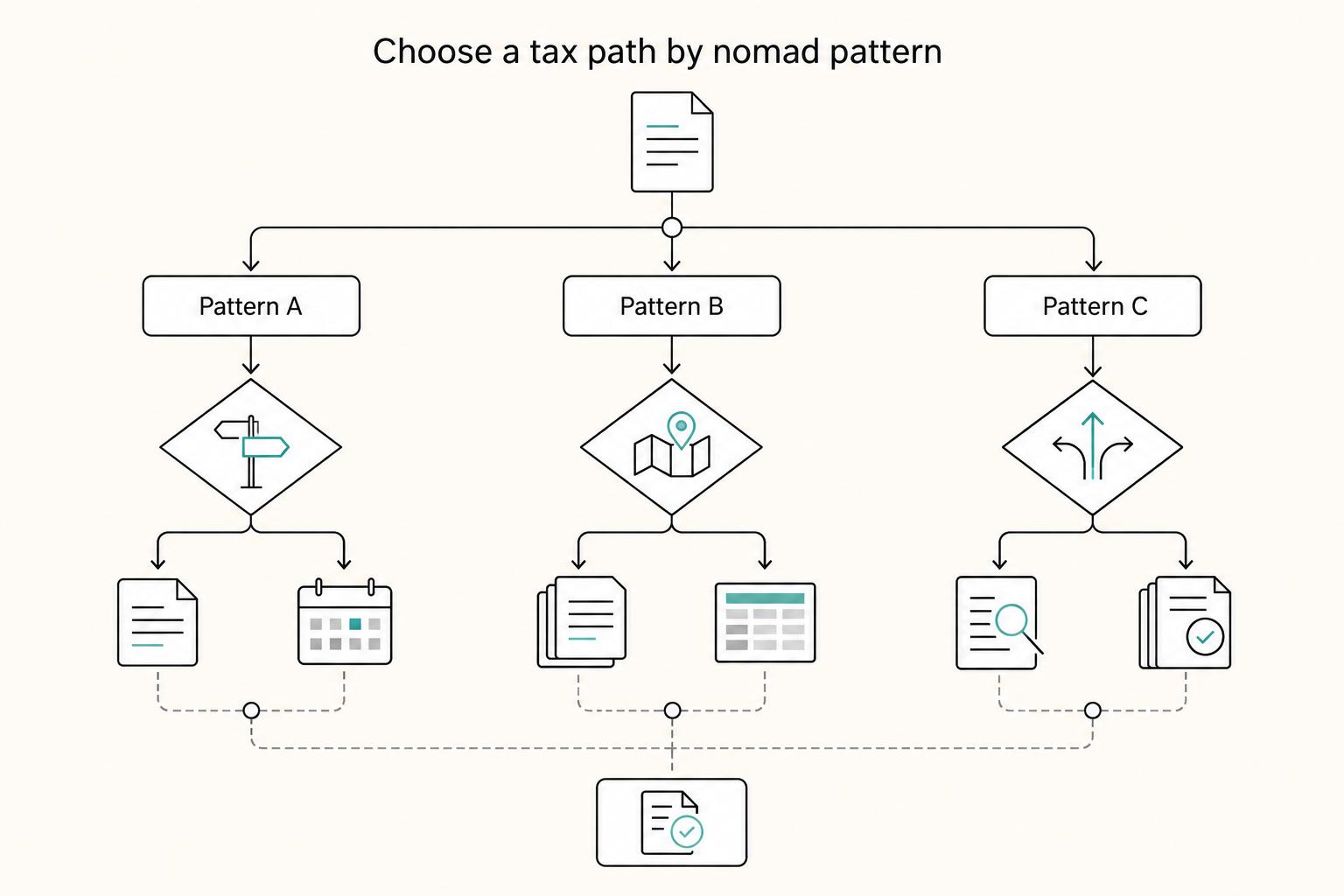
The goal is a defensible, low-drama position the Australian Taxation Office (ATO) can follow from your records, not a clever workaround. For a digital nomad, that usually means keeping two tracks straight: residency and GST/ABN admin. Consistency is what holds up over time: use real facts, take steps in a clear order, and keep documents that still match months later.
A Guide to Using Airport Lounges
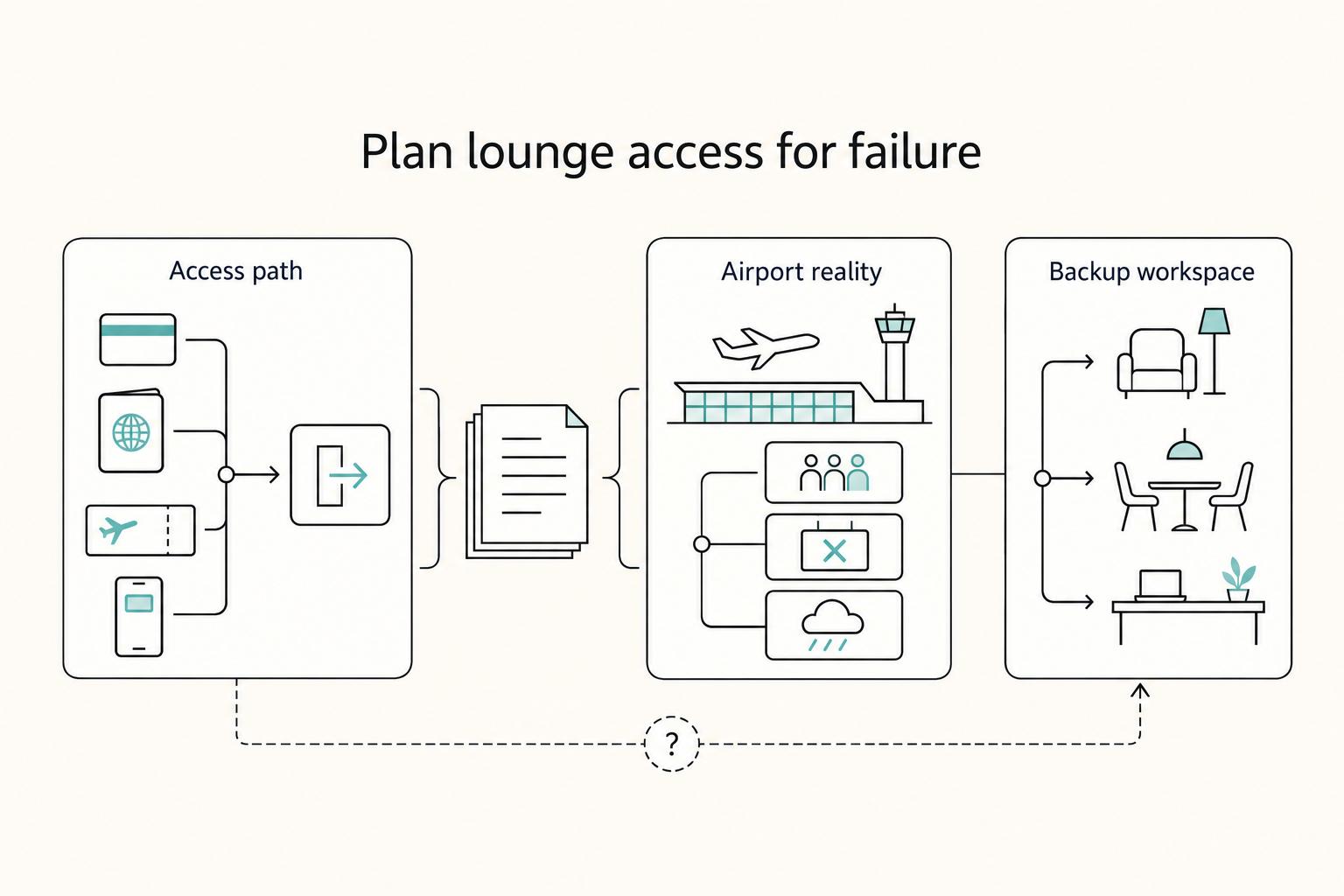
Treat airport lounges like operational infrastructure on relocation days because they can be one of the few semi-controllable environments inside an otherwise chaotic system. When you're in move mode (paperwork, logistics, tight timelines), you need habits that protect throughput, not aspirational travel perks. Lounge access can help when it works, if you run it like a process, not a vibe.