

Quick Answer
The best paid advertising channel for freelancers is the one that matches buyer behavior and your ability to execute consistently. Start with one channel, one offer, one landing page, and one conversion path, then measure downstream outcomes like booked calls and closes, not just clicks. Use Google Ads for high-intent search, LinkedIn Ads for professional targeting, and Facebook/Meta for retargeting or awareness when creative and follow-up are strong.
You're not choosing "a marketing channel" - you're choosing a cashflow system#
Treat paid advertising as a cashflow system you can run weekly, not a one-off "channel test" you hope works. If you are starting from zero, or dealing with inconsistent referrals, your real job is to choose and operate channels that do not break your follow-up, your measurement, or your bank balance. Judge channels by execution reliability, not hype.
Paid ads can work like a repeatable acquisition machine, but only if you design for real constraints: lead quality, consistent follow-up, and your ability to measure results week to week. As Uptick Marketing notes, "ROI is not a property or singular metric of a marketing channel." Translation: when ROI disappoints, the weak link may be the channel, the strategy, or your operations.
The operator's channel selection framework#
Use this decision stack before you launch ads on Google, LinkedIn, or Facebook:
- Offer clarity: Define one primary buyer, one outcome, one CTA. If you cannot sell it in a DM, ads will not save it.
- Constraint fit: Pick the channel you can execute consistently, "without breaking operations, cashflow, or your team," as CH4B puts it.
- Follow-up speed: If your follow-up slips, you will "just buy noise." Commit to a fast, consistent response before you spend.
Here's the non-glamorous filter that prevents runway gambling:
| System constraint | Your safe default | What it prevents |
|---|---|---|
| Limited time to manage complexity | Start with one core channel and one offer | Fragmented learning, scattered data |
| Weak tracking discipline | Define one conversion and one lead quality rule | "Cheap" leads that waste hours |
| Cashflow sensitivity | Spend to learn, not to impress (GeekWire uses a $1,000 example and a "10x return" goal) | Overspending before you earn signal |
Hypothetical scenario: you run LinkedIn Ads to a lead form, but you reply two days later because you're juggling time zones. You did not "pick the wrong channel." You built a system that cannot catch the demand you paid for.
30-day launch checklist (safe defaults)#
- Days 1 to 3: Write your qualification rules, your follow-up script, and your calendar workflow.
- Week 1: Launch one campaign, one landing page or form, one CTA. Name everything so you can reconcile results later.
- Weeks 2 to 3: Change one variable per iteration, audience or creative, not both. Review weekly and document decisions.
- Week 4: Produce a one-page ops report: spend, leads, booked calls, and pipeline movement. Decide kill or scale with receipts, not vibes.
Table-stakes definition: what "marketing" means when you're spending real money#
Marketing is the full system that creates value, earns attention, converts interest into revenue, delivers the work, and retains customers, not just "running ads." If you treat ads as the whole game, you will optimize the easy part, Promotion, and bleed money in the parts that actually determine profit.
In business terms, "table stakes" means the minimum baseline capabilities you need to stay in the game, not the differentiators that win deals. When you spend on ads, your table stakes are an understandable offer, a credible proof stack, a fast follow-up loop, and a delivery experience that matches the promise. If any one of those fails, ads simply amplify the failure.
The operator definition (what you control)#
Use this definition to stay honest: Marketing = value creation + acquisition + communication + delivery + retention. This is broader than promotion. You do not need perfect theory. You need operational coverage.
A practical gut-check comes from Erik Huberman (Hawke Media), who summarizes three principles as awareness, nurturing, and trust, shared from experience after "growing over 3,500 brands." Paid ads can buy awareness fast. They cannot buy trust if your proof and process look shaky.
The Marketing Mix lens: Four Ps (so you stop blaming the platform)#
Paid ads mostly sit under Promotion, but your conversion rate usually lives in Product and Price. Run this quick audit before you touch Google Ads, LinkedIn Ads, or Facebook Ads:
| Four Ps lens | For a business-of-one, this means | If you ignore it, ads will... |
|---|---|---|
| Product | Clear outcome, tight scope, proof (case studies, samples) | Drive clicks that do not convert |
| Price | Packaging, minimum engagement, payment terms | Attract the wrong buyers, or endless "how much?" |
| Place | Where the sale happens (call, email, checkout), time zones, invoicing flow | Create lead lag and drop-offs, especially cross-border |
| Promotion | Ads, landing page, retargeting, follow-up copy | Look "unprofitable" because the other Ps leak |
Hypothetical scenario: you run LinkedIn Ads to a lead form and blame the platform for "low quality." Then you realize your Product looks like generic consulting and your Price forces a custom quote every time. Fix the offer and packaging first, then re-test.
Decision rule: track ROI like a CFO. A common formula is (Revenue - Cost) / Cost. If you cannot connect spend to revenue, even with a lag, treat the campaign as unproven and keep scope tight.
Is marketing just advertising?#
No. Advertising sits inside marketing as a paid placement tactic, while marketing covers the broader work of understanding customer needs and promoting, selling, and distributing a product or service. Keeping that separation clean helps you stay professional when testing paid ads. You buy distribution with ads. You earn conversion with the system behind them.
The American Marketing Association frames marketing as "a business practice that involves identifying, predicting and meeting customer needs," while it frames advertising as the practice where a company "pays to place its messaging or branding in a particular location." That difference matters because you can pay for placement through search or social ads and still fail if you skip the strategic work.
Marketing vs. advertising (operator translation)#
Use this table as your default mental model:
| What you're doing | Marketing | Advertising |
|---|---|---|
| Core job | Identify customer needs, shape the market approach, and support promoting, selling, and distribution | Pay for message or branding placement in a specific location |
| Scope | Broad system (research, positioning, channel mix, sales support) | A single lever inside the system |
| Typical outputs | Strategy, messaging, content, email, SEO, PR, relationship marketing | Ads, campaigns, creatives, targeting, budgets |
| Failure mode | Incomplete strategy creates inefficiencies across your overall efforts | You optimize placements while the underlying strategy stays unclear |
If you catch yourself saying "marketing = ads," you will judge performance too early and in the wrong place. You will troubleshoot targeting when you should fix clarity.
Why "ads-first" breaks (using the Four Ps)#
A strategic marketing plan "takes into account all 4 and creates fit." When that fit breaks, ads expose it fast:
- Product: Your positioning reads generic, so people click but do not self-select.
- Price: Your packaging feels undefined, so buyers cannot map you to a decision.
- Place: Your sales motion adds friction, for example, unclear next steps after a form.
- Promotion: Your creative promises one thing and your landing page delivers another.
Hypothetical scenario: you launch paid ads to a polished PDF, then realize your follow-up email never answers the buyer's main question. Your "ad problem" is actually a marketing problem.
Safe default checklist before you buy ads:
- Write one sentence that states who you help and what outcome you deliver.
- Pick one conversion you can track, request, call, or purchase, and one path to it.
- Confirm you can respond consistently and move leads through a defined next step.
- Treat ads as an amplifier of a message you can already explain clearly, not a substitute for strategy.
Google Ads vs LinkedIn Ads vs Facebook Ads: which one should you test first?#
Test the channel that matches how your buyers already behave, then scale only after you can track spend to a real sales outcome. Choose your first paid lever like an operator, not like a gambler. The goal is a clean experiment you can measure, repeat, and explain.
Use this decision stack (in order)#
Start with buyer behavior, not platform preference:
| Platform | Start when... | Grounded note |
|---|---|---|
| Google Ads | You have high-intent search demand | Captures existing demand from people actively searching for solutions. |
| Facebook Ads | Your product is visual or needs awareness building | Shines at discovery and demand creation through visual storytelling and demographic targeting. |
| LinkedIn Ads | You want to reach a professional audience on LinkedIn | Gives access to a professional audience and supports options including sponsored content and InMail. |
-
Demand signal: Are they actively searching or just browsing? Google Ads captures existing demand from people actively searching for solutions. Facebook (Meta) Ads works differently: it shines at discovery and demand creation through visual storytelling and demographic targeting.
-
Where your buyers spend "work attention": LinkedIn gives you access to a large professional audience (the Mezzanine Growth excerpt cites over 546 million members, including 40 million decision makers, with 260 million logging in monthly). LinkedIn also supports multiple paid options, including sponsored content and InMail.
-
Your creative reality: Can you produce scroll-stopping assets? If you can ship strong visuals, short videos, and iterative creative quickly, you can run more meaningful tests on paid social. If your best asset is a tight offer plus clear language, search often fits better.
A practical rule of thumb:
- Start with Google Ads if you have high-intent search demand.
- Start with Facebook Ads if your product is visual or needs awareness building.
- Consider LinkedIn Ads if you want to reach a professional audience on LinkedIn.
Hypothetical scenario: you sell a specialized compliance service. Prospects rarely browse for it casually, but they do search when a deadline hits. Start with Google Search to intercept that urgency, then expand into paid social once you have a message that converts.
Decide your tracking readiness before your platform#
If you cannot define a qualified lead and a sales stage, every platform will lie to you in a different way. Lock these safe defaults first:
- Define qualified in one line: role, problem, readiness. Write it down.
- Track one primary conversion: booked call, purchase, or signed proposal. One.
- Commit to a closed loop: ad click to form to calendar to CRM stage to invoice.
- Compare channels on downstream outcomes like booked calls and closes, not just clicks.
That is how you keep paid testing disciplined.
The Best Paid Advertising Channels for Freelancers (ranked + concrete use-cases)#
Pick one primary channel to generate new demand signals, then add one retargeting channel to re-engage people who didn't convert the first time. Keep it simple so you can execute without splitting your attention. What works will vary by offer, audience, and constraints.
How to use this list (so you keep signal)#
Treat paid ads like an operations problem, not a creativity contest. Founders Network defines startup marketing as "initiating and nurturing the connection between the solution you've created and the consumers who need it." Your ads only count if they create that connection and drive business outcomes.
Use this as an execution menu: pick one row as your primary test, then pick one row for retargeting.
| Channel | Best for (use when you see this signal) | Pros | Cons | Do this week (concrete use-case) | Tracking and governance note (fact) |
|---|---|---|---|---|---|
| Google Ads (Search) | You can clearly describe what you sell and what someone might search for | Can be direct and measurable | Query matching can expand beyond what you intended | Start with a small, tightly scoped campaign aligned to one service. Review search terms and add negatives as needed. | Plan consent. DataAlly notes "Necessary cookies" enable secure log-in and consent preferences adjustments. |
| LinkedIn Ads (Sponsored Content) | You need context to explain the offer, not just a one-line pitch | Distribution in a professional feed | Easy to drift into "engagement" goals that don't map to revenue | Promote one asset (teardown, checklist, benchmark). Route clicks to one landing page with one conversion. | BAMF warns you to optimize for "qualified leads and closed deals, not just vanity metrics." |
| Facebook Ads (Retargeting) | You already get site traffic (even modestly) | Straightforward second touch after a visit | Retargeting usually needs consistent traffic to stay useful | Build an audience from high-intent pages, for example, pricing or case studies. Run one proof-heavy ad with one CTA. | DataAlly lists cookieyes-consent duration as 1 year. |
| LinkedIn Ads (Lead Gen Forms) | Your site experience slows conversion and you want fewer steps | Short path from click to lead | Lead quality can swing based on what you ask | Ask a few qualifier questions tied to your real buying criteria (budget, timeline, fit). | Keep a clean audit trail of lead source and form answers in your CRM. |
| Google Ads (YouTube) | Your buyer needs education before they trust you | Can build familiarity and feed retargeting audiences | Easy to misread views as revenue | Publish one tight explainer video. Retarget viewers with a call booking offer. | DataAlly lists VISITOR_INFO1_LIVE duration as 6 months. |
| Meta (Facebook/Instagram) Lead Ads | You can handle higher lead volume with strict filters | Low-friction capture | Spam and low-intent leads can happen | Require budget range and timeline fields. Disqualify early and route the rest to your scheduler. | DataAlly lists _cfuvid duration as session. |
| Sponsorships and launches (no ad account) | You want a concentrated burst around a release | Fast attention and social proof (when it lands) | Lead quality can be unpredictable | Pair a launch spike with retargeting so traffic doesn't evaporate. For Product Hunt, use this: A Guide to Launching on Product Hunt. | Treat the spike like an experiment. Track downstream outcomes the same way you track ads. |
A quick pairing rule (safe default)#
If prospects need multiple touches, pair one acquisition channel with one retargeting channel and judge both by outcomes. Keep yourself honest by measuring qualified leads and closed deals, not vanity metrics.
If you want a deeper dive, read How to Build a Waitlist for Your SaaS Product Launch.
How much should you spend to test paid ads - without lighting money on fire?#
Spend only what you need to buy clear learning, cap the downside, and scale only after your pipeline math supports it. A test budget should force discipline inside Google Ads or LinkedIn Ads instead of rewarding guesswork. The goal is decision clarity, not "giving it a chance."
1) Build a test budget around learning events (not a dollar amount)#
Pick one primary channel, Google Ads or LinkedIn Ads, and define the learning event you need to observe repeatedly: a qualified lead, a booked call, or a specific on-page action that reliably precedes revenue. Fund the test until you can see patterns, not anecdotes.
Use this safe default formula:
- Test Budget = (Learning events needed for confidence) × (Your expected cost per learning event)
- Keep targeting consistent long enough to learn, then change one lever at a time: keywords, audience, creative, or landing page.
Hypothetical scenario: you run LinkedIn Ads and see form fills, but your calendar stays empty. Treat "booked calls from qualified leads" as the learning event, not "leads," and adjust the offer and qualification questions before you touch spend.
2) Pre-commit kill rules, scale rules, and a payback constraint#
Write your rules down before launch. That prevents "just one more week" spending.
- Kill rule: Stop if you still cannot create a repeatable path from click to qualified pipeline after structured iterations. Change one variable, document the outcome, repeat.
- Scale rule: Scale only when your pricing can carry acquisition. If higher spend forces you to discount, your system is fragile.
- Payback constraint: Set a payback window that matches your delivery model. Project work usually needs faster payback than retainers. If the math fails, change packaging, tighten qualification, or switch channels.
| Decision | Use this input | Operator check |
|---|---|---|
| Kill | Qualified pipeline creation | "Do we see the same failure mode after controlled changes?" |
| Hold | Booked calls and sales cycle reality | "Do we need more time, or do we need a different offer?" |
| Scale | Margin after delivery costs | "Can pricing absorb CAC without degrading service?" |
Finally, do not judge channels on CPL alone. Run attribution consistently in your CRM, then sanity-check it with incrementality thinking: attribution is about crediting customer events to tactics, while incrementality is about the change in customer events caused by changing a tactic. Haus puts it bluntly: "In any brand at any moment, there's money being wasted," and incrementality helps you look for lift, not just credit. Then A/B test to improve efficiency, because as Unbounce notes, "The overarching objective of A/B testing is to find ways to get more results from the same (or less) investment."
Your 30-day launch test: tracking, creative, and governance controls#
Run a 30-day paid acquisition test like an operator: strict measurement, controlled variables, documented iterations, and audit-ready reporting. This is how you get clean signal instead of noisy chaos, even when creative and targeting change.
Week 0 to Week 1: launch with measurement + constraints#
Week 0 exists for one job: make outcomes measurable and reconcilable before you buy traffic.
| Control | Safe default | Grounded note |
|---|---|---|
| Tracking | Separate a primary conversion from a secondary conversion | Example: a booked call as the primary conversion and a qualified lead as the secondary conversion. |
| Naming conventions | Include offer + audience + geo in campaign and ad names | This helps you reconcile results later. |
| Controlled launch | Start with one offer, one landing page, one CTA | This reduces degrees of freedom and keeps optimization meaningful. |
| Search governance | Review search queries early on a consistent cadence and add negative keywords when intent is irrelevant | Broad traffic looks cheap until it wastes follow-up time. |
- Tracking (non-negotiable): Configure conversion tracking inside your ad platforms and analytics so you can separate a primary conversion from a secondary conversion. If you use AI to "autonomously run campaigns," treat tracking as your safety rail, not an afterthought.
- Naming conventions (future-you will thank you): Standardize campaign and ad names so you can reconcile results later. Safe default: include offer + audience + geo and, optionally, funnel stage.
- Controlled launch (reduce degrees of freedom): Start Week 1 with one offer, one landing page, one CTA. Multi-service menus inflate choice, dilute relevance, and make optimization meaningless.
- Search governance (Google Ads): Review search queries early and on a consistent cadence. Add negative keywords when you see irrelevant intent, because broad traffic looks cheap until it hits your calendar and wastes your follow-up time.
| Week | Primary goal | "Safe default" control |
|---|---|---|
| 0 | Measurement + hygiene | Primary vs secondary conversion, naming standards |
| 1 | Clean baseline | One offer, one page, one CTA |
Week 2 to Week 4: iterate, then decide with receipts#
Weeks 2 and 3 are for learning, not thrashing. Change one lever per iteration and document what you changed and why.
- LinkedIn Ads: Test a single audience dimension per cycle: job title or seniority or company size. Keep the rest stable so you can attribute movement to one decision.
- Facebook Ads: Rotate a small batch of creatives while keeping copy stable. You want to learn whether the hook or visual drives response, not confuse the system with constant rewrites.
- Governance controls (especially if you use AI tooling): Everworker defines "Ethical AI in marketing" as designing, deploying, and governing AI tools to be "transparent, fair, safe, compliant, and accountable," without slowing growth. If you use AI tooling, translate that into practice: use bias-testing practices that fit real campaigns, set practical disclosure rules (rules vary by jurisdiction), require human review before you publish ads, keep a changelog of targeting and creative edits, and maintain a simple audit scorecard.
Week 4 is decision week. Produce a one-page report that shows spend → leads → booked calls → closes or, at minimum, pipeline created if closes lag. Export monthly snapshots, platform spend, invoices, payouts, so your ad numbers match your books.
Hypothetical scenario: you see plenty of form fills from LinkedIn Ads but weak booked calls. Do not "fix" it by raising budget. Tighten qualification, adjust follow-up SLAs, then rerun the same audience with one controlled change.
The cross-border layer competitors ignore: compliance, invoicing, and getting paid reliably#
Treat payments and tax readiness as part of your marketing operations, or your paid acquisition engine will stall the moment volume hits. If you can track spend to leads and booked calls, the next failure mode is money friction: onboarding delays, invoice confusion, and payouts you cannot explain later. Put simple controls in place before you scale.
| Area | Safe default | Grounded note |
|---|---|---|
| Paperwork readiness | "Paperwork complete" as a stage gate before you start work | Do not schedule kickoff until you can invoice and collect without exceptions. |
| International payments | Offer bank transfer options when you can | Use a consistent invoice reference format so you can reconcile each payment to a specific invoice. |
| Audit trail | Keep an end-to-end story for cash movement | Include ad spend, client invoices, settlements, and payouts to others. |
| Global subcontractor payouts | Schedule payouts in batches, require approvals, and keep clear statuses | Avoid one-off manual transfers that scatter records across inboxes and bank apps. |
1) Paperwork readiness before you turn the ads up#
Paid acquisition increases the rate you onboard new clients. If you wait until after the leads arrive to sort documentation, you turn "fast pipeline" into "slow cash." Confirm up front how you will collect and store any required tax information and any verification your bank, platform, or payor requires. Requirements vary. Missing paperwork often triggers payout delays, extra review, or rework.
Safe default: add "paperwork complete" as a stage gate before you start work. Do not schedule kickoff until you can invoice and collect without exceptions.
2) Reduce international payment friction without losing traceability#
International clients sometimes hate card checkout. They also need invoices that match their internal process. Offer bank transfer options when you can, and keep references consistent so you can reconcile each payment to a specific invoice. Decide, before you scale, what "compliant invoicing" means for your business and who owns it, so it does not become an urgent project mid-campaign.
| Decision | What you optimize for | Safe default |
|---|---|---|
| Card checkout only | Speed | Add bank transfer when clients ask twice |
| Bank transfer option | Fewer failed payments | Use a consistent invoice reference format |
Hypothetical scenario: LinkedIn Ads starts producing qualified leads from multiple countries. You close deals, then a client asks for a bank transfer and a compliant invoice format. If you cannot deliver both quickly, you delay cash and derail momentum.
3) Build an audit trail you can defend (especially if you live abroad)#
You need an end-to-end story for cash movement: ad spend, client invoices, settlements, and payouts to others. If you are a U.S. person abroad, watch FEIE planning signals early. The IRS states you meet the physical presence test if you stay 330 full days in a foreign country or countries during any period of 12 consecutive months. The days do not need to be consecutive. For 2026, the IRS lists the maximum FEIE amount as $132,900 per person, and you still need to file a return reporting the income to claim it.
4) If you subcontract globally, operationalize payouts (do not "wing it")#
When you pay other freelancers, schedule payouts in batches, require approvals, and keep clear statuses so you can reconcile later. Avoid one-off manual transfers that scatter records across inboxes and bank apps.
5) Where Gruv fits (without overpromising)#
Use Gruv modules, where supported, to collect funds, hold and track balances, convert FX when needed, and run compliance-gated payouts with an audit trail. Think of it as the money back office that helps your acquisition engine avoid outrunning your ability to invoice, reconcile, and pay partners.
Conclusion: pick one channel, run the 30-day test, and operationalize the money flow#
Pick one channel, run a controlled test, and treat payments plus compliance as part of your marketing system, not admin "later." The people who do well with paid ads do not "find the best platform." They run clean experiments, then lock in the money ops that let them scale without breaking cashflow.
Your clean test (the operator version)#
Run one offer, one channel, one landing page, one primary conversion. Everything else stays constant so your results mean something.
- Define the win condition upfront: qualified leads that reliably turn into booked calls, then revenue.
- Pre-decide rules:
- Kill rule: stop if you cannot create qualified leads after a few tight iterations: intent, audience, creative, landing page. * Scale rule: scale only after you can connect spend to pipeline stages you trust.
- Track like a grown-up: Measured puts it plainly: "Attribution tells you what customers touched. Incrementality tells you what channels provided the incremental sale." Translation: clicks do not equal growth, especially when "iOS privacy changes have disrupted conversion tracking" and cookie deprecation limits cross-site measurement. Use attribution to debug, but judge success on pipeline and cash.
Here's a safe default decision table you can actually act on:
| If your bottleneck is... | Start with... | Add next when... |
|---|---|---|
| Clear "need it now" intent | High-intent search traffic | You have steady site traffic to retarget |
| Reaching the right buyer by role/company | Role and company-targeted ads | You can respond fast and qualify consistently |
| People visit but do not convert | Retargeting | You can segment by intent (pricing, case study, contact) |
Hypothetical scenario: you can close warm referrals, but inbound slows down. You pick one high-intent channel, run one service package, and log every lead through the same qualification steps. You do not "fix" three variables at once.
Operationalize the money flow (so "growth" does not turn into chaos)#
Treat invoicing and payout controls as marketing operations because ads create volume. Keep your records audit-ready, and use reputable references like IRS Publication 334 (2025), Tax Guide for Small Business as a starting point for organizing your small business tax thinking, then confirm details with a qualified professional for your jurisdiction.
Build these safeguards early:
- Invoicing hygiene: consistent client names, clear line items, and a reconciliation trail.
- Cross-border readiness: tax forms, invoicing requirements, and local tax concepts vary by jurisdiction, so plan for documentation and reviews as you expand.
- Payout discipline if you subcontract: run approvals, batch payouts, for example, payout batches where enabled, and identity or risk checks where required.
If you're scaling internationally and want tighter collection plus payout controls, request access or talk to sales to confirm Gruv coverage in your markets. Program support varies. If your business looks more like B2B SaaS as you expand, this pairs well with A Guide to Internationalizing and Localizing Your SaaS Product.
Frequently Asked Questions
What is marketing (in plain English) for a freelancer or consultant?
Marketing is the set of actions you take so the right people understand your offer and choose to buy your services. In practice, that can include your message, how you reach people, and how you move them from interest to purchase.
Is marketing just advertising - or do I need a broader marketing plan?
Advertising can be part of marketing, but it is not the whole job. The SBA’s guidance focuses on making a marketing plan to persuade customers to buy, and then deciding how you’ll accept payment when it’s time to make a sale, so your plan needs to connect promotion to the reality of selling and getting paid.
What should a marketing plan include according to the U.S. Small Business Administration?
The U.S. Small Business Administration frames a marketing plan as a plan that “describes the actions you’ll take to persuade potential customers to buy your products or services.” It also says marketing takes “time, money, and preparation,” and that a plan helps you stay “on schedule and on budget.” The SBA notes that most marketing plans cover target market, competitive advantage, and a sales plan, and it provides a downloadable marketing plan template PDF (the SBA’s sample template page shows “Last updated April 8, 2024” and a file size of “148KB”). The SBA also says your business plan should contain the central elements of your marketing strategy, and that your marketing plan turns strategy into action.
Which paid ad channel is best for freelancers: Google Ads, LinkedIn Ads, or Facebook Ads?
The SBA materials here do not compare paid ad channels or recommend a “best” platform. If you run paid ads at all, make the choice based on your target market and your sales plan, so the traffic you buy fits how you actually sell.
Google Ads vs LinkedIn Ads vs Facebook Ads: which is better for B2B services?
There is no SBA-backed “winner”, and the right answer depends on your target market and sales plan. Start by getting clear on who you're trying to reach (your target market), what makes you different (your competitive advantage), and how you convert interest into revenue (your sales plan), then pick channels that match that reality.
How much should a freelancer spend to test paid advertising?
No specific test budget amounts appear in the SBA guidance here. Keep it simple: only spend what you can afford to spend while you learn, and define in advance what you need to see before you increase spend.
What metrics prove a paid channel is working (beyond clicks and impressions)?
The SBA guidance here does not provide ad-performance benchmarks or a required metric list. Focus on outcomes that tie marketing activity back to your sales plan, so you can see whether attention is turning into actual sales.
Try a related tool
Researched and edited by the Gruv editorial team. Gruv builds cross-border billing, payouts, and finance-operations software for global businesses.
Sources
Educational content only. Not legal, tax, or financial advice.
Related Posts
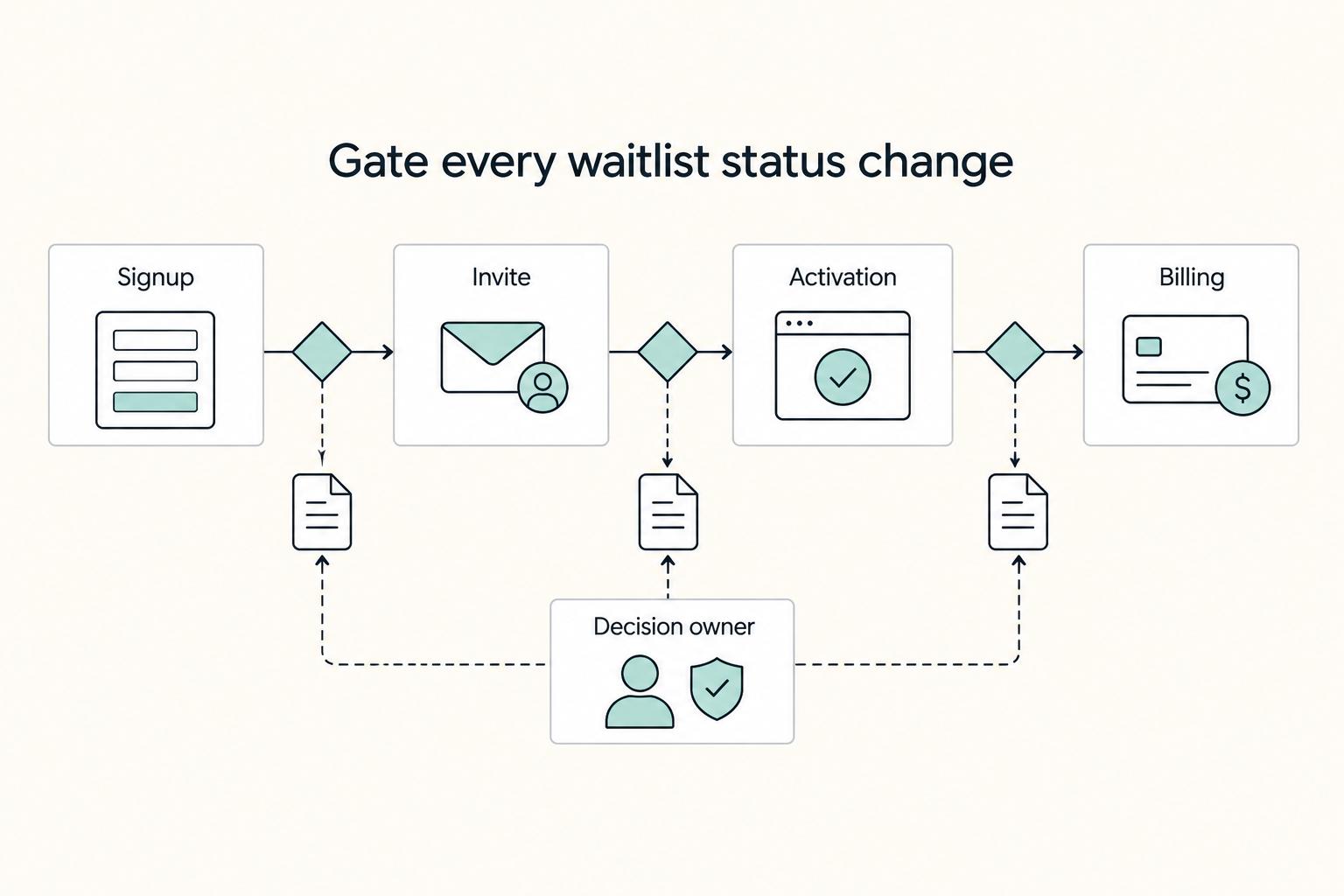
How to Build a Waitlist for Your SaaS Product Launch
Your waitlist should lower launch risk, not create cleanup work the week you open access. Treat your waitlist as a control layer for readiness: who signs up, what intent they show, what promise they heard, and what has to be true before you invite the next group.

How to Launch on Product Hunt
You will get more from a Product Hunt launch if you treat it as a repeatable set of decisions, not a one-day bet on rank. Judge success by qualified demand, feedback quality, and what happens next: signups, demos, onboarding fixes, and product changes you can act on.

SaaS Internationalization for Teams That Need Launch Control
**You do not get orderly global growth by translating strings faster. You get it by treating saas internationalization as an operating discipline with named owners, launch gates, and documented stop conditions.** This tends to become true once you move past 1-2 languages or start shipping weekly updates across multiple markets. At that point, localization behaves more like infrastructure: invisible when it works and expensive when you ignore it.