
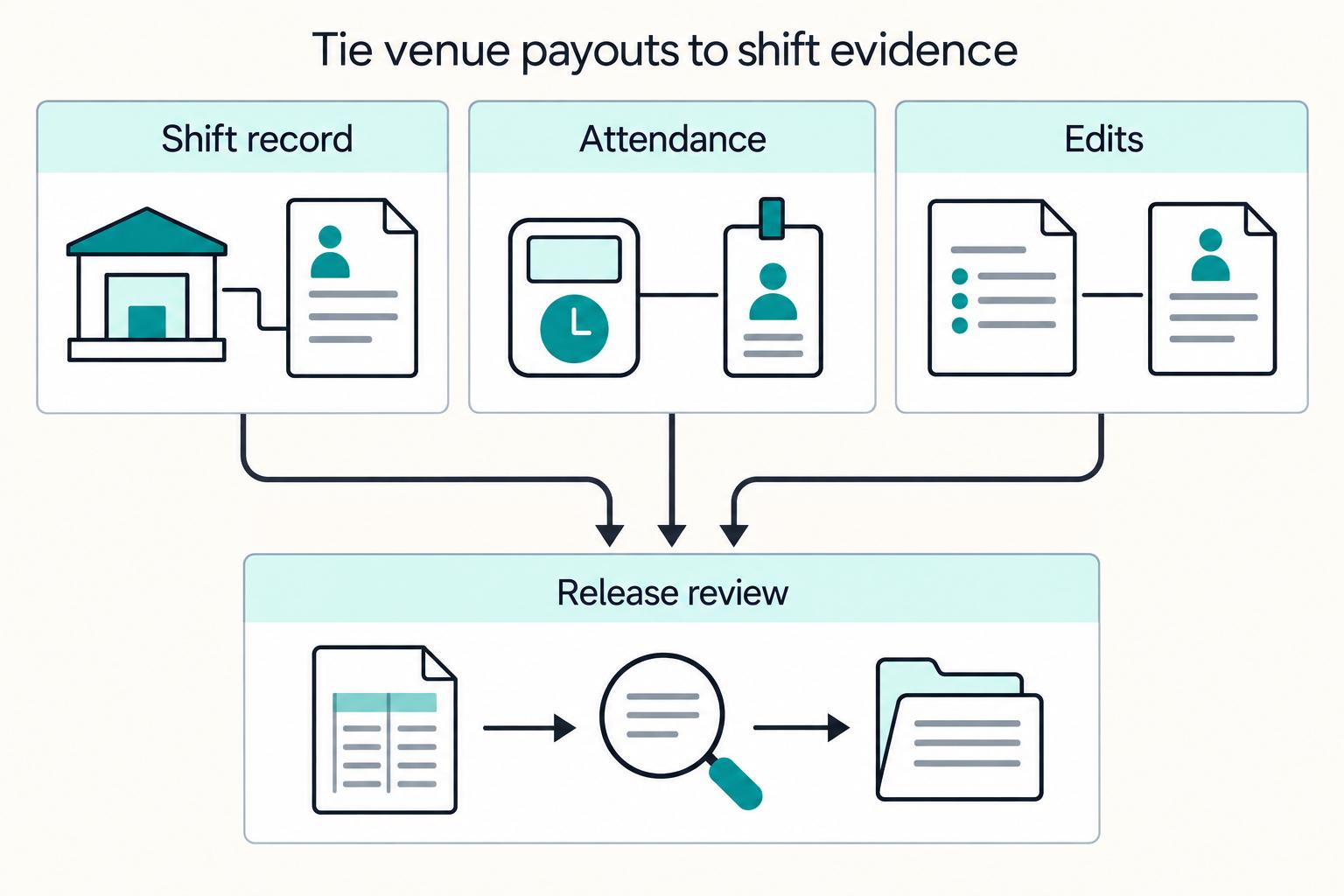
Quick Answer
Decide market by market: treat event gig worker payments as a go/no-go operations call, not a wage lookup. Build a dated city table for Brandon, Tampa, and Orlando, convert mixed pay units into one shift-level view, and require evidence for failed-payout recovery before rollout. If economics only hold under perfect fill, or compliance ownership for items like 1099 and W-8 handling is still unclear, run a bounded pilot or pause.
How to choose the right payout setup across venues#
Launch decisions for event gig worker payments should start with operational proof, not headline pay figures. Public pay numbers can help you spot interest, but they do not prove you can run reliable payouts, meet compliance obligations, and keep clean records once payments begin.
That gap shows up quickly in temporary, flexible work. In gig settings, payment amounts and schedules can vary by contractor terms, so planning has to reflect payout variability instead of assuming one standard pattern.
This article helps founders and operators make a practical call in each market: launch now, test first, or pause. The focus is an operational scorecard built around the areas most likely to fail early: compliance readiness, payout execution, and jurisdiction checks.
Compliance can be an early hard gate. For U.S.-linked gig work, income reporting to the IRS and state and local tax agencies is expected, so launch planning cannot sit with growth alone. A basic checkpoint is whether your process can store and organize receipts and other cost records for tax calculation, reporting, and later review.
Execution risk matters just as much. When payout amounts and schedules vary, operations are harder to run consistently, and manual methods like paper checks are a known speed failure mode. If exceptions still depend on manual cleanup, that is a signal to pause expansion.
Jurisdiction is a launch-critical variable, not a footnote. Requirements can differ by country and program, and some widely shared updates, including December 2024 EU directive claims and January 2025 U.S. contractor-rule claims, come from external, unedited industry coverage. Use those as alerts, then confirm local requirements before go-live.
Start with the expansion decision, not the salary headline#
For event gig worker payments, the first question is simple: should you launch in this market now, later, or not at all?
Salary headlines are directional, not sufficient. Public offers can diverge from actual payout behavior. In one FTC enforcement case, workers were offered $18 to $25 per hour, tips were diverted, and the company was required to return more than $60 million.
Start with a demand check before you commit rollout spend. For each city and role term you plan to support, log:
- search date
- search term
- result count
- whether results show live listings or only pay content
If sources are thin, inconsistent, or mostly pay pages, treat the market as unproven. Do not make a full launch call yet. Keep your evidence pack as you go so the decision is auditable.
Demand is one part of the picture. You also need to ask whether pay promises in that market look enforceable in practice. In the California Prop. 22 context, workers filed 54 claims and at least 32 were unresolved, and enforcement responsibility was pushed across agencies. Use that as a cautionary example: pay promises alone are not proof that payout execution and resolution paths are launch-ready.
Define the payment model before you compare markets#
Before you compare cities, lock one baseline payment model. Define how work is priced, how funds are disbursed, how exceptions are resolved, and what records you can produce later for Event Staff and Event Assistant payouts.
Treat pay data as payment-unit inputs, not interchangeable "market pay." Per shift, hourly, and per event are different units. An annualized pay view and a per-job listing can both help, but only after you normalize them with one consistent rule.
Separate the pay unit from the source#
If sources use different units, you are not making a like-for-like market comparison. Log each datapoint the same way so later review stays traceable:
| Worker segment | Median hourly pay | How to use it |
|---|---|---|
| Independent contractors | $25 | Segmentation warning, not a direct city-rate input |
| Temporary employees | $15 | Segmentation warning, not a direct city-rate input |
| Overall workers | $23 | Segmentation warning, not a direct city-rate input |
- source name
- role label used by the source
- pay unit shown (hourly, per shift, per event, or annualized)
- worker segment assumption (short-term W-2 temporary worker or 1099 independent contractor)
- capture date
- whether it is a live listing or a derived pay page
The worker segment field matters. In broad U.S. data, median hourly pay differs by segment: $25 (independent contractors), $15 (temporary employees), and $23 (overall workers). Those are not event-specific benchmarks, so use them as a segmentation warning, not a direct city-rate input.
Map role mix before modeling economics#
Do not blend roles too early. Keep Event Staff and Event Assistant as separate rows at the start, because role mix can reflect different labor dynamics.
At minimum, keep separate source counts, separate pay-unit conversions, and separate notes on likely worker segment by role. If that classification is still unclear, city-to-city comparisons are still premature.
Normalize once and apply it everywhere#
Pick one normalization rule, document it, and use it across markets. A practical approach is to choose a single comparable payout unit and apply the same conversion method everywhere.
Broad contingent-work data shows about 20 hours/week for temporary employees and independent contractors, while another platform-gig dataset reports about 14 hours/week and roughly $18/hour. That spread is exactly why your conversion rule should be explicit and fixed across markets.
One practical guardrail is simple: avoid payout logic your team cannot explain. If compensation becomes opaque, it gets harder to explain payout decisions and resolve questions. You should be able to show listing terms, conversion method, disbursement record, and any adjustment reason clearly.
Score market liquidity before you trust pay benchmarks#
Do not trust pay benchmarks until you have confirmed local market liquidity. Headline pay can look strong even when demand signals are thin, stale, or pulled from nearby-city results. For Brandon, Tampa, and Orlando, treat city-level job-board evidence as missing until you capture direct local signals with dates.
Build a city table that separates evidence from assumptions#
Use one table per city as an evidence log, not a conclusion sheet. Keep the exact query terms, role labels, and capture dates in the same file so you can recheck recency and consistency later.
| City | Indeed | ZipRecruiter | Wonolo | Evidence quality flags | Confidence label |
|---|---|---|---|---|---|
| Brandon, FL | Record whether results are live local listings, pay pages, or no clear local signal | Record local vs nearby-city results and capture date | Record whether shifts are truly local or nearby spillover | Thin sample, mixed geography, stale captures, unclear role labels | Unconfirmed until direct evidence review |
| Tampa, FL | Same capture method as Brandon | Same capture method as Brandon | Same capture method as Brandon | Same flags | Unconfirmed until direct evidence review |
| Orlando, FL | Same capture method as Brandon | Same capture method as Brandon | Same capture method as Brandon | Same flags | Unconfirmed until direct evidence review |
Keep Brandon, Tampa, and Orlando as separate demand zones#
Nearby markets may not be interchangeable. A stronger signal in Tampa should not validate Brandon, and Orlando should stay separate until you have direct evidence for your role mix in that city.
Keep confidence unconfirmed until evidence is direct#
Before finance or product treats a market as real, keep confidence marked as unconfirmed unless you have direct, recent city-level evidence for the same role mix across sources. Do not use nearby-city spillover alone to label Brandon, Tampa, or Orlando as directional, usable, or decision-grade.
Add payout-quality context to liquidity scoring#
Liquidity is not just about visible job demand. Public signals are incomplete without payout experience. Worker choice can shift quickly across platforms in a multi-app environment, and workers evaluate payouts on speed, flexibility, transparency, and reliability.
That means your liquidity score should include payout-timing risk, not pay level alone. Faster and clearer payouts can affect whether visible demand turns into filled shifts, while slow or unclear payouts can push active workers elsewhere.
Related reading: AgriTech Platform Payments: How to Pay Farmers and Agricultural Workers in Emerging Markets.
Normalize public pay signals into operator economics#
Before you approve a launch, convert public pay signals into one shift-level operator view with explicit assumptions and unknowns. If the economics only work when fill is perfect, no-shows are negligible, and legal exposure is ignored, treat the market as not launch-ready.
Convert mixed pay formats into one operator view#
Use one role-specific sheet to map each public signal into a provisional expected payout per filled shift only when assumptions are explicit, then track margin sensitivity separately. Keep Event Staff and Event Assistant separate if your operating assumptions differ.
| Field to log | Why it matters |
|---|---|
| Role label and city | Prevents cross-role or cross-city blending |
| Source and capture date | Preserves recency and traceability |
| Public pay format (annual, hourly, per-job) | Makes conversion assumptions explicit |
| Sample-depth/quality flag | Distinguishes directional vs decision-grade inputs |
| Shift-level assumption notes | Shows exactly how the estimate was derived |
If conversion assumptions are weak or missing, mark the estimate as unknown instead of averaging it into a "clean" number.
Treat thin salary pages as directional, not pricing truth#
Thin or ambiguous salary pages can help bound the discussion, but they should not set launch pricing. When role match, geography, recency, or sample depth is weak or missing, label that input as directional in the sheet and keep the limitation visible.
Add legal-cost risk before calling it margin#
For U.S. launches, do not call it margin until you account for classification and overtime risk. The DOL proposed rescinding the analysis in 29 CFR part 795 and replacing it with a modified January 7, 2021 approach for independent contractor status under the FLSA. The same proposal says this analysis would apply to FMLA and MSPA. It also states a 60-day comment window after Federal Register publication, a daily receipt cutoff of 11:59 p.m. ET, and that late comments are not considered.
Track those items as explicit assumptions and checkpoints in the same economics view. A Fourth Circuit decision dated July 17, 2025 described misclassification exposure involving approximately 1100 nurses, almost five million dollars in unpaid overtime, and a nearly equal sum of liquidated damages.
Stress-test low-fill and high-no-show periods#
Do not approve a market from an average-case model alone. Add at least three rows before launch: base case, low-fill period, and high-no-show period.
Use a simple decision rule: if normalized payout economics are viable only under perfect-fill assumptions, delay launch and improve demand-side evidence first.
For a step-by-step walkthrough, see How to Embed Payments Into Your Gig Platform Without Rebuilding Your Stack.
Set payout timing and exception rules by venue operations#
Once shift economics clear, payout timing is the next operating gate. Set release rules to match how each venue actually staffs and reconciles work, not a generic post-shift trigger. If failed payouts and attendance disputes stay unresolved beyond your own operating target, pause city expansion.
Match release logic to the shift shape#
Different shift patterns need different release checks because reconciliation risk changes with the work pattern.
| Work pattern | What to verify before release | Main risk if you release too early |
|---|---|---|
| Single-night event | Attendance confirmation plus any shift edits tied to venue work rules | You pay from initial clock-out data, then discover a dispute or adjustment afterward |
| Multi-day venue staffing | Reconcile worked segments regularly instead of waiting for a single end-of-period catchup | Errors accumulate across days and carry unresolved balances forward |
| Rapid back-to-back shifts | Confirm each shift separately, including rest-period conflicts where relevant | One bad record can distort multiple payouts |
Venue work rules can change payable hours after scheduling. In some union contexts, guidance references meal breaks by 5 hours, required rest between shifts, 4-hour minimum calls, and an 8-hour base day before overtime. Treat those as venue-specific constraints, not universal rules. If venue constraints can change final payable hours, hold release until those checks are complete. Where relevant, staggered starts can reduce overtime concentration and may reduce downstream payout exceptions.
Set the exception path before launch#
Define the failed-payout path before go-live so recovery is consistent and auditable. Use a simple operational sequence:
- Log the failed payout with reason code and timestamp.
- Notify the worker that payment did not complete and what happens next.
- Retry only after the underlying issue is resolved or revalidated.
- Move to manual review if retries fail or attendance is contested.
Keep recordkeeping detailed enough for dispute review. Capture at least shift ID, venue, role label, attendance source, manual edits, payout attempt result, and approver.
Add gates for higher-risk first payouts#
Use first-payout gates for higher-risk cohorts as policy controls, not as universal legal requirements. Identity checks and withdrawal controls can be appropriate when you enter a new city, onboard many first-time workers, or handle unusual manual edits.
Before you scale, request reliability evidence from providers and internal teams, including largest-event performance and stress-test results. If attendance confirmation depends on live connectivity, offline fail-safes matter because outages can turn completed work into payout backlogs. If recovery cannot close the loop quickly with records you trust, do not expand coverage yet.
Build the tax and compliance evidence pack before launch#
Do not launch a market until your team can produce a compliance pack with clear ownership. At minimum, that pack should cover tax-document flow and payout-policy approvals for the market in scope.
Set the minimum pack at market level#
A launch-ready market pack should make key checks easy to verify: what tax documents are collected and when, and who approved payout policy. If either is missing, launch readiness is weak. At a practical level, each market file should include:
- Tax documentation flow showing where relevant tax-document handling sits in product and operations records, including exception handling for missing or rejected documents.
- Payout policy approvals from risk owners, typically finance, ops, and legal or external counsel, with approved release and hold rules aligned to venue operations.
Tie this evidence to platform records so a reviewer can trace worker ID, market, payor entity, tax-doc status, payout activation date, and approver without rebuilding context from messages.
Document U.S. foreign-asset steps clearly#
For U.S.-linked workers or entities, define ownership and escalation for Form 8938 and potential FBAR steps before launch. Keep support and venue ops out of tax determinations they are not meant to make.
| Item | Stated detail | Scope |
|---|---|---|
| Filing timing | Attached to the annual income tax return and filed by that return's due date, including extensions | Form 8938 |
| Last-day threshold | More than $50,000 on the last day of the tax year | Specified domestic entities |
| Any-time threshold | More than $75,000 at any time during the tax year | Specified domestic entities |
| No return required | Form 8938 is not required | If no income tax return is required for the year |
| FBAR boundary | Form 8938 does not remove a separate FBAR obligation where FBAR otherwise applies | Separate obligation |
| Excluded accounts boundary | Some financial accounts maintained by a U.S. payer are excluded from Form 8938 reporting | Use scope checks, not blanket intake questions |
Form 8938 is attached to the annual income tax return and filed by that return's due date, including extensions. Filing includes a specified-person test. For specified domestic entities, the referenced thresholds are more than $50,000 on the last day of the tax year or more than $75,000 at any time during the tax year. If no income tax return is required for the year, Form 8938 is not required.
Also make two boundaries explicit so escalation stays within scope:
- Filing Form 8938 does not remove a separate FBAR (FinCEN Form 114) obligation where FBAR otherwise applies.
- Some financial accounts maintained by a U.S. payer are excluded from Form 8938 reporting, so escalation should follow scope checks, not blanket intake questions.
Keep records reviewable#
Keep records reviewable so teams can respond quickly during launch checks. Your review export should show document type, collection status, timestamps, approver, and manual overrides.
If evidence is scattered across chats, inboxes, and ad hoc CSVs, reviews slow down. If you cannot produce a clean audit trail quickly for one worker in one market, pause launch until you can.
Related: How to Write a Payments and Compliance Policy for Your Gig Platform.
Choose contractor classification and onboarding gates early#
Freeze your classification decision before recruiting scales, because changing it later can force rework across contracts and onboarding controls.
Freeze the classification call before role design drifts#
The key risk is not just choosing employee or independent contractor. It is letting role design drift after the choice is made.
A common legal frame is binary: employee or independent contractor. A legal analysis describes the common-law control test as the prevailing standard and also notes that judges have struggled with older multifactor tests in gig-worker disputes.
Set criteria early by market and by cohort, then keep role scope aligned to that decision. For Event Assistant and Event Staff, do not let recruiting copy, venue requests, or product settings quietly expand duties after approval. If role scope changes, revisit classification before scaling further.
Use a simple checkpoint before first-shift activation: a signed record for each cohort with jurisdiction, role label, decision owner, approval date, and the test or reasoning used. If local review starts to resemble a presumption-of-employment lens, a limited-factor approach, or pressure for one clear test, tighten guardrails instead of loosening them.
Sequence onboarding gates by risk, not convenience#
Onboarding should follow risk, not convenience, if you want fewer issues and stronger audit trails. A practical sequence is:
- Identity gate: confirm who is entering the platform and can be tied to a payout profile.
- Tax documentation gate: confirm required document collection status before routine money movement.
- Payout eligibility gate: activate disbursement only after the first two checks, or after an approved override.
This sequence is an operational control, not a universal legal mandate. If payout is activated before identity and tax status are stable, teams may see more exceptions and rework during live venue operations. Keep each gate visible in platform records with timestamp, status, approver, and override reason.
Start stricter when worker status norms are fuzzy#
When worker-status norms are unclear, start narrow. Use stricter onboarding, tighter cohort definitions, and fewer role variants.
For Event Assistant and Event Staff, keep duties specific and separated instead of using a catch-all role that shifts across setup, supervision, guest-facing tasks, and venue-directed work. Platform participation can help workers manage risk, but it can also create new risk. In practice, looser onboarding can increase risk exposure and review effort later.
If uncertainty remains, choose the stricter baseline first and relax only after evidence supports it: stable role scope, clean document collection, and low exception rates. If role control or duties change, reopen classification before expanding city coverage.
Plan cross-border expansion with explicit country constraints#
Treat cross-border compliance as a launch variable from day one, not a post-launch fix. A strong Tampa, FL launch can show city demand and domestic operations. It does not prove a non-United States corridor is ready for the same worker setup, tax-document flow, or payout release rules.
Separate city readiness from country readiness#
City readiness and country readiness answer different questions. City readiness is about supply, shift fill, and reliable payouts in one metro. Country readiness is about whether your model fits that jurisdiction's worker protections, contractor-classification expectations, reporting obligations, and practical constraints around who can work and be paid.
That distinction matters because worker-protection rules are shifting across jurisdictions, and compliance and reporting expectations are rising with them. Migration and gig operations are also linked, so immigration context is an operating variable, not a side note. Copying a United States setup into another country is a risk decision, not a shortcut.
Use a simple default: treat each new country as a new compliance launch, even when role design, venue type, and payout product look the same.
Define what changes before you test a corridor#
Cross-border compliance is not one checklist item. Before pilot approval, define what changes by country and what stays global. At minimum, document:
- Tax documentation path: what you collect, when you collect it, and what blocks payout eligibility.
- Reporting ownership: who owns reporting logic and record exports if local requirements change.
- Payout eligibility rules: whether domestic activation order applies or needs extra review.
- Worker status assumptions: whether the contractor model still fits that cohort and role design.
- Immigration context: whether the corridor introduces added verification or support needs.
Keep a country file before launch with jurisdiction, cohort, tax-document path, payout-eligibility gate, reporting owner, escalation contact, and the date of last legal or policy review. If country rules change, recheck workforce planning, termination-cost projections, and restructuring scenarios before expanding further.
Roll out in phases and earn the next step#
A safer sequence is phased:
| Phase | Stated requirement |
|---|---|
| Domestic proof | Stable onboarding completion and clean reconciliation in the United States base program |
| Limited cross-border pilot | One country, narrow role scope, limited venue count, with manual review capacity in place |
| Broader rollout | Proceed only after reconciliation timing, exception reasons, and document-rejection patterns are no longer shifting week to week |
If reconciliation breaks differently by country or exception queues keep moving week to week, pause expansion. The tradeoff is speed versus reversibility: a rushed cross-border launch can increase administrative friction and contribute to less predictable earnings for workers.
If you need deeper documentation detail, this is where a dedicated compliance spec helps, especially for tax-document collection and reporting logic. Gig Worker Tax Compliance at Scale: How Platforms Handle 1099s W-8s and DAC7 for 50000+ Contractors
Where a platform pays people in the EU, DAC7 is a data completeness problem before it is a filing one. The identity fields, the quarterly consideration and the fees withheld all have to be present for every reportable seller, and the ones that are missing are almost never missing at random. DAC7 and DPI reporting for platforms lists what the filing carries, and the DAC7 seller data checker reads a seller export in the browser and returns a chase list of the gaps.
If you want a deeper dive, read How to Scale a Gig Platform From 100 to 10000 Contractors: The Payments Infrastructure Checklist.
Use go or no-go checkpoints that force clear decisions#
Expansion decisions improve when checkpoints force an answer. At each stage, choose go, no-go now, or rerun a narrower test. Keep that sequence explicit before launch, after pilot, and before scale-up so the decision stays tied to evidence instead of momentum.
Review the same four evidence buckets at every checkpoint:
- Liquidity confidence: whether demand signals are consistent enough for the next step.
- Normalized unit economics: whether economics still hold after normalizing assumptions to your real operating model.
- Compliance readiness: whether documentation and policy inputs are complete for the market or corridor in scope.
- Payout reliability: whether pilot execution and reconciliation are stable enough to support expansion.
If any bucket is unresolved, choose no-go now and document the smallest test needed to clear that blocker.
Make each decision auditable. Keep the source, capture date, and decision note for each checkpoint so finance, ops, and product can defend the call later. For U.S. compliance inputs, rely on official .gov pages that use HTTPS, and share sensitive information only on official, secure websites.
Treat enforcement risk as a practical input, not a theoretical one. A reported Seattle case involving a $3.7M settlement tied to gig-worker protection rules is a useful signal, not a universal precedent. Document why your launch conditions were considered ready for your specific market.
This pairs well with our guide on When Instant Payout Matters for Gig Platform Payments.
If your checkpoint rubric is set, map each pass or fail gate to real payout statuses, exception handling, and retries in Gruv Payouts.
Make the launch call with evidence, not pay headlines#
The right launch call comes from operational proof, not a single pay headline. Treat public pay boards as directional inputs, then decide whether each city is ready to launch, ready to pilot, or should be deferred based on payout execution and compliance evidence.
Workers can and do multihome, and the material summarized here indicates consistent pay retains multihoming workers better than variable pay. The same paper reports a rise from 14% (2016) to 39% (2021) in U.S. gig workers active across two or more gig-job types. If payout delivery feels inconsistent, a strong headline rate may not hold supply.
Use one city scorecard with a forced outcome and explicit ownership.
| Bucket | What to verify | Launch | Pilot | Defer |
|---|---|---|---|---|
| Market signal | Public pay-board signals and your internal demand assumptions | Signals align and assumptions are documented | Signals are mixed but testable with bounded spend | Evidence is stale, thin, or conflicting with no clear reconciliation path |
| Payout design | Timing promise, exception handling, retries, worker communication | You can define when funds are available and evidence it in logs | Core flow works; exception paths need controlled-volume validation | You cannot reliably explain or evidence failed-payout handling |
| Compliance posture | Classification analysis, policy artifacts, accountable owners | Artifacts and owners are in place | One bounded gap remains before scale | Material classification or policy gaps are unresolved |
Give the compliance row real weight. A Wage and Hour Division rule on employee-versus-contractor classification was published on 01/10/2024 (89 FR 1638). FederalRegister.gov notes legal research should be verified against an official edition. Keep your classification rationale and legal references in the same decision file.
Document explicit no-go behaviors as part of launch readiness. FTC enforcement priorities announced September 15, 2022 call out deception about pay and hours, unfair contract terms, and anticompetitive wage coordination as risk areas. If launch assumptions depend on unclear pay disclosures or confusing terms, that is a defer signal, not a growth tactic.
Treat fee-based payout acceleration as an operating risk to model directly. One reported example is 4.8% for one-minute payout, 2.9% for three-day payout, or a wait up to 30 days. Even without making a legal claim, needing that structure to make city economics work is a warning that the model may be weaker than the headline pay suggests.
Before committing budget, run one city end to end through this framework and compare that decision file against your current expansion queue. Choose the city with the stronger, auditable case, not the louder headline.
Before committing budget to the next city, confirm market coverage, compliance gates, and rollout constraints with Gruv's team.
Frequently Asked Questions
How are event gig workers usually paid in practice?
This guide does not establish a reliable market-wide split across per-shift, hourly, or per-event models. Treat any public mix as directional, not as a default you can trust on its own. For planning, use one internal comparison unit per role and market so pricing and forecasts stay consistent.
What payout timing should operators promise for temporary venue staff?
Do not promise a universal timing such as instant, same-day, or weekly. Promise only the timing your team can consistently execute and explain in policy. Define clearly when payment is considered "available," since income is generally taxable when it is available, not only when it is deposited or picked up.
How should we compare markets when Indeed, ZipRecruiter, and Wonolo show conflicting signals?
When Indeed, ZipRecruiter, and Wonolo conflict, treat that as weak evidence rather than a tie to break by instinct. This guide does not establish a rule for picking one board as authoritative. Use those signals as background until you have stronger internal operating evidence for a launch decision.
What minimum data is required before launching in a new city?
This guide does not provide a universal minimum dataset or pass-fail threshold for city launch. Avoid presenting a fixed checklist as if it is externally validated here. Set explicit internal go or no-go criteria and defer launch when a criterion is still unresolved.
Which compliance items are mandatory before first payout for contractor cohorts?
For U.S. contractor cohorts, a practical baseline is a documented path for the Form 1099 series that may apply: Form 1099-NEC, Form 1099-K, and Form 1099-MISC. Do not imply reporting starts only when a 1099 is issued, because gig workers generally must report income even if they do not receive one. Also account for the fact that 1099s generally show income, not expenses, and direct workers to keep receipts and cost records. For deeper implementation detail, see Gig Worker Tax Compliance at Scale: How Platforms Handle 1099s W-8s and DAC7 for 50000+ Contractors.
When should we treat public pay benchmarks as too weak for a launch decision?
Treat them as too weak when signals conflict or when you cannot validate comparability from the available data. This guide does not establish that a single public benchmark is sufficient launch evidence. In that case, keep benchmarks as context and avoid using them as the primary go-no-go input.
Try a related tool
Payment fee comparison
Compare fee assumptions and estimate net received.
W-2 vs 1099 calculator
Compare the practical differences for taxes, deductions, and take-home pay.
DAC7 seller data checker
Check a seller export against the OECD DPI XML Schema in your browser and get a chase list of the gaps.
Researched and edited by the Gruv editorial team. Gruv builds cross-border billing, payouts, and finance-operations software for global businesses.
Sources
- ca4.uscourts.gov/opinions/232176.p.pdftrusted
- congress.gov/event/118th-congress/senate-event/LC73226/texttrusted
- dhs.gov/termstrusted
- dol.gov/sites/dolgov/files/WHD/flsa/IC_NPRM_092220.pdftrusted
- dol.gov/sites/dolgov/files/OFCCP/foia/files/DOL00783...trusted
- fcc.gov/sites/default/files/foia-consumer-complaints...trusted
- federalregister.gov/documents/2024/01/10/2024-00067/employee-or-...trusted
- ftc.gov/news-events/news/press-releases/2022/09/ftc-...trusted
Educational content only. Not legal, tax, or financial advice.
Related Posts

Gig Worker Tax Compliance at Scale: How Platforms Handle 1099s W-8s and DAC7 for 50000+ Contractors
At scale, the hard part is not the acronyms. It is deciding sequence, ownership, and evidence when Form 1099-K, Form 1099-NEC, Form W-8BEN/W-8BEN-E, and DAC7 do not line up cleanly. If you run a high-volume marketplace, put controls in the right order and define clear stop points where legal or tax takes over.
How to Scale a Gig Platform From 100 to 10000 Contractors: The Payments Infrastructure Checklist
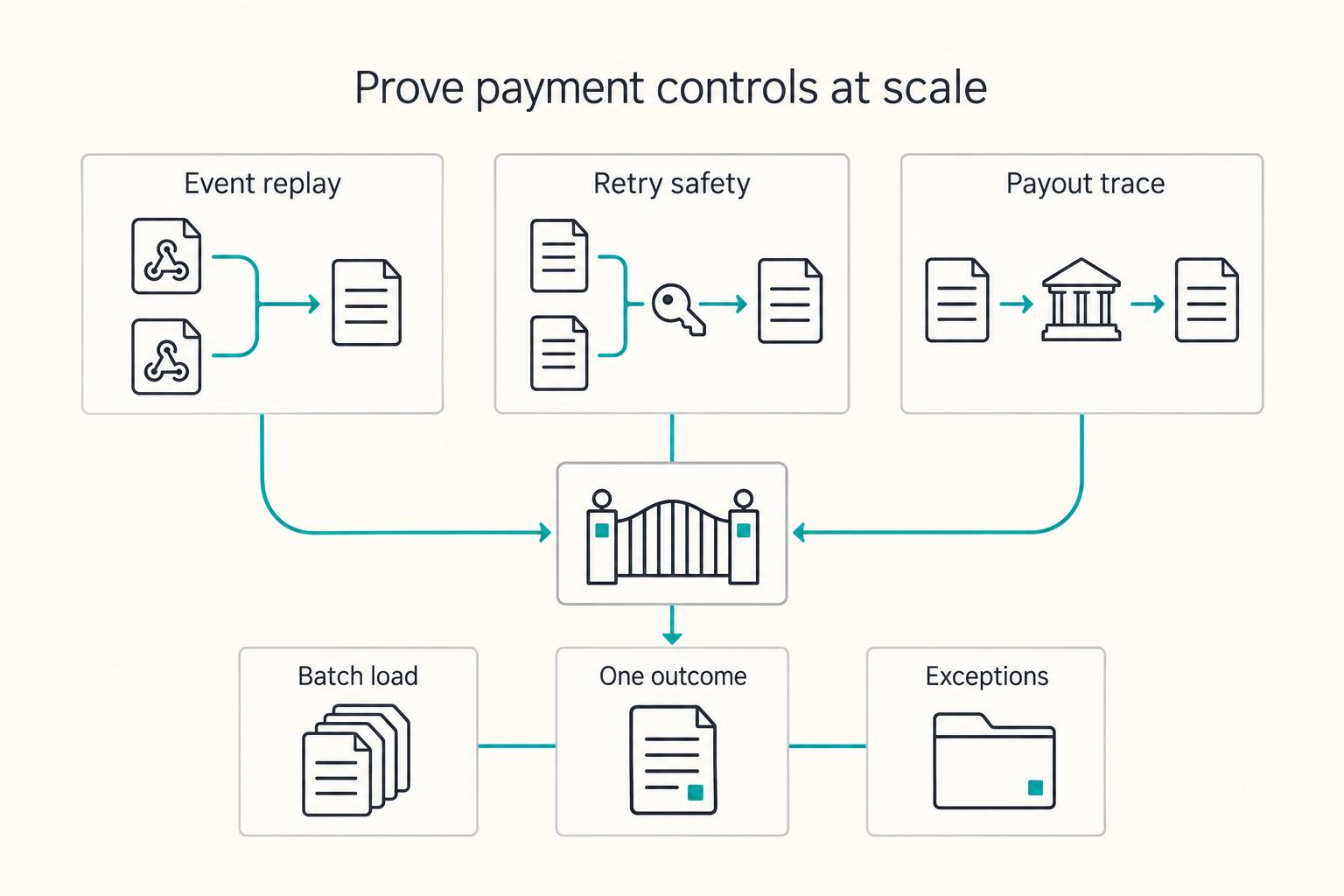
If you want to scale a gig platform from hundreds to thousands of contractors, treat payments operations as a launch gate alongside demand, not as a back-office task. Demand can look strong while payout execution, compliance checks, and reconciliation risk build in the background, then surface when you add a country, contractor cohort, or reporting obligation.
How to Write a Payments and Compliance Policy for Your Gig Platform
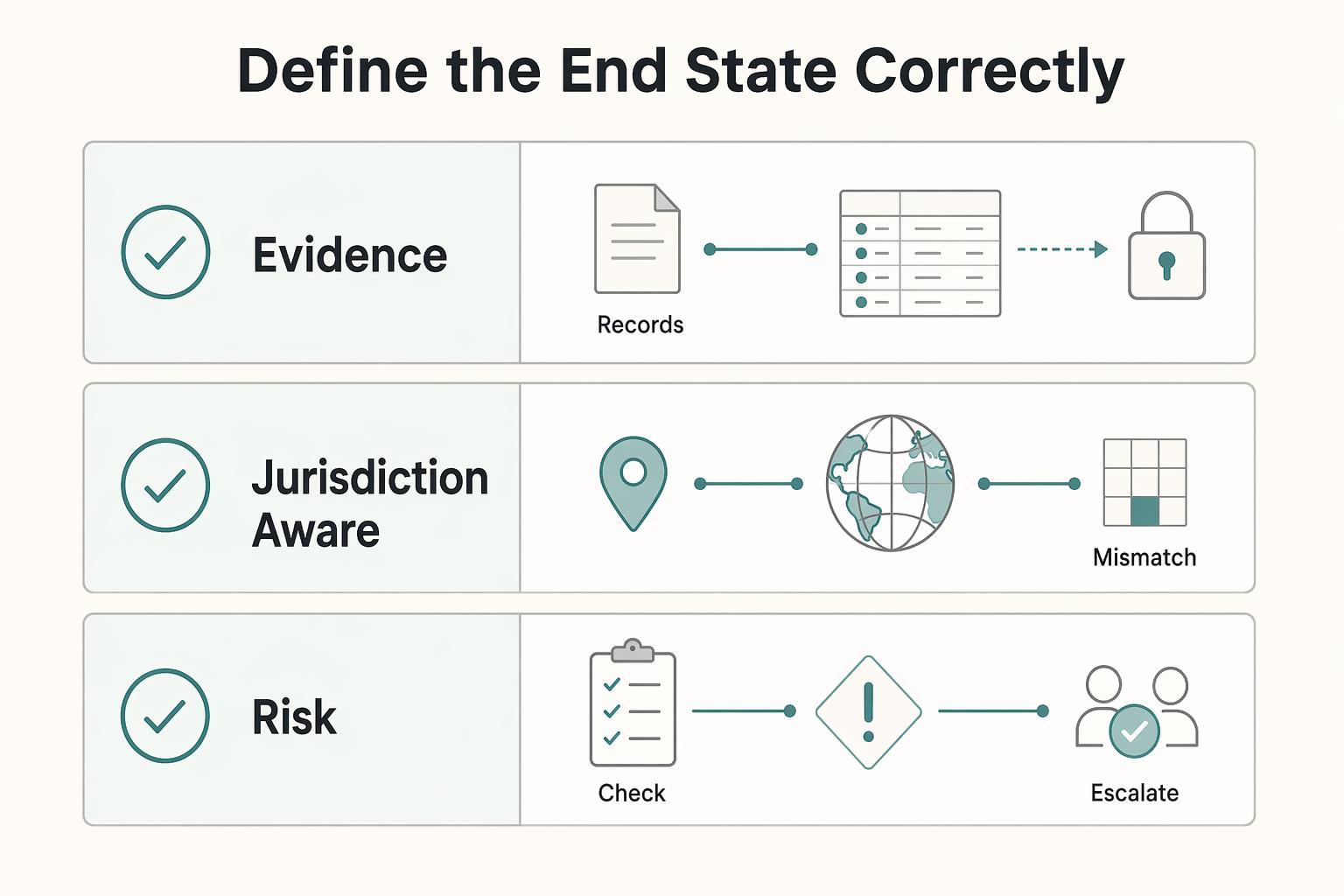
Treat your **payments compliance policy for a gig platform** as an operating document, not a legal memo. If product, finance, and engineering cannot use it to decide whether a payout is released, held, reviewed, or reported, the policy is not finished.