
Quick Answer
Build agent-ready checkout by enforcing controls in the transaction path before any money movement. Keep totals server-calculated, authenticate and sign every request, require idempotency, and treat webhook updates as lifecycle truth instead of trusting the first success response. Then verify replay safety end to end: same request behavior, correct final order status, and reconciled records that link request IDs, provider event IDs, authorization logs, and ledger outcomes.
Agent-ready checkout is not a prettier pay button#
agent-ready checkout is not a prettier pay button. It is a control problem. Can an AI agent complete a purchase through your API and payment gateway without breaking purchase confirmation, fraud handling, reconciliation, or customer trust? When the answer is no, the issue is usually not the model. It is the gap between authorization, payment events, and finance close.
That gap matters most when you are moving real money across borders, multiple currencies, and finance-owned month-end processes. A modern gateway may let you charge in over 135 currencies, but support still varies by country or region, processing currency, settlement setup, and feature availability. The practical rule is simple: design for "where supported" and "when enabled," not for a fictional global default. If sales or product is promising a uniform rollout, that is an early red flag.
The operating bar is higher than most teams expect. For an agent to buy safely, your checkout needs explicit authorization controls and an operational trail you can trace after the fact. OpenAI's Agentic Checkout Spec is a useful signal because it does not treat integration as a chat feature alone. It requires merchants to implement checkout endpoints and authenticate every request, verify signatures, enforce idempotency, validate inputs, and support safe retries. If your current path cannot do those five things consistently, do not hand execution to an agent yet.
You also need to assume asynchronous truth from day one. Payment outcomes do not arrive in a neat single response. Webhook events exist because production payment lifecycles change after the initial call. A clean auth response is not enough. Use a simple verification checkpoint. Retry the same purchase request through your idempotency path, then confirm that late provider events still produce the right final status and reconciliation outcome. A common failure mode is treating the first success response as final, then discovering later that finance cannot match payouts to bank deposits without manual reconstruction.
This guide is for operators and builders who own that whole chain: API behavior, gateway execution, and close accuracy. The promise is practical, not speculative. We will focus on the controls that decide whether a transaction can be trusted: authorization gates, request integrity, webhook handling, and reconciliation outputs such as the bank reconciliation report, where supported. Some controls and reporting features are region-scoped rather than globally available, so read every recommendation that follows through that lens.
Define the operating model before you design features#
Set the operating model first and treat it as an internal contract, not as an assumed industry standard. Public guidance is still uneven across OpenAI, Stripe, Google Cloud, BigCommerce, and ChatGPT.
Use shared terms so teams do not design against different assumptions:
| Term | Definition |
|---|---|
| agentic commerce | the full buyer-to-seller flow |
| agentic checkout | the transaction step inside that flow |
| instant checkout | one channel-specific execution pattern |
Keep availability constraints explicit. OpenAI currently describes Instant Checkout in ChatGPT as available to approved partners, and Stripe's ACP guidance is marked private preview.
Make role ownership explicit in writing. In ACP-style flows, the customer expresses intent, the agent initiates checkout, and the agent presents checkout and collects payment credentials. The merchant still keeps orders, payments, and compliance on its own stack, so your API remains the source of truth for pricing state, authorization decisions, and order state, while your gateway executes payment movement.
Before you touch orchestration or UI work, lock a minimum success contract:
- return a full cart state on every response (items, pricing, taxes/fees, shipping, discounts, totals, status)
- record explicit checkout authorization
- keep receipts durable through async lifecycle changes
- keep ledger outcomes traceable to the originating request and payment events
Choose architecture based on control depth and rollback risk#
Start with your existing checkout if it already handles retry safety, async payment updates, and reconciliation reliably, and only add a separate orchestration layer when you cannot add the needed control points cleanly. The key control points are explicit checkout authorization, status tracking, and an update-or-escalate path for missing information.
That aligns with Shopify's split: checkout architecture depends on required control depth. The low-complexity path is cart permalinks (URLs that send buyers to checkout with preselected items). The higher-control path is Checkout MCP for status tracking, error handling, checkout updates, and multi-step flows. More control can improve flexibility, but it also increases rollback exposure if changes fail.
| Criteria | Extend existing API checkout with added policy controls | Build a separate agent-orchestration layer |
|---|---|---|
| Time to launch | Usually faster when payment and order paths are already stable | Usually slower because you add another boundary and new failure states |
| Observability | Strong when request, payment, webhook, and order state stay connected | Can be strong, but only with end-to-end instrumentation across both layers |
| Lock-in exposure | Lower when core business rules stay in your API and ledger flow | Higher when behavior depends on channel-specific or external orchestration features |
| Rollback complexity | Lower when changes stay inside existing checkout paths | Higher when rollback must coordinate across multiple services |
| Audit trail quality | Strong when authorization, provider events, and ledger state are already linked | Can be strong if the new layer writes durable evidence and preserves provider references |
Use reliability signals as your decision gate#
Use production reliability as the gate. Extend first when all three are already true in production:
- POST requests are retry-safe with idempotency keys (including safe retry behavior within Stripe's documented 24-hour window).
- Webhook handling is built for async truth and duplicate delivery (including Stripe resends for up to three days).
- Finance can reconcile transaction records to accounting records without manual reconstruction.
If you cannot prove those controls, adding orchestration depth increases risk instead of reducing it.
A practical checkpoint is replay evidence: one request pattern, one payment outcome, one final order state, and a clean reconciliation match with linked artifacts (request ID, idempotency key, provider event IDs, authorization record, and ledger match).
Match the architecture to the operating scenario#
For high-volume marketplace retries, reliability under duplicate and out-of-order events is usually the primary risk, so extending the proven checkout path is often the safer default.
For low-volume, high-value approvals, tighter authorization and multi-step control can matter more, and a separate layer can be justified if it cleanly supports status tracking plus an explicit "update checkout or escalate to trusted UI" branch.
Also plan for channel dependency risk. OpenAI states Instant Checkout in ChatGPT is currently limited to approved partners, so avoid architectures that depend on that path without a clear rollback and fallback to your own checkout surface.
For a step-by-step walkthrough, see How to Get a Registered Agent for Your US LLC.
Put agent permissions and policy controls in the authorization path#
Put allow/confirm/block decisions before execution, not after. An agent should reach checkout authorization only after you classify the action, validate actor and account state, and decide whether the action is auto-executable, confirmation-required, or blocked.
Use action-level permissions, not session-level permissions. A practical model is per-action confirmation plus pre-execution policy checks: some actions can run automatically, some should pause for confirmation, and some should stay blocked until stronger controls pass.
| Action class | Recommended treatment | What to check before execution |
|---|---|---|
| Low-risk, non-money-moving actions | Auto-execute | Basic authorization, request integrity, expected account state |
| Material changes to commercial terms or order details | Require user confirmation | Who approved, what changed, and whether price, recipient, or fulfillment terms changed |
| Money movement or regulated account actions | Block unless policy gates pass | KYC/KYB status, AML/risk flags, payout restrictions, account capability state |
Define permissions by action, not by channel#
Do not grant broad rights just because traffic comes from an approved agent surface. Separate rules for quote retrieval, cart updates, payment confirmation, refund initiation, beneficiary changes, and payout batch creation are safer than a single "agent can transact" permission.
Use confirmation gates when an action changes buyer intent or exposure. If the agent changes amount-bearing or recipient/destination details, require explicit confirmation before checkout authorization continues.
Keep read and write permissions distinct. Letting them drift together is a common way to accidentally give payment-confirmation or payout-initiation rights to actions that started as simple update permissions.
Enforce compliance gates inline#
Run compliance and policy checks before tool execution on regulated payment and payout paths. Connected-account compliance state is a prerequisite for payment and payout capability, and unmet requirements can lead to payment or payout restrictions.
Treat missing verification, unresolved compliance responses, and payout restrictions as in-line stop conditions for payout-related actions. Apply the same pre-execution discipline to AML and risk controls; lower-friction treatment should follow risk assessment, not precede it.
Make if-then rules explicit and machine-readable:
- If identity or business verification is incomplete, do not partially complete the transaction; return a structured remediation response.
- If a risk flag or payout restriction exists, block execution and route to a human approver or trusted UI.
- If the action changes amount, beneficiary, or destination, require confirmation even when the account is otherwise eligible.
A remediation response should state what is missing, who must provide it, and what action is currently permitted.
Write evidence on every critical branch#
Log every allow, deny, and confirm decision as an audit trail event at decision time. Include the triggered rule, approver path, decision input snapshot, resulting status, and linked transaction or account reference so anomaly review and forensic reconstruction do not depend on operator memory.
Use one repeatable checkpoint: replay a blocked request after required KYC/KYB data is provided, verify the same rule blocks before remediation, and verify it passes only after compliance state changes. If you cannot show that full decision history, control is still too dependent on manual process.
Avoid partial completion as a failure mode. If compliance blocks the final step, fail closed, return structured remediation, and log the branch immediately.
Related: A Real Estate Agent's Guide to the Home Office Deduction.
Make pricing metadata deterministic for machine execution#
Deterministic pricing starts with one rule: your API, not the agent, is the price authority. Keep orders, payments, taxes, and compliance in the merchant system of record, and treat the agent as a requester of options rather than an author of payable totals.
The ACS draft is a useful reference for this shape: a standardized REST checkout contract where the merchant remains authoritative. In practice, accept the pricing inputs you actually depend on, such as buyer details, line items, and shipping information, then return server-computed totals.
Define a contract your pricing engine can defend#
You do not need a universal schema across vendors, but you do need a strict internal pricing-metadata contract that your services apply consistently. At minimum, version it and capture:
| Element | What to capture |
|---|---|
| Item identity and quantity | logic |
| Discount inputs | stacking behavior |
| Tax treatment | including VAT handling where applicable |
| Shipping or fulfillment | assumptions |
| Quote freshness | expiration window |
| Currency | rounding rules |
Keep response structures stable if you return line items and totals. Receipt lines and ledger entries should come from the same pricing facts.
Keep total calculation server-side#
Seller-side systems should calculate discounts, taxes, and shipping. Stripe's agentic checkout spec requires a totals array, and Stripe Checkout exposes tax in total_details.amount_tax; both reinforce the same operating model: the agent requests, the API computes, and the response carries authoritative amounts.
Avoid accepting client-computed totals for convenience. That shortcut is where receipt totals, captured amounts, and ledger records start to drift.
Fail closed on stale or incomplete pricing#
Define failure behavior up front. If a quote is stale, tax input is missing, or amounts do not match, block execution and return machine-readable errors plus a human-readable message. For missing or invalid required data, 400 Bad Request is a practical pattern, with structured error codes to guide retry versus input refresh.
Use one verification checkpoint for determinism:
- replay the same request with the same idempotency key and confirm the same outcome, including repeated
400responses for the same bad input - replay identical pricing requests only when context is unchanged, then confirm identical totals, matching receipt lines, and consistent ledger entries
Treat receipt integrity and reconciliation as product requirements#
Receipt integrity is a product requirement, not a reporting afterthought. If a receipt cannot be tied to the provider transaction, ledger posting, and status-changing event history, finance has to reconstruct the record manually.
At write time, include stable identifiers you can join across webhooks, provider reports, and internal books. In practice, each payment or payout record should join on provider reference, internal order or payment ID, receipt ID, and related ledger entry IDs. If any link is missing, month-end reconciliation becomes manual investigation.
Design for async truth, not optimistic truth#
Payment state is asynchronous, and webhook delivery can retry for up to three days. Treat the first synchronous response as provisional, not final settlement truth.
Use a status model that can transition as later webhook events arrive. Append events to an audit trail, update ledger state without erasing prior evidence, and keep retry and replay history. For recovery, process undelivered events in chronological order, and when an event was already processed, acknowledge it successfully so retries stop.
Avoid collapsing provider lifecycle states into a single early paid flag. That shortcut breaks when late updates, reversals, or payout adjustments arrive and no durable event chain explains the ledger change.
Give finance an operating path, not just raw data#
Raw data is not enough. Finance needs a repeatable operating path:
| Finance step | What it covers |
|---|---|
| Exception queue | transactions requiring investigation or exception processing |
| Daily unmatched-transaction review | review cases where provider references, receipt IDs, and ledger postings fail to join |
| Month-end reconciliation export | internal sign-off before close |
If you use Stripe, the Payout reconciliation report is a key artifact because it ties each payout to the transactions included after settlement. Stripe also recommends automatic payouts to preserve transaction-to-payout linkage for reconciliation. Stripe's bank reconciliation features exist, but availability is currently limited to direct US-based Stripe accounts on an automated payout schedule.
The tradeoff is straightforward: thinner controls may speed initial delivery, but gaps in receipt and reconciliation design can reappear later as dispute research, close friction, and additional finance effort.
Engineer for retries, duplicates, and out-of-order events from day one#
Retries are normal in async payments, not edge cases. Design your write path and webhook path so replays stay safe instead of creating duplicate money movement or unexplained state changes.
Start with money-moving API calls. Require idempotency keys where your provider supports them, especially for operations like payment confirmation and payout creation. For example, PayPal REST uses PayPal-Request-Id, and Checkout.com keeps keys for 24 hours by default. Align your retry policy to that key lifetime, because retries after expiry can be processed as new requests.
Treat same-key concurrency conflicts as in-flight, not failed. Checkout.com notes that concurrent requests with the same key can return 409 Conflict, and recommends waiting at least 30 seconds before retrying. If you mint a new key too quickly, you can turn a safe replay into a second charge or payout.
Handle events in a strict, boring order#
For webhooks, enforce one processing sequence every time: verify signature, suppress duplicates, apply state transition, write ledger and audit trail, then emit downstream events. That order is an implementation pattern, not a universal standard, but consistency is what keeps replays safe. OpenAI's checkout guidance also calls out signature verification, idempotency, and safe retries as core requirements.
Assume events can be duplicated, delayed, or out of order. Stripe states webhook endpoints might receive the same event more than once, and undelivered events can be retried for up to three days. If downstream effects fire before durable internal state is written, later replays can be misread as new work.
Monitor the red flags before finance finds them#
You do not need complex detection to catch common reliability failures. Track at least:
- duplicate capture or payout attempts tied to the same business action
- orphaned states where provider status changed but internal status did not
- records missing a terminal state after the expected async window
- repeated retry storms from the same endpoint, key, or event source
Add a hard go-live gate: run replay and concurrency tests against production-like event sequences. Your evidence should show safe retries return prior results or controlled conflicts, duplicate webhook deliveries do not create extra ledger entries, and out-of-order events do not corrupt final state. This does not prove zero incidents in production, but it does prove you are not shipping known duplicate-money paths.
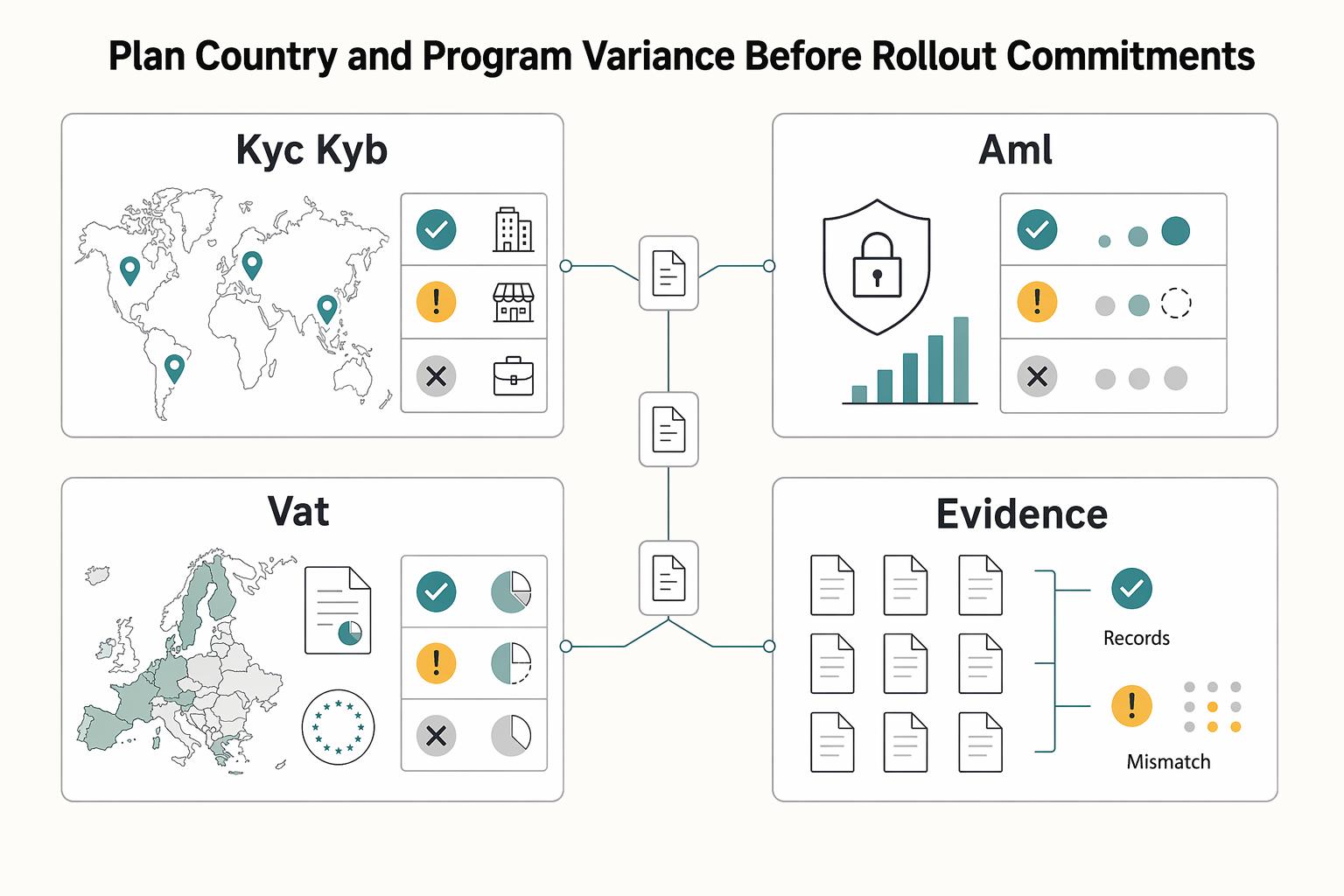
Plan country and program variance before rollout commitments#
Do not commit rollout dates until your country-by-program capability matrix is published and reviewed. Treat coverage as a release constraint, not a sales promise: mark each market/program combination as Supported, Conditional, or Not supported.
Focus the matrix on the variables that materially change launch risk. KYC/KYB requirements vary by location, business type, and requested capabilities. AML controls should scale to identified risk. Tax logic also varies by market; in the EU, member states set VAT rate levels within the directive framework, and the standard rate floor is 15%.
| Area | What can vary | Status to publish | Verification checkpoint |
|---|---|---|---|
| KYC/KYB | Required data/documents by location, business type, capabilities | Supported / Conditional / Not supported | Confirm onboarding requirements per market/program |
| AML | Review depth and monitoring intensity by risk profile | Supported / Conditional / Not supported | Validate risk rules and escalation path |
| VAT | Rate treatment and tax logic by member state/market | Supported / Conditional / Not supported | Replay quotes and receipts with market-specific tax inputs |
| Tax documents | Whether FBAR-related support is relevant for certain U.S. persons | Supported / Conditional / Not supported | Confirm boundaries for threshold/date guidance and support workflow |
Avoid "global coverage" language that implies identical availability. Feature coverage can differ by region, and Instant Checkout is available to approved partners, so external copy should stay precise: "where supported," "when enabled," and "coverage varies by market/program."
Use an internal sign-off sequence before launch: compliance validation, finance acceptance of reconciliation outputs, then engineering conformance on API/webhook schema, error handling, limits, and delivery behavior. If any gate remains conditional, keep the market launch conditional too.
Conclusion#
The end state is controlled automation, not handing core decisions to an AI agent. Your merchant stack should still own price and checkout decisions, plus the operational records finance depends on later.
That is why the safer pattern starts with machine-readable pricing metadata and ends with evidence, not just a successful payment. Reliable automation depends on required price and availability fields being returned in a form the agent can use correctly, while the merchant still accepts or declines the order and returns that state. When those controls are built in from the start, launches are less likely to turn into cleanup projects for finance, support, and engineering.
A good readiness review is not a design review in disguise. It should test whether your current checkout can survive real operating conditions without losing control. At minimum, check three things before expanding access:
- Architecture and data authority: required price and availability fields come from merchant-controlled systems, and order state is machine-readable enough for the agent to act without ambiguity.
- Policy gates and authorization: the merchant decision remains explicit, and accept/decline outcomes are returned clearly.
- Reconciliation and evidence: each critical test is demonstrated end to end with request and response logs, plus the resulting order state transitions.
Do not release off a single happy-path sandbox test. A common failure mode is that checkout appears to work, but lifecycle webhook handling is not fully verified, which can leave order state and reconciliation drifting apart. The production bar should include signed lifecycle checks as a release gate, including verification that both order_created and subsequent order_updated webhooks are sent with a valid HMAC signature. If you cannot show those events, logs, and resulting state changes together, you are not ready for unattended execution.
Rollout should also match current market reality. Some programs are still staged or partner-gated, and Instant Checkout in ChatGPT is currently available only to approved partners, so treat broad launch promises as a red flag. If you are implementing that path, remember it requires three merchant flows, which is another reason to release in cohorts instead of flipping every route at once.
The next sensible move is simple: run the readiness review, document the evidence pack from sandbox testing, and launch in phased cohorts with explicit verification checkpoints. If a cohort consistently reproduces the expected outcomes with matching request/response evidence, then you have something you can scale. If not, fix the control points first and expand later.
Frequently Asked Questions
What is the practical difference between agent-ready checkout, agentic checkout, and instant checkout?
Use these as working labels, not universal standards. Agentic checkout is a specific mode where the AI agent presents the checkout interface and collects payment credentials, while the seller still owns the existing data model and payment processing. Instant checkout is narrower still: a ChatGPT program that is available to approved partners, not a general entitlement.
How do we make our checkout agent-ready without rebuilding our entire API stack?
If your current seller-side data model and payment processing already work, extend first rather than rebuild. The practical retrofit is to return a machine-readable cart state, compute totals and taxes from the provided items and address, and add hard checks for authentication, signature verification, idempotency, input validation, and safe retries. A good checkpoint is to replay the same request and confirm retries return consistent totals and status.
What minimum pricing metadata fields are required before an AI agent can transact?
At minimum, your checkout responses should return a rich cart state with items, pricing, taxes or fees, shipping, discounts, totals, and status. Session creation should also calculate line item totals, fulfillment options, and taxes from the provided items and address, rather than relying only on a client-sent total. If you also use Stripe metadata, remember its limits: up to 50 keys, with 40-character keys and 500-character values, so metadata alone is a poor fit for the full cart state.
Which policy controls should always block automatic checkout authorization?
Block any automatic authorization when request authentication fails, signatures cannot be verified, idempotency is missing, or inputs do not validate. Those are baseline checks for reliable automatic execution and safe retries. If a program or vendor route is still conditional, keep that route out of auto-execution.
How do we preserve receipt integrity and reconciliation when webhook events are asynchronous?
Treat webhooks as lifecycle truth for payment state changes, because these flows are not synchronous end to end. Use webhook-driven lifecycle updates to keep receipts and reconciliation aligned with the final payment state.
What should we validate with vendors first when public standards are still evolving?
Start with the things that can block launch: whether your account is actually eligible for the program, then conformance on schema, error codes, rate limits, and webhook delivery. If a vendor points you to a draft spec, pin the exact version they expect rather than assuming the latest behavior, especially where the Agentic Checkout RFC shows API-Version: 2026-01-16. If they cannot show reliable webhook behavior and clear cart-state requirements in testing, treat the integration as conditional, not launch-ready.
Try a related tool
Researched and edited by the Gruv editorial team. Gruv builds cross-border billing, payouts, and finance-operations software for global businesses.
Sources
Includes 2 external sources outside the trusted-domain allowlist.
- docs.stripe.com/webhookstrusted
- docs.stripe.com/webhooks/process-undelivered-eventstrusted
- eur-lex.europa.eu/eli/dir/2015/849/oj/engtrusted
- irs.gov/businesses/small-businesses-self-employed/re...trusted
- stripe.com/blog/developing-an-open-standard-for-agentic...trusted
- taxation-customs.ec.europa.eu/taxation/vat/vat-directive/vat-rates_entrusted
- bigcommerce.com/blog/agentic-checkoutexternal
- checkout.com/docs/developer-resources/api/idempotencyexternal
Educational content only. Not legal, tax, or financial advice.
Related Posts
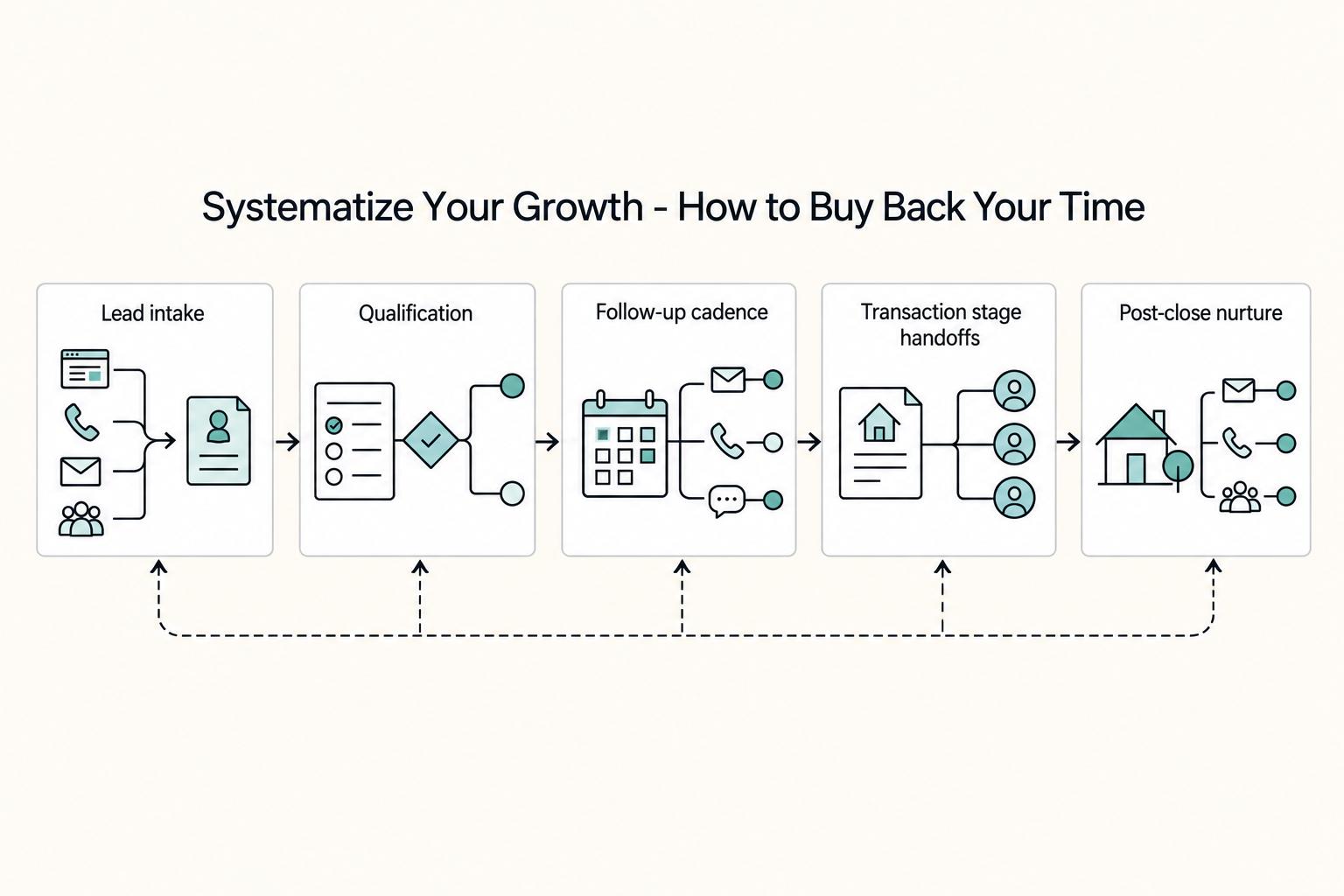
The Best CRM for a Real Estate Agent
If you start with "what is the **best crm for real estate agents**," you will probably compare demos, feature grids, and pricing pages before you define what your business actually needs. That is backwards. A CRM is not just a contact database. It is where your leads, follow-ups, campaigns, client communication, and day-to-day visibility either stay organized or start slipping.
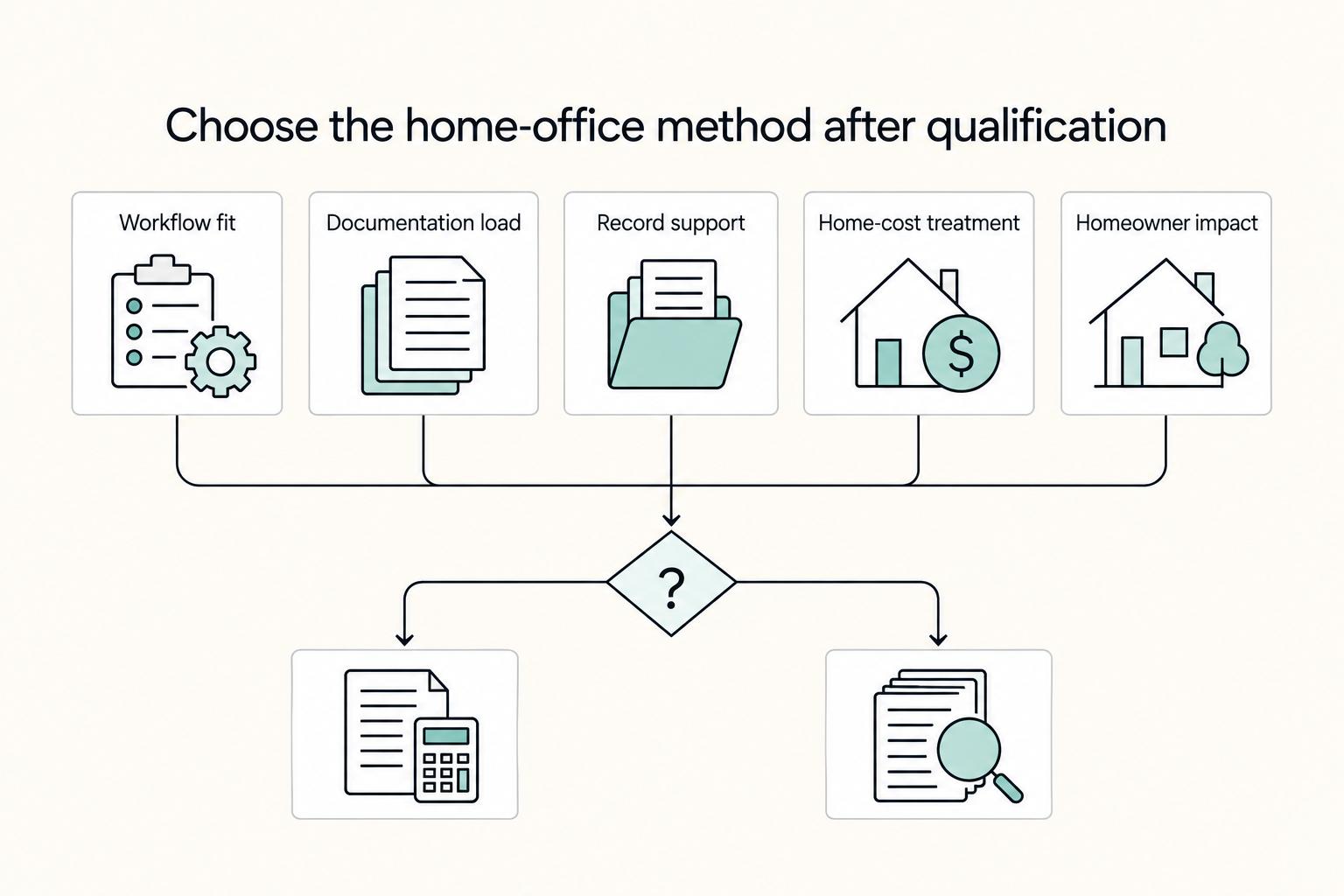
Home Office Deduction for Real Estate Agents: Qualify, Choose a Method, and Keep Records
If you file Schedule C, the key question is not whether this deduction looks aggressive. It is whether you can prove you qualify, choose the right method for that tax year, and support the claim with clean records.
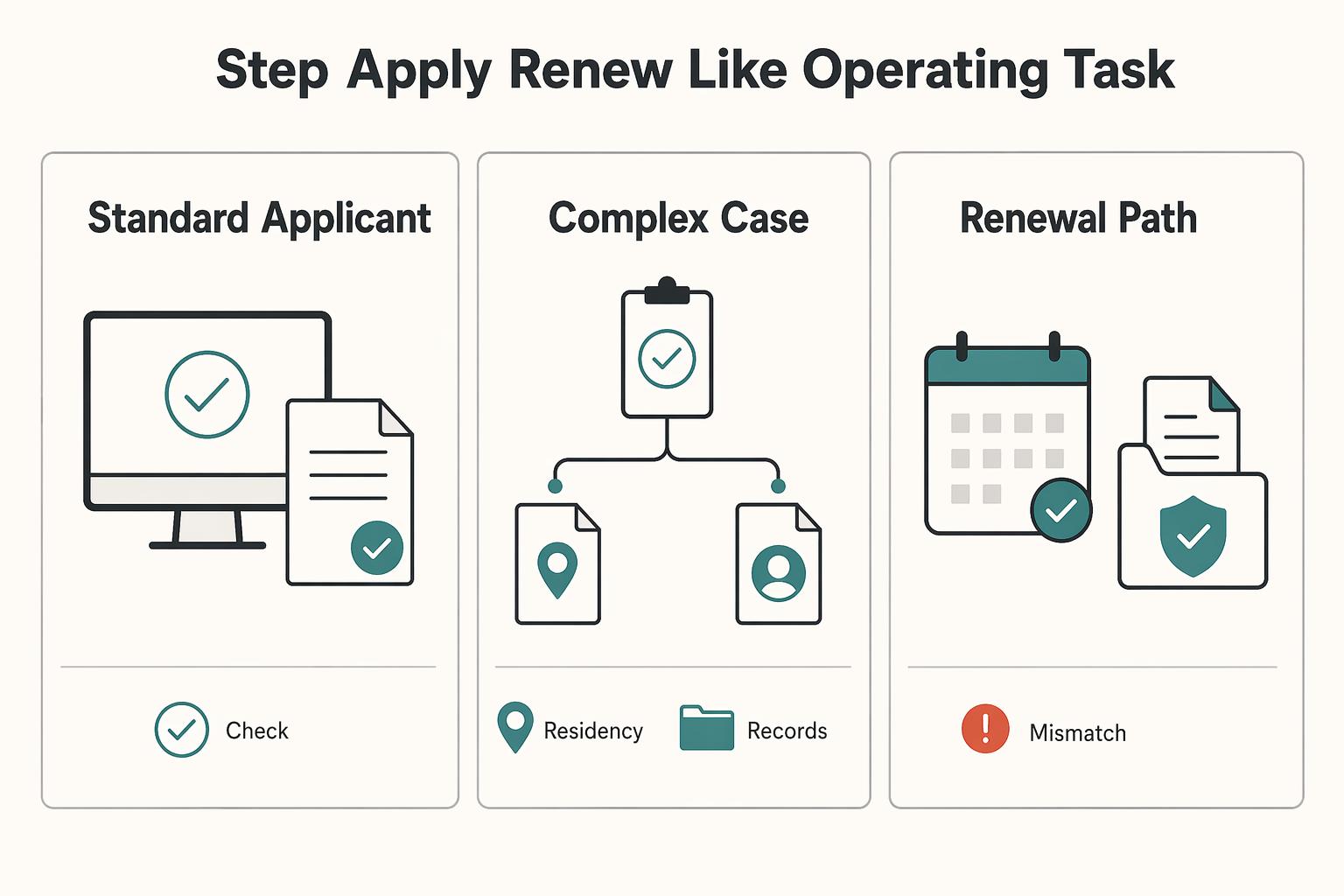
How to Get a PTIN from the IRS as a Tax Preparer
If you are paid to prepare a federal return or claim for refund, or paid to assist in preparing one, get a PTIN before you take the work. For most solo operators, that is the safest move when scope starts drifting from planning into hands-on filing support.