
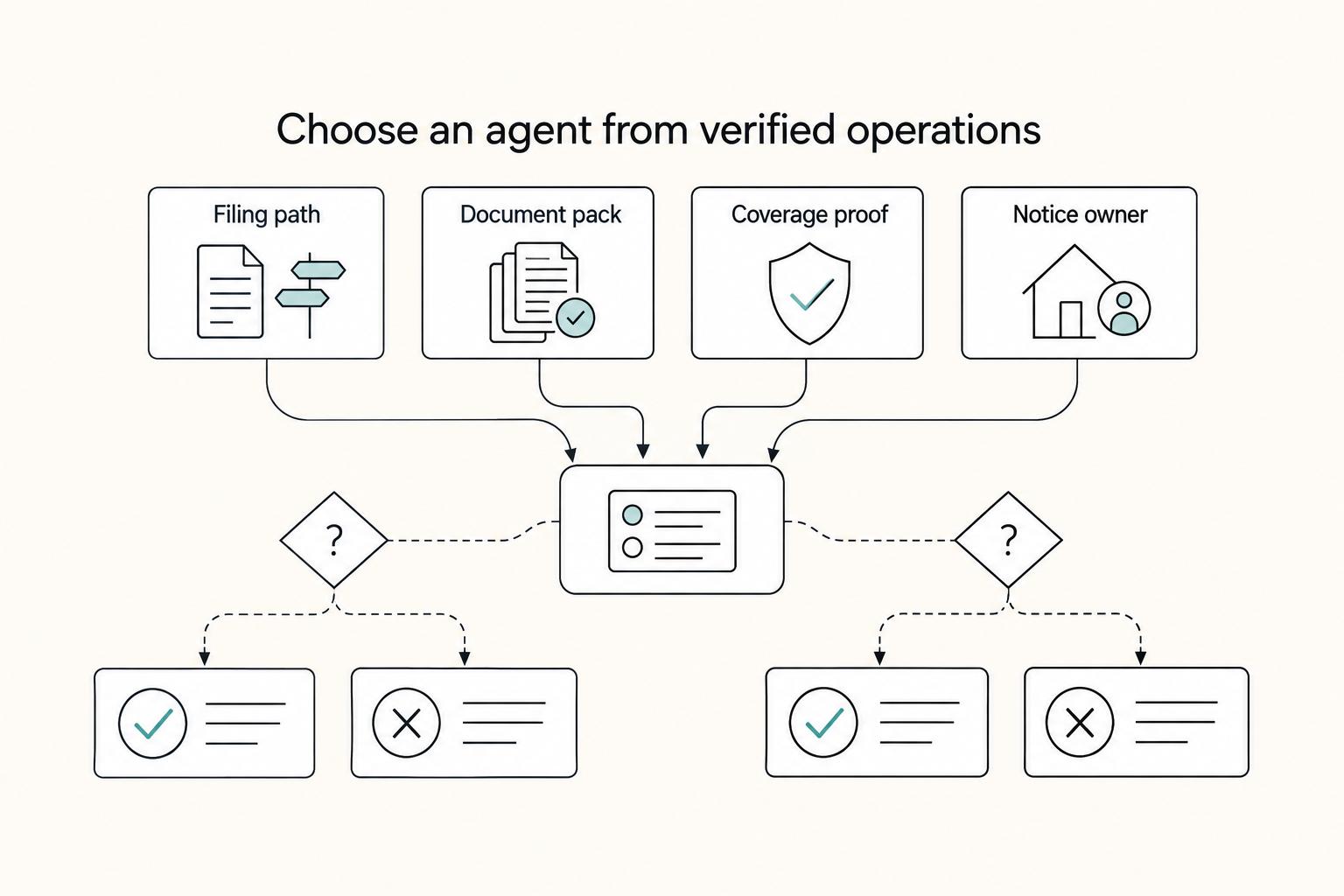
Quick Answer
Start by confirming your filing path, then pick a registered agent that can accept service of process at a physical in-state address during business hours. For a new LLC, enter agent details correctly in your Articles of Organization; for an existing entity, use the state change path and verify acceptance in the public record. Compare total annual cost, renewal language, cancellation terms, and notice-handling process before checkout. Finish by assigning a primary and backup notice owner so legal deliveries are acknowledged immediately.
You can choose the right registered agent in 30 minutes#
Use these 30 minutes as a decision sprint. Pick a setup you can run reliably, file it correctly, and avoid cleanup later.
Work in this order to move from decision to filing:
- Confirm your filing path and form step.
If you are forming an LLC now, you will file Articles of Organization with your state. Identify the exact field where agent details go, and decide who will submit the filing.
- Assign notice ownership before filing.
Name one primary owner and one backup for legal and state notices, and set a same-day escalation rule. Also assign who tracks annual compliance reminders so intake and follow-through are clear.
- Compare annual cost, not intro pricing.
At least one provider advertises registered-agent service as free for the first year, then $125 per year. Confirm renewal terms up front and save what you accepted at checkout. A 2025 Forbes Advisor roundup lists 11 services, so headline price alone is a weak tie-breaker.
This article is US-wide. Later sections use Texas as a worked example so each verification step stays concrete. Once formed, an LLC is a permanent public record, so this choice is operational, not cosmetic.
If you save one artifact, make it a short filing note. Capture your chosen agent, filing path, notice owners, and where your acceptance proof will be stored.
If you want a deeper dive, read Sole Proprietorship vs. LLC: The Definitive Guide for Global Freelancers.
What a registered agent does and why it is legally required#
A registered agent is your LLC's official contact for legal papers, including service of process, plus state communications. That contact forwards notices to the business. If intake ownership is unclear, compliance starts with a weak link.
| Setup task | What to confirm | Article detail |
|---|---|---|
| Notice owners | Assign one primary owner and one backup who can act the same day | Both should be able to access the same inbox or provider portal and know how legal items are escalated |
| Filing draft details | Verify the name and address match your appointment details before submission | Capture any state-specific instructions listed for your filing |
| Notice lanes | Separate urgent legal notices from routine state mail | Urgent lawsuit notices should trigger immediate review and a named next action; routine correspondence can follow a normal queue |
You generally need this at formation and during foreign qualification. At formation, you provide the filing office with the registered agent's name and address. If you qualify in additional states, you provide agent details in each one.
The role is less about passive mail forwarding and more about controlled intake. Ownership should be clear from receipt to next action so legal notices do not sit while your team decides who is responsible.
Use this setup sequence before you submit:
- Define who receives notices and who acts.
Assign one primary owner and one backup who can act the same day. Confirm both can access the same inbox or provider portal and know how legal items are escalated.
- Confirm registered-agent details in your filing draft.
Treat these fields as precision entries. Verify the name and address match your appointment details before submission, and capture any state-specific instructions listed for your filing.
- Separate urgent legal notices from routine state mail.
Urgent lawsuit notices should trigger immediate review and a named next action. Routine correspondence can follow a normal queue. Run a test notice so both primary and backup receive and acknowledge it.
A common failure mode is delay: a notice arrives, ownership is unclear, and response time is lost while people sort out responsibility. That can create avoidable cleanup and rushed follow-up.
Keep a small evidence packet from day one: the registered-agent details you filed and your primary and backup ownership rule. If you add states later, this baseline helps reduce copy errors when you repeat the process.
Treat that packet as active documentation. Update it whenever agent details or owner coverage changes so your filing records and daily notice handling stay aligned.
What to prepare before you choose an agent#
Prepare your filing path and notice ownership before you compare providers. Your setup needs to match how and where your LLC is registered. States require formed or registered entities to maintain an in-state registered agent with a physical presence in that state and availability during regular business hours to receive legal papers and official communications.
| Prep item | What to gather or confirm | Why it matters |
|---|---|---|
| Filing path and state scope | Whether you are handling a new formation, an update to an existing LLC record, or registration in another state | Your provider comparison should reflect real requirements |
| Minimum document pack | LLC legal name exactly as filed, current formation status, state portal login access, and draft contacts for legal and state mail | Filing issues can show up before checkout, not after |
| Eligibility and coverage | Physical presence in the state where your business is registered and ability to accept official communications during regular business hours | States require formed or registered entities to maintain an in-state registered agent with a physical presence in that state and availability during regular business hours |
| Notice ownership | One primary owner and one backup to monitor legal notices and act quickly if lawsuit papers arrive | Missed notices can lead to fines or default judgments |
Filing issues can show up before checkout, not after. Handle access, naming, and ownership details first so your provider comparison reflects real requirements.
- Confirm your filing path and state scope.
Write down whether you are handling a new formation, an update to an existing LLC record, or registration in another state. For new LLCs, the formation filing is commonly called Articles of Organization, but the exact filing name can vary by state.
- Gather a minimum document pack.
Collect the LLC legal name exactly as filed, current formation status, state portal login access, and draft contacts for legal and state mail.
- Confirm registered-agent eligibility and coverage.
Before you choose a provider, confirm the agent has physical presence in the state where your business is registered and can accept official communications during regular business hours.
- Assign ownership for notices before purchase.
Name one primary owner and one backup to monitor legal notices and act quickly if lawsuit papers arrive, since missed notices can lead to fines or default judgments.
A clean prep phase keeps your filing sequence predictable. It also lowers the chance that you buy a service before confirming whether it actually fits your filing path.
Step 1 Decide between being your own agent and hiring a service#
Use a simple rule: self-appoint only if you can reliably receive legal deliveries at an in-state physical street address during regular business hours. If you cannot, hire a registered-agent service.
A registered agent is the person or company designated to receive legal correspondence, including notice of lawsuit and service of process. Common requirements include in-state residency, an in-state physical street address, and business-hours availability, but exact rules vary by state.
Base this decision on reliability, not optimism. If your availability can change without warning, treat self-appointment as a risk even when cost looks lower.
- Stress-test availability first.
If your schedule includes frequent travel, irregular hours, or gaps where no one can receive deliveries, self-appointment is a weak fit.
- Confirm eligibility before filing.
If you plan to name yourself or another person, verify they meet your state's requirements.
- Compare tradeoffs in plain terms.
Self-appointment may lower service cost, but missed-notice risk rises if availability slips. A service adds recurring cost and can reduce gaps in business-hours coverage for legal deliveries.
- Verify filing details before submission.
Confirm your selected agent and address are entered correctly in your filing.
| Option | Best fit | Main risk | Switching friction |
|---|---|---|---|
| Self-appoint | You are reliably available at the listed address during business hours | Missed legal delivery if availability changes | Varies by state process |
| Hire a service | You travel often or cannot guarantee consistent availability | Ongoing recurring cost | Varies by state process |
If you are split between options, choose the path that reduces missed-notice risk first. You can revisit cost later, and delayed legal response can create larger problems than fee savings.
Step 2 Verify state requirements before you buy anything#
Pause before purchasing and verify requirements on official state pages first. Use provider pages as secondary context only.
Start with your state filing-office guidance for your exact filing path: new formation, agent change, or foreign qualification. Registration requirements depend on your business structure and location, and qualification requirements vary state by state.
Use this pre-check before checkout:
- Confirm the correct filing office and process for your entity type and location.
- Confirm any state-specific filing requirements in the official instructions for your filing path.
- If you will operate in another state, confirm whether you must qualify there before doing business.
- If a provider page conflicts with state guidance, follow the state guidance and pause purchase.
Write your verification note in plain language, not shorthand. It should show what you checked, what requirement mattered, and why your filing path choice is correct.
Texas is a useful reminder that filing details depend on the role involved. For most business entities, an assumed business name is filed with the Secretary of State. A general partnership or individual broker files with county clerks where they do business.
For Texas readers, review the official Texas guidance that applies to your entity type and filing path. Then record your answers in one verification note before you buy.
| Verification note item | What to record |
|---|---|
| State guidance checked | Date, entity type, and filing path reviewed |
| Filing path | Which office and process applies to your case |
| Cross-state activity | Whether foreign qualification is triggered |
| Texas references reviewed (if applicable) | Official Texas guidance for your entity type and filing path reviewed |
When state wording is unclear, resolve that ambiguity before you pay. Unclear interpretation at purchase time can become avoidable correction work after filing.
Step 3 Compare providers with a real total-cost filter#
Use your Step 2 verification note and choose based on total-year clarity, not signup price. A registered agent is your contact point for government and legal notices, so eliminate any provider that does not clearly state a physical in-state address and availability during normal business hours.
Build one comparison sheet before checkout and complete every field, especially renewal and cancellation terms.
| Provider | First-term price | Renewal price | Contract style | Cancellation terms | Add-on fees (scans or compliance help) | Legal-delivery handling | Legal-mail scan timing language | Escalation path to your contact |
|---|---|---|---|---|---|---|---|---|
| Provider A | Month-to-month or annual | How notices are received and logged | How timing is described in written terms | Email, portal, phone, and backup contact | ||||
| Provider B | Month-to-month or annual | How notices are received and logged | How timing is described in written terms | Email, portal, phone, and backup contact | ||||
| Provider C | Month-to-month or annual | How notices are received and logged | How timing is described in written terms | Email, portal, phone, and backup contact |
Treat this sheet as a pass-fail screen before ranking. If key terms are missing, that option fails even if the first-term price is attractive.
Use a hard rule: if a teaser rate comes with unclear renewal language, unclear cancellation steps, or lock-in you cannot verify, remove that option. Ranking lists can help discovery, but they are not official government guidance and may include affiliate compensation, so verify details in provider terms before you decide.
Match support level to your filing path. A simple single-state setup may need straightforward notice intake and forwarding. If you plan to operate in multiple states, prioritize clearer handling when adding jurisdictions.
Before selecting a provider, confirm:
- It states in writing that it can be named in your LLC formation documents.
- Renewal, cancellation, and add-on fee terms are documented in one saved note.
- Your primary and backup contacts are both configured for legal-notice escalation.
Read provider terms once for cost details and again for notice handling language. Different risks surface on each pass, and both sets of terms affect your day-to-day reliability.
Step 4 Appoint your agent correctly in your filing path#
Treat appointment as a compliance gate. File through the path that matches your LLC status, then confirm acceptance before moving to the next setup task.
A registered agent is your official contact for service of process and state notices, and designating one is part of LLC formation. This is usually handled in the formation filing or through a separate filing for an existing entity.
| Filing path | What to file | Core details to confirm before submission | What to save after filing |
|---|---|---|---|
| New US LLC | Formation filing | Agent name, in-state physical street address, and any consent details required by state instructions | Acceptance confirmation and a copy of the submitted filing |
| Existing LLC update | State change filing to appoint or change a registered agent | Agent identity, current registered office details, and matching entity information | Filed change confirmation and the final accepted record |
Before you submit, confirm the appointee meets your state criteria. Common requirements include a physical street address in-state and availability during regular business hours to receive legal documents.
Use this pre-submit check and keep it with your filing packet:
- Confirm the path matches your status: new formation or existing-entity change.
- Confirm agent and registered-office details match exactly across all fields.
- Confirm you saved the post-filing acceptance record in your compliance folder.
Before submission, read the agent name and registered office line aloud from both your draft and appointment details. That quick cross-check catches copy drift that is easy to miss in a long form.
The main failure risk is missing or incorrect registered-agent information. That can lead to missed legal delivery, including lawsuit papers, and in some cases fines or default judgments. Do not move forward until your accepted filing record shows the correct registered agent and registered office.
After acceptance, review your filing confirmation while details are still fresh. If correction is needed, your packet and confirmation are already in reach.
Step 5 Set up post-appointment operations so notices never get lost#
Once your appointment is accepted, the main risk is a missed notice. Run one intake sequence for every legal or official delivery: alert, owner notification, acknowledgment, assignment, and next-action timestamp.
Do not rely on memory for handoffs. Use one log format across legal and official notices so anyone covering the inbox can confirm status quickly.
Assume legal timing can begin when your registered agent receives a notice, even before you personally read it. In the Oklahoma example, receipt by the registered agent is treated as receipt by the LLC, and the excerpted timeline is 20 days to respond after service. Do not treat that number as universal, but treat the operating lesson as universal: act fast and log every handoff.
| Notice lane | First action | Owner | What to log |
|---|---|---|---|
| Service of process | Notify the legal owner immediately and open a response task | Primary legal contact | Received timestamp, case or reference, response deadline, next-action timestamp |
| Official state or tax notice | Acknowledge and route to compliance handling | Compliance owner | Received timestamp, document type, next-action timestamp |
| Recurring compliance items | Track as planned compliance work, separate from urgent legal items | Compliance owner | Item type, owner, completion status |
Define a failure-mode protocol before travel or downtime. Assign a backup reviewer with access to alerts and logs. Set who is escalated if acknowledgment is missing. Assign a response-deadline owner for each legal notice.
Test backup coverage before it is needed. The backup contact should be able to receive, acknowledge, and assign legal notices without waiting for missing permissions.
Keep records in one folder: appointment confirmation, dated notice logs, and official correspondence. Centralized records can make it faster to confirm what was received, who handled it, and what happened next.
How the decision changes when you add more states#
When you add states, the decision shifts from lowest one-state cost to reliable cross-state handling. In most expansions, foreign qualification in an added state follows that state's rules, so consistency matters more than a cheap starting setup.
Cross-state growth can multiply small setup flaws. One unclear internal process can become repeated delays across multiple states.
Your domestic state is where the LLC was formed. Added states are foreign states for that same entity. Expansion risk can start before formal registration: hiring a contractor in another state, storing inventory there, or using a U.S.-based 3PL there can create nexus. Once nexus exists, the state expects action, and waiting does not pause the obligation.
| Scenario | One-state choice that looks fine | What changes after expansion | Better multi-state direction |
|---|---|---|---|
| Single-state freelancer | Lowest-cost one-state setup with basic handling | Usually manageable while activity stays in one state | Keep cost discipline, but standardize how you track state requirements and filings |
| Distributed client footprint | Separate low-cost solutions added one by one | Qualification rules differ by state, and coordination risk rises as states increase | Review activity by state and qualify where needed under each state's rules |
Use this checkpoint before each added state:
- Map actual business activity by state, including contractors, inventory storage, and 3PL use.
- Flag where foreign qualification is likely needed before operating further.
- Confirm the state-specific qualification requirements for that jurisdiction.
- Keep one consistent internal process for ownership, notice routing, and record tracking.
- Store domestic- and foreign-state records in one place.
Keep naming and storage conventions consistent across states so record checks stay manageable as filing volume grows.
Red flag: operations expand first and filings lag. Because qualification rules differ by state and penalties can apply when operating without qualifying, plan for cross-state reliability early instead of patching gaps later.
Related: The 'Profit First' Method Part 2: Setting Up Your Bank Accounts.
Common mistakes that cause compliance headaches and how to recover#
Many compliance headaches come from setup gaps, not edge cases. A practical recovery path is to verify your state record, complete any required agent consent paperwork, and make legal-notice ownership explicit.
| Issue | What to check | Recovery |
|---|---|---|
| Role treated like a mailing formality | In Texas, the acceptance language includes receiving process, notice, or demand, forwarding it to the represented entity, and notifying the entity if the agent resigns | Confirm those responsibilities are documented in your records and aligned with how your team handles legal notices |
| Registered office assumed compliant | Check your state's registered-office requirements and confirm your current record matches them | File a correction promptly if it does not and align your internal records at the same time |
| Missing consent or appointment records | Texas Form 401-A may be used for acceptance of appointment and consent to serve as registered agent, and it may be used when the designated agent is an individual or an organization | Submit the proper appointment or consent record for your filing context and keep the signed form and filing confirmation together |
No clear owner for Service of process | Assign one accountable contact, name a backup, and run a simple test of acknowledgment and escalation | Document who takes over when the primary contact is unavailable, and verify backup access before a live notice arrives |
Step 1 Recheck what your registered agent is actually responsible for#
One mistake is treating the role like a mailing formality instead of an operational duty. In Texas, the acceptance language for a registered agent includes receiving process, notice, or demand, forwarding it to the represented entity, and notifying the entity if the agent resigns.
Recovery: confirm those responsibilities are documented in your records and aligned with how your team handles legal notices. If you use a provider, compare your internal handling expectations against the provider terms you saved at checkout. Responsibility gaps can appear when assumptions and contract language differ.
Step 2 Validate your Registered office entry against your state rules#
Another error is assuming a listed address is compliant without verifying it.
Recovery: check your state's registered-office requirements, confirm your current record matches them, and file a correction promptly if it does not. When an address update is needed, align your internal records at the same time so filing data and notice routing stay in sync.
Step 3 Fix missing consent or appointment records where required#
Missing appointment or consent records can create avoidable filing problems. Texas is a clear example: Form 401-A may be used for acceptance of appointment and consent to serve as registered agent, and it may be used when the designated agent is an individual or an organization.
Recovery: submit the proper appointment or consent record for your filing context and keep the signed form and filing confirmation together. Store consent and acceptance records in the same folder so you can show both authorization and filed status without rebuilding the timeline.
Step 4 Assign one owner for Service of process and test the response path#
Even accurate filings can fail if nobody owns notice handling.
Recovery: assign one accountable contact, name a backup, and run a simple test of acknowledgment and escalation so process, notice, or demand does not stall in an inbox. Improper setup or maintenance can lead to fines and penalties in some cases and, in serious disputes, personal liability exposure. Document who takes over when the primary contact is unavailable, and verify backup access before a live notice arrives.
Copy and paste this 30-minute registered-agent checklist#
Use this as a filing-quality check, not a generic template. Confirm your exact filing path first, then verify requirements before you pay or submit.
Complete each item in order and save evidence as you go. That way you will not need to reconstruct decisions if filing details are questioned later.
- Step 1 Confirm your filing path before opening forms.
Identify your jurisdiction-specific path. If you are qualifying in New York as a foreign professional LLC, confirm the entity is already organized as a professional LLC in its home jurisdiction before you proceed.
- Step 2 Verify official requirements for your
Registered agentdetails.
Check official state pages first and capture the required fields for your filing. A Registered agent is the person or business that accepts Service of process, and this information is required when filing formation documents.
- Step 3 Confirm your forms and fee details are current.
Before submitting, make sure you are using the current checklist and fee details from the relevant authority. If your checklist is more than a few days old, request a refreshed version before you pay.
- Step 4 File through the correct path and verify the record.
Submit the required information for your filing path, then confirm the state record reflects what you filed. In the New York foreign PLLC path, this includes obtaining a Certificate of Authority and using the Application for Authority.
- Step 5 Confirm where official filing documents will be sent and who monitors that contact point.
In the New York foreign PLLC package, corporate filing documents are mailed to the filer name and mailing address listed on the Application for Authority. Make sure that contact point is actively monitored, then save your filing confirmation and record check together.
After completion, keep your checklist, submission confirmation, and acceptance documents in one place. That package is your baseline for future updates.
Choose for reliability now and flexibility later#
Choose the registered-agent setup you can run consistently, not the one with the flashiest intro price. For a US LLC, this role is your legal contact point for lawsuit papers and official state mail, and LLCs, LLPs, and corporations are required to designate one in all 50 states.
Start with execution risk before marketing copy. If you act as your own agent, you need regular business-hours availability and a physical in-state street address, not a P.O. box. Self-appointment can also put your home address on public record, so make that privacy tradeoff deliberately.
When comparing providers, reliability should beat headline pricing. Red flags include unclear fee language, vague notice handling, and weak forwarding details. Stronger options explain, in plain writing, how they forward documents and how they notify you when legal mail arrives.
Before moving on to other setup tasks, complete these checkpoints:
- Confirm regular business-hours coverage for receiving legal notices.
- Confirm the agent has a physical in-state street address (not a P.O. box).
- Verify the registered-agent listing in the Secretary of State public record.
- Confirm the listed address is correct and actively monitored.
If your record is wrong, correct it through your state process. Missed legal notices can lead to default judgments, compliance penalties, and loss of good standing.
A clean setup now also gives you more flexibility later. As you expand into multi-state operations, coordination gets harder, and professional services are often a better fit for multi-state activity. The long-term win is fewer preventable compliance problems as you grow.
The target outcome is boring reliability: accurate records, clear responsibility, and fast notice handling. If you are making the decision today, finish with a saved verification note and a tested intake path before you consider the task complete.
You might also find this useful: A Guide to Long-Term Care Insurance.
Frequently Asked Questions
Do I need a `Registered agent` for every `US LLC`?
Usually, yes. A registered agent is generally required for entity formation, and you typically need one in each state where you register through foreign qualification. Because rules vary by state, confirm the exact requirement with your filing office before you submit. Treat this as a filing-time requirement, not a cleanup task for later.
Can I be my own `Registered agent` if I work from home?
In many states, yes, if you meet that state's eligibility requirements. One source lists age 18+ as a condition, but that is not universal. Verify your state's criteria before you self-appoint. If privacy or availability is a concern, consider provider options before filing.
What address qualifies as a compliant `Registered office`?
Use a physical street address in the same state where you are registered. Virtual addresses are not accepted in the guidance used for this section. If your current setup is virtual, update it before filing. Match this address exactly to your appointment details to avoid preventable filing issues.
How much does a `Registered agent` usually cost and what fees are often hidden?
There is no grounded nationwide price point you can rely on here. Ask each provider for a full written fee schedule and what service is included. If pricing is unclear, treat that as a risk and keep comparing options. Capture renewal timing, total annual spend, and cancellation steps in one saved note.
How do I appoint or change an `Appointment of agent for service of process`?
Use your state's required filing process, since forms and steps differ by jurisdiction. After filing, confirm acceptance and verify the updated agent details with the state. Keep that confirmation with your core formation or qualification records. Use the accepted state record as your source of truth for future updates.
Do I need a separate `Registered agent` after `Foreign qualification` in another state?
Yes, in general you need a registered agent in each state where you register to do business. Sources describe this as part of multi-state compliance. Plan for it before expanding so your filings and operations stay aligned. Set clear internal ownership for each state's agent details before expansion activity starts.
What should I do immediately if I miss a `Service of process` notice?
Treat it as urgent and check your state-specific requirements right away. Missed registered-agent requirements can lead to fines, penalties, and even administrative dissolution. There is no single fix that applies everywhere, so resolve any agent or address gap using your state's process. Then document what was missed, what was corrected, and who now owns ongoing monitoring.
Try a related tool
Researched and edited by the Gruv editorial team. Gruv builds cross-border billing, payouts, and finance-operations software for global businesses.
Sources
Includes 1 external source outside the trusted-domain allowlist.
- federalregister.gov/documents/2024/09/25/2024-21758/self-regulat...trusted
- irs.gov/businesses/corporations/frequently-asked-que...trusted
- sos.wa.gov/corporations-charities/business-entities/lim...trusted
- sos.wa.gov/corporations-charities/business-entities/mai...trusted
- filingexpress.com/expanding-a-u-s-llc-to-new-states-compliance...external
Educational content only. Not legal, tax, or financial advice.
Related Posts

Sole Proprietorship vs LLC for Global Freelancers in 2026
For most freelancers in 2026, the practical default is still simple: use the simplest structure you can run cleanly, then formalize when risk actually rises. If your work is still in validation mode and the downside is contained, a sole proprietorship is often the practical starting point. When contract exposure, delivery stakes, or dispute risk starts climbing, forming an LLC deserves earlier attention.
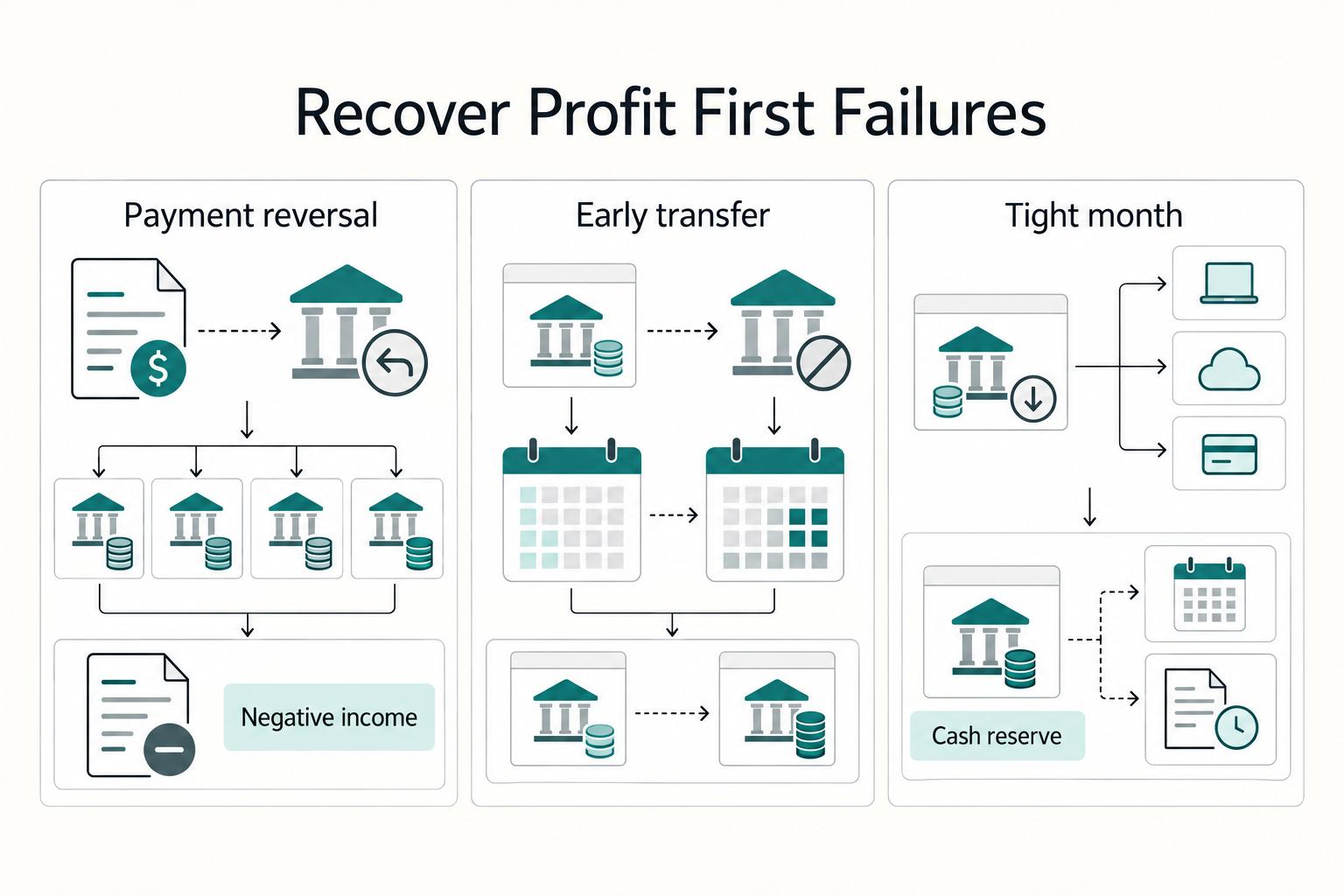
The 'Profit First' Method Part 2: Setting Up Your Bank Accounts
Most freelancers who try Profit First open a few extra bank accounts and call it done. That's the wrong move.

A Guide to Long-Term Care Insurance
**Treat long-term care insurance as a planning decision, then document a simple Go / Wait / Skip call you can re-run every year.** Once the topic is on the table, the operator move is to turn "maybe someday" into a repeatable control. That cuts stress because you stop relying on vibes and start relying on a decision record.