
Quick Answer
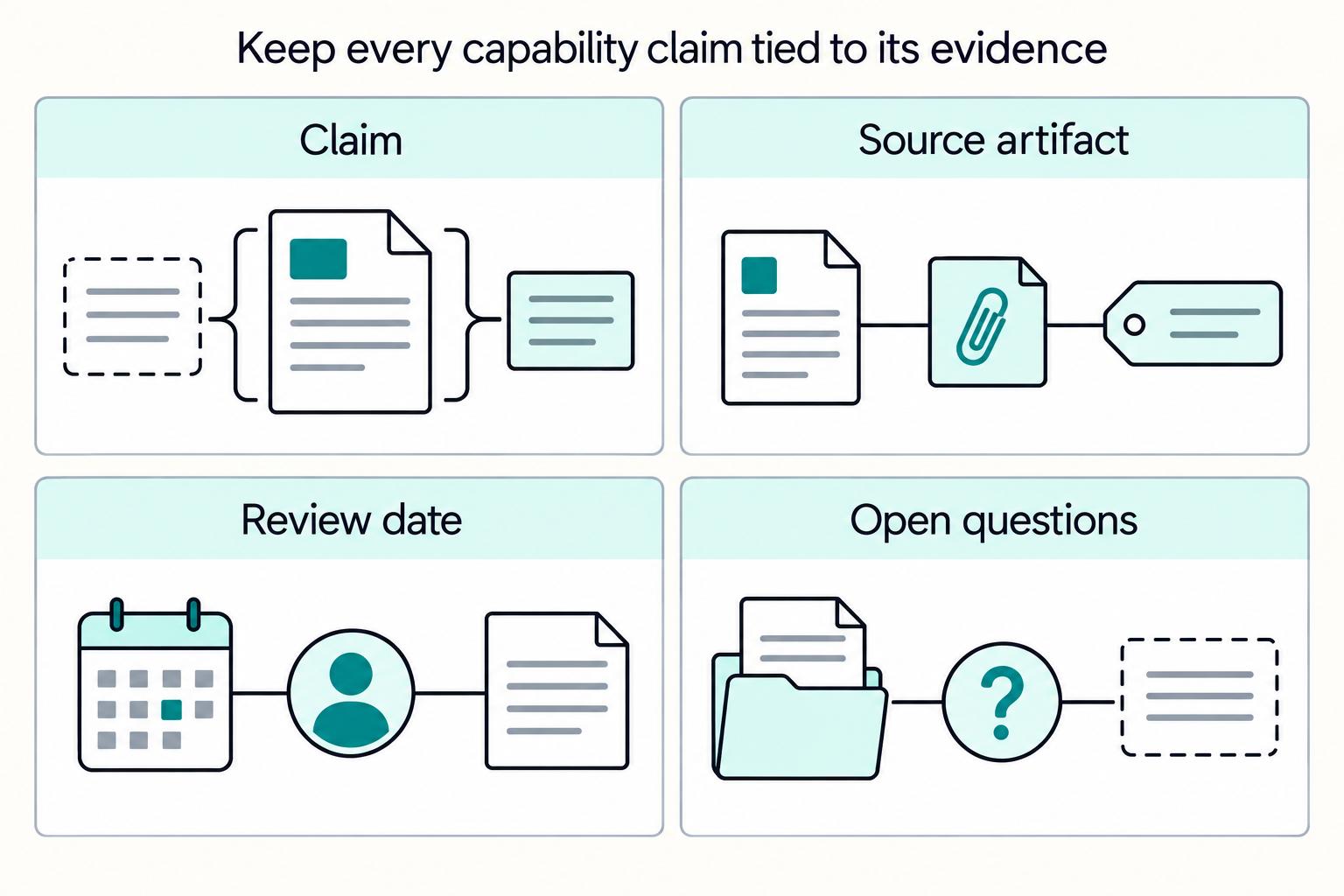
No. Keep Israel in discovery until three items are evidenced for your exact contractor flow: how BOI FX rules apply, whether Bit or PayBox are usable for platform-operated payouts, and what operator obligations attach to your model. Use Bank of Israel material as institutional context, not launch permission. Build a known/unknown/action-needed table, assign named owners, and block production release when eligibility, ILS/USD treatment, or legal status is still unverified.
What to Clear Before Paying Contractors in Israel#
Short answer: the public material we can confirm gives useful payment-system context, but it does not, on its own, support a launch decision for contractor payouts in Israel. Teams often jump from general payment-system context to "we can use Bit, PayBox, or a BOI FX interpretation for contractor payouts" without evidence for that leap.
The clearest confirmed baseline is the Bank of Israel. Its Payment and Settlement Systems Department publishes an overview that "outlines the payment and settlement systems in Israel" and describes developments in innovation, competition, and regulation. The overview is dated December 2021, uses data from 2018 to 2020, and also discusses events in 2021. That is solid market context. It is not the same as confirmed permission, eligibility, or execution mechanics for your contractor payout flow.
That distinction is the point of this guide. You are not here for a country summary or a recycled list of local payment brands. You are here because the real decision is narrower: can your platform launch a compliant, operable payout path for independent contractors in Israel without guessing on the rail, the FX treatment, or the operator obligations?
From the current source set, three areas still remain unverified:
- how BOI FX rules apply to this contractor payout use case
- whether Bit or PayBox are actually suitable for contractor payout execution by platform operators
- whether any platform-operator-specific licensing or operating treatment applies to your model
So the working rule is simple. Treat Bank of Israel material as the institutional baseline, then mark everything rail-specific or operator-specific as either confirmed by a source or still open. If an open item touches payout eligibility, FX handling between ILS and USD, or legal status for your operating model, do not let product or GTM teams treat Israel as launch-ready.
This guide follows that discipline throughout. It separates what is known from what is not, then turns the gaps into pre-launch checks you can assign and close. The goal is not a stronger opinion. It is an evidence pack you can actually use, with no production assumptions on Bit, PayBox, or BOI-linked FX questions until you can point to the document that answers them.
For a step-by-step walkthrough, see How Platform Operators Pay Creators Globally Across YouTube, Twitch, and Substack.
What to prepare before you assess Israel#
Start by fixing the fact pattern. If legal, tax, ops, and engineering are each assessing a slightly different payout flow, you will get answers that sound precise but do not apply to the same launch.
| Prep item | What to document | Why it matters |
|---|---|---|
| Define payout scope | Who the payees are, whether they are all independent contractors, the rough monthly payout count and value, and whether you expect domestic-only flows in ILS or any ILS/USD movement | BOI FX questions matter only if FX is in scope, and rail suitability can change if your model is local disbursement versus cross-currency funding |
| Build a baseline evidence pack | Your current agreement template, your internal tax and compliance assumptions, and the named owner for each reporting or review item | Bank of Israel material is a baseline for payment-system context, not evidence of contractor payout eligibility |
| Assign gate owners | Payments ops for execution and reconciliation, legal for operator treatment, tax for assumption review, and engineering for what can be built only after those answers exist | Prevents product from choosing the rail before legal and tax own the fact pattern |
| Set pass-fail criteria before research starts | A documented view on BOI FX rules for your exact flow, source-backed confirmation or explicit rejection of Bit and PayBox for that flow, and clear ownership of any open legal or reporting item | If any one of those stays unverified, keep Israel in discovery rather than launch |
- Define your payout scope. Write down who the payees are, whether they are all independent contractors, the rough monthly payout count and value, and whether you expect domestic-only flows in Israeli shekel (ILS) or any ILS/USD movement. This is the first gate because BOI FX questions matter only if FX is actually in scope, and rail suitability can change if your model is local disbursement versus cross-currency funding.
Verification: one page, one scenario. If your team has two models, split them now instead of averaging them into one vague Israel launch plan.
-
Build a baseline evidence pack. Include your current agreement template, your internal tax and compliance assumptions, and the named owner for each reporting or review item. Keep this as an assumptions file, not a statement of settled law. The Bank of Israel material you can confirm is useful as context for "institutional aspects," "payment and settlement systems," and "Trends in Payment Systems and Means of Payment," but the available review is December 2021, with data from 2018 to 2020 and updates from 2021. It is a baseline, not evidence of contractor payout eligibility.
-
Assign gate owners. Name who signs off each question: payments ops for execution and reconciliation, legal for operator treatment, tax for assumption review, and engineering for what can be built only after those answers exist.
Red flag: if product owns the rail choice before legal and tax own the fact pattern, you will build to an unverified use case.
- Set pass-fail criteria before research starts. Decide what must be true before you proceed: a documented view on BOI FX rules for your exact flow, source-backed confirmation or explicit rejection of Bit and PayBox for that flow, and clear ownership of any open legal or reporting item. If any one of those stays unverified, keep Israel in discovery rather than launch.
What is confirmed and what is still unverified#
At this stage, separate source-backed facts from planning assumptions. Right now, the highest-confidence conclusion is not that Israel is cleared for contractor payouts. It is that several decision-critical points are still unverified, so a production launch would be premature.
Put each item in a decision table#
Build a simple decision table and force every item into one of three states: known, unknown, or action needed. If a teammate cannot point to a real source or an internal document owner, that item stays unknown.
| Known | Unknown | Action Needed |
|---|---|---|
| Bank of Israel should be treated as your institutional starting point for Israeli payment-system context. That helps frame the market and where official materials are likely to sit. | The current material does not verify the specific rule you need for your contractor payout flow. It does not establish operator eligibility, participation conditions, or whether your exact use case is permitted. | Ask legal or compliance to map which Bank of Israel materials are relevant to your fact pattern, then record which questions those materials answer and which they do not. |
| BOI FX rules matter only if your flow actually touches ILS/USD or any other foreign-exchange step. That dependency was already established in your scope definition. | The current material does not give an explicit BOI FX rule for contractor payouts or for your platform model. | Get written interpretation for your exact flow, including who funds, where conversion happens, and who the relevant actor is at each step. |
| Bit is in scope only as a candidate rail to assess, not as a pre-cleared contractor payout option. | The current material does not confirm Bit mechanics, contractor eligibility, settlement behavior, or reporting implications for this use case. | Keep Bit marked unverified until you have source-backed proof for contractor payouts, not just generic transfer behavior. |
| PayBox is also only a candidate rail at this stage. | The current material does not confirm PayBox contractor payout eligibility, operational mechanics, or how it would fit a platform-operated flow. | Apply the same evidence standard you use for Bit. Do not let product treat PayBox as available just because it appears familiar in market discussion. |
| Contractor payout eligibility still depends on your own evidence pack, especially contract agreements and your tax and other compliance assumptions. Those are known inputs to the assessment. | The current material does not confirm the platform-operator-specific regulatory treatment or whether your contractor model is acceptable as structured. | Have legal and tax review the exact contractor model, then tie their conclusions back to onboarding fields, invoicing, and payout release conditions. |
The checkpoint is simple. Each row should link to either a real external source or an internal owner with a dated memo. If you cannot attach one of those two things, you do not have a known item. You have a gap.
Use strict source hygiene#
Be strict about source hygiene. The available source set already shows why. It includes two Hybrid Analysis malware pages, a DNS wordlist page, and a social-media-style sentiment document. Those are not payment-regulation evidence, and they cannot support a licensing, FX, or payout-eligibility decision.
| Material | How to treat it | Why it is insufficient |
|---|---|---|
| Bank of Israel material | Institutional baseline and market context | It is not the same as confirmed permission, eligibility, or execution mechanics for contractor payouts |
| Hybrid Analysis malware pages | Not payment-regulation evidence | They cannot support a licensing, FX, or payout-eligibility decision |
| DNS wordlist page | Not payment-regulation evidence | It cannot support a licensing, FX, or payout-eligibility decision |
| Social-media-style sentiment document | Not payment-regulation evidence | It cannot support a licensing, FX, or payout-eligibility decision |
| European Payments Council: Who's Who in Payments 2020 | Market context only | It describes the global payment solutions provider space, not a country-specific Israel rulebook |
| The US-Israel Legal Review 2023 / U.S. Regulatory Market: Fintech Product Overview | Broader legal orientation | It does not verify Bit or PayBox for contractor payouts in Israel |
This is a common failure mode. Teams see a few country references, a familiar brand name like Bit or PayBox, and a generic payment-system mention, then mentally convert that into approval. Do not do that. A payment-system overview is market context. It is not proof that your platform can use that rail for independent contractor disbursements.
A good evidence pack at this stage is short and specific: your payout fact pattern, the candidate rail, the open legal question, the named owner, and the closure test. If FX is involved, spell out whether conversion happens before funds enter Israel, inside Israel, or not at all. If you cannot answer that, your BOI FX analysis is not ready yet.
Set a hard no-launch rule#
Use one hard decision rule. If any unknown remains in licensing treatment, FX handling, or contractor payout eligibility, do not launch production flows. Run a limited discovery phase instead, with written closure criteria.
That discovery phase needs an end condition, not open-ended research. Before go-live, you want three things: a documented legal view on the operator model, source-backed status for Bit and PayBox if either is still under consideration, and a reviewed position on tax and other compliance assumptions tied to your contractor agreements. If even one of those stays unresolved, keep Israel in discovery and protect engineering from building against guesswork.
Regulatory checks that decide go or no-go#
Once you list the unknowns, turn them into launch gates. If your legal view is not anchored in Bank of Israel materials, your contractor assumptions are not written down, or your FX treatment is still fuzzy, you do not have a production-ready Israel payout design.
Map Bank of Israel materials to your flow#
Start with Bank of Israel materials, then mark exactly what they answer and what they do not. The useful output is not a stack of PDFs. It is a short memo tied to your payout flow: who funds the payout, who triggers it, whether funds are held by your platform or a provider, and whether the contractor receives ILS, USD, or both.
The verification standard should be strict. Every conclusion in that memo should link to either a Bank of Israel source or a named internal owner who is obtaining interpretation. Anything else stays open. Generic payment-industry reading often looks relevant when it is not. For example, the European Payments Council document titled Who's Who in Payments 2020 describes the global payment solutions provider space, not a country-specific Israel rulebook. Treat that kind of material as market context only.
Validate contractor assumptions in writing#
Validate your independent contractor assumptions before you design onboarding, payout timing, or release rules. Your legal and tax reviewers need the same fact pattern product and payments ops are using. That includes the contract agreements, who sets the commercial terms, how invoicing works, and which tax assumptions you are relying on.
The checkpoint here is a written view, not a meeting summary. If counsel or tax cannot confirm that your contract structure and assumptions are aligned, stop building payout logic around contractor status. A common failure mode is letting product lock in fields and payout states first, then asking legal to bless them later. That sequence creates rework fast.
Separate payment-system context from operator obligations#
Keep payment-system context separate from operator obligations. Israeli payment systems guidance may help you understand market structure, but that is not the same as permission for platform operators to execute contractor payouts in a specific way. The real decision questions are operational: who is the relevant actor, who is moving the money, and what obligations attach to your role versus a provider's role?
This is where familiar names like Bit or PayBox can mislead teams. A rail being visible in market discussion does not prove your platform can use it for contractor disbursements. Keep those rails in unverified status until the operator-specific questions are answered in writing.
Block launch if FX treatment is unclear#
Pause product scoping if BOI FX rules are unclear for your payout flow. If your flow touches ILS/USD conversion at any point, require counsel to map where conversion happens, which entity performs it, and whether that changes the legal treatment of the payout path.
Your evidence pack for this step should include the exact money flow, sample ledger states, and the intended settlement currency to the contractor. If the memo speaks only in generic cross-border terms and does not address your actual path, treat FX as unresolved and keep engineering out of build mode. That is the cleanest no-go rule in this section.
Related reading: How Platform Teams Pay Contractors Across UAE, Saudi Arabia, and Egypt.
Tax and invoicing checkpoints that affect payout architecture#
Treat tax and invoice evidence as a release condition, not a back-office cleanup task. If your Israel payout design cannot show what internal tax treatment was applied, which invoice or billing record supports the payout, and whether extra documentation was required by your own review process, keep payouts in queued and out of sent.
| Checkpoint | Control to implement | What blocks release |
|---|---|---|
| Map tax obligations into payout fields and hold reasons | Turn each confirmed obligation into a field, a document requirement, or a payout-state rule; contractor profile points to the agreement, the current tax-treatment assumption version, and the owner who approved it | If ops cannot answer why a tax field is populated, who approved it, and what source it came from, the rule is not operational yet |
| Bind invoice evidence to payout readiness | Capture invoice requirements in onboarding and in the payout object; use an invoice reference with status, timestamp, and document location | Paying first and expecting finance to match invoices later breaks auditability quickly |
| Define document triggers before release | Keep a documented matrix for when additional evidence is required, such as a contractor declaration, a tax form, or another document your reviewers say is needed | If the matrix is not tied to the exact contractor type and payout path, the control is too generic |
Block the status change from queued to sent until the evidence pack is complete | Check contractor identity, contract agreement, tax-treatment assumption version, invoice reference where required, and any additional documentation flagged by legal or tax review; record approver, reason, and timestamp for manual overrides | If tax or invoicing evidence is still unverified, the correct outcome is a hold code, not a payout attempt |
- Map tax obligations into payout fields and hold reasons.
Do not leave tax and reporting obligations in a policy memo that product never reads. Turn each confirmed obligation into a field, a document requirement, or a payout-state rule. At minimum, your contractor profile should point to the agreement, the current tax-treatment assumption version, and the owner who approved it. The check is simple: for any sample payout, ops should be able to answer why a tax field is populated, who approved it, and what source that decision came from. If you cannot do that from the record itself, the rule is not operational yet.
- Bind invoice evidence to payout readiness.
Do not let invoice requirements sit beside the payout flow as a separate finance concern. If your tax review says invoice issuance, invoice format, or invoice timing matters in Israel, capture that requirement in onboarding and in the payout object so contractor records and payout events reconcile one to one. A useful checkpoint is an invoice reference on the payout with status, timestamp, and document location, not just a free-text note. A common failure mode is paying first and expecting finance to match invoices later, which breaks auditability quickly when payout amounts, currencies, or pay periods change.
- Define document triggers before release.
You do not need to guess the exact trigger to design the control. You do need a documented matrix that says when additional evidence is required before funds move, such as a contractor declaration, a tax form, or another document your reviewers say is needed for that fact pattern. For Israel, this matrix should be tied to the exact contractor type and payout path you are launching, not a generic "international contractors" rule. The tradeoff is speed versus rework. Lighter onboarding feels faster, but missing evidence usually surfaces at release time, when the payout is hardest to unwind cleanly.
- Block the status change from
queuedtosentuntil the evidence pack is complete.
The most conservative control is for your send job to check for a complete, auditable package: contractor identity, contract agreement, tax-treatment assumption version, invoice reference where required, and any additional documentation flagged by legal or tax review. Avoid manual overrides unless they create an audit trail with approver, reason, and timestamp. If tax or invoicing evidence is still unverified, the correct outcome is a hold code, not a payout attempt.
How to evaluate Bit and PayBox without guessing#
Do not choose between Bit and PayBox based on recognition or convenience. If you cannot prove rail eligibility, settlement behavior, FX handling, reporting duties, and exception handling for your exact contractor flow, keep that rail unverified and move phase one toward the option with fewer open dependencies.
Compare only the fields that decide launch#
Build a short comparison matrix with only the fields that actually decide launch. The goal is to force a yes, no, or unknown on the items that block execution in Israel, not to collect product trivia.
| Rail | Independent contractor eligibility | ILS settlement behavior | USD and FX touchpoints | Reporting obligations | Exception handling | Current decision status |
|---|---|---|---|---|---|---|
| Bit | unverified | unverified | unverified | unverified | unverified | Do not select yet |
| PayBox | unverified | unverified | unverified | unverified | unverified | Do not select yet |
| Existing bank or PSP fallback rail | Fill from your provider agreement, legal memo, and ops procedures | Fill from current payout docs | Fill from current FX docs | Fill from current compliance owner input | Fill from current support and return procedures | Candidate for phase one if evidence is complete |
Use one practical rule here. One verified cell does not verify the whole row. A rail can look workable for domestic ILS movement and still fail once USD touches the flow or contractor classification changes.
Require proof for every verified cell#
Mark every field verified or unverified, then attach proof. This checkpoint should be mechanical. Each verified cell needs a source link or PDF, the capture date, and the reviewer who accepted it. If ops cannot open the record and see the backing document in under a minute, that field is not operationally verified.
Be strict about source quality. The only named material in the current pack is The US-Israel Legal Review 2023, including a contents reference to U.S. Regulatory Market: Fintech Product Overview. That may help with broader legal orientation, but it does not verify Bit or PayBox for contractor payouts in Israel, so those matrix cells stay unverified. The same goes for unrelated court documents, sentiment datasets, or GitHub files. They are not payment-rail evidence.
Add a fallback rail before product debate#
Add at least one fallback rail to the same matrix before you debate product experience. This is what keeps the decision moving when Bit or PayBox remain unclear. If your existing bank or PSP path has documented contractor support, defined ILS and USD behavior, named compliance owners, and a known exception process, it is often the better launch path even if the user experience is less polished.
The common failure mode is letting an attractive local rail into roadmap planning before the evidence pack exists. For this Israel contractor payout decision, the better phase-one choice is the rail with fewer unresolved compliance dependencies, not the one that looks easiest in a demo. Related: How to Pay Contractors in Ethiopia: Telebirr and NBE FX Rules for Platform Operators. If you need a practical next step, browse Gruv tools.
Step-by-step rollout for a first Israel contractor cohort#
The current source set does not verify an Israel-specific rollout playbook, so treat the steps below as a conservative internal framework, not a confirmed local procedure.
- Step 1: Onboard a small cohort with a complete evidence pack.
Start with a handful of independent contractors whose records are fully documented, not just the fastest signups. The file should include the signed agreement, the tax or compliance fields your reviewers require, and any other data points your team has already decided are mandatory for release. A simple check is this: before anyone is marked payout-ready, ops should be able to open one folder or record and see the full contractor packet in under a minute. If the record depends on scattered chat messages, inbox threads, or memory, the cohort is not ready.
- Step 2: Simulate both ILS and USD payout paths and label every assumption.
Run a non-production payout simulation for the exact routes you expect to use, including any ILS-only path and any USD touchpoint. Treat BOI FX rules as an explicit assumption set unless you have source-backed legal confirmation for your specific flow. Log who approved each assumption, when it was reviewed, and what review item the simulation is meant to satisfy. If your proposed launch depends on Bit or PayBox for this test and their contractor mechanics are still unverified, move the cohort to the documented bank or PSP fallback instead of guessing.
- Step 3: Execute limited live payouts with traceability built in.
If you choose to proceed on a documented fallback rail, send a deliberately small batch and instrument the full path from payout creation to settlement and reconciliation. Record what happened in the payout record itself, including timestamps, any hold codes, any manual overrides, and the owner for each exception. If ops cannot explain a result from the record, stop the cohort and fix that gap before you expand.
Do not expand beyond the first cohort until onboarding, invoice readiness, release controls, settlement, and exception handling all work without guesswork. If any result still depends on an open Bit, PayBox, or BOI FX question, keep the rollout capped and move that item back into discovery.
Try a related tool
Where Gruv fits
Researched and edited by the Gruv editorial team. Gruv builds cross-border billing, payouts, and finance-operations software for global businesses.
Sources
Includes 3 external sources outside the trusted-domain allowlist.
- clsp.jhu.edu/wp-content/uploads/2015/10/WS12-Summer-Senti...trusted
- euro.ecom.cmu.edu/resources/elibrary/epay/whos-who-in-payments...trusted
- kamakama.gov.il/media/3vhjor5d/israels-annual-survey-2021.pdftrusted
- nycourts.gov/reporter/files/bv/43Misc3d.pdftrusted
- openknowledge.worldbank.org/bitstreams/86eef224-6a34-5f47-9586-b2193acf8...trusted
- archive.org/stream/NewtonGraphicSep_1973/1973-09-Sept_dj...external
- boi.org.il/media/bdiapxpt/payment-systems-review-2021.pdfexternal
- boi.org.il/media/3vhjor5d/israels-annual-survey-2021.pdfexternal
Educational content only. Not legal, tax, or financial advice.
Related Posts

Paying Contractors in Sri Lanka with CBSL and LankaPay Decision Checks
Start with regulatory certainty. For a platform operator, Sri Lanka should not be screened from a payout product page or a rail feature list first. Real institutional signals exist, but they still do not prove that your exact contractor payout flow is permitted, eligible, and operationally supportable.

Pay Contractors in Ethiopia with Telebirr and NBE FX Checks
This brief is for platform founders and operators who need a go/no-go answer on Ethiopia before they spend engineering, compliance, or go-to-market budget. The real question is not whether contractors exist in Ethiopia or whether digital payments exist. It is whether your exact payout model looks feasible enough, based on actual evidence, to justify real work now.

How to Pay Contractors in Tanzania with M-Pesa and BoT FX Boundaries
Tanzania is worth evaluating for contractor payouts, but the decision is not about market interest alone. It comes down to whether your model can operate inside Bank of Tanzania boundaries and still deliver a payout experience that finance, compliance, and contractor support can defend.