
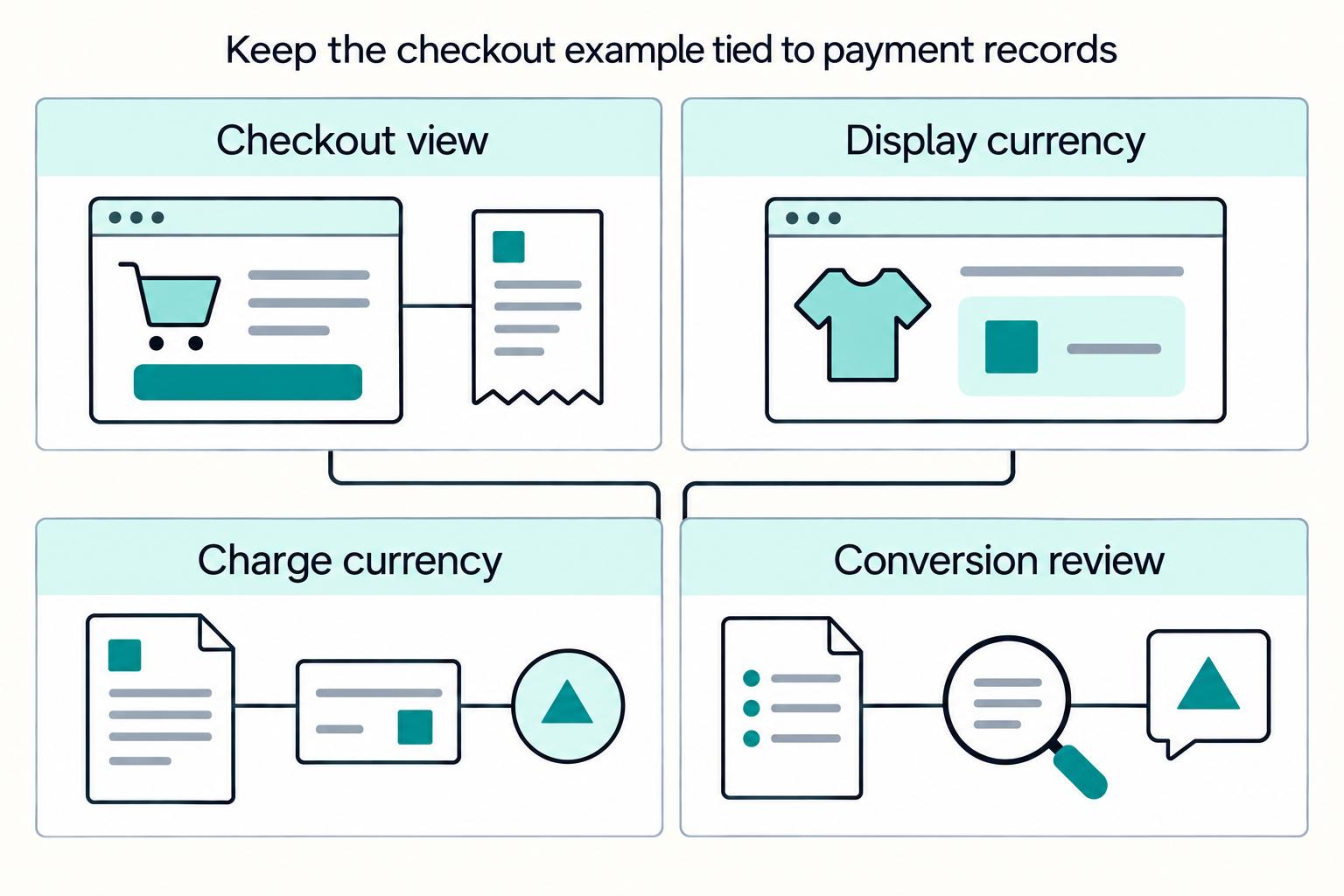
Quick Answer
Start with operating controls, then localize customer experience. Set clear owners, lock the flow boundary, and document how statuses move from webhook events into ledger journals before touching copy polish. Define quote expiry behavior for FX, place KYC/KYB/AML gates where funds can still be stopped, and treat payout readiness as a state decision rather than a UI signal. Complete each market with a review pack that includes transaction samples, settlement traces, legal variants, and dry-run payout batch outcomes.
Why payment localization fails when it is treated as a translation task#
Payment localization fails when teams treat it as translation rather than market adaptation. The real job is to make language, currency display, and UX feel local and trustworthy without creating confusion later in the customer journey.
That means localization is broader than screen text. It covers the full customer experience, and payment behavior is region-sensitive. A flow that works in one country can feel confusing in another, and a generic global experience can reduce trust. That is why translation-only rollouts often lead to weaker conversion, more support tickets, and higher drop-off during onboarding or checkout.
The usual failure is sequencing. Teams ship localized copy first, then discover late that fees and pricing details are not clear enough for local users. Hidden fees that appear late in checkout can also increase abandonment, especially in a flow that already has friction. A safer prelaunch approach is to validate core checkout controls before you polish interface copy:
- Validate payment options for the market, including regional wallets.
- Validate the timeline expectations users will see.
- Validate full pricing transparency early, not at the end of checkout.
- Run these checks during early MVP launches in each market.
If those checks do not hold, pause the rollout and fix the operating path first. A one-size-fits-all regional approach is risky, so treat each market as its own operating environment, then scale only what proves reliable.
We covered this in detail in How to Build a Payment Reconciliation Dashboard for Your Subscription Platform.
Step 1 Set scope and owners before you touch checkout#
Set scope and ownership before anyone edits checkout copy. If you do not, localization can drift into a language-only change with weak operational control.
Start by writing the exact flow you are localizing on one page, with clear start and end points and the key handoffs in between. Keep the boundary operational and specific to your system. In software, localization covers currencies and UX flow, not just translated text.
Name the owners now#
Assign clear owners for each area, even if multiple teams contribute, and document who gives final approval when decisions conflict.
- customer-facing product behavior
- localized content and policy copy
- operational controls and reporting handoffs
If open issues cannot be routed to a documented approver, pause launch planning until approval paths are explicit.
Choose the product surface in scope#
Be explicit about which surface you are launching, such as website, mobile app, or both. Different surfaces often need different localization work, so do not bundle them by default.
Use a short scope note that lists in-scope surfaces, flow boundaries, named owners, and the approval path. Then test planned changes with real users before broad rollout, and use rollback controls where available.
Step 2 Build your market priority matrix#
Rank markets by operational readiness, not demand alone. If payment-system fit is weak and regulatory requirements are unresolved, defer the launch until those gaps are resolved.
Treat each matrix row as a market-specific setup, not a region. Do not score "APAC" or "Southeast Asia" as one item. Grouped markets force compromises. Use rows such as Singapore, SGD, English so payment systems, currency, and language are evaluated together.
Score launch blockers, not preferences#
Use a weighted matrix to compare otherwise eligible markets. The table gives illustrative weights for a business with physical-goods logistics; a services platform may need a different split. Confirm mandatory payment and regulatory readiness separately so a high demand score cannot cancel a launch blocker.
| Factor | Weight |
|---|---|
| Demand | 30% |
| Regulation | 25% |
| Logistics | 20% |
| Payment systems | 15% |
| Competition | 10% |
- demand signals for that specific market
- regulation readiness
- logistics readiness
- payment-system fit
- localization scope (language, formats, and cultural cues)
Require one proof line per score. If evidence is missing, mark it as unknown.
Use a compare table that surfaces no-go risk#
| Market row | Weighted score | Method fit | Regulation readiness | Logistics readiness | Localization scope | No-go before build |
|---|---|---|---|---|---|---|
Singapore, SGD, English | Record score | Confirmed / partial / unknown | Confirmed / partial / unknown | Confirmed / partial / unknown | Confirmed / partial / unknown | List open blockers or none open |
Market X, currency, language | Record score | Confirmed / partial / unknown | Confirmed / partial / unknown | Confirmed / partial / unknown | Confirmed / partial / unknown | List open blockers or none open |
Before development planning, each row should include country, currency, language, weighted score, and no-go status.
Apply a hard defer rule#
Hold the affected launch scope if a required payment method is unusable or a mandatory regulatory condition is unresolved. A high weighted score cannot override either blocker. A narrower pilot can proceed only when its own required methods and controls are ready.
Local-currency display is only one part of localization. For physical goods, validate the destination’s current import duties, taxes, and disclosure obligations alongside the delivery terms. Show customers which charges are included and which can be due on arrival, using rules for the specific shipment and market.
If you want a deeper dive, read How to Expand Your Subscription Platform to APAC: Payment Methods Currency and Regulatory Market.
Step 3 Define the target money flow and ledger behavior#
Do not start implementation until the target money flow and ledger behavior are locked. A market-surface row is not build-ready until the flow is documented end to end with clear handoffs and outcomes.
Create one future-state flow per market-surface row, not one global diagram. Keep the scope explicit. Include what is in scope for launch and list what is out of scope so excluded branches are a choice, not an accident.
Define how each branch is handled before you finalize UI or support language. If a branch can resolve asynchronously or hit exceptions, represent that state clearly in both product and operations views. Treat compliance and sensitive-data complexity as explicit delivery risks, and call out technical traps early.
Use a compact shared artifact set so support, ops, and engineering work from the same truth:
| Artifact | What it should define | Operational meaning |
|---|---|---|
| Scope of work | What is included for this launch | Prevents hidden assumptions |
| Out-of-scope work | What is intentionally excluded | Avoids accidental commitments |
| Required submission documents | What must be documented before build | Ensures complete inputs before implementation |
| Evaluation methodology | How readiness will be assessed | Creates a clear checkpoint before implementation |
Treat this step as a formal checkpoint with required artifacts and a defined evaluation method. Keep the verification standard written and testable so decisions are based on documented evidence, not ad hoc judgment. If your operators need a model for what the downstream controls should support, How to Build a Payment Reconciliation Dashboard for Your Subscription Platform is a useful companion.
Step 4 Localize payment methods and currency without creating reconciliation drift#
Work through this step market by market, not as one regional preset. A localized checkout is only ready when payment methods and currency setup are coherent for each market, not just when language and price display look correct.
Choose method-country fit before you polish the checkout#
Start with the country, then choose the methods. APAC is not a single market, and a grouped regional setup can force compromises. A shared method stack across a broad "Southeast Asia" surface can leave weak fit in parts of the market.
Define what happens when a payment path fails. After an uncertain timeout, check the original operation before inviting a retry or alternate method so a fallback does not create a second charge. Offer another method once failure is confirmed; for a pending payment, explain when and where the customer can check its status.
Use an admin-layer checkpoint before changing downstream UX. In Shopify Markets, confirm the current Markets settings for target regions, supported currencies, and configured customer experiences. Admin navigation and available features can depend on the store configuration.
Separate display currency from charge currency on purpose#
If you enable local-currency price display, treat display currency and charge currency as separate decisions. For each market-surface row, record:
- the currency the user sees
- the currency the payment is charged in
- where conversion happens in the flow, if conversion is used
| Market example | Configuration to verify | Launch evidence |
|---|---|---|
| Singapore | GST treatment and whether displayed totals include it | Applicable rate, supply type, and invoice requirements |
| Thailand | VAT treatment for the actual supply and seller | Applicable rate and customer-facing total |
| Indonesia | PPN treatment, taxable base, and supply category | Applicable calculation and invoice fields |
Keep one verified tax example for each supply type in the launch scope. A country label alone does not determine the applicable rate, taxable base, or whether prices must include tax. Finance should approve the calculation and required invoice fields; the localized checkout must explain the resulting total clearly.
Define internal review and partial-failure rules before go-live#
If you use Merchant of Record (MoR), align product, finance, and ops on how customer-facing totals are explained and reviewed before launch. The goal is one shared interpretation when checkout totals and internal records do not match exactly.
Set an explicit partial-failure rule as well. A customer can see success on screen while your team still needs a defined follow-up path.
Keep one tested example per market with displayed, charged, and settlement currencies, exact amounts, and any conversion step. Store canonical amounts according to the selected API’s minor-unit rules; locale formatting belongs in presentation. If a provider supplies an expiring FX quote, retain its ID, rate, fees, expiry, and accepted amount. After expiry, obtain a fresh quote and confirm a changed customer total before creating the payment; do not turn a status-recovery attempt into a second charge.
You might also find this useful: How to Build a Currency Reserve Strategy for Marketplace Platforms Operating in Volatile Markets.
Step 5 Localize language and UX where payment errors actually happen#
Do not localize the whole interface at once. After method and currency setup, one major risk is confusion at the moment users need to understand what happened and what to do next.
Prioritize the high-risk moments first#
Start with the screens and messages that directly affect behavior during payment uncertainty. If those are unclear, translation elsewhere will not prevent unnecessary retries, abandonment, or mistrust. Focus first on:
| Moment | Why first |
|---|---|
| Payment error states | Users can quickly understand the issue |
| Retry prompts | The next action is explicit |
| Pending vs. failed status messaging | Users can tell outcomes apart |
| Payment method and currency surfaces | Core choices stay clear in the active locale |
Treat this as UI localization, not translation alone. Text expansion, locale formatting, RTL behavior, and QA can change user behavior if layout or navigation breaks.
Keep trust text aligned with the market variant#
Keep checkout copy, help text, and error wording consistent for the active market variant. When those surfaces conflict, users lose confidence at the worst point in the flow.
Use a simple launch check per market: review localized payment screens and in-flow text surfaces together to catch conflicts before release.
Write error copy for the actual outcome#
Error copy needs to match the real state, not a generic failure bucket. Make the first line clear about what happened and what the user should do next.
If the state is retryable, say so. If the result is pending, state that plainly and clarify what users should expect next in your flow. Validate these states dynamically with placeholders, plurals, and RTL enabled so runtime values do not break meaning or layout.
Check small-screen layouts before you call localization done#
Finish with small-screen checks, not desktop only. Longer localized strings can push critical payment details or status text out of view and weaken decision clarity.
Run task-based checks in each target language for one success path, one retryable failure path, and one pending path. Confirm key text stays visible, actions remain usable, and the layout still supports the intended next step.
Step 6 Wire compliance gates into money movement, not as a side process#
Treat compliance as part of the same decision path that allows collection and payout, not as a separate queue. Put applicable KYC, KYB, AML, consent, and tax-document status directly into the states your payment system reads before funds move.
Place checks where funds can still be stopped#
Set gate placement before you polish wording. If your provider offers embedded onboarding with merchant verification and KYC, use it early. Then add explicit internal gates for collection and payout release based on your own program rules.
Define gates from the selected program’s actual requirements and current provider capabilities. Test each unmet required condition and confirm the affected action stays blocked. An incomplete optional field or a future-due requirement should not create a universal payout block; apply the condition required for collection, payout creation, or release separately.
Turn AML and AML Hold into named operating states#
AML review should be a system state, not a note in a side tool. Model AML and AML Hold as explicit statuses with a clear owner, required next action, and a recorded release or rejection decision.
This is an operational control for known digital-payment risks, including fraud, theft, mis-selling, and data breaches. A practical pattern is to make four answers visible for each held case:
- Who owns the case now
- What evidence is missing
- What action releases or rejects funds movement
- What event escalates the case if it sits too long
Run a forced hold test and confirm blocked funds cannot enter payout release. Keep the balance and case visible in authorized internal support views and reconciliation reports, with its held status and owner. Customer-facing messages should use the approved status wording and avoid exposing sensitive review details.
Localize consent and compliance text by jurisdiction#
Localize consent at the submit point, not only in policy pages. One observed fintech flow shows explicit consent to store and process submitted personal information and also shows bot verification as a visible step.
Use that as a verification pattern for each market variant. Capture the rendered consent text, locale, and the policy URL or document version shown at submission. If your flow includes market-specific disclosures, keep those localized and retrievable for the exact variant shown to the user.
Tie tax-document status to payout eligibility#
Connect required recipient-document status to the action it governs. Configure the applicable collection, hold, or withholding rule for the actual program; enabling a document-collection feature alone does not make every missing document a payout prohibition.
Separate recipient-document collection from year-end information reporting. A missing Form 1099 is not, by itself, a universal payout block. Configure a hold or withholding action only when the applicable rules and program require it, using the required recipient data and provider capability state.
Step 7 Implement integration controls for retries and async events#
Once compliance gates are in place, timing and recovery become the next operational risk. Build this step so retry and recovery logic improve payment success, while provider-specific async behavior stays treated as unknown until your contract and tests confirm it.
7.1 Define stable request identities for money-moving calls. Use a stable internal request identity for payout creation, conversion requests, refunds, reversals, and release-status updates. Use an Idempotency Key only where provider support is documented; do not assume universal behavior for create or update calls.
Validate behavior in your own environment. Submit the same create request under controlled test conditions and record what actually happens. Your trace should link client request ID, provider object ID, internal transaction ID, and the resulting Ledger Journal impact. If that chain is hard to recover, retry handling is still too implicit.
7.2 Process provider events as potentially delayed or repeated inputs. Persist verified receipt, then keep processing completion separate. Commit local financial effects with their completed-operation marker, and use a recoverable workflow for external calls. A repeated event must not create a second effect, while an incomplete first attempt must remain recoverable.
Test for accounting outcome, not receipt alone. A practical failure case is gateway instability during peak demand, where customer submission and confirmation can fall out of sync. Your event logic should keep that recoverable without manual guesswork.
7.3 Add exception queues for missing or out-of-order settlement signals. Create an explicit exception path for missing or unusable events tied to Settlement, payout status, and release readiness. If expected signals do not arrive, or arrive in an unusable order, move the case into a tracked exception state with an owner and timer.
Keep a compact evidence bundle per exception:
- request ID and any request-identity key used
- provider response payload and timestamp
- provider event ID, if available
- internal transaction and
Ledger JournalIDs Settlementreference or a missing-file note- current payout or release status
7.4 Define release policy when sync and async signals disagree. If the synchronous API response indicates success but follow-up events fail or remain unresolved, apply your documented internal hold or release policy. The exact sequence is provider- and system-specific unless your contract defines it.
Customer-facing success is not proof of final payment status. Define the authoritative provider resource and internal accounting transition for each method. If an event is missing, recover status through the provider’s supported query or reconciliation path; do not require a new payment attempt simply to obtain a missing callback.
Step 8 Run prelaunch verification with an evidence pack#
Prelaunch verification should produce an evidence pack reviewers can inspect, not a presentation they are asked to trust.
8.1 Define one review pack and one evaluation method. Set one required-documents checklist and one evaluation method for each launch scope so approval stays consistent. Build the pack so reviewers can trace each critical path and key exception path in an auditable way, then decide with the same criteria every time.
A useful checkpoint is simple. A reviewer should be able to answer what happened, what outcome was recorded, and why the flow proceeded or stopped without ad hoc log hunting.
8.2 Keep launch artifacts and sign-off metadata together. Keep launch artifacts in the same review trail, with clear sign-off metadata such as approver, date, and release reference. That helps reduce version drift and makes ownership visible when a decision is challenged. If ownership or approval history is unclear, treat that as an open launch risk and resolve it before launch.
8.3 Test launch behavior and write explicit stop/go rules. Run prelaunch tests across expected and failure behavior so state changes and recovery paths are clear before traffic starts. Document rollback conditions and KPIs up front where practical so launch decisions are based on evidence, not assumptions.
If your release stack supports scheduled testing with real shoppers and automatic rollback, use those controls as part of the go-live plan. Before go-live, sanity-check your idempotency and ledger trace design against the implementation patterns in the Gruv docs. If reserve policy is part of launch readiness, How to Build a Currency Reserve Strategy for Marketplace Platforms Operating in Volatile Markets can help frame the review.
Common localization mistakes that create month-end chaos#
A common pattern is localizing one surface at a time and stopping at translated text. To reduce downstream issues, adapt each market consistently across surfaces and verify that currency data stays exact in records, not just on screen.
1) Treating localization as copy-only work. If launch checks stop at translated text and UI labels, you miss the legal, cultural, and regional adaptation the market actually needs. Localization that lags behind launch activity is a known global campaign failure pattern.
2) Assuming one surface represents all surfaces. Website and mobile app localization are not the same problem. If wording or market cues differ between surfaces, localization can become inconsistent across the same journey.
3) Localizing currency display but not underlying data. Localized formatting alone is not enough when records include multiple currencies. Financial record streams can carry multiple ISO-coded currencies in one period, including codes such as COP, EUR, and BRL. Stored records and exports should preserve those distinctions. This is where teams often discover too late that the reporting layer was never localized for operators; How to Build a Payment Reconciliation Dashboard for Your Subscription Platform covers that failure mode in more depth.
4) Skipping period-based evidence checks. Before expanding a market, run a period-based check and confirm currency codes and amounts stay consistent across the review window. A defined checkpoint, such as 2025-01-01 to 2025-12-31, makes it easier to validate that localized presentation and underlying data still align.
Final checklist before launching the next market#
Do not treat this as a final translation pass. A market is ready only when scope, technical setup, legal language, and post-launch ownership are explicit and verifiable.
Step 1 Approve the market gate. Confirm the market priority plan is approved, with clear decision criteria and named owners for the decision. Keep scope precise: similar markets are not interchangeable localization projects. Brazil and Mexico may represent a large share of LATAM GDP, but they still require different localization choices.
If unknowns remain around localization fit, legal content, or support impact, delay the launch.
Step 2 Validate the technical localization setup. Check URL structure, locale routing, and hreflang so the right language content reaches the right users. Use a sample user journey and verify localized pages resolve correctly across key entry points.
If language routing is inconsistent, launch prep is incomplete and rework risk is high.
Step 3 Validate rollout quality before a translation-only release. Run QA test cases for core localized journeys, including onboarding and support handoff. Include at least one normal flow and one exception flow.
Watch for known failure signals of translation-first rollouts: weaker conversion, higher support load, and onboarding drop-off. If these checks are still unclear, pause the launch until they are documented.
Step 4 Complete legal localization and language assets. Finish localized product, support, and legal content required for launch. Do not rely on raw translation alone. Prepare linguistic assets first, including a style guide, a market-specific financial glossary, and locale tone of voice.
Check that UI, support, and legal wording are aligned. For web-hosted market or legal pages, verify the technical language setup so users reach the correct version.
Step 5 Finalize evidence, governance, and maintenance. Assemble one prelaunch evidence pack with localized artifacts, QA notes, and review metadata. If risk ownership is split across teams in your org, confirm owners before release.
Before release, assign governance and maintenance ownership and monitor for conversion underperformance, support-ticket spikes, and onboarding drop-off so drift is caught early.
If you want a market-by-market rollout review focused on reconciliation controls and payout reliability, talk to Gruv.
Frequently Asked Questions
What does payment localization include beyond translation?
Payment localization is broader than translation. It adapts the product to local language, region, and culture so it feels natural in-market. In practice, that includes checking dates, numbers, currencies, layout behavior, fonts, and key UX moments, not just string accuracy. If wording is translated but formats are wrong, localization is incomplete, for example 12/10/2026 vs 10.12.2026.
Which change usually moves results first in a new market: payment methods, local currency, or UX copy?
Start with the largest demonstrated obstacle in that market: a missing preferred method, an unclear charged currency, or a status message users cannot act on. Test the change in a defined cohort and compare completion and support outcomes before expanding.
How should teams prioritize markets when engineering capacity is limited?
Choose a scope whose required payment methods, regulatory conditions, and localization work are understood and ready. Include logistics when physical-goods delivery is in scope. A narrower pilot can proceed if its own mandatory conditions are met; document the deferred capabilities instead of letting a region-wide score hide blockers.
What is the practical difference between internationalization and localization for payment platforms?
Internationalization (i18n) is the technical groundwork that prepares the product for multiple locales. Localization (l10n) is the market-specific adaptation on top of that foundation. In short, i18n enables scale and l10n adapts the actual user experience for each market.
How do we balance AI-assisted localization speed with compliance accuracy for legal and financial text?
If you use AI-assisted localization for speed, do not treat it as automatic compliance assurance for legal or financial language. Keep clear human legal/finance review ownership for high-risk text before launch.
What should be checked before launch and monitored after launch to catch operational drift?
Before launch, verify local date, number, and currency formats across critical payment flows and surfaces. Include UX checks where locale conventions can break usability even when the language is translated, such as time-input expectations. After launch, re-check the same surfaces so localized presentation stays aligned over time.
What critical unknowns should we call out early when market-specific payment data is incomplete?
Call out unknowns in locale formats, currency presentation, UX behavior, font handling, RTL needs, and text expansion risk. These are operational risks, not cosmetic gaps, because they can create broken layouts and confusing UX. If key checks are still unverified, treat that as unresolved prelaunch risk.
Try a related tool
Researched and edited by the Gruv editorial team. Gruv builds cross-border billing, payouts, and finance-operations software for global businesses.
Sources
- docs.stripe.com/currenciestrusted
- docs.stripe.com/connect/handling-api-verificationtrusted
- farmingdale.edu/courses/index.shtmltrusted
- nichols.edu/wp-content/uploads/2025/12/Nichols-Catalog-2...trusted
- sec.gov/Archives/edgar/data/0001846832/0002070979260...trusted
- sec.gov/Archives/edgar/data/1966710/0001062993250014...trusted
- som.yale.edu/sites/default/files/2025-05/SCOTT-MORTON_Dig...trusted
- stripe.com/en-jp/guides/rfp-template-for-billing-vendorstrusted
Educational content only. Not legal, tax, or financial advice.
Related Posts
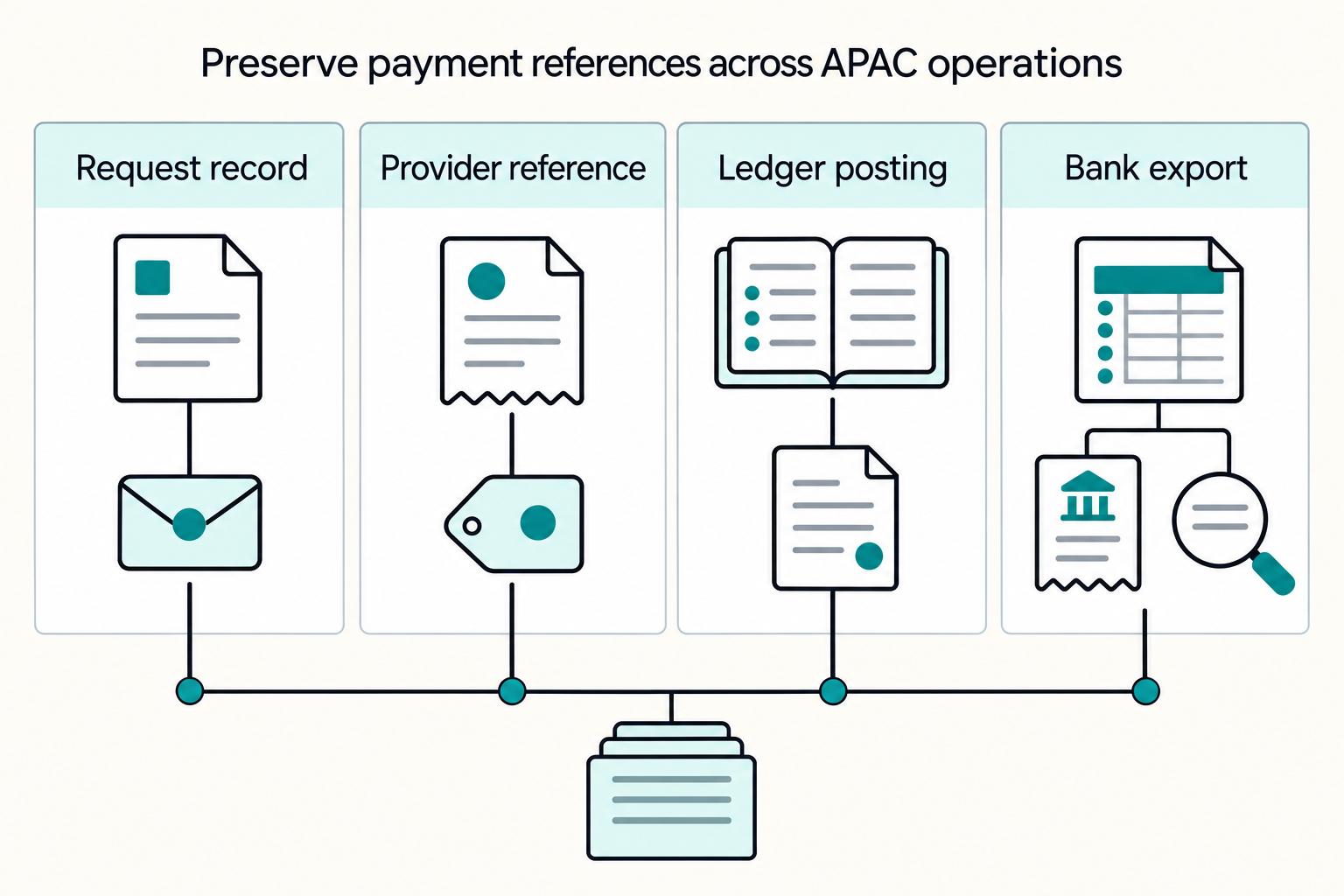
Expand APAC Subscriptions: Payments, Currency and Rules
To expand a subscription platform into APAC, match each customer market to a supported merchant setup, renewal method, billing currency and tax treatment. Then verify the whole renewal, failure and refund process. A method that completes the first checkout may still require customers to act on every renewal; broad card-network reach does not establish unattended subscription collection.

Intacct vs NetSuite: Multi-Currency and High-Volume AP
Sage Intacct and Oracle NetSuite OneWorld both support multi-entity, multi-currency accounting and consolidation. Neither capability establishes a universal winner for payment platforms. Compare the complete proposed configuration: which entities and currencies it covers, how bills become approved payments, who transmits money, and how finance recovers from an incomplete run.

How to Build a Currency Reserve Strategy for Marketplace Platforms Operating in Volatile Markets
A marketplace reserve strategy decides how much usable money to hold, in which currency and location, so approved payouts can meet their commitments when funding or FX execution is delayed. Its first objective is continuity. Rate optimization comes after the obligations can be funded.