

Quick Answer
Define churn labels first, then build subscriber engagement scoring from auditable behavior and route each Risk Tier to a named action in CRM. Use a small signal set, require proof before outreach, and calibrate thresholds by segment instead of one global cutoff. Keep interventions where expected retained value beats rescue effort, and suppress low-odds saves. The score is doing its job when Net Revenue Retention and gross-margin-adjusted outcomes move, not when alert volume rises.
Churn work only matters if it improves Net Revenue Retention (NRR) and margin#
Churn work only matters if it improves Net Revenue Retention (NRR) and margin. A busier engagement dashboard is not enough. For founders, Revenue Operations, Product Analytics, and finance leaders, the real question is simple: do earlier signals change who you contact, what you offer, and whether the retained revenue justifies the cost of intervening?
That commercial lens matters because NRR tracks recurring revenue kept from existing customers, including both expansion and churn effects. It is also why retention needs operating discipline: acquiring a new customer can cost 5 to 7 times more than retaining an existing one. If your churn program produces more alerts but no measurable change in retained revenue, save rate, or gross margin, you are funding activity, not performance.
This guide focuses on the part most teams get stuck on. You will learn how to build Subscriber Engagement Scoring as a practical behavioral measure, then connect that score to intervention choices and expected economic impact. The point is not just to spot who looks less active. It is to decide what that drop should trigger, who owns the response, and when you should leave the account alone because the rescue cost is likely to exceed the value.
That is where this guide goes beyond basic churn-scoring advice. Many playbooks stop at "track product usage" or "train a model on behavioral data." Useful, but incomplete. Teams usually run into trouble when they skip the harder work: agreeing on outcome definitions, documenting source-of-truth data, setting ownership for each risk alert, checking calibration after product or pricing changes, and logging whether an action actually changed retention. Without those early behavioral signals and operating rules, teams can end up reacting after a subscriber has already churned instead of catching warning signs in time.
Treat the score as an operating input, not a verdict. An engagement score can be a forward-looking behavioral metric, such as projected session hours over the next 30 days, while churn prediction estimates cancellation risk. That distinction matters because the intervention logic, success metric, and finance review are different. One practical checkpoint from the start is this: if you cannot tie a risk flag to an owner, an action deadline, and an outcome log, you do not have a retention program yet. You have reporting.
From here, the article moves in the order most teams actually need: clear definitions first, then signal design, Risk Tiers, action logic, threshold calibration, retention economics, cross-functional ownership, and failure checks. The goal is not a generic health score. It is a scoring approach you can trust in customer decisions and finance conversations. Related: How to Use Subscriber Segmentation to Reduce Churn on Your Platform.
Define engagement scoring so teams stop mixing up core terms#
Define the terms before you set weights or push CRM alerts: Subscriber Engagement Scoring tracks behavioral movement, while Churn Probability estimates the likelihood of churn within a defined window (commonly 30, 60, or 90 days).
| Term | What it means | What it usually includes |
|---|---|---|
| Subscriber Engagement Scoring | A behavioral signal index of observed activity level or movement | Usage, recency, frequency, depth, interaction trends |
| Churn Probability | A modeled estimate of churn likelihood | Behavioral and account patterns tied to churn outcomes |
| Customer Health Scoring | A broader Customer Success composite metric | Engagement plus support, sentiment, and financial context |
| Predictive Churn Scoring | A model-based churn risk score, often on a 0-100 range | Inputs above, trained against explicit churn labels |
This distinction matters in operations. If a CRM trigger fires only because engagement dropped, treat it as a behavior alert, not a validated churn model. When teams blur that line, alerts lose credibility, finance treats risk as measured when it is not, and save-rate analysis gets noisy.
Use one checkpoint before debating weights: confirm the churn labeling criteria. Your spec should define what counts as churn for your business, such as cancellation, non-renewal, downgrade, or sustained inactivity, and the prediction window. If the team cannot align on that definition, pause weighting work and align outcome labels first.
Build the signal set from behavioral data you can actually trust#
Once churn labels are set, include only signals you can trace to observable behavior in Product Analytics, CRM, or Support Tickets. If a candidate signal cannot be audited back to raw records, keep it out of version one.
Start with behavior you can inspect when a score looks wrong: product usage events, session patterns, ticket history, and account activity. If those inputs live in different systems, unify them into a single customer profile record before scoring so fragmented identities and duplicate rows do not create false alerts.
A practical control is a one-page signal spec per input with source of truth, entity key, refresh cadence, owner, and exact field or event. Then run a quick trace check across accounts at different risk levels. If the team cannot map each signal back to evidence quickly, it is not production-ready.
Choose signal families that reflect real behavior#
You do not need a wide feature set to get useful separation. Start with stable families, then expand only after reliability checks stay clean:
| Signal family | What it includes |
|---|---|
| RFM Analysis inputs | Recency, frequency, and monetary value or transaction cadence |
| Product depth signals | Active sessions, repeat usage, and feature breadth |
| Email engagement | Tied to subscriber identity |
| Support friction | Support Tickets, including recent ticket creation or repeated issue patterns |
| Negative trend velocity | How quickly key behaviors are declining |
Broader coverage can look smarter, but noisy or redundant features often hurt calibration and performance. Early on, fewer reliable signals usually outperform a long list of weak proxies.
Put a data quality gate in front of scoring#
Data quality is a trust gate, not a cleanup task after launch. Before scoring, check the dimensions most likely to distort account-level decisions: completeness, timeliness, and uniqueness.
| Quality dimension | Failure example | Likely distortion |
|---|---|---|
| Completeness | Missing events | Can skew recency and depth |
| Timeliness | Delayed ingestion | Can make healthy accounts look inactive |
| Uniqueness | Duplicate IDs | Can inflate frequency and trigger the wrong intervention |
Missing events can skew recency and depth, delayed ingestion can make healthy accounts look inactive, and duplicate IDs can inflate frequency and trigger the wrong intervention. Define a materiality gate for these failures and treat breaches as release blockers when they change account-level decisions.
Your evidence pack should include null-rate checks, ingestion-delay monitoring, deduplication results, and a documented missing-data approach. Missing-data handling can change model bias, so make the method explicit before production use.
If you are choosing between ten shaky signals and four reliable ones, ship the four, monitor behavior, and expand only after quality checks remain stable.
Turn risk tiers into intervention decisions your team can execute#
A churn score helps only when it triggers a clear, owned action. Once your signals are reliable, route low, medium, and high risk segments into a short intervention set with one owner, one channel, and one due date.
Treat this table as a starting policy, not a universal template. Final routing should reflect plan value, support model, and whether intervention is likely to change behavior.
| Risk tier path | Typical action | Owner and channel | Minimum evidence before action |
|---|---|---|---|
| Low risk | Monitor only | Lifecycle automation in CRM, no manual outreach | Small or isolated behavior dip, no meaningful support friction, no recent failed outreach |
| Medium risk | Guided reactivation | CRM email sequence plus product nudge sequence | Clear recent behavioral shift such as lower recency or depth, stable account status, no open support issue blocking use |
| High risk with recoverable usage pattern | Offer adjustment review | Customer Success Manager with CRM task and approval path if needed | Material behavior decline, prior outreach history checked, signs that plan, packaging, or usage pattern may be mismatched |
| High risk with service friction or strategic value | CSM escalation | Customer Success Manager direct outreach, informed by Support Tickets | Recent behavioral shift plus ticket context showing unresolved friction, renewal or account importance warrants human follow-up |
| High risk with weak recovery odds | Controlled churn acceptance | Revenue or Customer Success logs outcome, suppresses rescue motions in CRM | Multiple prior touches with no response, low expected retained value relative to rescue effort, no evidence that treatment is likely to change outcome |
Make evidence mandatory before you spend effort#
Do not let a score trigger outreach on its own. For medium- and high-risk actions, require three proof points in the account record before anyone sends an email, discount, or escalation:
| Required evidence | Source |
|---|---|
| Recent behavioral shift | Event or billing history |
| Account context | Support Tickets |
| Prior outreach history | CRM |
This avoids bad routing. A usage drop after repeated support issues needs service recovery, while a drop without ticket friction may fit a product nudge or guided reactivation.
Protect unit economics with explicit no action rules#
Not every at-risk subscriber should be saved. Your intervention policy should balance prediction value against intervention impact, and block rescue when expected effort is unlikely to justify retained value.
In practice, define explicit "do not intervene" rules for expensive human time, heavy concessions, and repeated failed touches unless new evidence appears. This keeps Customer Success focused on accounts where treatment can still change outcomes.
A simple weekly checkpoint keeps this operational: sample recent CTAs across low, medium, and high risk, and confirm each has an owner, due date, required evidence, and a recorded outcome. If that trail is hard to audit, scoring is still reporting, not an intervention engine.
Calibrate thresholds by segment and pricing model before scaling#
Do not scale with one global churn threshold. Churn cadence is business-specific, and usage rhythm differs by plan type, tenure, and value profile, so one cutoff will over-alert some cohorts and miss others.
Start with Subscriber Segmentation instead of blended averages. Segment by plan structure, time since start, usage pattern, and historical spend, not just current plan price. If value is misread, thresholds get tuned to the wrong economics.
What counts as churn should also match your business cadence. Microsoft's examples show that churn windows and prediction horizons can vary, including 60 days since subscription end and a 93 days forward prediction window, so treat those as setup examples, not defaults.
Build one comparison table before you automate alerts#
Use one calibration table per major cohort so alert logic is explicit and auditable.
| Segment | Baseline behavior | Alert sensitivity | Expected rescue cost | Acceptable false-positive rate |
|---|---|---|---|---|
| Early-tenure subscribers | Volatile onboarding usage | Start lower, tighten after baseline stabilizes | Medium when human activation is needed | Moderate |
| Established self-serve monthly subscribers | Frequent, regular usage | Higher, since short dips can matter faster | Lower when intervention is automated | Higher tolerance than high-touch cohorts |
| Premium or high historical spend subscribers with sparse usage | Infrequent but high-value usage | Do not trigger on inactivity alone; confirm with multiple signals | High when CSM time or concessions are involved | Low |
The key decision is whether the same signal means the same thing across segments. It usually does not.
For sparse-but-valuable cohorts, treat short inactivity as weak evidence on its own. Confirm risk with additional signals from the account record before escalation so false positives do not drive unnecessary retention spend.
Revisit thresholds when the business changes#
Recalibrate when pricing, packaging, onboarding, or product behavior changes. Otherwise, thresholds drift out of step even if the model still runs.
Run calibration in two layers:
- Monthly: review false positives and missed churns by segment.
- Quarterly: retune thresholds when patterns have shifted.
Before you change any threshold, document the churn definition, prediction window, segment baseline, owner, and expected intervention cost. If that decision cannot be explained in those terms, it is not ready to scale.
If you want a deeper dive, read AI-Driven Churn Prediction for Platforms: How to Identify At-Risk Subscribers Before They Cancel.
Tie scoring decisions to retention economics and forecast quality#
After threshold calibration, the core question is whether the score protected recurring revenue at a positive return, not whether it created more activity. For finance, subscriber engagement scoring matters only when outputs tie to Annual Recurring Revenue (ARR) exposure, Net Revenue Retention (NRR) movement, and intervention cost by cohort.
Translate each flagged cohort into revenue exposure before judging model quality. ARR frames predictable subscription revenue at stake, while NRR tracks recurring revenue retained from existing customers after expansion and churn using NRR = (Starting MRR + Expansion MRR - Churn MRR) ÷ Starting MRR. A score should not count as a win because more users re-engaged; judge it on retained revenue, margin impact, and whether retention actually improved.
Build a finance-ready measurement loop#
Run one consistent loop by segment and risk tier so intervention economics are visible instead of blended.
| Field | What to record | Why it matters |
|---|---|---|
| Flagged accounts | Count of flagged accounts and ARR/MRR exposure | Quantifies revenue at risk, not just alert volume |
| Action taken | Human outreach, product nudge, offer change, or no action | Separates intervention effects by type |
| Save rate | Share of flagged accounts that remained active or renewed after action | Captures retention outcome, but not in isolation |
| Gross margin impact | Retained revenue adjusted for gross margin and intervention cost | Tests whether saves are financially additive |
| Forecast delta | Gap between expected churned revenue and actual retained revenue | Shows whether forecast quality improved |
A model can look strong on classification performance and still underperform commercially if it drives costly outreach on low-value accounts. Evaluate outcomes with profit, customer value, and intervention economics in view, not accuracy alone.
Use ROI as a routing checkpoint#
If intervention ROI is negative for a segment, reduce early outreach there and test product or pricing changes instead. That is a resource-allocation choice, not a retention retreat.
For each segment review, keep an evidence pack with flagged volume, action mix, retained revenue, gross-margin-adjusted impact, and forecast delta versus finance expectations. In executive reporting, separate "engagement improved" from "churn prevented" so usage rebounds are not misread as revenue retention.
For a step-by-step walkthrough, see How to Calculate and Manage Churn for a Subscription Business.
Install an operating model across product, revenue, and finance#
A churn score is only operational when every alert has one owner, one queue path, and a response clock. After linking scoring to retention economics, make each risk event move through a single accountable flow from score change to logged outcome.
Start with ownership, but avoid forcing a universal team split. Customer Success, Revenue Operations, product, and analytics can each own different steps, but one team should be accountable for the first action on each alert. Use an SLA to make expectations explicit: service level, performance metric, and named responsibilities.
Define the flow before you automate it#
Use a simple system flow: Customer Data Platform or CRM score update -> queue assignment -> action within SLA -> outcome logging.
In CRM setups that support real-time churn refreshes, scores can update after each customer interaction instead of waiting for a batch cycle. In CDP-led setups, segment activation can push at-risk groups to downstream destinations where interventions run.
Routing is the control point. Use queue logic or assignment rules so each record lands with the right owner every time. If you cannot verify who received the alert, when it was assigned, and whether the SLA clock started, the process is not reliable yet.
Log outcomes with the same core fields every time: score tier, assigned owner, timestamp, action attempted, and final result. Without that trail, finance sees cost, Customer Success sees workload, and no one can prove churn impact.
Keep one standing review artifact#
A weekly review artifact is not mandatory, but it is a strong operating habit because it surfaces execution gaps quickly. Keep it short and consistent:
- Tier volumes by segment
- Stale alerts that breached SLA or never reached an owner
- Action latency from score update to first touch
- Unresolved handoffs across Customer Success, Revenue Operations, product, and analytics
At each review, sample closed alerts and confirm route, timestamp, action, and outcome match the record trail.
For financial platforms, intervention timing and channel choice may be constrained by compliance or market-program rules. The exact rule set varies, so do not assume every flagged account can receive the same action at the same time. In regulated outreach contexts, contact windows can matter, including limits on communication before 8 a.m. or after 9 p.m.
This pairs well with our guide on How to Use a Community to Reduce Churn and Increase LTV.
Catch failure modes before they erode trust in the score#
Trouble starts when the score keeps firing but stops reflecting real churn risk. Treat rising alert volume with flat save rates as an early warning, especially after product, onboarding, or pricing changes. That pattern does not prove drift on its own, but it can signal that user behavior or data distributions have moved away from what the scoring logic was built on.
Borrowed logic is another common failure mode. Lead Scoring estimates likelihood to convert, not likelihood to churn, so Lead Scoring or homegrown Reverse Lead Scoring should not be treated as validated churn risk until tested against actual churn outcomes. Review the full error picture, not just aggregate accuracy: a binary classifier has 4 outcomes, and false positives and false negatives both matter.
Queue overload in Customer Success is usually a prioritization problem before it is a staffing problem. When too many accounts pile into the same risk bucket, weak Risk Tiers turn action queues into noise. Adjust threshold policy based on error cost so human effort stays concentrated where misses are most expensive and false positives are least wasteful.
Use a recurring backtest checkpoint on true holdout cohorts, with manual review of false positives and missed churn cases. A quarterly cadence is a practical default for many teams, not a universal rule. Keep the review artifact simple: predicted tier, actual outcome, trigger signals, action taken, and whether the case came from CRM or your Customer Data Platform. If scores look stable but queue quality declines, investigate prioritization before assuming model failure. You might also find this useful: Win-Back Campaigns for Platform Operators: How to Re-Engage Churned Subscribers Automatically.
Conclusion#
The version that works is not generic engagement tracking. It is Predictive Churn Scoring tied to intervention economics, clear ownership, and revenue outcomes. If a score cannot tell your team who should act, what it should cost to try, and which revenue metric should move, it is still a reporting artifact.
At its core, churn prediction uses customer data to forecast which customers are likely to stop using a product. The useful part is what happens next. Your score should connect CRM data, product usage, and customer feedback in one analytics layer so you can predict, understand, and act on subscriber behavior instead of watching risk rise on a dashboard.
A strong first pass is straightforward. Use this as your initial checkpoint:
- Align on one churn definition and label it consistently before anyone debates weights or thresholds.
- Ship a small first signal set from data you can actually trust, usually subscription data plus core usage and account context.
- Publish a tier action table that names the owner, channel, and evidence required before outreach.
- Run a recurring calibration review as an initial checkpoint, not as a universal rule.
That review should be more disciplined than "did alerts go up or down?" Check model quality with actual metrics such as precision and recall. Then compare that with operator reality: alert volume, response time, and whether the actions taken map to revenue metrics and trends. If your source data is updated daily, make sure the score refresh and queue timing do not lag behind it. If your risk horizon is the next three months, confirm the frontline team has enough time and budget to intervene inside that window.
A common failure mode is scaling automation before the assumptions are proven. Teams can add more signals, more journeys, and more alerts when the real issue is weaker data joins, no owner in the CRM queue, or rescue economics that do not work for a segment. Another red flag is treating a tier action table as the solution by itself. It only matters if someone owns the alert, logs the outcome, and you can later tie that action back to retained revenue rather than activity metrics alone.
So the next move is not to automate everything. Validate your assumptions against your own segment economics, operating constraints, and data quality first. Once the score is accurate enough, the queue is practical, and the intervention cost makes sense by cohort, then scale it. Until then, keep the model honest, keep the actions narrow, and let revenue evidence decide what earns expansion.
Frequently Asked Questions
What is the difference between an engagement score and churn probability?
An engagement score is an input signal built from behavior and related customer activity. Churn probability is the model output that estimates the likelihood of churn at the customer or account level. If your team is only looking at usage movement, call it an engagement signal or risk indicator, not a validated churn prediction.
How often should subscriber engagement scores update in a production system?
There is no universal refresh rule. A daily update is a credible production pattern when billing, rating, or usage factors change often enough to matter, but your cadence should match signal freshness and how quickly your team can act. A simple checkpoint is this: if the source data lands after the score runs, your alerts can be stale before anyone sees them.
Which team should own action after a high-risk alert appears?
Analytics can build and monitor the score, but action should usually sit with the frontline team that can actually intervene. That is often Customer Success or service reps working from the CRM. The failure mode is shared ownership, where everyone sees the alert and nobody responds. Pick one accountable team, one queue, and one place to log the outcome.
What should we do first if data is fragmented across Product Analytics, CRM, and Support Tickets?
Do not start by tuning weights. First, align on what churn means for your business, then map a source of truth for product events, CRM account status, and support or feedback signals into one analytics layer. If those systems cannot be joined reliably, treat any alert as provisional until identity matching and refresh timing are fixed.
How do we set risk thresholds without over-alerting the team?
Do not treat a default cutoff as policy just because a tool ships with one. For example, 0.5 is a common binary threshold example, but your actual alert threshold should be tuned to business context, queue capacity, and the cost of false positives versus missed churn. If alert volume rises while saves stay flat, consider raising the bar or requiring a second confirming signal.
When should we avoid intervention and let churn happen?
Avoid intervention when you have a documented business reason for that segment, not just because the queue is full. There is no fixed ROI cutoff that fits every business, so define the rule in business context, document it, and review it regularly by segment.
How do we prove the score improved Net Revenue Retention rather than just activity metrics?
Use retention and revenue outcomes, not opens, clicks, or task completion, as the proof standard. Net Revenue Retention measures revenue captured by retaining and growing existing customers. Your evidence pack should tie flagged accounts, actions taken, and later retained or expanded revenue to a clear baseline or comparison group. If the score increases activity but does not improve retained revenue, it is not yet helping NRR.
Try a related tool
Researched and edited by the Gruv editorial team. Gruv builds cross-border billing, payouts, and finance-operations software for global businesses.
Sources
Includes 7 external sources outside the trusted-domain allowlist.
- consumerfinance.gov/ask-cfpb/when-and-how-often-can-a-debt-colle...trusted
- amplitude.com/explore/analytics/churn-predictionexternal
- arxiv.org/pdf/2310.07047external
- aws.amazon.com/blogs/media/cleengs-churniq-ai-ssistant-subs...external
- contentsquare.com/guides/data-connect/churn-prediction-preventionexternal
- corporatefinanceinstitute.com/resources/valuation/nrr-meaning-calculation-...external
- databricks.com/solutions/accelerators/survivorship-and-churnexternal
- docs.oracle.com/en/cloud/saas/cx-unity/cx-unity-user/Help/Da...external
Educational content only. Not legal, tax, or financial advice.
Related Posts
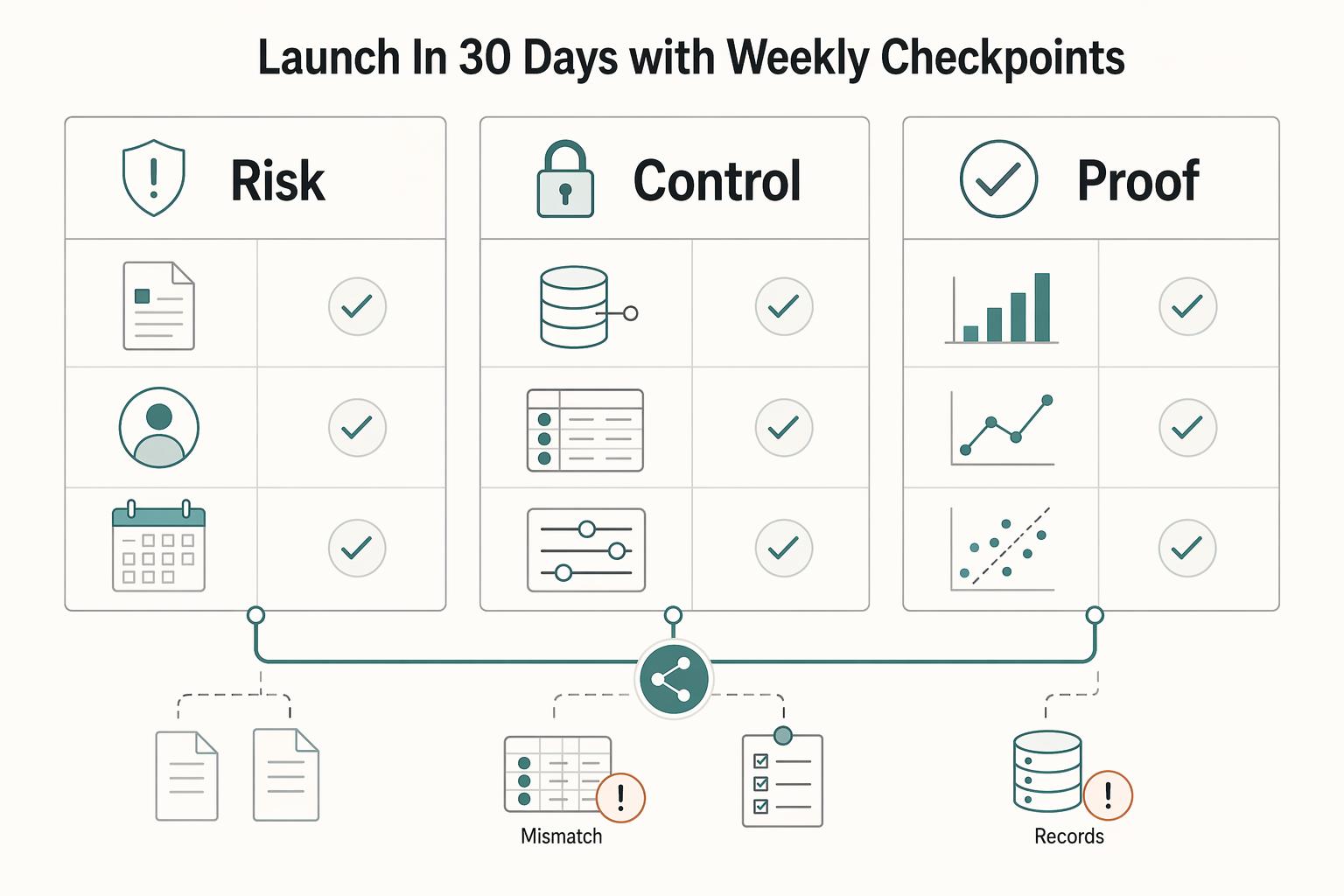
AI-Driven Churn Prediction for Platforms Before Subscribers Cancel
A churn score matters only if it changes what you do before a subscriber leaves. If the output lives in a dashboard and never affects pricing, outreach, feature access, or support treatment, you do not have a retention motion. You have a reporting artifact.

How to Use Subscriber Segmentation to Reduce Churn on Your Platform
Treat subscriber segmentation work as an economics decision, not only a targeting exercise. If a segment does not help you reduce **revenue churn** or improve recurring-revenue outcomes, it is probably adding complexity without changing the business outcome.
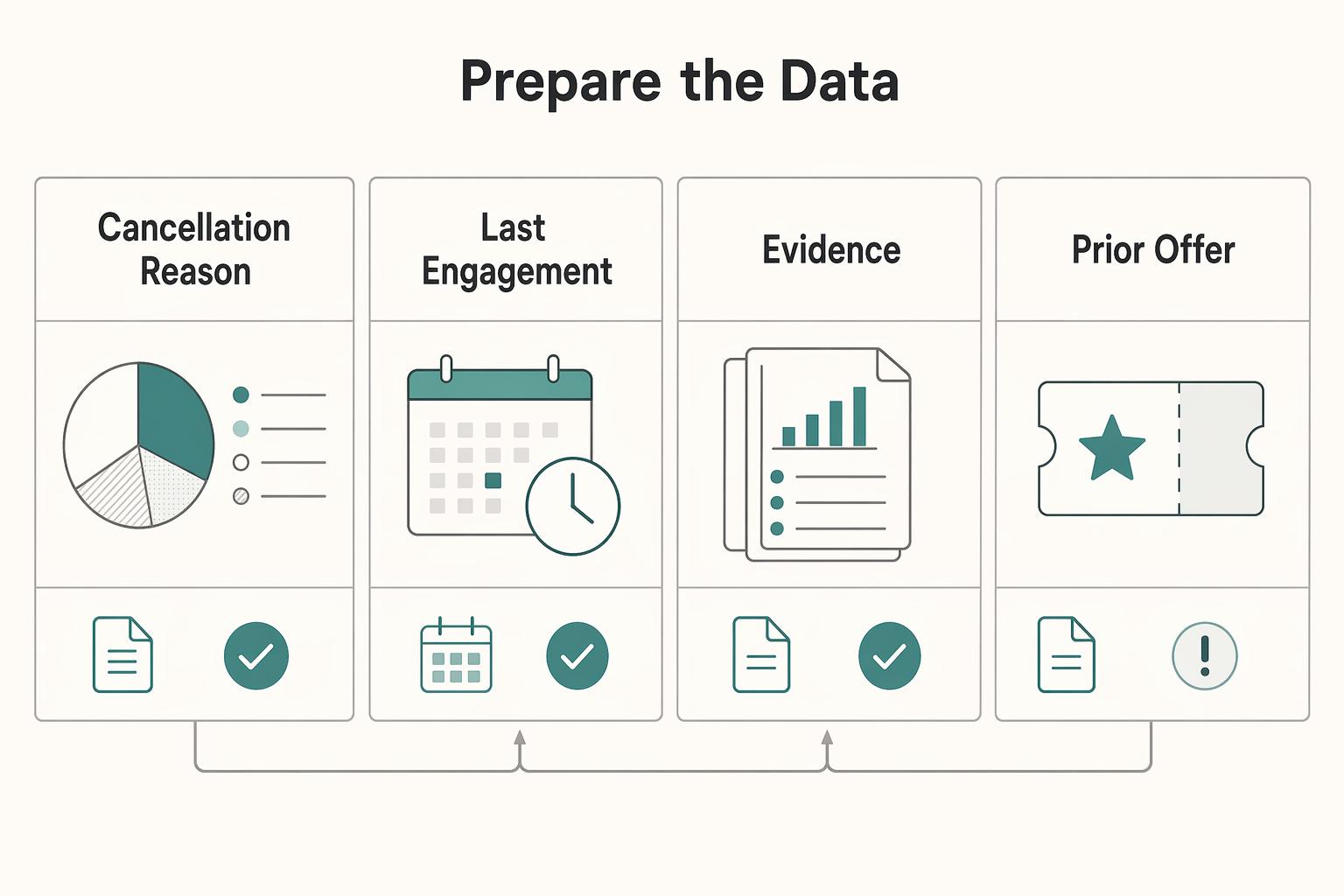
Win-Back Campaigns That Reactivate Churned Subscribers Without Margin Loss
Assume from the start that a win-back flow can lift reactivations and still be a bad trade. If you do not measure what those returns cost in incentives and short-term re-churn, you can end up celebrating activity that does not help the business.