
Quick Answer
Choose construction platform payouts based on release controls and evidence, not payment speed alone. A strong setup lets you trace each payout from approved work or pay application through holds, required documents, settlement status, and reconciliation in one record. If certified payroll, prevailing wage, tax, or waiver dependencies live outside that workflow, launch risk and manual cleanup increase.
How platform payouts affect certified payroll compliance#
-
Treat construction platform payouts as an operating decision, not a payment feature. In construction, money does not move just because an invoice exists or a contractor has bank details on file. Release often sits behind pay applications, progress billing, retainage, and other project-stage checks. You can see that separation in how vendors explain the category. Procore keeps dedicated guidance on construction payment applications, and Stripe treats progress payments and retainage as a distinct construction payments topic instead of folding them into generic disbursements. The practical takeaway is simple: if your product only solves fund movement, you still have not solved whether a subcontractor can be paid.
-
This outline is for operators making market-entry and build-depth decisions under real constraints. If you are deciding where to launch next, the hard question is not "can we send money there?" but "what has to be true before we can release money there without manual cleanup?" That matters whether your model is GC- and subcontractor-heavy in one country or a broader skilled-trades platform where payouts follow project progress.
Even milestone-based payments still turn on project progress, which is why release logic and evidence matter. A useful checkpoint before any GTM push is this: can you show, in one place, the approved amount, any retained amount, the document state, and the settlement state for a single payout event?
- Use explicit go or no-go checkpoints before you spend on distribution. Vendor demos tend to flatten the problem into "faster payments," but speed only helps after approvals, exceptions, and release conditions are under control. You want evidence that the payout path works end to end under realistic conditions, not just in a clean sandbox example. At minimum, your pre-launch check should answer:
- Approval chain: Can you trace a release from pay application or progress milestone to final payout status without spreadsheet stitching?
- Document dependencies: Can your team tell which payouts are blocked by missing required records before funds are queued?
- Exception handling: When a payout fails or a project amount changes after approval, is there one source of truth for what should be reissued, held, or reconciled?
A red flag is worth naming early. If approval status lives in one tool, payout status in another, and document collection in email, you will create preventable delays. They will look like payment problems but are really operating-model problems. This article is meant to help you avoid that trap. The goal is not to crown the flashiest vendor. It is to help you choose markets and product depth with clear checkpoints, so your next launch is based on release readiness, evidence, and ownership instead of generic claims about speed.
Selection criteria that separate scalable platforms from fragile ones#
Start with a simple filter: if a vendor only proves money movement, it is not enough for contractor-heavy construction flows. Prioritize platforms that keep trust, transparency, and accountability intact when approvals and exceptions get messy, because weak transparency is a known scalability risk and trust has to be designed, not assumed.
- Screen for contractor complexity, not one-step disbursements.
Use this list if you manage general contractors, subcontractors, and independent contractors with real release conditions. The key test is whether a payout can be held, approved, changed, and reissued with a clear record of who approved what and why.
- Make compliance artifacts part of each payout event.
Treat certified payroll, prevailing wage compliance, tax documentation, and related compliance documents as non-negotiable release dependencies. Require proof that these records can be attached to payout activity, searched, and exported with the same event history.
- Require operational fit, not feature sprawl.
Apply the same standard to integrations and controls: ERP links, accounting sync behavior, exception handling, and audit trace should function as one operating path. You are looking for coordination, trust, and accountability in the same workflow.
- Use classification controls as a pilot gate.
If a vendor cannot show how contractor classification decisions and misclassification-risk handling are recorded and updated under your IRS and broader U.S. labor and tax obligations, do not pilot. As tax-program guidance evolves, including updates tied to legislation enacted in 2022 and procedural updates like Revenue Procedure 2024-39, you need records and controls that can adapt without breaking payout traceability.
For a step-by-step walkthrough, see Gruv Platform Payments for Global B2B Payouts and Compliance.
Best construction payout operating models and when each wins#
No single model wins across all construction payout operations. The right choice depends on where the first bottleneck shows up: construction workflow controls, multi-country routing, or reconciliation ownership.
- Pay-app-first stack
This wins when your core problem is domestic contractor coordination and release controls. The strength is keeping pay applications and lien waivers close to payout timing, which supports tighter handling of progress billing and retainage. The tradeoff is weaker flexibility if cross-border electronic payments become your next priority.
- Payments-infrastructure-first stack
This wins when multi-country expansion and API-level payout control are the priority. You get stronger routing and programmability, but you must design construction-specific overlays yourself. If payout status and construction approvals live in separate systems, you risk the same stall pattern seen when payment data has to be assembled from multiple sources.
- Hybrid stack
This wins for phased expansion: keep construction workflow depth where needed, then add programmable payouts where routing flexibility matters. It is often the practical middle path. The cost is integration ownership across ERP integrations and payout ledgers, especially when approval state and payout state diverge.
- Embedded finance module inside vertical software
This wins when speed to first market matters most. Launch is faster, but constraints often show up later around progress billing, retainage, and policy controls. Pricing can also become structural as teams grow: in one construction software example, a 25-person team at $39/user/month is nearly $12,000 a year; flat-rate pricing can be easier when many users need access.
- Full custom orchestration
This wins when high-volume operations require maximum control over construction payment processing, reconciliation, and exceptions. You get the most flexibility, but you also take on the highest build and compliance burden. The model works only if records stay centralized; otherwise fragmentation recreates manual stitching and billing delays.
Operating model comparison at a glance#
Use a side-by-side matrix before you shortlist vendors. The right model depends on which system must own release conditions, payout routing, and reconciliation cleanup first.
| Model | Best fit | What it does well | Where it breaks first | Proof to request |
|---|---|---|---|---|
| Pay-app-first stack | Domestic GC and subcontractor flows where release control is the main risk | Keeps pay applications, lien waivers, progress billing, and retainage close to payout timing | Cross-border payout expansion or broader payout-method coverage becomes the next bottleneck | A demo that shows hold, release, and reissue tied to approved work |
| Payments-infrastructure-first stack | Multi-country expansion or API-first payout control | Improves routing, settlement-state visibility, and payout programmability | Construction approvals and document dependencies drift into side systems | A pilot that shows payout state and approval state in one trace |
| Hybrid stack | Phased rollout where workflow depth comes first and wider payout reach follows | Balances construction workflow depth with later payout flexibility | Integration ownership across ERP, ledger, and provider layers gets heavy fast | An exception drill that reconciles approval and provider outcomes together |
| Embedded finance module inside vertical software | Fastest time to first market inside an existing vertical product | Speeds initial launch and reduces vendor sprawl at the start | Progress billing, retainage, policy controls, and seat-based pricing can tighten later; the example above reaches nearly $12,000 a year at 25 users and $39 per user each month | A live-like scenario showing partial approval and retainage treatment |
| Full custom orchestration | High-volume operations that need maximum control over exceptions and reconciliation | Gives the most flexibility over release logic, payout status, and recovery paths | Build, maintenance, and compliance burden stay high unless records remain centralized | A named owner for approval truth, payout truth, and month-end reconciliation |
Integrated payouts versus pay-application automation tradeoff#
Choose based on the bottleneck that creates the most immediate operational risk: release-control risk (retainage and lien-waiver timing) or payout-reach risk (multi-market money movement and payout-state control). If release conditions are the bigger risk, prioritize pay-application depth first. If multi-market payouts are the bigger risk, prioritize programmable payout infrastructure first.
Oracle notes that scheduling and cost management are often run in silos, and that integration can speed pay-application approvals by checking milestones against completed work. In practice, that split creates different failure domains: pay-app-focused systems can struggle when payout coverage has to expand, while payout-focused systems can struggle when release decisions depend on construction document logic.
- Pick the layer that controls your highest-risk decision.
If your core question is "should this payment be released yet?", pay-app controls should come first. Built warns that lien-waiver risk is about timing, payment verification, and using the right waiver type at the right point, so release logic has to reflect that dependency.
- Test each option at its failure boundary.
Ask to see an approved pay application become blocked because waiver conditions are incomplete, then release only after the required verification is complete. If the flow jumps from approval to payout without that dependency, treat it as a control gap.
- Assign one owner for payout truth.
Approval status, provider status, and reconciliation outcome need one accountable system owner. When those states are split across disconnected tools, teams spend month-end resolving conflicting records instead of closing cleanly.
- Treat this as a phased decision, not a permanent one.
Start with the highest-risk bottleneck, stabilize it on a real cohort, then add the missing layer. This sequence is usually safer than forcing one product to own both payout orchestration and construction-document control from day one.
Bottleneck-to-architecture map#
Map each launch decision to the first failure boundary you expect to hit. If you still need the broader architecture frame, compare this table with Integrated Payouts vs. Standalone Payouts: Which Architecture Is Right for Your Platform?.
| If the first real bottleneck is... | Prioritize | Owner that must be explicit | Pilot proof |
|---|---|---|---|
| Retainage, lien waivers, or document-gated release | Pay-application automation first | Construction approval owner | An approved pay application stays blocked until the waiver or document condition clears |
| Multi-market payout routing and settlement visibility | Payout infrastructure first | Payout operations owner | The same payout shows provider status, retry path, and settlement outcome without spreadsheet stitching |
| ERP posting drift and provider-status conflicts | Hybrid design with one reconciliation ledger | Finance or reconciliation owner | One transaction record shows approval state, payout state, and accounting result together |
| Phased domestic launch with later expansion | Hybrid sequencing instead of a one-shot replacement | Named program owner | Cohort 1 stabilizes before new payout rails or markets are added |
Related: Bad Payouts Are Costing You Supply: How Payout Quality Drives Contractor Retention.
Market entry filters before you commit product and GTM resources#
Do not enter a market until your go or no-go call is based on shared evidence, not optimism. The filter should be clear enough that product, ops, and GTM reach the same decision from the same record.
- Build a four-filter table for every market.
Keep the first pass consistent: labor regime fit, documentation burden, payout method coverage, and required controls for payout release. For government-facing scope, include FAR Companion scoping early, especially Part 22 (labor laws in government acquisitions) and Part 25 (foreign acquisition), so compliance depth is part of planning before GTM spend.
| Filter | What to verify | Evidence before launch | Red flag |
|---|---|---|---|
| Labor regime fit | Whether your current operating model is plausible in that market | Written scoping notes, owner assigned, open questions logged | Material questions parked in email threads |
| Documentation burden | Which records must exist across release, correction, and audit review | Document list tied to payout states and exception paths | Manual document chasing outside product |
| Payout method coverage | Whether supported methods match how contractors actually get paid | Supported methods by market and settlement-state visibility | "Coverage exists" with no proof of status or timing behavior |
| Required controls | Whether you can block, release, retry, and reconcile with policy intact | Demo or pilot with blocked and cleared states | Approval can move to payout without control checks |
- Add explicit legal and process flags.
Keep flags visible and force each market into green, yellow, or red based on unresolved compliance and operating questions. If ownership or closure evidence is unclear, treat that as no-launch, even when the market looks commercially attractive.
- Run a pre-launch trace across your own systems of record.
Before launch, trace one realistic payout through approved work, provider payout state, and accounting outcome. The goal is simple: confirm your team can reconstruct one payout end to end without spreadsheet stitching.
- Prove timing and exception handling with live-like scenarios.
Do not launch until you can show predictable timing on a clean release, a blocked release, and a failed payout retry with a preserved audit trail. Teams execute better when they can filter high-signal launch issues from noise, so if key exception paths still need manual side handling, hold launch.
Certified payroll and prevailing wage evidence you must produce on demand#
Your release path is only defensible if you can reconstruct the payment record on demand. For U.S. federal construction work, the Davis-Bacon Act (enacted in 1931) requires contractors and subcontractors to pay laborers and mechanics at least the locally prevailing wages and fringe benefits for corresponding local work, so your records have to show how each release met that standard.
- Worker and rate proof
Keep one minimum evidence pack per paid worker: identity status, role used for the work, role-to-rate mapping, payout record, and linked tax documentation for the payee record. Preserve the role and rate that were in force at approval time, not only the latest profile state. Quick test: choose one worker and confirm you can export identity status, role, wage and fringe mapping, and linked tax documentation without pulling from email or shared drives.
- Approved work context and payout chain
Each release should map to a single auditable chain from approved work context through policy checks, payout event, and downstream record. One transaction should be reconstructable end to end without stitching across disconnected systems. If a payout was held and later released, the trail should show both the hold reason and the evidence that cleared it.
- Continuous checks for covered work
Treat certified payroll and prevailing wage controls as ongoing checks, not onboarding-only checks, especially when serving a funding recipient (an entity receiving covered federal funding). The Department of Labor's guidance includes "Common Compliance Issues," a practical reminder that risk appears in changes, corrections, and retries after initial setup. Operational rule: when role, approved work context, or payout status changes, refresh the evidence pack before release.
Evidence pack checklist by payout stage#
Build the evidence pack around the payout timeline, not around a last-minute audit scramble. Each release should preserve the worker, rate, approved work, and clearance trail that applied at that moment.
| Payout stage | Minimum record set | Why it matters | Release test |
|---|---|---|---|
| Before approval | Worker identity status, role or classification used for the work, role-to-rate mapping, and approved work context | Confirms the paid role and rate match the covered work before money is queued | A reviewer can see worker, role, and rate basis before approval moves forward |
| Before release | Certified payroll or prevailing wage records, tax documentation, and hold or clearance status | Prevents an approved payment from moving without the required evidence | The system can block release and show the missing record |
| After settlement | Payout event, settlement or result status, and ERP or downstream posting result | Preserves the full payment chain for audit and reconciliation | The team can export one record with approval, payout, and posting outcome |
| Correction or reissue | Hold reason, corrected rate or work context, and retry or reissue history | Shows what changed after the original decision and why it changed | The team can explain the delta without relying on email or shared drives |
Operator rule: no release if the worker, rate, approved work, payout result, and clearance history cannot be exported from one record.
Related reading: FATCA and W-8 Tax Compliance for Platforms: When to Release, Hold, or Withhold Foreign Payouts.
Failure modes that delay payouts and erode subcontractor trust#
The quickest way to erode subcontractor trust is an approved payout that still does not settle. In construction workflows, status can go stale fast, and one source notes that static schedules can erode trust within 48 hours.
- Approved in progress billing, blocked in payout
When progress billing is approved before required compliance documentation is complete, approval becomes a false finish line. Compliance gaps can escalate into project delays, financial penalties, or disqualification from government-funded work. Your payable state needs to validate the full dependency set, not invoice approval alone. Red flag: project ops sees approved, finance sees hold, and the subcontractor gets no clear payout status.
- Reconciliation drift between ERP integrations and payout statuses
A payment transaction can complete while downstream operational tasks are still open. Retainage still needs tracking, and partial payments still need correct line-item application. If ERP posting and payout-provider status move on different clocks, teams can treat the same payout as both closed and unresolved. Keep one transaction-level record that captures provider status, ERP posting result, and correction history so handoffs stay auditable.
- Electronic payments without a clear exception owner
Electronic payments move quickly, so unresolved exceptions create trust risk quickly too. When ownership is unclear, payout issues sit between support, finance, and ops instead of being resolved. That delay matters because late payments can force expensive borrowing and postpone project investment. Define who can pause a payment, who approves retries, and what evidence clears a hold before exceptions happen.
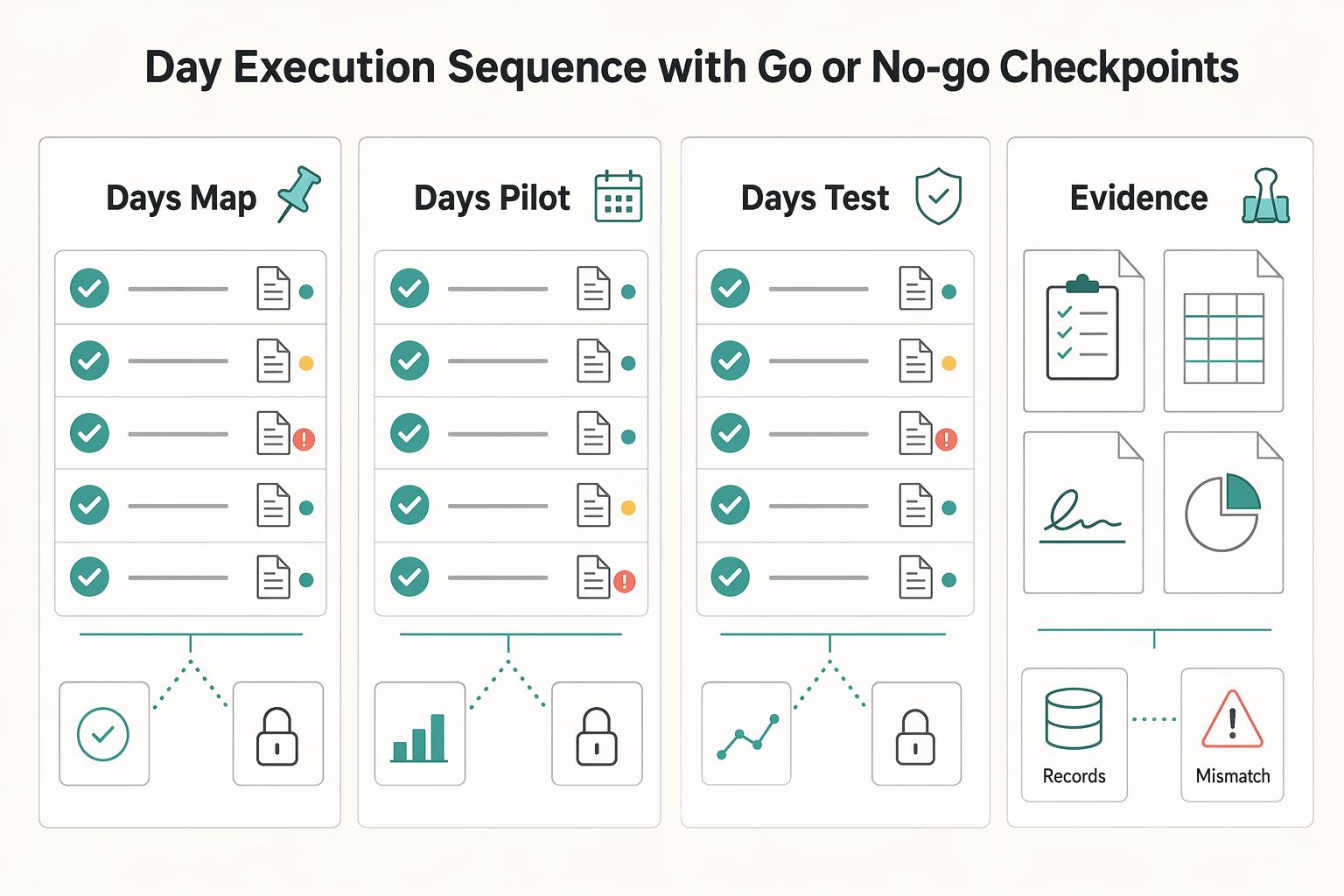
90-day execution sequence with go or no-go checkpoints#
Treat the first 90 days as a gated qualification cycle, not a launch countdown. A go/no-go decision should use explicit, data-driven criteria to reduce wasted effort, and a no-go can protect resources for better-fit opportunities.
- Days 1 to 30: map the real release path for general contractors and subcontractors
Make dependency and exception ownership visible in one workflow, not across disconnected tools. Trace the path from approved pay application to settled funds, including document checks, accounting review, and release conditions. If certified payroll support, lien waivers, tax documentation, or prevailing wage evidence can block release, that dependency should be clear on the same record. If teams still rely on side spreadsheets or email chains to explain a hold, fix continuity before moving on.
- Days 31 to 60: pilot hard cases, not just clean cases
Use a controlled pilot on partial approvals, retainage release conditions, and reconciliation into accounting systems. Keep one transaction-level record that shows approval state, payout status, retainage treatment, and posting result together. This is where policy drift shows up: similar cases handled differently across teams or tools. If the pilot reveals heavy handoffs between pay-app logic and payout operations, revisit your architecture tradeoffs in Integrated Payouts vs. Standalone Payouts: Which Architecture Is Right for Your Platform?.
- Days 61 to 90: test governed recovery under failure conditions
Validate scale readiness by running failure drills and confirming accountability under stress. Focus on whether blocked documents, retries, duplicate release attempts, and out-of-sequence postings follow a clear governed path. Governance gaps usually appear as policy bypasses or stalled approvals, so readiness is about reliable exception handling, not just good success rates in calm conditions.
- Go or no-go: expand only when evidence meets pre-agreed thresholds
Launch wider only when payout timing, compliance evidence completeness, and exception MTTR meet thresholds defined before the pilot review. If timing looks strong but evidence is incomplete, hold expansion. If evidence is complete but exceptions still bounce between teams, hold again. A disciplined no-go is often lower cost than scaling a process that creates trust and cleanup risk later.
Pilot scorecard before expansion#
Use one scorecard for the full 90-day cycle so product, ops, and GTM review the same evidence. A market is not ready just because the clean path works once.
| Window | Primary question | Evidence to collect | Stop trigger |
|---|---|---|---|
| Days 1 to 30 | Can one payout be traced from approved work to settlement? | 1 end-to-end trace with holds, document status, and accounting outcome | Teams still need side spreadsheets or email to explain a hold |
| Days 31 to 60 | Do hard cases behave consistently? | Partial approval, retainage, and reconciliation cases handled in the same workflow | Similar cases are resolved differently across teams or tools |
| Days 61 to 90 | Can governed recovery survive failure conditions? | Retry, blocked document, duplicate release, and out-of-sequence posting drills | Ownership breaks or policy bypass appears under stress |
| Day 90 review | Do timing, evidence, and exception MTTR meet the launch threshold? | Named threshold review with go or no-go sign-off | Expansion starts without pre-agreed pass criteria |
Conclusion#
If you only remember one thing, make it this: choose construction payouts around release conditions, evidence requirements, and expansion risk, not the cleanest vendor demo. In construction, money often moves on a percentage-of-completion or project-milestone basis. Once exceptions start piling up, the operating model matters more than the UI.
- Match the model to the burden
Start with the payment process you actually have. If your releases depend on completion percentages, milestones, and required documentation, a generic payout setup can leave you stitching together approvals and settlements after the fact. The key test is fit with the real release condition: if your hardest problem is document-gated approval, choose for approval depth first. If your hardest problem is multi-country routing, choose for payout control first.
- Treat evidence as part of the payout, not an attachment
A practical approach is to design every release around an exportable record: who approved it, what required documents were present, and what settlement status followed. One verification detail matters here: test whether you can produce that chain for payments tied to completion percentage and milestone billing without manual spreadsheet stitching. Auditability under pressure is the real test, especially when a disputed release or compliance review lands after funds have already moved.
- Put one owner on payout truth and exception handling
When approval status, provider status, and reconciliation live as separate truths, scaling risk increases. One risk is a progress payment that looks approved in one place but is still blocked somewhere else because a required document or dependency is incomplete. The differentiator is clear operational ownership: one team, or one named owner, should decide whether a payment is held, retried, or released.
- Do not ignore financing verification rights
Contract language can allow a contractor to request evidence of the owner's financial arrangements both before work starts and during execution. If that evidence is not provided, the contractor may delay or stop the work, which means your platform can face a valid payment disruption that looks like an ops failure unless it is tracked explicitly. The key issue is whether your records can show that a hold came from a contract-based financing issue rather than a processor issue.
- Build the comparison table before you evaluate tools
Make your short list earn its place against a simple table: evidence pack required, payout methods needed, tax and compliance support, exception owner, and failure handling. That is the practical next step. Not all solutions are built the same, and weak payout infrastructure can actively inhibit your ability to scale. If a candidate cannot show multi-currency, multi-rail, and tax-aware support where you need it, cut it before procurement gets attached.
Frequently Asked Questions
What should a construction platform evaluate before launching payouts in a new market?
Evaluate release conditions before payment rails. Verify labor regime fit, documentation burden, payout method coverage, and the controls needed to block, release, retry, and reconcile a payout. Before launch, trace one realistic payout and confirm approval, blockers, and settlement status can be shown in one record.
How do progress billing and retainage change payout architecture decisions?
They turn payouts into partial and repeated releases instead of a single final disbursement. Retainage also means approval and settlement cannot be treated as the same event because held amounts and later release conditions must stay visible. If a provider can move money but cannot represent those states clearly, manual cleanup follows.
What is the practical difference between pay-application automation and payout infrastructure?
Pay-application automation decides whether money should move. Payout infrastructure decides how money moves and whether it settles, retries, or fails cleanly. If the main risk is retainage state or missing compliance evidence, fix the approval layer first. If the main risk is routing, provider status, or reconciliation, fix the payout layer first.
Which fraud controls matter most for construction payment processing?
There is no single checklist in this article that fits every market. At minimum, keep clear approval ownership and a traceable record of payout actions, including who authorized a retry or change. One owner for payout truth also helps when exceptions occur.
What documents are required for audit-ready certified payroll and prevailing wage compliance?
There is no universal checklist, so treat the requirements as jurisdiction-specific. At minimum, keep a per-worker evidence pack with identity status, the role used for the work, role-to-rate mapping, the payout record, and linked tax documentation. Each release should also have an auditable chain from approved work and policy checks through payout outcome.
When should a platform prioritize compliance depth over faster launch timelines?
Prioritize compliance depth when delayed payments could create cash flow stress, work stoppages, legal costs, or lien filings. That is especially important when public funds are involved because added process steps may exceed a generic payout setup. If you cannot export a complete approval-to-settlement record without spreadsheet stitching, hold the launch.
Try a related tool
Researched and edited by the Gruv editorial team. Gruv builds cross-border billing, payouts, and finance-operations software for global businesses.
Sources
- acquisition.gov/sites/default/files/page_file_uploads/far-co...trusted
- dir.ca.gov/public-works/CaliforniaPrevailingWageLaws.pdftrusted
- dir.ca.gov/public-works/publicworkssb854faq.htmltrusted
- dol.gov/agencies/whd/government-contracts/protection...trusted
- federalregister.gov/documents/2024/10/15/2024-22905/cybersecurit...trusted
- irs.gov/credits-deductions/elective-pay-and-transfer...trusted
- stripe.com/resources/more/construction-payment-processingtrusted
- tucsonaz.gov/Departments/Planning-Development-Services/Fr...trusted
Educational content only. Not legal, tax, or financial advice.
Related Posts
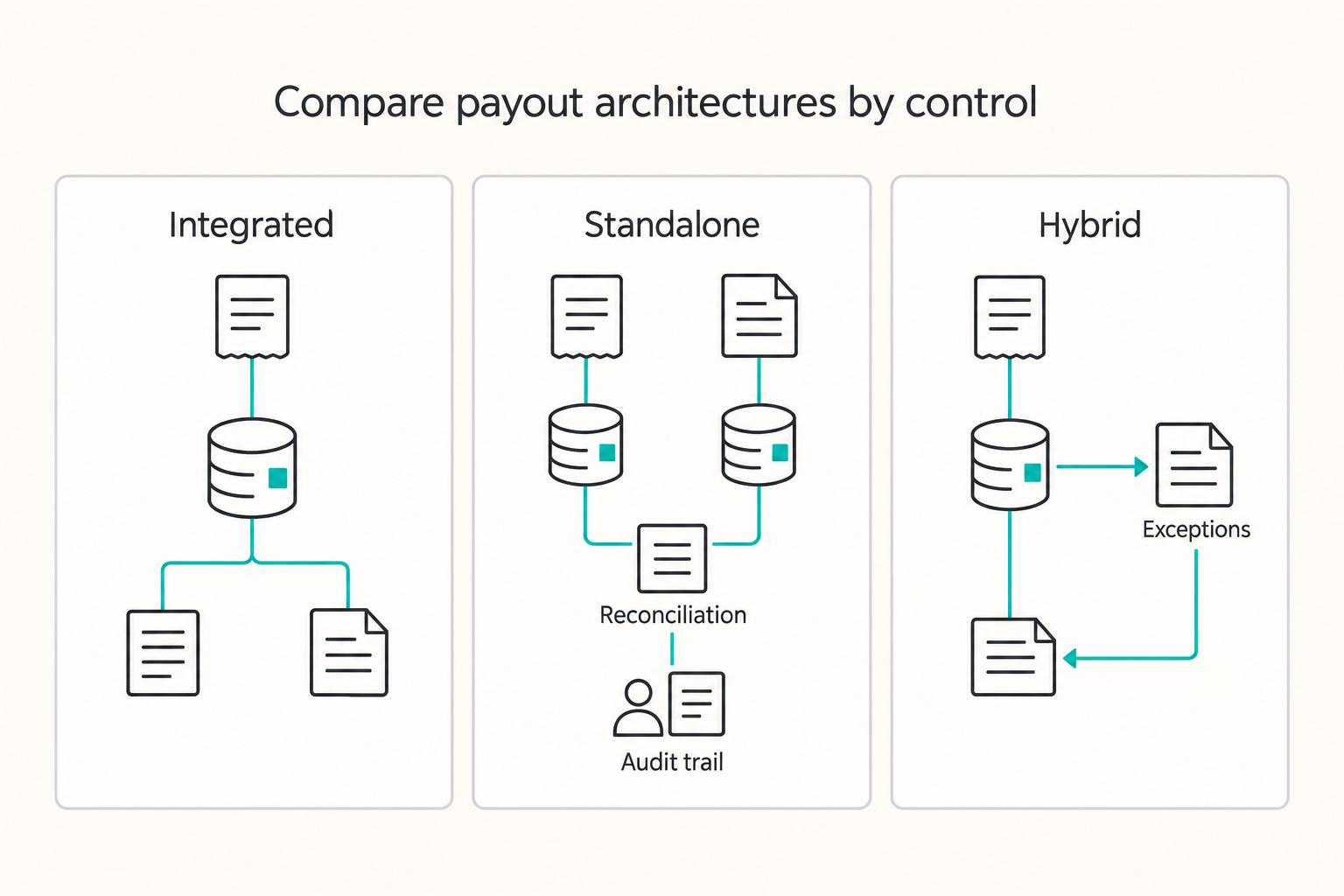
Integrated Payouts vs Standalone Payouts for Platform Architecture Decisions
**Treat integrated and standalone payouts as an architecture decision, not a product toggle.** The real split is the same one you see in payment processing more broadly: either payments are connected to the core platform experience, or they are not. [Lightspeed](https://www.lightspeedhq.com/blog/payment-processing-integrated-vs-non-integrated) puts that plainly in POS terms: your payment terminal either speaks to your point of sale, or it does not. For platform teams, the equivalent question is whether payment flows run through one connected system or sit in separate lanes you manage independently.
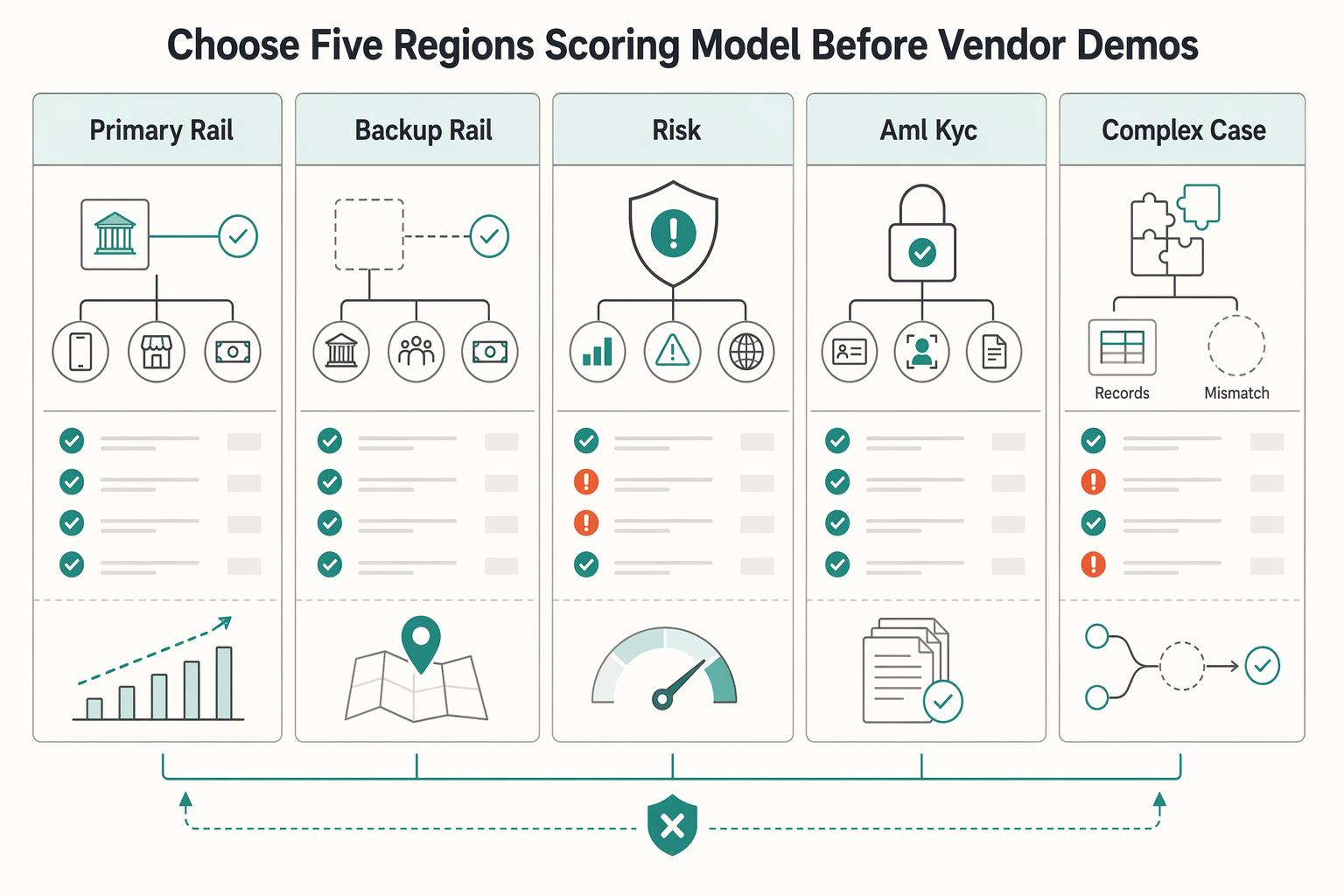
How Platforms Should Prioritize 5 Emerging-Market Payout Regions
If you are choosing where to launch cross-border payouts in 2026, start with what your team can actually run. Too many "top" lists lean on hype or market-cap tables. That may work for headlines, but it does not help with execution.
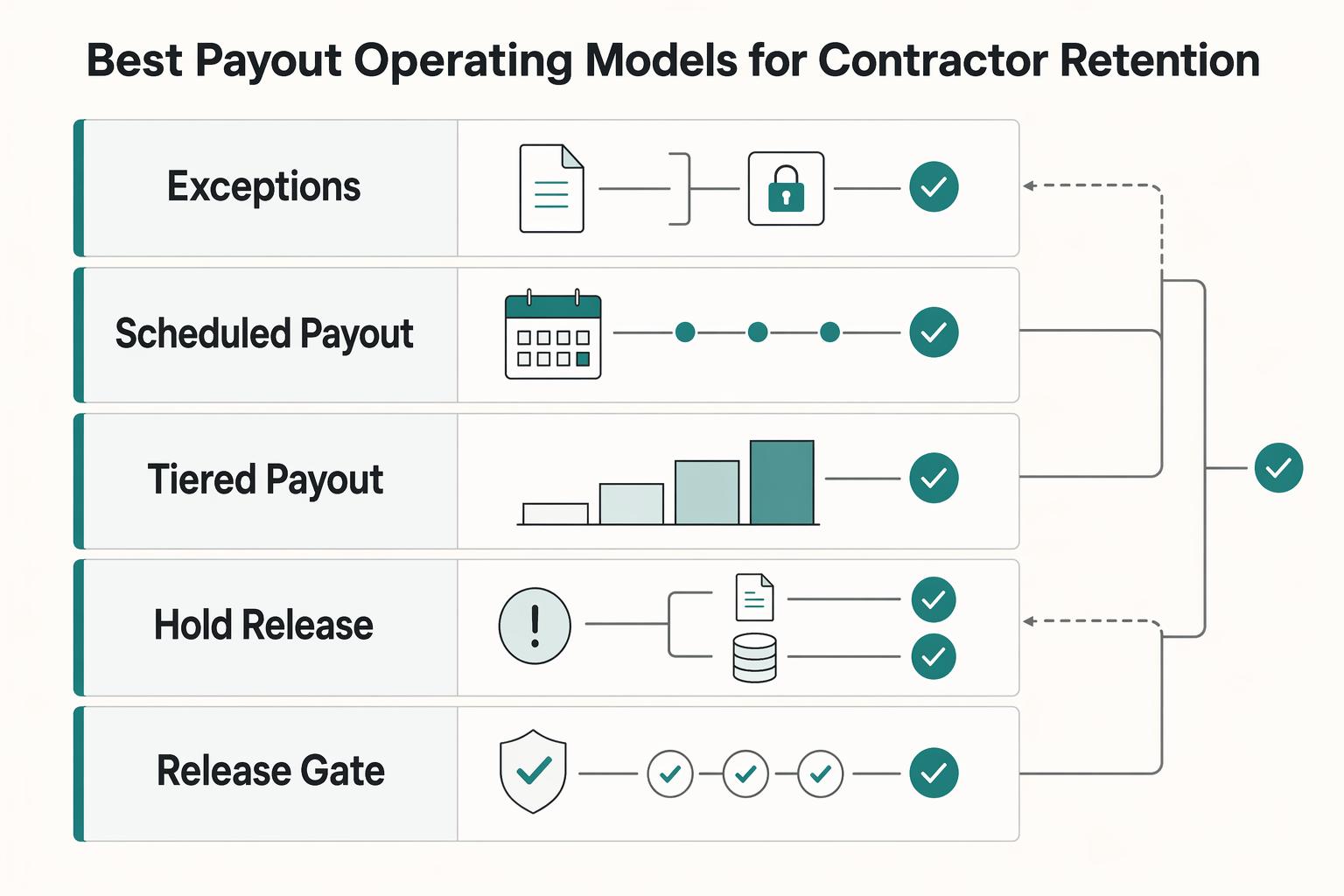
Bad Payouts Are Costing Your Supply in Two-Sided Platforms
Payout issues are not just an accounts payable cleanup task if you run a two-sided marketplace. They shape supply-side trust, repeat participation, and fill reliability. They can also blur the revenue and margin signals teams rely on.