
Quick Answer
Map available cash, dated inflows and unavoidable outflows first. Classify clients as keep, repair or replace, then agree clearer scope, milestones and payment terms where needed. Maintain focused outreach alongside collections so today’s delays do not become next month’s empty pipeline. Review the forecast weekly and act on your own cash triggers rather than waiting for a recession headline.
Freelancing in a recession can work if you run it like a business#
Treat the next month as a cash-protection sprint first, then a controlled growth restart. That order helps you avoid rushed decisions when invoices slip and buyers hesitate.
You do not need an official recession declaration to act on slower decisions or payments. Track the signals that affect your business: qualified inquiries, proposal wins, invoice delays and renewal decisions. Broad freelancer surveys can suggest questions to ask, but they cannot establish demand or payment reliability in your niche.
Discretionary projects may face cuts, but even essential work can be delayed by procurement or cash pressure. Validate the buyer’s budget, approval owner and payment process rather than treating a service category as protected.
Running this period like a business means the next decision comes from records, not mood. Keep contract terms, receivables status, and scope changes visible in one place. When the facts are visible, you can adjust quickly without overcorrecting.
Before You Start#
Pull your active client list, overdue invoices and essential personal/business outflows. Separate variable delivery costs, debt payments and tax commitments from fixed overhead. Build a first estimate promptly while keeping focused prospecting active; perfect bookkeeping is not a prerequisite for contacting a viable buyer.
Use a baseline you can update: available cash today, expected receipts by date and unavoidable payments by date. Mark uncertain receipts separately so you can see the difference between a likely balance and a downside case.
30 Day Sequence#
| Days | Focus | Actions |
|---|---|---|
| 1-7 | Quantify risk | Map fixed overhead, receivables, and expected versus actual payment timing so you can rank clients by cash reliability |
| 8-14 | Protect cash | Prioritize collections, tighten payment cadence on new work, and pause low-probability proposals |
| 15-21 | Filter client quality | Keep work tied to critical outcomes, repair slow but viable accounts with tighter terms, and reduce exposure to chronically risky ones |
| 22-30 | Reopen growth carefully | Keep qualified outreach active, review delivery capacity and test the next month’s cash forecast; if overdue exposure stays high, devote more time to collections and agreed scope/payment changes |
Use the sequence as a planning rhythm, with urgent actions running alongside it. Cash forecasting, collections and targeted outreach can happen in parallel. A missed payment needs attention immediately; a qualified prospect should not wait until Day 22 simply because the spreadsheet is unfinished.
Review progress weekly and carry unfinished items forward. Do not let one unresolved invoice block every other action. Prioritize the first forecast shortfall, the highest-risk client and the most promising new opportunity.
What to prepare before you start the 30-day reset#
Build one clean operating baseline before Day 1. The point is faster decisions under pressure, not more admin.
| Prep item | Include | Notes |
|---|---|---|
| Active contract documents | Current Statement of Work (SOW), Retainer agreement, Fixed-fee contract, and invoice terms; use only the latest signed version | Archive superseded drafts so nobody references outdated scope or payment language by mistake |
| Client ledger | Active revenue, outstanding receivables, overdue invoices, renewal dates, concentration risk, and notes on payment behavior and approval friction | Keep exposure visible so later risk classification is based on pattern, not memory |
| Operating baseline | Dated personal/business cash outflows, available cash and restricted or reserved balances, plus reversible and hard-to-cut commitments | A three-to-six-month essential-cost reserve is an illustrative planning range, not a universal target or a substitute for a dated cash forecast |
| Weekly owner document | Contract edits, Payment terms updates, and Collections process changes with date, reason, and next action | Keep entries short and specific so future reviews show what changed and why |
During downturns, clients may scale back projects, payment delays can rise, and competition can increase, so readiness beats prediction. Keep documents and numbers in one place so Week 1 goes to risk reduction.
Aim to answer scope, payment, renewal and exposure questions from current records. Resolve missing details while continuing suitable outreach and delivery; the baseline should help decisions rather than become another reason to postpone them.
- Compile active contract documents. Put each current
Statement of Work (SOW),Retainer agreement,Fixed-fee contract, and invoice terms in one client folder, using only the latest signed version. Archive superseded drafts so nobody references outdated scope or payment language by mistake. - Build a client ledger. Track active revenue, outstanding receivables, overdue invoices, renewal dates, and concentration risk by client so exposure is visible. Add short notes for payment behavior and approval friction so risk classification later is based on pattern, not memory.
- Set your cash baseline. List unrestricted cash and dated essential personal/business outflows, with tax and other reserved amounts shown separately. Label costs reversible or hard to cut. A three-to-six-month essential-cost reserve may be a useful planning range, but CFPB guidance emphasizes that the amount depends on your situation. Start with an achievable first target and update the forecast as income changes.
- Create one owner document for weekly decisions. Log contract edits,
Payment termsupdates, andCollections processchanges with date, reason, and next action. Keep entries short and specific so future reviews show what changed and why.
This prep also makes client communication easier. When terms, invoices, and approvals are organized, you can answer questions quickly and avoid avoidable back-and-forth. Use it to speed decisions, then handle collections and tighter terms first if overdue receivables or payment delays are climbing.
Week 1 triage cash risk and client risk#
Make your earliest calls in Week 1. Ranking cash risk and client risk now can reduce reactive moves later.
Variable income creates exposure when a few large clients dominate receipts. Measure concentration in both revenue and unpaid invoices: a client can be a modest share of annual revenue but account for most of the cash you are waiting to collect this month.
Triage turns broad concern into concrete action. You are not trying to predict the economy. You are deciding which accounts support stability, which accounts need repair, and which accounts create too much risk for the return.
Step-by-step triage#
- Classify active clients with working labels. Mark each account as
keep,repair, orreplaceusing criteria you can explain in your ledger. A label is useful only if it changes what you do next. - Run a conservative cash stress pass. Reforecast near-term inflow with slower approvals and later payment timing, then compare it against non-negotiable outflow. Treat receivables timing as a key pressure point. If timing slips push you near constraint, tighten new terms before taking on new commitments.
- Set cash triggers before pressure rises. Decide what changes when a forecast balance falls below your chosen floor. Use smaller commitments or faster billing on new work. For a repair client that misses a revised date, check the contract’s notice, cure and suspension provisions before pausing delivery; negotiate revised terms rather than assuming a unilateral right.
- Use your own operating signals first. Prioritize your conversion, payment, and renewal data over market noise. This can reduce surprises and help break feast-or-famine cycles.
Keep the triage labels stable long enough to be useful. Reclassifying an account after every update creates noise and hides trends. Reclassify when behavior changes in a meaningful way, not when a single message sounds optimistic.
Week 1 is also where plans often get overcomplicated. You do not need perfect precision. You need enough clarity to make faster calls on scope, payment cadence, and client priority.
Worked example: delayed invoice versus available runway#
Suppose unrestricted cash is $12,000 after separately reserving tax and client-held amounts. Essential personal and business outflows are $4,000 per month, with no other inflows or one-off payments. The zero-inflow runway is $12,000 ÷ $4,000 = three months. A $6,000 unpaid invoice is a receivable, not another $6,000 available today.
| Month-end balance | Invoice paid in Month 1 | Invoice slips to Month 3 |
|---|---|---|
| Start | $12,000 | $12,000 |
| Month 1: subtract $4,000 outflow | $14,000, including $6,000 received | $8,000 |
| Month 2: subtract $4,000 outflow | $10,000 | $4,000 |
| Month 3: subtract $4,000 outflow | $6,000 | $6,000, only if the receipt arrives in time |
The same eventual total hides different timing risk. If Month 3 bills fall due before the $6,000 arrives, cash can reach zero first. Track weekly or daily dates where timing is tight. Separately test the proposed 50% six-month revenue loss: with $8,000 monthly receipts falling to $4,000 and unchanged $4,000 outflows, there is no monthly surplus before any omitted tax or one-off costs. If receipts fall to $3,000, the $1,000 monthly deficit uses $6,000 over six months, leaving $6,000 of the starting reserve. These are hypothetical cash scenarios, not profit calculations or forecasts.
Week 1 tighten contracts before work gets shaky#
Once triage is done, tighten contract terms immediately. That is one practical way to reduce the chance that budget shifts or staffing changes turn into disputes.
A client may lose an approver, change its budget or ask for a new delivery pattern. Check who can authorize work, how acceptance is recorded and when invoices become due. Agree a written change if the existing arrangement no longer fits.
A practical contract pass is defensive in the best way. It does not make work rigid. It makes change manageable by defining what happens when scope, timeline, or approvals move.
Apply changes to new work or through the existing agreement’s amendment process. A revised template alone does not change an active contract, and contractual late fees or suspension rights must fit the applicable law.
Week 1 contract pass#
| Term or step | What to define | Notes |
|---|---|---|
| Statement of Work (SOW) | Deliverables, acceptance criteria, timeline, and who approves completion | Standardize every engagement around it |
| Milestone clause | Payment triggers | Make payment triggers explicit before pressure rises |
| Late payment clause | Overdue handling | Check applicable law and the agreement before adding fees; identify genuine invoice disputes separately |
| Termination clause | Exit paths | Make exit paths explicit before pressure rises |
| Change order + Payment terms | Require a change order for scope drift and update Payment terms at the same time | Do not continue expanded work based only on informal chat approvals |
| Collections process | Reminder timing, escalation steps, and any pause-on-overdue policy in writing based on your legal and finance policies | Use the contract’s notice/cure/suspension process and applicable rules; a pause policy alone does not create a legal right |
- Standardize every engagement around a
Statement of Work (SOW). Define deliverables, acceptance criteria, timeline, and who approves completion. - Add or tighten a
Milestone clause,Late payment clause, andTermination clause. Make payment triggers, overdue handling, and exit paths explicit before pressure rises. - Require a
Change orderfor scope drift and updatePayment termsat the same time. Do not continue expanded work based only on informal chat approvals. - Define a written
Collections process. Set reminder timing, escalation steps, and any pause-on-overdue policy in writing based on your legal and finance policies.
Use plain language in every clause. Complex wording does not improve protection if nobody applies it consistently. Clear wording with clear triggers is easier to apply and explain.
When overdue exposure rises, prioritize collection and negotiate tighter scope or billing on new or revised work. Keep performing existing obligations unless a lawful agreed pause or exit applies.
Week 2 choose the right offer mix for downturn demand#
Use a mixed offer strategy: keep one core specialty offer for positioning, then add one adjacent offer so budget-constrained clients still have a smaller starting option.
This mix protects two priorities at once. Your core offer keeps your positioning clear. Your adjacent offer supports diversification, which is part of recession resistance when budgets tighten and some organizations reduce freelancer usage.
A Fixed-fee contract can fit tightly bounded work, while a Retainer agreement fits ongoing work. In both cases, cash timing depends on the agreement terms and payment structure, and delivery predictability depends on how clearly you define scope.
- Classify the engagement before pricing. Decide whether the work is tightly bounded or ongoing, then match the agreement structure to that work pattern before discussing price.
- Protect niche depth, then add one adjacent offer. Keep your core offer as your main positioning, then add one nearby service for smaller initial commitments. This keeps diversification practical.
- Keep the
Statement of Work (SOW)explicit. Define scope and review points clearly so changes can be handled transparently if budgets tighten mid-cycle. - Stress-test the mix before demand drops. Use a hypothetical 50% revenue reduction for six months if it exposes a useful vulnerability, and also test a major receipt arriving late. These are planning scenarios, not forecasts or a legal definition of recession. Set adjustments based on cash and client behavior rather than GDP dates.
Avoid building too many offers during uncertainty. More options can add operational complexity. Keep the mix focused and executable.
Aim for resilience through preparation, upskilling, and a solution-oriented approach with clients. If an offer cannot be scoped, priced, and managed clearly, simplify it before promoting it. For a deeper margin pass, read The Silent Profit Killer: How to Stop Margin Erosion in Your Freelance Business.
Week 2 lock in baseline revenue with better renewal mechanics#
Treat renewals as scheduled decisions, not last-minute negotiations. Baseline revenue can be easier to protect when terms are reviewed before pressure peaks.
A renewal is still a future cash assumption until the client agrees and pays under the terms. Track the renewal date, budget owner, notice deadline, proposed scope and expected receipts. That makes a likely extension visible without counting it as cash already available.
Set check-in timing from the actual notice period and procurement lead time. For example, a contract requiring 30 days’ termination notice may need a renewal discussion earlier than a project that ends automatically at acceptance.
- Where strong one-off work repeats, consider converting it into a focused
Retainer agreement. Tie renewal to a clear outcome and keep base scope explicit so discussions do not become price-only. - Set renewal check-ins before end dates and discuss
Contract restructuringearly when needed. If budgets tighten, adjust scope or cadence deliberately instead of waiting for a sudden stop. - Use clearer
Payment termsand milestone billing on new and renewing work. Keep approval and invoice timing specific so cash expectations are explicit. - If you use a
Termination clause, document walk-away criteria in advance. This can help keep renewal decisions consistent under pressure.
A useful test for renewal quality is simple: could someone else read the file and understand why you renewed, restructured, or exited? If not, tighten the decision notes before the next cycle.
This week is about stability, not volume. Keep clients where outcomes are clear and avoid open-ended risk that can erode margin. If margins are slipping during renewals, review How to Conduct a Yearly Financial Review for Your Freelance Business. Then reset acceptance criteria before the next contract cycle.
Week 3 build a higher-quality pipeline without panic marketing#
Prioritize lead quality over lead volume. Market narratives can inform your view, but pipeline decisions should come from your own conversion and payment data.
Use public market discussion to spot patterns, then validate those patterns against your recent results. Downturn pressure can appear as tighter budgets, heavier competition, and cash-flow strain. Treat public discussion as directional, not as proof that your pricing or channel mix must change.
Quality pipeline management means every stage has a purpose. Inquiry volume alone tells you very little if proposals stall, approvals slow, or invoices lag.
- Separate context from decisions. Track inquiries, qualified calls, proposals sent, wins, and paid invoices by source in one sheet. Log one loss reason each time, such as timing, budget, or scope fit, to cut time spent on noisy channels.
- Run a two-lane pipeline in order. Start with referrals and warm network outreach, then use targeted outbound for a narrow client profile and specific problem. A narrower profile may reduce total leads, but it can also reduce proposal waste and help protect margins.
- Qualify before proposal work. Screen for urgency, budget authority, and payment reliability on the first call. If budget ownership or payment flow is unclear, use a paid discovery step or decline early.
- Avoid broad any-project positioning. Public forum threads can help with sentiment, but copying broad pitches in a downturn can invite price shopping. Position around one core problem, one outcome, and one client type you serve best.
Protect proposal capacity. A weak-fit proposal can fail and delay stronger-fit work already in your pipeline. Set clear minimum criteria and enforce them consistently.
Measure your own proposal and administration load for two weeks. If five proposals take 20 hours and produce one paid project, compare that result with the time and receipts from referrals. Use paid outcomes and margin alongside close rate; a high close rate achieved through heavy discounts can still weaken the business.
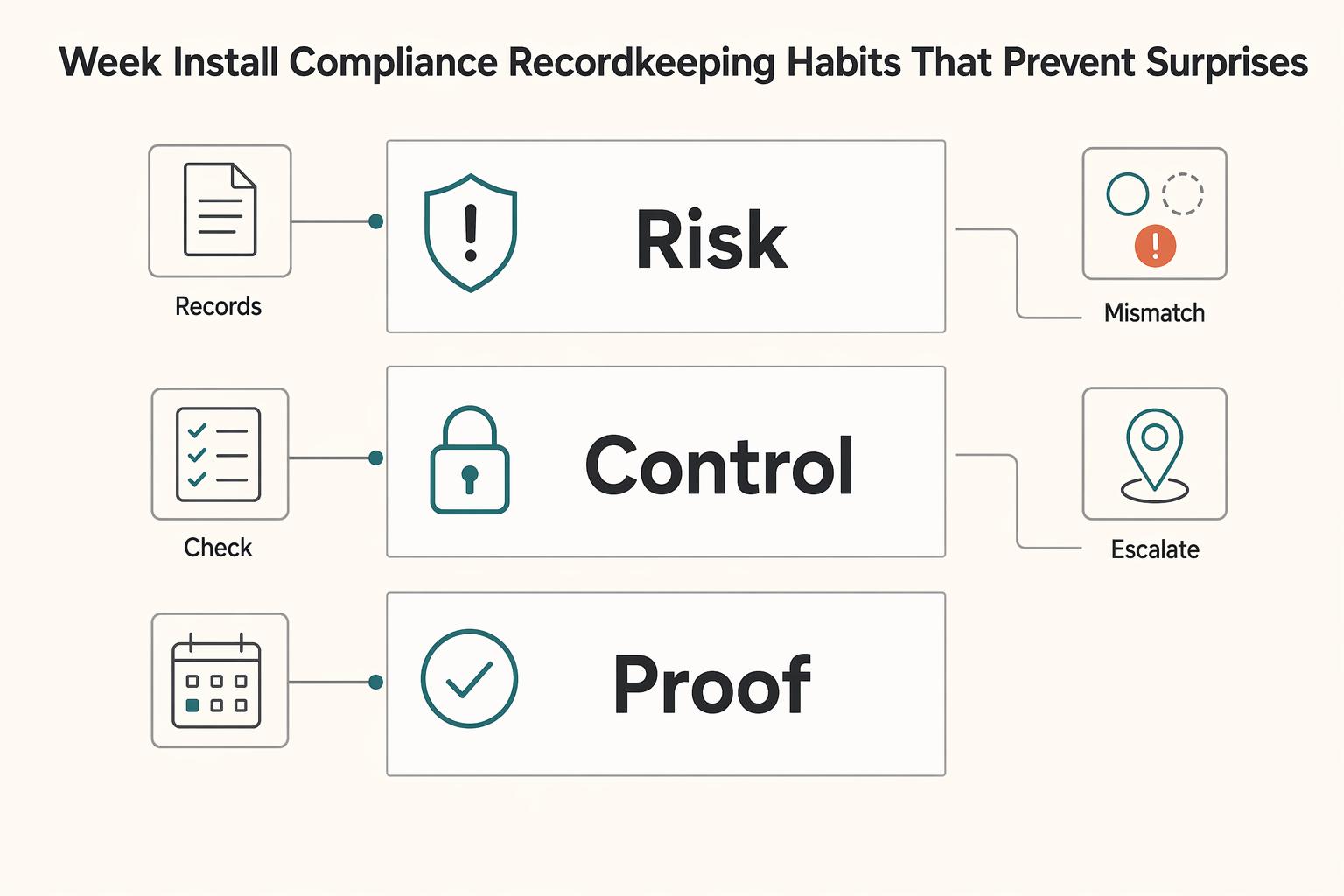
Week 3 install compliance and recordkeeping habits that prevent surprises#
Treat recordkeeping as a risk control, not overhead. Anyone touching an account should be able to confirm scope, approvals, billing status, and exceptions from one place.
The goal is practical: reduce disputes, reduce avoidable delays, and make decisions easier when timelines get tight. Clean records do not remove risk, but they help keep small issues from becoming expensive ones.
- Step 1: Assemble a usable client file set. Keep signed scope, approvals, invoices, payment records and changes together. Restrict private material and publish portfolio samples only when authorized, even if redacted.
- Step 2: Assign authority for exceptions and
Contract restructuring. Define who is authorized to submit or sign binding terms, who approves scope or billing exceptions, and who gives final approval on restructuring terms. Keep final versions in one designated location and document decisions in writing. - Step 3: Map the actual parties and payee. Confirm the contracting supplier, invoice issuer, payment recipient and any trading name or intermediary arrangement. Resolve unexplained differences with procurement before work starts; legitimate documented differences do not always mean every account and document must use one identical name.
- Step 4: Run a monthly checkpoint in your
Collections process. Review contract drift, overdue exposure, unresolved exceptions, and open documentation gaps on every active account. End each review with a dated decision log naming an owner, action, and follow-up timing.
Dated records help explain scope and payment decisions. They do not automatically satisfy every tax, audit or court requirement. Keep the documents and retention periods that apply to the actual business and transaction.
Week 4 stabilize how you get paid across borders#
After approvals and records are cleaned up, payment visibility is the next control point. Use methods you can reconcile clearly and treat hidden failure states as high risk.
Cross-border payments can fail in familiar ways: unclear status, incomplete readiness checks, and slow escalation when payouts stall. You can reduce these risks by making the money trail easy to trace from invoice to final payout.
- Step 1: Rank payment methods by traceability before fees. Score each method on visible status updates, usable reference IDs, export quality, and how easily it matches invoice records. A lower fee is not a win if failures are hard to trace and resolve.
- Step 2: Map a traceable payment flow. In your supported collection/payment tools, link the invoice, collection, any wallet balance and payout reference. Gruv can support the relevant workflow where enabled; verify the actual product and route. Reconcile each collected invoice to available funds, a completed payout or an identified exception.
- Step 3: Complete required payout checks early. Use the provider’s secure channel for identity, tax or bank documents. Keep a restricted reference and status in the client record rather than copying full IDs into a shared folder. Distinguish pending verification from a settled, available balance.
- Step 4: Define an escalation path for stalled payouts. Choose when to query a stale status, who follows up and what you tell the client. Keep provider references and the last verified status. Do not count a pending payout or an assumed public benefit as available runway; check any support program’s current eligibility separately.
Keep exception handling explicit. If a payout is delayed, ownership should be clear and the next action should be dated. Ambiguous ownership can turn minor delays into major cash problems. Cross-border payment stability is more likely with visible status, clean reconciliation, and early readiness checks than with optimistic assumptions. If you need an implementation check, Browse Gruv tools and pick the next action that matches your current bottleneck.
Common mistakes in downturns and how to recover fast#
Recovery is faster when you tighten decisions, contracts, lead quality, and cash planning together.
Most mistakes here are not about effort. They often come from sequence errors, like pushing growth before cash visibility or accepting scope drift without updated terms. The fixes are practical and repeatable when you apply them consistently.
- Mistake: copying generic templates without checking fit.
Fast recovery: Run a 30-day review of lead source, close rate, invoice size, payment speed and revision load. Keep actions that improve paid outcomes or delivery efficiency. Use your own shortfall dates and client behavior as triggers rather than waiting for a headline to confirm conditions are difficult.
- Mistake: relying on goodwill instead of clear terms.
Fast recovery: Improve templates for future work and seek agreed changes on active work. Clarify milestone acceptance, late-payment handling and written scope amendments before expanded delivery. Check that signed versions and approvals are accessible; do not impose new charges or pause rights retroactively.
- Mistake: chasing raw lead volume with weak-fit opportunities.
Fast recovery: Set minimum deal standards before proposal work, including budget range, decision-maker access, timeline, and payment readiness. If key criteria are missing, decline or move to a lighter-scope offer. Aim for a stronger proposal-to-close ratio even if lead count drops. The right decline may protect more revenue than an extra weak-fit proposal.
- Mistake: treating optimistic narratives as a guarantee.
Fast recovery: Keep base and downside cash forecasts active. Test a major client leaving, a receipt slipping and a slower replacement cycle. If the downside case turns cash negative, identify the first shortfall date, reduce reversible costs and discuss payment or bill timing early. Do not treat an anecdotal replacement time as typical.
Use these recoveries as a monthly reset, not a one-time cleanup. The point is to shorten detection time and speed up course correction when conditions shift.
Your copy-paste 30-day resilience checklist#
Resilience comes from faster adjustments and clear value, not perfect predictability. Use this 30-day cycle as a practical operating rhythm, then adapt it to your context.
- Week 1: Triage risk and protect cash timing. Review active clients, unrestricted cash and dated inflows/outflows. Set a cash floor and plan responses to delayed receipts. Adapt any three-to-six-month reserve target to your costs, variability and realistic ability to save.
- Week 1: Clarify baseline expectations and ownership. For new work, put core expectations in writing and define who owns key decisions if timelines or payments slip. Confirm every active account has a current plan and a clear approval owner.
- Week 2: Rebalance your offer mix for current buying behavior. Keep one core offer and one lighter entry option, then tighten payment timing and renewal checkpoints. When budgets tighten, buyers get more selective, so lead with clear value and scope. Remove ambiguous add-ons that increase proposal time without improving close quality.
- Week 2: Predefine fallback paths before renewals. Prepare options, such as reduced scope or phased delivery, so you can adjust quickly if a client cuts budget mid-cycle. Decide in advance which outcomes are essential and which can wait.
- Week 3: Improve pipeline quality over volume. Use qualification rules to stop low-probability proposal work, prioritize short proof projects over long courses, and keep network follow-up active to create faster opportunities in slower markets. Track paid outcomes by lead source so channel choices stay evidence-based.
- Week 3: Keep records organized. Make sure key decisions, approvals, invoices, and exceptions are easy to find and internally consistent. Use one file structure across all active clients so handoffs and reviews are less error-prone.
- Week 4: Pressure-test the plan. Compare base and downside demand and receipt timing. Identify the first cash shortfall, cut reversible costs where useful, and update the pipeline plan. Use your own demand and payment data rather than unrelated national layoff totals or AI job-transformation estimates.
- Week 4: Check payment operations. Confirm incoming and outgoing payments are tracked clearly, and verify each exception has a clear owner and next step.
Repeat the cycle monthly. Keep what improves cash timing and client quality, and remove work that adds effort without measurable business value.
Frequently Asked Questions
Can freelancing be recession-proof, or only recession-resilient?
Recession-resilient is the realistic target. The goal is to adapt to uncertainty and keep performing as conditions change, not to expect perfectly stable income. In practice, that can mean protecting cash timing, enforcing clear terms, and rebalancing your offer mix when buying behavior changes. If you do those consistently, volatility may become more manageable even when demand is uneven.
Do freelancers usually do better or worse during a downturn?
Results vary by market and client. Some buyers reduce external work; others use contractors for specific needs. Track your own conversion, payment and renewal patterns, then adjust offers and exposure from those signals rather than assuming either a boom or a universal decline.
What should I do first if I think client budgets are about to be cut?
Start with a focused risk review of current clients, pipeline, and payment timing. Then tighten scope and payment expectations in writing before new work starts. This protects cash flow without overhauling everything at once. Prioritize accounts by reliability and criticality so a keep, repair, and replace ranking sets the order for contract updates and collections focus.
How much should I cut from expenses without hurting future growth?
Aim for lean operations, not panic cuts. Reduce overhead that does not directly support delivery or near-term revenue, then review impact quickly. If cuts start hurting client outcomes or new-business momentum, adjust. Your monthly burn baseline is the anchor, and labeling costs as reversible or hard to cut keeps decisions deliberate instead of reactive.
Which client profiles are safest when the market gets unstable?
Look for funded, necessary work with a clear budget owner, manageable approval process and a reliable payment history. A preference for contractors alone does not make a client safe. Check concentration, signed scope, invoice handling and cancellation terms before increasing exposure.
Which contract terms matter most when payment risk rises?
Prioritize clear written terms for scope, deliverables, acceptance, payment timing, and change approvals. Upfront clarity can reduce billing confusion when pressure rises, and resistance to basic written clarity is an early risk signal. If payment risk rises, revisit your agreement terms and tie scope changes to written payment updates to reduce dispute risk and collections delay.
Should I niche down harder or diversify services right now?
Use a balanced move: keep one clear core specialty and add only closely related offers when needed. This protects positioning while giving budget-conscious clients a practical way to start. Keep what converts reliably and remove what adds effort without dependable revenue, with disciplined scope so adjacent offers stay close enough to protect delivery quality and margin.
Try a related tool
Researched and edited by the Gruv editorial team. Gruv builds cross-border billing, payouts, and finance-operations software for global businesses.
Sources
Includes 1 external source outside the trusted-domain allowlist.
Educational content only. Not legal, tax, or financial advice.
Related Posts

Stop Freelance Profit Margin Erosion Before It Hits Cashflow
Revenue can hold steady while the business underneath it gets weaker. What comes in matters, but what you keep after the work is delivered is the clearer signal of health.
How to Conduct a Yearly Financial Review for Your Freelance Business
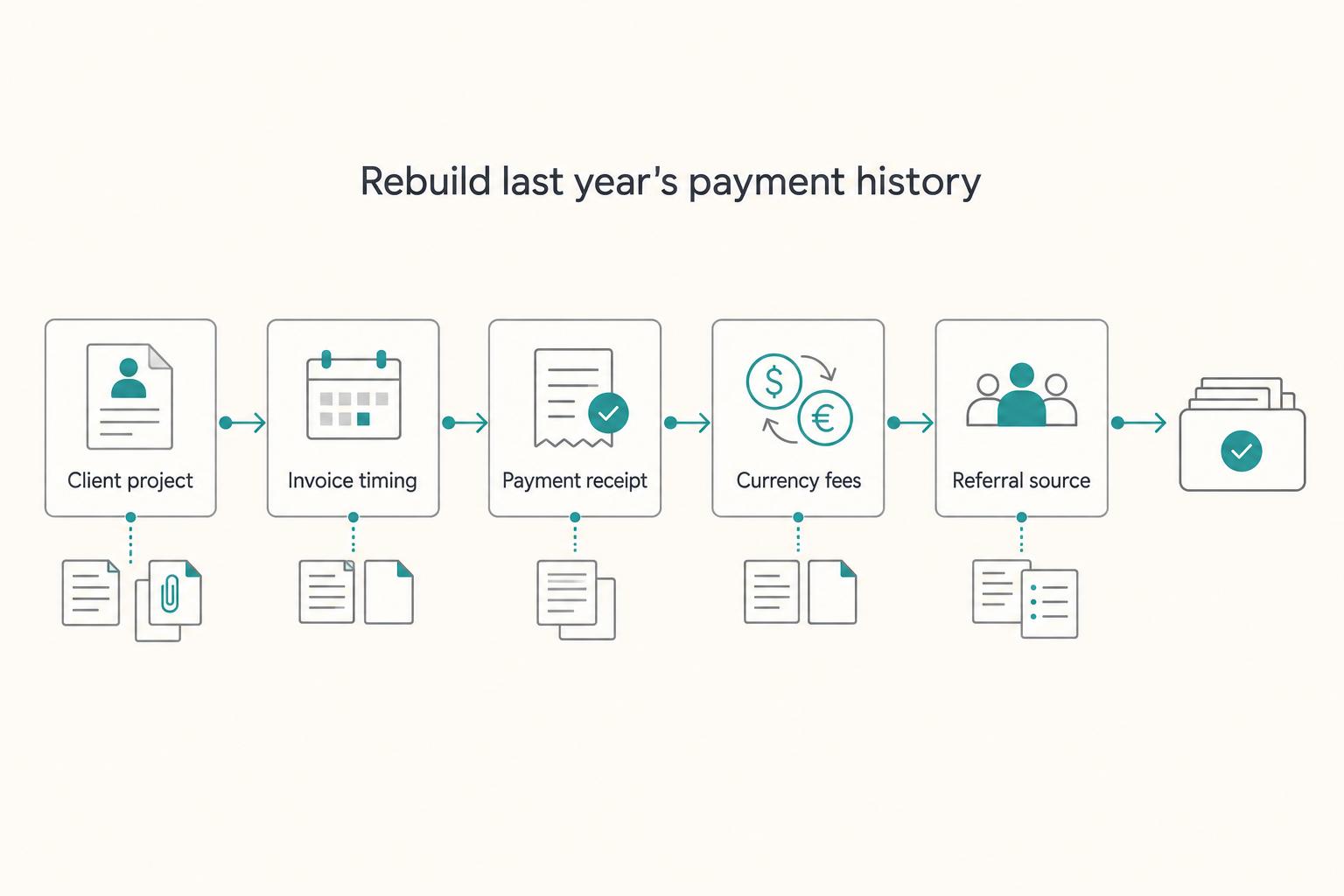
Start with the records: what you earned, what delivery cost, what remains owed and what cash is available. Then turn the findings into a budget, reserve plan and terms for future work. An annual review is useful even when the totals look healthy; profit and bank cash answer different questions.

The Freelance Payment Penalty: A Modeled Audit of Platform Fees, FX Spreads, and Payout Delays
The money rarely disappears through a single, easy-to-spot fee. The real loss is stacked. A marketplace takes its commission, a processor adds a charge for international cards, a bank or payment company converts the currency at a spread, a platform holds the funds before release, and a wire sheds a little to intermediaries on the way in. Each layer looks defensible on its own, but the worker feels the combined result as a smaller deposit and a later payday.