

Quick Answer
Start with scope, then price: for price ui/ux audit work in SaaS, map the exact flows, methods, and deliverables first, pick hourly when scope is unstable, and move to flat fee only after approval mechanics are fixed. Put the terms in a Statement of Work (SOW), define acceptance criteria that make completion testable, and invoice on artifact-based milestones. That sequence protects margin and lowers payment-delay risk better than copying public rate ranges.
Price a UI/UX Audit Without Getting Burned#
If you need to price UI/UX audit work for a SaaS client, the job is not finding a magic market number. It is turning uncertain scope into a quote you can defend, a Statement of Work (SOW) the client can approve, and payment terms that do not leave you carrying the risk.
Start from risk, not public price lists. Many search results on audit pricing are too noisy to use as a quoting anchor. Some are not about audit pricing at all, some are promotional, and some blur a focused audit into a much larger design project. One public example is a Stack Overflow thread, now 16 years, 10 months old, where someone says they charged about $200 for an audit document that took 8h to write. That is a real anecdote, but it is not a SaaS benchmark, and it should not set your quote.
Before you estimate, separate an audit from a design project. An audit can start as a general review, then expand into a deeper engagement with graphics, stakeholder conversations, or broader analysis. That is where margin disappears if you quote the first conversation instead of the actual work. Your first checkpoint is simple: before you put a number in front of the client, confirm whether they want findings only, or findings plus redesign direction, visuals, and review cycles.
Ignore fake precision. You will see confident-looking figures online, including hourly numbers like $120 to $180/hour. Some of those come from startup-cost content about running a design firm, not from neutral SaaS audit pricing data. Other retrieved materials can be unrelated, like an SEC Form 10-K or a NIST paper on AI bias standards. The takeaway is not that pricing is random. It is that your pricing logic has to come from scope, method, deliverables, and client risk, not from mixed-source averages.
From there, the quote path is straightforward:
- define the audit scope in concrete units
- choose hourly pricing or a flat fee based on how stable that scope is
- lock the details in the Statement of Work (SOW)
- tie invoices to clear checkpoints instead of vague "final delivery"
The failure mode to watch is quoting fast and documenting later. That is how a "quick audit" turns into extra flows, extra stakeholders, and subjective revision requests with no change in price. The next step is getting the minimum input pack you need before sending any number at all. Related: How to Price a Graphic Design Project (Logo).
Gather Inputs Before You Price Anything#
Price only after you have a minimum evidence pack; until then, you are still in discovery.
| Area | Confirm | Grounded detail |
|---|---|---|
| Product and journeys | Classify the product and document the 2 to 5 highest-impact journeys | SaaS, E-commerce, Enterprise software, or Regulated products; ask for user feedback and known friction or drop-off points |
| Audit methods | List the methods requested for the engagement in writing | Heuristic evaluation, Cognitive walkthrough, Usability testing, Accessibility audit |
| Stakeholders and sign-off | Confirm change authority, approver, and final acceptance path | Who can request changes, who approves the Scope of work, who accepts final delivery under the Acceptance criteria; review cadence can be single review, async comments, or multiple rounds |
| Payment-risk signals | Capture risk signals before pricing | Prior late payments, procurement delays, legal redlines, and pressure to skip a deposit |
-
Classify the product and core journeys first. Confirm whether the product is SaaS, E-commerce, Enterprise software, or Regulated products, then document the 2 to 5 highest-impact journeys. Ask for existing evidence, for example user feedback and known friction or drop-off points, so scope is tied to real behavior.
-
Define the audit methods in writing. Do not price a generic "review." List the methods requested for this engagement: Heuristic evaluation, Cognitive walkthrough, Usability testing, and Accessibility audit. Method mix changes effort, participation needs, and deliverables.
-
Match stakeholders to sign-off mechanics. Confirm who can request changes, who approves the Scope of work, and who accepts final delivery under the Acceptance criteria. Also lock the review cadence, whether that is a single review, async comments, or multiple rounds, so approval risk is explicit before you quote.
-
Capture payment-risk signals early. Check for prior late payments, procurement delays, legal redlines, and pressure to skip a deposit. These signals do not set terms on their own, but they do tell you whether to tighten assumptions before pricing.
Define Scope in Audit Units Instead of Vague Packages#
Price the work in explicit audit units, not a package label. Before you finalize the quote, get client approval on a one-page scope map so methods, deliverables, and review expectations are locked.
Step 1: Define the units first. Terms like UX audit, usability audit, and user experience audit can overlap, but the scope still changes by methodology. Quote against named units:
- Flows in scope: exact user journeys reviewed
- Depth per flow: light pass vs evidence-backed issue logging
- Method stack: heuristic evaluation (for example, Nielsen's heuristics) and, where needed, Usability testing
- Deliverable depth: executive summary only vs executive summary + annotated report + prioritized backlog
If you include prioritization, define it clearly. A practical structure is a 0-4 severity scale, then weight priority with frequency and persistence where relevant.
Step 2: Use comparable tiers, then adjust by scope. Treat these as quoting templates, not universal products.
| Tier | Methods | Artifacts | Review rounds | Timeline risk | Expected client effort |
|---|---|---|---|---|---|
| Baseline UX audit | Heuristic evaluation | Executive summary, annotated report, prioritized findings | One | Lower | Low to medium |
| SaaS growth audit | Heuristic evaluation plus deeper flow review; Usability testing when observation is needed | Executive summary, annotated report, prioritized backlog tied to metrics, optional 30/90/180-day plan | One to two | Medium | Medium |
| High-risk audit for Regulated products | Heuristic evaluation, usability testing where feasible, stricter evidence capture | Executive summary, annotated report, prioritized backlog, evidence pack with screenshots and severity notes | Two | Higher | High |
What matters is not the tier name. What matters is the method stack and artifact depth behind it.
Step 3: Write included vs excluded in plain language. This is the fastest way to reduce Change order disputes.
Included items can be named flows, named methods, one review meeting, one consolidated feedback round, and final delivery format. Excluded items can be unlisted flows, participant recruitment, moderated sessions, redesign execution, implementation QA, and additional workshops unless added by change order.
Step 4: Require scope-map sign-off before final pricing. If scope is still moving, pricing certainty is not real.
Keep the one-page map simple: product/version, in-scope flows, methods, deliverables, findings format, review rounds, required client inputs, approver, and key assumptions. If this page is approved, finalize price. If flows or methods are still unstable, use paid discovery or hourly until scope is fixed.
For a step-by-step walkthrough, see How to Price a Cloud Infrastructure Audit.
Choose Hourly Rate or Flat Fee With a Risk Rule#
Pick the model by scope risk, not by what is easier to sell. If scope is still moving, use Hourly rate; if flows, outputs, and approvals are fixed, use Flat fee.
| Model | Use it when | Main tradeoff |
|---|---|---|
| Hourly rate | Scope is fuzzy, stakeholder churn is likely, or complexity is still unclear | Protects your downside, but only if time tracking and progress reporting are tight |
| Flat fee | Flows, methods, deliverables, and review path are clearly defined and approved | Easier for clients to approve, but weak discovery can turn hidden complexity into unpaid time |
| Hybrid | Discovery can be fixed, but execution may still shift | Balances clarity and flexibility with pre-agreed change paths |
A flat quote is only safe when the work is defined in measurable units. Use the same logic as fixed-price page work: define what is unique versus repeated, and define deliverable depth up front. For audits, that means named flows, method stack, deliverables, review rounds, and approvers are explicit before you lock price.
For many SaaS audits, the practical middle ground is a hybrid: fixed discovery, a capped execution band, and pre-priced Change order blocks. Add a contract trigger in the quote: if assumptions fail, for example a new flow, market, or compliance ask appears, pricing automatically moves to the change path.
Build a Quote and Statement of Work Clients Can Approve Fast#
To speed approval, split your proposal into two decision artifacts: a one-page commercial summary and a detailed Statement of Work (SOW). Keep the first for the buy/no-buy decision, and the second for delivery control.
Use CPQ-style discipline even if you are quoting manually: rule-based quotes, clear approval ownership, and unambiguous terms.
| Document | Core question | Include |
|---|---|---|
| One-page commercial summary | Should we approve this purchase? | Price model, payment structure, timeline, short scope summary, named approver, expiry date |
| Statement of Work (SOW) | What exactly is being delivered? | Scope of work, methods, listed flows, deliverables, assumptions, exclusions, client responsibilities |
| Acceptance criteria section | How do we confirm completion? | Deliverable-level completion checks, review-round count, feedback window, approval method |
Step 1: Make the quote easy to approve. Turn the summary into a forwarding-friendly decision page, not a mini essay. Name the approver and the approval rule in plain language. If approval ownership is unclear, approval speed usually drops.
Step 2: Make "done" testable. Define deliverables with objective acceptance criteria tied to scope of work. Avoid subjective labels like "complete" or "strategic" without checks. A third party should be able to read the SOW and determine whether delivery is complete.
Step 3: Put guardrails where clients can see them. State the revision cap, feedback turnaround windows, and out-of-scope examples in the main SOW body. If client feedback arrives after the agreed window, state that the timeline shifts accordingly.
Step 4: Use market pricing pages as context, not proof. If Convergine, Krux AI, or GoodFirms ranges come up, treat them as directional only. Final pricing should be anchored to your actual scope, methods, deliverables, and approval load. Related reading: How to Price SEO Services for Freelancers.
Protect Cashflow With Payment Terms That Match Delivery Risk#
Use the same acceptance checkpoints that define "done" to define when cash moves. Collect payment before kickoff, bill at named artifacts, and release editable source files only after the final invoice is paid.
| Control area | What to do | Grounded detail |
|---|---|---|
| Billing checkpoints | Use artifact-based billing instead of calendar-based billing | Ask for a deposit before kickoff, then bill at named outputs such as the approved scope map, draft findings package, and final report package |
| Enforcement terms | Put payment enforcement terms in the commercial summary or SOW | State invoicing cadence, grace period, late-fee clause, and your right to pause work when payment is overdue |
| Cross-border traceability | Keep confirmation and transfer details in one record | Confirmation tracking, remittance details, a traceable reference, invoice number, amount, currency, and confirmation date |
Tie invoices to objective delivery exposure#
The safest payment sequence is artifact-based, not calendar-based. Ask for a deposit before kickoff, then use milestone billing tied to named outputs such as the approved scope map, draft findings package, and final report package in your Acceptance criteria.
This reduces payment friction in AP workflows. Invoice matching checks invoices against supporting documents before payment, and two-way matching checks invoices against purchase orders, so your invoice wording should match the PO, SOW version, and artifact name exactly.
Avoid billing language based on effort alone. "Due at midpoint" is easy to delay; "due on delivery of draft audit report for listed flows in SOW v1.2" is easier to validate and process.
Put enforcement language where the client will see it#
Put enforcement terms in the commercial summary or SOW, not in buried boilerplate. State invoicing cadence, grace period, late-fee clause, and your right to pause work when payment is overdue.
Keep every invoice tied to objective Acceptance criteria. Include the artifact delivered, delivery date, SOW version, and receipt evidence, for example a signoff email or upload record, so AP does not need extra back-and-forth to validate the bill.
Manual invoice handling can create weeks-long bottlenecks. Clear, document-linked invoices remove avoidable delay points.
Treat cross-border payment status as an operational control#
For cross-border clients, treat payment traceability as a control, not admin overhead. The OCC payment-systems handbook explicitly frames payment systems in risk-management terms, including policies, internal controls, risk assessment, audit, and third-party risk.
Ask for confirmation tracking, remittance details, and a traceable reference for each transfer. If payment is sent via SWIFT or another bank-transfer route, keep the transfer reference, invoice number, amount, currency, and confirmation date in one record so you can distinguish a payment in transit from an unverified status update.
Pressure-Test Your Price Against Market Noise#
Pressure-test your quote against public UX signals, but price to scope depth and method choice, not the lowest visible number.
Compare only like-for-like offers#
A SaaS UX audit is not the same as a generic UI/UX design project, a redesign, or interface-only testing. Public content often blends UI testing, UX testing, and broader design work, so headline prices are rarely apples-to-apples.
Before you use any public example, confirm three basics: product context, audit depth, and deliverable. If you cannot tell whether it is a light visual review, a fuller journey analysis, or a wider design engagement, treat it as noise.
Adjust for depth, not just category#
Method choice changes what you are selling, because different methods surface different issues. Work focused on user drop-off, trust loss, onboarding friction, or support-call drivers is a deeper audit than a light visual pass.
A common pricing mistake is treating every "UX" page as pricing evidence. Some public material is agency marketing, and much of it is about interface breakpoints or usability outcomes, not neutral audit pricing data.
State the uncertainty directly in your proposal#
Be explicit: there is no standard regional benchmark here, source quality is mixed, and neutral pricing data is limited. Then anchor your quote to your scope map: named flows, methods, deliverables, and review rounds.
That keeps your number defensible and reduces bad comparisons against unrelated design quotes that also use the term "UX."
Common Pricing Mistakes and How to Recover Mid-Project#
If your audit starts drifting, reset scope and approval rules immediately instead of absorbing extra work. The fastest recovery is to freeze what changed, rewrite the working agreement, and re-baseline dates before more unpaid effort stacks up.
| Mistake | Recovery | Grounded detail |
|---|---|---|
| Quoting before method lock | Lock the method set in a revised SOW | If you are using a Heuristic evaluation, Cognitive walkthrough, and Accessibility audit, name which are included, which flows they cover, and what each output looks like |
| Unlimited revisions | Replace open-ended revisions with a clear Revision cap | Move work beyond the cap into signed Change order items with price and timeline impact |
| Vague completion standard | Make Acceptance criteria testable | Tie completion to reviewed flows, delivered findings log, labeled priorities, and one review round |
| Delayed client feedback | Add a client-response SLA and extend the schedule when response windows are missed | Keep the plan tied to actual turnaround, not assumed turnaround |
1) Quoting before method lock Lock the method set before additional analysis. If you are using a Heuristic evaluation, Cognitive walkthrough, and Accessibility audit, name exactly which are included, which flows they cover, and what each output looks like in a revised SOW. If someone outside the project still cannot tell what is in scope, scope is not locked yet.
2) "Unlimited revisions" Replace open-ended revisions with a clear Revision cap. Define what counts as a revision versus a new request, then move work beyond the cap into signed Change order items with price and timeline impact.
3) Vague completion standard Make Acceptance criteria testable so "done" is not subjective. Tie completion to concrete deliverables, for example reviewed flows, delivered findings log, labeled priorities, and one review round, then reset milestone and invoice dates to that definition. This matters even more because UX audits can already run over a two-to-four-week window.
4) Delayed client feedback When feedback delays milestones, add a client-response SLA to your project terms and extend the schedule when response windows are missed. That keeps the plan tied to actual turnaround, not assumed turnaround.
Your mid-project reset pack should include the revised SOW, updated Acceptance criteria, adjusted dates, and pending Change order items. If a client will not align on any of those, the issue is no longer just ambiguity.
Want a quick next step on pricing a UI/UX audit? Try the free invoice generator.
Use This Copy-Paste Checklist Before Sending Any Audit Quote#
Before you send the quote, make scope, acceptance, and payment terms explicit so the work stays billable and predictable.
- Confirm method mix and scope units for the UX audit.
Do not quote only "UX audit." Treat it as a defined process and specify the units you are pricing, flows, screens, or journeys, plus the method for each unit. Checklist-based audits can run to 170+ points, so name items like navigation review explicitly when they are in scope. Also list the required data inputs before pricing so the review can actually be performed.
- Choose Hourly rate or Flat fee based on scope volatility.
Use Hourly rate when flows, methods, or stakeholders are still moving. Use Flat fee when journeys, deliverables, and the review path are stable enough to describe clearly. Simple rule: fuzzy scope is hourly risk; stable scope can be fixed.
- Send quote + Statement of Work (SOW) with hard Acceptance criteria.
Keep the commercial quote and the Statement of Work (SOW) separate but linked. In one agreement structure, Exhibit A is the SOW (23 page(s)) and Exhibit B is Budget Detail & Payment Provisions (2 page(s)), both incorporated into the agreement. Make acceptance testable: reviewed flows, methods used, deliverables, and what counts as completion.
- Lock milestone billing, revision cap, change order terms, and late fee clause before kickoff.
Put these terms in writing before work starts. Define clear triggers for milestone invoices, what counts as one revision round, and what happens when scope expands.
- Verify the client sign-off path before kickoff.
Confirm who approves the quote, who approves the SOW, and whether legal or procurement reviews payment terms. Confirm expected review timing so delivery and invoicing follow a real approval path.
Frequently Asked Questions
How much should a UI/UX audit cost for a SaaS company?
If you need a starting band for this work, one cited range for a full UX audit is $10,000 to over $75,000, with complexity as a key driver. That is directional, not a default quote. For smaller, tightly scoped tasks, one source lists freelancer hourly pricing around $50 to $150 per hour and agency audit or exploratory work around $100 to $300 per hour.
What actually drives UX audit pricing besides company size?
For SaaS work, product complexity is identified as a primary cost driver. Price also moves with the scope, depth of analysis, and number of user journeys examined. A narrow review of a couple of flows can price very differently from a broader multi-journey audit.
When is hourly pricing safer than a flat fee for an audit?
Hourly pricing is commonly used for audits and exploratory work, while fixed-scope projects are also common. In practice, hourly is usually easier when scope is still evolving, and fixed fee is easier when scope is clearly defined up front.
What must be inside a UX audit quote to avoid disputes?
At minimum, define the scope assumptions clearly: which journeys are reviewed and how deep the analysis goes. It also helps to state the engagement model (hourly, fixed-scope, or retainer), since published price ranges are context-dependent without scope detail.
How do freelancers protect cashflow when clients delay approval?
Keep commercial terms explicit in the quote or SOW so scope and pricing expectations are clear up front.
Is an accessibility audit priced separately or bundled?
Treat it as a scope decision that should be explicitly defined, because audit pricing changes with scope, analysis depth, and journeys covered.
Should I trust fixed-price vendor offers as my benchmark?
Only as rough market noise. Published ranges are often highly context-dependent, and some visible numbers are for broader UI/UX design projects, not audit-only work. For example, a cited $12,960 to $82,080 range refers to app UI/UX design cost, so it is a weak benchmark for a tightly scoped audit quote.
Try a related tool
Researched and edited by the Gruv editorial team. Gruv builds cross-border billing, payouts, and finance-operations software for global businesses.
Sources
- caloes.ca.gov/wp-content/uploads/PSC/Documents/Agreement-A...trusted
- digitalcommons.liberty.edu/cgi/viewcontent.cgitrusted
- dol.gov/node/171111trusted
- nvlpubs.nist.gov/nistpubs/SpecialPublications/NIST.SP.1270.pdftrusted
- occ.gov/publications-and-resources/publications/comp...trusted
- osi.ca.gov/PRA%20Postings/75332130%20Full%20Agreement%2...trusted
- pmc.ncbi.nlm.nih.gov/articles/PMC12836306trusted
- regulations.gov/document/EBSA-2026-0001-0001trusted
Educational content only. Not legal, tax, or financial advice.
Related Posts
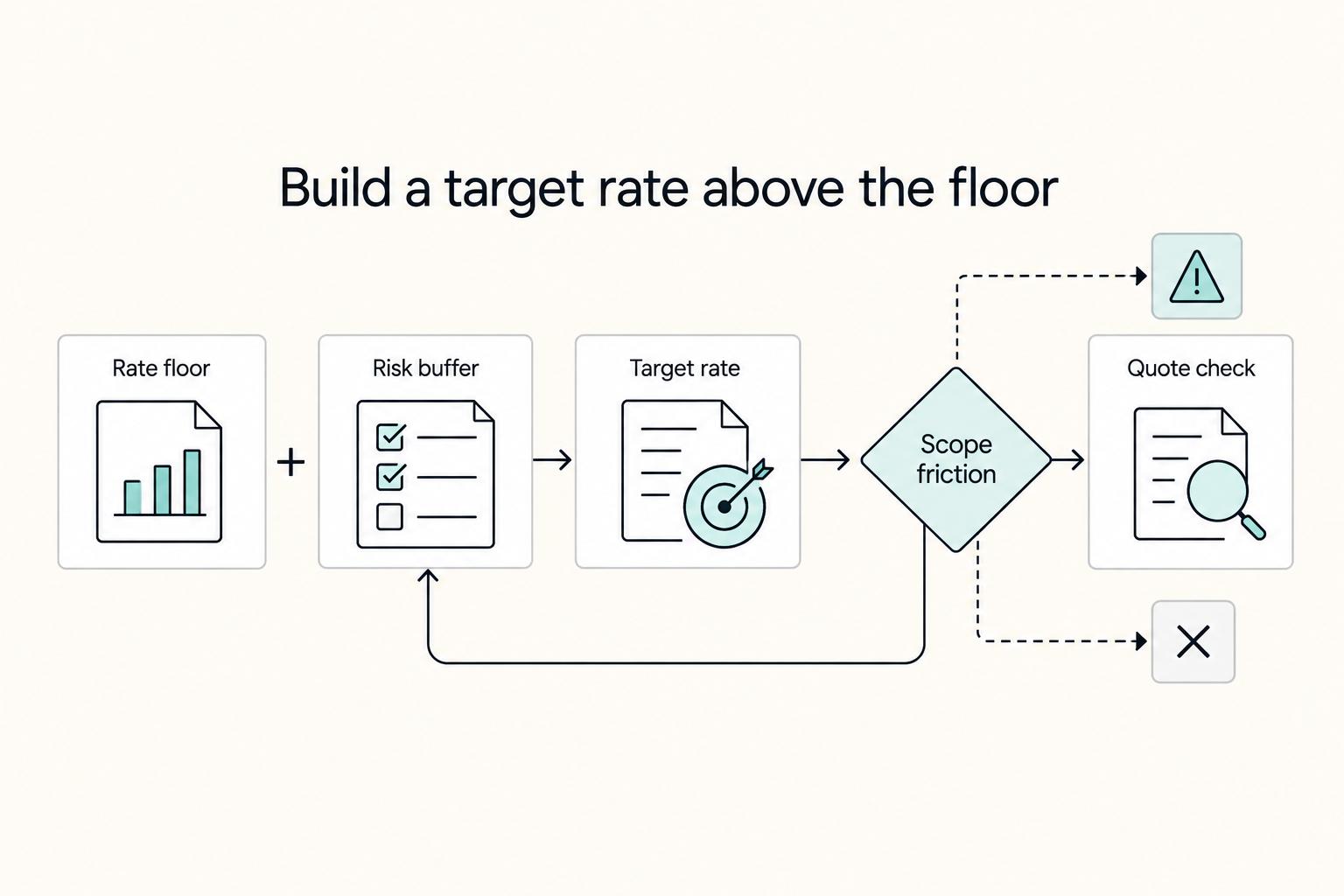
How to Calculate a Freelance Rate You Can Actually Get Paid On
A workable rate is not the neat number a calculator produces. It is the number that still works after you account for real billable capacity, non-client time, scope drift, and the gap between sending an invoice and receiving cleared cash. Start with hourly math even if you do not plan to bill hourly, then turn that number into a quote with clear `payment terms`.
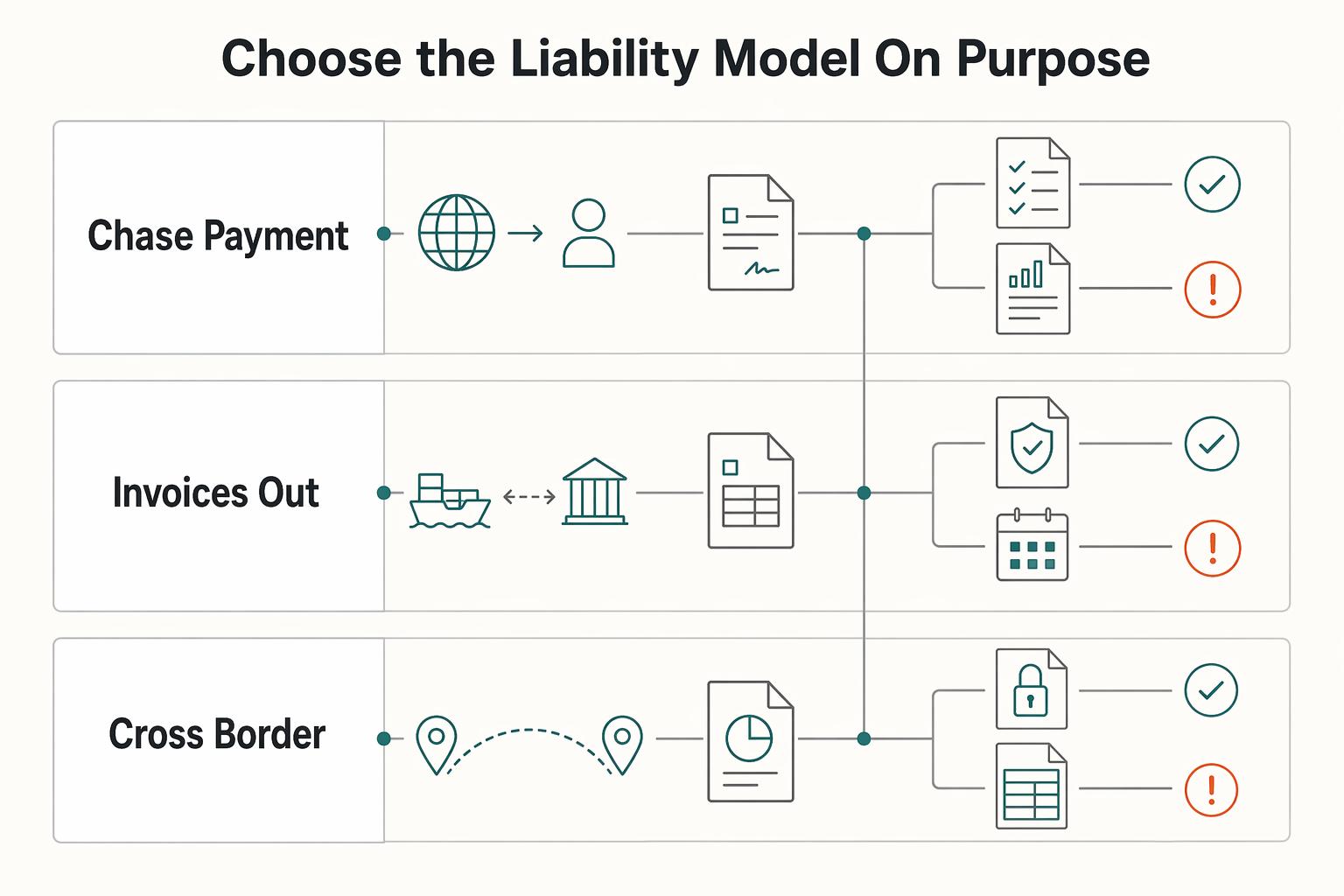
How Graphic Designers Protect Cross-Border Payments and Cash Flow
Traditional payment protection is often too reactive for cross-border independent work. The real risk is usually operational: late or missing payment, invoice-validity issues, payment-rail friction, and fees that reduce your margin after settlement.

The Freelance Payment Penalty: A Modeled Audit of Platform Fees, FX Spreads, and Payout Delays
The money rarely disappears through a single, easy-to-spot fee. The real loss is stacked. A marketplace takes its commission, a processor adds a charge for international cards, a bank or payment company converts the currency at a spread, a platform holds the funds before release, and a wire sheds a little to intermediaries on the way in. Each layer looks defensible on its own, but the worker feels the combined result as a smaller deposit and a later payday.