

Quick Answer
For a UK limited company, Wise suits quote-based international payments without a monthly account fee. Revolut can suit regular FX and team approval workflows, but costs depend on plan allowances. Compare the same recipient amount and verify your account’s protection before choosing.
Start with the company and the payment it needs to make. This guide compares Wise Business and Revolut Business for a UK limited company, using published UK terms checked on 3 October 2026. A personal travel account, a US business plan and a UK company account cannot be compared by putting their headline prices in one column.
Confirm that the business can open the account#
Revolut’s UK eligibility guidance lists limited companies among its supported legal entities and excludes freelancers and sole traders from this Business product. A sole trader should check an eligible product separately. Both providers can review the company’s activity, ownership and documents; a supported legal form does not guarantee approval.
Published UK costs and team features#
| Cost or workflow | Wise Business | Revolut Business |
|---|---|---|
| Account fee | No monthly account fee; £50 one-off setup for receiving account details | Basic £10/month; Grow from £30/month; Scale from £90/month |
| Currency conversion | Fee varies by currency and route; obtain the actual quote | Included monthly FX: Basic £1,000, Grow £15,000, Scale £60,000; 0.6% above allowance and 1% outside market hours |
| Transfers | Quote the funding method, destination and receiving charges | Local included counts: 10/100/1,000; then £0.20 each. International counts: 0/5/25; then £5 each; additional SWIFT charges can apply |
| Team approval requirement | Confirm the precise approval and permission workflow in the current account | Custom payment approvals, Business API and bulk transfers start at Grow; Basic is not equivalent |
These are published plan terms, not a guarantee of the final price for every payment. For Wise, supported domestic non-SWIFT receipts can be free, while wire or SWIFT receiving charges depend on the currency. For Revolut, distinguish an international transfer from a local one rather than assuming a currency conversion uses an international-transfer allowance. Optional services can add costs.
A £10,000 monthly conversion example#
Assume a company converts £10,000 during market hours in a supported currency, has used none of that month’s allowance, and incurs no separate transfer or receiving fees. Using the published allowance rules, Revolut Basic costs £10 + 0.6% × (£10,000 − £1,000) = £64. Grow costs £30 because the conversion fits within its £15,000 allowance. This is a fee illustration, not a live exchange-rate quote.
For Wise, call the actual conversion and transfer quote W. Its recurring payment cost is W under these assumptions; the first month also includes £50 if receiving account details are being activated. There is no honest numerical winner until W and the amount delivered are known. A lower fee can still accompany a less favourable exchange rate or a receiving-bank charge. Compare how many euros, dollars or other agreed units the supplier receives at the same quote time.
Match the account to the recurring work#
| Company need | Practical decision |
|---|---|
| Occasional foreign supplier payments | Get a Wise quote and compare it with the total cost of maintaining and using the appropriate Revolut plan |
| Regular FX within a plan allowance | Price the recurring volume against Grow or Scale; include months when activity is lower or allowance has already been used |
| Finance team with approval separation | Test preparer and approver permissions on the actual plan before onboarding the team |
| Bulk supplier runs or API integration | Confirm the selected plan supports the workflow; test one beneficiary and one payment before a large batch |
| Foreign currency receipts | Check receiving details, payer transfer type and any receiving fees for the required currency |
Run the same acceptance exercise for both products: create a supplier, prepare a payment, approve it with a different person where required, export the transaction and reconcile it to the invoice. Record which actions the operator can perform and which require a paid plan. Do not label a feature absent because a pricing page does not describe it.
Understand protection before holding a large balance#
For ordinary balances with Wise Payments Ltd, Wise describes safeguarding: customer funds are kept separate from operating funds using cash, secure liquid assets and a comparable guarantee. Wise Payments Ltd is not a bank, and its e-money and payment services are not covered by FSCS. Wise Assets is a separate investment service and should not be treated as the ordinary account balance.
Revolut’s current UK guidance distinguishes the account transition. Before transition, funds with Revolut Ltd are safeguarded. After the Business account transitions to Revolut Bank UK Ltd, eligible deposits receive FSCS protection rather than safeguarding. The guidance states a £120,000 limit for eligible deposits held by a separate legal entity; excluded business categories exist. Check the account agreement, transition notice and FSCS information sheet for the actual company. A bank launch announcement alone does not establish that a particular account has transitioned.
Reconcile the supplier obligation and the bank movement#
Keep the supplier invoice, agreed recipient amount, conversion quote, fees and transfer reference together. An account balance or a submission acknowledgement is not evidence that the supplier has been paid. If a transfer times out, mark the attempt pending and check its existing reference with the provider before retrying or paying through the other account. An unresolved attempt plus a fallback transfer can pay the same invoice twice.
Choose the product after comparing a representative month and demonstrating the required permissions. Keep the dated quote and plan selection with the decision so finance can revisit it when volume or pricing changes.
Frequently Asked Questions
Is Wise Business cheaper than Revolut Business?
It depends on the actual quote, monthly volume and plan. In the stated £10,000 market-hours illustration, Revolut Basic fees total £64 and Grow £30 before other charges. Compare those with Wise’s actual quote and any first-time receiving setup cost.
Can a UK sole trader use the Revolut Business plan in this comparison?
Revolut’s UK Business eligibility guidance excludes freelancers and sole traders from this product. Check an eligible product separately; this comparison is scoped to a UK limited company.
Does every Revolut Business balance have FSCS protection?
No blanket assumption is appropriate. Revolut’s guidance applies deposit protection after transition to Revolut Bank UK Ltd and only to eligible deposits and businesses. Check the actual account entity and eligibility.
What should finance do after a transfer timeout?
Keep the invoice unpaid or pending according to the evidence, inspect the existing provider reference and resolve its outcome before sending a replacement. A timeout alone does not prove the transfer failed.
Try a related tool
Researched and edited by the Gruv editorial team. Gruv builds cross-border billing, payouts, and finance-operations software for global businesses.
Sources
Includes 3 external sources outside the trusted-domain allowlist.
Educational content only. Not legal, tax, or financial advice.
Related Posts

How LLC Owners Separate Business and Personal Finances
For an LLC, separating business and personal money is best treated as a weekly habit, not a one-time bank setup. It keeps records cleaner, cuts month-end cleanup, and creates clearer boundaries as the company grows.
Form T2125 for Canadian Freelancers: How to File With Clear Records
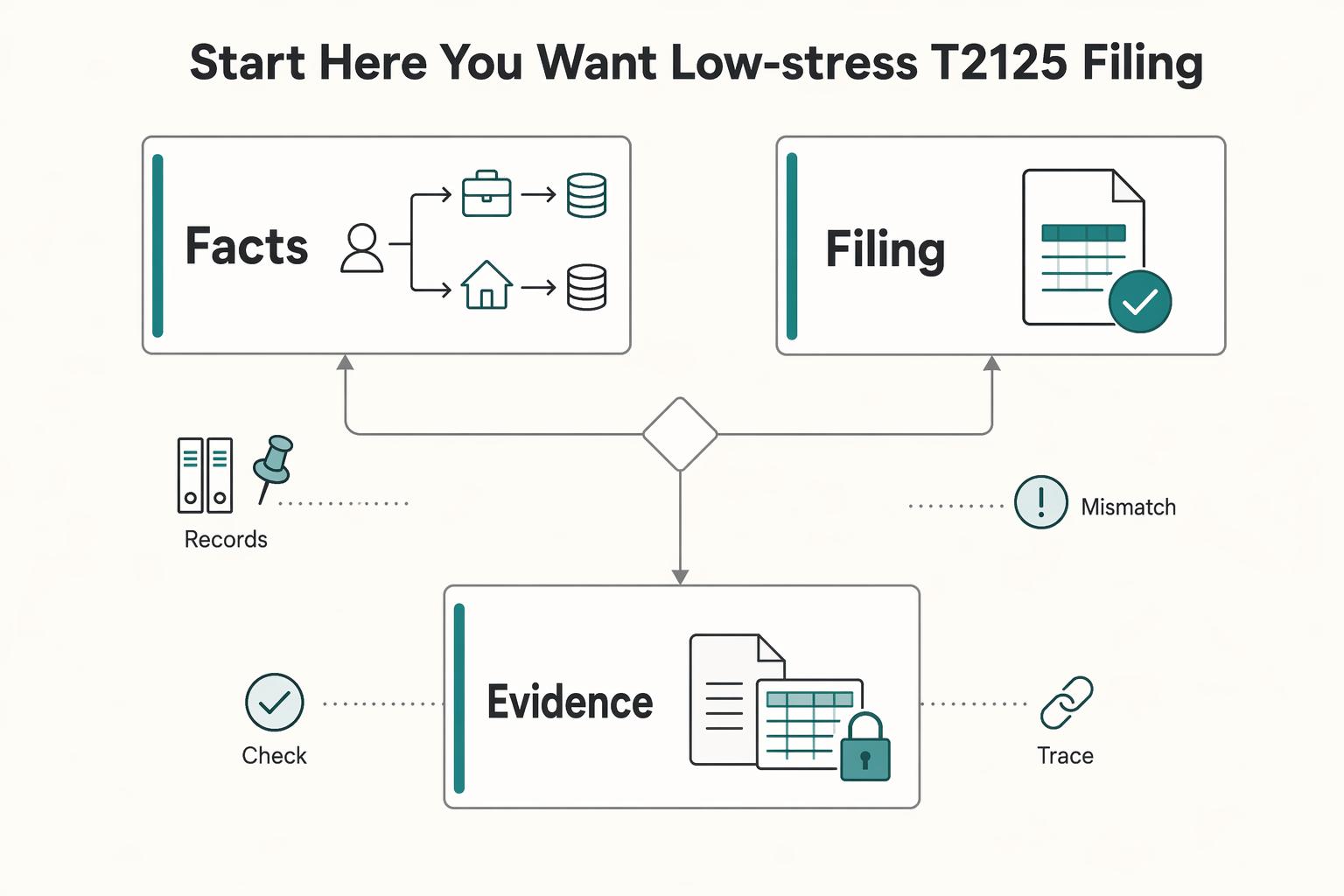
Low-stress T2125 filing comes from sequence, not speed. Start by separating employment income from self-employment income, then take positions you can support from records rather than memory. If you earned self-employment income, you will usually need to file a tax return, and many freelancers report that business or professional income using Form T2125 as part of a personal return. Conservative choices here do more than keep the file tidy. They make final review faster and reduce the chance of avoidable corrections later.

The Freelance Payment Penalty: A Modeled Audit of Platform Fees, FX Spreads, and Payout Delays
The money rarely disappears through a single, easy-to-spot fee. The real loss is stacked. A marketplace takes its commission, a processor adds a charge for international cards, a bank or payment company converts the currency at a spread, a platform holds the funds before release, and a wire sheds a little to intermediaries on the way in. Each layer looks defensible on its own, but the worker feels the combined result as a smaller deposit and a later payday.