
Quick Answer
Ask: “Is the constraint the total budget, the payment schedule, or something in the scope?” Keep the original quote available and offer a smaller package where useful. Before agreeing, check that the revised deal covers your costs and put its deliverables, fee and payment terms in writing.
Start by Understanding What the Client Is Really Asking For#
Treat a discount request as a deal redesign, not a quick yes or no on price. Slow the conversation down enough to find what is driving the ask. A lower fee for unchanged work usually means you gave something away and got nothing back.
Use the same sequence every time:
- Diagnose the request. Ask what is driving it. A direct question like, "Can you help me understand why you need the discount?" is a useful checkpoint because the answer can reveal whether the issue is risk, cost, or another constraint.
- Choose one concession path. If the workload stays the same, hold the price or treat your rate as non-negotiable. If a lower price is necessary, reduce scope. If the client can give you something meaningful in return, adjust terms conditionally instead of cutting blindly.
- Restate the full deal. Match any lower number to a different package or a clear reciprocal tradeoff, not the original promise at a cheaper price.
- Confirm acceptance in writing before kickoff so both sides are aligned on the revised terms.
A simple comparison makes the tradeoff visible:
| Deal element | Can change | Should stay explicit |
|---|---|---|
| Scope | Yes, if price drops | What is included and what is removed |
| Timeline | Sometimes, as part of a tradeoff | Expected delivery timing |
| Payment terms | Sometimes, if you receive value in return | Amount and timing |
| Revision limits | Yes, if effort changes | Number of rounds |
Keep the reset practical: state what changed, what did not, and what the client accepted. If scope changed, name what was removed. If terms changed, use the same language and numbers everywhere so the deal is clear.
The common failure mode is easy to miss. You give an immediate discount, keep the same work, and teach the client to ask again next time because the tactic worked. The success pattern is just as simple: diagnose the reason, offer a defined tradeoff, and let the client choose a version they can approve and pay for. You are not trying to win a discount conversation. You are trying to end up with a deal you can deliver without scope or payment drift.
Define the key terms before you negotiate#
Define the terms first, or the deal will drift. Before you discuss any number, name each term in plain language and tie it to one immediate action.
| Term | What it means | Action |
|---|---|---|
| Discount request | Request to lower price, not automatic proof your work is overpriced | Pause and clarify why they are asking |
| Risk concern | Client is worried about spending or making the wrong decision | Ask what feels uncertain before you discuss concessions |
| Price-shopping behavior | Prospect is prioritizing the cheapest option | Treat it as fit data if they push for lower price without trade-offs or threaten to leave |
| Scope of Work | What the fee covers | Restate included work before discussing any reduction |
| Deliverables | Concrete outputs the client receives | List them explicitly so both sides see what is and is not included |
| Revision Limits | How many revision rounds are included, such as two rounds of revisions | Say the limit clearly and document it |
| Payment Terms | How and when money is paid | Consider phased payments as a structure change instead of cutting total price |
| Change request | Any later scope or price adjustment | Capture every change in writing |
Similar words, different outcomes#
| What you hear | What it usually signals | Best next move |
|---|---|---|
| "Budget is tight." | Budget constraint | Reduce scope, not quality expectations. |
| "We're not sure yet." | Risk concern | Clarify uncertainty before discussing price. |
| "Can you do it cheaper?" | Possible price shopping | Offer defined trade-offs or hold your rate. |
Use neutral boundary language: "I can adjust scope, timeline, or payment structure, but I do not lower the fee for the same work." Once these terms are defined and acknowledged in writing, move to diagnosing intent and constraints before discussing numbers.
Diagnose the ask before you respond#
Treat a discount request as a diagnosis step, not a pricing decision. Before you discuss numbers, identify what is actually blocking approval.
| Signal | Confirmation | If still fuzzy |
|---|---|---|
| Signed scope | Clear services/deliverables | Name the gap and hold your current fee |
| Decision-maker authority | Confirmed decision-maker authority | Name the gap and hold your current fee |
| Purchase approval or purchase order status | Written acceptance where applicable | Name the gap and hold your current fee |
| Start/performance conditions | Clear written conditions, including a determinable delivery or performance date | Name the gap and hold your current fee |
Run this triage in real time:
- Budget: there is a hard cap, so scope must shrink to match it.
- Scope: they want the same result, but inclusions are still unclear.
- Timing: deadlines changed, or they want rush handling without matching terms.
- Approval friction: the person negotiating may not be the person authorized to approve.
- Risk transfer: they are pushing uncertainty, extra revisions, or open-ended change onto you.
Then verify one checkpoint: what is committed right now. Use objective signals, not enthusiasm:
- signed scope with clear services/deliverables
- confirmed decision-maker authority
- purchase approval or purchase order status, with written acceptance where applicable
- clear written start/performance conditions, including a determinable delivery or performance date
If those signals are still fuzzy, name the gap and hold your current fee.
Keep future-work promises in a separate bucket. "More projects later" is pipeline talk until volume, timing, or pricing terms are documented. Otherwise, you can concede today and still face fresh price pressure when later work is discussed.
Use hourly or time-and-materials pricing when the extent or duration is uncertain. A fixed project fee is easier to assess when the deliverables, acceptance criteria and timeline are clear. Choose the model for this project rather than switching merely to hide an hourly rate.
If diagnosis still shows unclear commitment or one-sided concessions, do not keep renegotiating blindly. Hold your rate and move to fit assessment.
For a step-by-step walkthrough, see The Psychology of Freelance Client Retention for Long-Term Relationships.
Choose a response path with clear decision rules#
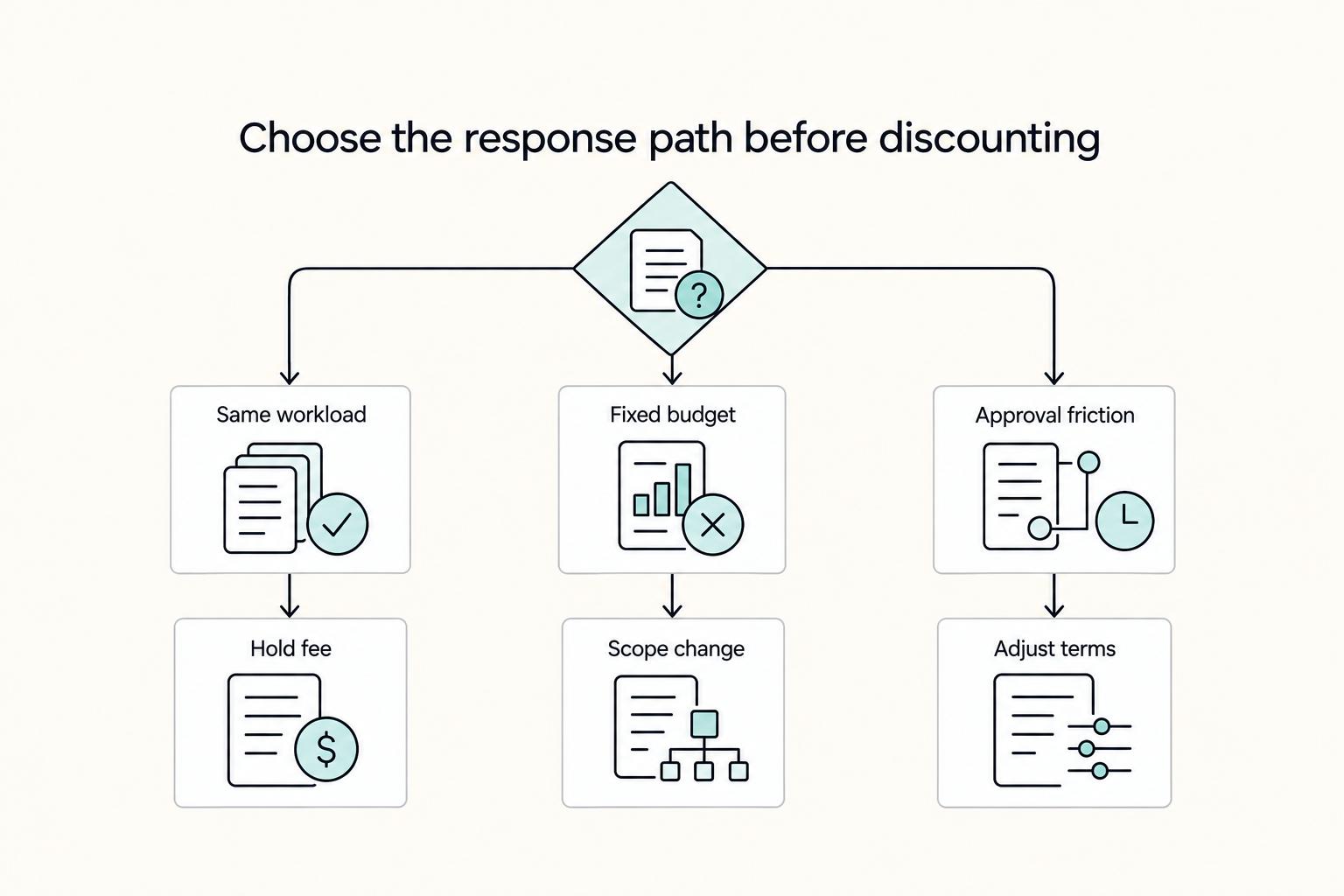
After diagnosis, choose one path and state it clearly. If workload and risk are unchanged, hold the fee. If budget is fixed, reduce scope. If scope is still workable but approval is stuck, adjust terms before price.
Pressure usually triggers two bad moves: dropping rate too fast or getting defensive. Both weaken decisions. Treat your quote as a boundary tied to your threshold and overhead, not a number to renegotiate by default.
Pick one primary path first#
Use one primary concession type at a time: hold fee, adjust scope, or adjust terms. Avoid blended concessions in one reply. If you add a secondary concession, do it only after the first change is documented and make it explicitly time-bound.
| If the signal is | Path to choose first | Document before agreement |
|---|---|---|
| Same workload, timeline, and risk, but they ask to "do better on price" or cite a cheaper offer | Hold fee | Scope of Work unchanged, Deliverables unchanged, Payment Terms unchanged or tighter, written acceptance before any start |
| Budget is fixed and the project can still work as a smaller package | Adjust scope | Revised Scope of Work, reduced Deliverables, explicit exclusions, revised fee, acceptance tied to that version |
| Scope is still viable, but internal approval or procurement is the blocker | Adjust terms | Scope of Work mostly unchanged, Deliverables unchanged, one named Payment Terms change, clear approval/sign-off steps |
| They demand lower price for unchanged work and reject reciprocal tradeoffs | Decline and no-start | No revised quote, no kickoff, no production booking; reopen only after written scope or budget change |
If the last row applies, treat it as a fit issue, not a persuasion issue.
Verify "what changed" vs "what did not"#
When you revise price or terms, write two lists: what changed and what did not. Do this before acceptance and again before kickoff.
- Before acceptance: selected option, dated quote version, approval owner, and clear changed/unchanged lines.
- Before kickoff: Scope of Work matches the selected option, Deliverables and revision limits match the fee, Payment Terms are confirmed, and milestone acceptance ownership is explicit.
This prevents the common mismatch where the message says "smaller package" but the working scope still reflects the original ask.
Use no-start status when tradeoffs are one-sided#
"Half the price" is an anchor, not automatic proof your quote is wrong. If scope, quality, and risk are unchanged, hold boundary or decline.
Use short decline language: keep current scope at current fee, or revise scope to fit budget; no start on unchanged work at a lower price. Then move to no-start until revised terms are accepted in writing.
If the deal proceeds, draft immediately with a structured SOW template so revision limits, approval gates, and change-order handling are explicit before work begins.
Related: How to Negotiate a Higher Rate with a New Client.
Use the SOW generator to record the selected deliverables, revision limits and payment schedule.
Trade scope first and protect delivery quality#
If budget drops, reduce scope before you reduce price. Your goal is to remove work clearly so the remaining deliverables can still be done to your standard.
Use a task breakdown (with per-task time or price estimates), then split work into two buckets:
- Core (keep now): tasks required to produce the first usable outcome.
- Optional (defer): secondary features, extra concepts, additional assets, extra revision layers, and other non-blocking polish.
This keeps quality intact because you protect the essential work instead of spreading less budget across everything. If you cannot name exactly what is removed or delayed, scope is probably not reduced enough.
| Reduced path | Scope | Timeline shape | Client tradeoff | Main risk |
|---|---|---|---|---|
| Core now | Keep only outcome-critical tasks; defer secondary items. | Similar near-term timing, smaller output. | Gets the main result sooner, with fewer extras now. | Deferred items get disputed later if exclusions are not explicit. |
| Broader but slower | Keep more of the original package, but phase delivery. | Longer schedule with staged delivery. | More complete package, but slower full completion. | Timeline drift if phases and approvals are not clearly written. |
Be careful with requests for "introductory pricing" tied to future volume. Treat future work as conditional until it is awarded in writing. Practical rule: charge your normal rate on project one; only consider a discount on project two after project two is actually committed in writing.
After scope changes, confirm this in writing before you proceed:
- what stays, what is deferred, and what is excluded
- revised deliverables, review limits, timeline, and fee
- whether deferred items need a later quote or change order
- who approves the reduced version before work starts or continues
Pause or walk away if the client still expects full original output at the lower fee. That is how a one-time concession becomes precedent, and the pressure usually repeats.
If the issue is that your pricing no longer fits the work, read How to Raise Freelance Rates Without Losing the Right Clients for a practical approach to resetting rates without losing strong clients.
Use terms-based concessions before pure price cuts#
After you trim scope, negotiate terms before you lower your fee. Keep your package value anchored, make any flexibility conditional on a real written commitment, and state when standard pricing resumes.
Restate the package before discussing concessions: deliverable, revision limits, timeline shape, and fee. If scope is still moving, quote a range or minimum rather than dropping to a lower number on the spot. Avoid reactive cuts like moving from $700/week to $600/week in one conversation, because that can lock in avoidable margin loss over time.
| Path | Reversibility | Margin impact | Expectation risk | When to use |
|---|---|---|---|---|
| Terms-based concession | Usually easier to end after a defined window | Lower if your fee anchor stays intact | Moderate if reversion terms are explicit | When the client gives a specific written commitment |
| Pure price cut | Hard to unwind once accepted | Immediate and direct | High because the lower fee becomes the new reference | Only when you have decided the deal still works at that lower fee |
Use this checklist before you revise terms:
- restate scope boundaries using your task breakdown: what stays, what is deferred, and what is excluded
- confirm the exact commitment evidence that justifies flexibility
- define the concession window with clear start and end points
- write reversion terms, including when standard pricing resumes
- get written acceptance before delivery continues
If the client keeps pressing for lower pricing without stronger commitment, treat that as fit data. If they repeatedly challenge your effort estimates, use a firm boundary: hold your price or walk away. If you need to verify your floor first, review How to Calculate Your Billable Rate as a Freelancer.
If you want to prevent discount pressure earlier in the relationship, A Checklist for Onboarding a New Freelance Client covers how to set scope, pricing, and expectations upfront.
Update the contract clauses that discounts often break#
A discount changes the deal, so your contract and invoices must change with it before you sign. If fee, scope, timeline, and billing language are not aligned in one final version, you create avoidable delivery and payment disputes.
Update these items as one set: Scope of Work, Payment Terms, timeline wording, change-control language, and invoice line-item labels. If one item still reflects the old package, the discount is still ambiguous.
What to sync before signature#
Start with the pricing model. State clearly whether the work is fixed-price, hourly, phased, or capped-time. Do not mix models in different places.
Then verify scope at task level. A granular task breakdown with per-task time or price estimates lets you mark what is included, deferred, excluded, or billable as a change.
| Deal area | Clause left unchanged | Clause updated | Likely outcome |
|---|---|---|---|
| Pricing model | Contract still reads like the original fee model after terms changed | Contract and invoices use the same current model language | Cleaner execution, less billing argument |
| Scope boundaries | Old deliverables stay listed, so full-package expectations remain | Revised Scope of Work names included, deferred, and excluded work | Lower dispute risk |
| Timeline assumptions | Dates still assume the original workload and review cycle | Milestones and dates match the revised package | Less delivery friction |
| Payment triggers | Invoice timing follows the old sequence | Payment terms map to revised milestones or approvals | Fewer payment-timing conflicts |
| Approval and change control | New requests get handled informally in chat/email | Every new request is tagged included now or routed to a billable change order before work starts | Fewer "I thought that was included" issues |
| Invoice label alignment | Invoice labels are vague or inconsistent with contract wording | Invoice line items mirror revised contract terms | Cleaner paper trail and collections |
Make change control operational#
After a fee concession, hold the boundary: every new request has two paths only, included now or billable change order. No informal third path.
Use this sequence every time: tag the request, confirm whether it is already in revised scope, and if not, issue written change terms (price or time impact) before work proceeds. In fixed-price and fixed-time work, even "small" changes can trigger larger rework, and repeated exceptions train the client to keep pushing.
Final check before kickoff#
- One final version governs Scope of Work, Payment Terms, timeline language, change control, and invoice labels.
- The pricing model is stated once, clearly, with no mixed language.
- Each task/request is tagged included, deferred, excluded, or billable change.
- Payment triggers match the revised delivery and approval flow.
- No work starts on new requests until they are confirmed in scope or approved as a billable change.
If you only run one check, run this one: your contract wording and invoice wording must describe the same reduced deal.
Related reading: Freelance Mediation for Client Disputes That Need a Clear Outcome.
Handle cross-border friction before you say yes#
Before you accept a discount in a cross-border deal, confirm that payment can actually clear under the revised terms. If payment mechanics are vague, a small price cut can still become a bigger loss when the received amount does not match what you invoiced.
Treat payment mechanics as part of price, not admin. Have your international payment account ready, then define these points in writing: billing currency, whether payment in another currency is allowed, who carries conversion and transfer costs, and how you reconcile any shortfall between invoice amount and received amount.
Pricing and payment models are tools, not one-size-fits-all choices. Pick the structure that matches the client, project, and risk you are managing.
| Payment structure | Use it when your priority is | Margin and delivery risk posture to set in writing | Key caution |
|---|---|---|---|
| Upfront-funded start | Reduce non-payment exposure before kickoff | Start only after the agreed upfront payment event | Can create more negotiation friction |
| Milestone-gated delivery | Keep payment tied to phased delivery | Tie each next phase to a defined prior payment trigger | Requires tighter approval and payment discipline |
| End-loaded payment | Preserve client flexibility in timing | Accept that more payment risk sits later in the project | Needs strong written controls before kickoff |
Before you sign, run this sequence:
- Verify the paying party: contract counterparty, invoice recipient, and actual payer should match or be explicitly linked in writing.
- Lock the payment trigger: define the exact cash event that unlocks kickoff or the next phase.
- Recheck dispute language: make sure the clause still matches the revised commercial setup and parties.
- Align contract and invoice wording: currency, payment trigger, package labels, and scope terms should match.
Operational rule: do not start work until the revised contract terms and matching invoice language are both accepted in writing. If kickoff depends on a deposit or first milestone payment, wait for that payment event before work begins.
Spot red flags and decide when to walk away#
If a client keeps asking for a discount while the work stays the same, treat it as a fit warning and run a quick screen before you agree.
There is no universal red-flag count, so judge the pattern, not a single moment. A demanding client can still be a good client when communication is clear, boundaries are respected, and payments stay on time. Risk rises when flexibility is one-sided: they want a lower fee, but resist clear scope, timing, revision limits, or written alignment.
Use this table to separate healthy negotiation from risk-heavy behavior:
| What you test | Healthy behavior | Risk-heavy behavior |
|---|---|---|
| Reason for the discount | Shares a concrete constraint | Asks for a lower fee without a real reason |
| Response to boundaries | Accepts tradeoffs if price changes | Pushes for the same workload at a lower fee |
| Documentation before start | Reviews and confirms updated terms before kickoff | Presses to start before terms are updated |
| Reciprocity | Gives something back (for example, phased delivery, fewer revisions, faster approvals) | Expects you to absorb all concessions |
| Day-to-day operating signals | Communicates clearly and pays on time | Feedback is unclear or keeps changing, and payment follow-up already feels difficult |
Use a short decision framework:
- Diagnose the reason. Ask for the actual constraint in writing.
- Offer structured tradeoffs. Adjust deliverables, timing, or project structure, and set an out-of-scope hourly rate.
- Require written alignment before kickoff. Confirm the revised scope, payment terms, timeline, and revision boundaries in writing before any start date.
Keep one boundary clear: no written terms, no kickoff. This is a risk-control rule that protects delivery quality, margin, and capacity when discount talks start to blur expectations.
If they reject documented tradeoffs, resist your process, or keep asking for one-sided flexibility, walking away is the safer decision. You are protecting room for clients you can deliver for cleanly.
Use short scripts that keep authority and rapport#
Use one structure every time: acknowledge, decide, and set written terms. This keeps the tone calm while protecting you from unpaid changes.
Agree how many revision rounds the project fee includes. Once those rounds are used, quote additional changes before doing them. This lets the client choose whether the extra work is worth its cost and protects your margin.
| Use case | Say this live | Boundary statement | Required written next step |
|---|---|---|---|
| Hold price | "I understand the budget pressure. With the current scope and included iterations, I can continue at the current fee. If you want a lower total, I can send a revised version with adjusted scope or timing." | Same workload, same fee. Included iterations stay as agreed. | Send recap: no fee change unless scope or timing changes. |
| Scope trade | "I can reduce the total if we reduce the work. I'll send a revised option with updated deliverables, included iterations, and timeline." | Lower fee applies only to a smaller package. | Send revised options that name the deliverables removed, included iteration limit, and revised timeline; require written selection. |
| Terms trade | "If scope stays the same, I can keep the fee and propose adjusted terms instead. I'll send those terms for approval." | Fee holds when scope holds; only approved terms change. | Send revised terms that spell out the approved term change; require written acceptance before work starts or continues. |
| Decline | "I appreciate the conversation. I can't take this on at that price under the current scope and iteration expectations. If scope or budget changes, feel free to reach out." | No agreement below your boundary without reciprocal change. | Close the thread clearly and state reopen condition tied to revised scope or budget. |
Post-call checklist#
- Confirm what changed.
- Confirm what did not change.
- Confirm included iteration limit.
- Confirm any out-of-scope items.
- Confirm client-side approval owner.
- Confirm when revised terms take effect.
Handoff flow#
- Use the script on the call.
- Send the written recap.
- Get client selection or approval in writing.
- Issue revised document.
- Get written acceptance.
- Start or continue work only after acceptance.
Conclusion#
Do not auto-discount, and do not drag the conversation into a price-only back-and-forth. Turn a vague objection into a clear yes, a clear scope tradeoff, or a clean no. If scope and payment are still unclear before kickoff, pause.
| Pre-kickoff check | What to do |
|---|---|
| Ask for budget first | Respond to a real number, not guessing |
| Match scope to price | Reduce or remove work if the client needs a lower fee |
| Keep price-value linked | State what stays in and what comes out at each price point |
| Confirm the revised deal in writing | Do it before work starts |
The real risk is not only a lower fee; it is lowering price while keeping the same workload. When work stays the same and price drops, your pricing integrity and sustainability can erode.
Keep one response template ready with clear options: hold your rate for full scope, or reduce scope to meet budget. Some price-focused prospects may leave when you decline a discount; that is a valid outcome. If a client rejects every reciprocal scope tradeoff or will not confirm the revised scope in writing, protect your capacity and decline.
Before you make any concession, set your price floor from your direct costs, overhead costs, salary target, and tax set-aside. Then use the Freelance Rate Calculator so your next response starts from a defensible number, not pressure.
Frequently Asked Questions
What should you say first when a client asks for a discount?
Do not answer with a number on the call. Ask for their budget, review the scope, and come back with options at different price points. Before work starts, send the chosen option in writing so both sides are aligned on what is included.
When is a discount commercially safe versus risky?
It is safer when something concrete changes with the price, such as reduced services or a different timeline. It is risky when the fee drops but expectations stay the same, because unmanaged discounting can hurt delivery quality and fit. Before work starts, document what changed and what did not.
Which agreement updates matter after a fee or scope change?
Update the parts of the deal the concession touched so the written agreement matches the new commercial terms. In practice, that means the scope/services, timeline, fee, and boundaries for additional requests should all reflect the same version of the work before kickoff.
What if you feel pressured to answer a discount request immediately?
Use a short stall response instead of reacting on the spot. A brief delay, even a day, gives you time to review scope and return with a deliberate option-based proposal rather than an emotional yes.
What are practical signs you should walk away?
Take it seriously if the client will not share a budget or keeps pushing for a lower fee with unchanged scope. That can signal price shopping or a poor fit, and in some cases the request may reflect dissatisfaction that needs a direct conversation. If you cannot align on clear budget and scope, stepping away is often the cleaner outcome.
Should you ever agree to a pure price cut?
Treat it as an exception, not the default. A more supported path is to hold your rate or reduce services to match the lower fee. If you still choose a price cut, define clear limits and document them before work starts.
Try a related tool
Researched and edited by the Gruv editorial team. Gruv builds cross-border billing, payouts, and finance-operations software for global businesses.
Sources
Includes 4 external sources outside the trusted-domain allowlist.
- law.cornell.edu/wex/mutual_assenttrusted
- mitsloan.mit.edu/shared/ods/documentstrusted
- pon.harvard.edu/daily/negotiation-skills-daily/ask-better-qu...trusted
- freelancemom.com/sticky-client-situations-how-to-handle-clien...external
- freelancemom.com/what-to-say-when-someone-asks-for-a-discountexternal
- pmi.org/learning/library/scope-creep-rising-11308external
- skillarbitra.ge/blog/handle-clients-asking-for-discountsexternal
Educational content only. Not legal, tax, or financial advice.
Related Posts
How to Calculate a Freelance Rate You Can Actually Get Paid On
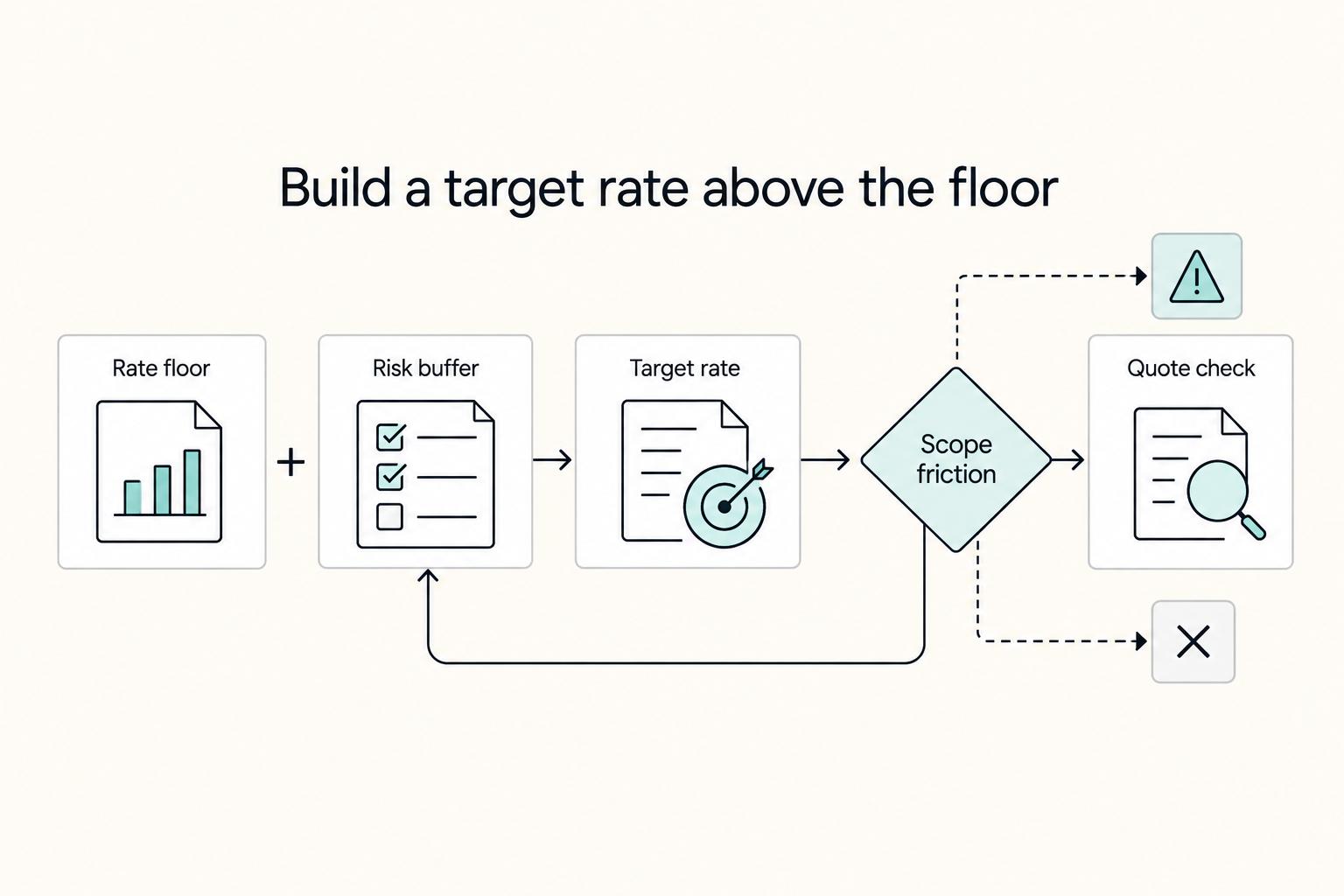
A workable rate is not the neat number a calculator produces. It is the number that still works after you account for real billable capacity, non-client time, scope drift, and the gap between sending an invoice and receiving cleared cash. Start with hourly math even if you do not plan to bill hourly, then turn that number into a quote with clear `payment terms`.
The Best International SIM Cards and eSIMs for Digital Nomads
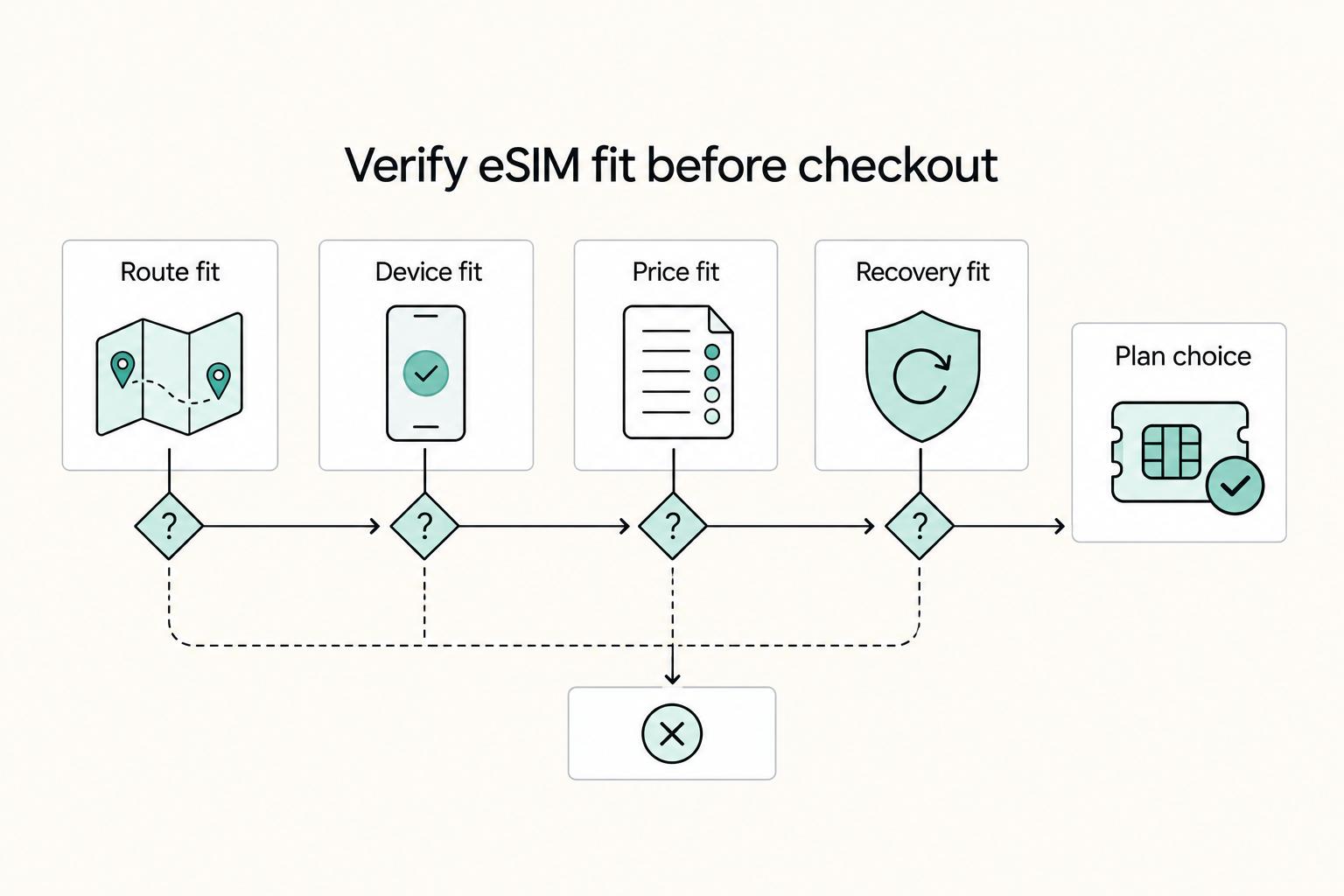
There is no universal winner here. The right pick depends on your route, your work needs, and how much setup risk you are willing to absorb. In most cases, you can narrow the field to Airalo, Nomad, Holafly, Roamless, Google Fi, or a physical international SIM card fairly quickly once you use the right filters.

The Freelance Payment Penalty: A Modeled Audit of Platform Fees, FX Spreads, and Payout Delays
The money rarely disappears through a single, easy-to-spot fee. The real loss is stacked. A marketplace takes its commission, a processor adds a charge for international cards, a bank or payment company converts the currency at a spread, a platform holds the funds before release, and a wire sheds a little to intermediaries on the way in. Each layer looks defensible on its own, but the worker feels the combined result as a smaller deposit and a later payday.