
Quick Answer
A Limitation on Benefits clause prevents treaty shopping by restricting specified benefits to qualifying claimants. Treaty residence alone may not be enough: identify the applicable individual, ownership/base erosion, active-business or other route in the current treaty. Competent-authority relief generally requires an actual favourable determination, and other income and form conditions still apply.
What a Limitation on Benefits clause does#
A Limitation on Benefits (LOB) article restricts access to specified treaty benefits to prevent treaty shopping: routing income through a treaty-country person chiefly to obtain benefits intended for qualifying residents. Treaty residence is the starting point. Where LOB applies, the claimant must satisfy an available treaty-specific route, such as qualified-person status, an income-linked business test or competent-authority relief. Other treaty conditions still apply.
Identify the claimant, income type and source before choosing a treaty rate. A company’s registration address does not establish treaty residence, and a U.S. client does not make all service fees U.S.-source income. For personal services, source generally follows where the work is performed. The payment can have no treaty-rate question even though the payer asks for foreign-status documentation.
Use this quick decision sequence first#
| Step | What to do | Key detail |
|---|---|---|
| Confirm treaty and LOB article | Confirm the exact treaty for your Contracting State and whether it includes an LOB article | Check current treaty/protocols, effective dates and any suspension; absent LOB does not remove other conditions |
| Start with the simplest claimant path | If you are claiming as an individual resident of a Contracting State, check that lane first | Table 4 code 01 identifies the individual category; it is not a form checkbox or proof of residence |
| Select the documentation for the claimant and payment | Distinguish foreign individual/entity, service location, income character and any exemption sought | W-8BEN, W-8BEN-E, 8233 and other forms have different scopes; see the form table below |
| Submit the claim to the right party | Give the claim to the payor of the income, the withholding agent | If treaty relief is unsupported, ordinary applicable withholding may still allow payment; LOB does not itself require holding every payment |
Confirm the exact treaty and whether it has an LOB article.#
Check whether the current treaty has an LOB article and which benefits it restricts. If none applies, you still need to satisfy residence, income-article, beneficial-owner and other relevant conditions. Read amendments and current suspension notices alongside the treaty.
Start with the simplest claimant path.#
Individuals are generally qualified persons under treaties with an individual route, and IRS Table 4 uses code 01 for that category. A direct individual claimant should verify treaty residence and the relevant income conditions; an entity does not inherit this route merely because its shareholder is an individual.
Match the form to the income type before payment.#
A foreign individual generally uses W-8BEN for foreign-status or applicable non-service treaty claims; an entity generally uses W-8BEN-E where appropriate. A nonresident alien individual seeking a treaty withholding exemption for qualifying U.S.-performed personal services uses Form 8233. Wages, effectively connected income and intermediary/flow-through arrangements may need other documentation. Form 8233 generally requires a U.S. TIN; W-8 treaty claims can have different U.S./foreign TIN rules and exceptions.
Submit the claim to the right party.#
Give the applicable certificate to the withholding agent. It must not apply a treaty rate when it knows or has reason to know the claim is ineligible. For Form 8233, the agent also has IRS submission and waiting-period responsibilities; the certificate is not an immediate payment exemption on signature alone.
What your first evidence file should contain#
Keep the file lean but reviewable: the treaty article you rely on, the LOB article excerpt if there is one, documentation of treaty residence, your TIN, and the form you gave the withholding agent.
If you are not claiming as a direct individual, add documentation showing which LOB test you think applies. If you cannot point to the exact treaty text and the exact test, you are not ready to claim reduced withholding.
When to stop and escalate#
Slow down if your case appears to depend on Table 4 code 07 (ownership and base erosion), 09 (active trade or business), or 10 (discretionary determination). Those paths usually require tighter documentation before you certify anything.
Fix the specific mismatch before certifying treaty relief: claimant, treaty provision, form or required identification. If the claim remains unresolved, the withholding agent can evaluate ordinary applicable withholding and reporting. Do not confuse withholding tax from a payment with stopping the entire payment.
Confirm treaty coverage and income source#
Use official treaty text and the matching protocol before calculating a rate. Check that the provisions are in force for the payment and that the income is covered. The following source review helps prevent a checklist from another treaty becoming your rule:
Identify the exact U.S. income tax treaty for your Contracting State.#
Start with the treaty itself, because eligibility is treaty-specific and comes from the actual text.
Confirm whether that treaty includes a Limitation on Benefits (LOB) article.#
An LOB article can restrict particular benefits and contain exceptions or alternative routes. Its absence removes that additional screen, not the rest of the treaty’s requirements.
Use IRS Table 4. Limitation on Benefits as a map, not a final determination.#
IRS Table 4 identifies categories including 01 individual, 07 ownership/base erosion, 08 derivative benefits, 09 active business and 10 discretionary determination. Use those codes to locate the treaty provisions. On Form W-8BEN-E, select the applicable line 14b description; a code copied from the table is not itself the certification.
Verify which LOB tests are actually available in your treaty text.#
Do not assume every treaty includes the same set of tests.
Keep the current income article, relevant LOB text and chosen route together. Check effective dates and amendments rather than relying on an old table alone. Where the actual text contradicts a generic summary, resolve the text and facts before signing the claim.
Identify an available LOB route#
Map the claimant and income to a route actually available in the treaty. Residence and an LOB route are separate questions where LOB applies. Some routes qualify a person generally; others apply to a particular income item. An ownership route failing does not establish that every other route fails.
For most solo operators, start with routes that fit a business-of-one structure. Public-company routes, including subsidiary-style public-company routes where a treaty includes them, usually are not the first screen. They generally matter only if you have a listed entity in your ownership chain.
Start with the tests that usually screen fastest#
Ownership and base erosion tests examine qualified ownership and defined deductible payments. The percentage, measurement period, permitted owners and excluded payment categories vary by treaty. Ordinary business spending is not automatically excluded, and every payment to a foreign person is not automatically counted. Build a ledger calculation using the actual paragraph.
The active-business route usually requires real activity in the residence country and a connection between that activity and the income claimed. Certain investment activities are excluded, and connected businesses may face a substantiality test. Registration alone does not establish these facts; the exact treaty controls.
The derivative benefits path is treaty-specific and ownership-chain dependent. If your analysis relies on assumptions instead of documents and treaty text, treat it as interpretation-heavy.
Use this triage rule.#
- Likely yes: you can point to an available treaty route and produce matching documents now.
- Needs interpretation: the route depends on treaty-specific conditions, layered ownership, or judgment calls you cannot prove cleanly from your file.
- Escalate: no objective test fits, and discretionary determination is your only plausible route.
Discretionary relief is not self-certification that the structure looks commercial. Obtain the competent authority’s favourable determination where required. W-8BEN-E instructions say benefits generally cannot be claimed while the request is pending unless the treaty or technical explanation specifically provides otherwise.
Decision table#
| Test path | Inputs to screen first | Common disqualifier | Evidence to have before filing |
|---|---|---|---|
| Ownership and base erosion | Legal ownership, qualified-person status, deductible payment flows | Unclear ownership chain or excessive deductible outflows to non-qualified persons | Formation records, shareholder or cap table records, org chart, ledger detail, related-party agreements |
| Active trade or business | Real operating activity in treaty country, link to income for which benefits are claimed | Thin local substance or weak connection to covered income | Contracts, invoices, operations records, payroll or contractor records, financial records |
| Derivative benefits | Treaty includes route, ownership chain can be mapped, owner status can be verified | Treaty-specific conditions not clearly provable | Full ownership chart, owner residency records, parent or entity records, treaty excerpt |
| Discretionary determination | No clean objective route, facts still non-abusive | No favourable competent-authority determination where required | Facts memo, commercial rationale, application and actual favourable determination for the claimed benefit |
| Public-company routes | Actual listed entity facts in the ownership chain | No listed entity in chain | Listing support, group structure records, ownership chart |
Run two checks before forms go out. Confirm the exact treaty wording again. LOB language can vary from the U.S. Model, so your available route may differ from what you saw in another treaty.
The current Publication 515 distinguishes treaty terminations and suspensions. For example, the Hungary treaty ceased to apply from January 1, 2024, while Russia’s specified provisions were suspended from August 16, 2024. These are coverage questions, not failed LOB tests; verify the affected provision and payment date.
Choose a route supported by the treaty and records. Derivative benefits may be an objective route when every condition is established; it is not automatically discretionary. Obtain professional review when owner status, rates or substantiality remain uncertain.
A treaty-specific ownership and base erosion example#
Under U.S.–UK Article 23(2)(f), the ownership limb requires specified qualified persons to hold at least 50% of aggregate voting power and value on at least half the period’s days. The base erosion limb requires less than 50% of gross income to be paid or accrued in defined deductible payments to nonresidents of either state, subject to the paragraph’s exclusions.
Illustration: assume a UK treaty-resident company is wholly owned throughout the period by an individual who is a qualifying UK treaty resident. Its gross income is £100,000 and the payments counted under this exact base erosion limb total £40,000. The ratio is 40%, below 50%. If the counted payments were £50,000, that limb would fail because the text says less than 50%. This calculation assumes the ownership and payment facts are established; it does not decide the separate income article, beneficial ownership or other routes.
| Payment/claimant facts | Documentation to consider | Limit |
|---|---|---|
| Foreign individual; applicable non-service treaty claim | W-8BEN | Verify treaty provision and TIN rules |
| Foreign beneficial-owner entity; applicable treaty claim | W-8BEN-E | Review line 14b and any line 15 special conditions |
| Nonresident individual; qualifying U.S.-performed personal-services exemption | Form 8233 | Follow U.S. TIN and withholding-agent submission/waiting procedure |
| Nonresident individual; services performed wholly abroad | Document foreign status and where work occurred as appropriate | Do not assume U.S.-source services or Form 8233 from a U.S. client alone |
| Flow-through, intermediary or effectively connected income | Applicable special certificate/documentation | Review W-8IMY, W-8ECI or owner documentation as relevant |
For a step-by-step walkthrough, see A Deep Dive into the 'Services PE' Clause in Modern Tax Treaties.
Build the evidence for your specific claim#
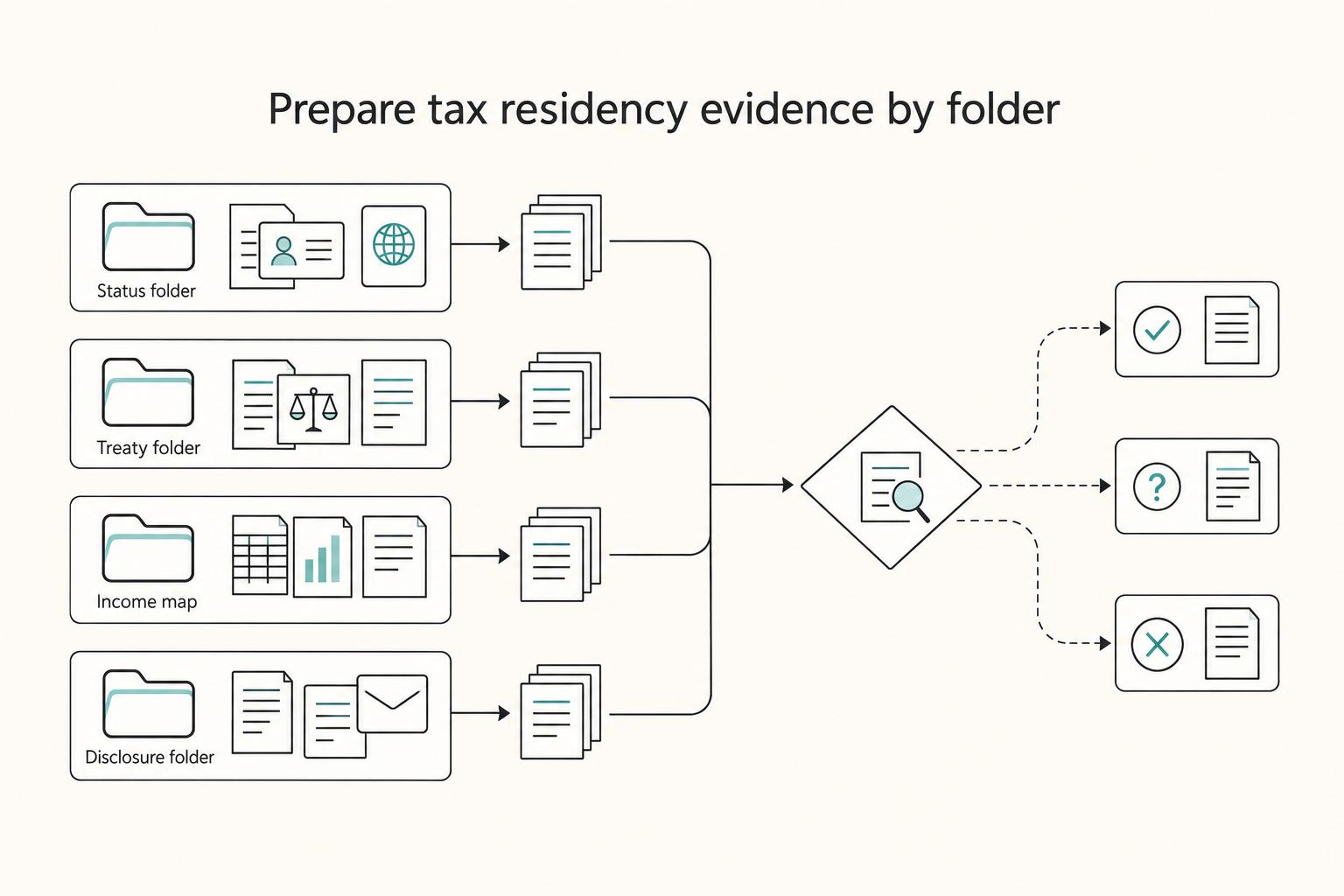
Build the file so a reviewer can verify your treaty claim end to end without guessing. Your evidence pack should connect three things clearly: the treaty text, the payee or entity facts, and the payment timeline tied to your chosen path.
Build the file around source text first#
Lead with the controlling treaty article excerpt, then add the treaty-specific technical explanation, if one exists, as support. Use the technical explanation as an official guide, not a substitute for the treaty text.
Use a technical explanation matching the treaty and protocol you are applying. A U.S.–Canada explanation can help interpret that convention but cannot supply missing requirements for a different country’s treaty.
| File section | What to include | Why it matters |
|---|---|---|
| Treaty authority | Current treaty article excerpts, treaty-specific technical explanation | Shows the legal basis you are relying on |
| Payee and entity facts | Payee-identification notes, including flow-through/disregarded entity treatment, plus supporting entity records | Supports who is claiming and whether the payee is correctly identified |
| Claim chronology | W-8 or W-9 artifacts, payout records, withholding records, invoices or contracts, audit-trail exports | Shows what was collected, when, and which payments the claim relates to |
Document ownership and payment flows with payee identification in mind#
If your position depends on ownership and payment flows, map both: who owns the claimant and where related payments go. Publication 515 checkpoints are useful here because they explicitly call out Identifying the Payee and Flow-Through Entities. They also address disregarded entities.
Working rule: if your org chart, ledger flow, and tax form collection do not point to the same payee story, pause and fix the mismatch before you claim benefits.
Prove business activity with operating records, not registration alone#
If your path relies on business activity, build the file around operating evidence such as contracts, invoices, payroll or contractor records, expense support, and operating correspondence. Use registration and residency documents as supporting context, not the core proof.
If substantiality matters, document both relevant activities and the treaty’s comparison. Professional judgment may be needed, but the presence of the word alone does not make a properly supported business route unavailable.
Use Gruv records as chronology support, not standalone treaty proof#
Include available withholding certificates, payment records and audit exports from your actual systems to establish chronology. Verify that any Gruv workflow supports the records you need. Platform documents cannot create treaty residence, beneficial ownership or LOB eligibility.
Review payee identification and any applicable Forms 1042/1042-S obligations with the responsible withholding agent or adviser. Those are reporting obligations with their own rules; complete them where required without treating every uncertainty as a reason to withhold the entire gross payment.
Related reading: A Deep Dive into the 'Dividend' Article of the US-Germany Tax Treaty for LLC Owners.
Decision Rules for Simple Structures and Layered Structures#
Use a simple rule: if the payee, beneficial owner, and income-derivation story all line up on one clean set of facts, you may have a certifiable treaty claim. If they do not, treat it as an escalation case.
Start with the direct claimant path#
For a direct claim, confirm the basics first: the claimant is the beneficial owner, meets any applicable LOB requirement, and gives the correct form to the withholding agent, or payor.
Choose the certificate using claimant type, income source and the exemption sought, rather than a service/non-service shortcut. Foreign beneficial-owner entities generally use W-8BEN-E; individuals generally use W-8BEN. Form 8233 is for qualifying treaty withholding exemptions of nonresident alien individuals on U.S.-performed personal services, subject to its rules. A foreign individual working wholly abroad is not routed to Form 8233 solely because the invoice is for services.
Use these if-then checks before claiming treaty relief#
| If this applies | Then do this | Why it matters |
|---|---|---|
| The payment is direct and the claimant facts are clean | Keep the claim direct | Match the payee shown in your records and forms to the person claiming treaty benefits |
| An entity is involved | Treat entity certification as a decision gate | Determine who derives the income under section 894 and how each relevant country treats the entity; special hybrid/flow-through rules may apply |
| Your facts suggest third-country benefit access | Examine the actual route and owner conditions | Third-country ownership may be relevant under derivative benefits; it does not itself establish failure |
| Your position relies on multiple legal assumptions at once | Escalate | When the claim depends on stacked interpretations, it is no longer a low-risk DIY filing |
If the payment is direct and the claimant facts are clean, keep the claim direct.#
Match the payee shown in your records and forms to the person claiming treaty benefits.
If an entity is involved, treat entity certification as a decision gate.#
Determine which person derives the income under section 894 and how the relevant jurisdictions treat the entity. Transparency can change the claimant and documentation, but some hybrid entities can claim under special rules. Do not use “entity must never be transparent” as a universal test.
If your facts suggest third-country benefit access, pause.#
Treaty shopping rules restrict inappropriate third-country access, but an available derivative-benefits route may expressly consider qualifying third-country owners. Check equivalent-beneficiary conditions rather than rejecting a structure from nationality alone.
If your position relies on multiple legal assumptions at once, escalate.#
When the claim depends on stacked interpretations, it is no longer a low-risk DIY filing.
What usually breaks in layered cases#
If the payor knows, or has reason to know, the owner is ineligible, it must not apply the treaty rate.
A nonresident alien who elected U.S. resident income-tax treatment with a U.S. spouse generally cannot claim foreign residence for reduced U.S. treaty taxation. The IRS also notes saving-clause exceptions in some treaties. Review both issues; this is not an absolute statement that the election eliminates every treaty exemption.
Sanity Checks Before You Claim Treaty Benefits#
Before you claim treaty benefits, make sure every related filing position tells the same story. Contradictions can undermine an otherwise workable claim.
Check for filing-position conflict first#
Ask one question first: does your treaty position align with the rest of your U.S. return posture? If one document takes a position that conflicts with another, pause and reconcile before filing.
Use consistent underlying facts while recognizing different legal definitions. Treaty residence, domestic-law residence, beneficial ownership and foreign-asset reporting can have different scopes. Explain a legitimate difference in the workpapers instead of changing one form simply to make all answers look identical.
Run the foreign-asset reporting cross-check#
Treaty eligibility does not replace foreign-asset reporting. If you are a specified person with specified foreign financial assets, Form 8938 may still apply. It must be attached to your annual return by that return's due date, including extensions, and state the correct calendar year or tax year.
Confirm whether Form 8938 is in scope.#
Apply the Form 8938 category independently. For an unmarried specified individual living in the United States, the threshold is more than $50,000 at year-end or $75,000 anytime. Joint filing and qualifying living-abroad categories have higher thresholds; specified domestic entities have their own definition. If no income tax return is required, the instructions say Form 8938 is not required for that year.
Keep Form 8938 and FBAR as separate checks.#
Filing Form 8938 does not remove a separate FBAR requirement. If FinCEN Form 114 is otherwise required, you may need both.
Reconcile documents before certification.#
Reconcile facts such as ownership, dates and residences across the workpapers. A difference caused by distinct legal tests is not necessarily a contradiction. Resolve unexplained factual mismatches before certification, and retain separate Form 8938 and FBAR analyses where relevant.
If you need a separate refresh on the saving clause, see How to Handle the 'Saving Clause' in US Tax Treaties.
Red Flags That Mean You Should Escalate Immediately#
Escalate immediately when your treaty position depends more on interpretation or assumptions than on a clean, treaty-specific evidence file.
1. You cannot prove the ownership chain and payment chain cleanly#
Escalate when ownership or payment flows are unclear. If you cannot show one consistent record of legal ownership, the income recipient, and downstream payments across entity records and withholding documentation, treat that as an escalation trigger.
2. Your answer turns on whether your activity is "substantial"#
If your result depends on interpreting "substantial," treat that as a professional-review case. You need the treaty text and its matching technical explanation in your file before taking a judgment-heavy position.
3. Your derivative benefits path depends on multi-country assumptions#
If eligibility depends on layered cross-border assumptions, escalate. Do not rely on copied logic from another treaty or old cross-era comparisons. Technical explanations are treaty-specific, protocol-amended, and can explicitly note that they are not complete comparisons to earlier conventions.
4. You are relying on discretionary relief without strong prior support#
If competent-authority relief is the only available route, prepare the application and obtain the determination required to claim. Commercial rationale supports the request; it is not a substitute for approval. Keep the decision and its conditions with the claim file.
Where LOB Fits Against Other Anti-Abuse Standards#
Use the bilateral treaty and applicable U.S. law for the actual claim. OECD anti-abuse concepts help explain treaty policy, but do not automatically add a new test to a U.S. treaty.
| Item | How the article frames it | Filing role |
|---|---|---|
| LOB provisions | Use objective criteria to determine who can claim treaty benefits | Show facts and records that match the treaty path you are relying on |
| PPT | A broader, purpose-focused concept in OECD treaty-abuse materials | It may help explain policy intent, but it is not a substitute for showing eligibility under the specific U.S. treaty provision you are using |
| BEPS Action 6 | Relevant background because it treats treaty shopping as a minimum-standard problem | Context only; it does not decide whether your U.S. treaty claim passes |
| Bilateral treaty text and U.S. filing requirements | The controlling authority for a U.S. filing position | Use the bilateral treaty you are claiming under and U.S. filing and disclosure requirements as the final authority |
Objective tests are not the same as a purpose-based screen#
LOB provisions use objective criteria to determine who can claim treaty benefits. Your file should show facts and records that match the treaty path you are relying on.
PPT is a broader, purpose-focused concept in OECD treaty-abuse materials. It may help explain policy intent, but it is not a substitute for showing eligibility under the specific U.S. treaty provision you are using.
BEPS Action 6 is context, not your filing authority#
BEPS Action 6 is relevant background because it treats treaty shopping as a minimum-standard problem. OECD also frames abuse risk as benefits being routed to third-jurisdiction residents or income being taxed contrary to treaty intent.
That background still does not decide whether your U.S. treaty claim passes. Do not treat non-U.S. treaty analysis as a replacement for the bilateral U.S. treaty text that governs your case.
Use treaty text and IRS checkpoints as the final authority#
Your outcome depends on the bilateral treaty in force for your case and U.S. filing requirements.
Use this working rule in your notes.#
- Start with the exact bilateral treaty you are claiming under, and identify the eligibility article that applies (for example, an LOB provision where present).
- Confirm applicable U.S. filing and disclosure requirements, including Form 8833 where required; use the current treaty and relevant protocols.
- Use OECD materials, including BEPS Action 6 and PPT discussions, as context unless your treaty text makes them directly relevant.
If concepts still conflict after that, escalate. For filing, a treaty-specific record is safer than a source-mixed memo.
How LOB Can Affect Dividend Tax Treatment#
LOB can matter in dividend work when your analysis depends on treaty eligibility. Passing LOB can be necessary for treaty benefits, but it does not by itself determine whether a dividend is qualified or whether an issuer is a qualified foreign corporation.
Use this quick check before you let treaty status drive your dividend conclusion.#
Confirm treaty status is actually part of your dividend analysis.#
If your dividend conclusion does not depend on treaty eligibility, LOB may not control that step. If it does, read the actual treaty LOB article. IRS Table 4 is a starting map, not the final rule.
Keep legal tests separate.#
LOB is a treaty-access test. Dividend classification under other tax rules is a separate question. They can connect, but one does not automatically answer the other.
Use the right withholding claim path for dividend-type income.#
For income not from personal services, treaty-rate claims are generally documented through Form W-8BEN or the entity version, with beneficial-owner certification, a TIN, and LOB certification if applicable. If an entity is claiming treaty withholding, include the Section 894 derivation certification in your review.
Do not import service-income logic into dividend claims without checking the governing rules. The Form 8233 path is for personal services, so do not treat it as interchangeable with dividend withholding analysis. For freelancers, keep this section limited to actual dividend fact patterns. If the withholding agent knows, or reasonably should know, treaty eligibility is not met, treaty rates should not be applied.
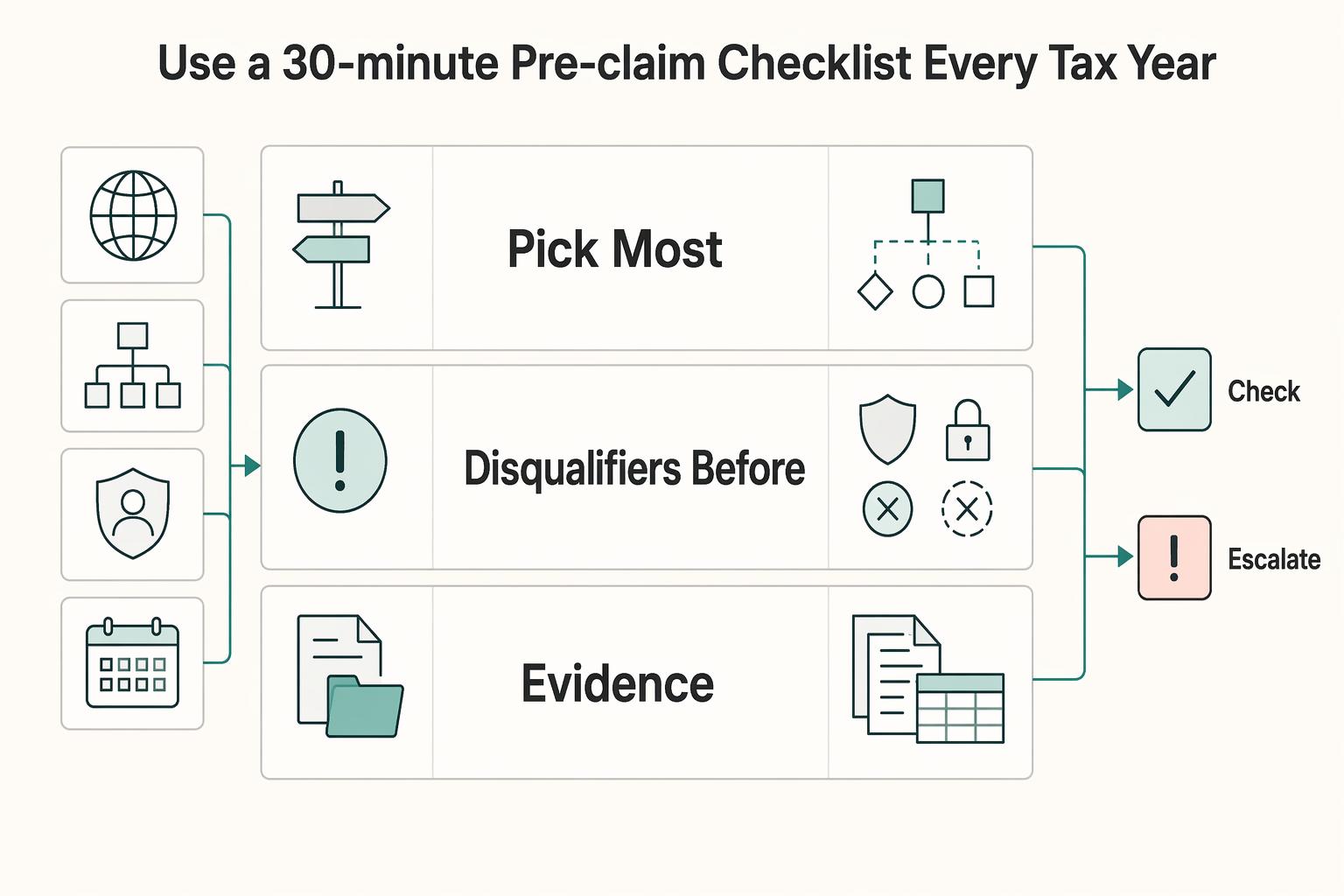
Use a pre-claim review sized to your facts#
A short initial review can identify the likely route and missing evidence. Thirty minutes is a planning allowance, not a promise to resolve layered ownership or competent-authority relief. Review when the facts or certificate validity change; not every W-8 needs annual reissuance.
Start with four inputs: the current U.S. income tax treaty for your Contracting State, your current entity chart, your residency facts for the year, and your prior-year filing position. Use IRS Table 4. Limitation on Benefits as a map only. Final eligibility comes from the actual treaty Limitation on Benefits (LOB) article, because available tests can differ by treaty.
Pick the most likely LOB path first.#
Start with the path that fits your facts instead of testing everything at once. If you are an individual resident, treat "generally not affected" as a prompt to verify, not automatic clearance. For entities, identify the likely treaty path first, such as ownership and base erosion, derivative benefits, active trade or business, discretionary determination, or another treaty-specific route.
Check disqualifiers before building paperwork.#
First confirm whether the treaty has an LOB article. If it does not, those additional tests are not required. If it does, read the treaty article before relying on category codes such as 01, 07, 08, 09, 10, 11.
Tie each key statement to a stored document.#
Residency, ownership, and entity or payment facts should each map to supporting records. For entity treaty claims, confirm the treaty-claim fields you will use, including Form W-8BEN-E Line 14.
Record unresolved issues immediately.#
Keep a short escalation list for items that depend on interpretation or incomplete support so they are reviewed before filing.
Keep a dated conclusion, the selected route, supporting documents and any unresolved issue. If a material certification is unsupported, do not sign it as settled. Ask the withholding agent how ordinary withholding applies while the claim is resolved.
The W-8 Form Generator can help prepare a draft. Confirm that it supports the required form and fields; it cannot determine treaty eligibility, choose the LOB route or replace the applicable instructions.
Keep a reviewable treaty claim#
A useful claim identifies the current treaty provision, claimant, income item and supporting route. Passing LOB is one part of the analysis, not a guarantee of reduced withholding.
Start with treaty coverage before you focus on relief.#
Ask this first: does this treaty cover this income type, and are you the kind of person it can help? Treaty relief varies by country and by item of income. If the treaty does not cover the income, or no treaty applies, standard U.S. nonresident tax treatment applies.
This is where filings can drift off course. It is easy to jump to a reduced rate before confirming the correct treaty version, the correct income article, and any later protocol updates. If treaty language is thin or unclear, use the Technical Explanation as the official guide to interpretation before you claim anything.
Build a file that proves your position.#
You do not need a huge binder. You do need a clean evidence file where each key claim maps to a document.
- The current treaty article you rely on, plus relevant protocol language.
- The matching Technical Explanation excerpt when interpretation is needed.
- Residency records and any certification forms tied to the claim.
- A short note stating the income type and why the treaty article applies.
If a reviewer would have to guess what you are claiming, stop and tighten the file. Also separate general entitlement evidence from LOB proof: Form 8802 and Form 6166 can help when a foreign tax authority requests U.S. residency certification, but they do not replace meeting treaty terms.
Use hard escalation rules when facts are fuzzy.#
Use a one-page test as an internal discipline: if you cannot explain your position in one page with treaty text, your facts, and your records, it is not ready for self-filed treatment. That is a quality check, not an IRS rule.
Escalate when either of these shows up: your facts do not cleanly fit the treaty article, or another part of your filing position conflicts with your claim. Common pressure points include state treatment, since some states honor treaty provisions and some do not, and status issues, since treaties generally do not reduce U.S. tax for U.S. citizens or U.S. treaty residents except in limited cases.
The working rule is simple: use the current treaty, confirm income coverage, rely on official treaty materials when interpretation is needed, and keep records that prove the claim without explanation gymnastics. If that is hard to do, pause and get professional review before filing.
For the records and payment workflow, contact Gruv to confirm supported capabilities. Have a qualified tax adviser resolve treaty eligibility or competent-authority relief.
Frequently Asked Questions
What is a Limitation on Benefits clause in a U.S. tax treaty?
A Limitation on Benefits clause restricts access to specified treaty benefits to prevent treaty shopping. Where it applies, a claimant must meet an available treaty-specific route or obtain required competent-authority relief. Passing LOB does not remove residence, income-article or other applicable conditions.
Do I get treaty benefits automatically if I live in a treaty country?
No. Living in a treaty country is not enough on its own. If the treaty has an LOB article, you still need to meet one of its tests, and a payor should not apply treaty rates if it knows or has reason to know you are not eligible.
Which LOB tests matter most for freelancers?
Start with the individual route if you are claiming directly as an individual. In IRS Table 4, that is 01, while entity routes include 07 (ownership and base erosion), 08 (derivative benefits), 09 (active trade or business), and 10 (discretionary determination). Use Table 4 as a map, then confirm the actual treaty text because available tests vary by treaty.
Why do people fail LOB even when their setup looks legitimate?
A common failure point is treating a summary table as final authority instead of checking the treaty's actual LOB article. Another is claiming a test without records that support it. Claims also fail when the payor has reason to know the owner is not eligible.
What should I do before claiming reduced withholding?
Identify the claimant, income source and treaty provision, then document an available LOB route where required. Choose the certificate for that payment: generally W-8BEN for a foreign individual, W-8BEN-E for an appropriate foreign entity, and Form 8233 for qualifying U.S.-performed personal-services treaty withholding exemptions of nonresident alien individuals. Follow the specific TIN and withholding-agent procedures.
When should I talk to a tax professional?
Talk to one when you cannot clearly determine which treaty test applies or whether your documents actually support that test. Escalate if your position depends on interpretation rather than clear treaty text and evidence. If you cannot explain your claim with one treaty path and matching records, it is not a strong DIY filing case.
Is LOB the same thing as the saving clause?
No. They are separate treaty mechanisms and should be checked separately before relying on treaty benefits. Some treaties include saving-clause exceptions that may still allow certain U.S. residents to claim a treaty exemption. If that distinction affects your filing position, read How to Handle the 'Saving Clause' in US Tax Treaties before you file.
Try a related tool
Researched and edited by the Gruv editorial team. Gruv builds cross-border billing, payouts, and finance-operations software for global businesses.
Sources
Includes 1 external source outside the trusted-domain allowlist.
Educational content only. Not legal, tax, or financial advice.
Related Posts

Digital Nomad Taxes in 2026 With a Defensible Filing Plan
With digital nomad taxes, the first move is not optimization. It is figuring out where you may be taxable, where filings may be required, and what proof supports that position.
Handle the Saving Clause in US Tax Treaties Without Guesswork
Start with documents, not conclusions. Before you take any `saving clause us tax treaties` position, write down your residency facts, period-by-period status, and filing logic in plain language so someone else can follow your reasoning.

The Freelance Payment Penalty: A Modeled Audit of Platform Fees, FX Spreads, and Payout Delays
The money rarely disappears through a single, easy-to-spot fee. The real loss is stacked. A marketplace takes its commission, a processor adds a charge for international cards, a bank or payment company converts the currency at a spread, a platform holds the funds before release, and a wire sheds a little to intermediaries on the way in. Each layer looks defensible on its own, but the worker feels the combined result as a smaller deposit and a later payday.