
Quick Answer
Form W-8EXP documents qualifying foreign governments and other listed organizations for U.S. withholding purposes. A withholding qualified holder may also use it for section 1445 relief. Match the income and claim to the IRS instructions, then give the certificate to the requester before payment. The current form revision is October 2023.
You can avoid most W-8EXP mistakes in one decision pass#
Decide the form before you fill in any fields. First confirm whether the filer fits one of the organization types that use this certificate, or whether the facts belong on a different W-8 path.
The IRS describes Form W-8EXP as a certificate for certain foreign governments and other foreign organizations used for U.S. withholding and reporting. In practice, it supports the core claims that the filer is not a U.S. person and is the beneficial owner of the relevant income. Reduced-rate or exemption treatment depends on the organization category, including examples such as a foreign government, an international organization, or a foreign central bank of issue.
Start with filer status, then the payer request#
A payer can ask for a W-8, but you still need to match the version to your facts. Check status first, then match the form.
If you are a foreign individual who is the beneficial owner of an amount subject to withholding, review the W-8BEN path. Provide that form to the withholding agent or payer when requested, whether or not you are claiming a reduced rate or exemption. If the filer is an entity and does not clearly fall into the specific organization categories for this certificate, review W-8BEN-E next, starting with who must provide it.
Use one short decision pass#
Before signing, answer these in order. Who is the filer? An individual foreign person, or a qualifying foreign organization. What is the claim basis? Beneficial-owner foreign status, or status tied to a specific organization type. What did the payer request? A general W-8, or W-8EXP for a stated reason.
If those answers do not line up, pause and verify classification before filing.
Keep the choice defensible#
Use the IRS current revision page as a final check before you rely on a saved template. For this certificate, the instructions are marked 10/2023 in the current revision area.
One failure mode is trying to force it onto facts that only support a standard beneficial-owner claim. If filer status and payer request point in different directions, escalate and confirm the form path first.
What Form W-8EXP is and what it is not#
Form W-8EXP is a narrow withholding certificate for specific foreign organization types, not a general non-U.S. contractor form. Its full title is Certificate of Foreign Government or Other Foreign Organization for United States Tax Withholding and Reporting, and that title reflects its limited scope.
What it is:
- A form used in U.S. withholding and reporting for specific categories, including foreign governments, international organizations, foreign central banks of issue, foreign tax-exempt organizations, foreign private foundations, and governments of U.S. territories.
- A way to support the core claims that the filer is not a U.S. person and is the beneficial owner of the relevant income.
- A status-and-claim form tied to Internal Revenue Code treatment, including sections like 115(2), 501(c), 892, 895, and 1443(b).
What it is not:
- Not filed directly with the IRS. You give it to the withholding agent or payer.
- Not the default path for individuals or entities outside the listed categories.
- Not the right form when a beneficial owner is only claiming foreign status or treaty benefits. That route is generally W-8BEN or W-8BEN-E instead.
- Not the right form when claiming income effectively connected with a U.S. trade or business. That route is W-8ECI.
Before you provide this form, use one simple checkpoint: confirm your status matches this form, confirm the requester is the payer or withholding agent, and confirm they want the current IRS version.
You might also find this useful: A Guide to Form 1042-S for Foreign Persons' U.S. Source Income.
Do you need Form W-8EXP or a different W-8#
Decide the form before you fill in any fields. Confirm entity type, confirm claim basis, then map to the correct W-8.
Start with entity type#
The usual categories are foreign governments, international organizations, foreign central banks of issue, foreign tax-exempt organizations, foreign private foundations, and governments of U.S. territories. The separate section 1445 route for a withholding qualified holder can also apply.
If neither those categories nor the section 1445 route applies, move to another W-8 path:
- Beneficial owner solely claiming foreign status or treaty benefits: Form W-8BEN or W-8BEN-E.
Then test the claim basis#
Even if your entity type fits, confirm what you are actually claiming. This form can be used to establish non-U.S. status, support a beneficial owner claim, and support certain reduced withholding or exemption claims for listed organization types.
If your claim does not line up with the status lanes referenced on the form, including sections 115(2), 501(c), 892, 895, or 1443(b), follow the IRS routing logic below.
- Beneficial owner only claiming foreign status or treaty benefits: W-8BEN or W-8BEN-E.
- Income effectively connected with a U.S. trade or business: W-8ECI.
- Acting as an intermediary: W-8IMY.
| Payer request scenario | Likely form | Why this form | What to verify before signing |
|---|---|---|---|
| U.S. payer is onboarding a foreign government, international organization, foreign central bank of issue, foreign tax-exempt organization, foreign private foundation, or government of a U.S. territory | W-8EXP | IRS designates this form for these organization classes and related withholding and reporting claims | Confirm your entity fits a named category, confirm beneficial owner status for the income, and confirm the payer is using the current IRS version, for example Rev. October 2023 |
| Beneficial owner is only claiming foreign status or treaty benefits | W-8BEN or W-8BEN-E | IRS routing for this claim type points to W-8BEN or W-8BEN-E instead of W-8EXP | Verify which of the two forms matches your filer type |
| Foreign person claims the income is effectively connected with a U.S. trade or business | W-8ECI | IRS routes effectively connected income claims to W-8ECI | Verify the income is being treated as effectively connected before signing |
| You are acting as an intermediary | W-8IMY | IRS routes intermediary cases to W-8IMY, not this form | Verify you are not the beneficial owner and your role is intermediary |
Before you sign#
Use one quick check. Are you the beneficial owner in a named category for this certificate, or are you using another W-8 route for foreign status, treaty, ECI, or intermediary treatment?
Give the signed form to the withholding agent or payer, not to the IRS.
If you want a second pass on form selection, you can use the W-8 form generator.
Compare W-8EXP against W-8BEN W-8BEN-E W-8ECI and W-8IMY#
Choose the form by filer type, claim type, and whether special tax treatment applies. This is a narrow lane decision, not a general foreign-status substitute.
| Form | Filer type | Claim type | Common trigger | Common wrong-form failure mode |
|---|---|---|---|---|
| W-8BEN | Individual | Foreign status, often treaty-related claims | An individual non-U.S. payee is onboarding with a U.S. payer | Used by an entity, or used when the income is claimed as effectively connected with a U.S. trade or business |
| W-8BEN-E | Entity | Foreign status and treaty benefits for an entity | A non-U.S. entity needs to document status and does not fit another W-8 lane | Used by an individual, or used where another W-8 form better matches the claim |
| W-8ECI | Payee or beneficial owner | Income claimed as effectively connected with a U.S. trade or business | The recipient is documenting ECI treatment instead of default foreign withholding treatment | Used when facts do not support an ECI claim, or skipped when ECI certification is required |
| W-8EXP | Specialized W-8 lane | Claim depends on specific treatment outside ordinary W-8BEN/W-8BEN-E routing | A payer requests it because the claim context points to this lane | Used as a substitute for ordinary individual or entity foreign-status or treaty forms |
| W-8IMY | Intermediary or certain flow-through entities | Documents the role and underlying withholding allocation | Acting for others or receiving income as a flow-through entity | Used without the required supporting withholding statement or owner documentation |
The key split between the general forms and specialized lanes#
W-8BEN is the individual path, and W-8BEN-E is the general entity path for foreign status or treaty claims. W-8ECI is a payee or beneficial-owner path where the claim is ECI. W-8EXP and W-8IMY are also in the requester scope.
If your claim is only "we are non-U.S." or "we claim treaty treatment," the general W-8BEN or W-8BEN-E route is usually the cleaner fit. A specialized certificate works only when your status and claim actually match that lane.
Where W-8EXP differs in operations#
The practical question is whether the withholding agent can rely on what you submitted. IRS requester instructions are built around withholding-agent reliance and include due diligence, when to request a new W-8, and period-of-validity checkpoints. If role and claim do not align, withholding-agent review may lead to follow-up requests or a new form before reliance.
Also check templates carefully. The IRS requester instructions note 2021 updates for Forms W-8 and instructions excluding W-8EXP in the section 1446(f) update context. Do not assume all W-8 templates changed on the same schedule.
If your facts fit X, do Y#
- If you are a solo freelancer or independent consultant with no specialized-claim basis, use W-8BEN. If you need help with that route, use How to Fill Out Form W-8BEN for a Foreign Freelancer.
- If you are a non-U.S. entity claiming ordinary foreign status or treaty benefits, and no other W-8 lane fits, use W-8BEN-E.
- If you are the payee or beneficial owner and the income is being claimed as effectively connected with a U.S. trade or business, evaluate W-8ECI.
- If the payer specifically asks for W-8IMY, pause and verify why that form applies before signing.
- If your claim depends on a specialized lane, stay on this track and prepare support for that status and claim match.
What goes wrong when form choice is off#
When form selection is unclear, withholding-agent checks can trigger replacement requests or extra documentation. Missing valid documentation can require withholding at the applicable rate. Before first payment, confirm the form-to-claim match, current revision, and review path.
Handle submission correctly so payouts are not delayed#
Once you know Form W-8EXP is the right lane, execution matters. The key checkpoint is submitting it through the channel the withholding agent uses for tax forms.
- Send the signed certificate to the withholding agent, or through the intake path they direct you to use.
- Confirm the form fits IRS guidance, including the when not to use Form W-8EXP guardrail.
- Recheck the current revision and submission requirements whenever you prepare or refresh documentation.
- Verify the current form and instructions on the IRS Form W-8EXP page; both use the October 2023 revision.
- Watch for IRS instruction triggers tied to expiration of Form W-8EXP and changes in circumstances.
Build the minimum evidence pack before anyone signs#
Before anyone signs, build one evidence folder that tells a consistent story across identity and filer status, and include internal signer-approval records as a house control. Then confirm what the payer actually checks before reliance.
Start with identity and filer status consistency#
Keep the legal name, entity status, and required identifiers consistent across the signed form and payment profile. A U.S. EIN is generally required for claims based solely on section 501(c) tax-exempt or private-foundation status; confirm the identifier requirements for the actual claim before signature.
Document your claim basis in plain internal language#
Keep the entity status, income, and claim basis with the signed form. A foreign tax-exempt claim must qualify under U.S. section 501(c) and be supported by an IRS determination letter or an opinion of U.S. counsel; foreign nonprofit registration alone is insufficient. A section 501(c)(3) non-private-foundation claim also requires an attached affidavit based on the latest accounting year, signed by a principal officer, supporting section 509(a)(1), (2), (3), or (4) status. The permitted substitute is a U.S. counsel opinion that establishes that status and meets the public-charity equivalency requirements in Revenue Procedure 2017-53.
Confirm payer checks early, including classification and identifier checks#
Line 4 records chapter 4 status when required, including for a withholdable payment or an account with an FFI requesting the form. Complete the corresponding certification in Part III and check that the payer’s records agree with the signed certificate.
Keep signer authority and approvals in the same package#
Store signer-authority proof and internal approval notes in the same folder as the draft and signed form. Confirm required signer-authority documents with the relevant authority; keep this as a practical evidence standard for consistency and auditability.
Avoid the failure modes that create withholding surprises#
Withholding surprises can come from three avoidable breaks: the wrong form, incomplete handling of requested certification, and conflicting entity details across records.
Pick the right W-8 before you touch the fields#
Start with eligibility, not form familiarity. The usual W-8EXP categories are foreign governments, international organizations, foreign central banks of issue, foreign tax-exempt organizations, foreign private foundations, and governments of U.S. territories. Also test any section 1445 qualified-holder claim before choosing a different form.
Use a quick decision check:
- If you are evaluating an individual foreign beneficial-owner scenario, review the W-8BEN path.
- If the payee is a non-U.S. entity outside the listed categories for this certificate, confirm the correct alternative form before proceeding.
- If you are claiming treaty benefits, follow the current IRS instructions; a foreign tax-exempt organization claiming a treaty benefit uses W-8BEN-E.
Before signing, confirm both points:
- The entity matches an allowed category for this certificate.
- The beneficial-owner claim matches the income covered by the form.
Treat it as requested withholding documentation, not a loose filing task#
Give the certificate to the requester, usually the withholding agent or payer, before payment is made, credited, or allocated. Do not send it to the IRS. Record the delivery channel and the account or vendor profile it covers.
If valid documentation is missing, the withholding agent may need to withhold at the highest applicable rate. Confirm the actual income and withholding regime rather than assuming every missing-form case receives the same treatment.
Run this as an intake process with the withholding side:
- Confirm where the signed form must be submitted.
- Confirm which account or vendor profile it must match.
- Confirm how acceptance is recorded.
Keep delivery proof with the signed form. If the form is requested again, you can show when and where it was accepted.
Keep one entity story across every touchpoint#
A technically correct form can still run into operational issues if records conflict. Because this certificate includes a beneficial-owner claim, keep the same legal name, entity type, and payer-facing identifier aligned across the signed form, onboarding profile, and payment record.
Do a final line-by-line match before first payment, then store the request, signed form, and acceptance confirmation together. This helps reduce avoidable reconciliation and payout delays.
Verify revision and validity details before relying on old templates#
Use the current IRS Form W-8EXP materials as your source of truth, and treat saved templates as unverified until they match. Check your copy against the IRS About Form W-8EXP page, which links to both the form PDF and instructions.
Both the form and instructions use the October 2023 revision. Compare saved templates with the current IRS materials before signing.
Use these checks before submission:
- Confirm the form PDF header matches the current revision shown on the IRS page.
- Confirm the instructions revision aligns with the form revision, not just the filename in your internal folder.
- Confirm you are submitting the form to the withholding agent or payer, not directly to the IRS.
- Confirm the payer portal or onboarding request is asking for that same form type and revision.
A withholding qualified holder may use W-8EXP for section 1445 relief. That status does not itself exempt income from section 1441 or 1442 withholding. A foreign partnership may use this route only if all its interests are held by qualified holders, including through other partnerships.
If payer guidance conflicts with your internal template pack, pause and verify against the current IRS instructions before submitting. Use IRS.gov/FormW8EXP as the tie-breaker for latest developments after publication.
Know when to escalate to a tax professional#
Get professional review when the organization’s status, income type, or claimed exemption is unclear, or when the payer’s request conflicts with the supporting records.
Escalate when your facts do not point to one clear path#
Pause and get professional review when:
- more than one payee or status story seems plausible from your records
- your draft path could fit more than one form or status
- a payer request conflicts with your entity records or classification
- a request references specific tax code sections, but you cannot clearly map that reference to your documentation
Hand the adviser a compact evidence pack#
Send:
- the payer's exact request, including portal labels or screenshots
- entity formation or status records
- the draft form you planned to submit
- a short fact summary covering income type, entity type, and claimed status
- any guidance you relied on, with its date shown
The practical next step is to make one defensible form decision#
Make the form decision before you fill anything in. If you cannot explain, in one short note, why your entity is using this certificate and what claim it supports, stop and resolve that first.
Withholding certificates are fact-driven, not admin busywork. Use this sequence every time: entity type first, claim basis second, submission path third. Starting from an old copy can create a mismatch between what the form says and what your facts support.
Use a three-step decision check#
Start with entity type. Ask what organization will receive the income in legal and tax terms, not in contract or marketing language. Cases are often won or lost on the facts.
Then test the claim basis. State clearly why the certificate is being provided. If a reviewer would have to guess, treat that as a warning sign.
Last, confirm the submission path. Ask who reviews withholding documentation, what format they accept, and whether they require a wet signature or accept an electronic signature. Poor communication can break an otherwise solid tax file.
Build a reusable evidence pack#
Keep a small file you can reuse for each U.S. onboarding request:
- the signed certificate you submitted
- the payer request email or portal instructions
- a one-page internal note with entity type, claim basis, and approver
- payer acceptance or acknowledgment, if provided
This can make future onboarding faster and gives you a clean explanation if questions come up later. Before submitting, run a consistency check line by line: legal name on the form, contracting entity name, and payment profile name.
Verify operations, not just theory#
Do not assume signature handling is uniform. Confirm your payer's exact process, then keep document control simple: one current template, archived superseded drafts, and a clear record of who made the final decision.
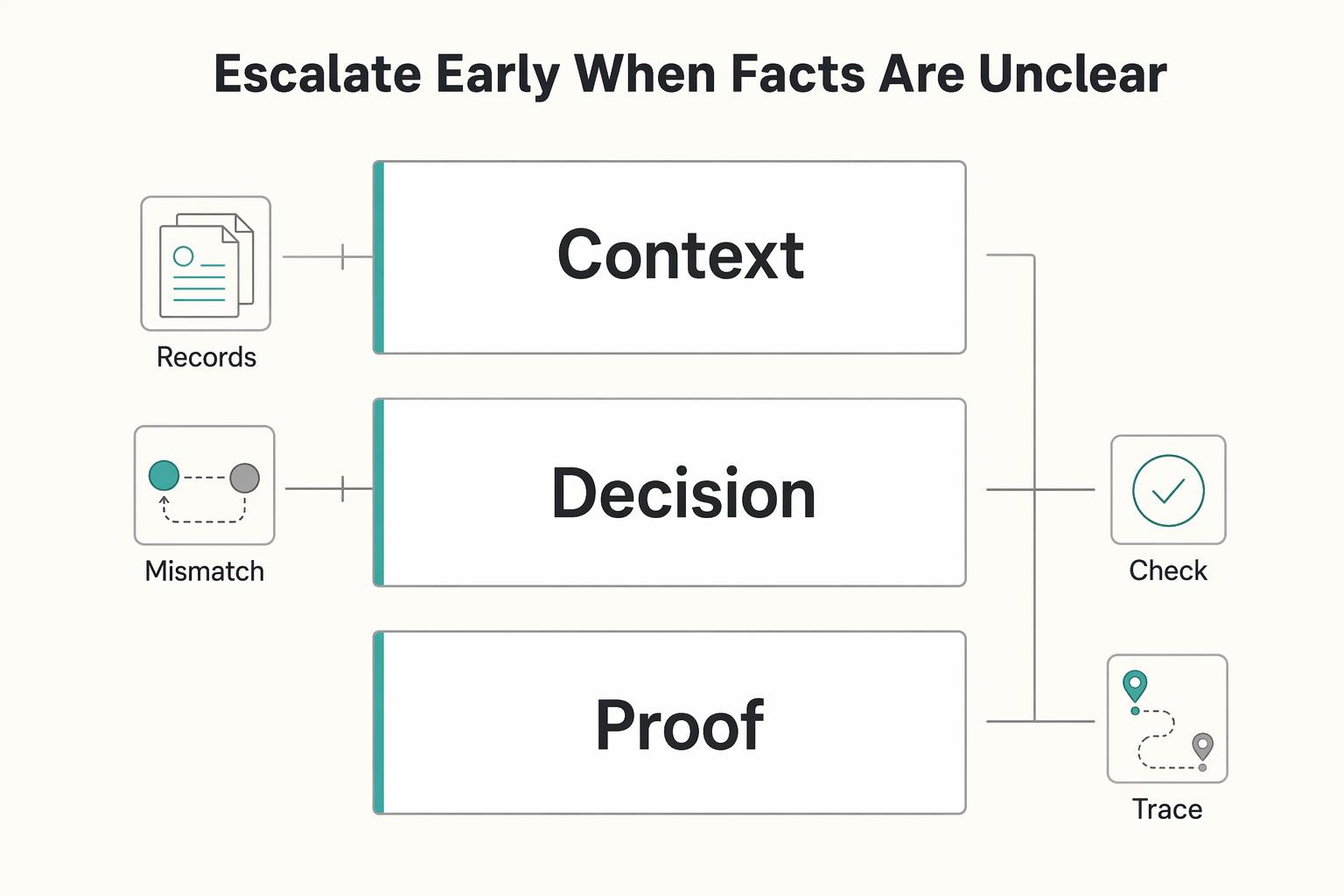
Escalate early when facts are unclear#
If your facts point in more than one direction, escalate early instead of polishing uncertain wording. Ambiguous status, mixed entity records, or payer instructions that do not match your understanding are all reasons to get one professional review.
The operating rule is straightforward. Up-front planning and an initial risk assessment should come before deeper work. One defensible decision now is usually better than repeated document loops later.
If your payer workflow needs compliance gates and traceable payout records, talk to Gruv to confirm fit for your setup.
Frequently Asked Questions
What is Form W-8EXP?
Form W-8EXP is the IRS certificate titled Certificate of Foreign Government or Other Foreign Organization for United States Tax Withholding and Reporting. It is for specific foreign government and foreign organization categories, not as a general-purpose form for any non-U.S. payee.
Who should use Form W-8EXP?
The usual categories are foreign governments, international organizations, foreign central banks of issue, foreign tax-exempt organizations, foreign private foundations, and governments of U.S. territories. The separate section 1445 route for a withholding qualified holder can also apply.
Do I send Form W-8EXP to the IRS?
No. You give it to the withholding agent or payer, and you do not send it to the IRS.
What can Form W-8EXP help me claim?
For qualifying organizations, it supports foreign-status and beneficial-owner claims and the applicable reduced or exempt withholding treatment. The section 1445 qualified-holder route instead supports non-foreign treatment under section 897(l). The income, status, and supporting documents must match the claim.
When should I use a different W-8 form?
Use W-8BEN or W-8BEN-E when you are only claiming foreign status or treaty benefits. If that is your case, see How to Fill Out Form W-8BEN for a Foreign Freelancer. Use W-8ECI if you are claiming income is effectively connected with a U.S. trade or business. Use W-8IMY if you are acting as an intermediary.
What is the current Form W-8EXP revision I should check?
The form PDF shows Rev. October 2023, and the IRS About page lists Instructions for Form W-8 EXP (10/2023). Before you submit, verify that your payer's version matches current IRS materials.
How long is a W-8EXP valid?
W-8EXP generally remains valid until a change makes its information incorrect. Some cases end on the last day of the third succeeding calendar year; section 1445 has a separate two-year rule. Check the exception for your status and notify the withholding agent within 30 days of a change; a qualified holder losing that status must notify before further dispositions or distributions.
Try a related tool
Researched and edited by the Gruv editorial team. Gruv builds cross-border billing, payouts, and finance-operations software for global businesses.
Sources
Educational content only. Not legal, tax, or financial advice.
Related Posts
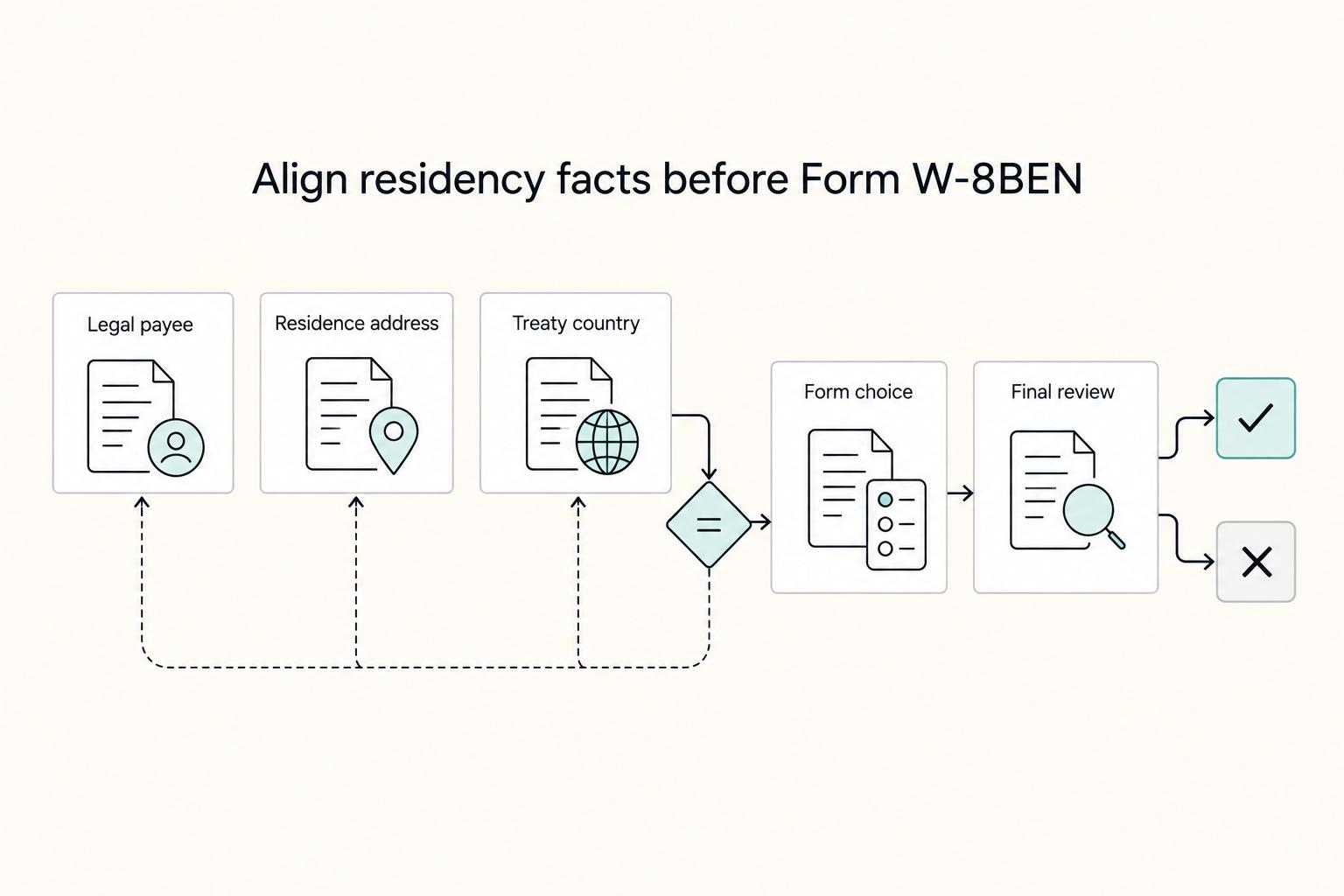
How to Fill Out Form W-8BEN for a Foreign Freelancer
Form W-8BEN lets a non-U.S. individual document foreign status to a payer and, where eligible, claim treaty benefits. For a freelancer, the first decisions are who owns the income, where the services were performed, and whether this is the right certificate. A U.S. client does not by itself make your work U.S.-source income.

The Freelance Payment Penalty: A Modeled Audit of Platform Fees, FX Spreads, and Payout Delays
The money rarely disappears through a single, easy-to-spot fee. The real loss is stacked. A marketplace takes its commission, a processor adds a charge for international cards, a bank or payment company converts the currency at a spread, a platform holds the funds before release, and a wire sheds a little to intermediaries on the way in. Each layer looks defensible on its own, but the worker feels the combined result as a smaller deposit and a later payday.
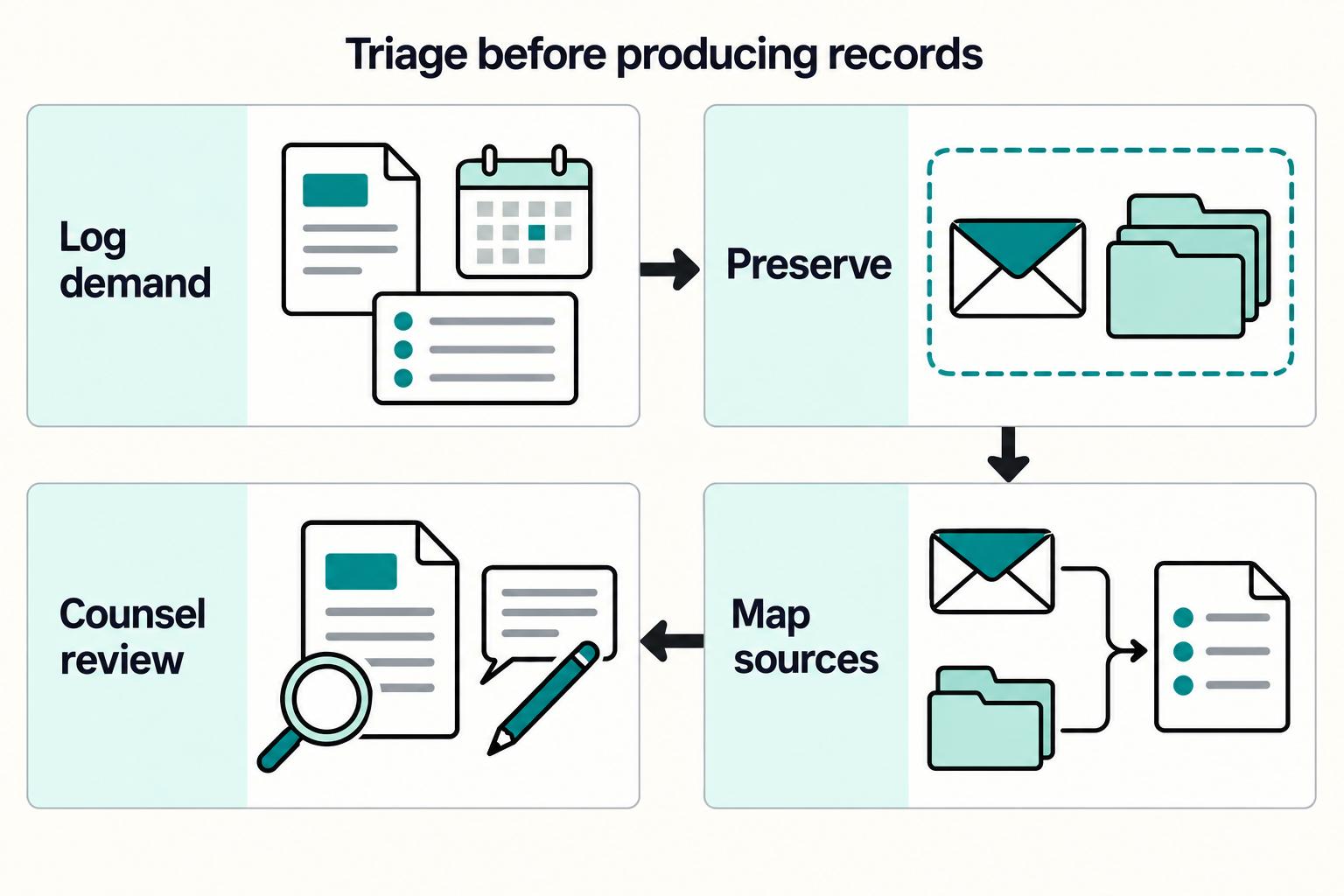
How to Respond to a Subpoena for Business Records
Move fast, but do not produce records on instinct. If you need to **respond to a subpoena for business records**, your immediate job is to control deadlines, preserve records, and make any later production defensible.