
Quick Answer
Yes - if your income relies on specialized duties, this coverage can be worth the extra premium. Open the Plan Document, verify how your occupation is defined at disability onset, and check whether benefits continue if you move to other paid work. Then test elimination period and maximum benefit duration against your receivables, emergency reserve, and fixed debt. The right choice is the contract that matches your current duty mix, not the policy label on a summary sheet.
Start here if your income depends on specialized work#
If your income depends on specialized duties, own-occupation disability insurance is meant to protect your ability to earn in your actual role, not just your ability to do any job.
This isn't only a physician issue. It can also matter for freelancers and independent professionals whose income depends on specific deliverables and may be uneven over time. You may still be able to work in theory, yet be unable to perform the material and substantial duties clients actually pay you for. When that happens, earnings can be disrupted quickly.
Treat this as a contract-language decision, not a label decision. Definitions vary across insurers, and those differences affect benefits, limits, and premiums. By the end of this article, you should have three things:
- a decision path for when stronger occupation wording is worth potential added cost and complexity
- a policy-reading checklist focused on disability definitions and related contract terms
- a cashflow continuity checklist you can reuse as your client mix or role changes
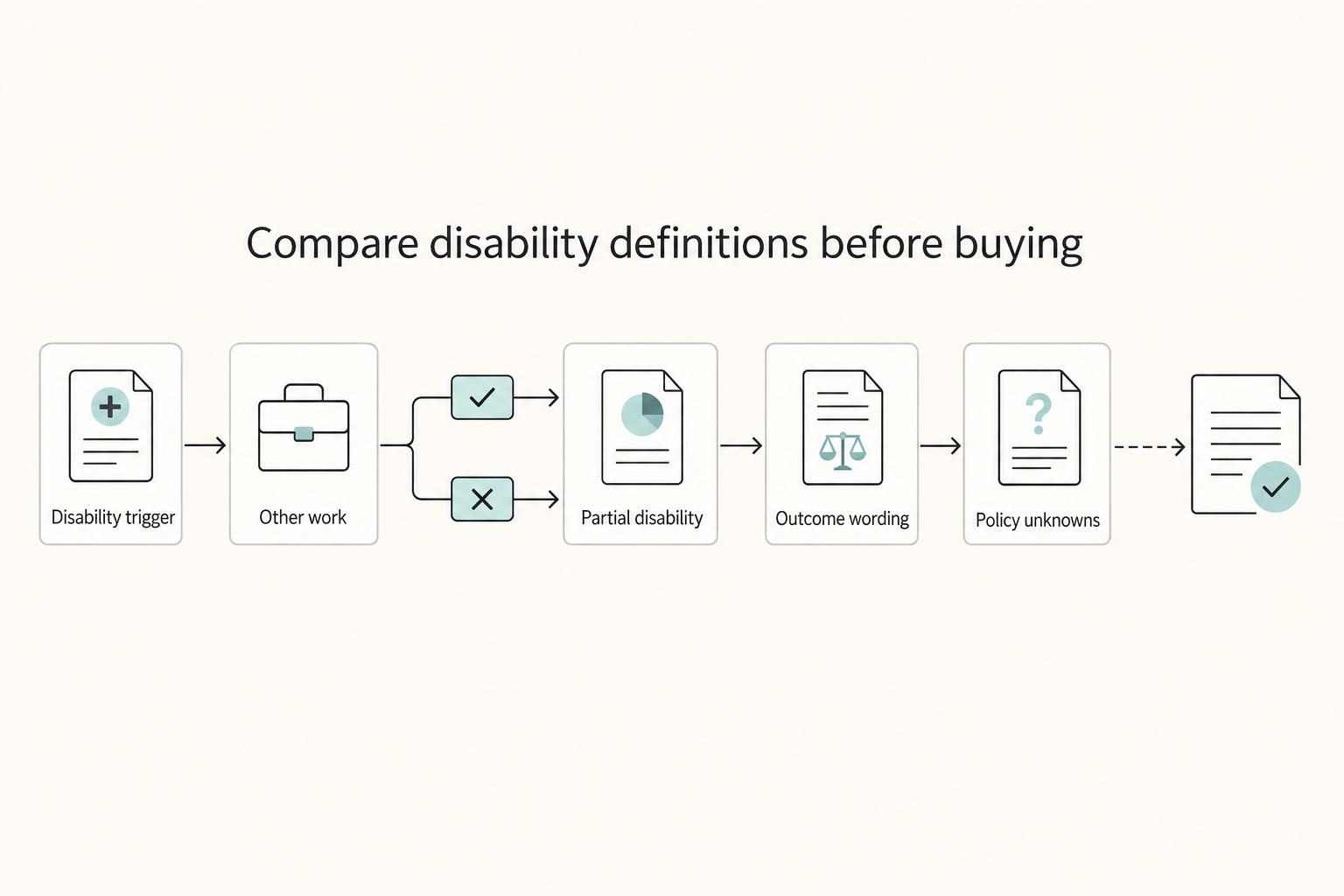
The first thing to verify is the definition of disability. Under own-occupation wording, benefits can depend on whether you can perform the material and substantial duties of your occupation. Some policies define regular occupation as the occupation you had when disability began. That makes the occupation description in your policy important. It should match the work you actually do now, not a broad title.
Before you buy, compare your current duties against how the policy describes your occupation. Use recent statements of work, invoices, and deliverables to catch mismatch early.
Do not assume similar wording means similar protection. Compare contract provisions, benefit limits, and premium differences side by side. Rely on the actual policy language rather than summaries. If your earnings depend heavily on role-specific work, keep that contract-first mindset through the rest of this guide.
If you want a deeper dive, read Canada's Digital Nomad Stream: How to Live and Work in Canada.
Define own-occupation in plain language before comparing policies#
Own-occupation disability insurance means a policy can pay when you cannot perform the duties of your specific job. In plain language, the test is whether you can still do the work you actually do.
By contrast, any-occupation disability can work differently in practice. It may depend on whether you can do other work based on your education, training, and experience. That distinction matters because the definition of disability can determine whether benefits are paid and how long they last.
Before you compare prices, lock down these terms in the contract so you are comparing the same things each time:
- Definition of disability: the core rule for eligibility
- Disability-status terms (such as total, partial, or residual disability): confirm how your policy defines them
Start with the policy itself, not the sales summary, and work in this order:
- Open the Plan Document.
- Find the section that defines "disability."
- Confirm whether the policy stays on own-occupation or later switches to any-occupation, and note when.
Watch for occupation mismatch. If your real duties are specialized but your file uses a generic title, the claim may be evaluated against that broader title instead of your actual work.
Most of this guide focuses on Long-term disability insurance (LTD). Short-term disability insurance (STD) is typically for temporary disabilities with a shorter horizon, commonly 3 to 6 months and, in this source, never more than a year.
Related reading: Can an LLC Pay for a Member's Health Insurance?.
Compare definitions that look similar but pay differently#
These labels are not interchangeable. In Long-term disability insurance (LTD), small differences in the definition of disability can change whether benefits are paid. That shows up when your work capacity drops, your duties change, or you earn income another way.
Treat own-occupation wording as contract language first and a marketing label second. Definitions vary by policy and by carrier, so this table is a starting point, not a substitute for the contract.
| Comparison point | Own-occupation | Any-occupation | Modified own-occupation coverage | Transitional own-occupation coverage |
|---|---|---|---|---|
| Core disability trigger | Inability to perform the duties of your own occupation | Inability to work in occupations suited to your education, training, and experience | Commonly framed as inability to perform your own duties and not working elsewhere | Carrier-specific option that can tie benefits to income loss after you cannot perform your own occupation |
| Can you work in another role and still receive benefits? | Sometimes yes, depending on wording. Some policies can still pay full benefits after a transition to another occupation | Usually harder, because ability to work in another suitable occupation can weigh against eligibility | Often no if you are working, because the definition may require you to be not working | In carrier-specific versions, benefits can be limited by income-loss rules and a cap, not a simple yes or no |
| Partial disability and Residual disability | May pay partial or residual benefits. Percentage and qualification rules vary | May include partial or residual provisions, but stricter total-disability framing can narrow access | Can include partial or residual provisions, but "not working" language can affect how they apply | Often tied closely to earnings reduction, so the income-loss formula is central |
| Wording that changes outcomes | "Unable to perform the duties of your occupation," plus any language on benefits if you work elsewhere | "Suited to" your education, training, and experience can broaden what counts as available work | Language equivalent to "unable to perform own duties and not working" | Language tying payment to income loss and limiting payment to no more than the full disability benefit |
| What is unknown until you read the contract | Whether own-occupation applies for the full benefit period, whether side work is allowed, and how your occupation is described | How broadly "suited" is interpreted in your policy | Whether "working" means any paid work, part-time work, or only another occupation | How income loss is measured and what caps apply |
The same claim can win or lose on one phrase#
The deciding issue is usually not the headline label. It is how the contract treats your ability to earn money in another role after you can no longer perform your primary occupation.
Under some own-occupation wording, policies can still pay if you cannot do your occupation and later transition to different work. Under any-occupation disability insurance, that same transition may be treated as evidence that you can work in a suitable occupation.
Modified own-occupation is easy to misread. The label sounds close to pure own-occupation, but common wording can require both inability to do your occupation and not working. If your recovery plan includes any paid work, that detail can change the outcome.
Partial and residual benefits are where cashflow risk shows up#
If you focus only on total disability, you can miss reduced-capacity scenarios. Policies may define Partial disability or Residual disability and pay only part of the total-disability benefit, sometimes as a percentage of the full benefit.
Timing matters too. Residual benefits may have a separate qualification period, and that period can be longer than the elimination period for total disability. Do not assume reduced-capacity benefits start on the same timeline as total disability benefits.
What to verify before you compare price#
Before price enters the discussion, pin down the claim mechanics in the contract so you are not comparing marketing shorthand:
- Find the exact definition of disability and copy the sentence into your notes.
- Search for wording about working in another occupation, including any "not working" condition.
- Find the Partial disability and Residual disability sections and note qualification timing, percentage calculation, and any income-loss test.
- Confirm how your occupation is described in the application and policy schedule.
If most of your income comes from specialized deliverables, prioritize clear own-occupation wording over broad labels. A polished summary that says "own occ" is less useful than contract language that states what happens if you cannot perform your core duties but can still earn in another role. If you want a broader freelancer-focused checklist before you shop, see A Guide to Disability Insurance for Freelancers. For related reading, see How to Use Credit Card Trip Insurance and Avoid Claim Denials.
Decide if the extra premium is worth it for your risk profile#
If losing your core billable skill would cut earnings sharply, paying more for stronger own-occupation wording can be easier to justify. If you could shift into other paid work with limited income loss, the extra cost may be less compelling.
The key is still the contract, not the label. The definition of disability determines whether earning income in another role can coexist with benefits or undermine eligibility. With any-occupation disability insurance, the standard is usually stricter because the test is whether you can do any job you are qualified for.
Where stronger wording usually earns its keep#
Use income concentration as the main lens. A diversified freelancer with multiple service lines may be able to keep cashflow moving if one line becomes impossible. In that case, a narrower definition can be workable when remaining income still covers monthly living expenses and fixed obligations.
The specialist case is different. If most revenue depends on one narrow capability, the downside is steeper when that capability is lost. When your regular occupation at disability onset is that specialized work, stronger wording often matters more. Some policies can still pay if you cannot return to that original occupation even when you later earn elsewhere. You need to verify that in the contract.
Price matters, but the income gap matters more#
Stronger own-occupation protection is generally more expensive than any-occupation coverage, but there is no universal carrier-by-carrier premium table. Broad budgeting guidance often places disability insurance around 1% to 3% of annual income, and actual premiums are individualized.
So the practical question is simple: what gap would you face if your main service became impossible? If you also have employer Long-term disability insurance (LTD), those plans often replace about 60% of income, which can still leave a meaningful shortfall.
Use this three-part checkpoint#
Use these three checks before you decide what level of protection is worth paying for, and run them against your current income mix:
| Checkpoint | What to review | Why it matters |
|---|---|---|
| Income concentration | Sort recent revenue by service line | If one capability drives most earnings, stronger wording deserves more weight |
| Debt obligations | Add required monthly debt payments, including student loans, personal loans, and credit cards | Higher fixed debt reduces flexibility during an income drop |
| Recovery timeline tolerance | Compare monthly living expenses and debt payments against income that would continue if you had to stop your main work | The difference is your income gap to cover through savings or a disability income insurance policy |
Use this as a screening rule, not a standalone verdict. When income is concentrated, fixed debt is high, and your tolerance for a long earnings dip is low, paying extra for stronger wording is usually easier to justify. When income is diversified and recovery tolerance is higher, trading down can be reasonable, but only after confirming how the policy treats work in another role.
Before you compare price, make one more check: confirm how the policy defines your occupation at the time disability begins. Related: The Best Disability Insurance Companies for High-Earners.
Build your occupation evidence pack before you apply#
Build your occupation evidence pack before you compare definitions. Underwriting, and often claim review, focus on what you actually do, not just your title.
Start with the work, then evaluate policy wording#
The right sequence is straightforward. Document the job first, then judge the contract against it. Your file should be practical enough to help both at application time and later if a claim turns on occupation scope.
- Document your current duties with time allocation.
Use specific tasks, not broad labels. Underwriting requires a complete duty description, and at least one carrier application asks for duties plus percentage of time spent on each duty.
- Map your income documentation by entity.
Financial proof is required, and required documents vary by business structure, so organize income evidence before you file.
- List tools, tasks, and client deliverables that show specialization.
Focus on the concrete work clients pay for, including physical and cognitive duties where relevant.
- Then compare contract wording.
In own-occupation coverage, eligibility is tied to your regular occupation when disability begins and whether you can perform its substantial and material duties.
What to look for in your policy review#
Keep the pack practical enough to help at application time and later if a claim turns on occupation scope.
| Pack item | What to include | Article note |
|---|---|---|
| Statement of core duties | A concise summary of primary tasks with rough time allocation | Keep it practical enough to help at application time and later if a claim turns on occupation scope |
| Proof of specialization | Representative deliverables, role descriptions, or scope documents | Show the narrow work you are hired to do |
| Role boundaries | Clear separation between your primary occupation and side work, admin, or management | If you have multiple roles, classification can be driven by the higher-risk role |
| Income documentation | Financial proof organized by business entity | In some owner or entity cases, one insurer guide lists 2 years' complete business tax returns |
Verify against the contract, not summaries#
Once the pack is built, check it against the actual policy. Confirm that the definition of disability matches how you work today, not a generic label.
Use the policy language as the source of truth. Reference guides and summaries can help you ask better questions, but they are not the contract. Also check fit over time. More specific occupation wording can create mismatch risk if your role evolves.
Stress-test benefit mechanics that determine real cashflow protection#
After the headline wording, cashflow protection depends on timing and claim mechanics. A policy can still create a gap if payments start later than expected or end sooner than needed.
| Contract term | What it controls | What you need to verify |
|---|---|---|
| Elimination period | When payments can begin | Whether there is an elimination period, plus claim submission timing and proof-of-claim requirements during that gap |
| Maximum benefit duration period | How long payments can continue | The stated maximum benefit duration period in the plan |
| Claim timing | When you must file | The plan's claim submission timing requirements |
| Proof of claim | What evidence is required | What the plan accepts as proof of claim |
| Transitional duty / return-to-work | How benefits may be handled during reduced work | Whether the plan has a transitional duty process and how benefits are calculated in a transitional assignment |
The common failure mode is timing mismatch: a plan may be in force, but payment timing or duration may not line up with your obligations.
One 2026 short-term disability plan puts the right questions plainly: "Is there an Elimination Period before payments begin?", "What is the Maximum Benefit Duration Period?", "When must I submit a claim?", and "What constitutes proof of claim?"
Run a timing check against your own cashflow#
Use your actual numbers, not optimistic assumptions, to compare your available cashflow with any waiting period before benefits begin.
Reduced-work mechanics need explicit checks#
That same plan explicitly includes a "Transitional Duty - Return-to-Work Process" and a separate calculation path for benefits during transitional assignments, which shows reduced-work scenarios can have different payment mechanics.
Final rule: confirm elimination timing, maximum benefit duration, claim timing, proof requirements, and reduced-work calculation in the actual plan text before you decide. For a step-by-step walkthrough, see A Guide to Long-Term Care Insurance.
Plan for role changes and return-to-work edge cases#
Role changes can create claim ambiguity, so keep your records current. Treat occupation drift as a documentation task: when your work changes, update your role file and re-check the exact definition of disability in your contract.
The point here is procedural. In SSA administration, allow or deny outcomes cite a specific regulatory basis, and initial-step classification can be traced with an RBC. Private own-occupation contract outcomes are policy-specific and not established, but the takeaway is similar: clear definitions plus clear records help reduce avoidable ambiguity.
Treat occupation drift as file maintenance#
Do not wait for a claim to reconstruct what your job became over time. Keep the file current as your business changes.
- Keep a recurring review of your current duties and income mix.
- Update that record immediately after a real business pivot.
- Re-read the policy's definition language against your current role.
- Keep dated backup that matches your current work narrative.
Re-check after any meaningful business pivot#
A meaningful trigger can be a change in what you do day to day or how you earn, not just a title change. If your work shifts, do not assume claim treatment stays the same. If contract language is unclear, get written clarification and store it with your policy records.
Limited-work scenarios need explicit review#
If you can still work in a limited way, confirm how your policy handles Partial disability and Residual disability in the contract text itself. Do not assume reduced work automatically preserves benefits; that depends on the policy language. Verify what counts as reduced capacity and what ongoing records are required while you are still earning.
Pair insurance with a cashflow continuity checklist#
Insurance is one layer, not the whole plan. Keep your Long-term disability insurance (LTD), and run a cashflow checklist that helps you absorb the waiting period and partial income replacement. Benefits may not start immediately, and a typical disability policy benefit is approximately 60% of pre-disability income.
This is mostly a sequencing problem. Handle the cash side first, then match the policy to the gap:
- Stabilize incoming payments.
- Define your emergency reserve policy.
- Align policy waiting periods to the first two steps.
That does not replace coverage. It reduces avoidable cashflow shocks while benefits are pending.
Stabilize incoming payments first#
Start with invoice discipline and status tracking so your cash view reflects money actually received, not booked work. Track money in and money out, and treat collectible cash as what you can reconcile to real payment status.
If you use Gruv for billing, keep each invoice operationally complete: issue date, due date, amount, current status, and expected payout timing. Then reconcile invoices against actual deposits regularly. If you cannot quickly tie open invoices to expected cash, reserve planning is guesswork.
Define your reserve policy second#
Write an emergency reserve policy that is specific to your business. An emergency fund is cash set aside for unplanned expenses, including income loss, so define what it must cover, where it sits, and what triggers its use.
Keep the policy grounded in your records: non-deferrable outflows, expenses you can pause, and open receivables. Good recordkeeping supports monitoring and financial statements, which is exactly what you need here. Do not count committed operating cash as emergency reserve.
Align waiting periods last#
Choose waiting periods only after payment timing and reserve rules are clear. The key policy lever is the Elimination period. A 30-day waiting period is common, and LTD generally begins about six months after disability and can last years or even to retirement age. Short-term disability insurance (STD) typically replaces a portion of salary for 3 to 6 months.
If you cannot self-fund the gap before LTD starts, adjust one of three levers: reserve strength, waiting-period choices, or an STD layer. Also account for benefit sizing. Benefits are based on income when the policy was purchased, which can create a gap if current income is higher. If residual or partial benefits apply, keep clean invoicing and payment records to document the income drop.
This pairs well with our guide on How to Decide on COBRA Health Insurance During a Job Transition.
Use this checklist in your weekly ops cadence by standardizing invoice timing and follow-ups with Gruv's free invoice generator.
Handle country and program variation without guesswork#
Do not assume disability terms carry over across countries, programs, or policy types. Policy wording and claim conditions can differ by country, by state, and across public benefits, employer plans, and private disability income policies.
The same label can mean different things in different systems. In the U.S., Social Security disability is tied to inability to engage in substantial gainful activity, with a duration test of at least 12 months. In Canada, CPP uses a different legal standard and applies to people under age 65. Group disability terms can also vary by employer or union.
What to confirm in writing#
Before you buy or rely on coverage, confirm these items in writing so there is a record you can use later:
| Item | What to confirm | Record to keep |
|---|---|---|
| Definition of disability | The exact contract language and which jurisdiction governs it | Save a dated email or PDF and note the policy or certificate name, jurisdiction, who answered, and when |
| Benefit period | How long benefits are payable and whether limits change by claim type | Save a dated email or PDF and note the policy or certificate name, jurisdiction, who answered, and when |
| Residual disability | How the policy treats reduced work capacity or reduced earnings in your jurisdiction | Save a dated email or PDF and note the policy or certificate name, jurisdiction, who answered, and when |
Keep a dated record of each answer. Save the email or PDF, note the policy or certificate name, jurisdiction, who answered, and when. For ERISA plans, request documents in writing from the plan administrator so you can obtain the summary plan description and related plan materials through the formal disclosure process.
What not to trust by itself#
Do not rely on a summary page, marketing sheet, or outline of coverage alone. Those materials can summarize benefit amounts, durations, limits, and elimination periods, but the policy text controls claim outcomes and legal rights.
Small wording differences can change whether a claim is payable. If a broker, HR contact, or website cannot point to the exact contract clause, pause and get the language before signing.
You might also find this useful: How to Handle Tax on a Foreign Life Insurance Policy.
Spot red flags before you sign#
If no one can explain a clause using your real job duties, pause. You likely do not have enough contract clarity to sign, and that is where claim surprises can start.
Watch for fuzzy occupation scope#
Vague occupation wording can be a risk when your income depends on a narrow skill profile.
If a contract only says "occupation" but does not make your actual duties clear, push for specifics. Some policies pay when you cannot perform your own occupation, but disability definitions are contract-dependent and vary by carrier. Very specific wording may look helpful now, then become a problem later as your role evolves.
Stress-test the language against your current duty mix. Ask: "If I can still handle adjacent tasks but cannot do the core work that drives most of my income, how is my occupation defined here?" If the response stays abstract, treat that as a sales explanation, not a contract explanation.
Use explainers as glossaries, not proof#
Use Guardian Life, White Coat Investor, Policygenius, and SoFi to learn terms, not to confirm coverage. Some of these sources explicitly frame content as educational or include editorial or monetization disclosures, which is useful context but not policy authority.
Use broad content to build better questions, then verify each answer in the actual policy and rider language. Benefits, exclusions, and disability definitions can differ by policy, and some definitions change over time, including examples that shift to stricter terms later. If an explainer and your rider conflict, the rider controls.
Ask your broker these exact questions#
Do not ask whether a policy is "good." Ask for a written, contract-level comparison that you can keep with your records.
- In this exact contract, what is the definition of disability, and does it change later? If yes, when, and to what definition?
- Show me how Modified own-occupation coverage works here. Does it require that I be unable to do my occupation and also not working elsewhere?
- Show me how Transitional own-occupation coverage works here. If I work in another role, how are benefits affected, and what earnings limit applies?
- Give me one claim scenario using my real duties, not just a generic title.
- Email me the specimen policy, rider names, and exact clauses you are relying on.
If a clause cannot be explained with a concrete claim scenario, pause and escalate for clarification. Ask the broker to point to the exact contract language, then confirm it in the specimen or issued policy before you sign.
Make the decision once and keep it current#
Choose your disability policy by testing the contract against your real duties, not by trusting a marketing label. The policy's disability definition controls eligibility, and those definitions vary by contract.
A practical final test is this: if disability started next month, would the policy evaluate the work you actually perform now, or a broader set of occupations? That difference between own-occupation and any-occupation framing is why similar-looking policies can behave differently at claim time.
Recheck the parts that actually move claim outcomes#
Recheck your coverage regularly, and use annual open enrollment as a checkpoint if your plan is employer-based. Start with the exact disability definition, then confirm your occupation description, elimination period, and benefit period. If you have employer coverage, open enrollment is typically in November and December and can be used to keep or adjust disability income insurance elections. If your policy is individual, pick a recurring review month and keep it on your calendar.
Keep a dated record of your current duty mix and specialty work so your occupation description stays accurate. If your work mix changes, update that record and confirm how the policy would treat the new mix. For cash timing, remember that many LTD policies include an elimination period before monthly benefits begin, with 90 days as a common example.
Watch the failure modes that creep in quietly#
Role drift can become a risk. Own-occupation is tied to the occupation you were performing when disability began, so gradual shifts in what you do can affect how a claim is assessed. Revisit your duty summary after major changes in clients, services, or team structure.
Another risk is assuming old coverage still fits a new setup. Employer-linked disability coverage may not follow you when you leave a job, so a move into freelance or hybrid work should trigger a fresh review.
Align insurance with business cash controls#
Insurance is one side of income protection. Operations is the other. Disability coverage often replaces only part of earnings, for example ranges like 50% to 80%, with around 60% often cited, so your plan still needs to absorb a gap.
Pair your policy review with a short cashflow review: receivables follow-up, monthly burn, and reserve target. Keep those business controls separate from policy terms, but align them so your waiting period and your buffer match.
Make the decision once, then make it repeatable. Compare exact contract language, keep your occupation record current, and recheck both whenever your role or income mix changes.
Need the full breakdown? Read How to Get Health Insurance as an Early Retiree (Before Medicare). After you lock policy language, reduce day-to-day payment risk with a traceable payout workflow in Gruv Payouts.
Frequently Asked Questions
What is own-occupation disability insurance in one sentence?
Own-occupation disability insurance can pay when you cannot perform the material and substantial duties of your specific occupation. The contract’s disability definition controls, not the label on a summary page.
What is the difference between own-occupation and any-occupation disability insurance?
Own-occupation language focuses on whether you can still do your actual job. Any-occupation is stricter because it tests whether you can perform the material and substantial duties of any job under the plan’s rules. Some plans start with own-occupation and later shift to any-occupation, but that timing is not universal.
Can you work another job and still receive benefits under an own-occupation policy?
Sometimes, yes, but only if the contract allows it. One cited source says benefits can still be paid when you cannot do your occupation or specialty even if you can and do work in another field. Before buying, ask for the exact policy wording on how working in another field affects eligibility.
Does specialty wording matter if your role has changed over time?
Yes, it matters a lot. If your occupation is defined too broadly, or your duties have shifted from a narrow specialty into management or adjacent work, losing the specialty task may be treated as partial disability or no disability. Confirm in writing that your occupation matches your current specialty or real core duty mix, not a generic title.
Is own-occupation disability insurance always more expensive?
No, that is not a reliable rule. There is no universal pricing pattern or freelancer-specific premium range you can assume. If prices are close, compare the disability definition first because claim eligibility depends on that wording.
How do elimination period and benefit period change real cashflow outcomes?
They matter because contract timing and duration terms affect when approved payments can start and how long they can continue. Guardian describes short-term disability as typically replacing 60% to 80% of income for 3 to 6 months, never more than a year. Guardian also describes long-term disability as aimed at more severe or lasting disabilities, with 60% to 80% after-tax income replacement for total disability.
What should freelancers verify in writing before buying a policy?
Get the exact disability definition in writing, then confirm whether that definition changes later and when. Confirm your occupation description matches how you actually earn, including your specialty work and core duties, not a broad title. If a claim happens, supporting evidence often includes medical records, treating-provider opinions, and documentation of specific job requirements you can no longer perform, sometimes with a functional capacity evaluation.
Try a related tool
Researched and edited by the Gruv editorial team. Gruv builds cross-border billing, payouts, and finance-operations software for global businesses.
Sources
- consumerfinance.gov/an-essential-guide-to-building-an-emergency-...trusted
- dfr.oregon.gov/insure/health/Pages/disability-income-insura...trusted
- ecfr.gov/current/title-29/subtitle-B/chapter-XXV/subc...trusted
- edd.ca.gov/siteassets/files/pdf_pub_ctr/de2040.pdftrusted
- federalreserve.gov/publications/2025-economic-well-being-of-us-...trusted
- federalreserve.gov/consumerscommunities/shed.htmtrusted
- irs.gov/businesses/small-businesses-self-employed/re...trusted
- irs.gov/pub/tas/08_tas_arc_intro_toc_msp.pdftrusted
Educational content only. Not legal, tax, or financial advice.
Related Posts
Canada Digital Nomad Visa Planning for Visitor Status and Work Permits
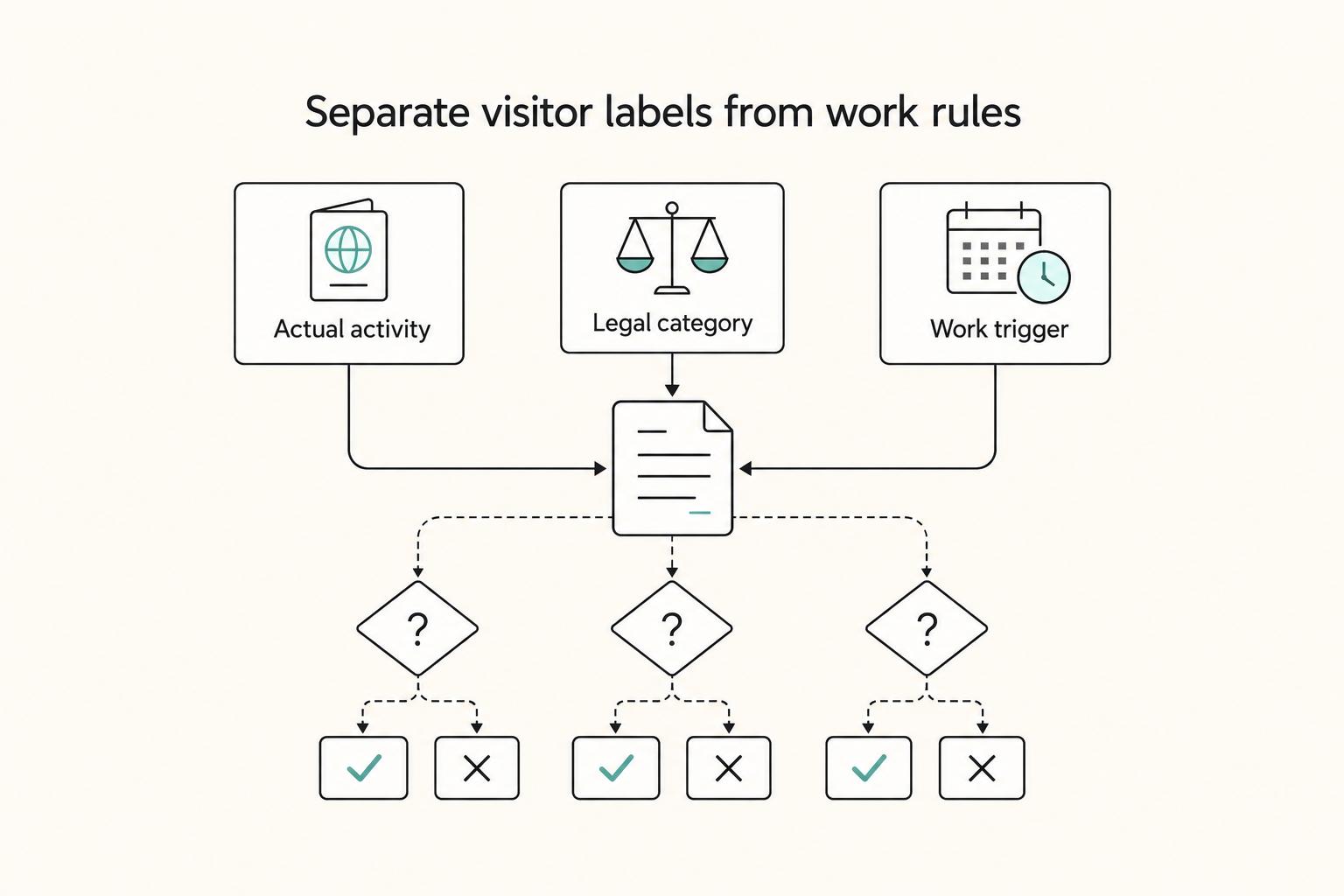
The phrase `canada digital nomad visa` is useful for search, but misleading if you treat it like a legal category. It is shorthand for existing Canadian status options, mainly visitor status and work permit rules, not a standalone visa stream with its own fixed process. That difference is not just technical. It changes how you should plan the trip, describe your purpose at entry, and organize your records before you leave.
Disability Insurance for Freelancers Who Need Reliable Cashflow
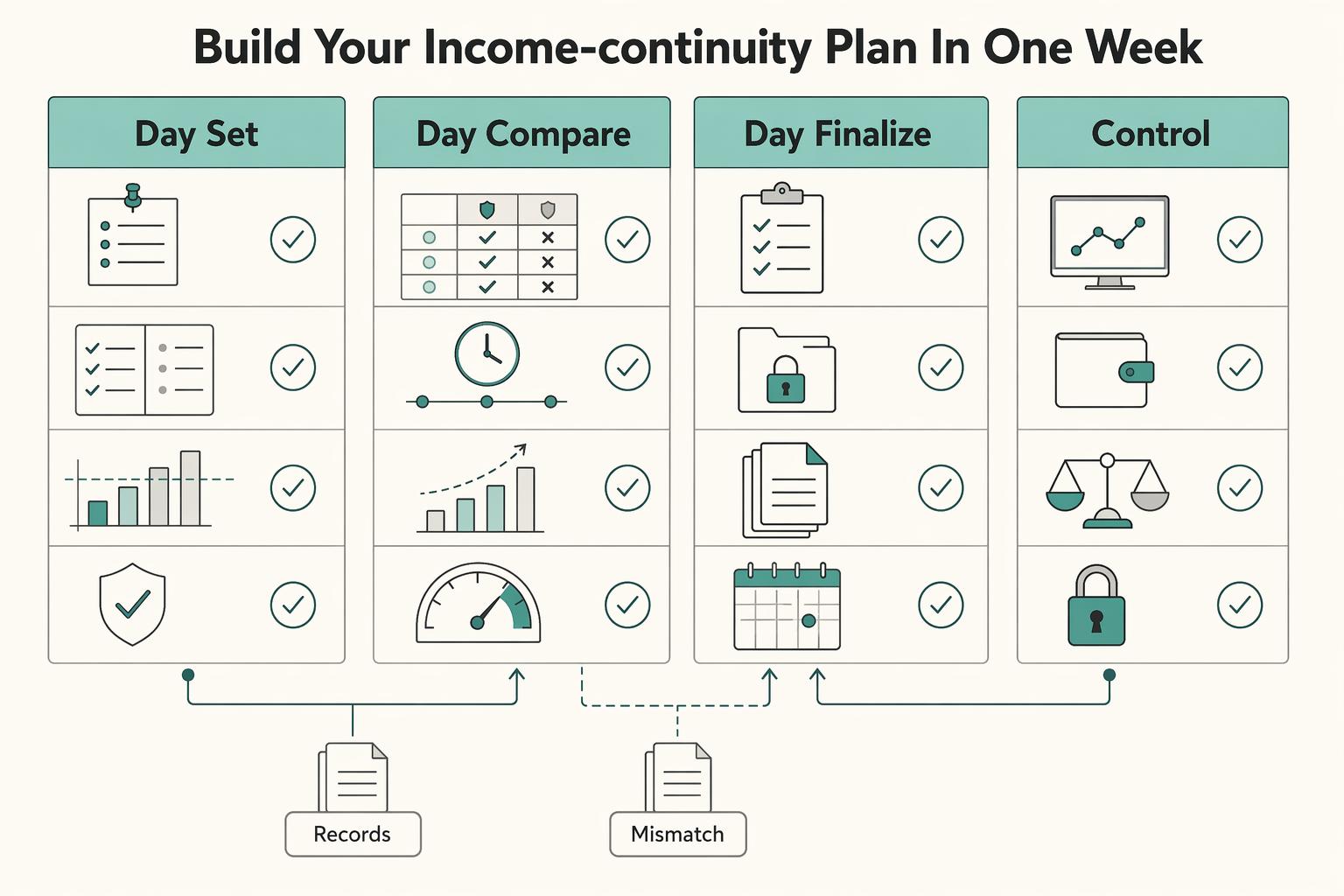
When your work stops, revenue can drop fast. The real job is not finding the cheapest quote. It is building an income-continuity plan that still works when billable hours disappear.
The Best Disability Insurance Companies for High Earners
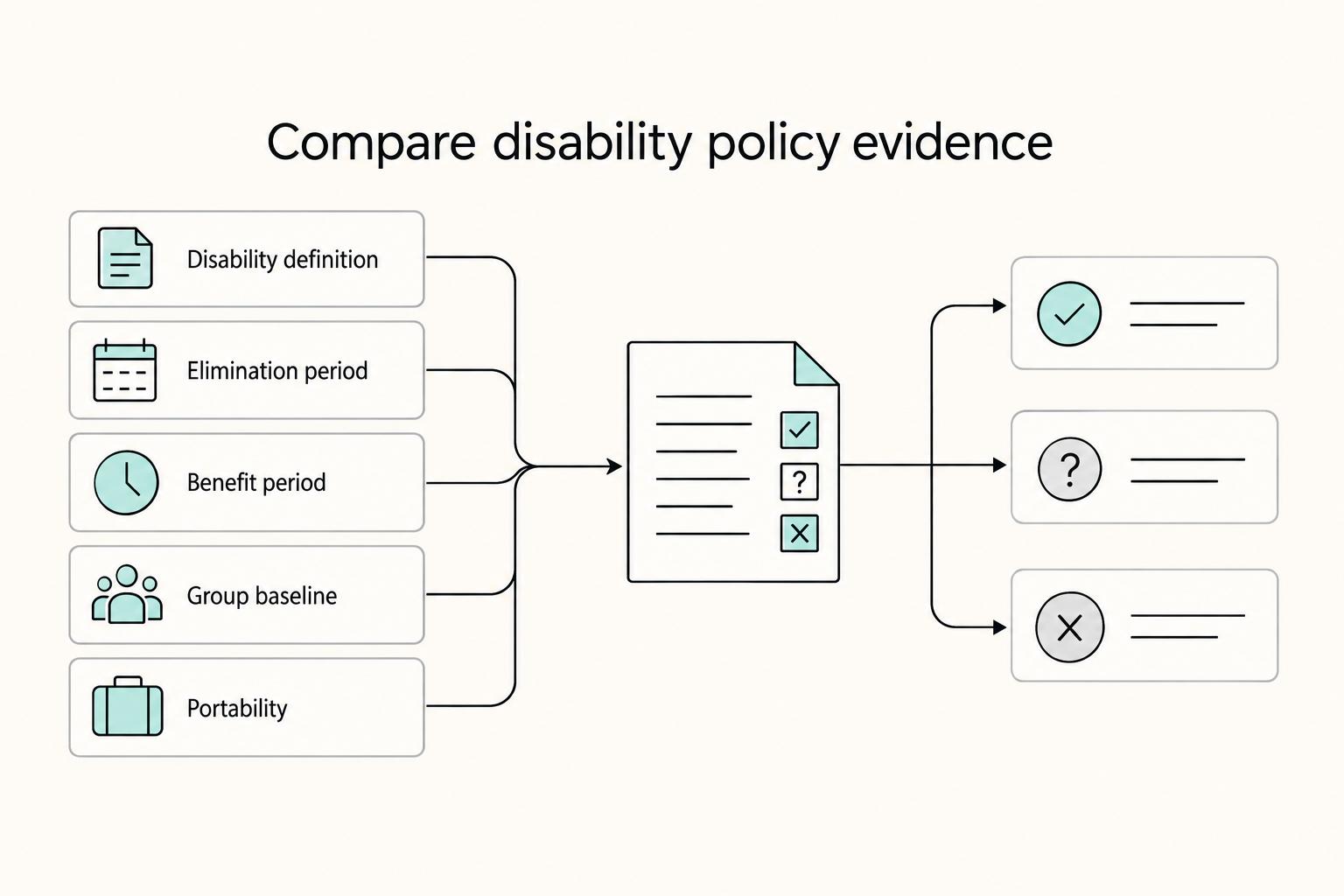
Start with the income-gap problem, then use carrier rankings to build a shortlist you will verify with matched quotes. That order matters. A polished ranking page cannot tell you whether an option actually fits your obligations, cash reserves, and work pattern.