
Quick Answer
Build three connected trackers: a residency ledger, a financial monitor for FBAR decisions, and a business ledger with linked support files. A digital shoebox for taxes becomes operational when each trip, account, and transaction maps from one row to one verifiable document set. Keep weekly updates, monthly reconciliation, and conflict notes so filing requests are handled from current records instead of deadline cleanup.
Pillar 1: The Residency Ledger - How to Prove Where You Were (and Weren't)#
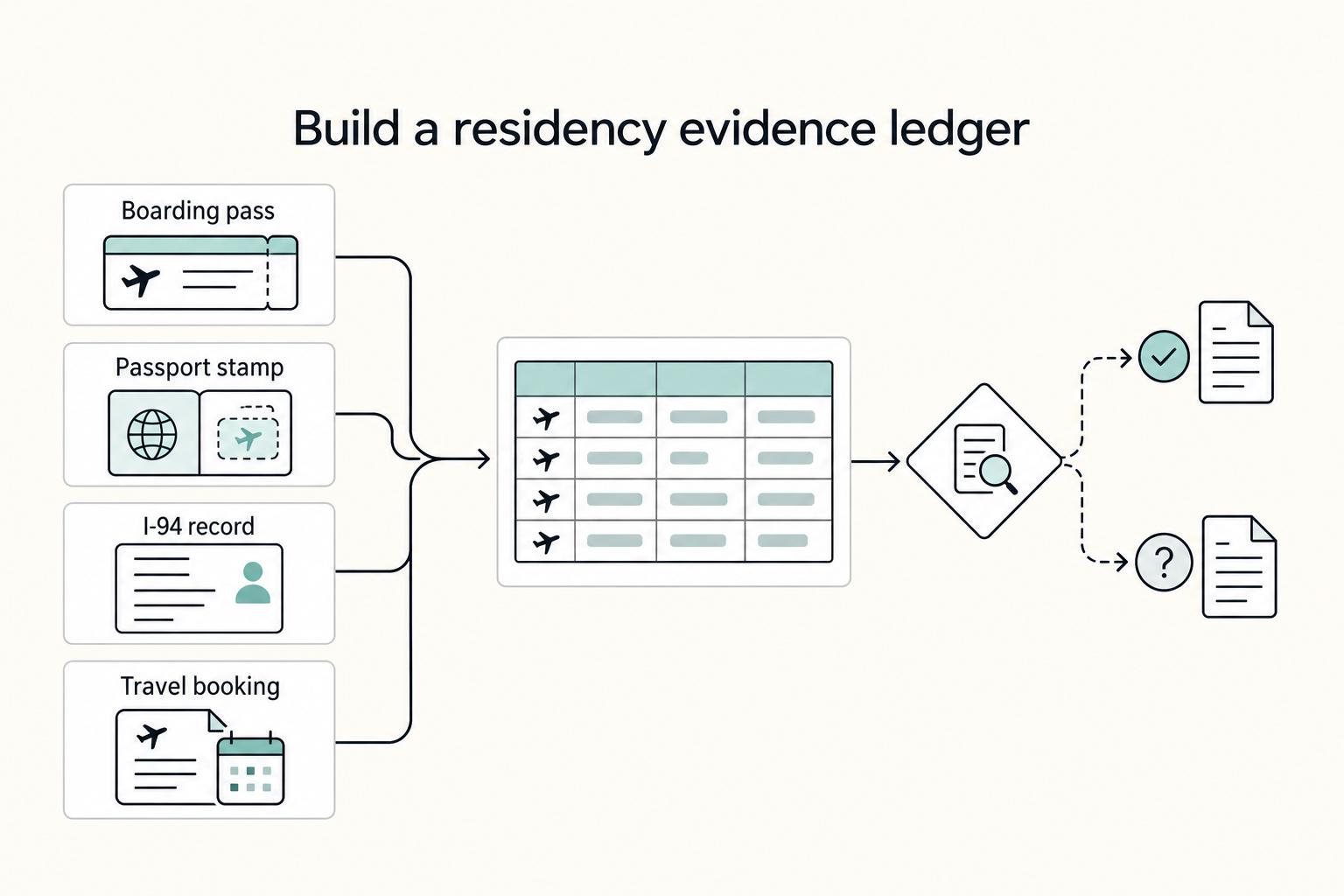
The goal is simple: one Master Timeline you can trust at a glance. Keep one row per trip, and link each row to proof you can actually retrieve. For each trip, log departure and return dates, jurisdiction or locality, where you were at day-end or midnight when that matters, the trip purpose, and links to the source files. If you cannot answer "Where were you on this date?" quickly from one place, the system is not ready.
Good proof is usually straightforward: records that show a date, a place, and enough detail to substantiate what happened. In practice, that often means travel schedules, booking details, tickets, boarding cards, and admission records.
| Document type | What it helps prove | Typical evidence strength | Common gap | Useful backup |
|---|---|---|---|---|
| Boarding pass or e-ticket | Travel segment details | Useful, stronger when paired | Missing segment or name mismatch | Booking details, travel schedule |
| Passport stamp (if available) | Corroborating border entry/exit date and jurisdiction | Useful supporting evidence | Missing, illegible, or not stamped | Ticket, admission record |
| Form I-94 admission record | U.S. lawful admission record | Strong for U.S. admission events | Travel-history output is limited | Boarding pass, passport stamp |
| Travel schedule or booking details | Planned and documented movement between locations | Useful supporting evidence | Itinerary may differ from actual travel | Tickets, boarding cards |
Apply the jurisdiction's counting rule before you try to resolve conflicts. For U.S. FEIE tracking, the physical presence test uses 330 full days in a 12-month period, and a full day is 24 consecutive hours from midnight to midnight. For UK SRT tracking, day-end presence counts, and deeming rules can apply after the first 30 qualifying days.
When records conflict, give more weight to the item that proves the counted fact for that jurisdiction. Do not assume one document type is always decisive. For U.S. admission events, Form I-94 is the lawful admission record, while CBP travel-history output is assistive and not an official legal record. If the conflict remains, mark the date for manual review, keep all conflicting files, and add a short note explaining why. If dual residence is on the table, check the exact treaty tie-breaker text before you take a position.
A short weekly review usually keeps this manageable, especially if you follow the same sequence each time:
- Add new trip rows and file links.
- Reconcile missing entry or exit evidence.
- Tag unresolved dates for manual review.
- Store a short note on conflicts and how you resolved or deferred them.
- Back up the ledger and linked files regularly.
If you want a closer look at what goes wrong when records stay scattered, see The 'Digital Shoebox' Scramble: How It Erodes Profit and Peace of Mind.
Pillar 2: The Financial Monitor - Neutralizing Your FBAR Risk#
Treat this as a separate disclosure tracker, not an extension of bookkeeping. Its job is to answer one question: whether your foreign financial accounts crossed the FBAR trigger, regardless of how income is recorded. FBAR is an account-disclosure report filed on FinCEN Form 114. The trigger is whether the aggregate value of foreign financial accounts exceeded $10,000 at any time during the calendar year.
Step 1. Classify accounts the FBAR way, not the bookkeeping way#
Start broad, then narrow only after the account is on your list. A foreign financial account is generally an account at a financial institution outside the United States. Aggregate value means the combined value across those accounts for trigger testing. Signature or other authority means you can control the disposition of money by direct communication, even without ownership.
The practical rule is this: if a financial account is outside the United States and you own it, jointly own it, or can control it, put it in your Financial Monitor first. Resolve edge-case treatment after it is being tracked. Before relying on an edge-case rule, verify the treatment from current FinCEN or IRS source records.
Step 2. Run a dedicated Financial Monitor (one row per account)#
A receipt app or bookkeeping ledger may store supporting files, but neither replaces an FBAR monitor with the fields you actually need for disclosure.
| Field | Why it matters |
|---|---|
| Account holder name | Required FBAR record field |
| Ownership/authority status | Distinguishes own, joint, signature authority |
| Account number or identifier | Required FBAR record field |
| Financial institution name | Required FBAR record field |
| Financial institution address | Required FBAR record field |
| Account type | Required FBAR record field |
| Country/jurisdiction | Confirms foreign-account scope |
| Original currency | Needed before conversion |
| Maximum value during year | Required FBAR record field |
| Evidence link | Supports reported values and account details |
| Conversion source | Audit trail for conversion inputs |
| Review status/owner | Keeps follow-ups visible |
Review it monthly, then do a deeper check at quarter-end. Even if someone else prepares the filing, keep one owner accountable for updates.
Step 3. Keep tool boundaries explicit#
This is where avoidable confusion starts, so keep each tool tied to one job.
| Task | Financial Monitor | Bookkeeping ledger | Receipt app |
|---|---|---|---|
| Track foreign account ownership/authority | Yes | No | No |
| Test aggregate value against FBAR trigger | Yes | No | No |
| Store institution + account disclosure fields | Yes | Usually not | No |
| Record income/expenses | No | Yes | Sometimes support only |
| Store receipts/invoices | Link only | Sometimes summary | Yes |
| Build FBAR support pack | Yes | No | No |
Step 4. Make currency conversion procedural#
Do not improvise conversion at filing time. Use a repeatable sequence with an audit trail, and use it the same way every time:
- Record the maximum balance in the account's original currency.
- Save supporting evidence such as a statement, export, or portal record.
- Record the conversion source used. Treasury's converter is explicitly usable for FBAR-related conversions.
- Apply the required FBAR reporting method only after confirming the current official rule text.
- If conversion guidance is still pending, mark the entry: Current conversion source and rule pending official verification.
Step 5. Escalate edge cases early#
Escalate these cases early so they do not turn into late-year surprises:
| Edge case | Action |
|---|---|
| New account opened | Add it immediately with opening evidence and institution details. |
| Temporary balance spike | Keep proof of the peak. The trigger is based on exceeding $10,000 at any time. |
| Joint account | Track full account value. Each joint owner reports the entire value on an FBAR. |
| Signature-only authority | Keep it in scope and review. Do not drop it by assumption. |
| Missing statement/incomplete data | File as completely as possible by October 15 and amend when missing details are available. |
Keep the filing reminders inside the monitor itself. FBAR is due April 15, has an automatic extension to October 15, is filed electronically through BSA E-Filing, should not be filed with your federal tax return, and related records are generally kept for five years from the FBAR due date.
If you are also tightening the business side of your admin system, read Value-Based Pricing: A Freelancer's Guide. Before you lock your financial monitor, run your account data through the FBAR calculator so you can catch filing risk before it becomes a cleanup project.
Pillar 3: Record and Substantiate Every Transaction in the Business Ledger#
Keep this separate from the FBAR monitor. The Business Ledger is there to show what happened in the business, why it happened, what currency was involved, and which records support it.
Step 1. Define a complete business ledger record#
A good ledger entry should let you substantiate a transaction without hunting across folders. The IRS allows any recordkeeping system that clearly shows income and expenses, but you still need a transaction summary backed by documents you can produce.
A practical schema for each entry is: vendor/client, project tag, original currency, U.S.-dollar equivalent for U.S. reporting, transaction date, tax component, and document link. That is not an IRS-required universal template. It is a workable structure that keeps the IRS core elements visible: payee, amount, proof of payment, date incurred, and description.
Record transactions as they happen. IRS guidance says daily recording is best, and electronic records must be complete, accurate, and accessible. Use this quick operator check for any row: can you identify who, what, when, how much, the tax component, and where the proof lives in under a minute?
| Record style | What it contains | When it is insufficient |
|---|---|---|
| Minimal receipt-only record | Receipt file, total amount, merchant/payee | Insufficient when you need business purpose context, project-level analysis, tax-component tracking, or a fast multi-document substantiation trail |
| Audit-ready ledger record | Vendor/client, project tag, original amount, U.S.-dollar equivalent for U.S. reporting, transaction date, tax component, jurisdiction metadata when relevant, and linked support | Insufficient if links are broken, payment proof is missing, or business purpose cannot be shown |
Step 2. Record multi-currency transactions the same way every time#
Consistency matters more than elegance here. Start with the original amount, translate amounts reported on a U.S. return into U.S. dollars using one consistent method, and keep the rate source with the entry. Use the same sequence every time:
- Record the original-currency amount.
- Apply your consistent conversion method using the rate when the item is received, paid, or accrued.
- Store the conversion source with the transaction.
- If the procedure is not finalized, mark the entry: Current conversion rule and source pending official tax verification.
IRS states there is no single official exchange rate, so the method needs to be both consistent and documented.
Step 3. Track foreign tax amounts separately from any claim decision#
This is one of the cleaner places to separate recordkeeping from tax treatment. Track the amount first, then decide later how, or whether, to claim it. Capture the tax amount shown on the invoice and the jurisdiction where it was charged, including indirect taxes such as VAT or GST.
For U.S. treatment, do not assume the invoice settles the issue. IRS guidance says you may be able to claim either a credit or an itemized deduction for some foreign taxes. It also says that generally only certain taxes qualify for the foreign tax credit, and that you cannot claim a foreign tax credit for taxes on excluded income. Mark claim status as: Confirm treatment with current rules before filing. If amounts will flow to Form 1116, report in U.S. dollars.
Step 4. Build one evidence chain for each project#
The strongest setup is one where each transaction sits inside a retrievable evidence chain. Payment proof alone may not establish business purpose, and covered expenditures can require documentary evidence, including the $75 or more threshold context under §1.274-5.
| Evidence item | Details |
|---|---|
| Contract or SOW | When one exists, showing business purpose and scope |
| Client invoice or vendor bill | Tied to the project tag |
| Payment proof | Such as a bank record, deposit slip, or canceled check |
| Expense support | Such as a receipt, paid bill, or invoice |
| Ledger entry | Links all documents together |
If any link is missing, flag it right away for follow-up. For tooling ideas on the document side, see The Best Expense Tracking Apps for Freelancers.
From Compliance Vault to Business Operating System#
Step 1. Define what you are building#
Build this in stages: digital shoebox -> compliance vault -> business system. A digital shoebox for taxes is stored paperwork. A compliance vault is that paperwork organized as evidence to substantiate return entries, deductions, and statements. A business system is a recurring process you use to turn those records into decisions before a deadline forces them.
A simple weekly sanity check helps keep that distinction real. Ask: Are you approaching a threshold? Does each ledger row have support? Can you answer a request quickly? Would any missing record change a filing position?
| Stage | Trigger | Suggested cadence | Owner | Decision enabled | Risk if skipped |
|---|---|---|---|---|---|
| Digital shoebox | Tax season or a document request | Irregular | You (usually late) | "Do I have the files?" | Slow response, no transaction summary, unclear income/expense picture |
| Compliance vault | Return prep, filing support, or audit substantiation | Monthly | You or your bookkeeper | "Can I prove this entry or deduction?" | Weaker burden-of-proof support and more preventable errors |
| Business system | Ongoing business, residency, and foreign-account decisions | Weekly review + monthly close | You, with advisor review as needed | "Can I decide now without creating a compliance surprise?" | Higher risk of late threshold detection, a broken audit trail, and reactive decisions |
Step 2. Use the ledger that matches the decision#
A common recordkeeping mistake is asking one tool to answer the wrong question. Match the ledger to the decision.
| Decision | Use | Key rule |
|---|---|---|
| Where you were | Residency Ledger | For the FEIE physical presence test, the core rule is 330 full days in a 12-month period, and a full day is 24 consecutive hours. |
| Whether you may have an FBAR filing obligation | Financial Monitor | The trigger is aggregate foreign account value over $10,000 at any point in the year. |
| Income, expense support, or deduction proof | Business Ledger | Link each row to source documents and payment proof. If support is missing, keep that row open until resolved. |
When the question changes, switch ledgers rather than forcing one record set to do work it was not built to do.
Step 3. Implement in sequence and keep the rhythm#
Roll this out in order. Start with the ledger that supports ongoing business records, then add the specialized trackers when your facts require them.
Build in this order:
- Set up your Business Ledger summary.
- Attach compliance-vault evidence to each entry.
- Add a Residency Ledger and Financial Monitor when your facts require them.
Then keep one maintenance rhythm that fits your workflow. Consider a short weekly review for new entries, threshold checks, and missing files. Do a monthly reconciliation against statements and travel records. Add year-based retention notes before archive. That is the shift from tax-time storage to a system you can actually run your business on.
For a step-by-step walkthrough, see How to Create a System for Naming and Organizing Your Digital Files. If you want this system to stay usable all year, start your weekly routine with the tax residency tracker and treat it as the anchor for your compliance vault.
Frequently Asked Questions
How do you digitally track your days for FEIE?
Use one dated master timeline, not scattered notes, and link each location change to related dated records using a consistent label like YYYY-MM-DD_location_event. If you rely on the physical presence test, verify the current day-count rule and qualifying period from official IRS guidance before filing, because this test is based on time in-country rather than intent. If bona fide residence is part of your position, treat it as facts and circumstances, not automatic after a year abroad. Do this now: set a monthly reconciliation to compare your timeline with travel records and close any date gaps promptly.
What is the best way to organize multi-currency receipts for U.S. taxes?
File receipts by year and by income or expense type, and name each file with the date, vendor, project, and original amount, for example 2026-03-14_Vendor_Project_EUR45_receipt.pdf. Pair each file with a ledger row; at minimum, capture payee, amount paid, proof of payment, and date incurred, then add any currency-conversion fields your workflow uses. Do this now: keep your current receipt app only if it also gives you a usable transaction summary and complete, accurate, IRS-accessible records. If it does not, add a dedicated ledger layer and an exchange-rate source field.
Can a standard receipt app help with FBAR compliance?
A receipt app can support expense documentation, but FBAR tracking needs a separate account-level process. FBAR is filed on FinCEN Form 114, and the trigger is whether aggregate foreign account value crosses the current FinCEN reporting threshold at any point, not whether the account produced taxable income. Do this now: build one account tracker with institution, country, account identifier, and records that support reported account values, then verify the current reporting deadline and extension date from official FinCEN instructions before filing.
How can you prove your location for tax residency purposes?
Build a dated evidence trail that matches your master timeline. A stronger file usually has multiple dated records lining up with the same place and period. A weaker file often has isolated documents, missing date ranges, or timeline entries with no linked proof. Do this now: review your most recent quarter, fill any gaps, and attach corroborating dated records wherever your location could reasonably be questioned later.
What documents should be in your digital shoebox for taxes?
Keep three linked layers: a summary ledger, supporting documents, and filing trackers. At minimum, store income records, expense records, invoices, receipts, paid bills, deposit slips, canceled checks or similar payment proof, plus a residency timeline and foreign-account tracker when relevant, organized by year and by income or expense type. Do this now: set up one current-year folder structure and link each new file to its ledger entry as you add it.
How long should you keep records in a digital setup?
Do not use one blanket retention rule for every file. For tax records, keep documents until the period of limitations for the related return has expired, and for FBAR records, verify the current FBAR retention rule from official FinCEN instructions before deleting anything. Do this now: add a retention note to each annual folder tied to return year, filing type, and document list so deletion decisions are scheduled rather than guessed.
Try a related tool
Researched and edited by the Gruv editorial team. Gruv builds cross-border billing, payouts, and finance-operations software for global businesses.
Sources
Educational content only. Not legal, tax, or financial advice.
Related Posts
Value-Based Pricing for Freelancers Under Real Payment Risk
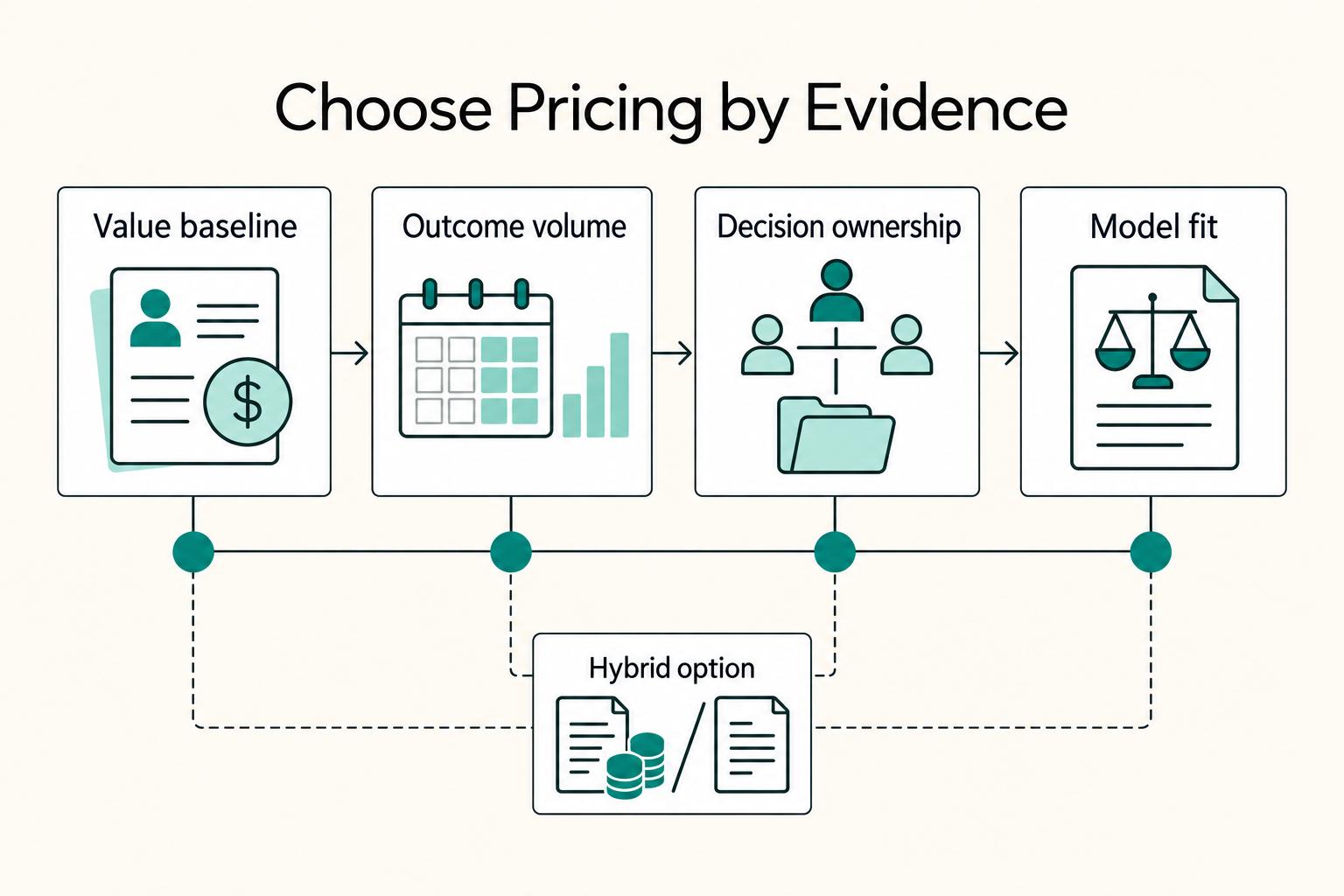
Value-based pricing works when you and the client can name the business result before kickoff and agree on how progress will be judged. If that link is weak, use a tighter model first. This is not about defending one pricing philosophy over another. It is about avoiding surprises by keeping pricing, scope, delivery, and payment aligned from day one.

The Best Expense Tracking Apps for Freelancers
Admin drag usually starts small, then eats margin at month-end. Use this as a decision guide, not a popularity roundup: pick one tool quickly, then stick to a weekly routine that keeps records clean.

The Freelance Payment Penalty: A Modeled Audit of Platform Fees, FX Spreads, and Payout Delays
The money rarely disappears through a single, easy-to-spot fee. The real loss is stacked. A marketplace takes its commission, a processor adds a charge for international cards, a bank or payment company converts the currency at a spread, a platform holds the funds before release, and a wire sheds a little to intermediaries on the way in. Each layer looks defensible on its own, but the worker feels the combined result as a smaller deposit and a later payday.