
Quick Answer
Yes. A charging order usually lets a judgment creditor intercept a debtor member’s LLC distributions and attach a lien to the transferable interest, but it does not automatically transfer voting or management control. In the article’s examples, the key split is economic rights versus governance rights. California Corporations Code section 17705.03 is used to show that even after foreclosure, a purchaser may receive only transferable rights and not become a member.
What a Charging Order Means for Your LLC#
A charging order usually lets a judgment creditor reach a member's LLC payout rights, not take over the business. When people search for charging order llc rules, they are often trying to solve the wrong problem. The real issue is not how to improvise after a lawsuit. It is how to keep your business functional if a personal judgment creditor shows up and starts looking at your LLC membership interest.
At a basic level, a charging order is a court remedy used after the creditor already has a judgment. It lets that creditor collect the debtor member's LLC payout rights, and it attaches as a lien to the debtor's transferable interest. That framing matters because it points to the real decision: this remedy usually targets economic rights, not automatic control over management or ownership decisions.
That distinction catches a lot of founders off guard. People hear "creditor against an LLC" and assume the business can be seized like corporate stock. The rule is narrower. Corporate shares can often be levied on directly to enforce a judgment, but an LLC membership interest is generally not treated the same way for direct levy. A charging order does not, by itself, hand the creditor voting rights, management control, or an immediate right to liquidate the business.
So the practical question is what the order actually reaches in your case. Start with three checkpoints:
- Judgment status: has the creditor already obtained a judgment?
- Scope of the remedy: does the order redirect distributions and attach as a lien to the debtor's transferable interest?
- Control limits: does anyone claim the order alone transfers voting or management rights?
Because outcomes are not identical everywhere, verify the result under the governing state law instead of relying on broad assumptions.
This article stays at that practical level: what a charging order actually reaches, and what it usually does not control.
What a charging order is and what it is not#
A charging order is usually a court-ordered lien on an LLC member's payout rights, not a right to run the LLC. The judgment creditor is the party trying to collect; the judgment debtor is the member whose transferable (economic) interest is targeted.
Think in three buckets:
- What it can reach: distributions tied to the debtor member's economic interest.
- What it does not automatically transfer: management rights, voting rights, governance rights, or a right to dissolve the LLC.
- What it cannot force: the creditor cannot require the LLC to make distributions on demand.
This is where people over-assume. With corporate shares, a creditor can often levy directly on shares to enforce a judgment. A charging order against an LLC interest is usually narrower and aimed at payout flow, not immediate control transfer.
If you are reviewing a demand letter or court filing, check the exact rights being claimed and the state-law basis. If someone treats a charging order like an automatic operational takeover, treat that as a warning sign and verify the legal scope before assuming your control rights are lost.
For a step-by-step walkthrough, see What is the 'Corporate Veil' and How Does an LLC Protect It?.
What creditors can collect versus what they usually cannot control#
A charging order usually lets a creditor collect distributions, not take over how the LLC is run. If there are no distributions, the order alone may provide little immediate recovery.
"Importantly, a charging order does not grant the creditor control over the LLC's operations."
| Issue | Economic interest rights | Control rights |
|---|---|---|
| Income distributions | A creditor may receive income distributions that would otherwise go to the debtor member. | A creditor generally cannot decide whether income distributions are made or when they are paid. |
| Profit distributions | A creditor may receive profit distributions that would otherwise go to the debtor member. | A creditor generally cannot force profit distributions or set distribution policy. |
| Voting rights | Usually not part of what a charging order reaches. | Voting rights usually stay with the member unless state law or a separate remedy changes that result. |
| Management rights | Not part of the transferable payment stream. | A creditor does not automatically gain authority to manage operations. |
| Myth vs reality | Myth: "The creditor takes over the company immediately." | Reality: a charging order usually reaches only the transferable/economic interest, not immediate operational control. |
The practical hinge is whether money is actually distributed. The order can place a lien on the transferable interest and redirect distributions that would have gone to the debtor member, but the creditor generally cannot force the LLC to make distributions.
California shows this limit clearly: under Corporations Code section 17705.03, even a foreclosure purchaser gets only the transferable interest and "does not thereby become a member." That does not make outcomes identical in every state, but it shows the core split between payout rights and governance rights.
Read the order and related filings for exact wording. If the target is the transferable interest or distributions, that matches the usual pattern; claims of automatic voting or management control should be tied to actual state law or a separate remedy. Related: The 'Profit First' Method Part 2: Setting Up Your Bank Accounts.
Single-member LLC and multi-member LLC risk is not the same#
The risk profile changes with member count because it can affect what remedies a creditor can pursue. In a Single-member LLC, courts and statutes may see less reason to protect governance boundaries because there are no non-debtor co-owners to protect.
The plain-English policy behind that is "pick your partner." In a true Multi-member LLC, charging-order limits help prevent non-debtor members from being forced into governance with an outsider creditor. That policy is weaker in a one-owner company, where no innocent co-member relationship exists.
Why single-member cases can get rougher#
Florida is a useful illustration, not a nationwide rule. The 2025 Florida Statutes (section 605.0503) separately address one-member and multi-member LLCs: for a one-member LLC, a charging order is "not the sole and exclusive remedy," while for a multi-member LLC, foreclosure "is not available to a judgment creditor attempting to satisfy the judgment."
| Context | Article says | Source |
|---|---|---|
| Florida one-member LLC | A charging order is "not the sole and exclusive remedy". | 2025 Florida Statutes, section 605.0503 |
| Florida multi-member LLC | Foreclosure "is not available to a judgment creditor attempting to satisfy the judgment." | 2025 Florida Statutes, section 605.0503 |
| Olmstead v. FTC | Under the law then in effect, the charging-order remedy was not the sole remedy for a creditor of a single-member LLC owner. | Florida Supreme Court, decided June 24, 2010 |
That aligns with Olmstead v. FTC (decided June 24, 2010), where the Florida Supreme Court held that under the law then in effect, the charging-order remedy was not the sole remedy for a creditor of a single-member LLC owner. The practical point is narrow but important: member count can affect the legal menu.
What "pick your partner" protects and what it does not#
In a Multi-member LLC, the policy often supports limiting a creditor to the debtor member's transferable (economic) interest rather than governance rights. But multi-member status is not an automatic shield. If asset protection is a core goal, verify how your state treats transferable interests, foreclosure, and follow-on post-judgment remedies.
| Structure choice | Likely benefit | Tradeoffs | Admin burden | Control implications |
|---|---|---|---|---|
| Keep single-member structure | Simple ownership and faster decisions | In some jurisdictions, remedies may extend beyond a charging order | Low | Full internal control, but weaker "pick your partner" policy argument |
| Add a real minority member | May strengthen the policy case for limiting remedies to economic rights | More complexity, shared economics, and no automatic legal win | Medium | Less unilateral control; co-owner must be real, not cosmetic |
| Redesign governance and documents | Better alignment of ownership, management, and transfer rules with risk goals | Legal review and ongoing maintenance | Medium to high | Control can stay centralized or be shared, but documents must match reality and local law |
Decision rule: do not rely on the LLC label alone. Outcomes are jurisdiction-dependent, and one state example cannot be generalized to every state.
If you're still deciding whether an LLC is the right structure, see Sole Proprietorship vs. LLC: The Definitive Guide for Global Freelancers.
If the LLC makes no distributions what happens next#
No distributions do not make the problem disappear. They just make the charging order less useful in the short term, and that can push a creditor to pursue other remedies if state law allows it.
A charging order is a lien on distributions tied to the debtor member. Its limit matters: it reaches only distributions to that named person, not payments to other members. So when payouts are irregular or paused, collection pressure often shifts from "wait for distributions" to "what else is available under this state's LLC rules?"
Typical path after a dry charging order#
The first step is usually the charging order. If it produces little, some states allow a foreclosure request against the debtor's LLC membership interest. California is one example. Other states describe charging orders as the only remedy, including Wyoming, Nevada, and Delaware.
| State example | Article says | Follow-on |
|---|---|---|
| California | Some states allow a foreclosure request against the debtor's LLC membership interest; California is one example. | Foreclosure may be in play |
| Wyoming | Charging orders are described as the only remedy. | Check the governing state statute |
| Nevada | Charging orders are described as the only remedy. | Check the governing state statute |
| Delaware | Charging orders are described as the only remedy. | Check the governing state statute |
That split is the core issue: you cannot assume the next move without checking the governing state statute.
In some jurisdictions, creditors may also request a receiver or similar aid, but availability and standards are state-specific and must be confirmed locally.
If foreclosure is in play, treat redemption as a checkpoint. Do not assume how it works. Confirm from the statute and current case law whether redemption rights exist, who can use them, and when.
Cashflow pattern changes leverage#
| Cashflow pattern | Likely effect on a charging order | Practical creditor pressure |
|---|---|---|
| Irregular freelancer payouts | Lien may have limited near-term value | Creditor may test follow-on remedies where allowed |
| Stable monthly owner payouts | Lien has regular points to attach | Creditor has a clearer collection path |
The common failure mode is assuming "no payouts" means the risk is over. Sometimes the risk just changes shape.
If your state permits foreclosure, pressure can move from distributions to the membership interest itself, which can be much more serious, especially for a single-member LLC.
If formation-state choice is part of the asset-protection question, see Delaware vs. Nevada LLC: A Comparison for Asset Protection.
Governing Law, Jurisdiction, and Dispute Resolution decide outcomes#
For charging-order risk, outcomes turn on forum and document terms, not a generic nationwide rule. Start by confirming which state law applies, which court can act, and how your own dispute clauses route the fight.
| Item | What to confirm | Why it matters |
|---|---|---|
| Governing Law | Confirm the exact state named in your LLC documents. | If it points to Washington, pull the current text of RCW 25.25.265 and have counsel apply it to your facts. |
| Jurisdiction | Confirm where a creditor can establish personal jurisdiction over the debtor or company. | Forum can change enforcement results. |
| Dispute Resolution | Verify whether your documents require court litigation, arbitration, or a specific venue. | Test how that setup affects where and how quickly collection relief can be pursued. |
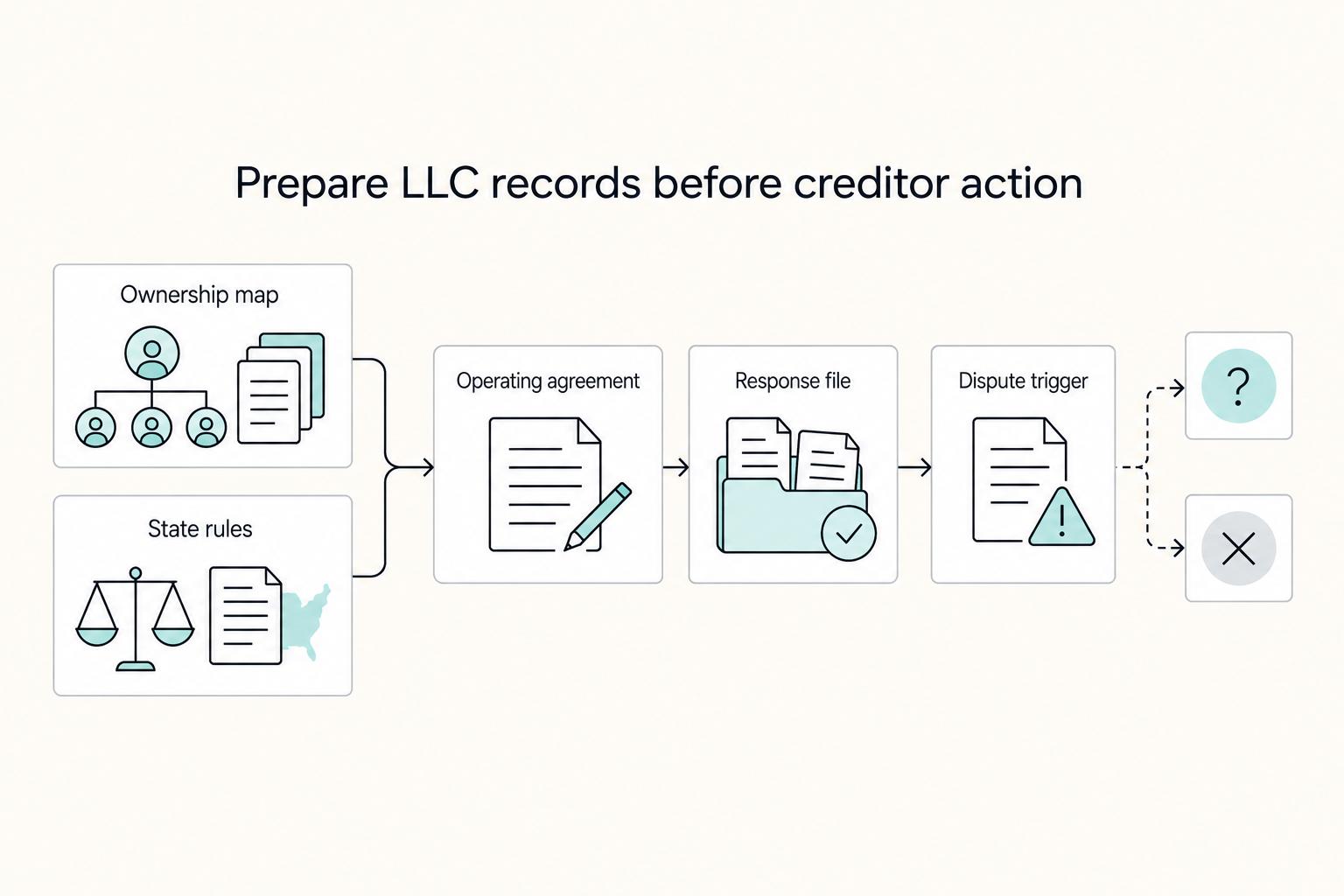
Use your operating agreement and formation records as a three-part check:
- Governing Law: confirm the exact state named in your LLC documents. If it points to Washington, pull the current text of RCW 25.25.265 and have counsel apply it to your facts.
- Jurisdiction: confirm where a creditor can establish personal jurisdiction over the debtor or company. A New York-focused appellate commentary was framed around debtors subject to personal jurisdiction in New York, which is exactly why forum can change enforcement results.
- Dispute Resolution: verify whether your documents require court litigation, arbitration, or a specific venue, then test how that setup affects where and how quickly collection relief can be pursued.
Washington and Kentucky are useful reminders to verify locally, not to generalize nationally. If your LLC is tied to Washington, confirm the current Washington statute (including RCW 25.25.265). If it is tied to Kentucky, confirm the current Kentucky statute and local case law. Do not assume single-member or multi-member outcomes, foreclosure exposure, or creditor rights carry over from one state to another.
What is still unknown until you confirm it locally#
- Whether a charging order is the exclusive remedy
- Whether extra remedies are available after a dry charging order
- Whether court, venue, and personal-jurisdiction facts change the outcome
A common miss is reviewing operating documents for business terms but not enforcement consequences. Pull the signed agreement, amendments, member ledger, and formation-state record before asking counsel for a risk call. For the bookkeeping side of owner separation, see How LLC Owners Separate Business and Personal Finances.
Operating rules that reduce personal collection risk#
Use repeatable money and approval rules, then document them the same way every time. This helps you show owner payouts were ordinary business decisions, not reactive moves.
Keep money movements boring and traceable#
Start with separation: use distinct business and personal accounts, and do not run personal spending through the business account. That does not guarantee protection, but it reduces commingling risk and makes distributions easier to trace in your records.
Set payout rules in advance: when distributions are considered, who approves them, and what gets saved. Then follow that process consistently.
For each owner payout, keep a clear chain of evidence:
- bank transfer record
- matching bookkeeping entry
- approval record
- short business-purpose note
Also avoid assuming a no-distribution approach is complete protection. Depending on the statute and facts, courts can still consider remedies such as a receiver or foreclosure on the transferable interest.
Document who decides and why#
Your operating agreement should clearly assign management authority and payout approval rights. Keep economic rights and governance decisions separate in your records.
A charging order is tied to the debtor member's transferable interest, not automatic company control. Under RCW 25.15.256, the judgment creditor has transferee rights, so your documentation should clearly distinguish distributions from management authority.
Use the approval method your documents allow. If written or electronic consent is permitted, use it consistently and keep it organized. 6 Del. C. § 18-302 is an example of statute language that allows action by consent without a meeting.
Keep an evidence file with:
- signed operating agreement and amendments
- written consents or minutes for payout approvals
- payout records tied to bookkeeping entries and bank statements
- member ledger and records of membership interests
Tighten client contracts before they become collection problems#
Review your service contracts with counsel for three clauses: limitation of liability, indemnification, and termination triggers. These are risk-allocation tools, but they are not automatically enforceable as drafted, and overbroad language can fail.
Keep them explicit:
- limitation of liability: what liability is limited and how
- indemnification: who covers which losses
- termination: what event triggers cancellation and what happens next
Practical rule: run payouts on a set cadence, record approvals the same way each time, and keep contract terms clear enough to reduce avoidable disputes.
Related reading: How to Structure an LLC for a Freelance Writing Business.
The freelancer decision checklist before a dispute starts#
Do this before any dispute starts: map ownership, confirm your state remedy rules, and align your documents so you can respond fast if a judgment creditor appears.
Step 1: Map ownership from records, not memory#
Confirm whether you are a Single-member LLC or Multi-member LLC, then identify who holds each LLC membership interest. Verify that against the signed operating agreement, amendments, and company records. If you cannot quickly produce the current operating agreement, a current member/manager list, and records showing member admission, treat that as a priority gap.
Step 2: Confirm your state remedy map with counsel#
Ask counsel to confirm what applies in your state: charging order, foreclosure, receiver, and whether charging order is the exclusive remedy. Do not generalize across states. Delaware (6 Del. C. § 18-703(d)) uses exclusive-remedy language and addresses both one-member and multi-member LLCs, while Washington (RCW 25.15.256) includes receiver and foreclosure mechanisms. Kentucky (KRS 275.260) also uses exclusive-remedy language.
Step 3: Align governing and dispute clauses across documents#
Check operating documents and client contracts for consistency on Governing Law, Jurisdiction/Forum, and Dispute Resolution. Then review Indemnification, Limitation of Liability, and Termination so risk allocation is deliberate, not accidental. The goal is not identical wording everywhere. The goal is avoiding conflicting forums, procedures, or risk assumptions.
Step 4: Build a ready evidence pack#
Keep a current legal/evidence pack that includes:
- signed operating agreement and amendments
- current member ledger or member list (with available contact details)
- distribution or payout history tied to bookkeeping and bank records
- recent tax returns and core company records
- a short court-order response note (who receives notices, who contacts counsel, where records live)
Step 5: Recheck on a calendar and when the business changes#
Set a yearly recheck, and run it sooner after major changes like a new partner, new state nexus, or a significant cross-border revenue shift. If the business changed but documents did not, assume your paper trail is already stale.
Conclusion#
The practical answer is narrower, and more serious, than many owners expect. A charging order is aimed at the judgment debtor's transferable interest. It places a lien on that interest and can require the LLC to pay over amounts that would otherwise go to the member. What it does not do, in this framework, is hand the creditor your voting, management, governance, or information rights.
That distinction matters, but it is not the same as safety. If your LLC regularly makes owner payouts, the economic pressure is obvious. Even then, broad assumptions are risky because outcomes can vary by state.
The best move is to treat this as a pre-dispute decision, not a post-judgment scramble. Verify the exact remedy rules in the state tied to your LLC before you rely on a general protection story. The red flag is an owner who repeats "the creditor cannot take control" and stops there, without checking what local law allows after the initial order.
If you want one short operating rule, use this:
- Treat a charging order as a claim on distributions, not an automatic transfer of control rights.
- Verify state-specific remedy rules before relying on a single general rule.
- Do not assume a charging order is always the creditor's only remedy.
The takeaway is not that LLCs solve personal creditor risk. It is narrower: the remedy targets economics first, not immediate control, and outcomes can still vary by state.
Frequently Asked Questions
What is a charging order for an LLC in plain language?
It is a court order telling the LLC to send the debtor member’s payouts to the judgment creditor instead of to the member. In plain terms, it goes after economic rights, not an automatic transfer of voting power or day-to-day control.
Can a creditor take over my LLC with a charging order?
Not automatically. The source material here says the creditor does not get to “vote your membership rights” just because the order exists. But the same source also says a creditor may challenge LLC protection if the judgment cannot be satisfied in a “reasonable time,” and a successful challenge can lead to a forced sale of financial and management rights.
Can a creditor force LLC distributions to be made?
No, a charging order by itself cannot force the LLC to make payouts. That is why “we will just stop payouts” is not a full strategy. It may reduce immediate collection, but it does not mean pressure disappears or that follow-on remedies are off the table.
Does a single-member LLC have weaker charging-order protection than a multi-member LLC?
This guide does not establish a single-member versus multi-member rule. If this point matters to your planning, get a state-specific answer from counsel rather than relying on a general FAQ.
Is a charging order always the creditor’s exclusive remedy?
No. In this source, a creditor may challenge LLC protection if the judgment cannot be satisfied in a reasonable time. If that challenge succeeds, the court could force a sale of financial and management rights.
Can a charging order reach wages and income distributions the same way?
Usually no. A charging order generally cannot require the LLC to forward earned income, meaning wages, but it can reach owner payouts, usually profits, payable to the member. If you pay yourself in more than one way, keep your records clear so those payment types are easy to distinguish.
How do Governing Law and Jurisdiction change charging-order outcomes?
This guide does not provide enough detail to map specific governing-law or jurisdiction outcomes. What it does show is that a charging order may not be the end of the collection path in every case, so state-specific legal review is important.
Try a related tool
Researched and edited by the Gruv editorial team. Gruv builds cross-border billing, payouts, and finance-operations software for global businesses.
Sources
Educational content only. Not legal, tax, or financial advice.
Related Posts

Sole Proprietorship vs LLC for Global Freelancers in 2026
For most freelancers in 2026, the practical default is still simple: use the simplest structure you can run cleanly, then formalize when risk actually rises. If your work is still in validation mode and the downside is contained, a sole proprietorship is often the practical starting point. When contract exposure, delivery stakes, or dispute risk starts climbing, forming an LLC deserves earlier attention.
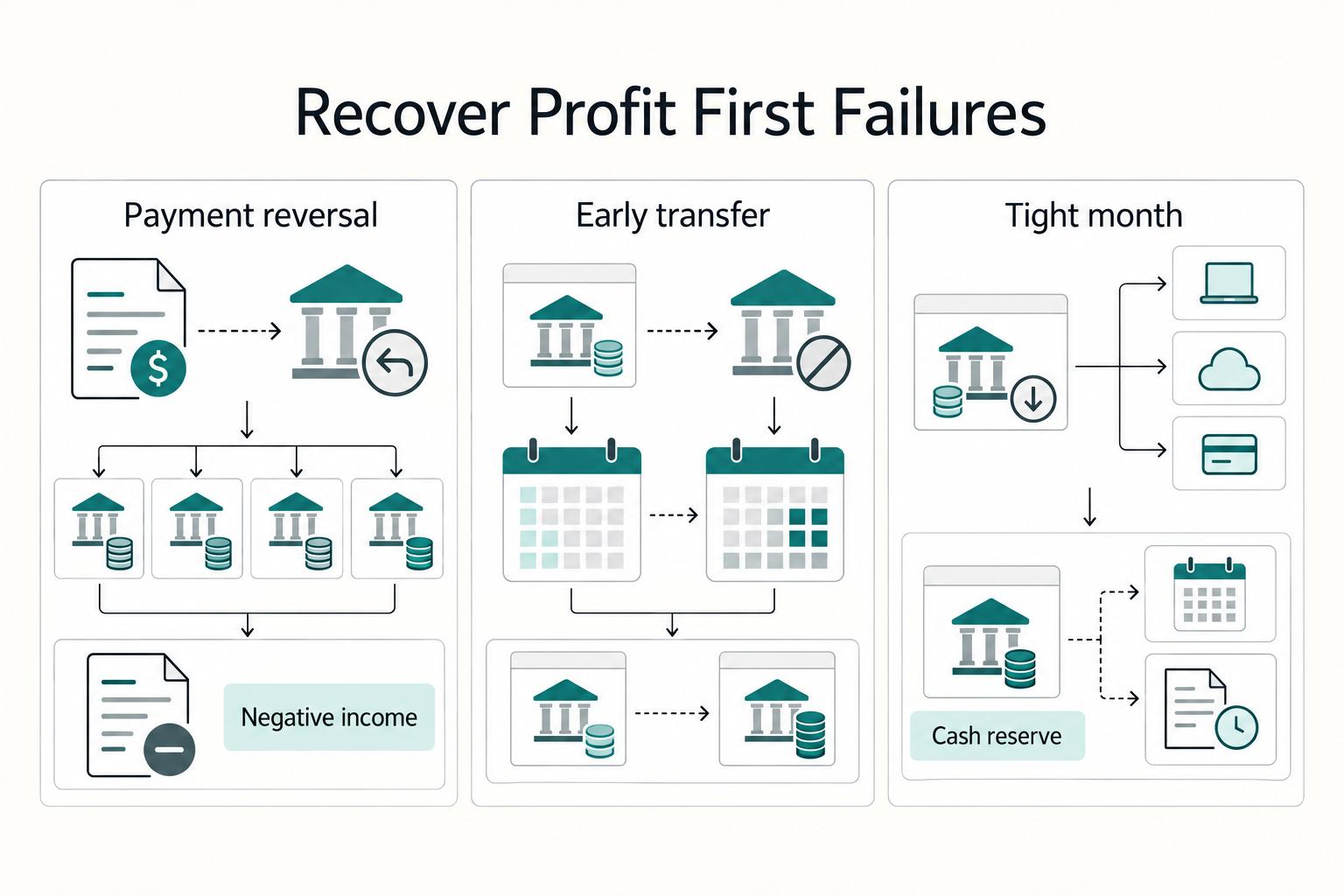
The 'Profit First' Method Part 2: Setting Up Your Bank Accounts
Most freelancers who try Profit First open a few extra bank accounts and call it done. That's the wrong move.
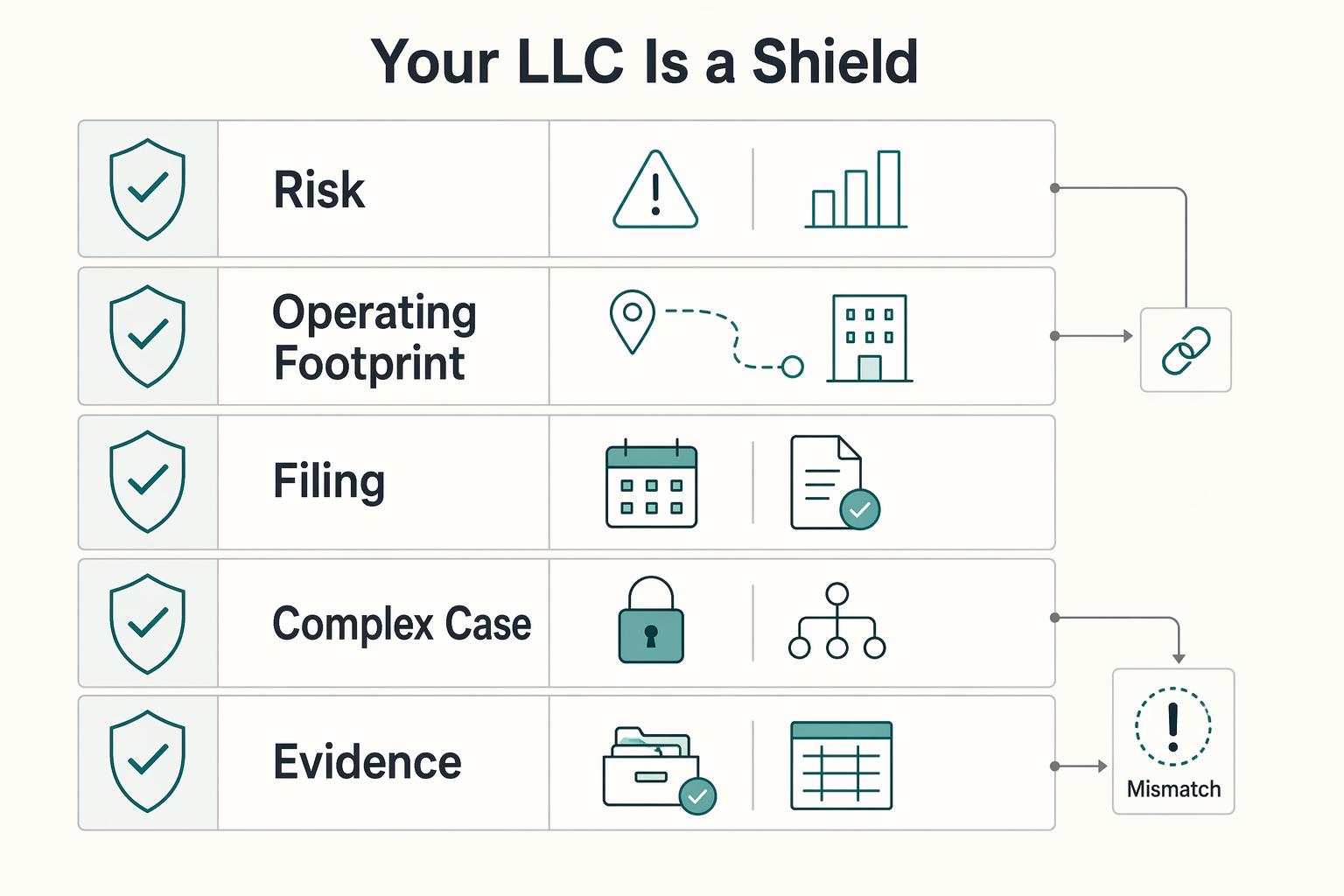
Delaware vs Nevada LLC for Asset Protection Decisions
If you are a solo professional, stop treating **delaware vs nevada llc** like a brand choice. Much of the noise around this topic comes from corporate law, and that does not automatically translate into a better LLC setup in your day-to-day business.