
Quick Answer
Yes: after an llc member death, your signed operating agreement usually governs first, and state default rules fill any gaps. If the document is silent, heirs may receive financial rights without immediate authority to run the business, and probate can slow decisions. Protect continuity by naming successor authority, defining transfer and dissolution mechanics, and keeping an operations handoff file with contacts, access steps, and cash priorities.
What your operating agreement and state law each decide#
When a member dies, many states treat the operating agreement as the first rulebook for internal LLC issues. If there is no agreement, or it says nothing about death, state default rules can fill the gap. That is where control, continuity, and value get harder to protect.
The outcome depends on both your agreement and your formation state's statute. The common pattern is straightforward: the agreement governs internal member relations first, and the statute controls where the agreement is silent. Start with a practical check. Review what your operating agreement says now, and what your state law does when it does not.
| What you care about | If your operating agreement is current and specific | If you have no agreement, or it is silent |
|---|---|---|
| Control | You can direct who can manage, vote, and act next, subject to state law. | Default LLC and estate rules are more likely to decide who can act. |
| Continuity | You are better positioned to keep contracts, payments, and day-to-day operations moving. | In some states, death may trigger dissociation, which can interrupt authority and decisions. |
| Transfer path | You can separate economic ownership from management rights when that fits your plan. | Heirs or other transferees may receive economic rights first, without automatic member or manager powers. |
| Value preservation | A planned handoff better protects timing, clients, and business value. | Delays, disputes, or forced unwinding can reduce estate value. |
One of the biggest risks is the gap between economic ownership and management authority. Delaware makes that split explicit. An assignee can receive the economic interest without automatically receiving member powers. In plain terms, your family may be entitled to the value while still lacking immediate authority to run the company.
Another risk is default dissolution or forced continuation mechanics. Some states treat death as dissociation. Delaware also includes a default trigger when there are no members, with a 90-day continuation window unless the LLC agreement sets another period. That is not a nationwide rule, so you need to verify your own state's dissociation, no-member, and continuation rules.
Probate is the third pressure point. Courts describe probate as court-supervised administration of a decedent's assets, debts, and distribution. In some states, it can require a court filing plus appointment of a personal representative. For heirs, that can mean temporary operating disruption while authority is confirmed for banks, clients, or counterparties.
State differences cut the other way too. Massachusetts allows a deceased member's legal representative to exercise member rights unless the operating agreement says otherwise. That is why this has to be checked state by state. You are planning against your own LLC statute and your own agreement language, not one national default.
The next step is execution. Tighten the operating agreement, choose the transition path, and build a practical playbook a successor can use right away.
If you want a deeper dive, read Sole Proprietorship vs. LLC: The Definitive Guide for Global Freelancers.
The Command Document: Fortifying Your Operating Agreement for Ultimate Control#
Your operating agreement is the document that should settle internal succession first. If it is silent, state default rules can step in and produce a result you did not intend.
The agreement also needs to line up with your state LLC statute and with your will or trust. If those documents pull in different directions, it can be unclear who has management authority and who holds only economic rights. Because results vary by jurisdiction, confirm final language with counsel in your formation state.
A practical drafting approach is to separate management, transfer mechanics, and winding-up issues instead of blending them together. That makes the key decisions easier to read and enforce.
| Clause | What it does | Decision you must make | Common drafting mistake |
|---|---|---|---|
| Management authority clause | Identifies who can manage, vote, sign, and run operations after death | Who has immediate authority, and what event activates it | Naming a beneficiary but not stating whether they receive management authority or only economic value |
| Economic rights clause | States who receives the deceased member's financial interest | Whether the recipient receives distributions only or can become a full member under defined terms | Assuming inheritance automatically includes voting or manager rights |
| Valuation and funding clause | Defines how the interest is valued and how payment is funded | How value and payment terms are determined in your agreement | Leaving value and payment timing undefined |
| Executor authority clause | Grants limited authority to complete transition steps | Which specific acts are allowed and when authority ends | Giving broad, open-ended operating power |
The management clause protects continuity. The economic-rights and valuation/funding clauses protect value by separating who benefits financially from who controls decisions when that split makes sense. If you include an executor clause, keep it narrow and task-specific.
Before moving on, check the basics in the actual controlling documents:
- Review the current signed operating agreement version, not a draft copy.
- Confirm named parties are still correct, including members, ownership percentages, capital contributions, managers, successors, and any trusts or beneficiaries.
- Align the agreement with your will, trust, and other estate planning documents.
- Document exactly where the verified succession language will be inserted in the final controlling agreement.
Related: How to Create a Buy-Sell Agreement for a Partnership.
Choose between continuity, value transfer, and an orderly wind down#
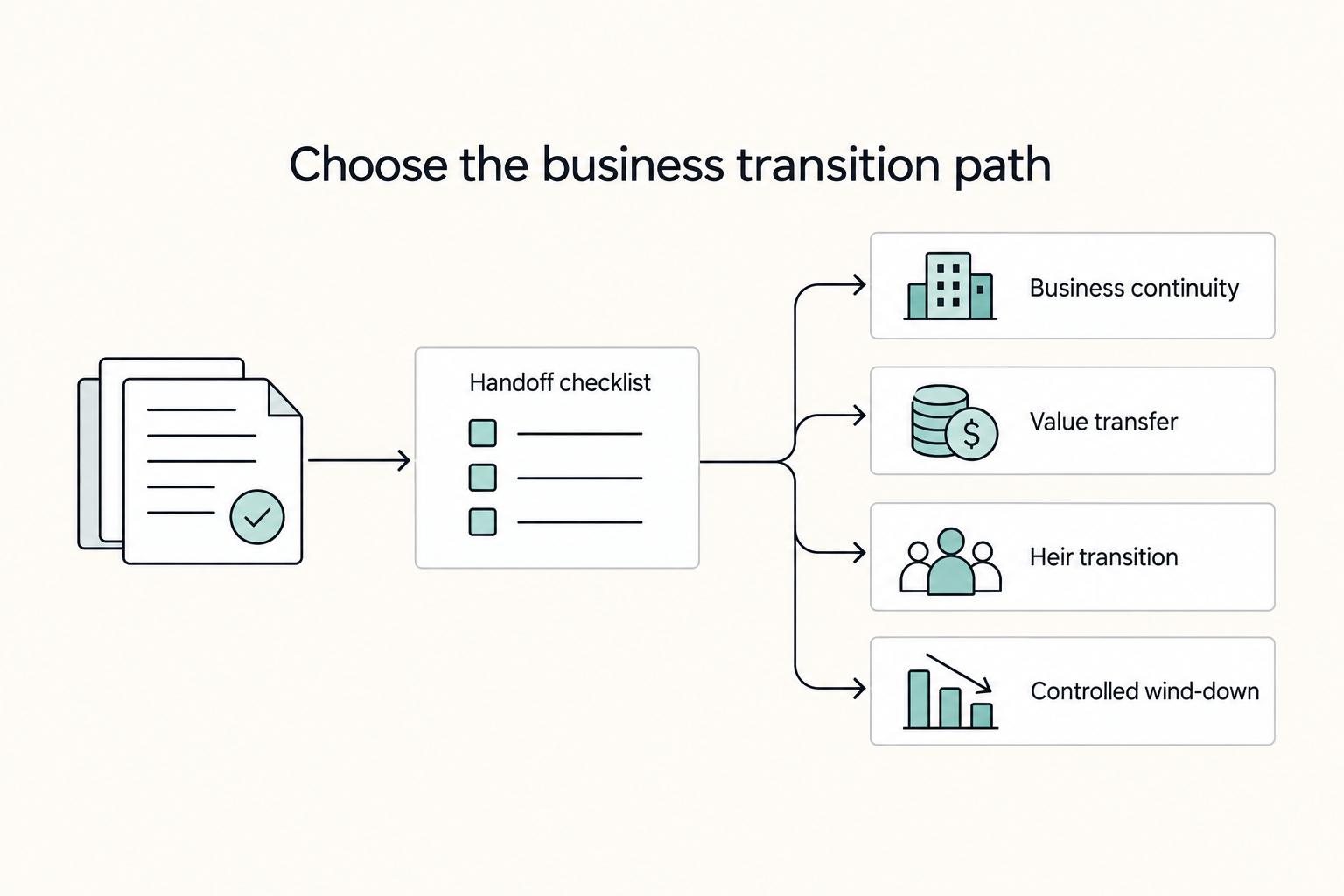
Once the agreement says who can act, the next question is what they should do. In practice, the options usually come down to three paths: continue operations, transfer value, or wind down.
How to choose#
Start with three questions: Does the business work without your daily involvement? Is a real successor ready to step in quickly? Do you want ongoing operations or value extraction for heirs?
If the company depends on your personal relationships, judgment, or licensed work, winding down is often the cleaner path. If operations are repeatable and transferable, continuity is more realistic. If heirs should receive value but not control, your documents need to separate economic rights from management rights.
Your formation state and signed agreement control the outcome. In New York, death alone does not automatically dissolve an LLC, and post-death decisions can involve a 180-day window. In Delaware, having no members can trigger dissolution, subject to a 90-day continuation period or a different period set in the LLC agreement. Verify whether your governing documents and state law point to admission, buyout, continuation, or dissolution.
| Path | Primary objective | Control handoff | Likely friction points | Documents that must align |
|---|---|---|---|---|
| Continuity | Keep the business operating as a going concern | A named successor can take operating authority if properly admitted and authorized under the agreement | Successor is named but not properly admitted; signer authority is unclear with banks, vendors, or clients; co-owners invoke buy-sell restrictions | Operating agreement, buy-sell terms, estate documents, member consents, signer authority records |
| Asset transfer | Deliver financial value without making heirs operators | Beneficiaries receive economic rights; executor or manager handles administration | Heirs expect voting power they do not have; assignee management limits apply; transfer-on-death language may not work the same way in your state | Operating agreement, will or trust, state-specific transfer language, executor instructions |
| Wind down | Preserve value, pay obligations, and close in an orderly way | Executor or legal representative acts for estate administration, with scope set by law and the agreement | Death may not itself dissolve the LLC; authority to collect receivables or terminate contracts is missing; tax or EIN steps are overlooked | Operating agreement, executor powers, dissolution instructions, contract list, tax file |
If you want the business to continue#
Choose continuity only if you can name someone who can actually run operations right away. Naming a successor in the agreement helps, but it is not enough by itself. You still need to confirm admission mechanics and authority under your state law and governing documents.
Focus on real operating control: contract signing, bank access, contractor or staff direction, and member or manager decisions. A common failure is transferring economic value without management rights. Delaware law, for example, distinguishes assignee economic rights from management participation unless your agreement and admission terms say otherwise.
If you have co-owners and want control to stay inside the business, align the buy-sell terms now. Properly drafted transfer restrictions can require resale of the deceased owner's interest to the company or existing owners.
If you want heirs to receive value, not a job#
This path fits when the LLC is mainly a value-holding asset or when beneficiaries should not run the business. The drafting goal is simple: move the economic value without implying automatic voting or management rights.
| Reference | What it says | Limit or trigger |
|---|---|---|
| Transfer-on-Death language | State-specific and does not work the same way for LLC interests in every jurisdiction | Does not work the same way in every jurisdiction |
| New York LLC Law §608 | Allows the executor or other legal representative to exercise the member's rights for estate administration | Not the same as an automatic permanent management transfer |
| IRS guidance | Requires a new EIN if an estate continues operating the business after the owner's death | Required if an estate continues operating the business |
Treat any Transfer-on-Death language as state-specific. It does not work the same way for LLC interests in every jurisdiction. In New York, LLC Law §608 allows the executor or other legal representative to exercise the member's rights for estate administration. That is not the same as an automatic permanent management transfer.
Plan tax administration early. If an estate continues operating the business after the owner's death, IRS guidance requires a new EIN for that business.
If you want a controlled wind down#
Wind down can be the practical choice when the business is closely tied to your personal work.
| Jurisdiction/example | Rule described | Timing |
|---|---|---|
| New York LLC | Death is not automatic dissolution | 180-day decision window |
| Delaware LLC | Having no members can trigger dissolution | 90-day continuation period, or a different period set in the LLC agreement |
| New York professional service LLCs | Separate rule requires purchase or redemption of the deceased member's interest | Timing tied to six months after executor appointment |
Your agreement should give narrow, task-based authority: collect receivables, pay creditors, preserve records, terminate contracts, sell defined assets, and distribute the remaining value through the estate. Avoid broad language that implies indefinite operation if the agreement does not support that role.
Then verify the legal trigger and timing rules. New York does not treat death as automatic dissolution and includes a 180-day decision window. Delaware can trigger dissolution when there are no members, subject to a 90-day or agreement-modified continuation period. New York professional service LLCs follow a separate rule requiring purchase or redemption of the deceased member's interest, with timing tied to six months after executor appointment.
Section handoff checklist#
- Pick one path only: continuity, asset transfer, or wind down.
- Assign roles by name: successor operator, economic beneficiary, executor, and any limited transition authority.
- Align the operating agreement with your will, trust, and buy-sell terms so control rights and economic rights do not conflict.
- Flag all state-specific assumptions for legal review, especially admission mechanics, transfer-on-death language, dissolution timing, and executor authority.
You might also find this useful: How to Structure an LLC Operating Agreement for a Multi-Member Partnership. After you choose continuity, transfer, or wind down, map the matching payment permissions and payout handoffs in Gruv Docs.
Leave an operations file a trusted person can act on#
A legal plan is not enough if no one can use it under pressure. Once you choose continuity, value transfer, or wind down, the next job is to make that choice executable. Your playbook should let a trusted person find the right people, confirm authority, and keep operations stable without guessing.
Treat it as a living operations file. An older Baylor LLC case survey includes dedicated LLC topics for inspection and access to information, transfer of interest/buy-out of a member, and dissolution, including judicial or administrative dissolution. That is a useful warning area, but the survey is dated January 2010 and should not be treated as current law.
| Playbook component | Purpose | Owner | Storage location | Review cadence |
|---|---|---|---|---|
| First contacts list | Shows who to contact for your chosen path (order must be verified) | You + named backup | Encrypted file + sealed offline copy | Set a recurring review cadence |
| Authority and document pack | Collects records used to verify who can act | You | Secure folder labeled clearly | Review after every legal or account change |
| Access register | Documents approved emergency access routes for critical systems and unverified steps | You or delegated admin | Password manager notes + read-only export location | Set a recurring review cadence |
| Cash map | Shows cash-in and cash-out priorities for early stabilization | You + bookkeeper (if any) | Accounting folder + quick reference summary | Set a recurring review cadence |
| Client handoff notes | Preserves active work status and next actions | You or account lead | Secure shared folder or CRM export | Set a recurring review cadence |
| Vendor, subscription, and insurance file | Helps keep essentials running and pause nonessentials | You or operations admin | Finance folder with policy and billing records | Set a recurring review cadence |
Contacts and authority records#
Start with contact order. There is no universal first-call sequence here, so the useful version is the one tied to the path you already chose.
For each contact, include role, direct contact details, backup route, and a one-line action. Store the core records your advisor and institutions have told you they require: governing documents, key account references, and the location of official company records. If institution-specific requirements are still unclear, mark the document requirements as pending confirmation.
Access without guessing#
Credentials are not the same as authority. Your playbook should show both the authority path and the account-access path, and flag any unverified steps.
| System category | Details to record | If unconfirmed |
|---|---|---|
| Banking | Account owner, admin route, recovery route, and where backup materials are stored | Access protocol pending confirmation. |
| Payment processor | Account owner, admin route, recovery route, and where backup materials are stored | Access protocol pending confirmation. |
| Accounting system | Account owner, admin route, recovery route, and where backup materials are stored | Access protocol pending confirmation. |
| Primary email | Account owner, admin route, recovery route, and where backup materials are stored | Access protocol pending confirmation. |
| Storage | Account owner, admin route, recovery route, and where backup materials are stored | Access protocol pending confirmation. |
| Domain or hosting | Account owner, admin route, recovery route, and where backup materials are stored | Access protocol pending confirmation. |
| Billing-linked vendors | Account owner, admin route, recovery route, and where backup materials are stored | Access protocol pending confirmation. |
For each critical system category, record the account owner, admin route, recovery route, and where backup materials are stored. Use category-level labels such as banking, payment processor, accounting system, primary email, storage, domain or hosting, and billing-linked vendors unless a specific provider must be named. Where a step is still unconfirmed, mark the access protocol as pending confirmation.
Cash flow, client handoff, and ongoing obligations#
The goal here is a short first-week operating map. Your successor should be able to see where incoming cash is tracked, where it lands, and which outgoing payments are business-critical.
Keep client handoff notes brief and useful: current status, next deadline, relationship owner, and whether to continue, pause, or close out. Do the same for vendors and subscriptions by marking each as essential, hold, or cancel-review, with billing owner and renewal details. For insurance, keep the contact route, policy identifiers, and the storage location for the full policy file in one place, and verify current coverage terms separately.
Use this readiness test before you treat the playbook as done:
- A trusted person can locate the playbook and authority pack quickly.
- That person can follow the approved emergency flow for core systems without inventing steps.
- That person can run core cash-in and cash-out operations and identify active client and essential vendor status.
We covered this in detail in How to create an 'accountable plan' for a single-member LLC.
Your Final Act of Control#
If you want to protect continuity after a member dies, keep your plan in clear, usable documents, including the operating agreement and a practical Legacy Operations Playbook. The main risk is a control gap, not just a legal technicality. Depending on your jurisdiction's default rules, an estate may receive economic rights while management or voting rights stay elsewhere. In some structures, that can leave no one with clear authority to run the business.
The operating agreement should settle governance: who can act after death, whether the business continues or dissolves, how a successor is admitted, and what transfer limits apply. This helps prevent the dispute where heirs have a financial stake but no operational say. The Legacy Operations Playbook serves a different purpose. It is not a statutory requirement. It is a practical file that can help a successor manage operations, preserve contracts, and handle account-access issues quickly.
Keep the legal line clear. Estate documents can direct who should receive the deceased member's interest. LLC documents often determine what rights come with that interest and whether the recipient can manage the company. If you are a single member, this matters even more. Without a designated successor and usable documents, the company can fall into statutory limbo, and in some situations the window to fix authority may be short.
Choose your path before a crisis:
- Continue the business: name successor authority in the operating agreement and confirm that person can prove authority to banks and key counterparties.
- Transfer the ownership interest: align the operating agreement, transfer restrictions, and estate documents so the recipient and rights actually match.
- Wind down: write clear shutdown instructions, including who notifies clients, collects receivables, and closes accounts.
Before you close this out, run this handoff check:
- Review the signed current operating agreement and any amendments.
- Align your estate documents with LLC transfer rules.
- Confirm who has successor authority to act.
- Verify access to bank, payment, and other key business accounts.
- Schedule periodic reviews so documents do not become missing, unclear, or poorly executed.
For a step-by-step walkthrough, see How to Transfer Ownership of an LLC.
Once your succession documents are in place, confirm market coverage and any compliance-based payout setup with a quick Gruv consult.
Frequently Asked Questions
Can your heirs automatically run your LLC after a member dies?
Usually no, and it depends on your state law and your LLC documents. In Delaware, an assignee can receive economic rights, like distributions, without getting management rights or member powers by default. Next step: review your admission, transfer, and successor-management clauses, and confirm the signed current version is in your authority pack.
Does your will control the LLC interest?
Not by itself. Your will governs estate distribution, but your operating agreement and any buy-sell restrictions can still control whether and how the LLC interest transfers after death. Next step: align your will, operating agreement, and buy-sell terms so they do not conflict.
What changes for a single-member LLC versus a multi-member LLC?
The continuity risk can be higher in a single-member LLC because there may be no other member to keep governance moving. In Delaware, if there are no members, continuation may depend on admitting a new member within 90 days, unless the LLC agreement sets another period. Next step: if you are the only member, document a clear successor path and confirm who can act while estate administration is pending.
What if state default rules conflict with your operating agreement?
Your operating agreement usually controls default LLC rules, but only where your state law allows and where your language is clear. Delaware law repeatedly defers to the LLC agreement, so vague drafting can become the core failure point. Next step: compare your agreement against your formation state's LLC statute and have counsel review death, transfer, and dissolution clauses.
Can probate still slow everything down?
Yes. Probate is court-supervised estate administration, and timing can still affect business continuity even when your documents are well planned. Next step: keep an estate-administration checklist with your LLC documents so transitions can move faster during probate.
Try a related tool
Researched and edited by the Gruv editorial team. Gruv builds cross-border billing, payouts, and finance-operations software for global businesses.
Sources
- app.leg.wa.gov/RCW/default.aspxtrusted
- app.leg.wa.gov/rcw/default.aspxtrusted
- cityofpleasantonca.gov/assets/our-government/police/pleasanton-poli...trusted
- consumerfinance.gov/ask-cfpb/what-is-a-revocable-living-trust-en...trusted
- delcode.delaware.gov/title6/c018/sc08/index.htmltrusted
- delcode.delaware.gov/title6/c018/sc07/index.htmltrusted
- extapps.dec.ny.gov/data/DecDocs/C224454/Application.BCP.C224454...trusted
- flcourts.gov/Courts-System/florida-courts-help/other-reso...trusted
Educational content only. Not legal, tax, or financial advice.
Related Posts

Sole Proprietorship vs LLC for Global Freelancers in 2026
For most freelancers in 2026, the practical default is still simple: use the simplest structure you can run cleanly, then formalize when risk actually rises. If your work is still in validation mode and the downside is contained, a sole proprietorship is often the practical starting point. When contract exposure, delivery stakes, or dispute risk starts climbing, forming an LLC deserves earlier attention.
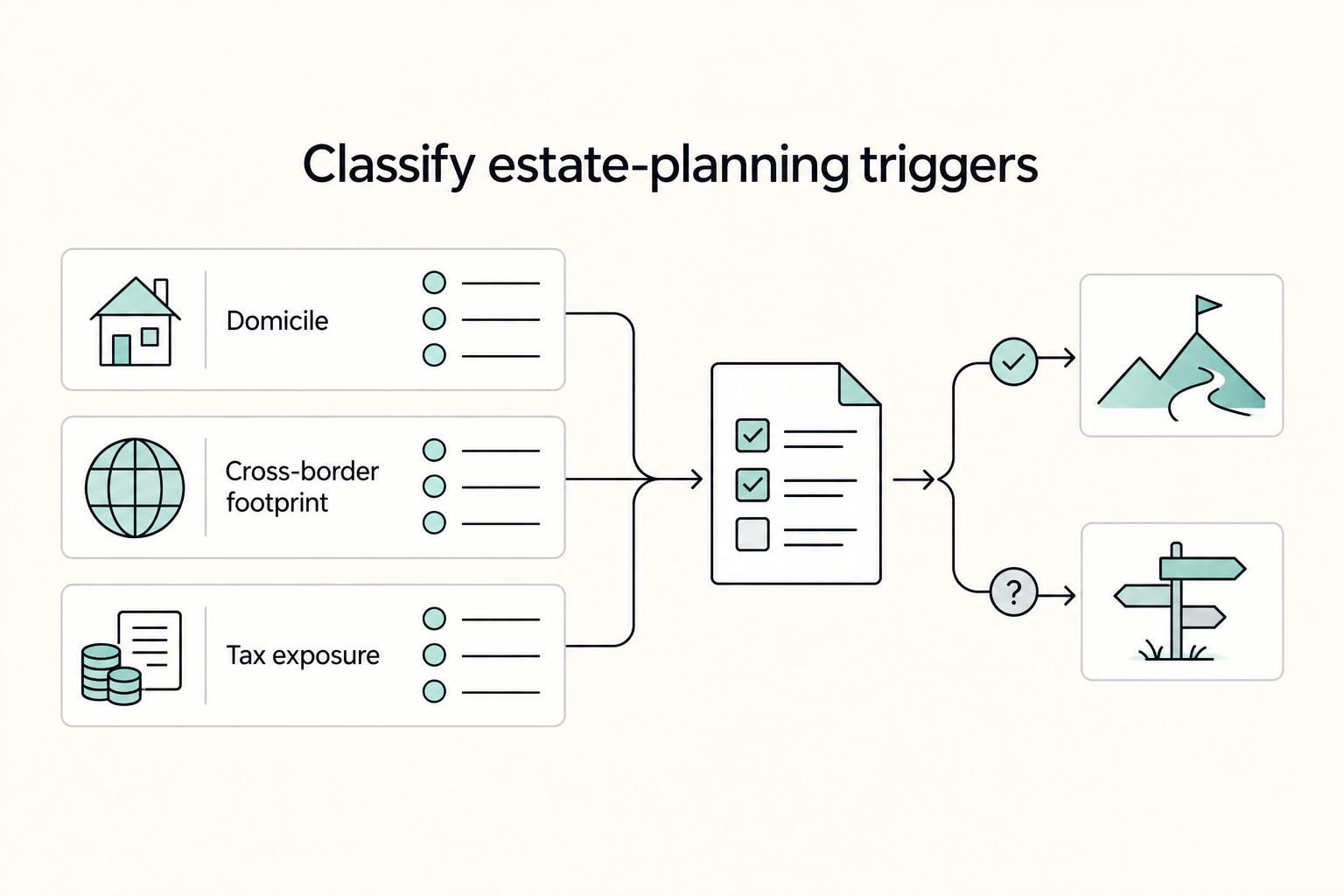
Estate Planning for Digital Nomads: Legal Intent and Cashflow Continuity
Treat estate planning for digital nomads as a two-part continuity system: legal intent plus operational execution, so your business keeps moving when you cannot. The common trap is thinking, "I have a will, so I'm covered." If you run a business-of-one, cashflow, logins, and process often live in your head until you deliberately externalize them.
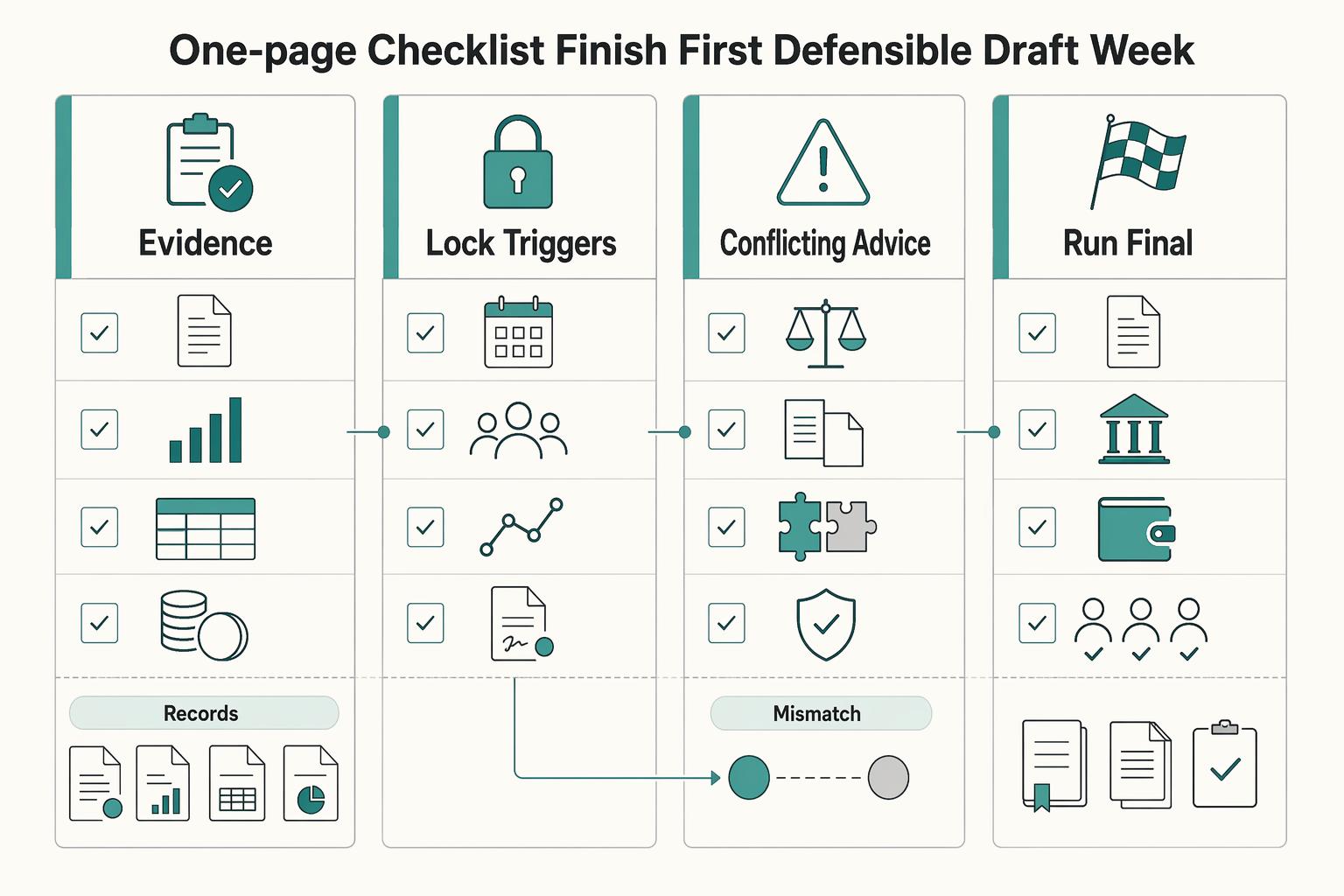
How to Create a Buy-Sell Agreement for a Partnership
**Treat your buy-sell agreement for partnership as core operating infrastructure, not paperwork for later.** Freelancers and consultants move fast on client delivery, but shared ownership risk keeps running in the background until one partner leaves, becomes disabled, goes bankrupt, or goes through a divorce.