
Quick Answer
Start by selecting one verifiable legal route for Poland, then build a single tracker before booking housing or flights. The warsaw digital nomad guide centers every decision on three checks: right to stay, right to work, and payment treatment. Use a personal 60-30-7 cadence, keep records aligned across documents, and pause any fee when rule freshness or file consistency is still uncertain.
Warsaw in 2026 for remote professionals who need certainty, not hype#
If you want this move to hold up under pressure, treat it like an operating decision, not a lifestyle experiment. This piece is for people planning a serious stay in Poland, not a quick city hop. Start with legal clarity, then timeline, then spending. In practice, that order prevents rework.
Use this guide as a sequence you can execute. You are not trying to collect endless opinions. You are trying to build a plan you can defend later, where every step has an owner, a deadline, and proof you can retrieve when you need it.
Create one move file before you compare districts or book flights. Put route assumptions, required documents, open legal questions, deadlines, and pending checks in one place. When that file is complete, contradictions show up early. When it is scattered, they usually appear after you have paid for something you cannot easily unwind.
Community channels help with context, not compliance decisions. Nomads.com can show how people talk about tradeoffs, but it is not legal guidance. Here, the Nomads.com page is a Brasov versus Varna comparison, so treat it as background signal only.
Use the same filter for broader trend reports. A 2023 European city ranking and a report on 21 future job locations may help you see where demand and opportunity might be moving. They cannot tell you whether your specific Poland filing path is clean.
Before any fee or non-refundable booking, run a simple three-part check:
- Jurisdiction check: confirm the guidance explicitly applies to Poland and your nationality profile.
- Action check: confirm it names the next concrete step, such as a form, authority, document class, or timing rule.
- Access check: confirm the source is fully readable now. If it is login-gated, treat it as unverified for critical decisions.
Capture each check in a dated decision log. That turns planning into a repeatable process instead of a memory test. It also gives you one place to review assumptions before money leaves your account.
Warsaw can still be the right base, but only after the sequence is locked. Pick the legal path first, align your timing second, and make travel or housing decisions around that timeline with backups.
The legal and practical model you need before booking flights#
Most problems start when people treat labels as if they automatically grant the same rights. Terms like digital nomad visa and Poland business visa often appear in the same conversation, but using them interchangeably is not supported here. If the label is fuzzy, the risk is usually hidden inside it.
Use one legal test before you book anything major: your right to stay, your right to work, and how your payment setup is treated in Poland. If even one of those three is unresolved, the route is not ready for money decisions.
A path becomes decision-ready when purpose, timing, and documentation tell the same story across every file. If you still need to explain exceptions in multiple places, you are not ready to spend. That is the practical standard before flights, deposits, or non-refundable fees.
| Label you will see | Plain-language meaning | What is known vs unknown right now |
|---|---|---|
| Digital nomad visa | A dedicated visa category for remote workers | One explainer says Poland does not yet have a dedicated category. Verify current status before acting |
| Poland business visa | A label not clearly defined in this material | Exact rights, requirements, or eligibility are not defined here. Verify before planning with this label |
| Schengen Type C | Short-stay route | Listed as 90 days within 180 days, with remote work treatment described as a grey area |
| National Type D | Longer-stay route | 365 days in most cases, though that guidance is dated 29 October 2023, so details may be stale |
| Poland. Business Harbour Program | A separate named program label | Where it fits for independent remote professionals is not established. Treat as a separate eligibility check |
After you map the labels, write a short route memo in plain language. State the path you think fits, why the other options were not selected, and which assumptions still need confirmation. That memo becomes useful as soon as advice from different channels starts to conflict, because it gives you one reference point instead of five half-matching notes.
Nationality is your first branch, not a footnote. EU, EEA, and Swiss nationals are described as able to live and work remotely in Poland without a visa or work permit. For stays over three months, they are told to register residence at the voivodeship office for an EU residence registration certificate. Non-EU professionals are described as needing one of several legal routes, not one universal path.
Before you pay fees or lock non-refundable travel, confirm five items in writing:
- Confirm your route by nationality group, then by intended stay length.
- Verify your stay, work, and payment checks for that route.
- Note trigger points, especially 90 days in 180 days and the over-three-month registration threshold.
- Check publication recency on each legal page you rely on.
- Define the exact condition that would force a route change before funds are committed.
If Poland. Business Harbour appears in your notes, keep it separate until scope and eligibility are confirmed for your case. It may be relevant, but treat its fit for independent remote work as unconfirmed. For background context only, see Poland's 'Poland. Business Harbour' Program: A Guide.
Once the legal model is stable on paper, you can judge whether Warsaw actually supports the way you work.
Is Warsaw actually the right base for your work style#
Warsaw is usually a strong fit when you need dense client access and dependable remote-work infrastructure, and you can absorb higher fixed housing costs. If lower spend is your first priority, compare it against at least one alternative before you commit to the capital.
The tradeoff is clear. Warsaw is described as a major cultural, political, and economic hub with high-speed internet and many coworking options. The same material says rent is not cheap in the country's most populated city. That tradeoff works for some people and fails for others, depending on how much in-person access and schedule reliability affect your income.
The cost examples here work better as calibration points than planning numbers. One guide lists an inexpensive meal at $11.02, a domestic beer at $2.94, and a cappuccino at $3.32, and notes that daily spending is in Polish zloty rather than euro. That page is from 2021, so use it to frame expectations, not to set a final budget.
A short city trial will tell you more than broad rankings. Run the same test in each city you are seriously considering. Track internet reliability during calls, backup-location availability for meetings, and admin time lost each week. In practice, the place that interrupts you less often is usually the better business choice, even if the rent line looks higher at first.
Use a simple scorecard during trial weeks. Rate each city on delivery reliability, admin drag, and total fixed monthly cost. You are not trying to build a perfect model. You are trying to avoid choosing a base that looks cheaper on paper but quietly costs you billable focus.
| Priority | What the current material supports | How to decide between Warsaw, Krakow, Gdańsk, Poznań, and Wrocław |
|---|---|---|
| Client access | Warsaw is described as an economic hub | Map client and partner locations, then estimate how often in-person days are required |
| Work setup | Strong signal for internet and coworking availability in Warsaw | Run a short trial in at least one alternative city and compare focus time and interruptions |
| Cost pressure | Warsaw rent is described as not cheap | Compare live housing quotes and workspace terms in the same week before signing |
| Day-to-day fit | No reliable material-based ranking across cities | Decide from your trial-week data, not forum preference threads |
For this decision, this guide does not offer dependable comparative sentiment from Nomads.com or r/digitalnomad. Use your own measurement as the tiebreaker. If Warsaw still wins after that test, move straight to route selection and document prep instead of browsing more city lists.
Pick your visa path with a simple decision tree#
Choose the path you can verify from start to finish before you pay fees, book flights, or sign housing. The key correction is simple: Poland does not currently have a standalone digital nomad visa, so the decision needs to follow the actual category, stay length, purpose, and document fit.
Start with this first-pass routing logic:
- If your stay is short and capped, Schengen tourist entry may fit, but it is limited to 90 days in a 180-day period.
- If your plan needs a longer window, evaluate Type D routes first. This material describes Type D as 365 days in most cases and also notes a special freelance track under Type D at two years.
- If your plan depends on a business visa label, stop until you have written criteria for your nationality and case, because those requirements are not defined here.
When timeline pressure is high, take the branch with the fewest unclear document dependencies. Type D is presented as requiring a valid reason for visit, so your evidence should match the stated purpose from day one. That matters because the filing path, the supporting documents, and the later explanations all need to reinforce the same story.
If two branches remain plausible, compare them with three operator tests: clarity of required evidence, confidence in timeline, and reversibility of spend if conditions change. Pick the option that keeps downside visible and manageable, not the one that only looks faster on paper.
Write your decision on one page before you move to execution. Include the route selected, the route rejected, the exact trigger that would force a switch, and the next document actions. That short note helps keep planning practical when new information appears halfway through the process.
Use broad country comparisons as context and nothing more. The Global Digital Nomad Visa Index helps with market-level framing, not case-level approval decisions.
Before irreversible spending, run one stop-and-verify checkpoint:
- Freshness: this visa explainer shows
Last update 29 October, 2023, so re-check current rules before you act. - Thresholds: treat quick-fact figures like
3 month to 2 years,15-30 days, and776 PLN/$190 per monthas prompts to verify, not final requirements. - Extension: a quick-fact field says
Possible to extend? No, so confirm extension rules for your exact route. - Consistency: do not proceed until stay length, purpose, and required documents align in one file without contradictions.
If unknowns remain after this checkpoint, choose the path with clearer evidence and fewer assumptions. Before paying fees or locking housing, run your route through this practical visa checklist.
With the category chosen, the next priority is the document pack. Every later step depends on how cleanly that pack supports the route you selected.
Build the document pack in the right order#
Document quality usually decides whether the process feels controlled or expensive. The goal is not volume. The goal is one coherent pack where identity details, purpose statements, timelines, and supporting records all match.
Start with a single checklist that covers both visa and TRC tasks. Keep every required item in one structure and assign an owner early. Lifestyle content may help with orientation, but procedure should come from route-specific requirements and your own controlled records.
Use consistent filenames and lightweight version notes so stale files are obvious. When a document changes, record what changed and why, then archive the prior version instead of deleting it. That small habit prevents accidental reuse of old records and makes later review much faster.
Build in this order:
- List every required item in your working checklist.
- Gather the most current version of each document into one folder structure.
- Review names, dates, and core details for consistency across the full set.
- Run a final pre-filing pass to catch outdated or conflicting records.
That order matters because later review is only useful if the source files are already collected and current. Many avoidable delays come from trying to check consistency before the pack is complete, or from assuming a newer file replaced an older one when both are still sitting in different folders.
Conflicts within one application set are a common failure mode. If one document contradicts the rest, pause and resolve it before submission. Rushing through a mismatch usually creates a longer delay later, and the clean-up work is rarely as simple as people hope.
Use this final verification gate before filing:
- Assign one owner for the final review pass.
- Confirm names and key identifiers match across all files.
- Confirm dates and timeline references align.
- Verify dated records are still current on filing day.
- Keep one primary set and one backup set with matching filenames.
Before filing, run a short rehearsal. Have someone read the pack from top to bottom and flag anything that needs extra explanation. If the reviewer gets confused, a case officer may too. Complete records matter, but readable records matter just as much.
Decide early whether you will handle this yourself or use outside help, and keep one complete pack either way. That decision affects how quickly you can resolve blockers when they show up, but the underlying requirement stays the same: one clean set of files that tells one consistent story.
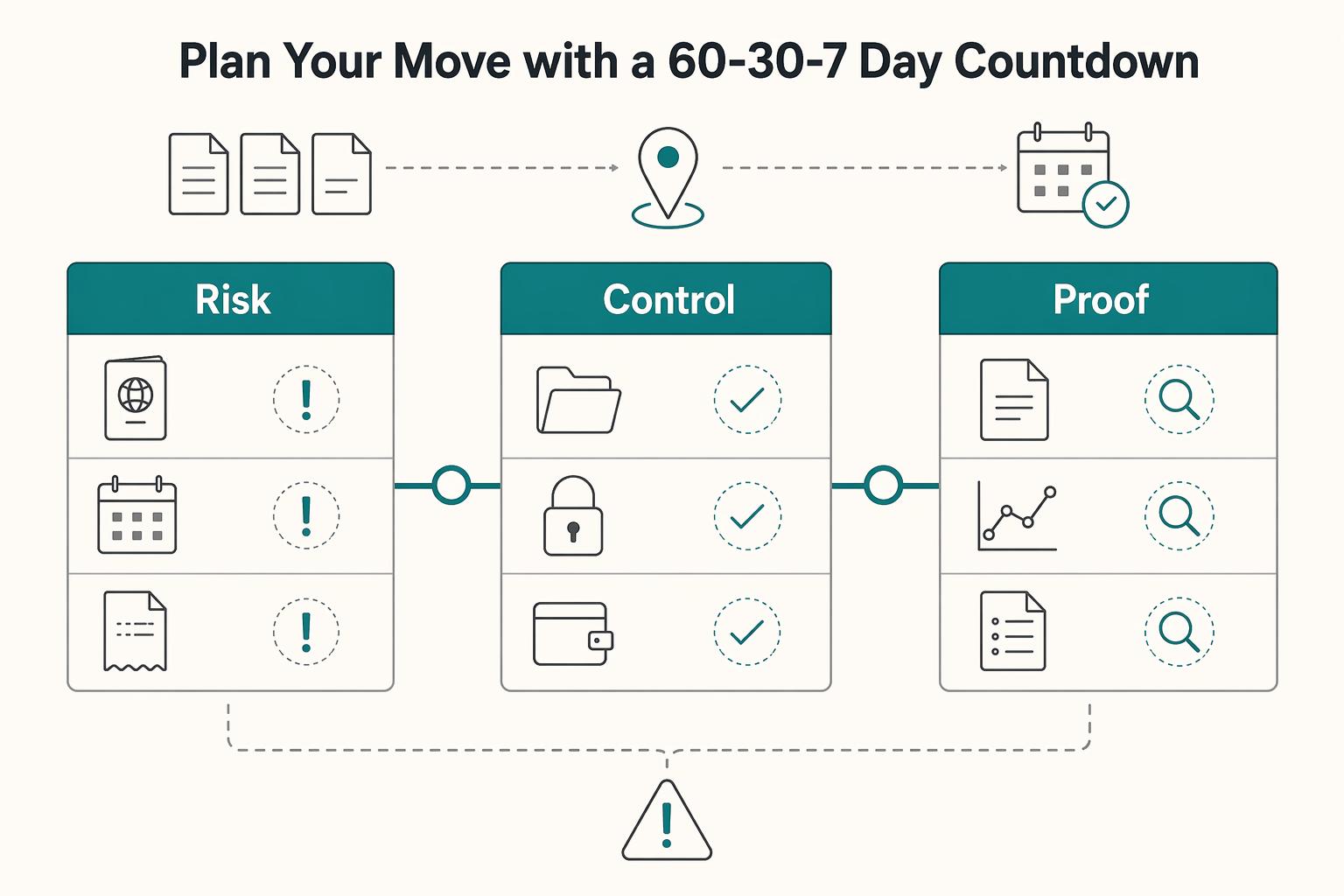
Plan your move with a 60-30-7 day countdown#
A clear countdown keeps momentum without forcing bad calls. Use 60-30-7 as a personal operating rhythm, not as an official Poland requirement. Keep one standing condition in place: if a required record is still uncertain, delay non-refundable bookings.
| Checkpoint | Main focus | Key actions |
|---|---|---|
| 60 days | Define the city choice and legal path; anchor a realistic arrival window | Start or tighten your document pack against that window, and mark each item with owner, status, and expiry risk |
| 30 days | Finalize your housing approach and payment setup | Keep at least one flexible backup option and stress-test first-month cash flow |
| 7 days | Lock travel only after a final consistency check across names, dates, contacts, and booking details | Print critical records, keep offline copies, and prepare a first-week admin list with addresses and contact points |
Online stories are useful for pattern recognition, but many are time-bound. Posts marked 6y or accounts tied to 2016 still surface in search, and that can create false confidence if you do not tag what is old. Put a last-checked date on each planning assumption so old context does not quietly turn into active instruction.
At 60 days, define the city choice and legal path, then anchor a realistic arrival window. Start or tighten your document pack against that window, and mark each item with owner, status, and expiry risk. At this stage, clarity matters more than speed because the later calendar only works if the first assumptions are sound.
At 30 days, finalize your housing approach and payment setup. Keep at least one flexible backup option so you can adapt without forcing an expensive compromise. This is also the point to stress-test first-month cash flow, because small frictions tend to show up together right after arrival.
At 7 days, lock travel only after a final consistency check across names, dates, contacts, and booking details. Print critical records, keep offline copies, and prepare a first-week admin list with addresses and contact points. The practical goal is simple: arrive with fewer open loops than you had a week earlier, not more.
Run a short checkpoint review at each stage: what is complete, what is blocked, what can still shift timing, and what decision is waiting on verification. That discipline prevents last-minute compression, which is where minor omissions turn into high-cost mistakes.
If a checkpoint fails, move the timeline instead of forcing completion. Delaying one booking is usually cheaper than correcting a legal mismatch after arrival.
Use one evidence habit through the whole countdown. Maintain one primary folder and one backup folder with matching filenames, then keep dated snapshots of key confirmations. You are building control, not urgency theatre.
Once you arrive, keep that same discipline. The first week goes best when you handle dependencies in order instead of reacting to whatever feels easiest.
Execute your first week in Warsaw without admin drift#
Week one should reduce uncertainty, not add to it. Finish critical admin tasks before optional exploration, and keep unresolved route details visible in your tracker until they are verified. This is a stabilization week where each completed task should make the next one simpler.
Treat source quality carefully once you arrive. Some relocation content is city-specific, date-specific, or built on very small samples. One benchmark in this material is Bucharest-specific, based on 12 submissions, and explicitly says results may shift as more data is added. That is useful context, not operating guidance for Warsaw.
Warsaw-specific legal names, offices, forms, or deadlines are not covered here. Treat those as unknowns until you verify your exact route. That may feel slower in the moment, but it is still faster than building your first week around assumptions that turn out not to apply.
Close each day with a quick admin review. Confirm what was completed, what proof was saved, and which dependency blocks tomorrow's work. That small reset prevents silent drift during a busy arrival week and keeps the week from turning into a pile of half-finished tasks.
Sequence your week by dependency, not convenience#
The fastest way to lose time is to do easy tasks first and dependency tasks later. Run the week in dependency order so each step unlocks the next one.
Use this practical sequence:
- Early week, stabilize arrival logistics. Confirm address details, what written stay proof you can obtain if needed, and that booking names match identity records.
- Midweek, stabilize communication and route checks. Set up a reliable local communication channel, then contact relevant offices or providers and log exactly what they request.
- End of week, reconcile proof and open items. Match receipts and confirmations against your tracker, close pending confirmations, and build week-two tasks from unresolved dependencies.
This order is not about convenience. It is about preventing circular delays where one missing record blocks several later steps. A missing address document, a name mismatch, or an unlogged request can turn a simple follow-up into multiple extra calls or a wasted appointment.
If an office or provider gives verbal guidance, write it down immediately with the date and contact details. You can confirm it later, but you should not rely on memory.
Treat proof as a first-week deliverable#
Proofkeeping from day one protects your timeline later. Keep one digital folder and one physical folder with matching filenames so retrieval is quick when you need it.
Store records as you go:
- Filing or submission confirmations.
- Payment receipts and booking confirmations.
- Appointment notes with date, time, address, and contact.
- Copies of the documents used for each step.
When you write appointment notes, capture requests in plain language. A short entry with what was requested, by whom, and what is still pending helps you avoid duplicate calls and missed follow-ups. It also gives you something concrete to work from if the same issue comes back later.
Use a consistent file-naming pattern from the start. The few minutes you spend naming files clearly can save hours when you need to retrieve evidence quickly.
Protect your day structure as well. One Poland travel example notes that in Krakow, winter daylight can end around 4pm in December. Practical takeaway: put document-dependent errands early in the day and keep flexible tasks for later hours.
Once week one is under control, the next challenge is less visible but just as important: keeping money records, billing activity, and proofkeeping clean through the first month.
Handle your first 30 days of money, tax, and proofkeeping#
Days 8 through 30 are about control, not optimization. Keep every money record traceable and internally consistent, and treat Poland-specific legal or tax interpretation as a separate verification stream. Month-one habits usually become quarter habits, so set clean standards early.
Use one currency view for your internal tracking during this period. Mixed formats and inconsistent labels create reconciliation drag and make errors harder to isolate. Even when you are dealing with multiple platforms or payment paths, your internal view should stay simple enough that you can explain it quickly.
The material behind this section supports operational controls, not Warsaw tax law. What you can apply immediately is clear: billing integrity, monitoring invoicing and renewals, documenting exceptions, and escalating anomalies when they appear. That is enough to reduce avoidable mess while you verify the route-specific legal side separately.
Create one map from agreement to invoice to payment. When each transaction has a clear chain, month-end checks become faster and less stressful. More important, if something is off, you can usually see where it broke without reconstructing the entire month from scratch.
Build a repeatable billing routine from day one#
Standardize invoicing in month one and only change format when you log the reason. That single discipline keeps records easier to review and easier to explain if questions appear later.
Run a weekly close with explicit checks:
- Match each payment to one invoice and one active agreement.
- Review failed payments, renewals, and inconsistencies as soon as they appear.
- Use the internal admin panel to detect and resolve subscription or payment inconsistencies.
- Flag plan mismatches quickly and document the correction path.
- Keep a short case note for each exception with date, owner, and outcome.
- Reconcile totals weekly so month-end is confirmation, not reconstruction.
Protect time for this close on your calendar. If it is always delayed, exception handling expands and the next close gets harder. A routine that slips once often slips again, and by then you are not doing review anymore, you are doing repair.
Keep exception notes in the same tracker as invoice status. If a discrepancy needs handoff, the reviewer can see the timeline, action, and outcome in one place. Incorrect plan selection is a common source of billing rework, so a small check now saves larger cleanup later.
Use one judgment rule when income patterns change#
Use one rule for month one: if client mix or income geography changes, re-check compliance assumptions before the next invoice cycle. Do not postpone this to quarter-end.
This matters most when changes look temporary. Short shifts can still affect how records should be prepared and reviewed, so treat each shift as a trigger event rather than noise. It is easier to note a small change immediately than to explain later why several invoices were handled under old assumptions.
When a shift happens, log the date, what changed, and what verification is pending. That note creates a clear boundary between known and unknown obligations and keeps later review grounded in a timeline rather than memory.
If your route is labeled online as digital nomad or business, treat the label as shorthand, not proof that tax handling is settled. Warsaw-specific tax thresholds, rates, or filing deadlines are not defined here. Keep records clean while you verify case-specific requirements.
Once this routine is stable, deepen the tax layer with Taxes in Poland for Foreigners and Freelancers.
The same discipline applies to spending. A realistic budget works best when it separates recurring life in Warsaw from the one-time cost of getting established.
Budget realistically in Warsaw and avoid false savings#
Budgeting usually fails when one-time move costs are mixed with recurring living costs. Build two buckets from the start: monthly living costs in PLN and separate relocation costs. That method makes tradeoffs visible and stops a low-rent assumption from hiding higher setup spend somewhere else.
False savings usually come from incomplete totals. A lower rent line can still produce a higher monthly burden once workspace, transit, and payment friction are included. If your work depends on reliable timing, those indirect costs matter more than people admit.
Build a two-part budget in PLN#
Track recurring monthly costs in PLN so every comparison is like for like. Commonly shared Poland bands are 130-230 PLN per day for budget travel, 260-520 PLN per day for mid-range, and 600-1,100+ PLN per day for comfort. Warsaw, Krakow, Gdańsk, and Wrocław are often described at the higher end. Treat those ranges as planning references, not current-year guarantees.
Keep one-time costs in a separate line: flights, initial insurance, document-related payments, and banking friction. Public guidance often cites 0-5% card or ATM fees per withdrawal and ATM caps around 1,000-2,000 PLN, which can affect your first-month cash strategy.
Before you commit, stress-test your budget against a difficult month. Assume one admin delay and one higher-than-expected fixed cost, then confirm your buffer still protects rent, transport, and core work expenses. That is a better test than building the neatest-looking spreadsheet.
Turn your plan into weekly checkpoints during month one. If one week trends high, adjust early instead of discovering the gap at month-end. Early corrections are usually operational. Late corrections tend to be expensive.
Compare cities with a needs-first lens#
Lower headline rent helps only if your work rhythm remains reliable. Compare options against client timing, travel links, and full monthly fixed costs in PLN before you optimize for accommodation alone.
Cheaper neighborhoods or cities can add commute and coordination friction that undermines delivery quality. If predictable timing affects income, protect reliability first and treat rent savings as secondary. That is especially true if your calendar depends on calls, regular meetings, or in-person access.
Use one comparison template across cities and collect quotes in the same week where possible. This keeps timing noise low and makes real tradeoffs easier to evaluate. You want differences in the data to reflect the cities, not different weeks, different landlords, or different booking conditions.
List non-negotiable work conditions first, then compare cost. This avoids choosing a city that looks efficient on paper but creates delivery instability.
Add a validation checkpoint before deposits#
Before any non-refundable payment, run a short validation pass:
- Get at least three current local quotes in PLN for your target area and dates.
- Confirm which costs are recurring and which are one-time.
- Check first-month card and cash practicality, including withdrawal caps.
- Add a 10-20% contingency reserve to the full projected total.
Use broad cost summaries from community pages as context only, especially when the content is older, such as 2021. They can help you spot whether something is obviously off, but they are not strong enough to support deposits by themselves.
Hold this checkpoint to a fixed deadline in your timeline. If required inputs are missing, delay the deposit and keep options flexible.
At this point, the biggest threats are no longer broad unknowns. They are predictable mistakes people make when convenience or old advice overrides verification.
Mistakes that cause delays and how to prevent them#
Most avoidable delays share one pattern: context gets mistaken for instruction. Community signal is useful, but legal path and timing decisions need verification before irreversible commitments.
Use a quick pre-spend checkpoint: what assumption are you relying on, when was it last verified, and what proof is saved. If one answer is weak, pause and verify before moving. That small pause is usually where expensive mistakes get avoided.
One prevention habit improves all four mistakes below: document each major decision with date, owner, and evidence saved.
Mistake 1: Treating community advice as legal guidance#
Forums and community platforms are strong for city-fit and lifestyle signals. They are weak as legal authority for entry, stay, and work status. Even many legal explainers in this area describe themselves as high-level overviews and explicitly say they are not a substitute for legal advice.
Use a simple guardrail: tag each community insight as context or action. Only verified action items should enter your checklist. That gives you the benefit of lived experience without letting opinion quietly become compliance logic.
If advice cannot be tied to your nationality and route, keep it out of decision-critical planning.
Mistake 2: Using a generic "digital nomad visa" assumption#
If your plan is still described only as a digital nomad visa, pause and map the exact route and document requirements before paying fees. Different legal paths can carry different evidence standards, timing windows, and liabilities.
Recency is part of that check. One legal overview in this material is dated 1 September 2023 and tells readers to verify the latest position before acting. Precise labels reduce costly drift because purpose, documents, and timing become easier to align.
A generic label can hide route-specific obligations. Replace it with the exact route name in your checklist as soon as it is confirmed.
Mistake 3: Making irreversible housing commitments too early#
Keep housing cancellable until legal timing is confirmed, not guessed. Before non-refundable travel, fees, or long leases, run a go or no-go review.
- Confirm publication dates on legal guidance and re-check items likely to have changed.
- Request a risk assessment that covers payroll obligations, local tax and social-security registrations, and employer or employee liabilities.
- Finalize housing only after legal sequence is clear.
Flexible bookings can cost more upfront, but they often protect you from larger losses when timing slips. The extra cost is easier to absorb than a lease or travel decision tied to a route that later changes.
A cancellable option buys time when approvals move slower than expected.
Mistake 4: Weak recordkeeping that creates downstream compliance pain#
Weak records create delayed pain. Keep one dated file from day one containing application copies, submission receipts, status notices, contract versions, invoices, and payment proof. Then reconcile monthly: what was filed, what was paid, and what changed in your work setup.
One personal account reports a Temporary Residence Card process taking 400 days, with 13 months spent waiting. Treat that as anecdote, not forecast, but plan for slippage and avoid commitments you cannot unwind. The lesson is not that your case will take that long. The lesson is that weak records make long timelines much harder to manage.
If records are fragmented, delays become harder to challenge and corrections become slower to execute.
Your next step is to choose one legal path and start one checklist#
At this point, more browsing is not the bottleneck. Sequence is. Choose one legal path, open one checklist, and execute in order.
Take these three actions today:
- Pick one route and end decision drift. If your notes still say digital nomad visa, treat it as placeholder language until the exact program path is confirmed.
- Open one dated tracker for identity files, application records, payment confirmations, insurance evidence, housing documents, and travel records.
- Add a recency check to every rule before paying non-refundable costs.
Prioritize current requirements over reading volume. Older Warsaw guides can help with orientation, but they are not enough for a 2026 decision. Even newer explainers should be re-checked before submission. Community platforms can add peer context, and residence-calendar tools can help with stay tracking, but neither replaces legal confirmation.
When speed and certainty conflict, choose certainty. A clean first submission usually protects timeline and budget better than rushing an incomplete file.
Keep momentum with a personal 60-30-7 cadence:
- 60 days: lock the legal path, gather hard-to-replace records, and build a submission-ready pack.
- 30 days: prepare a PLN-based month-one money setup, plus a Plan B with emergency funds and travel health insurance.
- 7 days: finalize arrival logistics and keep housing cancellable if legal timing is still uncertain.
Run one weekly review until departure and through month one after arrival. Confirm what changed, what was verified, and which next action is blocked by missing proof.
Keep one final tradeoff visible: lower accommodation costs may depend on sharing, and sharing does not fit every work setup. If reliable delivery drives income, protect work conditions first and cut costs elsewhere.
Validate current program rules now, submit one clean first batch, and track each step as completed evidence. If you want help tightening cross-border collection, tracking, and payment controls, talk to Gruv.
Frequently Asked Questions
Is Warsaw a good city for digital nomads in 2026?
Warsaw is a practical choice if you want big-city infrastructure at costs often described as lower than Western European hubs. Treat cost and lifestyle claims as directional, not guaranteed, because neighborhood and setup can change your monthly reality. Prioritize legal clarity and timeline control over community hype. If your work depends on reliable client access and stable meeting conditions, Warsaw can be a workable option. If your top priority is lowering fixed costs, compare alternatives with the same trial method before deciding.
How expensive is Warsaw compared with Krakow, Poznań, and Gdańsk?
There is no fixed ranking you can trust from broad summaries alone. A comfortable monthly budget is often cited around 4,000 PLN and coworking around 400 to 800 PLN, but those are not official or guaranteed rates. Compare current local quotes for your dates, then choose based on total monthly cost and work fit. The useful move is to compare full monthly cost, not rent in isolation. Include workspace, transport, and payment friction so your forecast matches real spending.
Can I work remotely long-term in Poland on a digital nomad visa?
Do not assume Poland has an official standalone digital nomad visa category. Commonly discussed routes include Type D or residence-permit options tied to business or freelance activity, while Type C is a short-stay route at 90 days within 180 and is described as a legal grey area for remote work. EU/EEA/Swiss nationals are treated differently and can live and work remotely without a visa or work permit, with residence registration advised for stays over three months. For planning, the safest approach is route-first and label-second. Confirm your exact route and rights before using any broad visa label in your checklist.
How do I choose between a Poland business visa and other legal routes?
Start with three filters: nationality, intended stay length, and whether your work pattern is short-visit or ongoing paid activity. For short stays, Type C limits and document requirements matter early, including insurance, proof of funds, and a return ticket. For longer plans, compare Type D and residence-permit routes, then verify current rules before paying fees. If uncertainty remains after that pass, choose the option with clearer requirements and fewer unresolved dependencies. Clarity beats speed when the downside is rework and denied steps.
What should I do in the 30 days before moving to Warsaw?
Finalize your legal route first, then re-check each requirement for your passport profile because rules can change. Build your document set early and keep clean digital copies of submissions and receipts. Keep housing cancellable until legal timing is confirmed, and pre-plan any registration step that applies after arrival. Keep your money setup practical for the first month as well. The smoother your payment and recordkeeping setup is before arrival, the fewer admin interruptions you face once work resumes.
What are the most common relocation mistakes people make in Poland?
Common mistakes include treating forum sentiment as legal guidance, assuming one generic visa label fits all cases, and making non-refundable housing commitments before legal timing is clear. Another recurring issue is acting on outdated guidance even though rules can change and vary by nationality. Use community content as context, but validate legal details before irreversible commitments and keep dated records for filings and payments. Many of these mistakes share one root cause: acting before verification is complete. A short pause for recency and consistency checks usually prevents larger delays later.
Try a related tool
Researched and edited by the Gruv editorial team. Gruv builds cross-border billing, payouts, and finance-operations software for global businesses.
Sources
Includes 2 external sources outside the trusted-domain allowlist.
- academia.edu/4958133/Chasing_Warsaw_Socio_Material_Dynami...trusted
- academicworks.cuny.edu/cgi/viewcontent.cgitrusted
- ec.europa.eu/assets/eac/culture/policy/strategic-framewor...trusted
- citizenremote.com/visas/poland-digital-nomad-visaexternal
- cleanwhale.pl/en/blog/unlocking-warsaw-a-digital-nomads-gu...external
Educational content only. Not legal, tax, or financial advice.
Related Posts
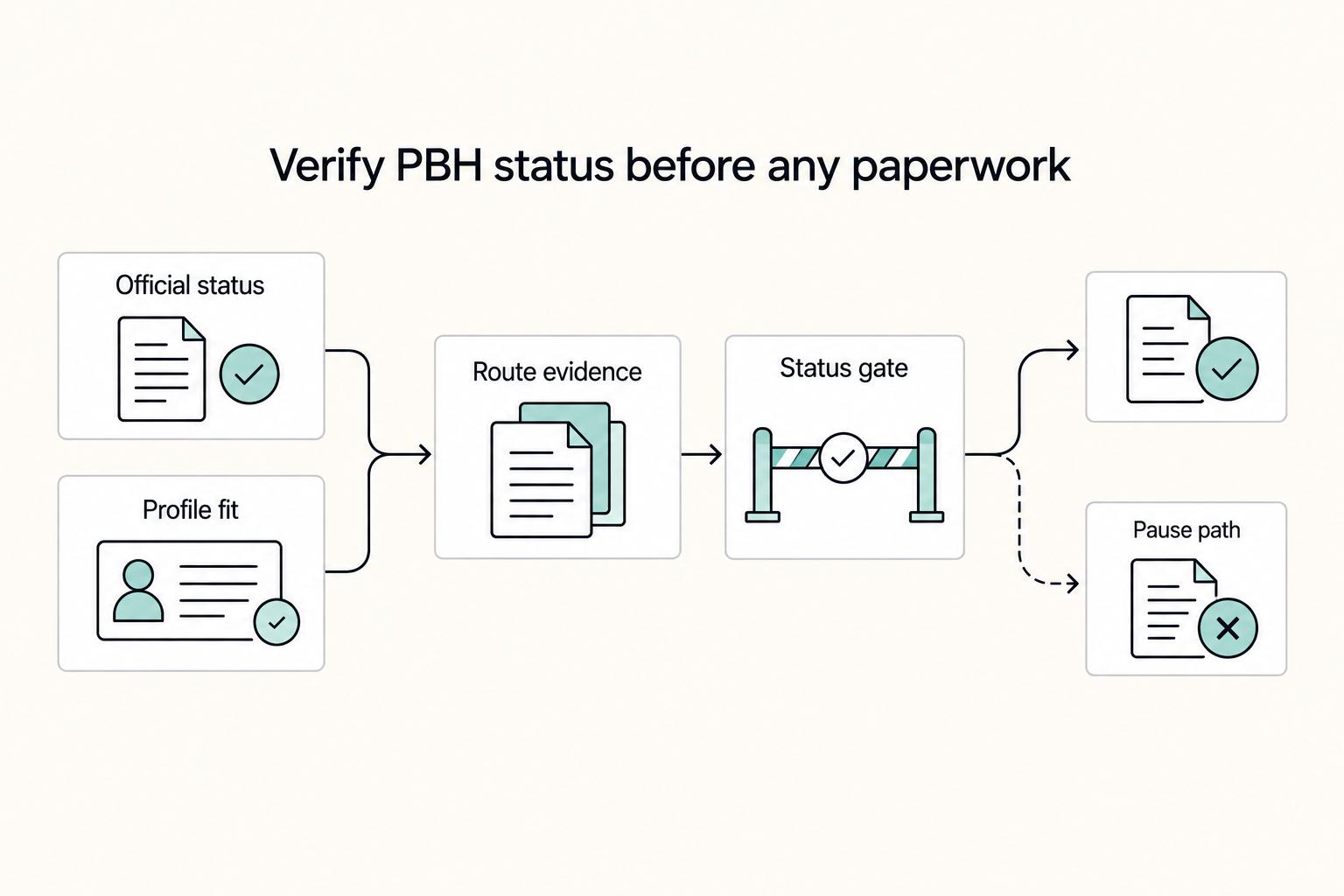
Is Poland Business Harbour Still Usable for Your 2026 Move?
You are here to make one practical call: is **Poland Business Harbour** usable for your case now, or should you switch routes? Treat this as a go/no-go decision, not a broad research exercise.

The 2026 Global Digital Nomad Visa Index for 50+ Countries
Start with legal fit, not lifestyle filters. The practical order is simple: choose a route you can actually document, then decide where you want to live. That single change cuts a lot of wasted comparison work and stops you from falling in love with places that were never a real filing option.
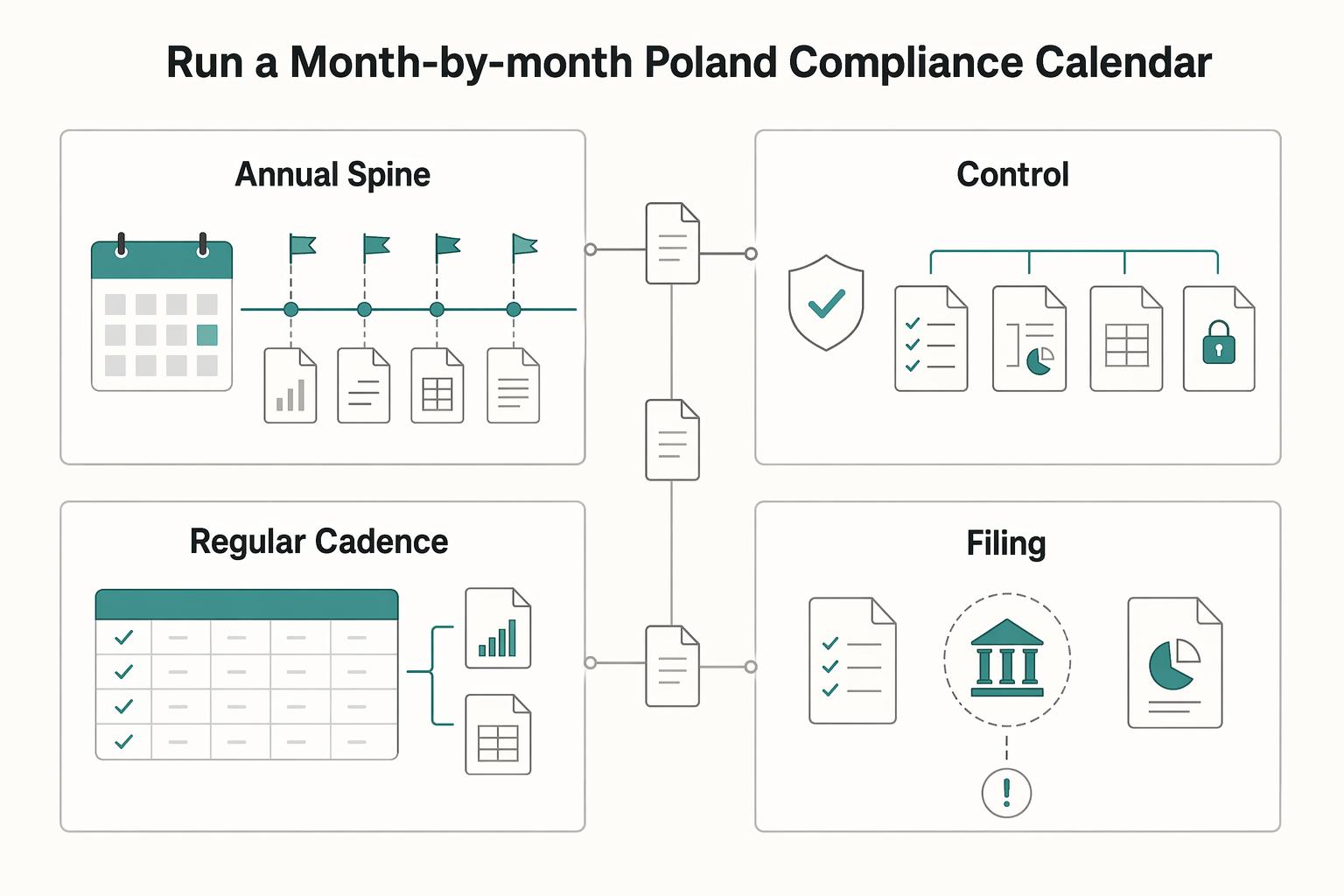
Taxes in Poland for Foreigners and Freelancers
Start with your likely Polish tax residency status, because many later tax decisions depend on it. In practice, tax in Poland for foreigners is often less about memorizing rates and more about getting status, income scope, and documentation in the right order.