
Quick Answer
Structure the contract around clear scope, a named approver, operational acceptance, invoice triggers, GDPR role, liability carve-outs, and the right German contract model. Use the framework for standing terms and put transaction-level scope, pricing, deliverables, dependencies, and payment triggers in each SOW or order form, then confirm AP routing and invoice requirements before invoice one.
Before You Write a Single Clause: Using the Contract as a Client Vetting Tool#
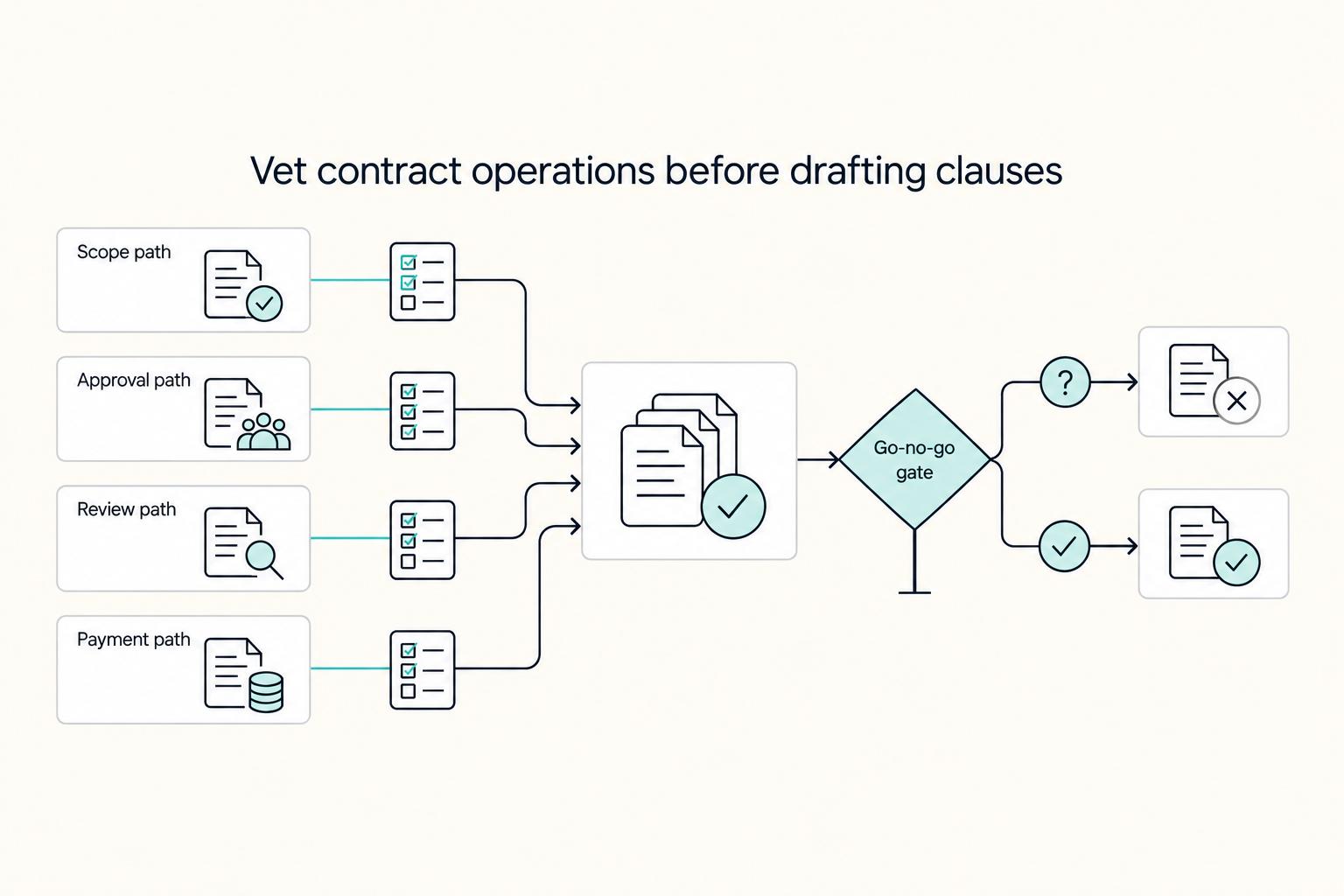
Treat pre-contract intake as a go/no-go check. If the client cannot explain how work will be scoped, approved, reviewed, and paid, drafting now will create negotiation noise rather than a workable agreement.
Step 1. Send a one-page intake before you draft#
Start with a short Statement of Objectives-style intake and confirm the basics in writing:
- Purpose and scope boundaries, including explicit exclusions
- Period and place of performance
- Delivery model, expected results, and deliverable schedule, with measurable acceptance criteria where possible
- Approval ownership, with one accountable approver plus consulted and informed roles
- Communication path, including who gets updates and how often
- Dependencies, such as client inputs, systems, access, and timing
- Billing mechanics, including invoice recipient, PO or vendor onboarding needs, and proposed payment term
Before you draft, pressure-test two points. Can the client define the required results instead of prescribing your method? Can they name one accountable approver? If either answer is unclear, you are not ready for a full contract draft.
Step 2. Classify readiness and decide how far to go#
Do not let a vague deal turn into a long document. Use three readiness tests:
| Outcome | Condition | Next step |
|---|---|---|
| Proceed | Commercial clarity, legal-process maturity, and stakeholder alignment are clear | Proceed |
| Paid discovery | One of the three readiness tests is weak | Narrow the engagement to a paid discovery phase |
| Pause | Two or more of the three readiness tests are weak | Pause |
- Commercial clarity: scope, exclusions, deliverables, and billing path are concrete
- Legal-process maturity: review flow and signer path are known
- Stakeholder alignment: decision owners can receive timely information and make calls on scope, cost, schedule, and quality
Use a simple rule: proceed when all three are clear. If one is weak, narrow the engagement to a paid discovery phase. If two or more are weak, pause. A mini RACI can reduce approval drift, but you still need one accountable person, not a committee.
Step 3. Confirm the review path on a call, then lock it in by email#
A short call here can save a long redline cycle later. Use a script like this:
"Before I draft, can you walk me through who reviews consulting agreements, who signs, whether someone can step in if the primary reviewer is unavailable, and your expected turnaround for each step? Also, will this engagement involve personal-data processing, and if so, who is the controller contact for processor terms?"
Then send a confirmation email:
"Thanks for confirming the review path. My understanding is: commercial owner the name of the commercial owner; legal reviewer the name or team responsible for legal review; signer the name and role of the authorized signer; backup reviewer or approver if applicable; expected review timing the agreed timeline; invoice recipient the billing email address; PO or vendor onboarding requirement yes or no; and proposed payment term the agreed payment term. Please reply with any corrections before I draft."
If the proposed payment period is longer than 60 calendar days, flag it early. In EU B2B contexts, that is typically a baseline rather than an automatic ban, so ask for the commercial rationale and explicit agreement in writing before you draft final payment language.
| Early signal | Healthy signal | Protective action |
|---|---|---|
| "We'll sort scope out in the contract." | Scope and exclusions are clear before drafting. | Return a narrowed intake or convert to paid discovery first. |
| "Several people will approve." | One accountable approver is named. | Request a mini RACI with one decision owner plus consulted reviewers. |
| "Legal handles contracts somehow." | Review flow, signer, and expected timing are defined. | Pause drafting until the path is confirmed by email. |
| "Finance decides payment later." | Invoice route, PO needs, and payment term are known. | Hold final terms until billing mechanics are confirmed. |
If you want a deeper dive, read Germany Freelance Visa: A Step-by-Step Application Guide.
The Clauses That Decide How Money Is Earned, Approved, and Paid#
Once intake is clear, the contract should answer one practical question: how is money earned, approved, and paid? If the client prefers a framework agreement, use it as the outer layer for pre-agreed terms. Put transaction-level scope, pricing, and triggers in each statement of work or order form. The framework alone does not govern an individual transaction.
Step 1. Define the Leistungsbeschreibung#
Scope has to do more than describe the work; it has to control assumptions. Structure the clause in four parts from the start: in-scope deliverables, explicit exclusions, client dependencies, and change requests.
Write deliverables as concrete outputs, not broad activities. Add exclusions for work that is often assumed but not priced. Put client dependencies in the clause itself, including inputs, access, reviewers, approvals, and timing, and state what happens to dates if those inputs arrive late. Then require written approval of scope, timeline, and fee before any out-of-scope work starts. That helps reduce scope creep, delay arguments, and unpaid expansion when the project changes midstream.
Step 2. Set the Vergütung model before price negotiation#
Pick the payment structure first, then negotiate the number. That helps you avoid repeated renegotiation when delivery patterns change and reduces friction when work repeats.
If you expect recurring work, keep the standing commercial terms in the framework and set transaction-specific amounts and invoice triggers in each order form.
| Payment model | Cash-flow risk to you | Dispute exposure | Negotiation friction |
|---|---|---|---|
Time and materials, invoiced [monthly/biweekly] | Can be moderate, depending on approval flow | Can center on hours, scope boundaries, and approval flow | Often low to medium |
| Milestone-based with defined deliverables | Varies with milestone clarity | Can increase if milestone language is vague | Often medium |
| 100% on final completion | Can be high if sign-off is delayed | Can be high when full payment depends on one acceptance event | Often low at signature, higher later |
Use a simple rule: if delivery depends on client inputs or multi-team review, consider avoiding completion-only billing. Tie each invoice to a provable event such as delivery notice, review-window expiry, or a billing date.
Step 3. Make Abnahme operational#
Acceptance should run like a process, not become an argument after delivery. Your clause should name the approver, submission method, feedback format, review window, and the consequence of silence.
Require one consolidated written response against the agreed deliverable description. Treat non-material preferences or new requests as scope changes, not acceptance failures.
If you use deemed acceptance language, keep it as proposed wording and confirm enforceability and timing under your governing law. Example placeholder: if no written rejection with specific reasons is received within the agreed number of business days after submission, the deliverable is treated as accepted.
Step 4. Define Laufzeit und Kündigung, including payment on exit#
Your termination language should tell you exactly what happens if the project stops. State the term, termination paths, notice process, handoff expectations, and payment treatment on exit.
Include explicit payment language: on termination, the client pays for services performed and approved expenses incurred through the termination date. If delivery is staged, say how partially completed work is billed under your commercial model. This can reduce a common gap where the project ends, the work is retained, and payment is delayed because "final completion" never happened.
Step 5. Split client deliverables from your Urheberrecht and background IP#
Your IP clause should be generous where needed and narrow where it should be. Give the client ownership or use rights for project-specific deliverables, and explicitly keep your reusable materials, methods, and know-how.
Before you sign, check the clause against this list:
- Define "work product" narrowly as final deliverables created for this engagement.
- Define pre-existing materials, methods, and tools as yours, including reusable assets created during the project.
- Grant only the license needed for the client to use deliverables that include your background materials.
- Exclude generic know-how, ideas, and reusable techniques from assignment language.
If the clause could be read to transfer templates, diagnostics, or internal methods, tighten the definitions before signature.
You might also find this useful: The Legal Considerations of Expanding a SaaS Business to the EU.
Before you send your draft, create a clean working version you can redline with procurement using the Freelance Contract Generator.
Mastering German Compliance: GDPR, Liability, and Contract Law#
Before signature, verify three items in order: your GDPR role, your liability structure, and whether the draft is a Dienstvertrag or [Werkvertrag](https://dejure.org/gesetze/BGB/631.html). If those three do not line up, legal review can reopen scope, payment, and acceptance terms.
Before You Start#
Review the full packet together: the main services agreement, the SOW or order form, the AVV or DPA if applicable, and your technical and organisational measures summary. Keep the service descriptions, risk allocation, and governing-law terms consistent across all of them.
Step 1. Classify your GDPR role, then build the AVV only when the facts require it#
Start with function, not labels. Your role depends on who decides the purposes and means of processing and whether you process personal data on the client's behalf.
| Situation | Role or document | Required step |
|---|---|---|
| The client sets the purposes and core means and you process data on its behalf | Processor | Treat yourself as processor |
| You decide your own purposes for processing | Role assessment | Do not assume processor status just because the template says so |
| Processor status applies | Article 28 AVV | Include subject matter and duration, nature and purpose, data types, data-subject categories, and controller rights and obligations |
| Processor status applies | Operational clauses | Confirm documented instructions, sub-processor authorization, and audit cooperation |
| SCC-style controller-processor clauses are used | Annex I and Annex II | Complete them with validated details only |
| Any annex item is still unverified | Verification | Mark the item as pending verification instead of guessing the requirement |
| US personnel, US vendors, or non-EEA remote access are involved | Transfer compliance | Check transfer compliance separately; these clauses do not by themselves complete Chapter V transfer duties |
Before signing, use this decision path:
- If the client sets the purposes and core means and you process data on its behalf, treat yourself as processor.
- If you decide your own purposes for processing, do not assume processor status just because the template says so.
- If processor status applies, include an Article 28 AVV with subject matter and duration, nature and purpose, data types, data-subject categories, and controller rights and obligations.
- Confirm the Article 28 operational clauses, including documented instructions, sub-processor authorization, and audit cooperation.
- If SCC-style controller-processor clauses are used, complete Annex I and Annex II with validated details only.
- If any annex item is still unverified, mark it as pending verification instead of guessing the requirement.
- If US personnel, US vendors, or non-EEA remote access are involved, check transfer compliance separately. These clauses do not by themselves complete Chapter V transfer duties.
Step 2. Separate non-excludable liability from cap-eligible liability#
Do not negotiate the cap first. First carve out what you should not try to exclude, then structure the cap around realistic exposure.
- Keep non-excludable liability outside the cap language, including intent liability under Section 276 (3) BGB.
- Treat broad exclusions in standard terms carefully. Overreach can fail under German general-terms controls, including the Section 309 No. 7 BGB context.
- Set cap logic to your real risk profile, including insurance response in practice and the actual scope of services.
- Check appendices and SOWs for hidden expansion of warranties or security duties that can increase exposure beyond what the main cap language appears to cover.
Step 3. Classify contract type before the draft turns services into a result guarantee#
This choice affects how payment, acceptance, and warranty risk behave in practice.
| Checkpoint | Dienstvertrag | Werkvertrag |
|---|---|---|
| Trigger condition | You owe agreed activity and professional effort | You owe a concrete work or result |
| Acceptance exposure | Lower. Payment can follow service performance without formal acceptance of a finished work | Higher. Acceptance is central, and Section 640 BGB becomes operationally important |
| Warranty risk | Lower. The contract is not built around defect-free completion of a defined result | Higher. Defect-rights disputes are more likely once result quality is contested |
| Payment-dispute risk | Often lower when invoices tie to periods, milestones, or review events | Often higher when payment is blocked by "not complete," "defective," or "not accepted" arguments |
| Typical fit | Often advisory, support, audits, training, or ongoing optimization | Often a narrowly defined deliverable where the result itself is the bargain |
A practical rule helps here. If the outcome depends on client inputs, third-party tools, or internal adoption you do not control, use service-contract framing. If the client insists on a fixed result, narrow the result definition and make submission and review mechanics explicit.
Step 4. Use a compliance handoff checklist#
Send one consistent package:
- Main agreement with liability language aligned to the SOW
- AVV, when your verified role is processor
- Technical and organisational safeguards summary aligned with Annex II wording
- Governing-law and dispute terms checked for consistency across the main agreement and AVV
That can reduce review loops and gives legal, privacy, and procurement one coherent file set to assess.
For a step-by-step walkthrough, see How to Create a Privacy Policy for a SaaS Application.
From Signature to Bank Account: Navigating Negotiation and Invoicing#
Many payment problems start before the final legal wording is settled. Align the commercial points first, triage redlines by impact, and send invoices the client can route on the first pass.
Step 1. Align commercial terms before full contract markup#
Start with a one-page Professional Engagement Checklist before full MSA review. Keep it non-binding and use it to force clarity early.
Include the essentials in plain language:
- Core scope boundaries and key deliverables
- Pricing structure and invoice timing
- Client dependencies that affect delivery
- Communication protocol
If milestone billing fits, you can propose a split like 40% upfront, 30% at midpoint, 30% on acceptance. Ask early, "Could you briefly walk me through your standard legal review and timeline for new consulting agreements?" If the answer is vague, treat that as operational risk, not a minor detail.
Step 2. Triage MSA redlines by impact, not volume#
Not every clause deserves the same amount of energy. Sort redlines into three buckets:
| Bucket | Focus | Examples |
|---|---|---|
| Revenue impact | Payment and invoicing mechanics | Payment triggers, invoice timing, acceptance mechanics, holdbacks |
| Delivery risk | Scope and execution dependencies | Scope wording, client responsibilities, access assumptions, review bottlenecks |
| Legal exposure | Exposure created by the legal terms | Liability expansion, IP assignment drift, confidentiality scope, data-processing language |
Prioritize the edits that can delay invoicing, block acceptance, or shift practical delivery risk onto you. Before each negotiation call, keep this non-negotiables template in front of you:
- Payment term: confirm before the negotiation call
- Initial billing trigger: confirm before the negotiation call
- Acceptance or review window: confirm before the negotiation call
- Scope-change control: confirm before the negotiation call
- Liability position: confirm before the negotiation call
Step 3. Submit invoices for routing success, not just accuracy#
A legally correct invoice can still sit unpaid if it cannot clear internal routing. Client-side routing failures are a common choke point.
| Common rejection trigger | Prevention action |
|---|---|
| Client-side routing issues | Confirm the client's preferred routing path and recipient before first submission |
| Missing invoice number, date, or payment instructions | Verify these fields with a pre-send checklist every time |
| Invoice details that do not match agreed commercial terms | Recheck key invoice details against the signed agreement before sending |
If tax treatment is unclear, pause and verify before issuing.
Step 4. Run a short AP handoff immediately after signature#
Do not wait until invoice one to learn how the client actually pays suppliers. As soon as the contract is signed, confirm the AP process details that apply to your engagement:
- Required supplier fields: confirm with the client's AP contact
- Approved submission channel: confirm with the client's AP contact
- Backup documentation expected with invoice: confirm with the client's AP contact
- Escalation path for stalled invoices: confirm with the client's AP contact
Before you send invoice one, verify your billing contact and submission destination with the client so routing issues are easier to resolve.
Related: A Deep Dive into Germany's Tax System for Freelancers.
Your Contract is Your Co-Pilot#
Your contract should help you operate the engagement, not just close it. If you want fewer disputes, cleaner approvals, and more predictable payment flow, put the working rules in writing before legal or procurement defaults fill the gaps.
Step 1. Build the commercial spine first#
Start with a one-page Professional Engagement Checklist before full terms. Include scope boundaries, key deliverables, timeline, communication protocol, points of contact, and the payment structure you actually want.
If you bill by milestones, write the split now, for example 40% upfront, 30% at midpoint, 30% on acceptance. Add at least one verifiable operating control, such as a weekly 30-minute status call and one channel for change requests. Ask who owns legal review and procurement. Vague or dismissive answers are a practical warning sign for later disorganization and payment delay.
Step 2. Turn risk areas into clauses and schedules#
The first draft should make the operating choices visible. Put the service model, acceptance and payment mechanics, liability limitation, data-processing terms, and governing law in the document from the start. If personal data is in scope, attach a Data Processing Agreement schedule with processing terms and technical and organizational measures. If the client calls it an AVV, align the label and keep the substance clear.
If you use master terms plus an order form, define hierarchy explicitly. State that conflicting purchase-order terms do not override the agreed terms so PO boilerplate does not rewrite the deal.
| Risk if unclear | Contract control | Operational benefit |
|---|---|---|
| Service model drift | State service model and billing basis in master terms and order form | Clearer delivery expectations and fewer scope or outcome disputes |
| Data handling confusion | Attach a Data Processing Agreement, with AVV label if needed | Faster privacy review and cleaner cross-border execution |
| Open-ended exposure | Add liability limitation language and have counsel confirm final wording | More predictable downside and smoother legal approval |
| Governing-law ambiguity | State governing law clearly in the general provisions | Fewer escalation fights if disputes arise |
| Payment stalls | Define acceptance triggers and milestone payment mechanics | Cleaner approvals and steadier cash flow |
Step 3. Check the packet before signature#
Before signature, do one final control pass:
- Finalize the clause set and schedules, including the order form and data-processing schedule.
- Validate current legal wording with qualified counsel, especially liability limitation, governing law terms, and privacy terms.
- Confirm legal, procurement, and business owner approval on the same document set before signature.
If you want to pair this contract structure with cross-border invoicing, compliance-gated payouts, and traceable records, talk to Gruv.
Frequently Asked Questions
Do you need an AVV or DPA for GDPR purposes?
If you will process personal data on the client's behalf, you need an Article 28 processor contract, commonly called an AVV in Germany, before processing starts. If the client says it is unnecessary, ask them to confirm in writing that you are not acting as a processor, and do not access the data until the requirement is verified.
How should you handle liability limits with a German client?
Ask for a clear liability cap, but do not assume every cap formulation is enforceable as written. Keep carve-outs for non-excludable liability, including intent, and if the client pushes back, ask which claims they want uncapped instead of accepting blanket all-losses liability.
What must your invoice say for a German B2B client?
Your invoice must match the deal's VAT treatment and include "Reverse charge" where the customer is VAT-liable. Before invoice one, verify legal entity details, addresses, and any required local fields such as contract or PO references, and if AP rejects it, fix routing fields first.
What payment terms should you accept?
Treat long payment terms as an exception you negotiate, not a default you absorb. The Late Payment framework sets 60 calendar days as the baseline contractual cap unless a longer term is expressly agreed and not grossly unfair. Tie due dates to receipt of a valid invoice and billing to milestones or monthly periods, and if the client wants longer timing, trade for protections such as upfront payment, tighter milestone intervals, or tighter acceptance timing.
Should you choose U.S. law or German law and courts?
You can choose governing law and jurisdiction, but keep them coherent and enforceable for the deal. Mandatory obligations can still apply even if you choose U.S. law, so state one governing law and one forum clearly and verify the current jurisdiction wording before signing. If the proposed forum is hard for you to use, test practical enforcement before agreeing.
Should your deal be framed as a Dienstvertrag or a Werkvertrag?
Use Dienstvertrag framing when you are selling expert effort and ongoing services. If you promise a defined success result, you move toward Werkvertrag, where acceptance becomes more central and payment risk can rise. Draft scope, assumptions, client dependencies, and review windows in service language unless the client truly requires a narrow result.
Try a related tool
Researched and edited by the Gruv editorial team. Gruv builds cross-border billing, payouts, and finance-operations software for global businesses.
Sources
- acquisition.gov/far/37.602trusted
- cisa.gov/sites/default/files/c3vp/crr_resources_guide...trusted
- energy.gov/sites/default/files/2023-05/OCED%20Integrate...trusted
- eur-lex.europa.eu/legal-content/EN/TXTtrusted
- fhwa.dot.gov/majorprojects/pmp/guidance17.cfmtrusted
- opa.hhs.gov/sites/default/files/2020-12/short-lesson-lea...trusted
- scholarlycommons.law.wlu.edu/cgi/viewcontent.cgitrusted
- sec.gov/Archives/edgar/data/1603015/0001628279250002...trusted
Educational content only. Not legal, tax, or financial advice.
Related Posts

Germany Freelance Visa Application Path for Freiberufler and Gewerbe
Choose your track before you collect documents. That first decision determines what your file needs to prove and which label should appear everywhere: `Freiberufler` for liberal-profession services, or `Selbständiger/Gewerbetreibender` for business and trade activity.
Germany Freelance Tax Decisions for Globally Mobile Consultants
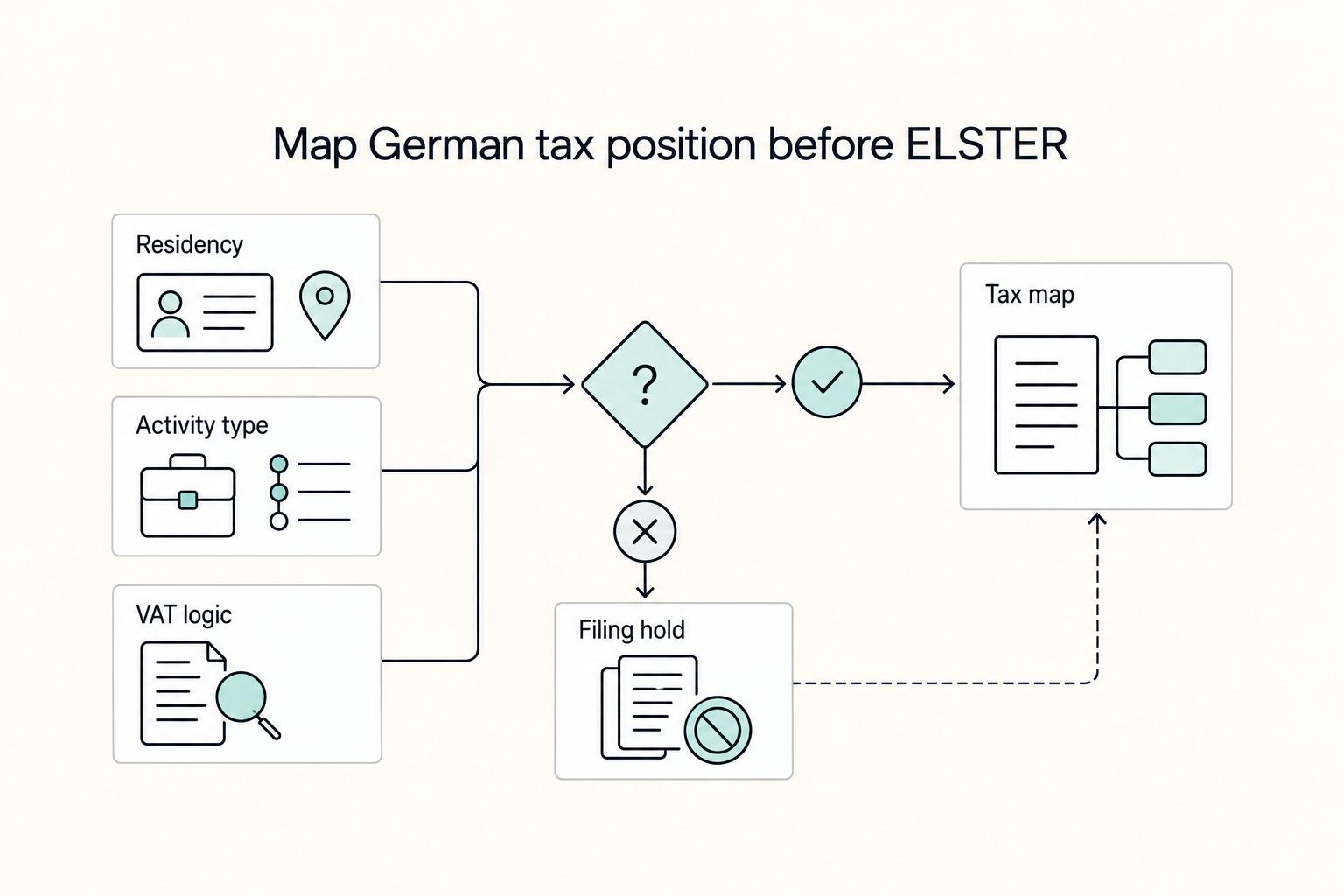
Set your German tax position first, then register and file. If you are a globally mobile consultant, a lower-risk approach is a clear decision order, not a tax shortcut.
The Legal Considerations of Expanding a SaaS Business to the EU
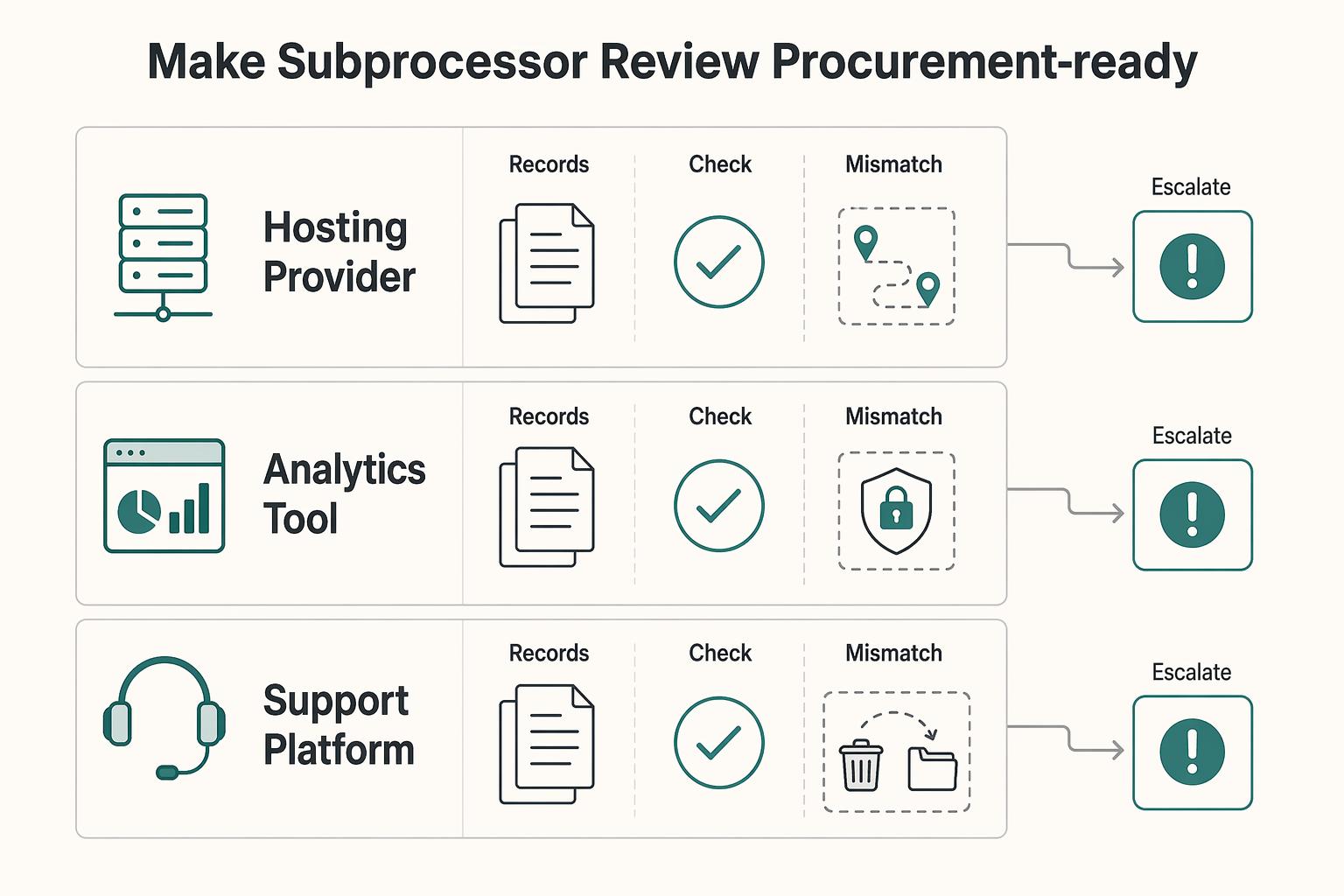
Before you sell into the EU, decide your exposure, assign clear owners, and define what proof you can show on demand. For SaaS expansion to the EU, this is not abstract risk management; it affects buyer confidence during procurement and legal review, and how well your team handles diligence when questions get specific. Start with scope.