
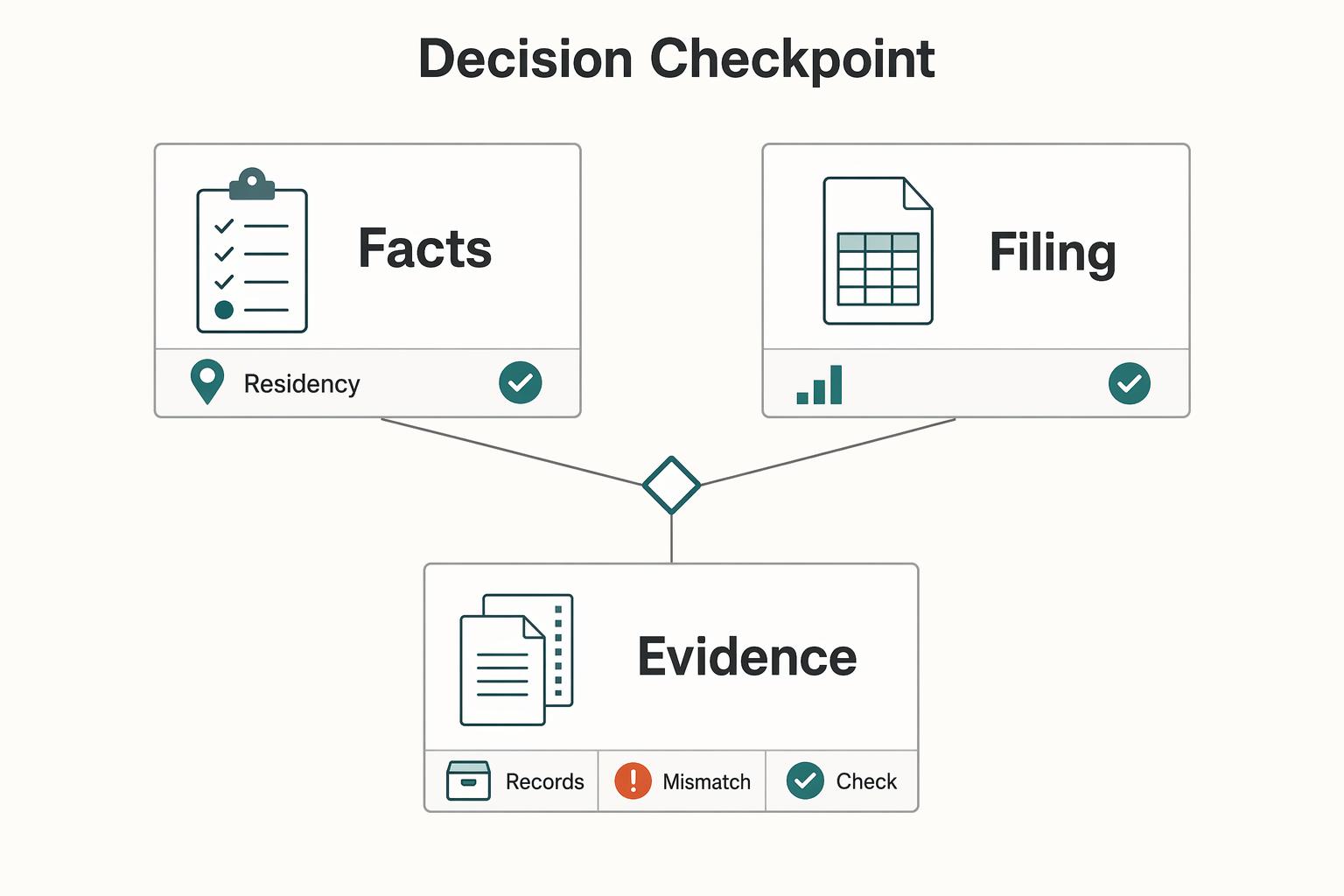
Quick Answer
For US expat freelancers, the strongest 90-day move plan is three phases: de-risk compliance before departure, wind down U.S. operations in the final 30 days, and build banking and insurance during the first 30 days abroad. Prioritize foreign-account tracking, state-residency evidence, cross-border business issues, account closures, digital backups, and a banking setup that preserves both local access and U.S. continuity.
Moving abroad is not a generic checklist problem. It is a strategic move involving your most valuable asset: your own business of one. Standard to-do lists turn that move into a rush of chores, which creates anxiety and leaves real financial and legal exposure.
This is not a checklist. It is a three-phase migration plan for a global professional who needs to reduce compliance risk, wind down U.S. operations cleanly, and launch abroad with fewer avoidable failure points. The point is to stop reacting to tasks and start directing the outcome.
Phase 1: The 90-Day Compliance De-Risk - Fortifying Your Foundations#
Before you leave, reduce risk in three areas first: FBAR reporting, state-residency exposure, and cross-border business tax issues. Treat this phase like a controlled compliance review, not a paperwork scramble.
Tighten FBAR before money starts moving#
Start building your foreign-account inventory early. If you wait until filing season, you will be reconstructing facts from memory.
| FBAR item | Article detail |
|---|---|
| Financial account examples | Foreign bank accounts, brokerage accounts, and mutual funds |
| Value trigger | Combine all reportable foreign accounts, and if the total exceeds $10,000 at any point in the year, reporting can apply |
| Financial interest | Being the owner of record or legal title holder |
| Signature or other authority | You can control the disposition of money even without ownership |
| Filing timing | Due April 15 with an automatic extension to October 15 |
For FBAR, a financial account can include foreign bank accounts, brokerage accounts, and mutual funds. The trigger is based on aggregate value. Combine all reportable foreign accounts, and if the total exceeds $10,000 at any point in the year, reporting can apply.
Separate financial interest from signature or other authority. Financial interest includes being the owner of record or legal title holder. Signature or other authority means you can control the disposition of money even without ownership. Either can trigger filing. Whether an account produced taxable income does not change FBAR classification.
Use one tracker with the account name, country, ownership status, signature-authority status, highest-balance method, and open date. Set reminders for regular balance updates and annual FBAR preparation. FBAR is due April 15 with an automatic extension to October 15. Do not rely on stale penalty ranges; confirm current amounts in 31 CFR 1010.821 before filing.
Build a state-residency evidence file, not a story#
If you are leaving a high-tax state, intent alone will not carry the case. What holds up is a dated body of evidence; no single action by itself determines residency status.
New York treats domicile as one permanent home and requires proof that you abandoned the old domicile and established a new one. It also applies a separate statutory-residency test if you maintain a permanent place of abode and spend 184 days or more in-state, and any part of a day counts. California uses a closest-connections and temporary-or-transitory analysis, so day count alone is not the full test.
| Action | Why auditors care | Keep this document trail |
|---|---|---|
| End or clearly limit access to your prior home | Housing is central to domicile and permanent-place-of-abode analysis | Closing docs, lease termination, handover or sublease records, utility stop dates |
| Track every day in the old state after move date | Day-count rules can be strict, including partial days | Day log, travel calendar, supporting location records |
| Shift civic and identity ties to the new jurisdiction | Intent is tested through practical ties, not statements alone | License updates, voter registration changes, address-change confirmations |
| Move core life ties, not just work location | Residency reviews examine home, time, business activity, family, and personal ties | Shipping records, family or school move records, storage termination, business-address updates |
Build this file as if you may need to answer a residency questionnaire in an audit. Keep dated records, not just a narrative.
Decide whether business continuity is routine or specialist work#
Some moves only need routine operational updates. Others create cross-border issues that should be reviewed before you act.
| Situation | Article guidance |
|---|---|
| Facts are straightforward | Routine updates may be enough: contracts, billing address, payment instructions, time-zone terms, and client notices |
| Potential permanent establishment exposure | Escalate to a cross-border tax or legal advisor before you act |
| Relying on preparatory or auxiliary characterizations for core business activity | Escalate before relying on that characterization |
| Taking a treaty-based position to reduce U.S. tax | Disclosure is generally required on the affected return |
| Net self-employment earnings are at least $400 | Flag self-employment tax for planning |
If your facts are straightforward, routine updates may be enough: contracts, billing address, payment instructions, time-zone terms, and client notices.
Escalate to a cross-border tax or legal advisor when the facts may support permanent establishment exposure, including a potential fixed place of business or dependent-agent contracting authority issues. Also escalate before relying on preparatory or auxiliary characterizations for core business activity. If you take a treaty-based position to reduce U.S. tax, disclosure is generally required on the affected return.
Treat self-employment tax as a separate check. For U.S. citizens or residents abroad, it generally still applies, and FEIE does not remove that base. If net self-employment earnings are at least $400, flag it for planning.
Pre-departure checkpoint#
Use this checkpoint before you move into execution.
| Status | What it includes |
|---|---|
| Complete | All foreign accounts are inventoried for ownership or signature authority, your residency-exit file has dated evidence, and contract and payment updates are tested |
| At risk | You still have unmanaged foreign accounts, unresolved old-state housing or day-count exposure, or unclear client billing and operations transitions |
| Escalate | You may still meet New York permanent-place-of-abode plus 184 days exposure, your California ties remain stronger than your new ties, or PE, treaty, or self-employment tax facts are unclear |
If any item is At risk or Escalate, resolve it before Phase 2.
Before you lock your exit timeline, map your residency ties and evidence in one place so your filing decisions stay defensible: Use the Tax Residency Tracker.
Phase 2: The 30-Day Operational Wind-Down - Executing a Controlled Exit#
At this stage, shift from planning to controlled shutdown. Close anything that can keep billing you, misroute your mail, or force a U.S.-based fix after you leave. Run this phase as an execution log, with an owner, deadline, and proof for every task.
Close liabilities in tiers, not in one long to-do list#
Do not work from one giant list. Close high-risk items first.
Use three buckets: must close, optional closures, and delegated tasks.
- Must close: obligations that can keep charging, defaulting, or trigger notices after departure, including utilities, credit cards, student loans, automatic memberships, and other autopays. Before closing any financial account, clear pending checks, fees, and automatic payments.
- Optional closures: services you may keep only if they still serve a clear purpose abroad and you can monitor them.
- Delegated tasks: actions that require in-person handling or authorized representation. Assign one named person, one defined task, and required proof.
| Task class | What gets done | Owner | Deadline | Proof of closure |
|---|---|---|---|---|
| Must close | Utilities, memberships, autopays, and any account that can keep billing or create arrears | You | Before departure, with provider lead times built in | Confirmation email, final bill, screenshot with cancellation date or zero balance |
| Must update | Address updates with agencies and companies, not only USPS | You | Start up to 2 weeks before move; forwarding may begin within 3 business days | Submission receipt, account screenshot, mailed confirmation |
| Delegated | Narrow in-person or agency task you cannot complete remotely | Named agent or tax representative | Date tied to the specific task | Signed receipt, filed form copy, scan of completed action |
Handle USPS correctly. If you are moving outside the U.S., change-of-address must be submitted in person. USPS forwarding only updates your mailing address with the Post Office. It does not update agency or company records. For IRS home mailing address changes, use Form 8822.
Use a consistent sell, store, or ship test#
Do not decide item by item based on mood. Apply the same four criteria every time: cash recovery, replacement friction, sentimental value, and operational need in your destination.
| Decision | Use when | Watch-outs |
|---|---|---|
| Sell | Resale value is meaningful, replacement abroad is easy, sentimental value is low, and near-term need is low | Avoid emotional quick sells of work-critical gear |
| Store | Sentimental value is high, but near-term operational need abroad is low | Confirm storage access and ongoing cost |
| Ship | You need it soon, replacement abroad is hard or expensive, and total landed cost is justified | Include customs duty and destination import rules, not just shipping price |
Two checks are non-negotiable. Customs duty can change true landed cost, and destination-country legality can override your plan. For medicines and similar regulated items, verify destination-country restrictions before carrying or shipping.
Keep any Limited Power of Attorney narrow#
If you use a Limited Power of Attorney, keep it narrow and task-specific. One task, one scope, one timeframe, one named agent. Do not use broad authority as a shortcut.
State handling is not uniform, so escalate to a qualified legal professional for complex tasks or state-specific execution questions. Keep controls tight: the final signed copy, exact powers granted, effective and expiration dates, agent details, and a revocation reminder.
Also separate tax representation from general authority. Form 2848 authorizes IRS representation only. It does not update your IRS address, and it does not transfer your tax liability.
Build your digital headquarters before you fly#
Before departure, your records and backups need a home you can reach under pressure, not just when everything is working normally.
Set up three components:
- Document inventory: a written map of where sensitive records and devices are stored, including laptops, phones, external drives, cloud folders, flash drives, and other storage locations.
- Backup architecture: backups that are offline, encrypted, and recovery-tested. Confirm the current backup standard from the official source.
- Emergency file set: a minimal, current set of critical records for rapid access if your primary devices are lost.
Your final check should be practical, not theoretical. Restore sample files and confirm access from a second device under stress conditions.
Related: Digital Nomad Pre-Travel Checklist for Long-Stay Moves.
Phase 3: The First 30 Days on the Ground - Activating Your Global Launch#
Once you land, work in dependency order. Set up local banking for daily life, preserve U.S. banking continuity for resilience, and put insurance in place that will hold up in a real claim. Treat this phase as execution, not admin.
Build a three-part banking stack#
One account will not do every job well. Use separate tools for daily spending, continuity, and larger transfers.
| Option | Best use | Onboarding friction | Card usability | Transfer path | Support reliability | Documentation burden |
|---|---|---|---|---|---|---|
| Local bank account | Rent, utilities, local tax payments, in-country client receipts | Can be high in some markets | Often strong for local merchants and bill pay | Usually strongest on domestic rails; U.S. continuity varies | Varies by country and branch | Varies by bank and country; commonly includes identity and local-address evidence, and may include visa or residency documents |
| U.S. bank or credit union account | Keep U.S. obligations running, dollar access, backup liquidity | Lower if already open | Useful for international card use and ATM cash | Strong for incoming U.S. payments | Varies by institution; confirm international support channels | Standard identity checks; U.S. banks must collect minimum customer identity information before account opening |
| Dedicated transfer rail | Larger cross-border transfers and currency conversion | Moderate | Not usually a daily spending tool | Can be a clean path for larger FX moves | Provider-dependent; verify current fees and features | Usually identity verification plus linked accounts; prefer providers with clear written disclosures and an error-resolution process |
Execute onboarding in dependency order#
Once you know which banking stack you want, bring the documents that unlock downstream tasks first and keep copies separate from originals.
- Primary identity and travel documents (passport and, where applicable, visa or residency records).
- Local address proof, if required.
- Backup copies stored separately from originals.
If local account opening is delayed, use a bridge plan from your U.S. account:
- Notify your bank and card issuers that you are abroad so fraud controls are less likely to freeze access.
- Ask whether they have international banking partners for deposits and withdrawals.
- Keep insured U.S. deposits within insurance limits:
$250,000per depositor, per FDIC-insured bank, per ownership category (and at least$250,000total coverage for share accounts at a federally insured credit union).
Activate health coverage as a risk control#
Do not assume a policy works the way you expect. Before you rely on it, confirm how claims are handled, whether providers require upfront payment or can bill direct, and what exclusions apply, including preexisting conditions or higher-risk activities. If your location makes evacuation risk material, verify whether medical evacuation is included or requires separate coverage. State Department guidance notes air evacuation back to the U.S. can run about $20,000 to $200,000.
Store your policy, ID card, emergency contacts, and claim instructions in a secure go-bag so you can actually use them in a claim.
Then close the loop on the reporting consequences of the accounts you just opened. Foreign accounts can trigger FBAR when aggregate value exceeds $10,000, and Form 8938 starts at a $50,000 base threshold for certain taxpayers. FBAR is filed electronically, and individual filers do not need to register. Talk to a cross-border tax or insurance professional if you have multi-country business accounts, unresolved state-residency exposure, or policy terms you cannot explain clearly.
Conclusion: Four Things You Should Be Able to Show on Demand#
Your leaving america checklist only works if you run the move like an operating model, not a one-time project. Keep U.S. filings and payments current after departure, with records and reviews that hold up if someone asks questions later.
Being the CEO of your global life means you can show four things on demand:
- A documented compliance posture: records that support income, deductions, credits, and foreign-account reporting.
- A state-residency evidence file: objective proof that supports your domicile change if a state asks you to prove it.
- An operating cash system: more than one usable account or card path, designed with protection limits and failure risk in mind.
- A risk-review routine: recurring withholding and estimated-tax checks whenever your income mix, contracts, or location changes.
| Checklist mode | Operator mode |
|---|---|
| Reactive: You find filing duties after deadlines pass. | Early: You pre-calendar FBAR dates, April 15 and October 15, and estimated-tax dates when relevant. |
| Fragile: One bank, one card, one failure point. | Resilient: Multiple tested rails, with FDIC limits ($250,000 per depositor, per insured bank, per ownership category) and SIPC scope ($500,000 including $250,000 cash) understood as different protections. |
| Ad hoc: You assume the move itself ended state residency and covered foreign reporting. | Documented: You keep objective residency evidence and treat FBAR and Form 8938 as separate obligations. |
Decision checkpoint#
If any pillar is incomplete, do this next:
- Compliance: confirm filing dates, verify whether foreign accounts crossed the $10,000 FBAR aggregate threshold, and do not treat Form 8938 as a substitute for FBAR.
- Banking and cash flow: confirm at least two working payment rails before you need them.
- Client and contract continuity: verify invoices, pay-to details, notices, and service terms still match your operating reality.
- Insurance and records: confirm medical coverage abroad, Medicare has limited coverage outside the U.S., and keep a retrievable digital evidence pack.
Review this system regularly and again after any major change in income, location, contracts, or account structure. If the facts are unclear, especially on state residency, foreign reporting, or multi-country tax treatment, escalate early to a qualified cross-border attorney, CPA, or enrolled agent.
You might also find this useful: Legal and Financial Pre-Departure Priorities for US Digital Nomads.
When you are ready to operationalize the plan, explore how Gruv can support your collection, balance tracking, and payout workflow: Explore Gruv tools.
Frequently Asked Questions
Do I still have to file U.S. taxes if I live abroad?
This article does not determine your U.S. federal income tax return filing duty. It covers FBAR reporting only, so you should verify your filing thresholds and required forms separately. If your facts are complex, treat your income-tax filing duty as unresolved until you verify it.
How do I handle FBAR correctly after I open foreign accounts?
If you are a U.S. person and one foreign financial account, or the aggregate of multiple foreign financial accounts, exceeds $10,000 at any point in the year, you generally file an FBAR on FinCEN Form 114. File electronically through the BSA E-Filing System by April 15, with an automatic extension to October 15, and individuals can use the no-registration option. Track each account's maximum value and keep a running record from day one. Convert to U.S. dollars using a Treasury rate or another verifiable rate when needed, and round up to the next whole dollar.
What if I do not know an account’s exact maximum value?
File anyway rather than waiting for perfect records. FBAR allows a reasonable approximation of the year's greatest account value, and if the value is truly unknown for a reportable account, you can complete the account section and check Item 15a. Document your method, keep statements, and record any exchange-rate source you used.
How do I actually exit state residency for tax purposes?
This article does not provide state residency exit tests, evidence standards, or state-specific thresholds. Treat state residency as separate from FBAR and verify your former state's current rules before acting. Keep dated move records until your position is confirmed.
What is the difference between legal residency and tax residency, and does it affect banking?
This article does not establish legal-residency rules, tax-residency tests across jurisdictions, or bank product requirements. Use it for FBAR mechanics, not as a residency or banking rulebook. Verify requirements with the relevant authority and each bank, and do not rely on assumptions when setting up banking.
Try a related tool
Researched and edited by the Gruv editorial team. Gruv builds cross-border billing, payouts, and finance-operations software for global businesses.
Sources
Educational content only. Not legal, tax, or financial advice.
Related Posts

183-Day Rule Tax Myths That Trigger Residency Filing Mistakes
If you are a mobile freelancer or consultant, start here: the "183 day rule tax" idea is not a single universal test. It is a shortcut phrase people use for different residency rules that do not ask the same question. If you mix federal and non-federal residency logic, you can create filing risk even when your travel calendar looks clean.
Moving From Hourly to Project Rates Without Hurting Cashflow
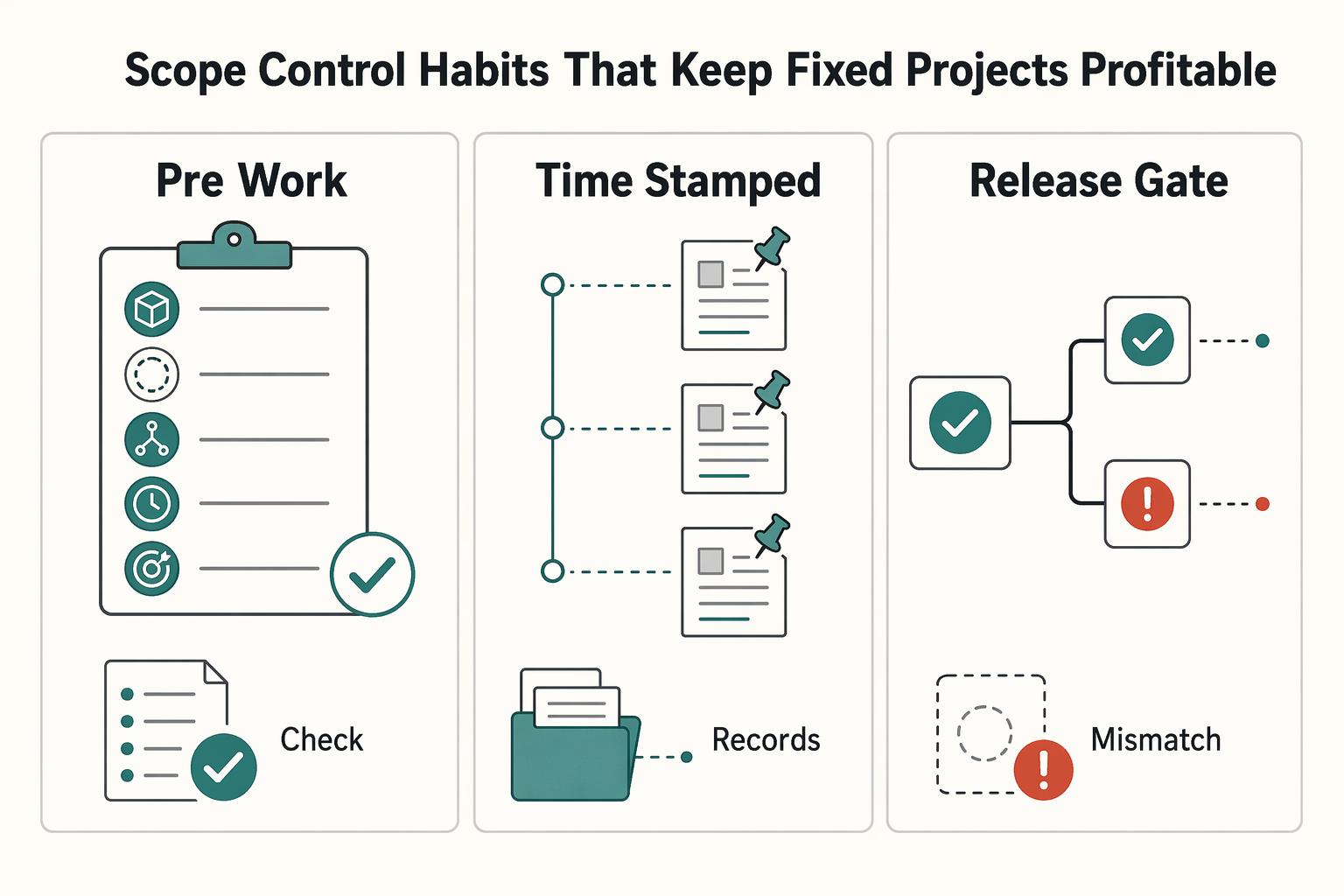
The right pricing model matches uncertainty and cashflow risk. It should fit how clearly the work can be defined, approved, and defended, not just what you are used to selling. Hourly billing gives you room to work while requirements are still moving. Fixed project pricing gives the client stronger budget clarity once deliverables are stable enough to pin down.

Digital Nomad Pre-Travel Checklist for Long-Stay Moves
Set your departure dates first. Long-term travel planning breaks down when timing stays vague. Vague timing usually turns into rushed paperwork, rushed bookings, or unresolved home obligations.