
Quick Answer
Start by treating Article 14 as a facts test: your residence-country position can change when U.S. presence crosses the treaty day-count trigger or when a U.S. fixed base is regularly available. Use Form 8233 for personal-services compensation, and handle payer paperwork before funds are processed. Keep a reconciled evidence file with travel records, contracts, invoices, and workspace terms so your filing position and withholding posture match how the work was actually performed.
The US-Australia Tax Treaty: The Default Rule and What Changes It#
Start with the default rule. Under Article 14 (Independent Personal Services), your income is generally taxable only in your country of residence. That changes if the services are performed in the other country and a treaty trigger is met.
For U.S. exposure, focus first on two triggers:
- You are in the United States for more than 183 days in the taxable year.
- You have a fixed base regularly available in the United States for performing the services.
If a fixed base exists, U.S. taxation is limited to income attributable to that fixed base, not automatically all income. That is the core decision this guide is built around. Are you still in the default residence-country position, or have your U.S. travel and work setup moved you into U.S. taxing territory?
How to use this guide#
Read the next sections in order. Run the risk check, read Article 14 in plain English, set up your documentation, then test your facts against common scenarios.
Handle your onboarding paperwork early. If a payer asks for Form W-8BEN as proof of foreign status, give it to the requester before payment is made, credited, or allocated. If you do not, the withholding agent may have to withhold at 30% under chapters 3 and 4. Treat withholding documentation timing as a separate step from treaty analysis.
If you want to check the source set yourself, the IRS Australia treaty documents page, last reviewed 08-Aug-2025, points to the 1982 treaty text and technical explanation, plus the 2001 protocol materials. If you want a deeper dive, read the digital nomad tax guide.
Your 5-Point Risk Diagnostic#
Treat this as triage, not a legal conclusion. Your job is to confirm what is verified, document your position, and escalate early when treaty outcomes are uncertain.
1. Are you a non-resident business using (or needing) simplified GST registration? If yes, confirm your activity matches the simplified path (including low-value imported goods sold to consumers, where relevant). Keep a clear record of why this path applies.
| Risk signal | Lower documentation risk | Higher documentation risk |
|---|---|---|
| Registration basis | Clear non-resident profile and documented eligibility for simplified GST | Unclear eligibility or mixed facts not documented |
| Setup status | AUSid created and online registration completed | Setup incomplete or delayed |
| ATO identifier records | ARN captured and stored with tax records | ARN not recorded or hard to retrieve |
2. Have you completed setup and captured your ARN? If yes, store the ARN with your tax records so you can use a consistent identifier in ATO-facing workflows.
3. Do you understand the limited registration tradeoffs before relying on this path? If no, pause and confirm the constraints: this status does not provide an ABN, does not allow GST credit claims on purchases, and does not allow tax invoices.
4. Can you meet quarterly GST lodgment and payment consistently? If no, treat this as immediate compliance risk. Set a quarterly process now and keep supporting records aligned to each reporting period.
5. Are you relying on an unverified treaty day-count or fixed-base rule? If yes, treat that position as uncertain until you have direct treaty support and advisor confirmation.
Use this action rubric:
- Proceed: Simplified GST setup is complete, ARN is documented, and your quarterly process is in place.
- Fix now: One core compliance element is missing (setup, ARN tracking, or quarterly process), or limited-registration constraints are not reflected in your operations.
- Escalate: You may face taxation not in accordance with a treaty, or your position depends on unverified treaty assumptions. Ask your advisor about the Mutual Agreement Procedure (MAP). We covered this in detail in A Freelancer's Guide to the US-Australia Tax Treaty.
Using Article 14 as a Decision Rule#
Use Article 14 as a decision rule, not a slogan. Treaty protection is workable only when your facts are documented, the payment is correctly treated as personal-services income, and you are not tripping the two main U.S. risk triggers: presence and a U.S. fixed base.
That follows directly from the diagnostic. If your records are thin or your setup looks U.S.-anchored, the immediate problem is practical. You may not be able to support your position with a payer or the IRS without rebuilding the file later.
The default rule you start from#
For U.S.-Australia independent personal services by a nonresident individual, Article 14 is the place to start, but relief is conditional. IRS treaty guidance is clear that you must satisfy all treaty requirements before income is exempt from U.S. income tax.
For personal-services income, the claim form is Form 8233, not Form W-8BEN. IRS guidance separates the forms: Form 8233 for personal services, Form W-8BEN for non-personal-services income. If you use the wrong form for service fees, treaty withholding relief can fail at the payer stage.
Your immediate action is simple:
- Tell the U.S. payer that you are a foreign individual.
- Confirm that they are classifying the payment as personal-services compensation.
- Complete Form 8233 only after checking the treaty terms you are relying on.
In general, IRS instructions describe a 30% section 1441 withholding baseline for independent personal services, so verify the current instructions before relying on any older figure.
The two exceptions that change the result#
The result changes when your facts start to look like U.S. operating presence. The IRS treaty table for Australia points to Article 14 and includes a 183-day U.S. presence figure. Because exact treaty wording must be verified before you rely on it, treat day counting as an active control, not a memory exercise.
For presence risk, keep a cumulative U.S. day log and reconcile it to flights, entry records, lodging, and calendar entries. If you are close to the verified threshold, pause additional travel until you recheck the count and treaty text.
The second exception is fixed-base risk. IRS Form 8233 instructions say that you generally cannot claim treaty exemption for independent personal services if you have an office or fixed base in the United States available to you. This is a facts-and-documentation issue, not a label issue.
How to read fixed-base risk in real life#
Use this table as a classification tool, not a legal verdict. No single signal decides the issue, but stacked signals raise the risk.
| Risk area | Lower documentation risk | Higher documentation risk |
|---|---|---|
| U.S. workspace availability | Records show no U.S. office or fixed base was available to you | Records suggest a U.S. office or fixed base was available to you |
| U.S. presence tracking | Day log reconciles to travel, lodging, and calendar records | No reconciled day log, or records conflict |
| Payer filing posture | Foreign status was disclosed and personal-services claims use Form 8233 | Foreign-status disclosure is missing or forms are mismatched |
| Evidence quality | Contracts, invoices, travel, and workspace records align | Thin or inconsistent records, or gaps you cannot explain |
A quick test helps here. Can you show who controlled the space, how long it was available, and whether your access was temporary, shared, or continuous? If not, fix the file now.
Where the treaty stops helping#
Under the U.S.-Australia treaty, covered U.S. taxes include federal income taxes imposed by the Internal Revenue Code. It does not cover every tax type. Technical guidance notes that social security and certain excise taxes sit outside treaty coverage.
| Tax or issue | Covered by treaty? | Detail |
|---|---|---|
| Federal income taxes imposed by the Internal Revenue Code | Yes | Covered U.S. taxes include federal income taxes imposed by the Internal Revenue Code |
| Social security taxes | No | Technical guidance notes these sit outside treaty coverage |
| Certain excise taxes | No | Technical guidance notes these sit outside treaty coverage |
| State treatment | Separate question | IRS guidance says some states honor treaty provisions and some do not; California's sourcing rule for personal services tracks where services are physically performed |
State treatment is separate, and that is where people often over-assume. IRS guidance says some states honor treaty provisions and some do not. California's sourcing rule for personal services tracks where services are physically performed, so a federal treaty result does not automatically remove state filing or withholding exposure.
If you take a treaty-based position that reduces U.S. tax, IRS guidance says you generally must disclose that position on your return. Keep a clean evidence pack: travel log, travel records, contracts and SOWs, invoices, calendar records, and workspace documentation that align with where services were performed.
What to do next if you trip a risk signal#
If risk is rising, act before filing or payment steps lock in.
| Risk pattern | Immediate move | Do this before |
|---|---|---|
| Presence risk only | Tighten day tracking, reconcile historical travel, and pause new U.S. travel | Verify the current threshold and your count |
| Fixed-base risk only | Review whether a U.S. office or fixed base is available to you, make prospective workspace or contract changes as needed, and keep records of each change | Relying on treaty treatment |
| Both risks | Get cross-border professional review | Relying on treaty treatment, submitting forms to payers, or setting payment flows around an exemption assumption |
Use this rule: facts first, forms second, assumptions last. Related: the Tbilisi digital nomad guide.
Your Compliance File: The Four Questions It Should Answer#
Treat this as a working checklist, not a year-end cleanup. Your file should always answer four questions: where you were, what income type you were paid for, which form you gave the withholding agent, and what changed that could affect compliance.
Step 1 Keep a live U.S. movement log#
Update your log on every movement. Record each U.S. arrival, each departure, and any extension that changes your planned exit date.
For each movement, record the date, direction, airport or city, trip purpose, client or project, planned exit date, actual exit date, lodging reference, and the evidence file link. Keep a running U.S. day total in the same log, and track it against the current verified threshold until you confirm the current treaty text and IRS guidance.
Checkpoint: reconcile monthly against flight confirmations, passport or entry records, lodging receipts, and your calendar. If you are near the verified trigger, pause new U.S. travel until you confirm your count and treaty position.
Step 2 Build one evidence vault you can maintain#
One year-based vault is usually the simplest way to stay audit-ready without relying on memory later.
| Document type | What it proves | Where it is stored | Who owns updates |
|---|---|---|---|
| Travel log | U.S. presence count, trip purpose, client linkage | /Tax/US/2026/Travel/Day-Log.xlsx | You, after each movement |
| Flight, lodging, passport, entry records | Corroborates travel dates and physical presence | /Tax/US/2026/Travel/Support/ | You, after each trip |
| Contracts, SOWs, change orders | Service scope, delivery terms, location language | /Clients/ClientName/Contracts/ and /Tax/US/2026/Contracts/ | You, on signature or amendment |
| Invoices and payment receipts | Amount, payer identity, payment date, service period | /Finance/2026/Invoices/US Clients/ | You or bookkeeper, monthly |
| Tax forms and payer correspondence | What you submitted, when, and payer acknowledgement | /Tax/US/2026/Withholding Forms/ | You, at onboarding and renewal |
| Workspace bookings and access terms | Your workspace facts and access history | /Tax/US/2026/Workspace/ | You, when booked or changed |
Common failure mode: inconsistent records. If dates or facts conflict across travel, contracts, and invoices, fix it immediately.
Step 3 Own the withholding-form workflow#
Form choice matters. For personal-services income, use Form 8233. For income not earned from personal services, use Form W-8BEN.
Provide the form to the withholding agent as early as practical, ideally during onboarding and before first payment processing. Keep the signed form, proof of submission such as an email or portal capture, and the payer acknowledgement in your withholding folder. If a client workflow offers only W-8BEN for service fees, stop and resolve the classification with their tax or accounts-payable contact before you proceed.
The reason is simple. The payer must not apply a treaty rate if it knows, or has reason to know, the claim is invalid. A rushed or mismatched form can create both withholding and documentation problems.
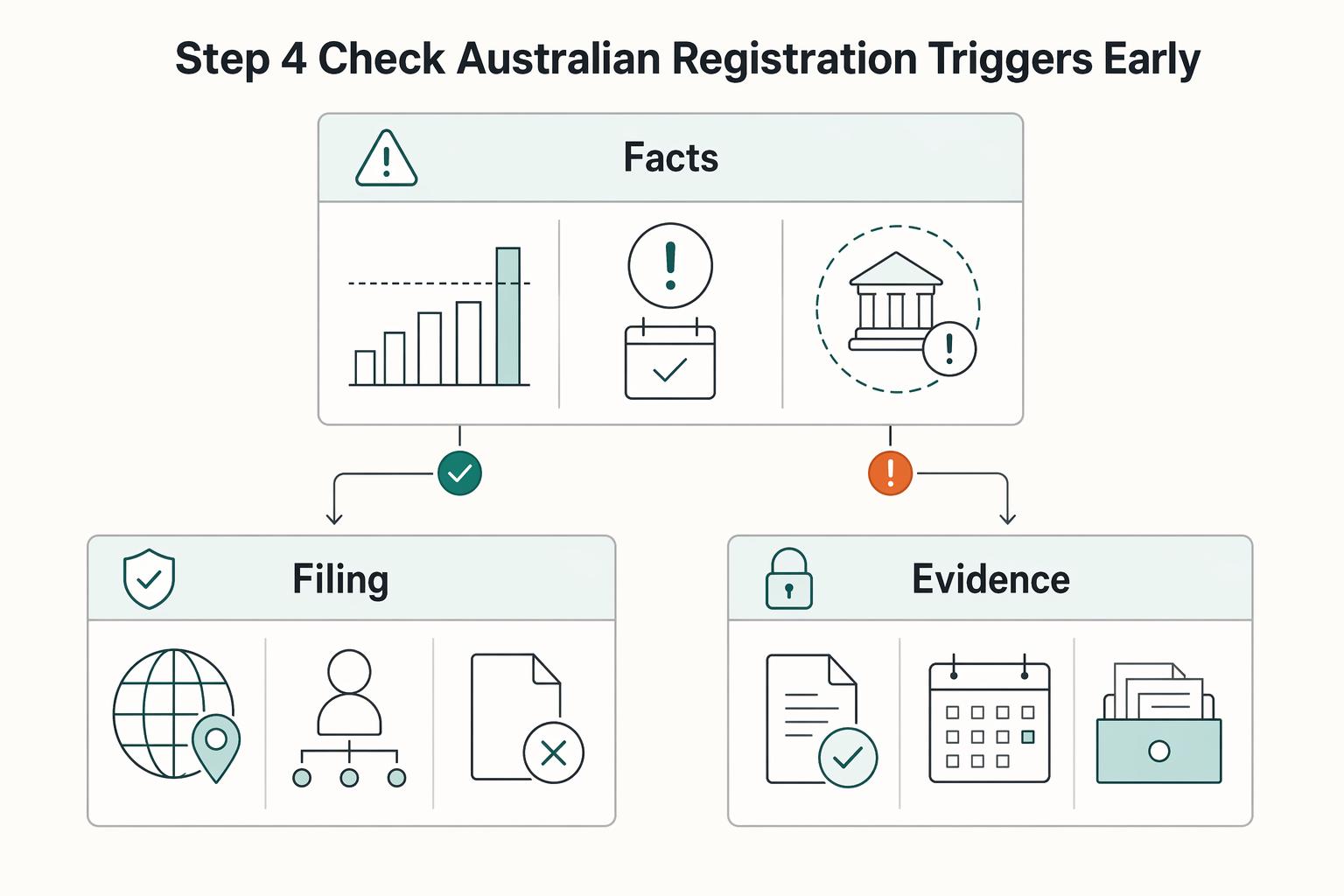
Step 4 Check Australian registration triggers early#
Treaty workflow does not replace Australian GST obligations. If GST turnover reaches $75,000, check whether you must register. If registration is required, register within 21 days. Penalties may apply if you fail to register when required.
Keep your ATO registration notice, including the effective date, in the same compliance vault. If standard GST registration applies for your non-resident setup, plan for the ATO constraint that you cannot lodge electronically from outside Australia and may need an Australian registered tax agent.
If the facts become ambiguous, pause and get cross-border tax review before payment, withholding, or filing decisions. That matters most after travel-pattern changes, work-arrangement changes, or tighter contract language.
You might also find this useful: A Guide to Using Airport Lounges. Before your next trip, set up a clean evidence trail with the tax residency tracker.
The Strategic Scenario Planner#
When your facts change, check three things immediately: your U.S. day count, whether you now have a U.S. office or fixed base available to you, and whether state filing exposure may appear even if your federal treaty position still holds.
| Scenario | Risk trigger | Why it matters | Safe default | Evidence to keep | When to escalate to a tax professional |
|---|---|---|---|---|---|
| Extended U.S. engagement | Extra days could push you above 183 days in the taxable year, or increase U.S.-performed services | Article 14 protection can narrow once the presence trigger is crossed, and personal service income is generally sourced where you physically perform the work | Pause acceptance, model impact, and test remote completion from Australia before committing | Updated travel log, flight records, passport or entry records, amended SOW, invoices split by work location, payer correspondence | Before signing an extension that may cross 183 days, change filing posture, or require treaty-position disclosure |
| Workspace choice | You are offered a dedicated office, room, or other space regularly available to you | IRS treaty-withholding guidance says an office or fixed base generally blocks a treaty exemption claim | Keep workspace access non-exclusive unless you have already priced in U.S. tax and compliance risk | Workspace or license agreement, booking terms, invoices, access terms, emails describing shared access, screenshots or photos of plan type | Before signing any lease, dedicated desk, office license, or long-term access arrangement |
| Multi-state work | You perform services in multiple U.S. states, especially California | Federal treaty relief and state filing exposure are separate; California guidance says federal treaty exemption does not automatically exempt California franchise tax | Run the federal treaty analysis and the state filing analysis as separate tracks | Travel log, project calendar, invoices by state or work location, client onsite-day confirmations, contracts showing work location | Before recurring work starts in a state with filing risk, or when pricing did not include state compliance cost |
Extended project#
If a client asks you to stay longer, verify your exact U.S. day count first. Reconcile your movement log against flights, passport or entry records, lodging receipts, and your project calendar, then model the added days from the extension.
If the extension could push you over 183 days in the taxable year, pause before agreeing. Run two versions of the project: one that stays under the trigger and one that exceeds it, using current federal and state cost assumptions. Then choose your next move: renegotiate scope or fees, or shift later deliverables to remote work from Australia.
Before extra payments are processed, align the documents to the operating reality. Update the SOW to separate onsite and remote deliverables, keep invoices tied to where the work was physically performed, and confirm current withholding documentation with the payer.
Workspace choice#
This is usually a facts question, not a label question. A key issue is whether you have a U.S. office or other fixed base regularly available to you, including dedicated or exclusive space.
If you want lower-risk facts, use non-exclusive arrangements. Keep membership terms, booking confirmations, invoices, cancellation terms, and emails that describe shared access so your records match your treaty position.
Multi-state work#
Location tracking is doing two jobs at once here. It supports your day count, and it supports sourcing. For personal services, U.S. source is generally based on where you physically performed the work, so your travel log and project calendar should map workdays to location.
Keep the federal and state analysis separate from the start. Publication 901 frames treaty relief as U.S. income-tax relief, while California guidance explicitly says a federal treaty exemption does not automatically exempt California franchise tax.
If you expect repeat workdays in a state, price the compliance cost early and escalate before filing assumptions harden. If you later take a treaty-based return position that reduces U.S. tax, confirm whether disclosure is needed and whether Form 8833 should be included.
For a step-by-step walkthrough, see Understanding the Independent Personal Services Article in Tax Treaties.
Conclusion: Run a Repeatable Control System for Facts and Paperwork#
The practical way to get autonomy is to run a repeatable control system. Keep your facts current and keep your paperwork aligned with those facts.
| Path or rule | Key requirement | Practical note |
|---|---|---|
| If GST turnover reaches $75,000 | Check whether you must register | If registration is required, register within 21 days |
| Standard GST path | Need an ABN first and may need to lodge BAS and pay GST monthly or quarterly | May need an Australian registered tax agent because electronic lodgment from outside Australia is not available |
| Simplified GST path | For non-resident businesses that do not need an ABN, create an AUSid account and receive a 12-digit ARN | Lodge quarterly; cannot issue tax invoices or claim GST credits |
Track what you can control while the work is happening, not after the fact: your GST-relevant turnover, registration timing, and the client paperwork tied to payment. Keep contracts, statements of work, invoices, and onboarding records consistent with how the engagement actually ran. If facts change mid-project, update the documents immediately.
For the Australia side, verify the admin path early. If GST registration is required, the ATO says you must register within 21 days. In the standard path, you need an ABN first and may need to lodge BAS and pay GST monthly or quarterly. In the simplified path (for non-resident businesses that do not need an ABN), you create an AUSid account, receive a 12-digit ARN, and lodge quarterly, but you cannot issue tax invoices or claim GST credits. A useful checkpoint is the ATO written notice confirming your effective registration date. The standard path may also require an Australian registered tax agent because electronic lodgment from outside Australia is not available.
| Reactive posture | Operator posture | Likely compliance outcome |
|---|---|---|
| Rebuilds facts and records later | Maintains records as work happens | Cleaner support for your filing position |
| Waits for a notice to find admin gaps | Confirms ABN and GST path and timing early | Lower risk of late-registration issues and rework |
| Treats unclear facts as "probably fine" | Escalates when facts or documents conflict | Earlier advice and fewer surprises |
Your next step is one of three. Keep your current plan if the facts and records are clean. Restructure the engagement setup if the records are drifting from reality. Escalate to a qualified cross-border advisor when the facts are unclear or your GST path is uncertain.
This pairs well with our guide on US-India DTAA Independent Personal Services for Freelancers.
Frequently Asked Questions
What is a "fixed base" under the US-Australia tax treaty?
Under Article 14, the key question is whether you had a U.S. base that was regularly available to you. If yes, income attributable to that base may be taxed there. IRS Form 8233 instructions also say you generally cannot claim a treaty exemption if you have a U.S. office or fixed base, except where a specific treaty provides a limited exception.
How do you prove you were in the US for less than the treaty presence threshold?
Use a reconciled evidence trail, not one document. For this treaty, Article 14 references presence aggregating more than 183 days in the taxable year, but day count is not the only issue because fixed-base facts also matter. Match your log to travel records, passport evidence, and location-backed card or bank activity, and fix mismatches before you file or submit treaty paperwork.
What form do you use to claim treaty benefits on personal-services income?
For personal-services compensation, start with Form 8233, not Form W-8BEN. Prepare it separately for each tax year, each withholding agent, and each income type, and submit it early enough for the withholding agent to review, sign, and forward it to the IRS within 5 days of acceptance. If your state or payer facts are mixed, get cross-border tax advice before changing forms or invoices.
Does a co-working space count as a fixed base?
Sometimes. The analysis is fact-specific and turns on regular availability plus control and exclusivity, not the plan name. Dedicated or private arrangements can create stronger fixed-base risk than truly shared access, but treaty treatment should be verified case by case. If your agreement gives you private, dedicated, or exclusive access, verify treaty treatment and Form 8233 implications before filing.
What records should you keep for the treaty position?
Keep an evidence pack that supports your Article 14 position and return disclosures: how long you were in the U.S., whether you had a fixed base, and what withholding forms were filed. In practice, that means travel proof, contracts and invoices, copies of each Form 8233, withholding correspondence, and workspace records that show whether access was shared or dedicated. If you also receive income not earned from personal services, use the appropriate W-8 documentation for that income type and keep it separate from your Form 8233 file; tools like the W-8 form generator are for that non-personal-services lane.
Try a related tool
Researched and edited by the Gruv editorial team. Gruv builds cross-border billing, payouts, and finance-operations software for global businesses.
Sources
Educational content only. Not legal, tax, or financial advice.
Related Posts

Digital Nomad Taxes in 2026 With a Defensible Filing Plan
With digital nomad taxes, the first move is not optimization. It is figuring out where you may be taxable, where filings may be required, and what proof supports that position.

Tbilisi Digital Nomad Guide for 2026 Long Stays in Georgia
Start with sequence, not excitement. If your income depends on delivering work on schedule, secure your legal footing, assemble your documents, and keep month one reversible before you optimize comfort.
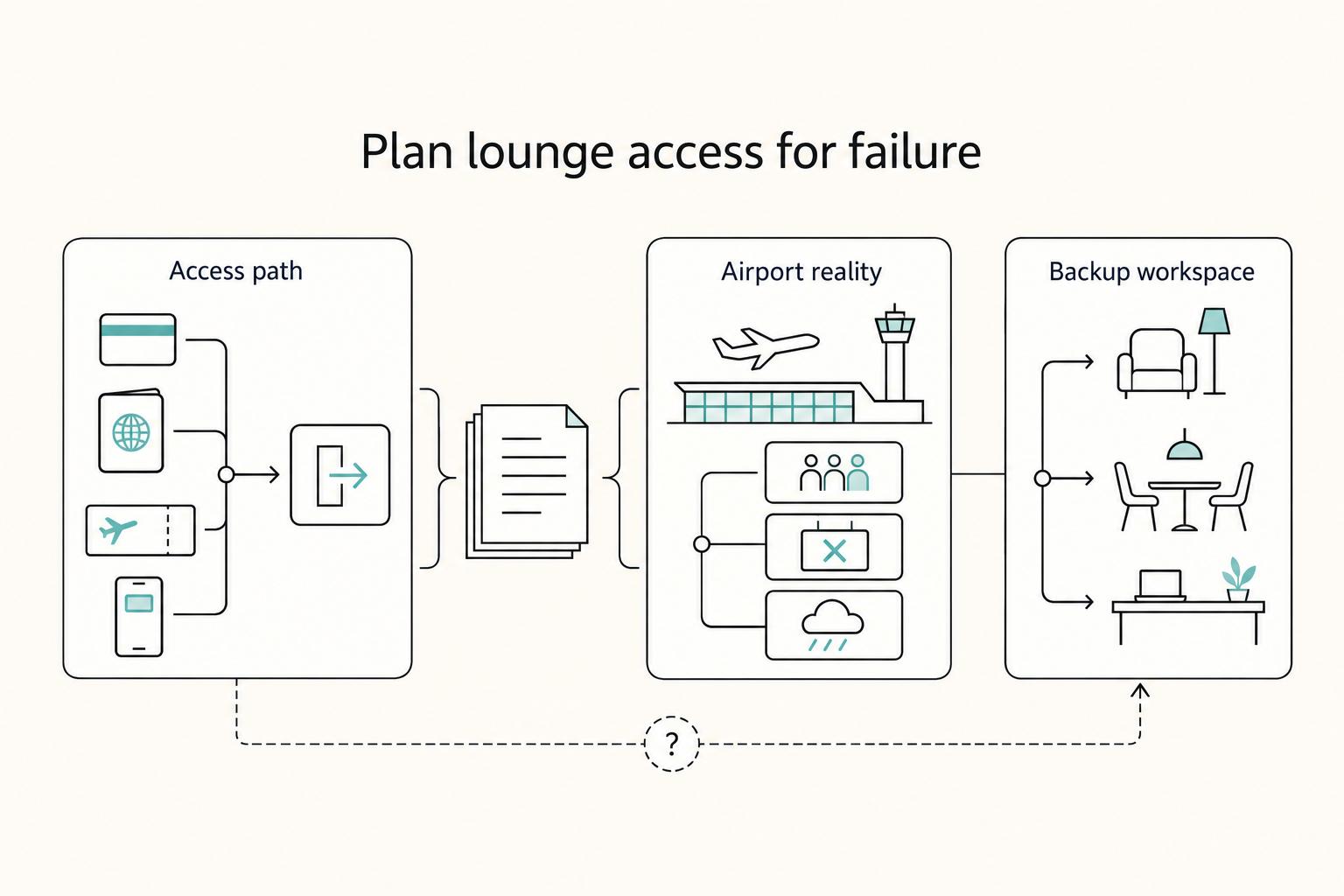
A Guide to Using Airport Lounges
Treat airport lounges like operational infrastructure on relocation days because they can be one of the few semi-controllable environments inside an otherwise chaotic system. When you're in move mode (paperwork, logistics, tight timelines), you need habits that protect throughput, not aspirational travel perks. Lounge access can help when it works, if you run it like a process, not a vibe.