
Quick Answer
Decide first whether to file now, file later, or hold. File now when one exact name or logo appears across proposals, invoices, website pages, and contract headers; wait if those assets still conflict. Keep domain, DBA/entity filings, and trademark analysis in separate lanes. Choose federal only when client work or marketing crosses state lines; choose state when operations are truly local. Before paying the USPTO base fee of $350 per class, save dated proof of real use.
How to Decide Whether to File Now or Wait#
Start with one practical decision: file now, file later, or hold for now. Base it on actual client-facing use, brand stability, and whether your work is moving beyond one state, not on how much you like the name.
| Path | When it fits | Main risk if delayed | What evidence to collect now | Trigger to revisit |
|---|---|---|---|---|
| File now | Your name or logo is already used consistently across client-facing materials and you plan to keep that exact version | You may rely only on common-law rights, which are tied to where you actually use the mark | Dated screenshots of service pages and other client-facing materials showing the same brand form | You change the mark, change services, or find conflicting use |
| File later | You are using a brand, but the wording, logo, or positioning is still changing | You file for a version you later abandon; one application is limited to one trademark | Dated copies of each public version and a running note of the version you intend to keep | The brand stays stable across proposals, invoices, website pages, and contract headers |
| Hold for now | You mostly operate under your personal name, with limited standalone branding and narrow reach | Brand drift can force a rushed filing later | A simple dated log of where the name or logo appears in client-facing work | You launch branded assets, start logo-led selling, or expand beyond one state |
Keep the legal tracks separate#
Keep this boundary clear: trademark rights, entity or DBA registrations, and domain registration are separate tracks. A domain registration does not create trademark rights, and a business name filing alone does not necessarily show trademark use. Make this call based on real market use of your name or logo, not just state paperwork or domain ownership.
Run a consistency check before you spend#
Before you pay a federal filing fee, with the base fee starting at $350 per class, make sure you are presenting one brand, not several.
| Material | What to confirm |
|---|---|
| Proposals | Same name in title, footer, and sender block |
| Invoices | Payee identity still maps cleanly to the client-facing brand |
| Website pages | One spelling and one logo version on key service pages |
| Contract headers | Same brand form as the website and proposal |
If these drift, clean them up first. Filing too early for a version you are not consistently using is avoidable rework.
Build the evidence folder now, even if you wait#
Even if you are not ready to file, start the file now. Build a dated folder with public-page screenshots and internal copies of client-facing materials.
If you later file based on use in commerce, specimen standards matter. For services, the mark must be directly associated with the services, and webpage evidence should keep the URL and date. If you choose intent-to-use, you can file before use, but registration still requires later proof of actual use. USPTO frames that future-use window as within 3 to 4 years.
Decision: [file now / file later / hold] | Why: [one sentence tied to actual use + consistency] | Next review trigger: [brand stability / expansion beyond one state / new client-facing launch] | Owner: your name
Related: How to Create a Business Website on a Budget.
Build the Right Mental Model Before You Spend Money#
Start with the market-facing basics: spend only after your name or logo is showing up consistently in paid, client-facing work. If buyers see different brand versions across your site, proposal, intake docs, and invoices, you are still in cleanup mode.
Use a simple test: can a client recognize the same brand at every point where they decide, sign, and pay? If not, fix that before you spend on formal protection steps.
Keep the lanes separate#
Treat trademark, copyright, patent, domain ownership, and business registration as separate review lanes. Use each lane to organize decisions, then confirm specifics from official sources before you act.
| Lane | What to document now | Common freelancer mistake | Immediate next action |
|---|---|---|---|
| Trademark | The exact client-facing name/logo currently in use | Treating a domain or entity filing as the same decision | Compare site pages, proposals, intake docs, and invoices for one exact brand form |
| Copyright | Core business materials you created and when | Assuming one IP step covers all brand risk | List your core creative assets and keep dated copies organized |
| Patent | Any technical-idea questions that need separate review | Escalating to patent language when the issue is naming consistency | If the issue is brand presentation, move it back to brand cleanup |
| Domain ownership | Domains you control and where each points | Buying the domain and stopping there | Check whether the domain and client-facing brand match exactly |
| Business registration | Registered names versus client-facing names | Assuming registration paperwork resolves market-facing brand risk | Compare registered names to client-facing names and resolve mismatches |
For U.S.-specific terminology, the episode's resource list points to USPTO.gov as a starting point.
Treat cross-border work as a separate review item#
Cross-border work changes the analysis. If you sell across borders, do not assume your current setup answers every market. Do not assume cross-border legal outcomes are settled, so treat each country as its own review decision before making rights claims.
Pre-spend checklist#
Before you spend or announce protection, confirm the same brand shows up everywhere the client sees it:
- Site pages: one exact name and logo version on core pages.
- Proposals: cover, footer, and sender identity match the public brand.
- Intake docs: forms and onboarding messages use the same brand language.
- Invoices: payee identity maps clearly to the brand the client hired.
If these align, your next step is clearer. If they drift, clean up first and keep dated copies of the corrected version.
Use a File Now File Later or Skip Rule#
Once your brand direction is clear, make one timing decision and document it. File now when your exact name or logo is already used in paid client-facing work. File later when the brand is still changing. Skip for now only when brand exposure is limited and confusion risk is low.
In the U.S., "file later" can still mean acting now through an intent-to-use filing if you have a good-faith plan to use the mark. Use that path only if your direction is stable enough to follow through, because Statement of Use timing after a Notice of Allowance is strict. You have 6 months to stay timely.
| Path | Best-fit scenario | Core risk | Immediate action | Reassessment trigger |
|---|---|---|---|---|
| File now | Your exact mark is already consistent across client-facing materials, and clients are paying under it | Delay while market exposure grows | Run clearance checks and prepare dated proof showing the mark with your services | New conflict signal or a material mark change before filing |
| File later | You expect near-term changes in name, logo, or service framing, but you have a real plan to use one mark | Filing too early on a moving brand, or missing intent-to-use follow-through deadlines | Freeze avoidable changes, set a review date, and capture evidence as the mark stabilizes | Mark stops changing, paid use starts, or intent-to-use deadline steps approach |
| Skip for now | You mainly operate under your personal legal name with limited brand exposure | Assuming low risk indefinitely and missing early warning signs | Keep records clean and monitor for confusion signals | Confusion appears, visibility increases, or you expand into additional markets |
Confusion overrides timing#
If confusion is already visible, that usually outweighs your preference to wait. Likelihood of confusion is a common refusal issue, and similarity is not just exact text matching.
Use these practical red flags:
- Search results blur your business with a similar provider or similar service wording.
- Online profiles lead clients to contact or mention the wrong account.
- Your client-facing materials use different versions of the brand.
- Client messages ask whether you are connected to a similar brand.
These signals do not decide a legal outcome by themselves, but they do show delay risk is rising and your evidence trail may be getting weaker.
Keep the jurisdiction rule narrow#
Keep your assumptions local. Trademark rights are territorial, and priority approaches vary by jurisdiction. If a market matters to your revenue plan, confirm local rules before relying on what you know from a different trademark office.
If you delay#
If you choose "later," keep that choice disciplined so it stays defensible:
| Record | What to keep |
|---|---|
| Client-facing materials | Save dated client-facing materials that show the exact mark with the exact services, including website pages, ads, and brochures |
| Webpage records | Keep the URL and access or print date |
| Brand usage | Keep brand usage consistent across client-facing materials |
| What is still changing | Track what is still changing, whether the name, logo, service wording, or market focus, and what has stabilized |
| Review trigger | Write down the event that will prompt you to reassess filing, such as brand stability or expansion beyond one state |
Related reading: How to Create a Business Email Address for Your Freelance Business.
Clear Your Name and Logo Before You Push Marketing#
Clear conflicts before you scale SEO, ads, outreach, or proposal volume. The avoidable cost is building visibility first, then having to rename, redesign, or untangle client confusion.
Use this four-step sequence. Make one person the final approver, even if that person is you:
- Run an internal distinctiveness screen. Favor names that read like a brand, not a generic service label. Treat this as an internal filter, not a legal clearance test.
- Run a conflict scan. Check for similar names or logos in related services. This does not guarantee clearance, but it helps catch obvious issues before you spend on promotion.
- Lock the brand form before filing. Freeze one exact name format, spelling, spacing, and capitalization, and one logo version. If your logo is still changing, do not treat it as filing-ready. A filed design mark cannot be materially changed. If long-term logo stability is unclear, prioritize the standard word mark or brand name first.
- Assign final approval ownership. One owner approves the exact version used everywhere so multiple name variants or old logo files do not go live.
| Candidate | Distinctiveness signal | Conflict risk signal | Go / No-go |
|---|---|---|---|
| Personal legal name only | Internal signal is unclear | Keep in scan until obvious conflicts are ruled out | Maybe |
| Descriptive service name | Internal signal is weak | Keep in scan until obvious conflicts are ruled out | No-go unless revised |
| Unique brand name with stable wordmark | Internal signal is stronger | Go only if your scan finds no obvious similar use | Go |
| Custom logo still being revised | Not stable yet | High rework risk if filed too early | No-go for filing yet |
Before launch, run one consistency checkpoint across domain, homepage and service pages, proposal templates, invoices, and contract headers. The same exact mark should appear across all of them.
Then build a launch evidence folder with dated captures of live pages and sales documents showing that exact mark. If a freelancer or agency designed your logo, confirm rights assignment, including work-for-hire terms where applicable, and confirm you own the logo copyright before filing. Pause promotion if conflict signals are unresolved or if more than one brand form is still in use.
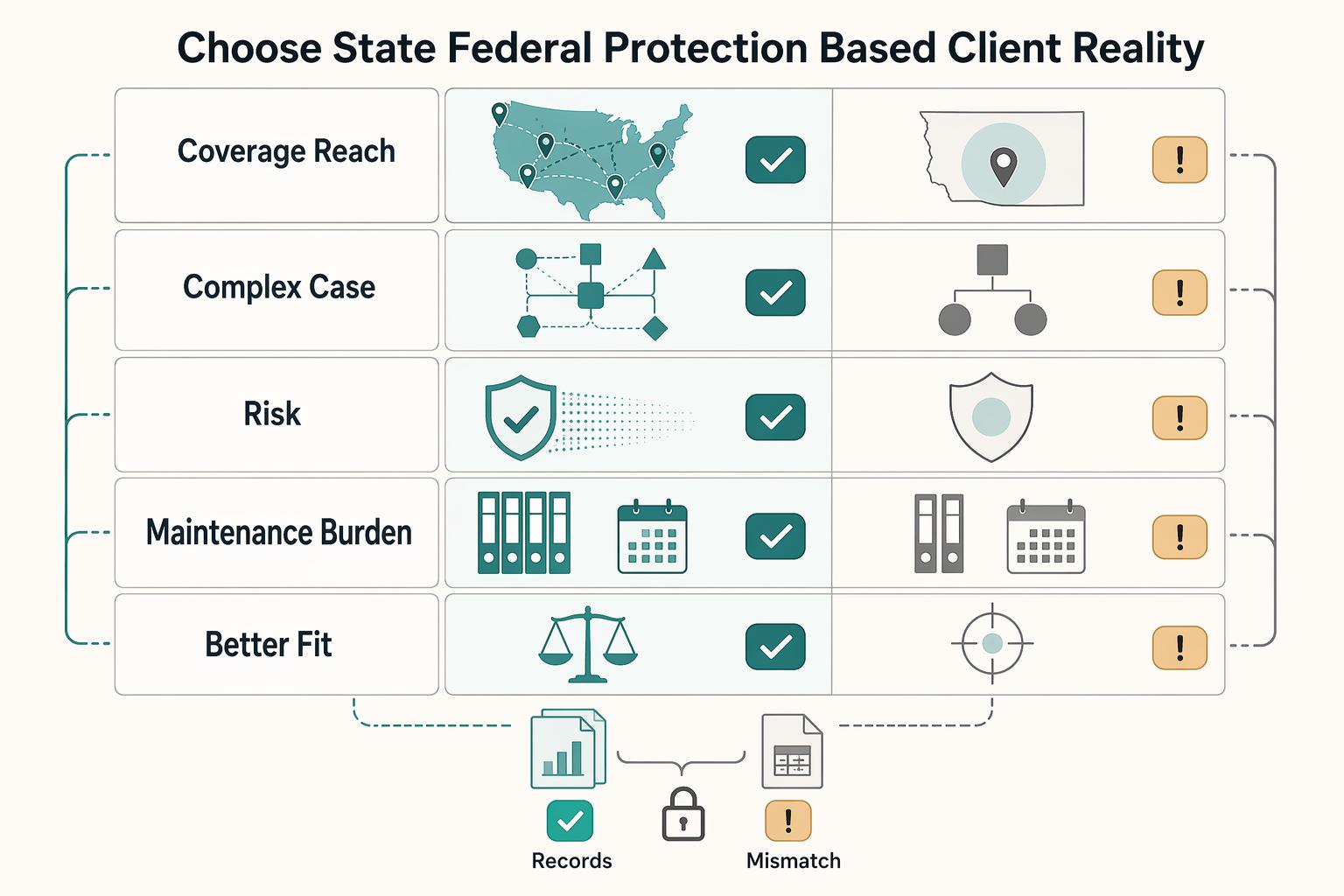
Choose State or Federal Protection Based on Client Reality#
Choose protection based on where your clients and marketing actually operate, not your home address. If your work or outreach crosses state lines, federal registration is often the stronger fit. If your business is truly local, state registration can work as a narrower starting point, with a written reassessment trigger.
| Factor | State registration | Federal registration |
|---|---|---|
| Coverage reach | Rights in one state only | Presumptive nationwide right for listed goods and services |
| Filing complexity | Varies by state; confirm with that state trademark office | Filed through USPTO with filing-basis and specimen requirements |
| Expansion risk | No protection in other states when you expand | Better aligned when clients or marketing already span states |
| Maintenance burden | Varies by state; verify with the state office | Ongoing deadlines: Section 8 in years 5 to 6, then Section 8 and 9 in years 9 to 10, then every 10 years |
| Better fit when | Work is concentrated in one state and expansion is not near-term | You already serve across state lines or plan near-term interstate growth |
Use evidence, not assumptions. Before you choose, gather four things: your recent marketing footprint, your current client locations based on signed work and invoices, your near-term expansion plan, and a clean check of brand consistency across homepage, proposals, invoices, contract headers, and any specimen you may file.
Fix brand mismatches before filing. Your filed mark and real-world use need to align, so if proposal headers, website branding, and invoice branding differ, standardize first.
Set an operational trigger in writing now: "If I sign clients in another state, launch multi-state ads, or actively target out-of-state work, I will reassess state vs federal filing before the next campaign." Any current filing details must be verified from official federal or state source records before use.
Prepare a USPTO Filing Packet That Survives Review#
If federal filing is your path, slow down and build one dated packet before you submit. In the source context, registration and recordation are voluntary acts, but registration can affect infringement enforcement under 17 U.S.C. sec. 411 and 412. Sparse records can also make ownership and licensing contact harder to determine, so keep this section focused on conservative internal consistency.
Build one dated evidence pack now#
Create one folder with today's date and collect materials in this order for internal review, not as a substitute for current USPTO requirements:
- Exact current mark version
Keep one controlled version of the name, logo, or combined form across the materials you plan to review.
- Ownership trail
Collect records that help explain who uses and controls the brand, and keep identity details consistent across those records.
- Real client-facing examples
Keep examples that show how the mark appears in real-world service context so your internal file is clear.
- Services language aligned to reality
Describe only services you currently offer publicly, and remove wording that overstates scope.
Treat mark format as a verification step#
Whether to file a word mark, a logo mark, or both is not established. Keep that choice as a verification item and confirm it against current USPTO guidance before submission.
| Packet element | Why weak records create risk |
|---|---|
| Exact mark version | Mixed spellings, styles, or logo variants can create confusion in your file |
| Ownership trail | Inconsistent identity details can make ownership and contact harder to follow |
| Client-facing examples | Unclear examples can make service context harder to evaluate |
| Services language | Scope that reads broader than real offers can create avoidable disputes later |
| Legacy assets | Old branding can make the mark look unsettled |
Run one pre-submit side-by-side check before filing. Your public-facing and operational materials should tell the same story. Current USPTO submission details must be verified from official USPTO source records before use. Registration decisions can still face refusal or later challenge, so consistency can lower risk, but it does not eliminate it.
Add Contract Clauses That Protect the Brand if a Client Relationship Breaks#
Once the filing packet is clean, align your contracts to the same IP-use logic. If your MSA and each SOW answer post-split use questions differently, you create a dispute about who can keep using what, and on what terms. That risk is not theoretical: one cited dispute involved former artists being urged not to use 15,000 drawings because those works had been assigned to the firm.
Treat these clauses as a working checklist, not boilerplate. Ask one question per clause:
- Scope of work + assignment scope: Is the commissioned work scope clear, and is the scope of any IP assignment equally clear?
- License vs. assignment: Does the contract clearly separate permission to use from transfer of rights?
- Exclusivity: Is it explicit whether the author or third parties can use the work outside the relationship?
- Originality requirement: Does the contract require original, non-imitative work to reduce third-party claim risk?
- Cross-border rights assumptions: If the relationship is international, are you avoiding assumptions that moral-rights protections are identical across countries?
| Clause | Brand/IP risk it controls | What to align across MSA and SOW |
|---|---|---|
| Scope of work + assignment scope | Unclear ownership or use rights after the split | Same deliverable scope and same assignment scope |
| License vs. assignment | "Use permission" language conflicts with "rights transfer" language | Consistent terminology and no mixed signals |
| Exclusivity | Reuse by the author or third parties is left ambiguous | Whether exclusivity is included, and how far it extends |
| Originality requirement | Third-party claims tied to copied or imitative work | Matching originality commitments in all agreement documents |
| Cross-border rights assumptions | Country-to-country differences create interpretation gaps | Any country-specific assumptions called out consistently |
Run a mismatch check before signing#
A common failure point is contradictions across documents. Review the MSA and each SOW side by side and check these four items:
| Check | Question to review |
|---|---|
| License scope | Is permitted use described the same way everywhere? |
| Assignment language | Does any section conflict with license-only language? |
| Exclusivity terms | Do reuse rights for the author or third parties match across documents? |
| Originality obligations | Are originality and non-imitation commitments consistent across the full contract set? |
If one document grants limited use and another reads like full transfer, you have a predictable dispute risk.
Before signing, stress test the full set:
- What is assigned, and what is only licensed?
- Is exclusivity included or omitted?
- Can the author or third parties use the work outside the relationship?
- Where is the originality requirement stated, and is it consistent across documents?
If you cannot answer those questions from the signed documents alone, the contract set is not finished.
Before you finalize your use terms, draft a cleaner MSA/SOW baseline with the freelance contract generator.
Handle Cross-Border Client Work Without Overclaiming Rights#
For cross-border client work, describe your trademark position by territory, not by ambition. If your rights are in the U.S., say that plainly. A U.S. federal registration is not valid outside the United States, and state or common-law rights are narrower by geography.
Use one cross-border sequence and keep it consistent:
- Marketing claims: state only confirmed jurisdictions.
- Proposal language: match the same territorial scope.
- Signed terms: mirror that scope in license, enforcement, and post-termination use.
If those three layers conflict, you can create avoidable disputes and credibility risk. One example is external copy claiming "internationally protected" while the MSA only supports U.S. use or is silent on non-U.S. rights.
| Status | Enforcement language | Permitted use territories | Termination effect |
|---|---|---|---|
| Confirmed now | Use verified country-specific wording, for example, "Registered in the United States" | Only jurisdictions you have actually confirmed | Contract states what use stops in those territories when the relationship ends |
| Pending local confirmation | Use limited wording such as "Application filed" or "Subject to local review," when true | Keep use limited to territories named in the contract until review is complete | No continued brand use outside confirmed territories unless the contract expressly allows it |
| Do not claim yet | Do not claim exclusive rights, registration, or enforceability | Do not imply worldwide or regional coverage | Do not promise post-termination rights tied to unverified foreign protection |
Madrid can simplify filing across more than 120 countries and regional offices, but outcomes are still country by country. An international registration through WIPO does not mean automatic registration in every designated country, and each country may approve or refuse independently.
Before signing, run three checks:
- Forum selection: choose a court for commercial disputes if it fits the deal, but do not assume that clause resolves every IP-validity issue across jurisdictions.
- Post-termination brand use: state where use must stop, who removes branded material, and whether any limited display rights survive.
- Local validation: before you make non-domestic rights statements, confirm with local counsel or local filing status.
Final copy-control step: if your sales language is broader than your contract scope, revise external language first. Any current jurisdiction-specific requirement must be verified from local legal or official source records before use.
Conclusion and Your Next Move This Week#
Do not leave this as a someday task. Pick one path this week, because the timing and scope of your filing shape the rights you may be able to claim later.
Use this action ladder: file now, file later with a trigger, or hold and clean the brand first. If your name or logo is consistent across proposals, invoices, contract headers, and public pages, decide timing and scope. If those do not match, fix that before you file.
| Path | Readiness signals | Immediate actions this week | Main risk if delayed |
|---|---|---|---|
| File now | One consistent name or logo is in real client-facing use, your services description is clear, and your work or marketing is not limited to one state | Confirm current USPTO requirements, verify your USPTO.gov account is identity-verified, and prepare your application in Trademark Center | You keep building on geographically limited common-law rights while delaying a broader-rights filing decision |
| File later with a trigger | Brand is mostly settled, but use evidence is incomplete or your services scope is still shifting | Set a written trigger, for example, stable public use across client materials or expansion beyond one state, then collect dated screenshots, invoices, and contract headers | Delay drifts and you file under pressure with weak evidence or sloppy goods and services wording |
| Hold and clean inconsistencies first | Business name, logo, handles, contracts, and website are inconsistent, or ownership or jurisdiction questions are unresolved | Pause promotion of the messy version, choose one brand form, and clean client-facing materials before any filing | You pay generally non-refundable fees on an application that cannot be supported by consistent use or acceptable services wording |
If your mark is stable and your services activity is broader than one state, federal registration is the path tied to nationwide rights framing. State registration creates rights in that state only. If your footprint is truly local, a state path can be narrower now, with a written reassessment trigger if expansion starts.
If you choose intent-to-use under Section 1(b), treat it as a real timeline commitment. That path can require additional filings and fees later. The Statement of Use is due within 6 months after the Notice of Allowance.
Keep one execution guardrail: verify live procedure before filing. Trademark Center is the filing channel, and USPTO process details can change. Confirm the current filing page, fee page, and identity-verification requirements. Any checklist item that depends on an older step must be verified against current official USPTO source records before use.
This week, align contracts and all client-facing brand use to the same form. Log unresolved state, federal, and cross-border jurisdiction questions for counsel, then move forward on the path you chose.
For a step-by-step walkthrough, see A guide to 'Antifragile' thinking for building a resilient freelance business.
If you want your post-trademark client payment flow to stay traceable and cross-border ready where supported, review Gruv for freelancers.
Frequently Asked Questions
Do freelancers need a trademark for a freelance business name?
Not always. It usually makes sense when the name is stable, client-facing, and costly to change if someone challenges it. If the same name is already used across your proposals, invoices, contracts, and public pages, move to clearance and filing prep. If not, wait and set a review date.
Can I trademark both my business name and my logo?
Yes. Your name and logo are separate brand elements, so clearing one does not clear the other. Run separate checks and file first for the element you use most consistently, then file the other when you have use in commerce or a bona fide intent to use.
Is a domain name enough to protect my brand?
No. A domain is your web address, not trademark protection. Registering a domain does not create trademark rights by itself, and it does not confirm there is no conflicting mark. Keep the domain you want, but run trademark clearance separately before you build around it. | Item | What it protects | What it does not protect | |---|---|---| | Domain | Control of a web address | Trademark rights by itself | | Trademark | Source-identifying brand elements used with goods or services, such as a name or logo | Automatic worldwide protection | | Copyright | Original works of authorship | Names, titles, slogans, short phrases, and domain names | | Patent | Non-brand IP, not your service brand identity | Your business name or logo as a brand identifier |
Should I choose state trademark protection or federal trademark protection?
Choose based on where you actually do business, not just where you live. Federal registration can provide nationwide protection for the listed goods or services when you have a valid filing basis; state registration is filed with the specific state where you want protection. Map your real client and marketing footprint, then document your filing scope before filing.
When is trademarking a side hustle worth it?
It is usually worth it when your brand is stable, visible, and expensive to rename. Use this readiness checklist before filing: consistent branding, real use evidence or a real intent-to-use plan, and clear service scope. If all three are solid, budget from the USPTO base fee of $350 per class and plan for a process that usually takes 12 to 18 months.
What is the difference between trademark, copyright, and patent?
Use trademark when your goal is to protect the brand identifier clients connect to your services. Copyright protects original works of authorship, but not names, titles, slogans, short phrases, or domain names. If your question is “Can I stop confusing use of my business name or logo?”, start with trademark.
What should I prepare before I file a USPTO trademark application?
Prepare for refusal risk before you prepare forms. Likelihood of confusion is the most common refusal reason, so search for conflicting federal marks first and remember earlier common-law use can still matter. Before filing, use one consistent brand form, keep your service scope clear, and collect use evidence that can support a specimen, or a bona fide intent to use within the next three to four years.
Try a related tool
Researched and edited by the Gruv editorial team. Gruv builds cross-border billing, payouts, and finance-operations software for global businesses.
Sources
- copyright.gov/comp3/docs/compendium.pdftrusted
- copyright.gov/policy/moralrights/full-report.pdftrusted
- guidelines.euipo.europa.eu/2302857/2215120/trade-mark-guidelines/3-1-us...trusted
- tmep.uspto.gov/RDMS/TMEP/printtrusted
- uspto.gov/trademarks/apply/statement-use-sou-minimum-f...trusted
- uspto.gov/trademarks/trademark-timelines/section-1b-ti...trusted
Educational content only. Not legal, tax, or financial advice.
Related Posts
Best Digital Nomad Cities for Safety and Stability in 2026
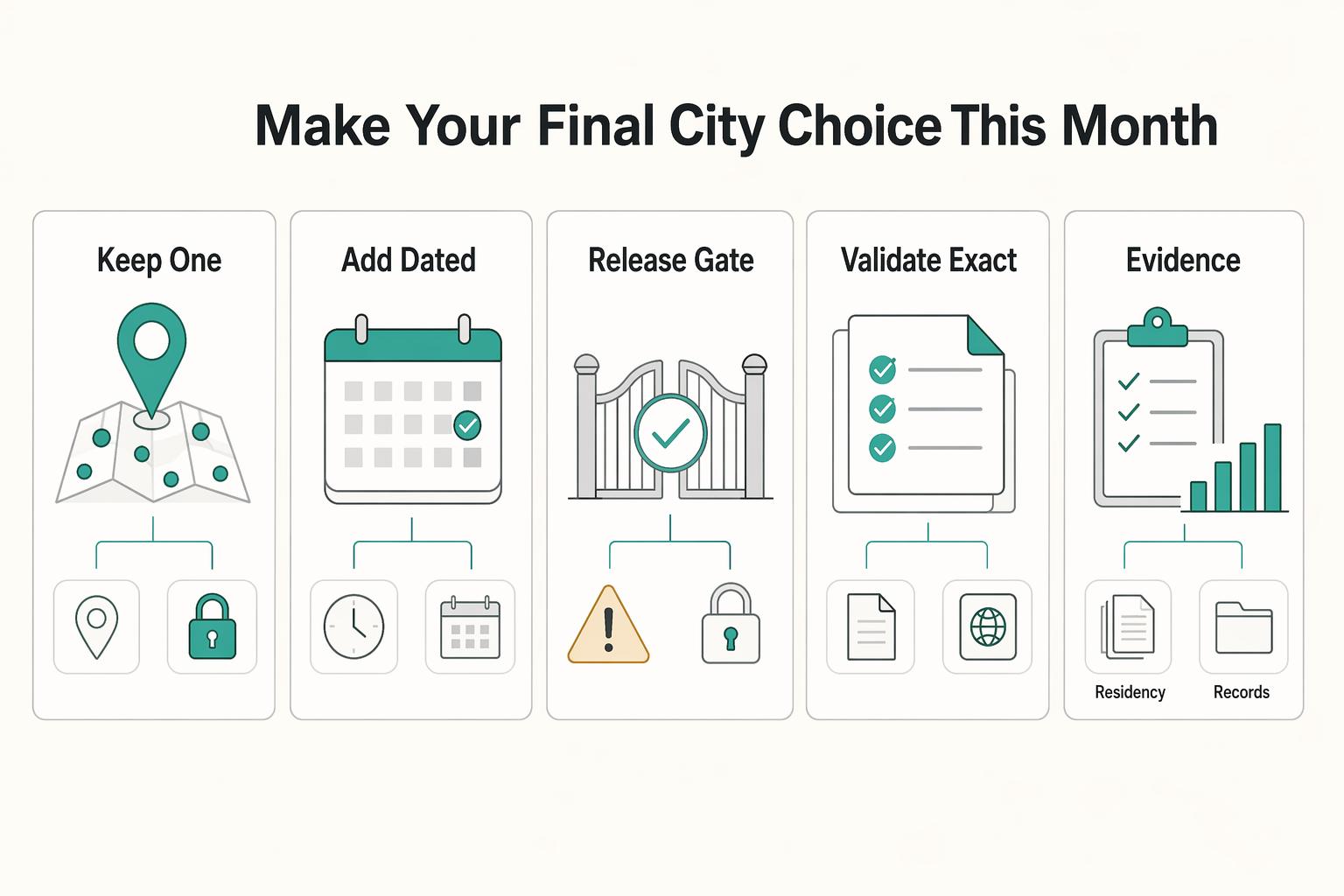
Treat this as a relocation decision, not a travel mood. The fastest way to make a good call is to run every city through the same three checks in the same order: shortlist signal, stay feasibility, and day-to-day work readiness. Stick to that order and you avoid most expensive mistakes before money leaves your account.
How to Build a Freelance Website on a Budget
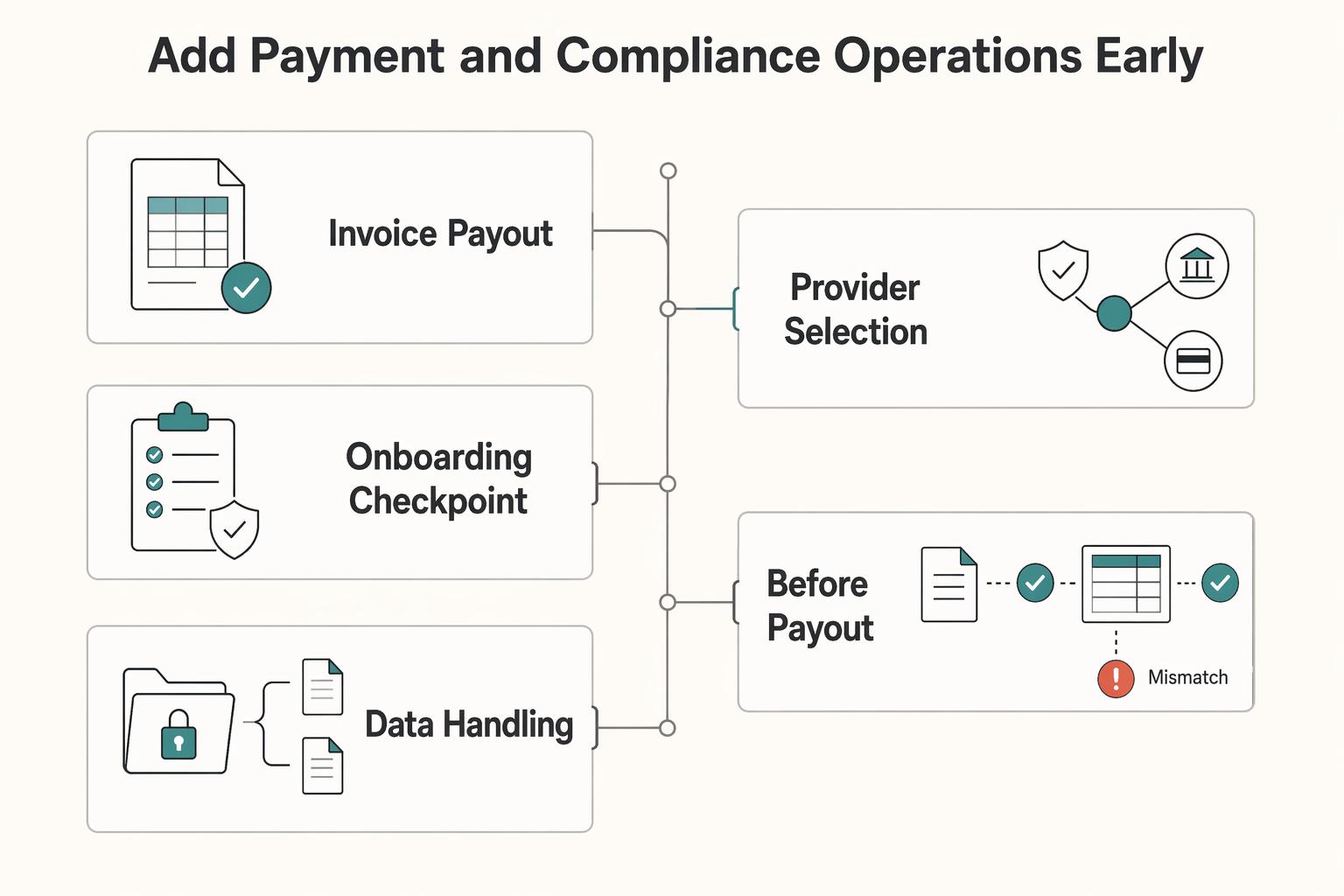
A professional budget site should be your home base, not just another marketplace profile. Launch fast, keep costs controlled, and make it easy for prospective clients to contact you and pay you.

The Freelance Payment Penalty: A Modeled Audit of Platform Fees, FX Spreads, and Payout Delays
The money rarely disappears through a single, easy-to-spot fee. The real loss is stacked. A marketplace takes its commission, a processor adds a charge for international cards, a bank or payment company converts the currency at a spread, a platform holds the funds before release, and a wire sheds a little to intermediaries on the way in. Each layer looks defensible on its own, but the worker feels the combined result as a smaller deposit and a later payday.